
DNA RNA PROTEIN Chapter 12 Section 3 Central






- Slides: 55
DNA, RNA & PROTEIN Chapter 12: Section 3
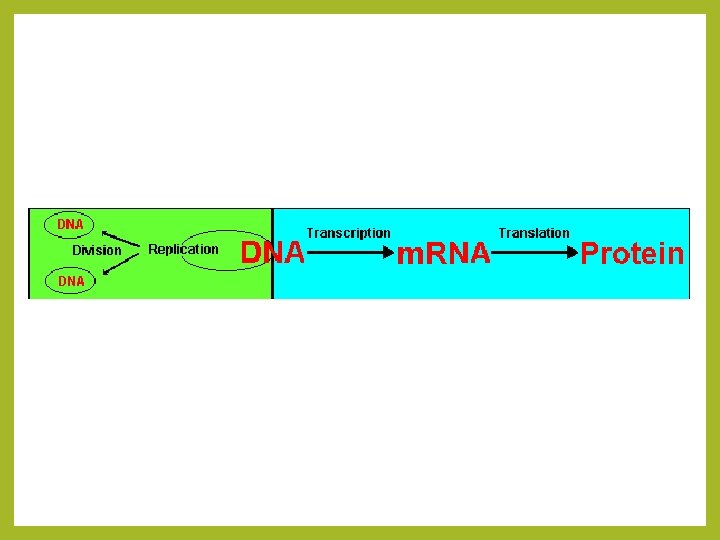
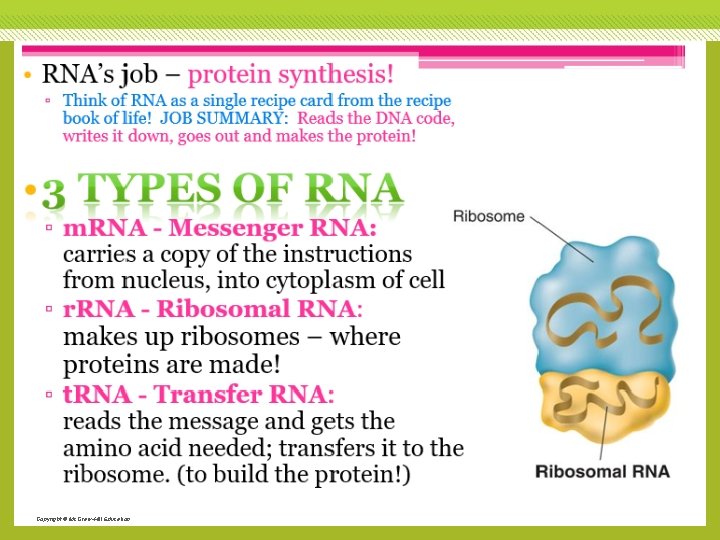
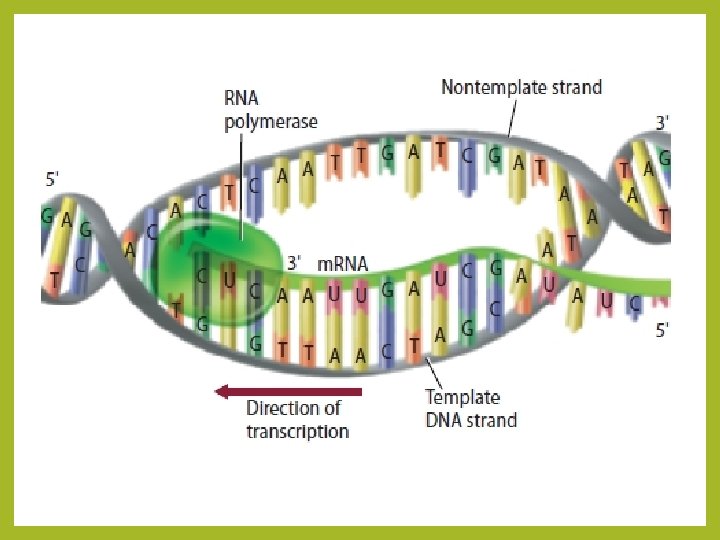
Central Dogma • Investigate how DNA served as a genetic code for the synthesis of proteins. • Geneticists accept that the basic mechanism for reading and expressing genes is from DNA to RNA to protein. • This is referred to as the central dogma of biology: • DNA codes for RNA, which guides the synthesis of proteins. Copyright © Mc. Graw-Hill Education
Copyright © Mc. Graw-Hill Education
Transcription & Translation Bozeman Science Transcription & Translation Video
Part of DNA molecule is copied to make m. RNA molecules (using complimentary base pairing. THINK: The sequence of nucleotides in a m. RNA is determined by the sequence in the ? DNA
Central Dogma Transcription • First step synthesis of m. RNA from DNA in a process called transcription. • RNA polymerase moves along the DNA strand in a 3’ to 5’ direction, synthesizing m. RNA. Copyright © Mc. Graw-Hill Education
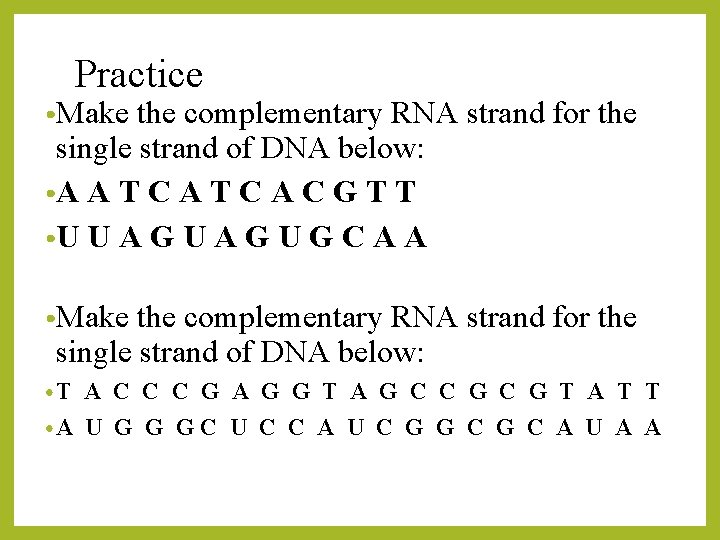
Practice • Make the complementary RNA strand for the single strand of DNA below: • A A T C A C G T T • U U A G U G C A A • Make the complementary RNA strand for the single strand of DNA below: • T A C C C G A G G T A G C C G T A T T • A U G G G C U C C A U C G G C A U A A
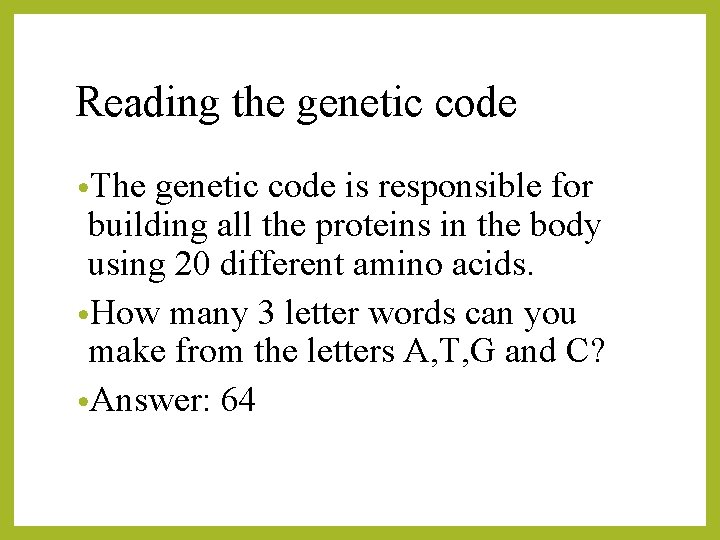
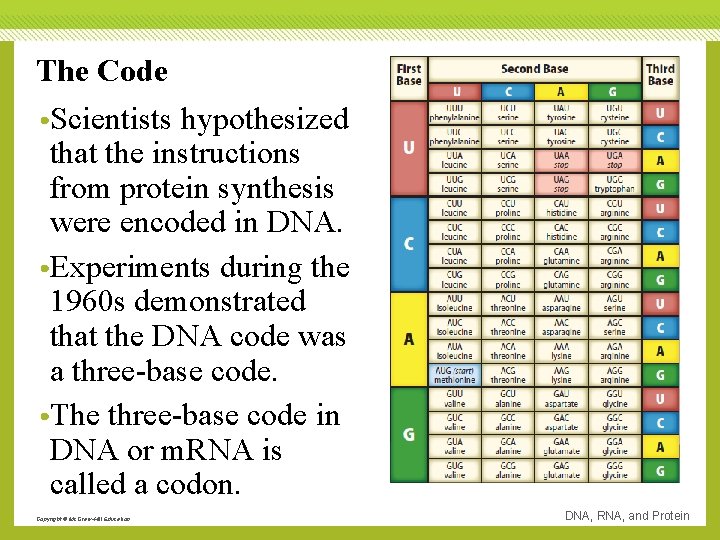
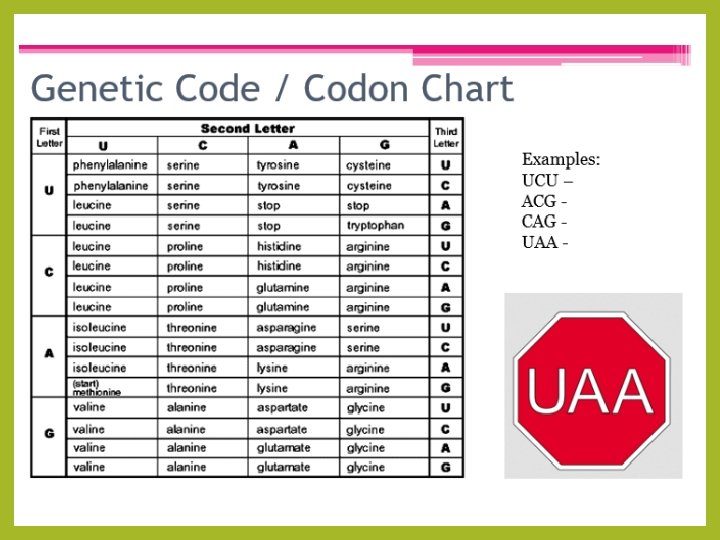
Reading the genetic code • The genetic code is responsible for building all the proteins in the body using 20 different amino acids. • How many 3 letter words can you make from the letters A, T, G and C? • Answer: 64
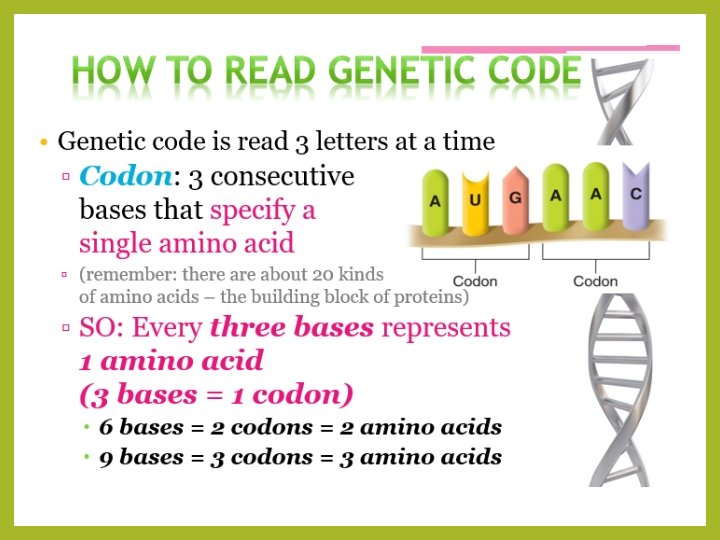
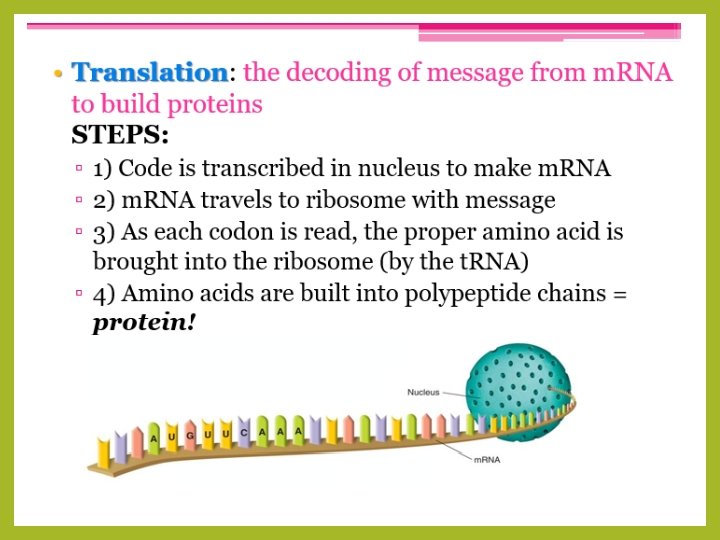
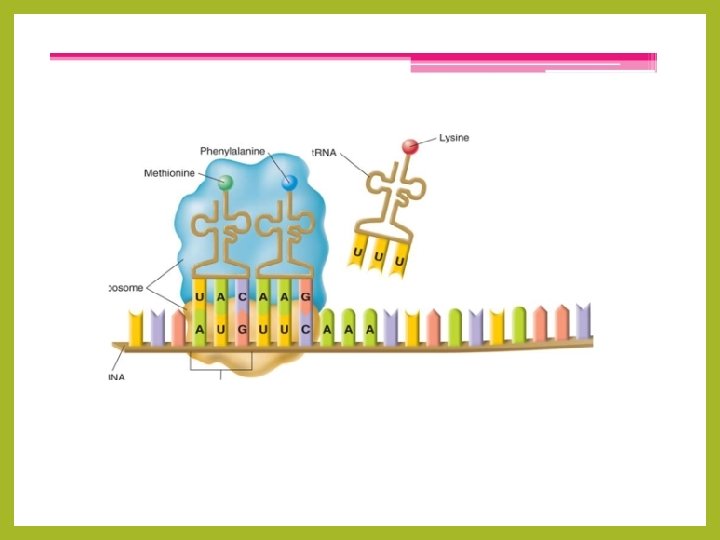
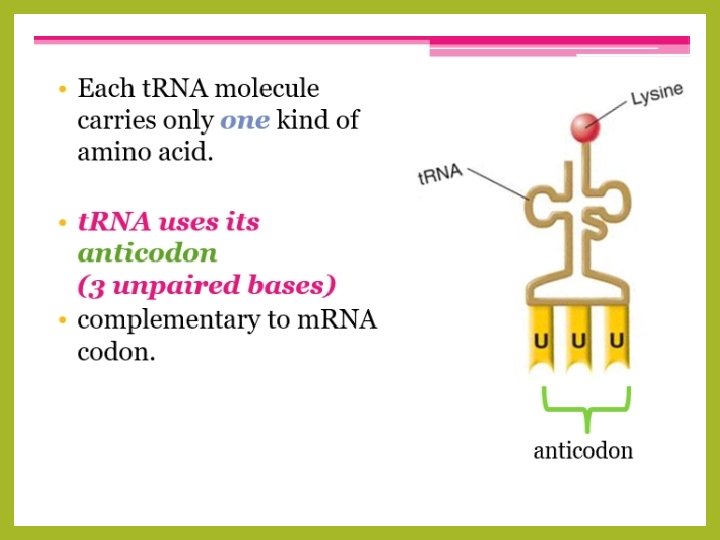
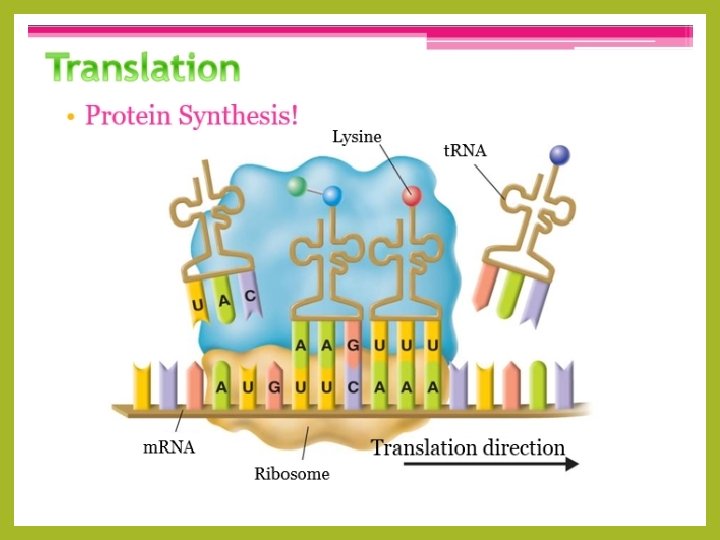
The Code • Scientists hypothesized that the instructions from protein synthesis were encoded in DNA. • Experiments during the 1960 s demonstrated that the DNA code was a three-base code. • The three-base code in DNA or m. RNA is called a codon. Copyright © Mc. Graw-Hill Education DNA, RNA, and Protein
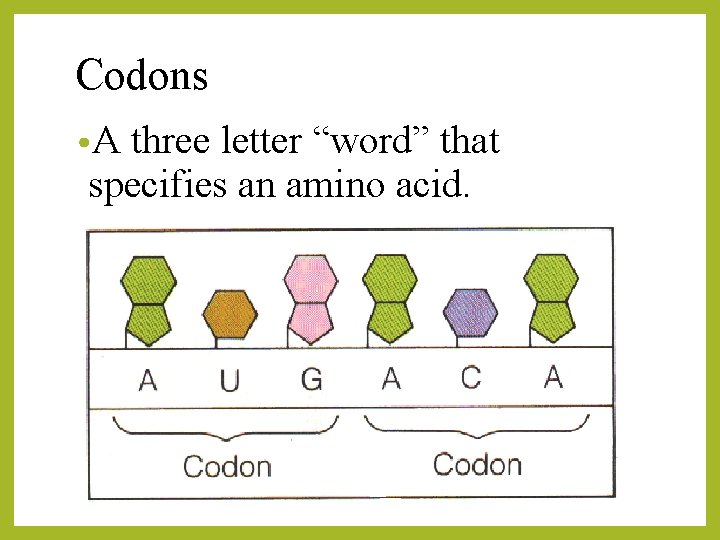
Codons • A three letter “word” that specifies an amino acid.
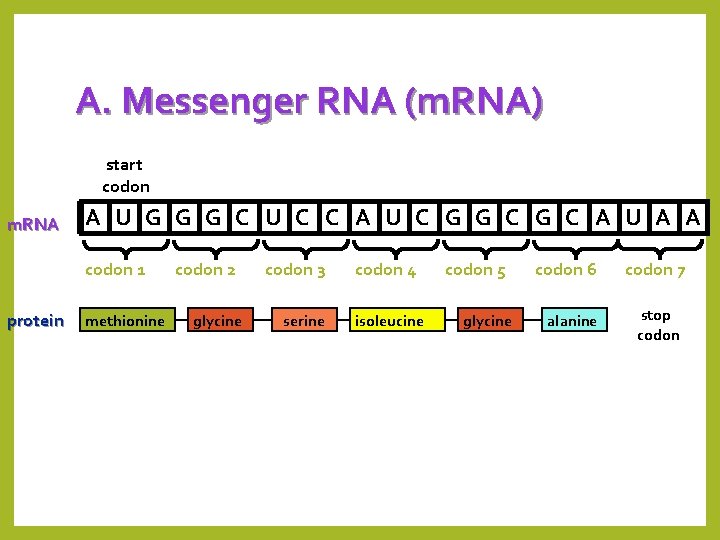
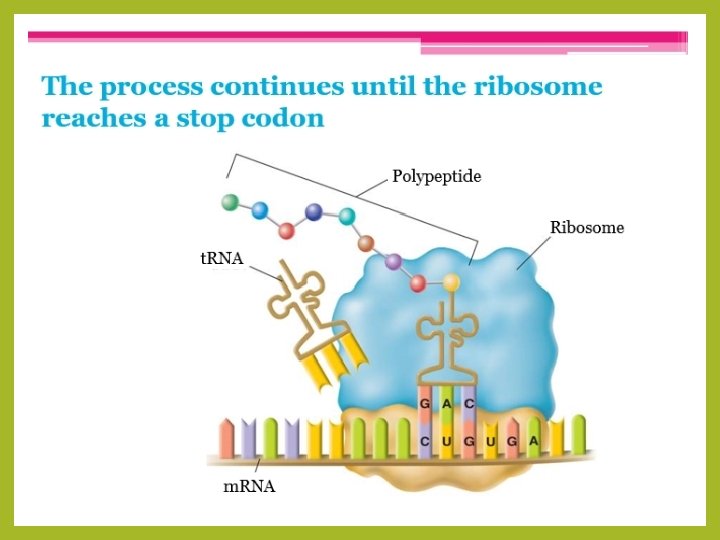
A. Messenger RNA (m. RNA) start codon m. RNA A U G G G C U C C A U C G G C A U A A codon 1 protein methionine codon 2 glycine codon 3 serine codon 4 isoleucine codon 5 glycine codon 6 alanine codon 7 stop codon
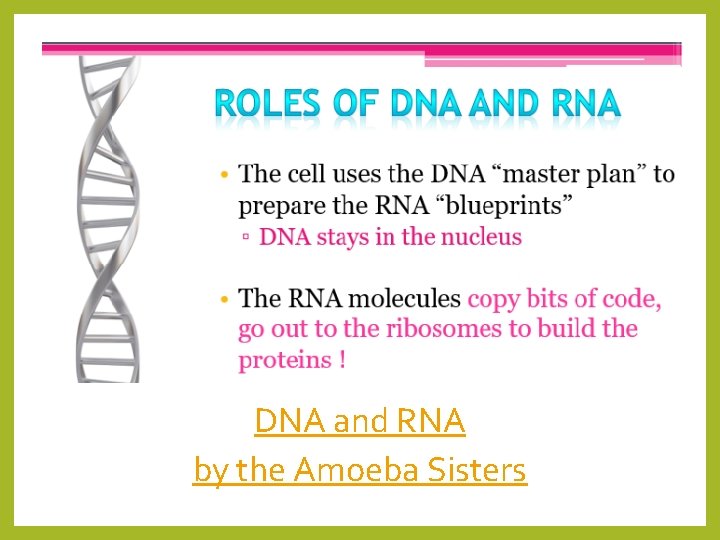
DNA and RNA by the Amoeba Sisters
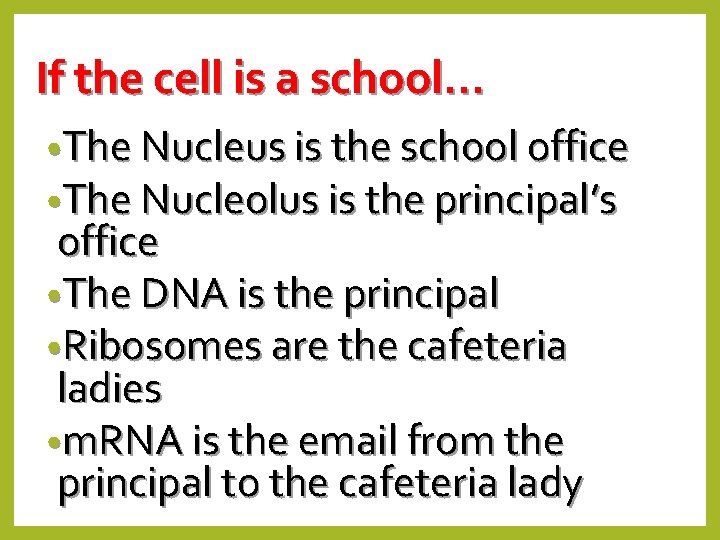
If the cell is a school… • The Nucleus is the school office • The Nucleolus is the principal’s office • The DNA is the principal • Ribosomes are the cafeteria ladies • m. RNA is the email from the principal to the cafeteria lady
From DNA to Protein http: //www. hhmi. org/biointeractive/translation-basic-detail#video 7 b 9676 a 4 -5 f 24 -4837 -9 aaf-9352 eed 43 c 1 e
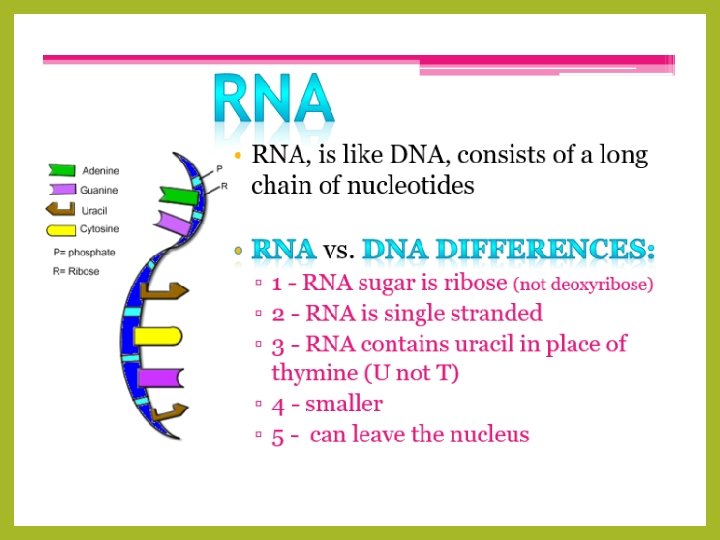
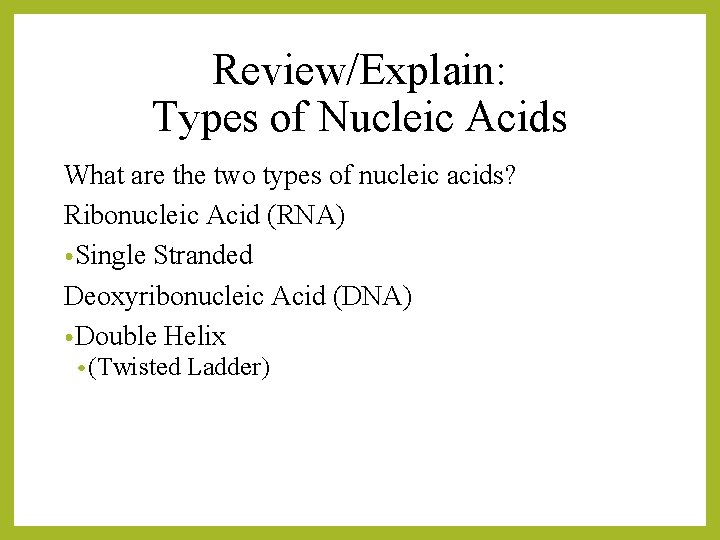
Review/Explain: Types of Nucleic Acids What are the two types of nucleic acids? Ribonucleic Acid (RNA) • Single Stranded Deoxyribonucleic Acid (DNA) • Double Helix • (Twisted Ladder)
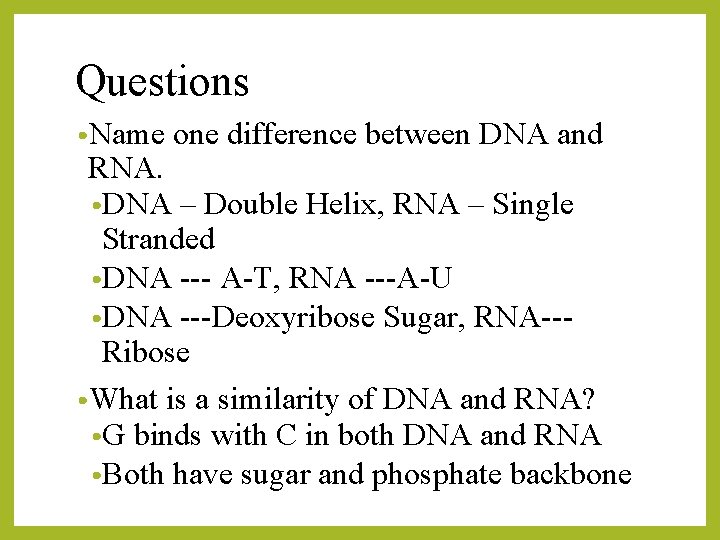
Questions • Name one difference between DNA and RNA. • DNA – Double Helix, RNA – Single Stranded • DNA --- A-T, RNA ---A-U • DNA ---Deoxyribose Sugar, RNA--Ribose • What is a similarity of DNA and RNA? • G binds with C in both DNA and RNA • Both have sugar and phosphate backbone
Video Intro
REVIEW MUTATIONS: The power of small change
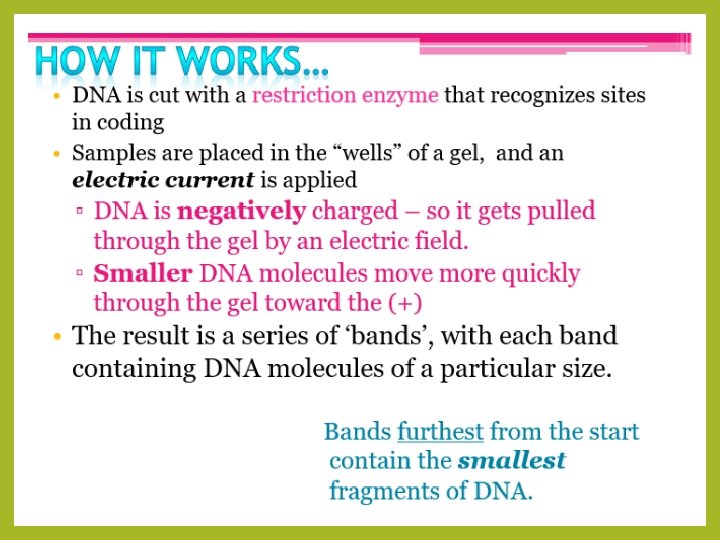
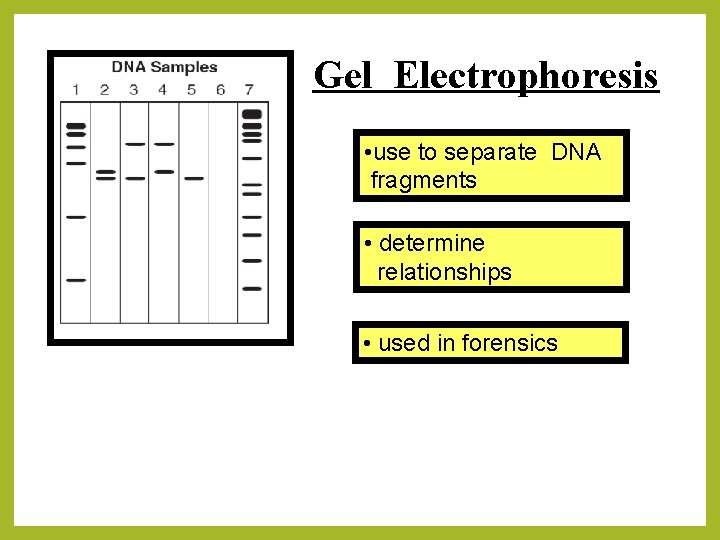
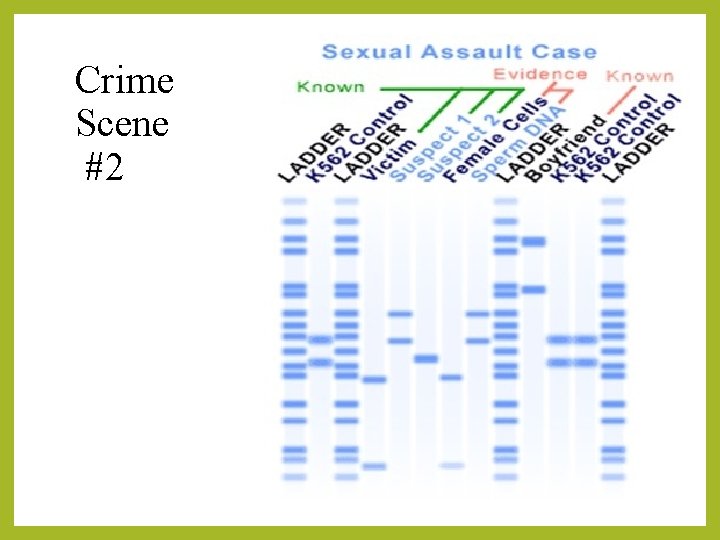
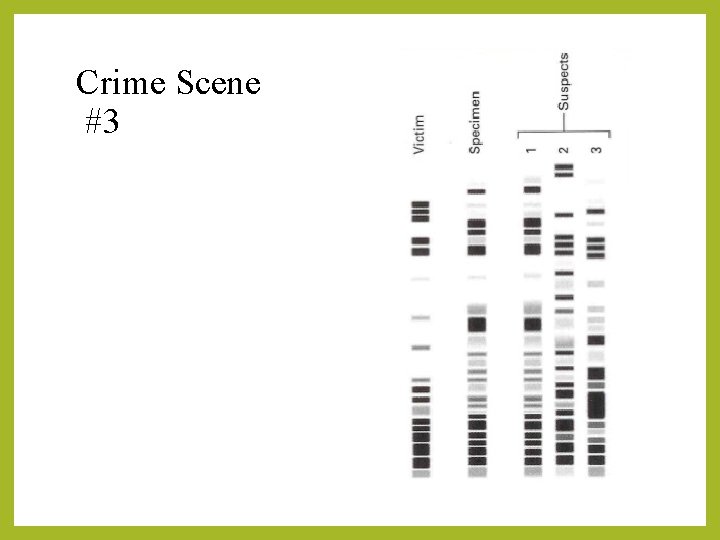
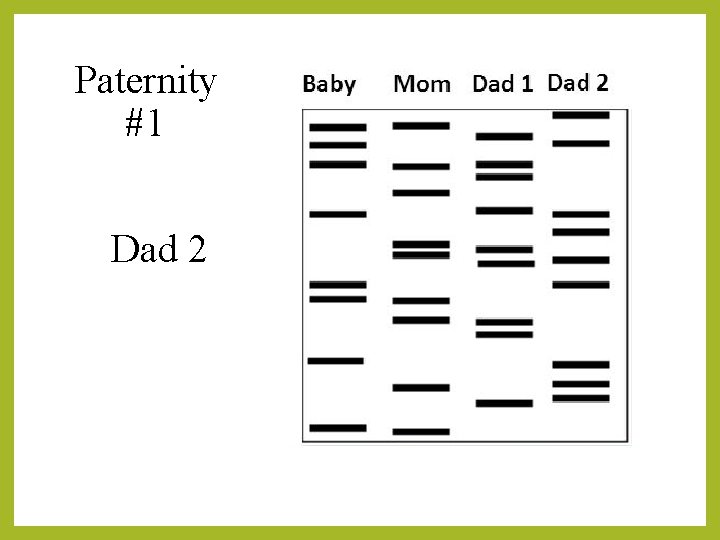
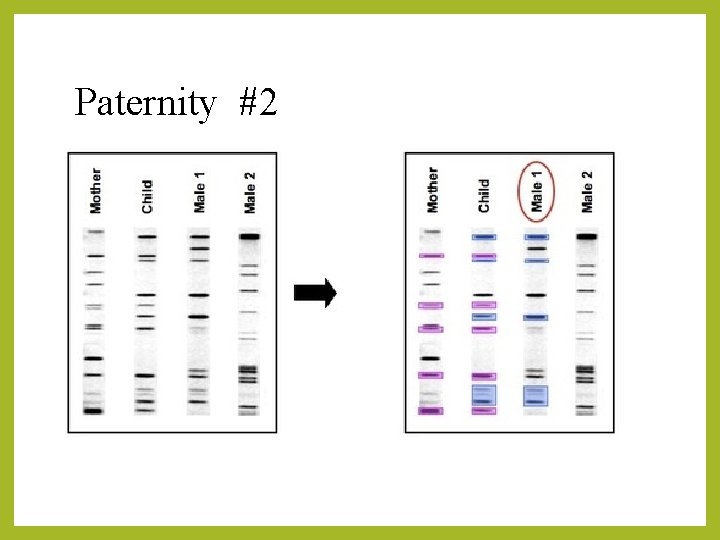
Gel Electrophoresis • use to separate DNA fragments • determine relationships • used in forensics
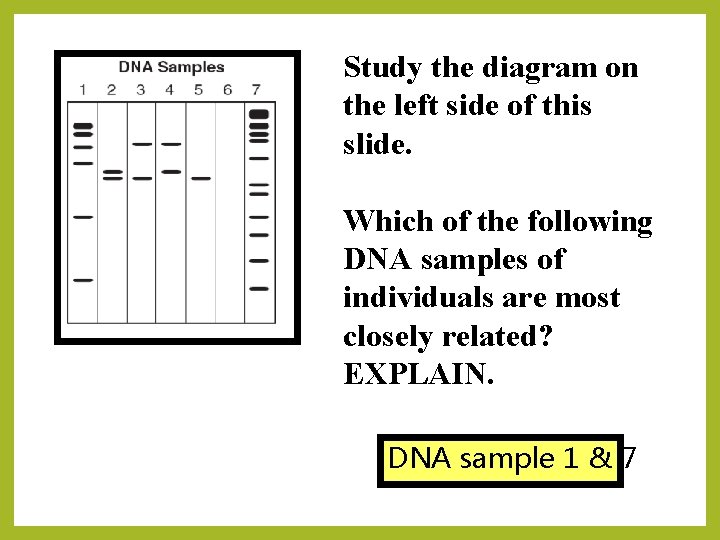
Study the diagram on the left side of this slide. Which of the following DNA samples of individuals are most closely related? EXPLAIN. DNA sample 1 & 7
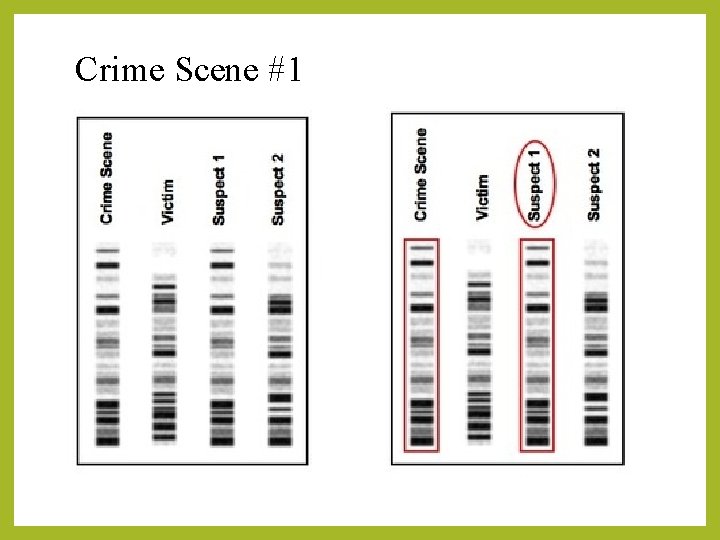
Crime Scene #1
Crime Scene #2
Crime Scene #3
Paternity
Paternity #1 Dad 2
Paternity #2
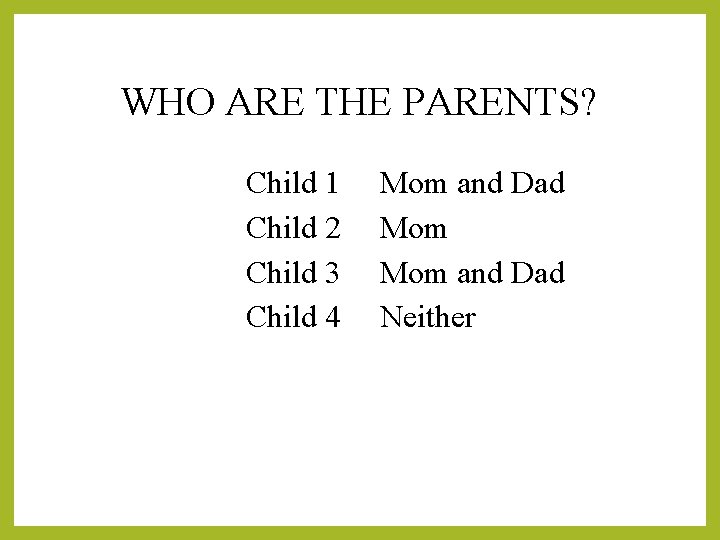
WHO ARE THE PARENTS?
WHO ARE THE PARENTS? Child 1 Child 2 Child 3 Child 4 Mom and Dad Neither