
DNA RNA Notes 6 Bellwork Mon Nov 20
DNA / RNA Notes 6
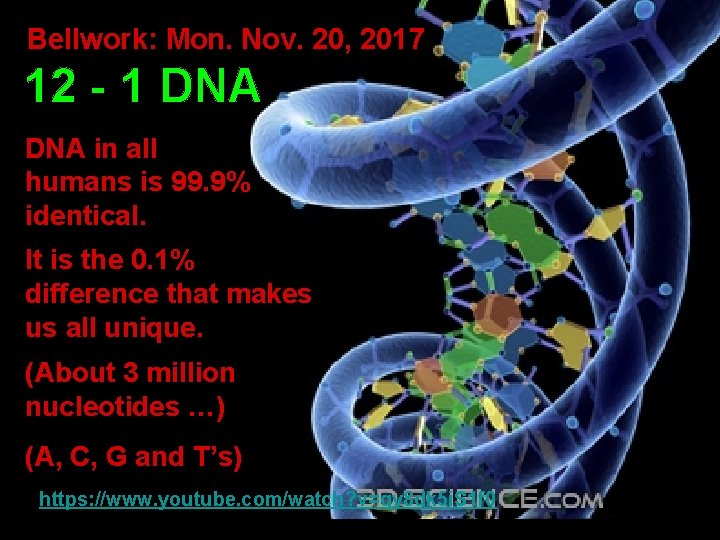
Bellwork: Mon. Nov. 20, 2017 12 - 1 DNA in all humans is 99. 9% identical. It is the 0. 1% difference that makes us all unique. (About 3 million nucleotides …) (A, C, G and T’s) https: //www. youtube. com/watch? v=qy 8 dk 5 i. S 1 f 0
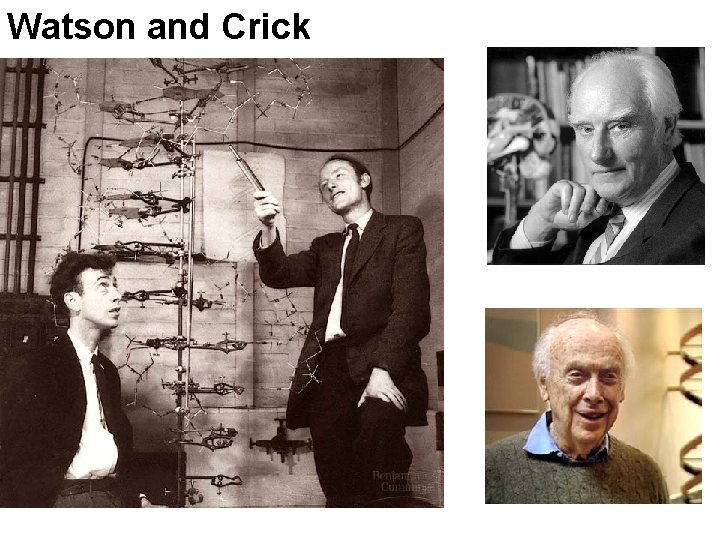
Watson and Crick
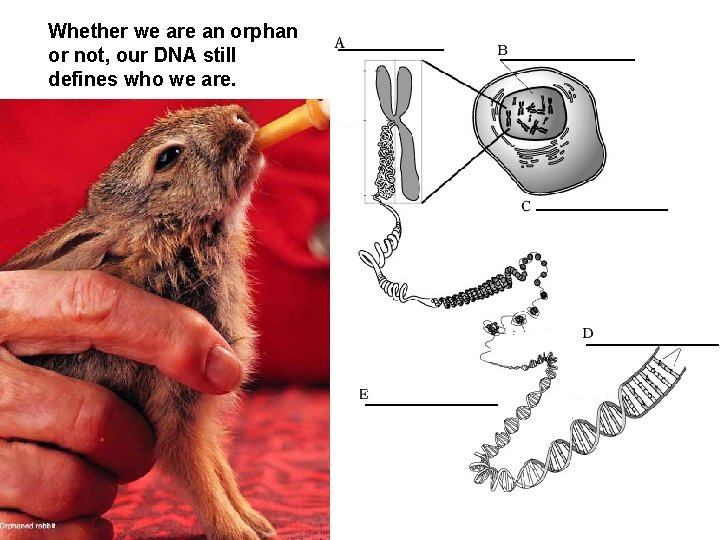
Whether we are an orphan or not, our DNA still defines who we are.
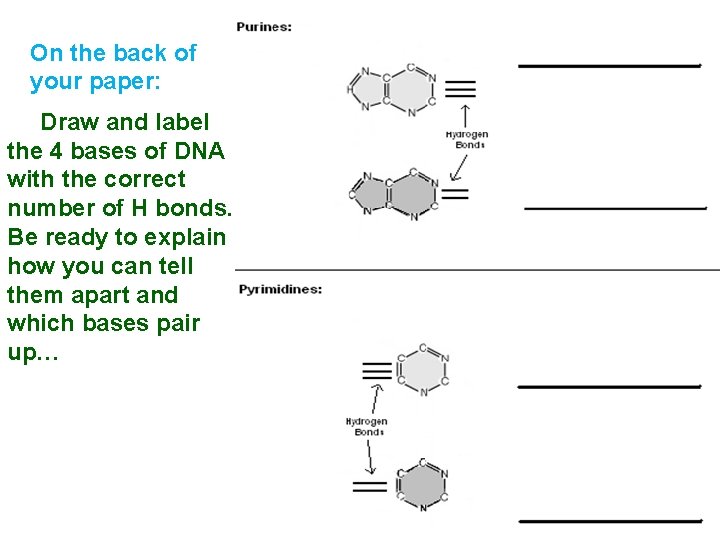
On the back of your paper: Draw and label the 4 bases of DNA with the correct number of H bonds. Be ready to explain how you can tell them apart and which bases pair up…

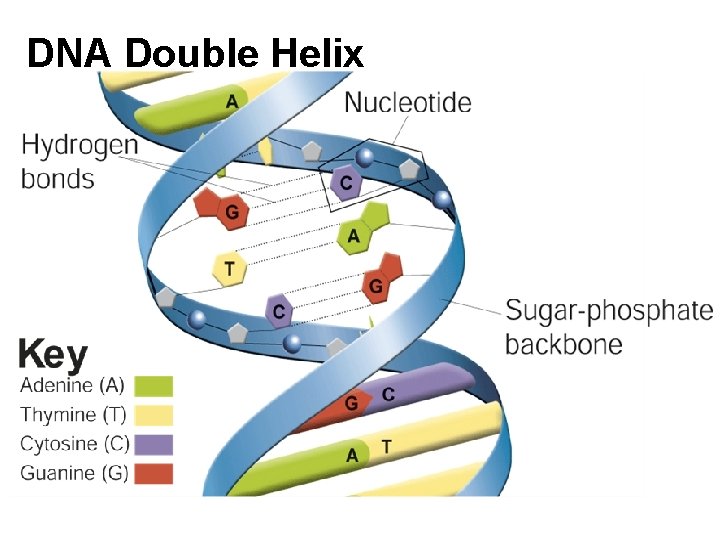
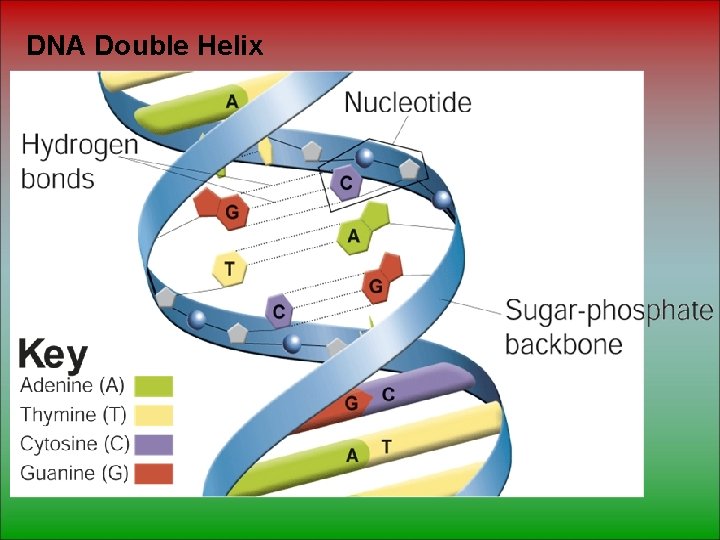
DNA Double Helix
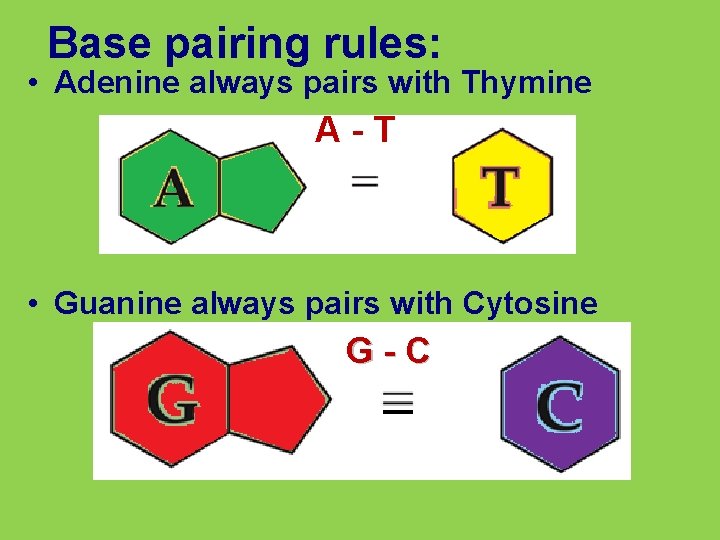
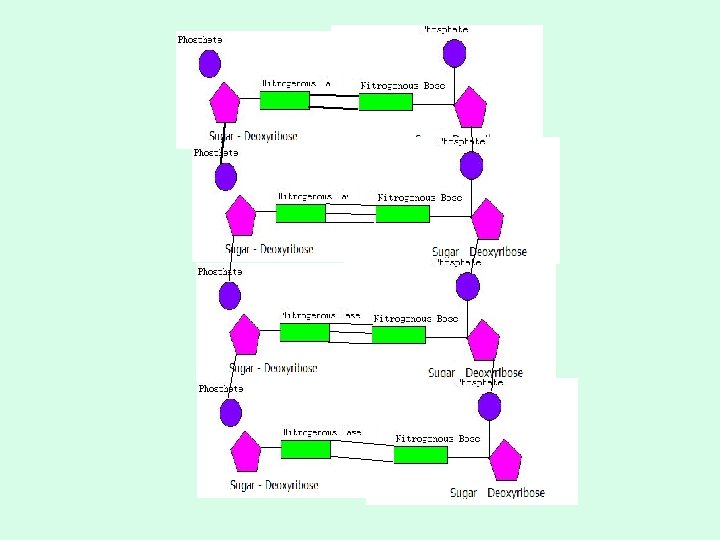
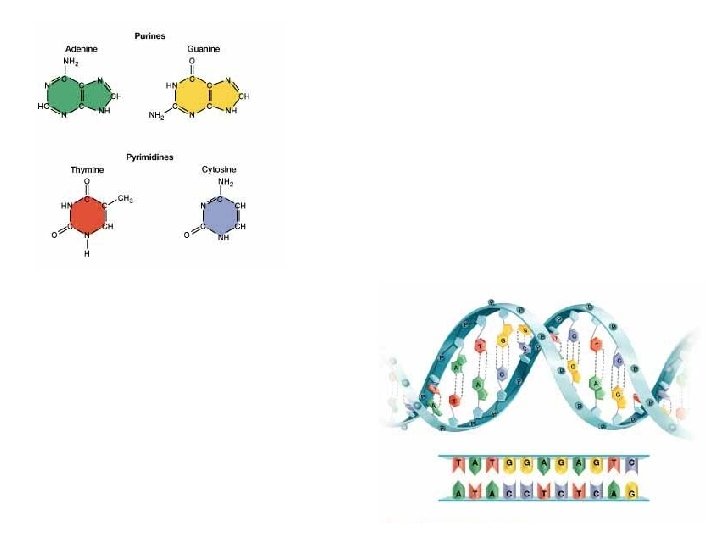
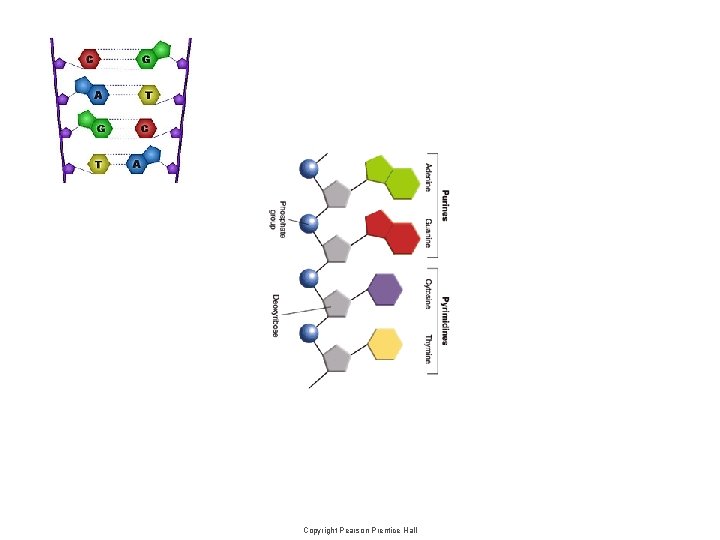
Base pairing rules: • Adenine always pairs with Thymine A-T • Guanine always pairs with Cytosine G-C
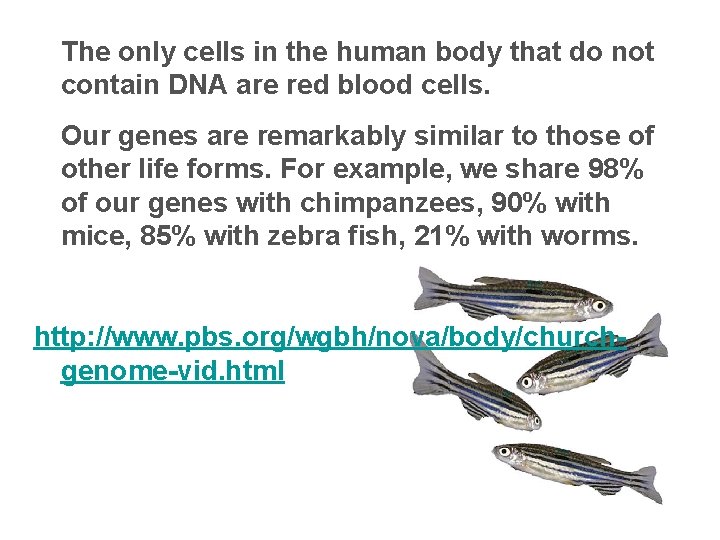
The only cells in the human body that do not contain DNA are red blood cells. Our genes are remarkably similar to those of other life forms. For example, we share 98% of our genes with chimpanzees, 90% with mice, 85% with zebra fish, 21% with worms. http: //www. pbs. org/wgbh/nova/body/churchgenome-vid. html
DNA Double Helix
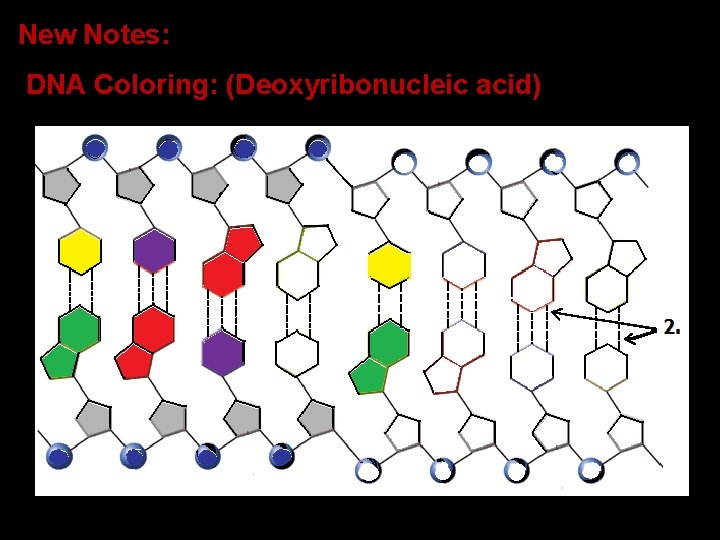
New Notes: DNA Coloring: (Deoxyribonucleic acid)
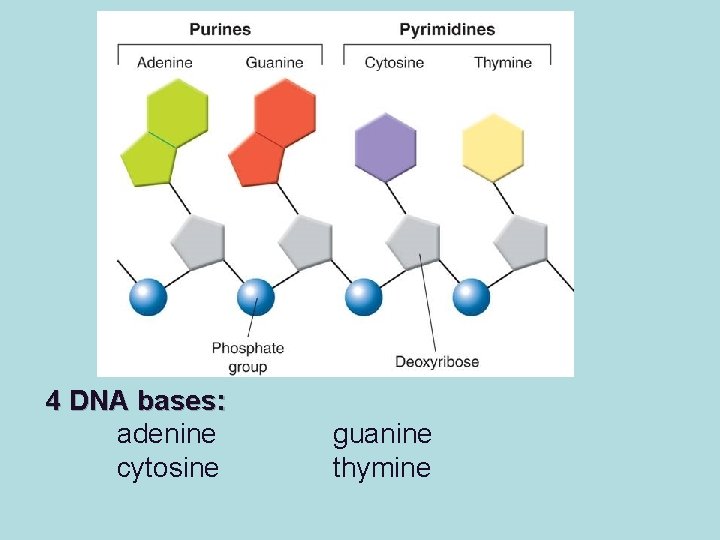
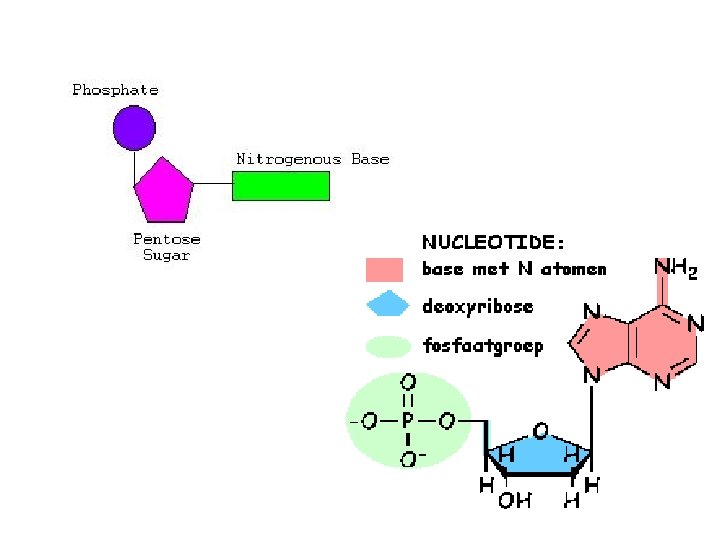
4 DNA bases: adenine cytosine guanine thymine
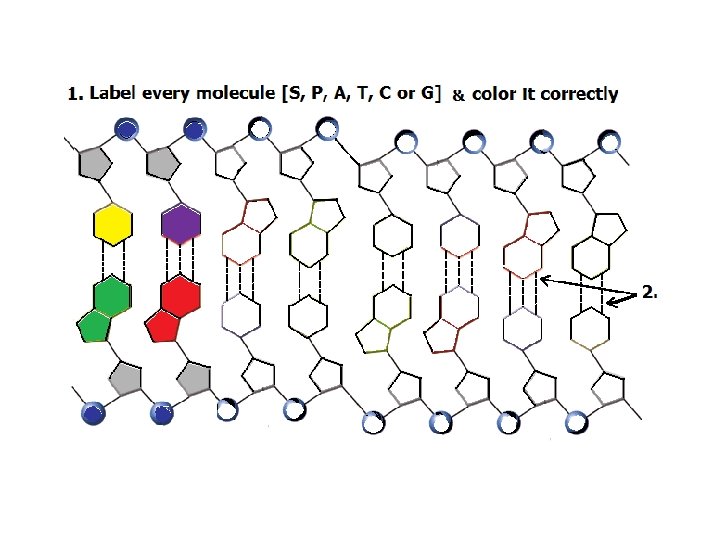
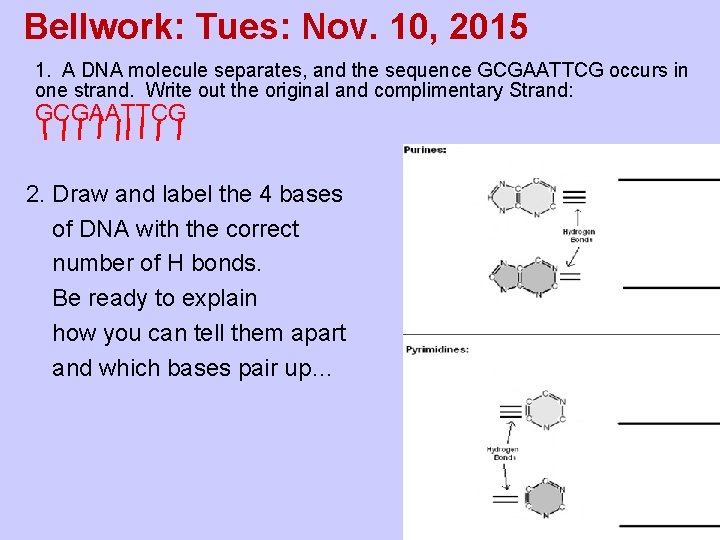
Bellwork: Tues: Nov. 10, 2015 1. A DNA molecule separates, and the sequence GCGAATTCG occurs in one strand. Write out the original and complimentary Strand: GCGAATTCG 2. Draw and label the 4 bases of DNA with the correct number of H bonds. Be ready to explain how you can tell them apart and which bases pair up…
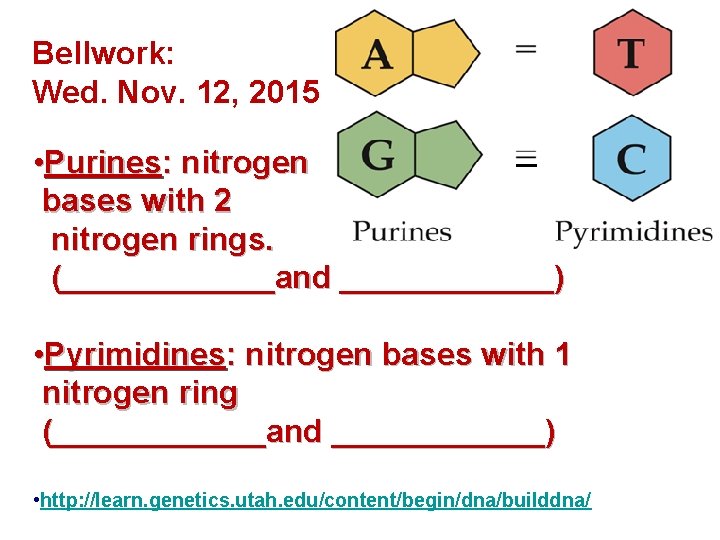
Bellwork: Wed. Nov. 12, 2015 • Purines: nitrogen bases with 2 nitrogen rings. (______and ______) • Pyrimidines: nitrogen bases with 1 nitrogen ring (______and ______) • http: //learn. genetics. utah. edu/content/begin/dna/builddna/
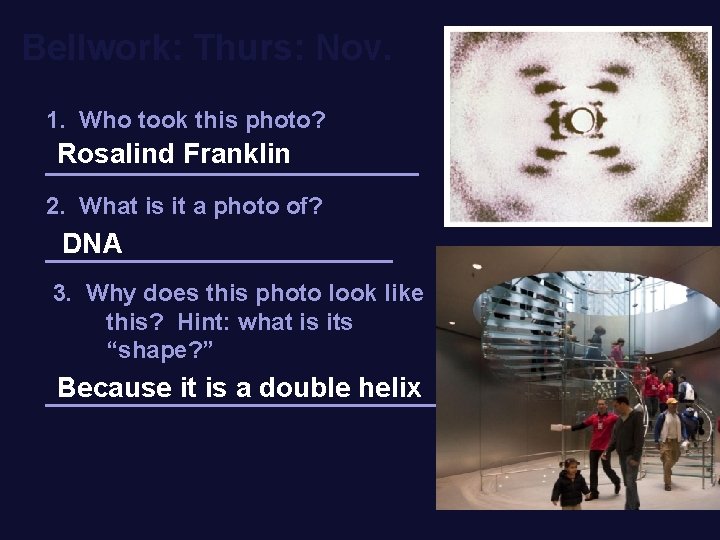
Bellwork: Thurs: Nov. 1. Who took this photo? Rosalind Franklin ______________ 2. What is it a photo of? DNA _____________ 3. Why does this photo look like this? Hint: what is its “shape? ” Because it is a double helix ________________
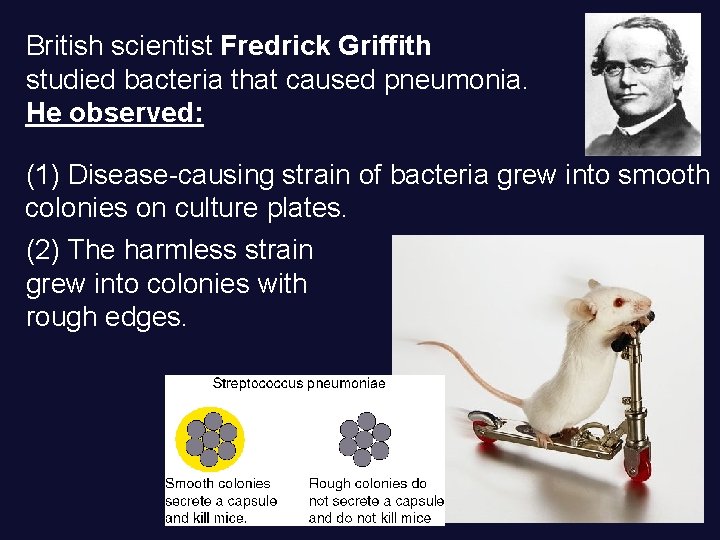
British scientist Fredrick Griffith studied bacteria that caused pneumonia. He observed: (1) Disease-causing strain of bacteria grew into smooth colonies on culture plates. (2) The harmless strain grew into colonies with rough edges.
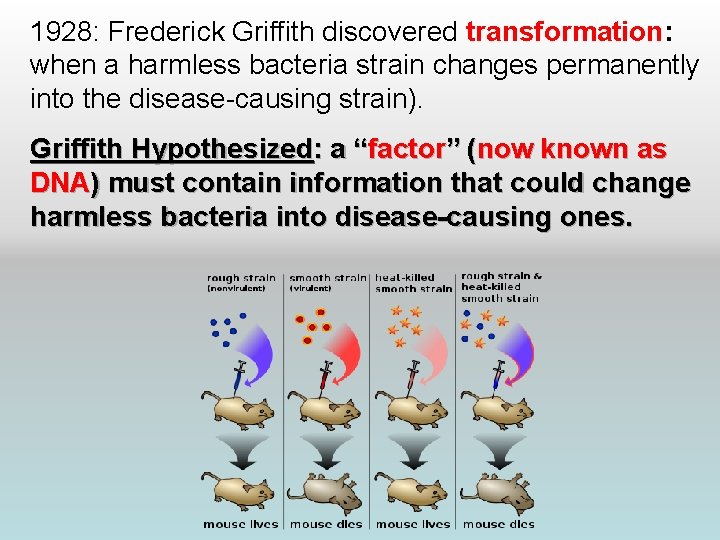
1928: Frederick Griffith discovered transformation: when a harmless bacteria strain changes permanently into the disease-causing strain). Griffith Hypothesized: a “factor” (now known as DNA) must contain information that could change harmless bacteria into disease-causing ones.
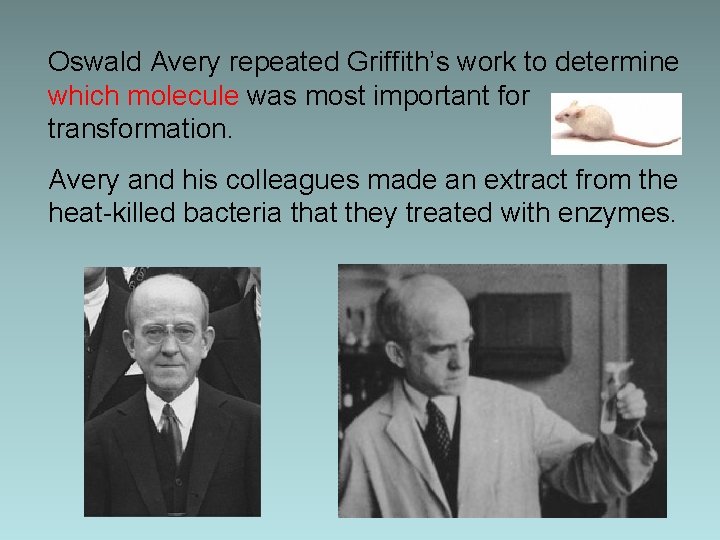
Oswald Avery repeated Griffith’s work to determine which molecule was most important for transformation. Avery and his colleagues made an extract from the heat-killed bacteria that they treated with enzymes.
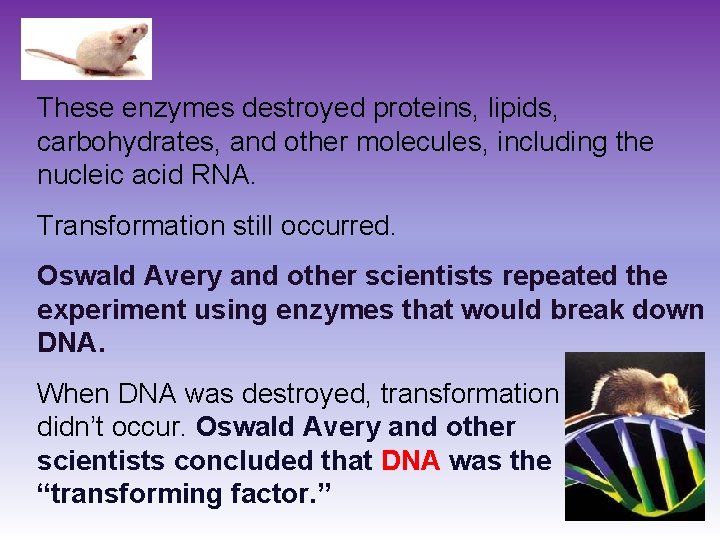
These enzymes destroyed proteins, lipids, carbohydrates, and other molecules, including the nucleic acid RNA. Transformation still occurred. Oswald Avery and other scientists repeated the experiment using enzymes that would break down DNA. When DNA was destroyed, transformation didn’t occur. Oswald Avery and other scientists concluded that DNA was the “transforming factor. ”
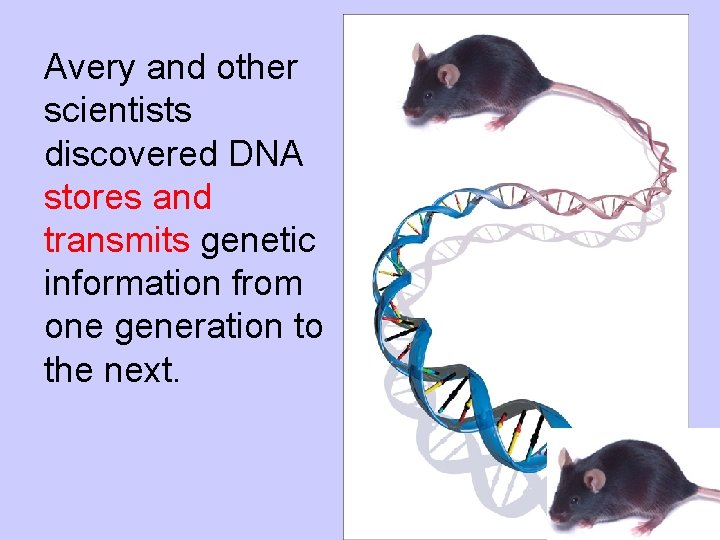
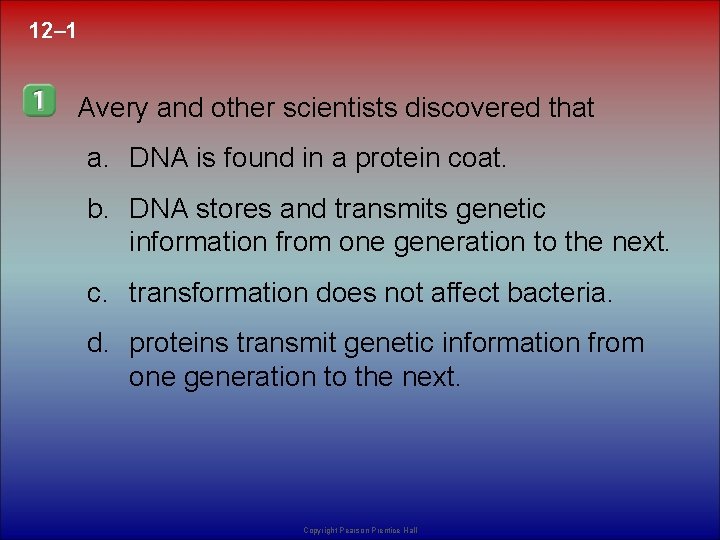
Avery and other scientists discovered DNA stores and transmits genetic information from one generation to the next.
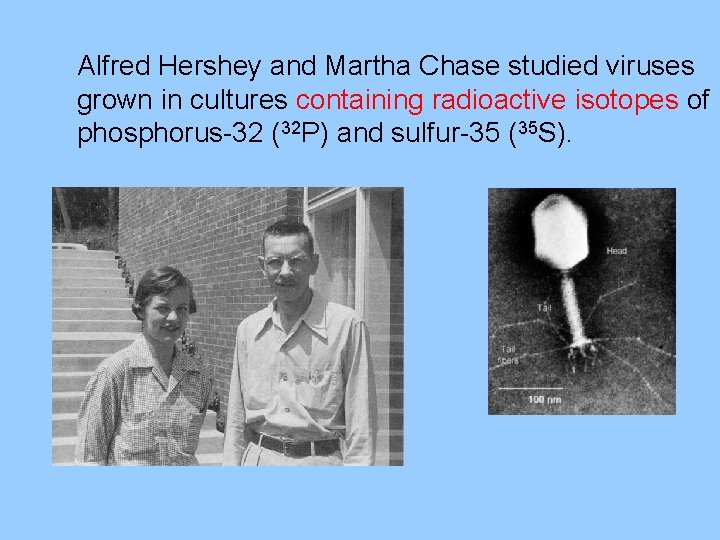
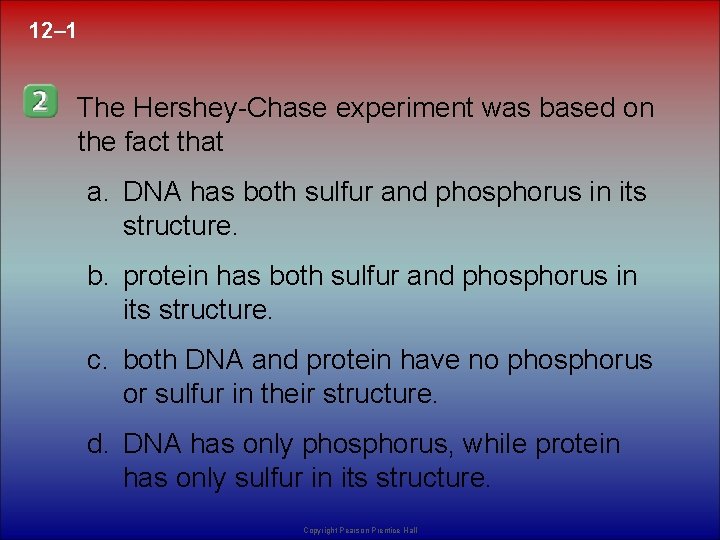
Alfred Hershey and Martha Chase studied viruses grown in cultures containing radioactive isotopes of phosphorus-32 (32 P) and sulfur-35 (35 S).
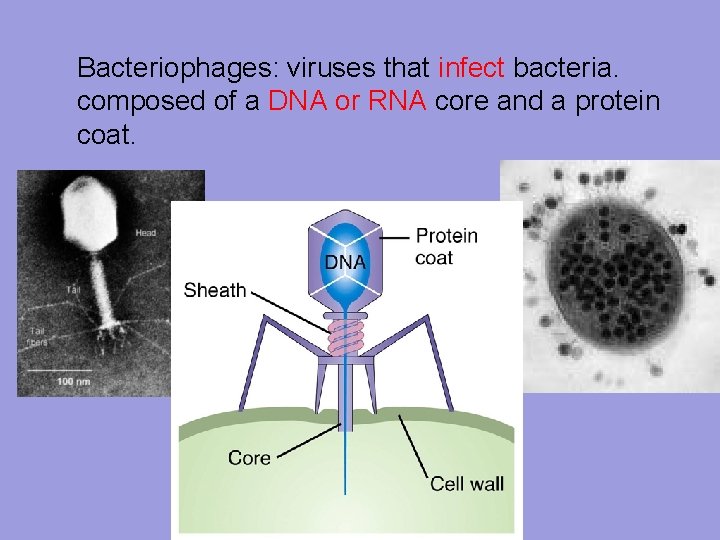
Bacteriophages: viruses that infect bacteria. composed of a DNA or RNA core and a protein coat.
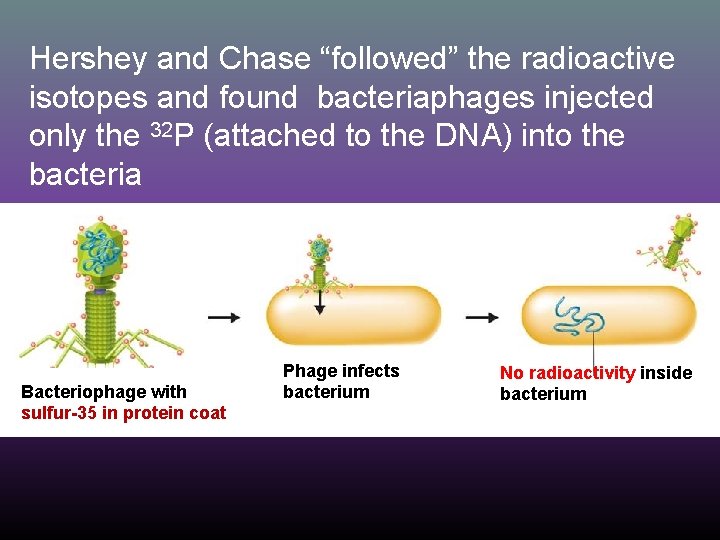
Hershey and Chase “followed” the radioactive isotopes and found bacteriaphages injected only the 32 P (attached to the DNA) into the bacteria Bacteriophage with sulfur-35 in protein coat Phage infects bacterium No radioactivity inside bacterium
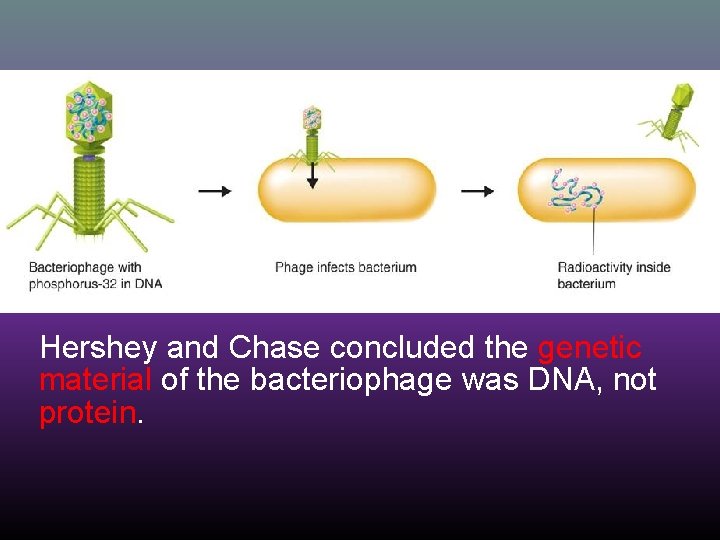
Hershey and Chase concluded the genetic material of the bacteriophage was DNA, not protein.
![Chargaff's Base Pairing Rules: • % guanine [G] and cytosine [C] are almost equal](http://slidetodoc.com/presentation_image_h2/9f4df2f602805897eaa72104ee5023ae/image-29.jpg "Chargaff's Base Pairing Rules: • % guanine [G] and cytosine [C] are almost equal")
Chargaff's Base Pairing Rules: • % guanine [G] and cytosine [C] are almost equal in any sample of DNA. • % adenine [A] and thymine [T] bases are almost equal in any sample of DNA.
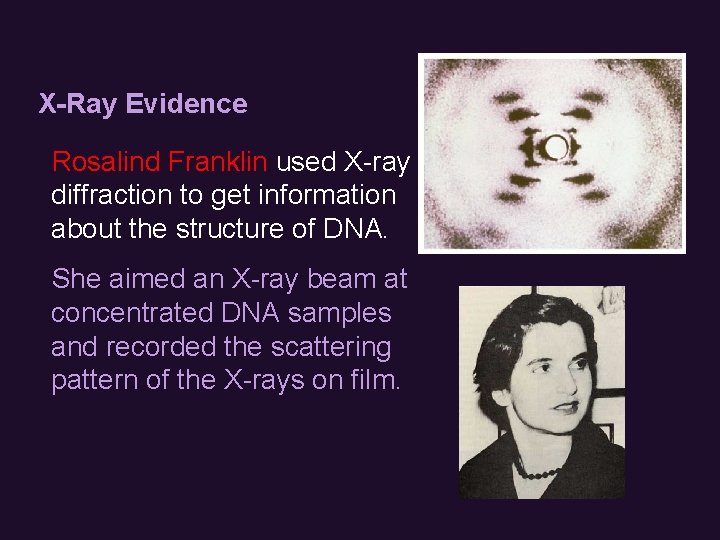
X-Ray Evidence Rosalind Franklin used X-ray diffraction to get information about the structure of DNA. She aimed an X-ray beam at concentrated DNA samples and recorded the scattering pattern of the X-rays on film.
12– 1 DNA Slide 31 of 37 Copyright Pearson Prentice Hall End Show
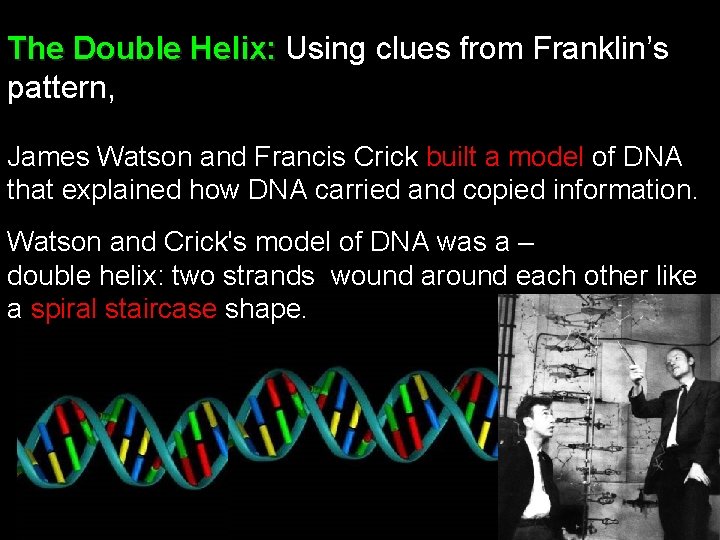
The Double Helix: Using clues from Franklin’s pattern, James Watson and Francis Crick built a model of DNA that explained how DNA carried and copied information. Watson and Crick's model of DNA was a – double helix: two strands wound around each other like a spiral staircase shape.
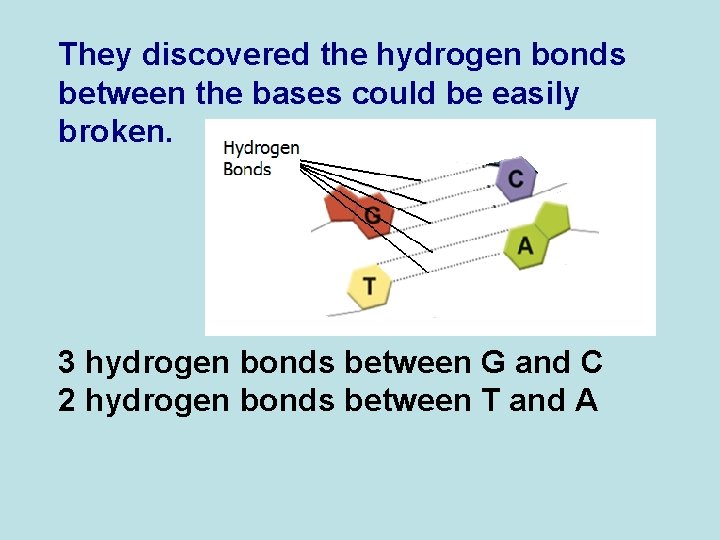
They discovered the hydrogen bonds between the bases could be easily broken. 3 hydrogen bonds between G and C 2 hydrogen bonds between T and A
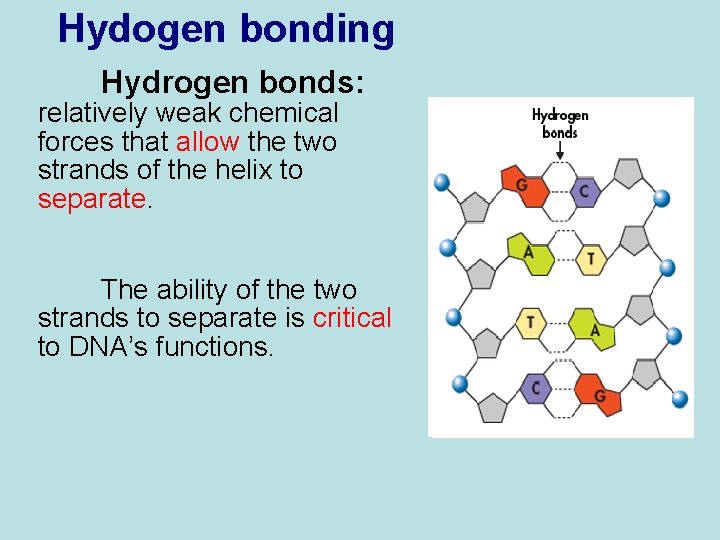
Hydogen bonding Hydrogen bonds: relatively weak chemical forces that allow the two strands of the helix to separate. The ability of the two strands to separate is critical to DNA’s functions.
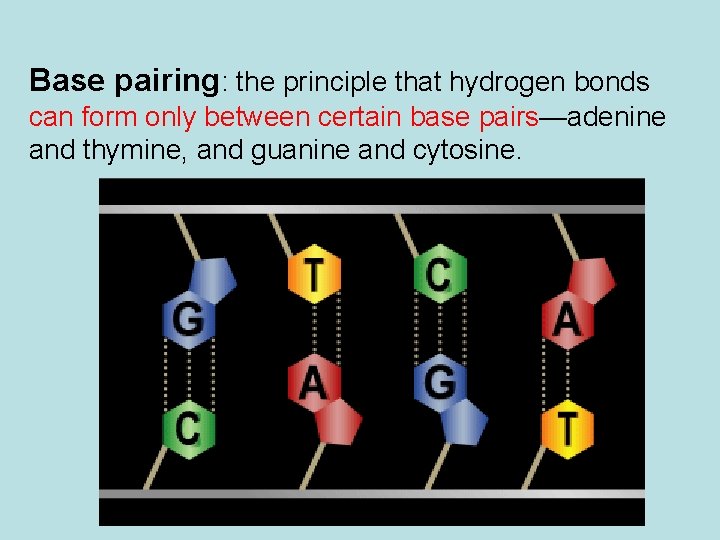
Base pairing: the principle that hydrogen bonds can form only between certain base pairs—adenine and thymine, and guanine and cytosine.
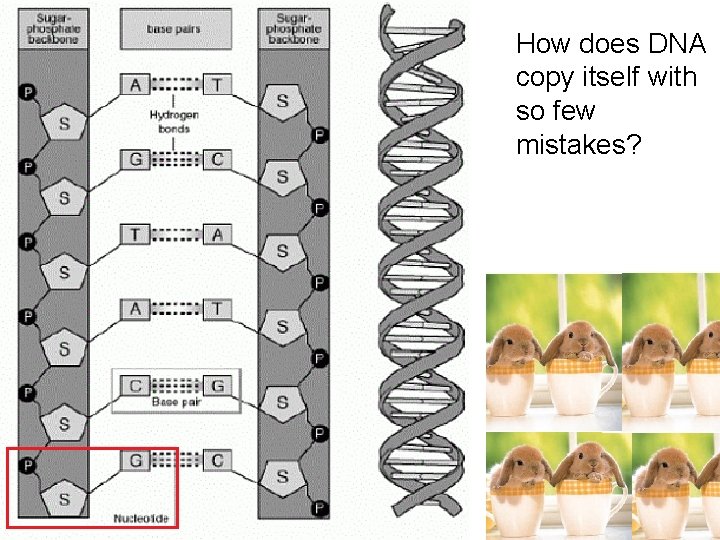
12– 1 DNA How does DNA copy itself with so few mistakes? Slide 37 of 37 Copyright Pearson Prentice Hall End Show
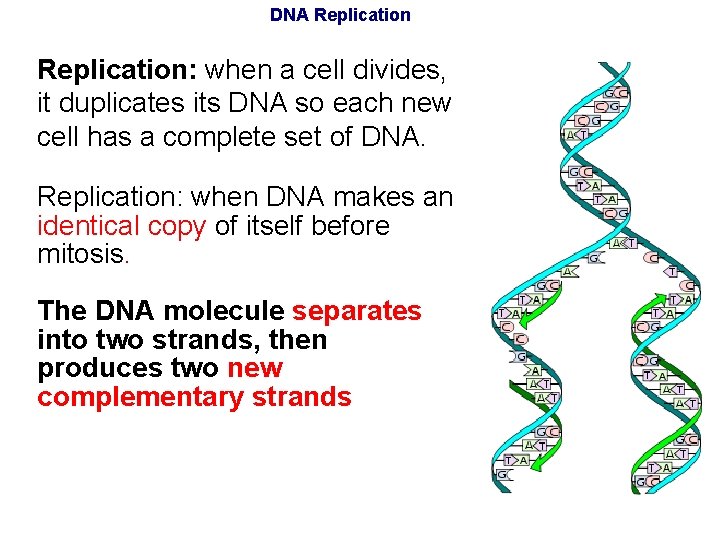
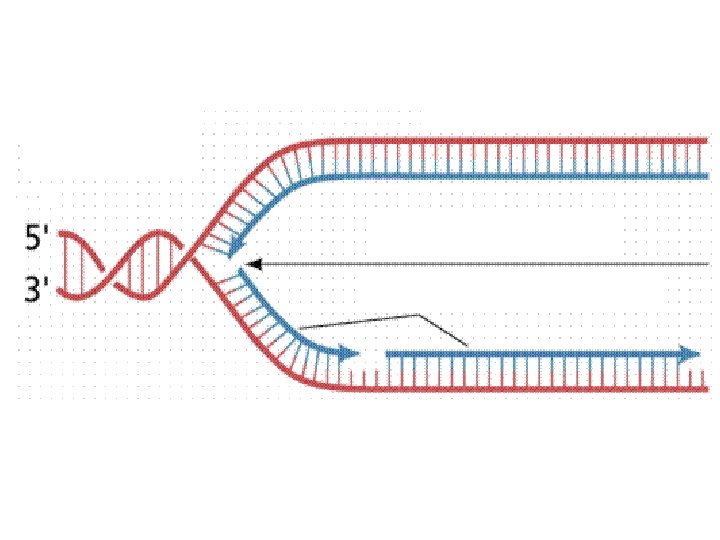
DNA Replication: when a cell divides, it duplicates its DNA so each new cell has a complete set of DNA. Replication: when DNA makes an identical copy of itself before mitosis. The DNA molecule separates into two strands, then produces two new complementary strands
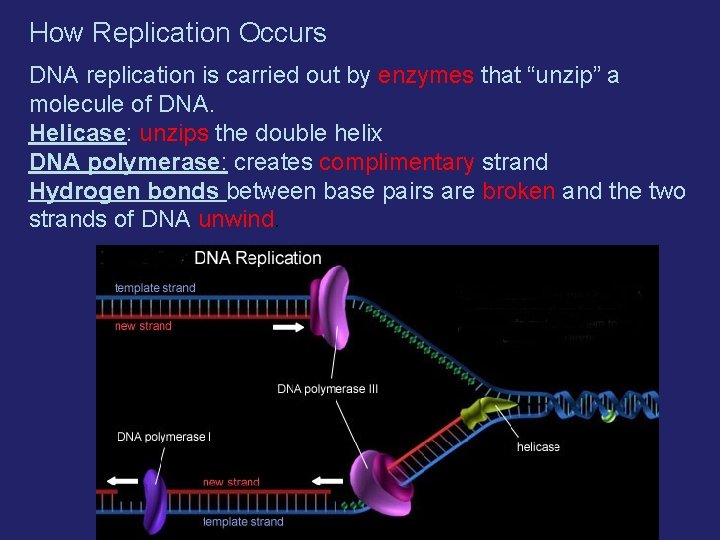
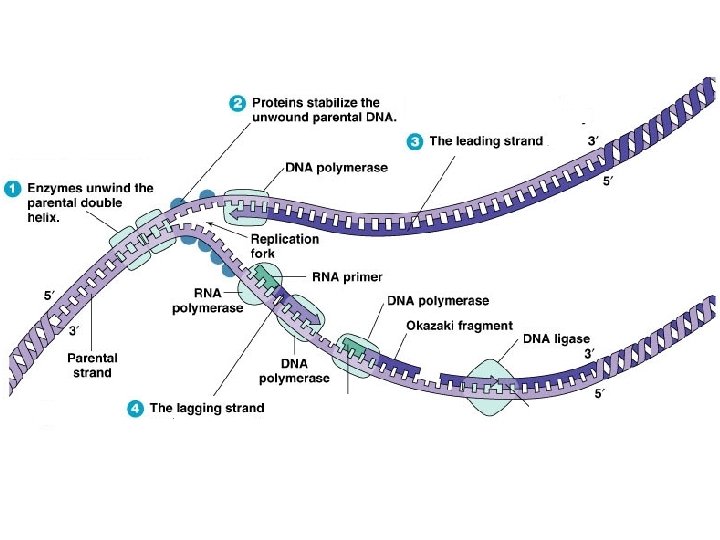
How Replication Occurs DNA replication is carried out by enzymes that “unzip” a molecule of DNA. Helicase: unzips the double helix DNA polymerase: creates complimentary strand Hydrogen bonds between base pairs are broken and the two strands of DNA unwind. Copyright Pearson Prentice Hall
• http: //www. koshland-sciencemuseum. org/exhibitdna/index. jsp
12– 1 Avery and other scientists discovered that a. DNA is found in a protein coat. b. DNA stores and transmits genetic information from one generation to the next. c. transformation does not affect bacteria. d. proteins transmit genetic information from one generation to the next. Copyright Pearson Prentice Hall
12– 1 The Hershey-Chase experiment was based on the fact that a. DNA has both sulfur and phosphorus in its structure. b. protein has both sulfur and phosphorus in its structure. c. both DNA and protein have no phosphorus or sulfur in their structure. d. DNA has only phosphorus, while protein has only sulfur in its structure. Copyright Pearson Prentice Hall
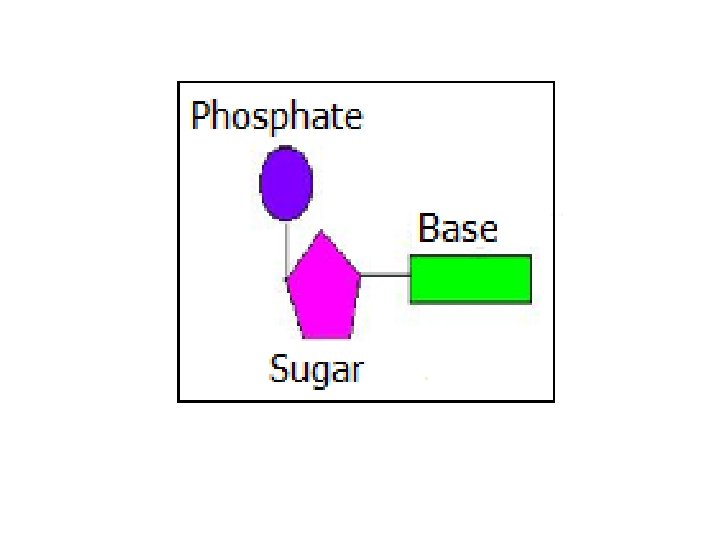
12– 1 DNA is a long molecule made of monomers called a. nucleotides. b. purines. c. pyrimidines. d. sugars. Copyright Pearson Prentice Hall
12– 1 Chargaff's rules state that the number of guanine nucleotides must equal the number of a. cytosine nucleotides. b. adenine nucleotides. c. thymine nucleotides. d. thymine plus adenine nucleotides. Copyright Pearson Prentice Hall
12– 1 In DNA, the following base pairs occur: a. A with C, and G with T. b. A with T, and C with G. c. A with G, and C with T. d. A with T, and C with T. Copyright Pearson Prentice Hall
Copyright Pearson Prentice Hall
- Slides: 50