
DNA RNA DNA REPLICATION TRANSCRIPTION TRANSLATION OH MY
- Slides: 43
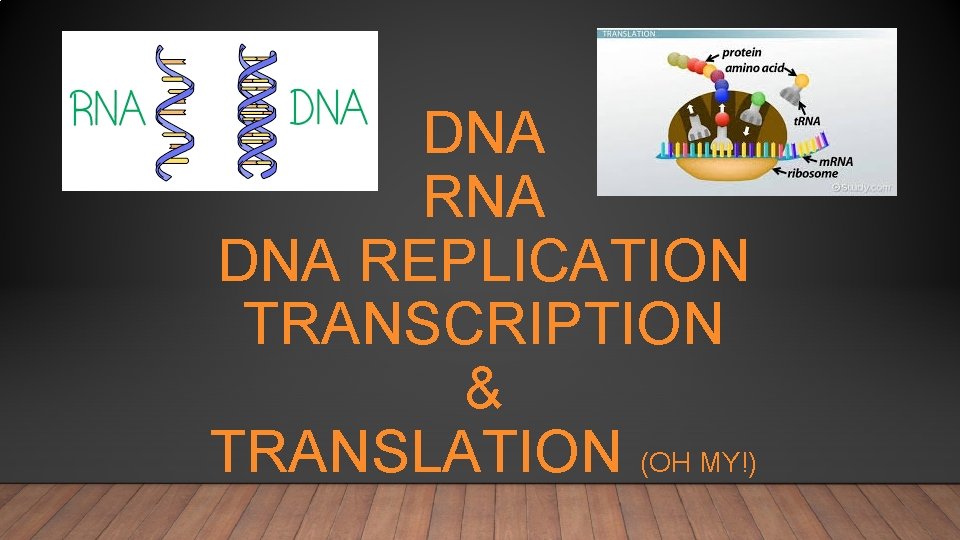
DNA RNA DNA REPLICATION TRANSCRIPTION & TRANSLATION (OH MY!)
What are the 4 nucleotide bases of DNA?
ANSWERS • Adenine • Thymine • Cytosine • Guanine
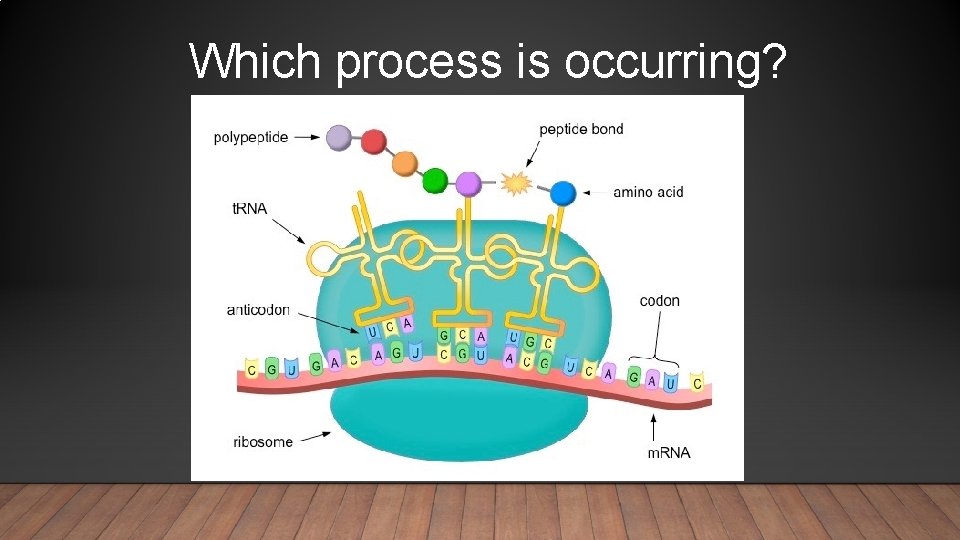
Which process is occurring?
ANSWERS • Translation
What does helicase do?
ANSWERS • It unzips the DNA strands so replication or transcription can occur • Breaks hydrogen bonds between nitrogen bases
What are the 4 nucleotide bases found in RNA?
ANSWERS • Adenine • Uracil • Cytosine • Guanine
A section of DNA has the following nitrogenous bases: AGCTGAAAT What would be the complementary base pairing for DNA Replication?
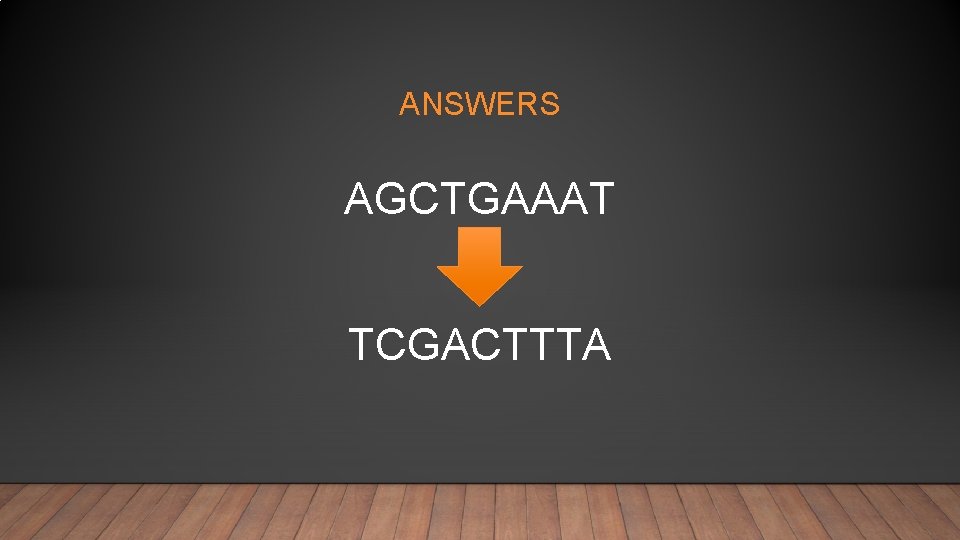
ANSWERS AGCTGAAAT TCGACTTTA
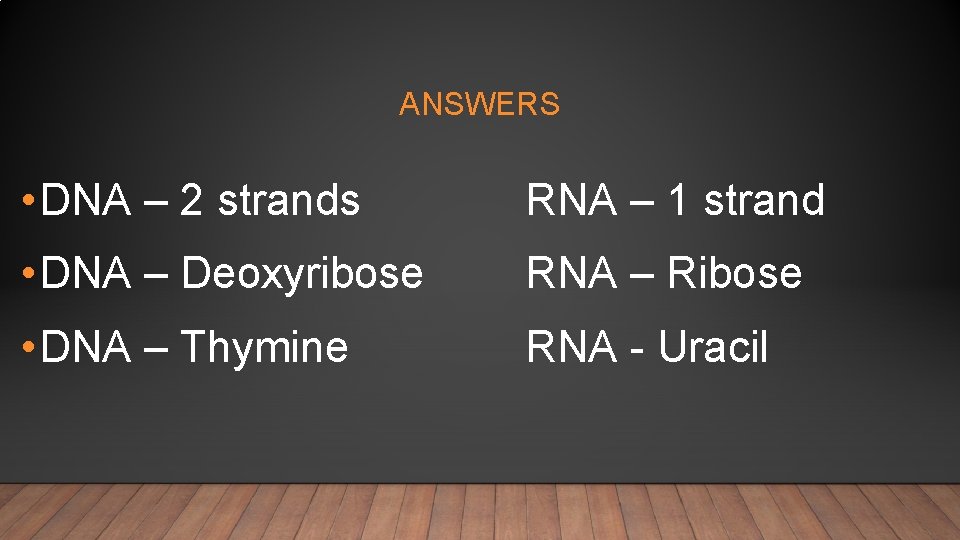
What are the 3 main structural differences between DNA and RNA? (How can you tell them apart? )
ANSWERS • DNA – 2 strands RNA – 1 strand • DNA – Deoxyribose RNA – Ribose • DNA – Thymine RNA - Uracil
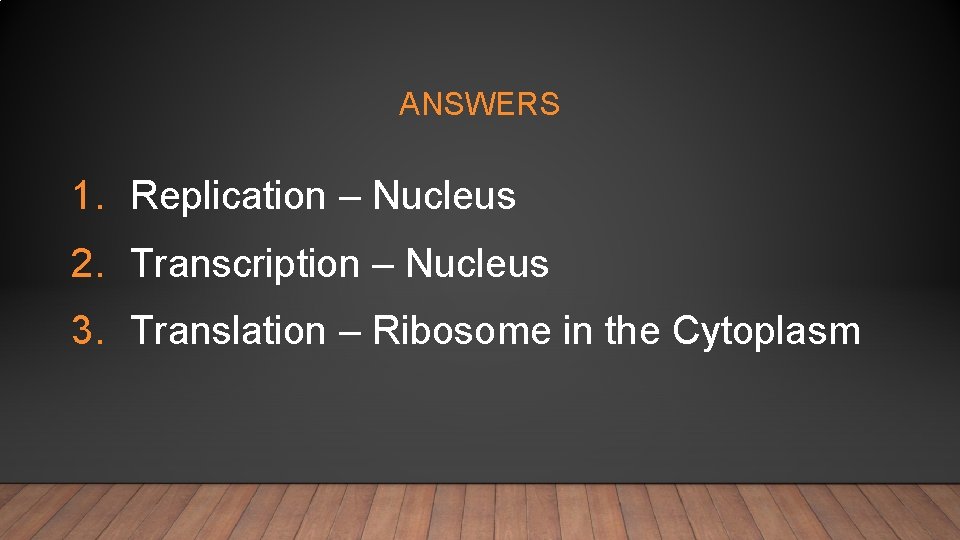
Where does each process occur? 1. DNA Replication 2. Transcription 3. Translation
ANSWERS 1. Replication – Nucleus 2. Transcription – Nucleus 3. Translation – Ribosome in the Cytoplasm
What are the building blocks (monomers) of nucleic acids?
ANSWERS • Nucleotides
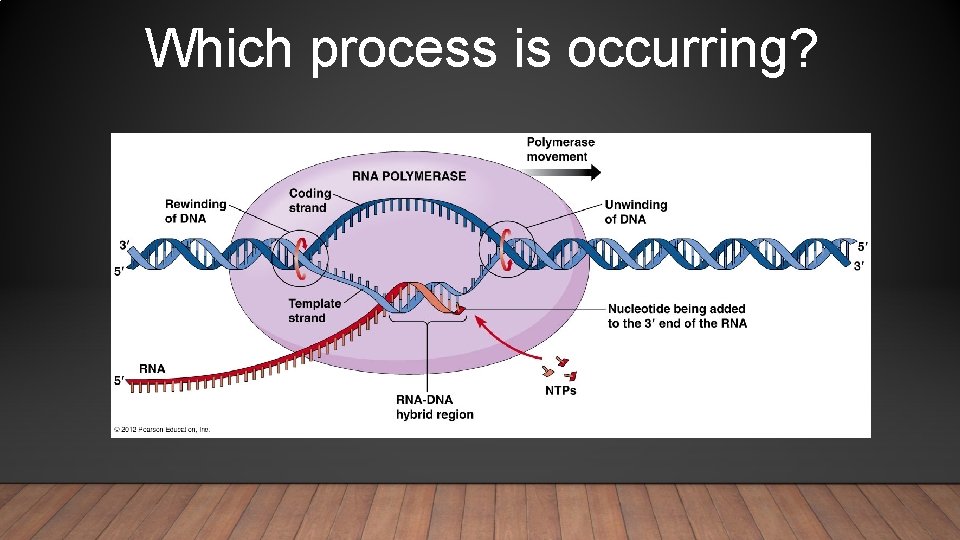
Which process is occurring?
ANSWERS • Transcription
What are the 3 parts of the nucleotide?
ANSWERS • Sugar, Phosphate, and a nitrogenous base
What part(s) of the nucleotide make up the backbone/sides of the DNA molecule?
ANSWERS • Sugar and Phosphate
If a DNA molecule is found to be composed of 20% guanine, what percentage of cytosine would be expected?
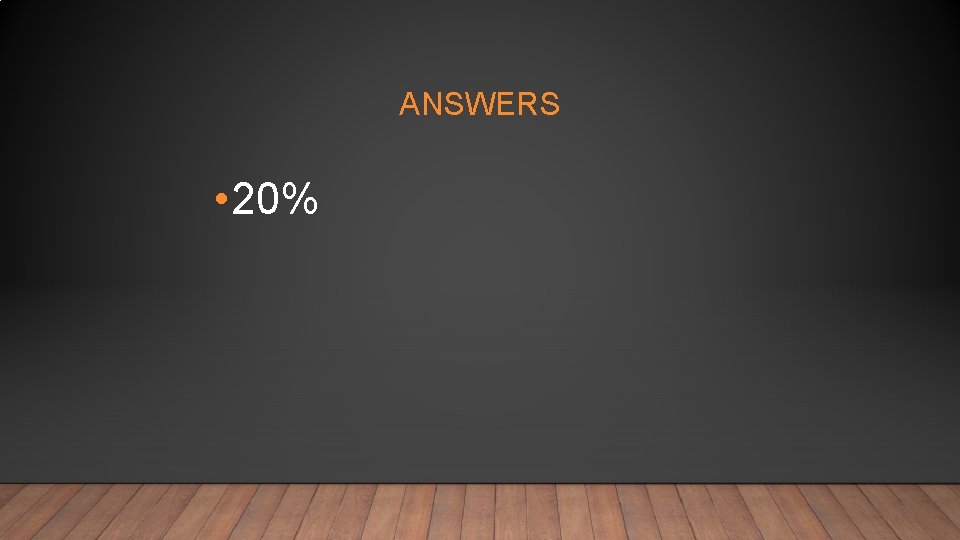
ANSWERS • 20%
What part(s) of the nucleotide make up the “rungs” of the DNA molecule, and how are they held together?
ANSWER • Nitrogenous bases held together by hydrogen bonds.
What is the function of m. RNA?
ANSWER • Brings the genetic information out of the nucleus and to the ribosome.
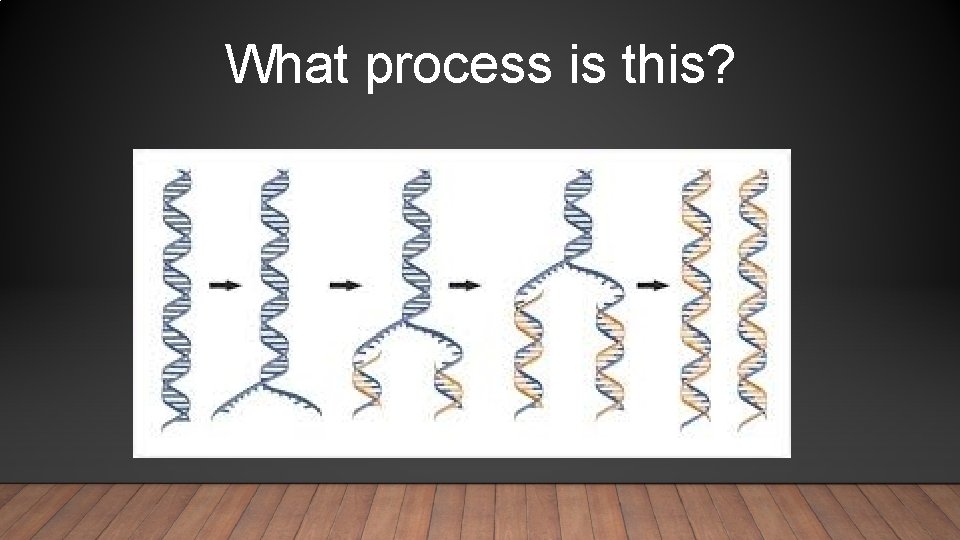
What process is this?
ANSWERS • DNA replication
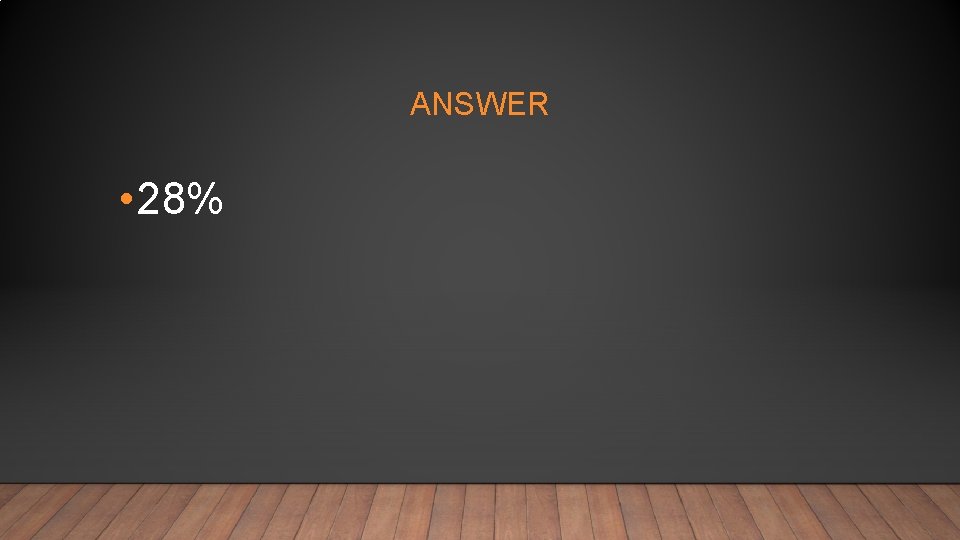
If a DNA molecule is found to be composed of 22% adenine, what percentage of cytosine would be expected?
ANSWER • 28%
What is the function of r. RNA?
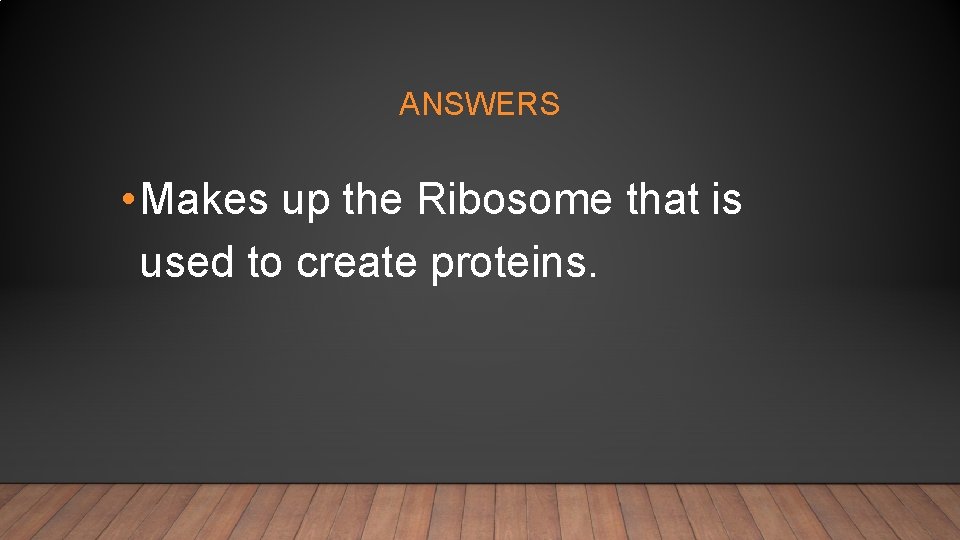
ANSWERS • Makes up the Ribosome that is used to create proteins.
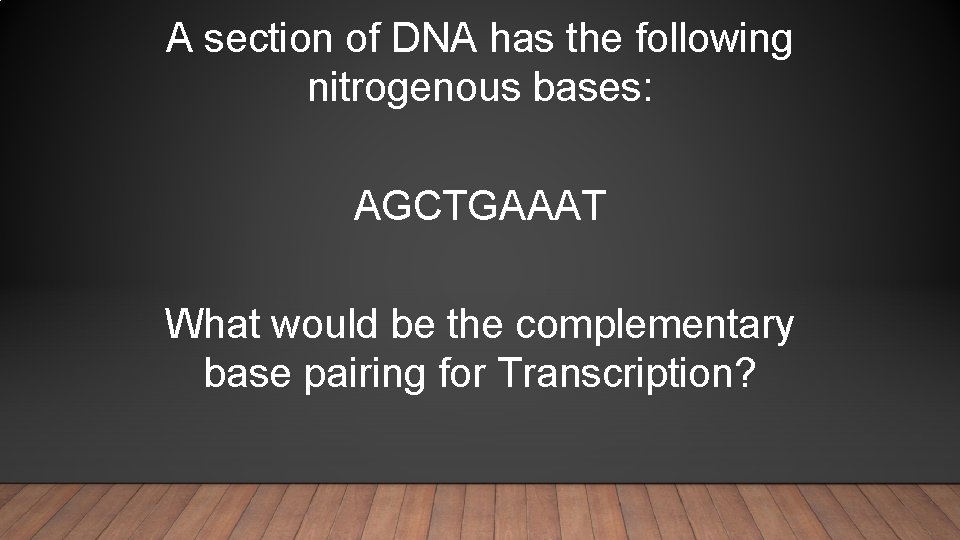
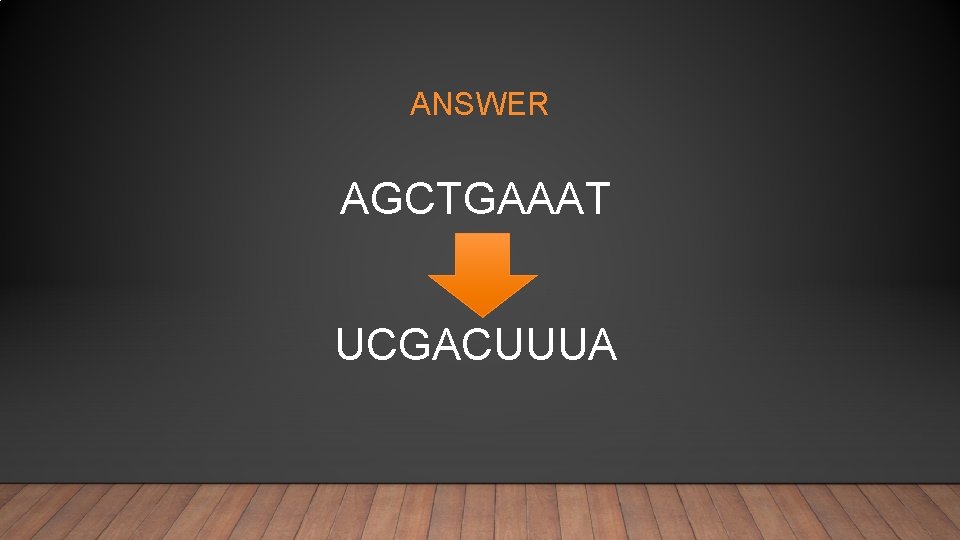
A section of DNA has the following nitrogenous bases: AGCTGAAAT What would be the complementary base pairing for Transcription?
ANSWER AGCTGAAAT UCGACUUUA
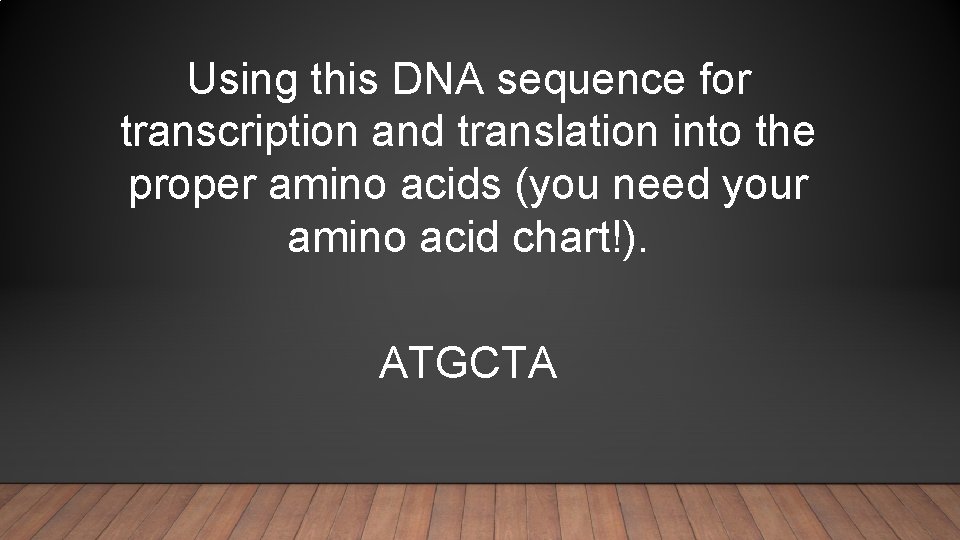
Using this DNA sequence for transcription and translation into the proper amino acids (you need your amino acid chart!). ATGCTA
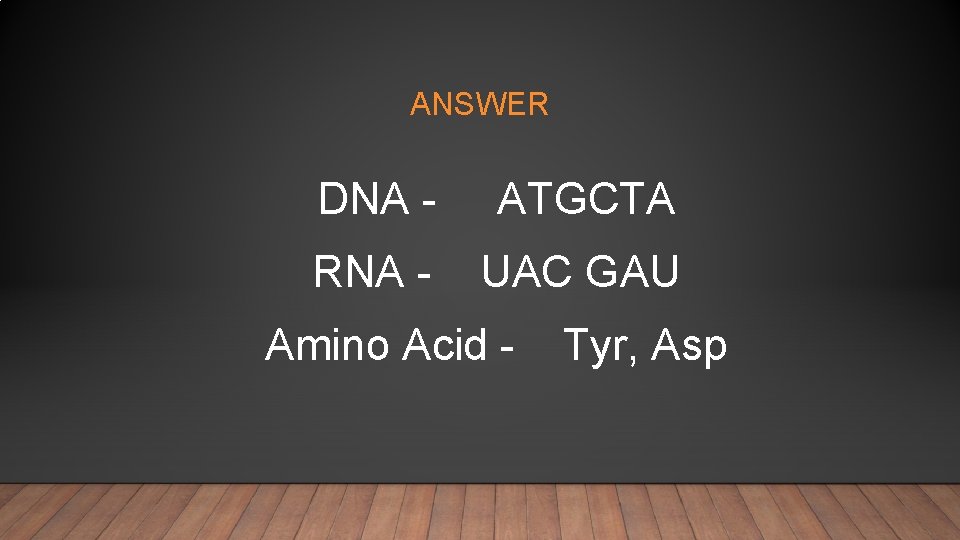
ANSWER DNA - ATGCTA RNA - UAC GAU Amino Acid - Tyr, Asp
What are the building blocks (monomers) of proteins?
ANSWERS • Amino Acids
What is the function of t. RNA?
ANSWERS • Brings the amino acids to the ribosome to create a protein