
DNA RNA and the Flow of Genetic Information
- Slides: 43
DNA, RNA, and the Flow of Genetic Information
Nucleic Acid Structure n What structural features do DNA and RNA share? u Polymers of nucleotides u Each nucleotide contains sugar, phosphate, nitrogen containing base u Each nucleic acid contains 4 different nucleotides
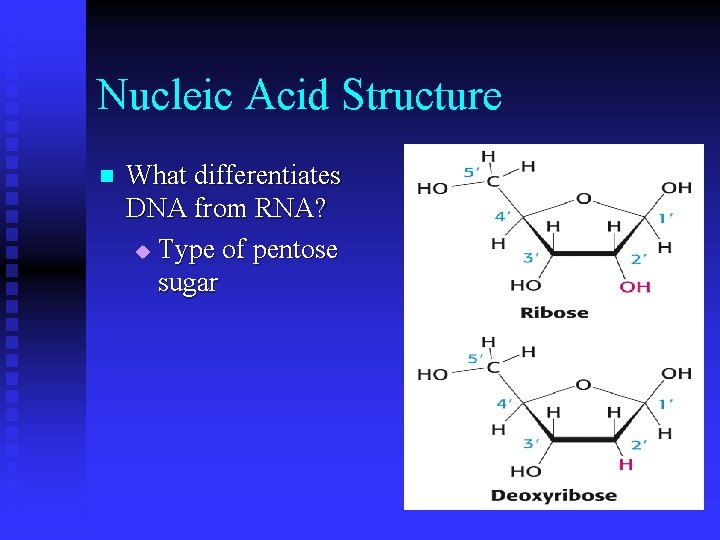
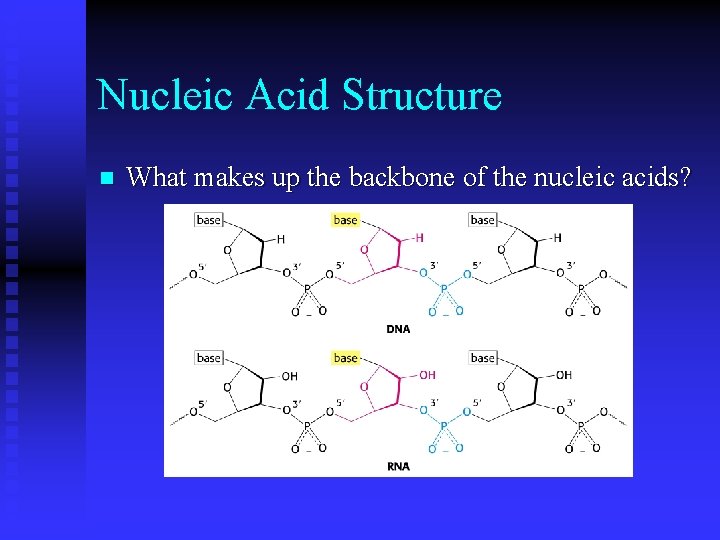
Nucleic Acid Structure n What differentiates DNA from RNA? u Type of pentose sugar
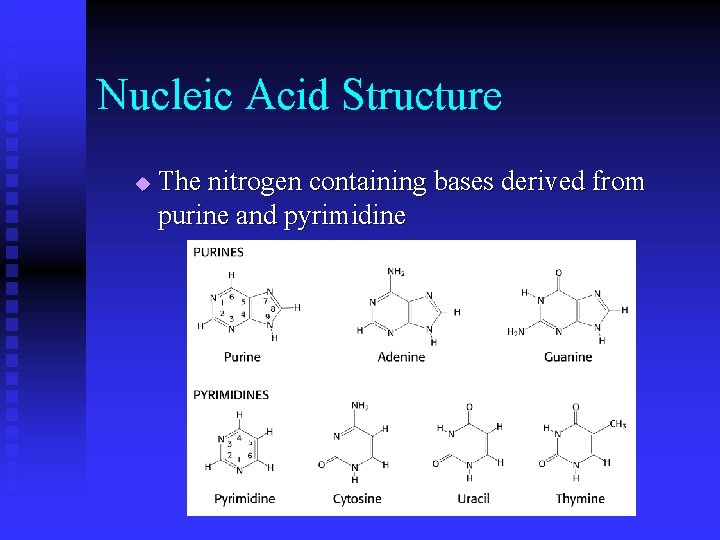
Nucleic Acid Structure u The nitrogen containing bases derived from purine and pyrimidine
Nucleic Acid Structure n What makes up the backbone of the nucleic acids?
Nucleic Acid Structure What contributes to the stability of nucleic acids? u Negative charge of phosphodiester bridge u Repels nucleophiles n What is the difference between a nucleotide and a nucleoside? n
Nucleic Acid Structure n What are the DNA nucleotides? u Deoxyadenosine-5 -phosphate u Deoxyguanosine-5 -phosphate u Deoxycytidine-5 -phosphote u Deoxythymidine-5 -phosphate
Nucleic Acid Structure n What are the RNA nucleotides? u Adenosine-5 -phosphate u Guanosine-5 -phosphate u Cytidine-5 -phosphate u Uridine-5 -phosphate
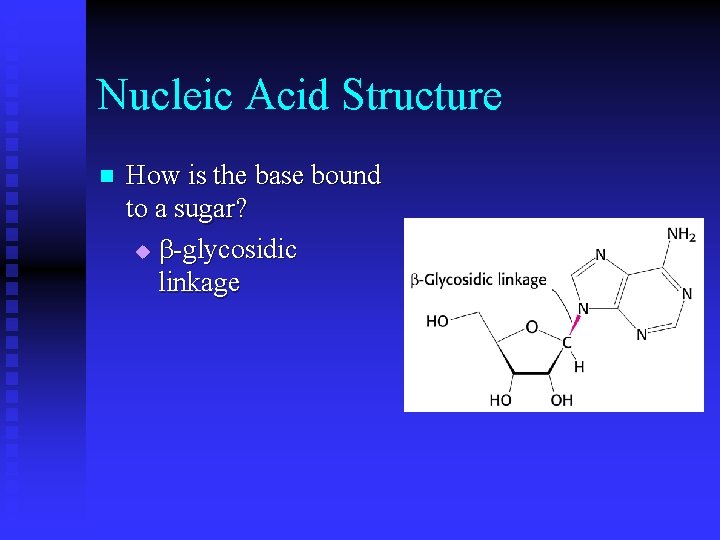
Nucleic Acid Structure n How is the base bound to a sugar? u -glycosidic linkage
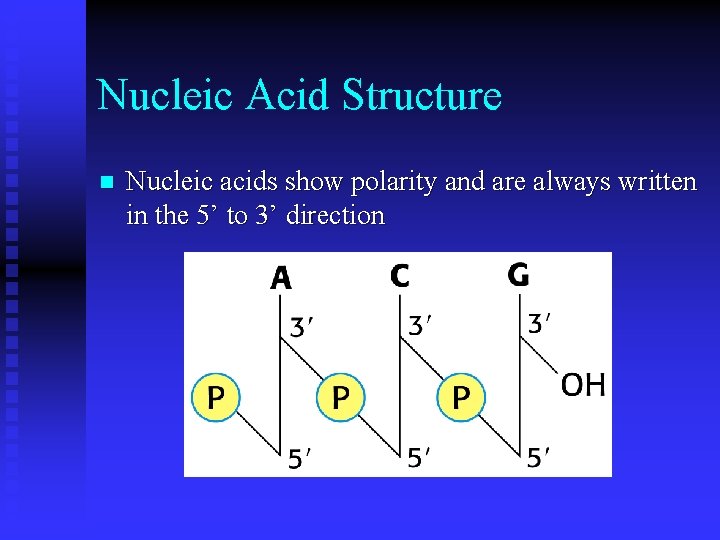
Nucleic Acid Structure n Nucleic acids show polarity and are always written in the 5’ to 3’ direction
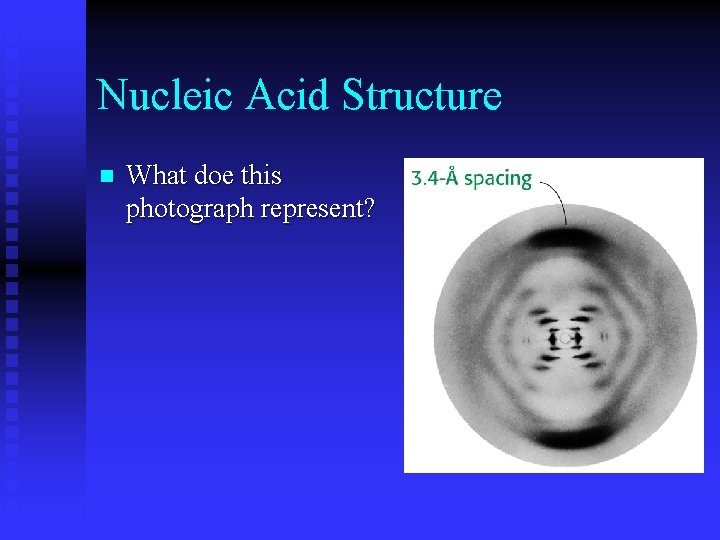
Nucleic Acid Structure n What doe this photograph represent?
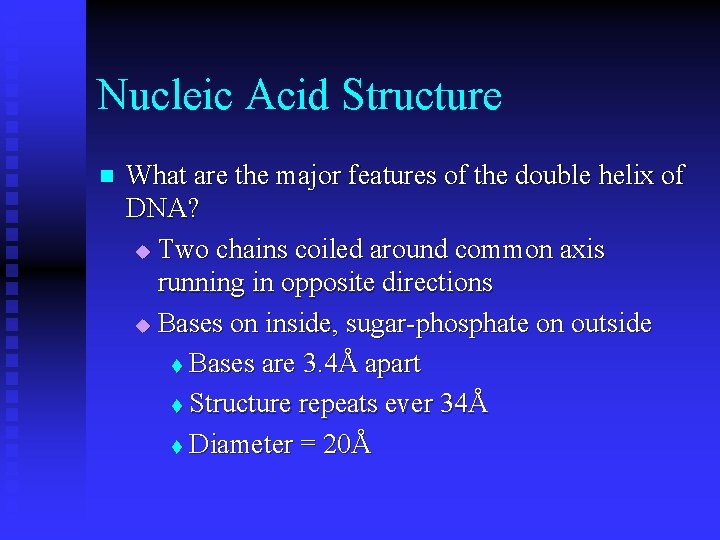
Nucleic Acid Structure n What are the major features of the double helix of DNA? u Two chains coiled around common axis running in opposite directions u Bases on inside, sugar-phosphate on outside t Bases are 3. 4Å apart t Structure repeats ever 34Å t Diameter = 20Å
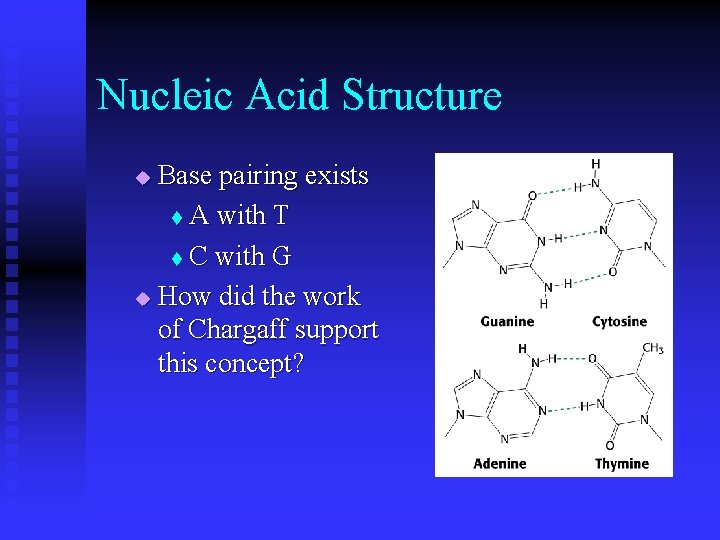
Nucleic Acid Structure Base pairing exists t A with T t C with G u How did the work of Chargaff support this concept? u
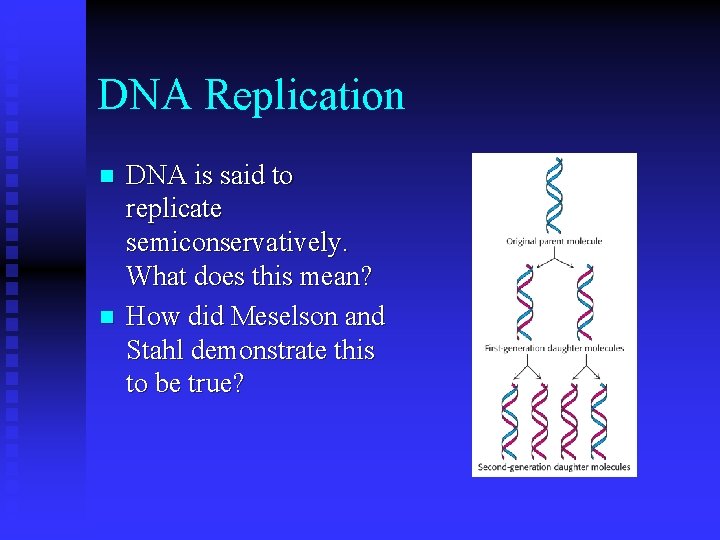
DNA Replication n n DNA is said to replicate semiconservatively. What does this mean? How did Meselson and Stahl demonstrate this to be true?
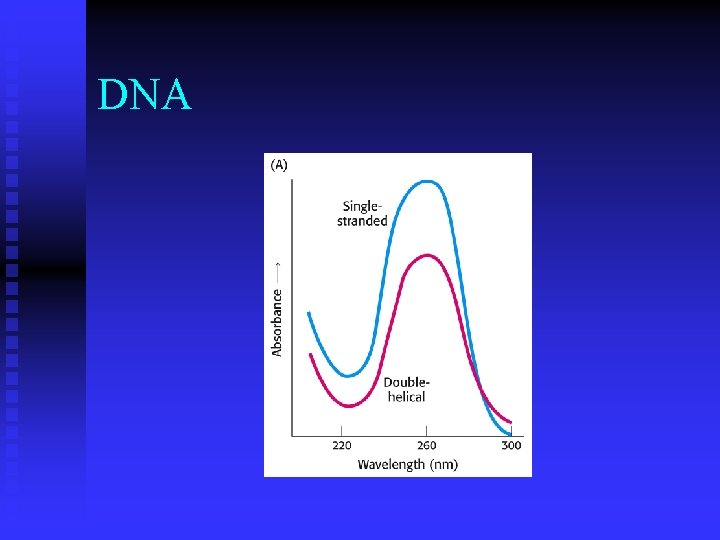
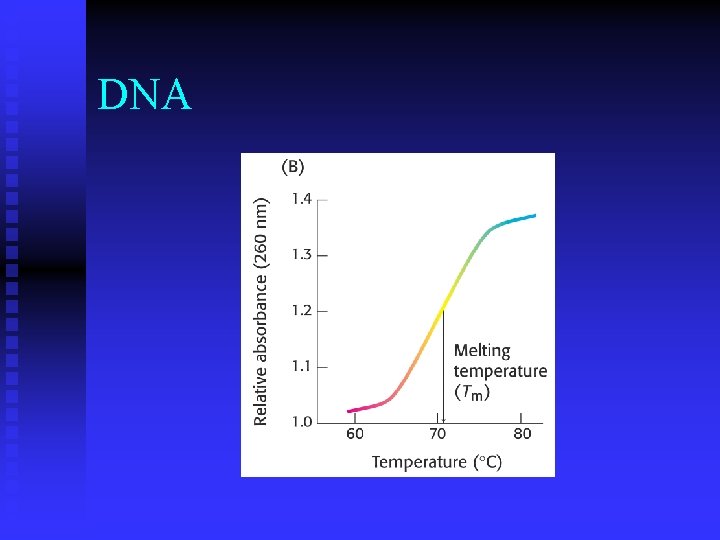
DNA n n n How can the helical structure be disrupted? u Heating What is Tm? u Melting temperature – half helical structure is destroyed What is hyperchromism? u Single stranded DNA absorbs UV light more effectively than double stranded DNA
DNA
DNA
DNA n Why is the ability to separate the two chains of the double helix and reassociate them an important tool in the laboratory? u hybridization experiments
DNA n What is the difference between linear DNA and circular DNA and where are each of these forms found? u circular – ends of molecule are linked u linear – human DNA u circular – bacterial DNA
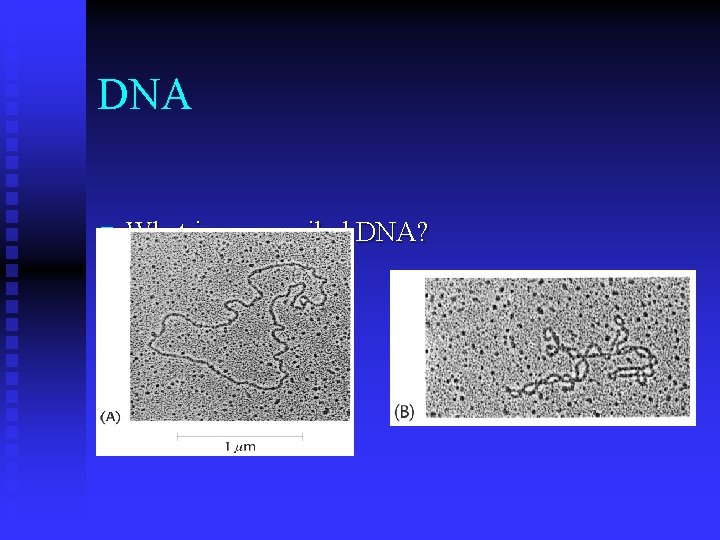
DNA n What is supercoiled DNA?
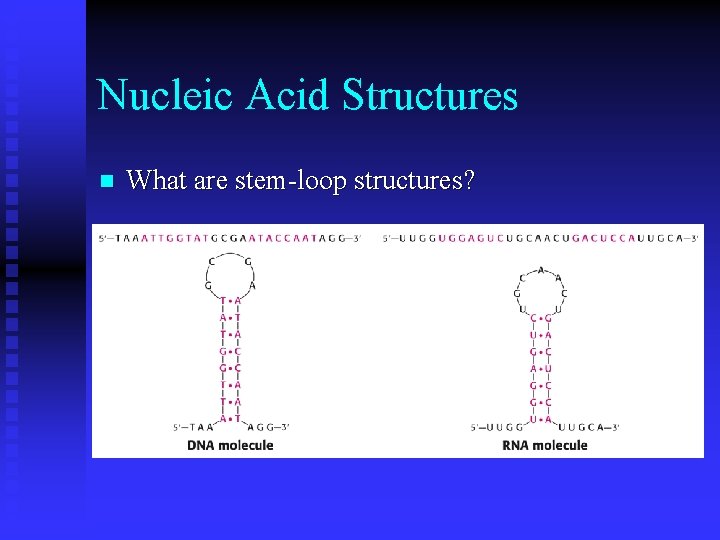
Nucleic Acid Structures n What are stem-loop structures?
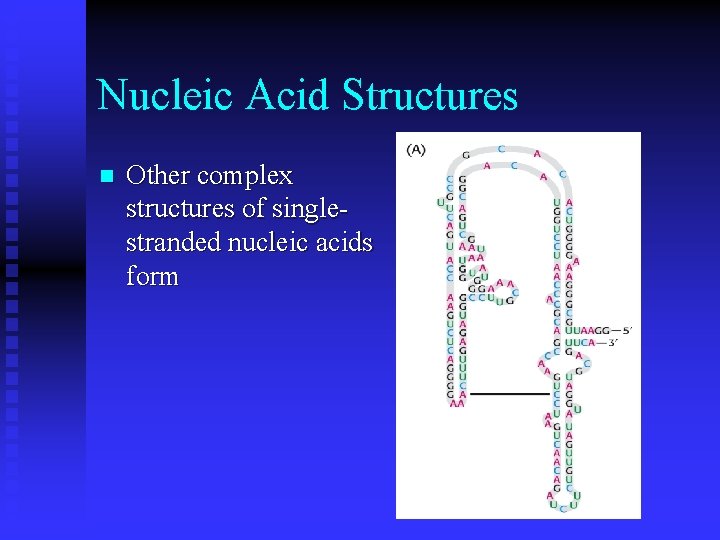
Nucleic Acid Structures n Other complex structures of singlestranded nucleic acids form
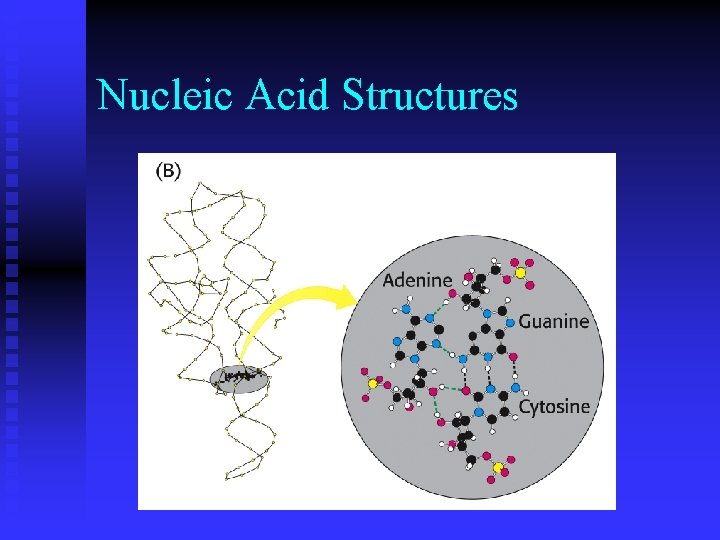
Nucleic Acid Structures n In some complex structures can get hydrogen bonds formed between nonstandard base pairs
Nucleic Acid Structures
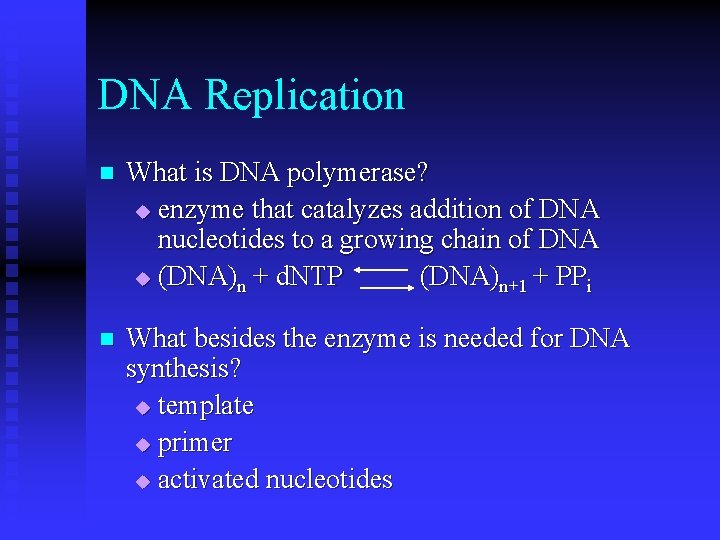
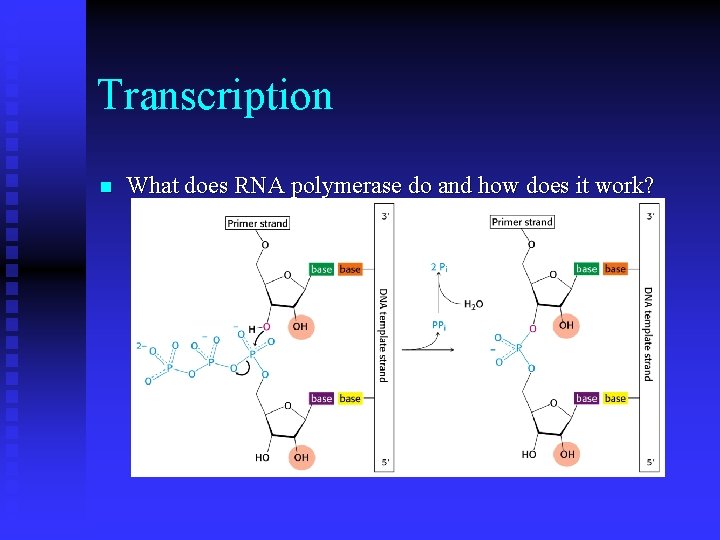
DNA Replication n What is DNA polymerase? u enzyme that catalyzes addition of DNA nucleotides to a growing chain of DNA u (DNA)n + d. NTP (DNA)n+1 + PPi n What besides the enzyme is needed for DNA synthesis? u template u primer u activated nucleotides
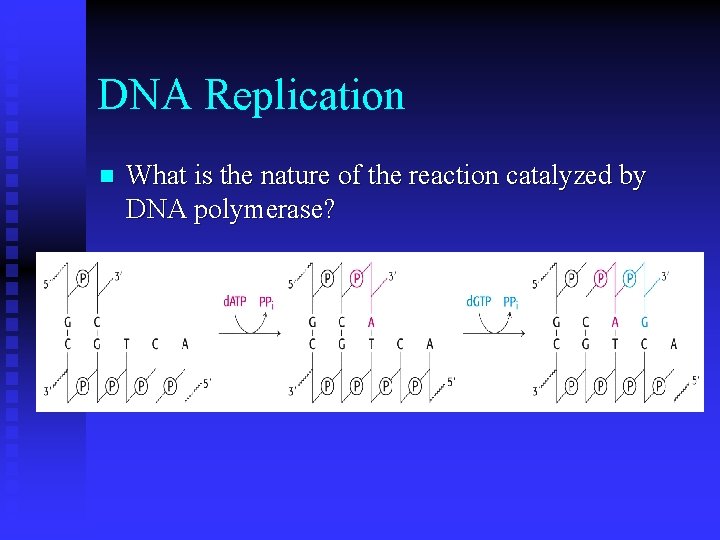
DNA Replication n What is the nature of the reaction catalyzed by DNA polymerase?
DNA Replication n What else can some DNA polymerases do? u remove mismatched nucleotides
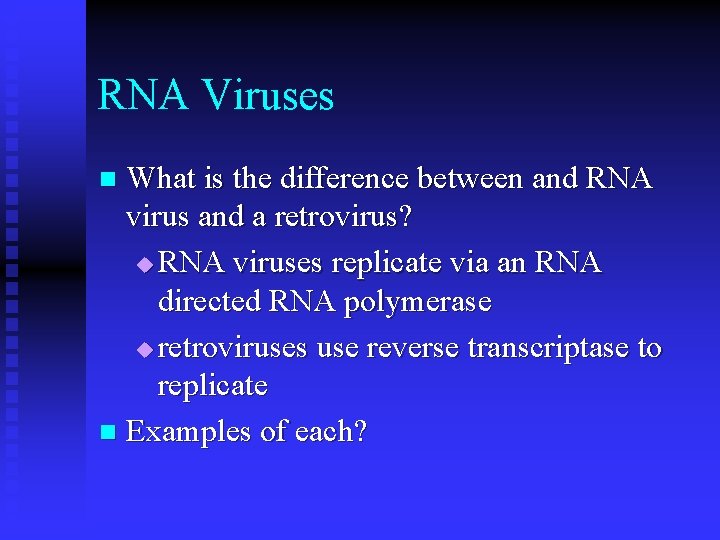
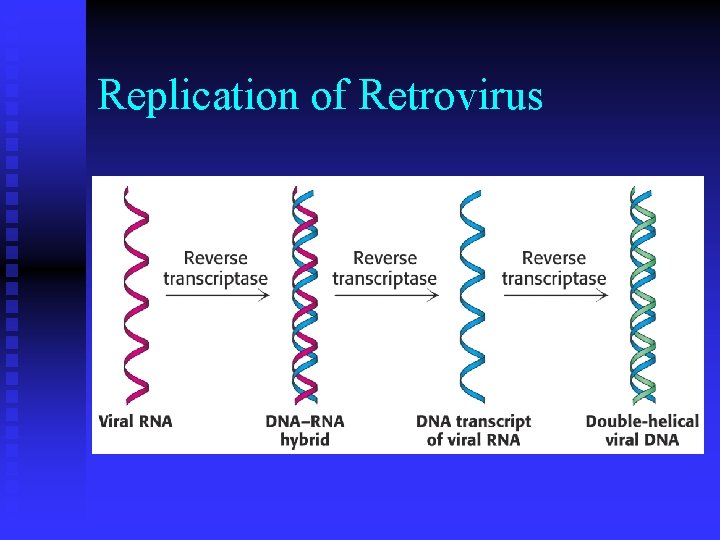
RNA Viruses What is the difference between and RNA virus and a retrovirus? u RNA viruses replicate via an RNA directed RNA polymerase u retroviruses use reverse transcriptase to replicate n Examples of each? n
Replication of Retrovirus
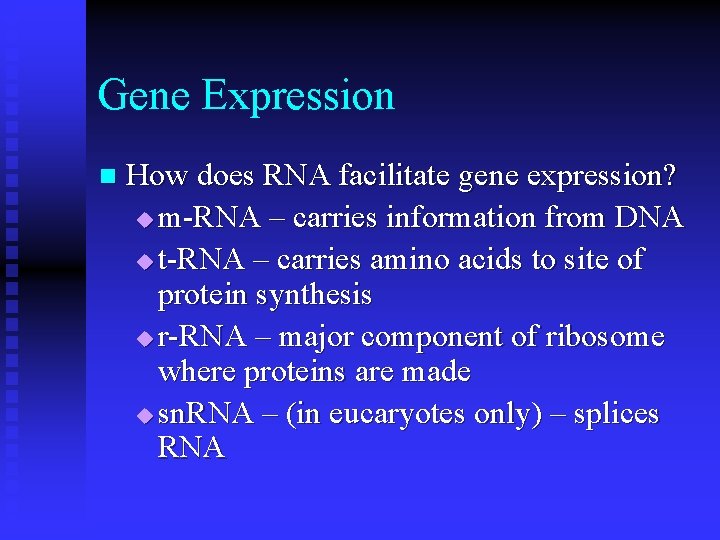
Gene Expression n How does RNA facilitate gene expression? u m-RNA – carries information from DNA u t-RNA – carries amino acids to site of protein synthesis u r-RNA – major component of ribosome where proteins are made u sn. RNA – (in eucaryotes only) – splices RNA
Transcription n What does RNA polymerase do and how does it work?
Transcription n How does RNA polymerase differ from DNA polymerase? u doesn’t require primer u doesn’t contain nuclease activity
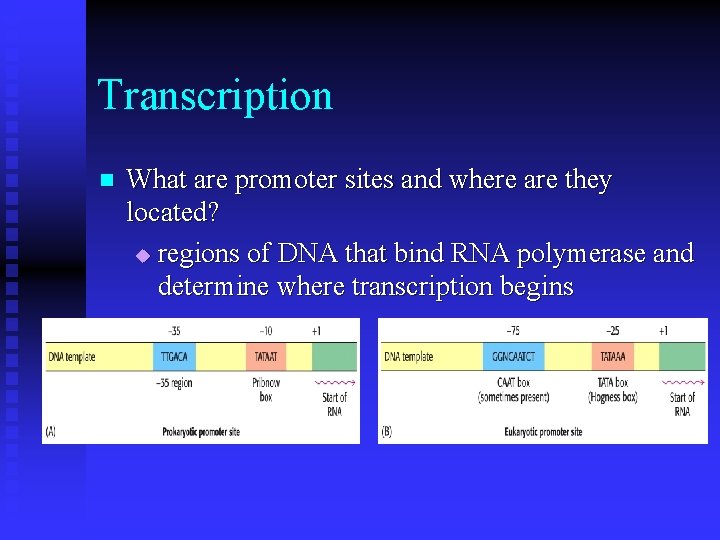
Transcription n What are promoter sites and where are they located? u regions of DNA that bind RNA polymerase and determine where transcription begins
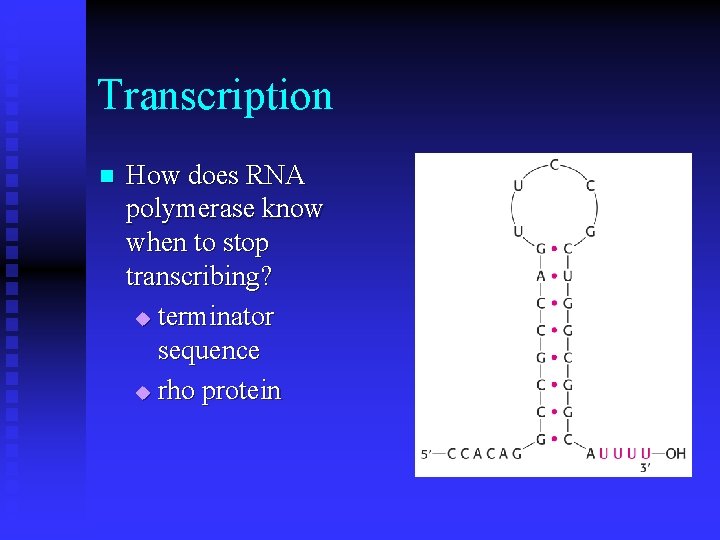
Transcription n How does RNA polymerase know when to stop transcribing? u terminator sequence u rho protein
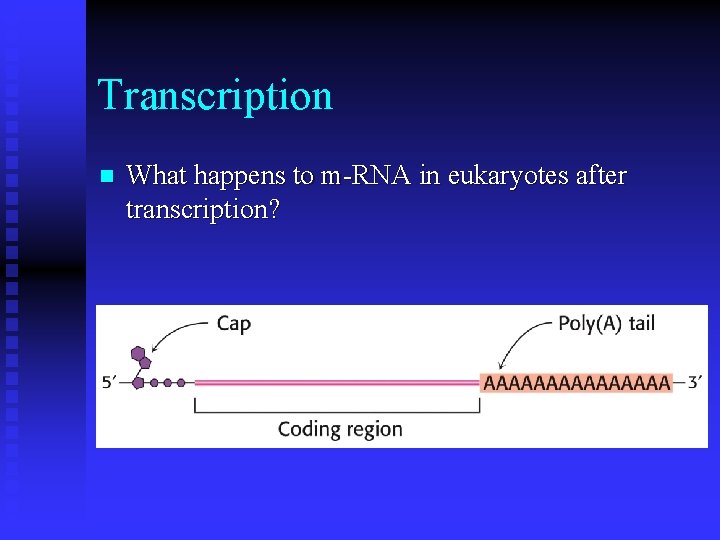
Transcription n What happens to m-RNA in eukaryotes after transcription?
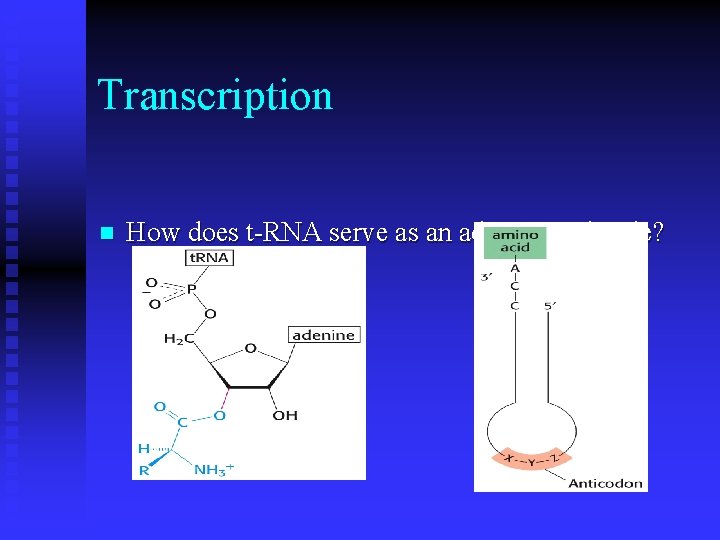
Transcription n How does t-RNA serve as an adaptor molecule?
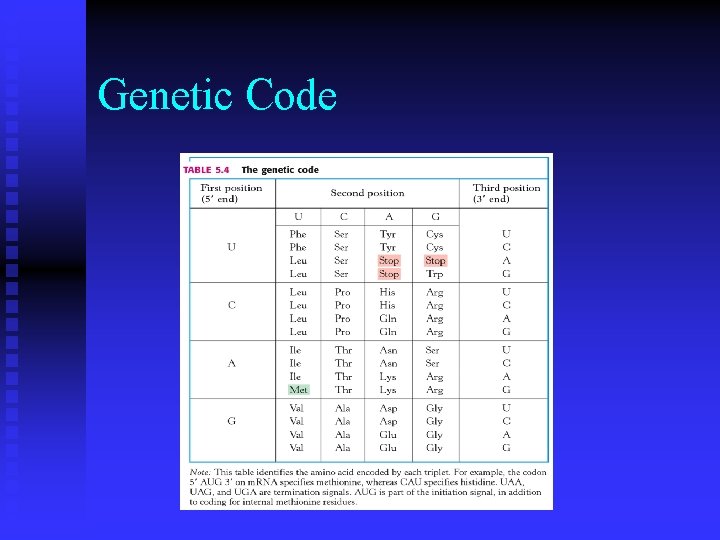
Transcription n What do we know about the genetic code? u three nucleotides code for an amino acid u code doesn’t overlap u no punctuation u code is degenerate
Genetic Code
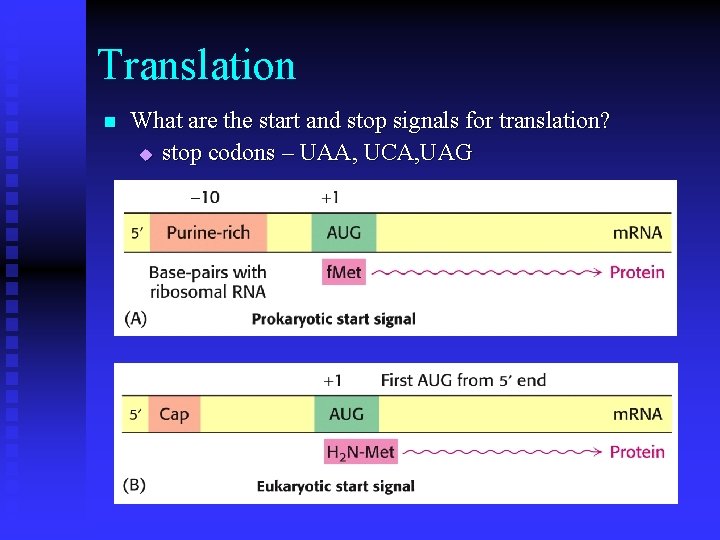
Translation n What are the start and stop signals for translation? u stop codons – UAA, UCA, UAG
Genetic Code What evidence suggests that the genetic code is universal? u one can use machinery of one species to translate m-RNA of a different species n There are some variations in genetic code u mitocondrial DNA u DNA from cilliates n
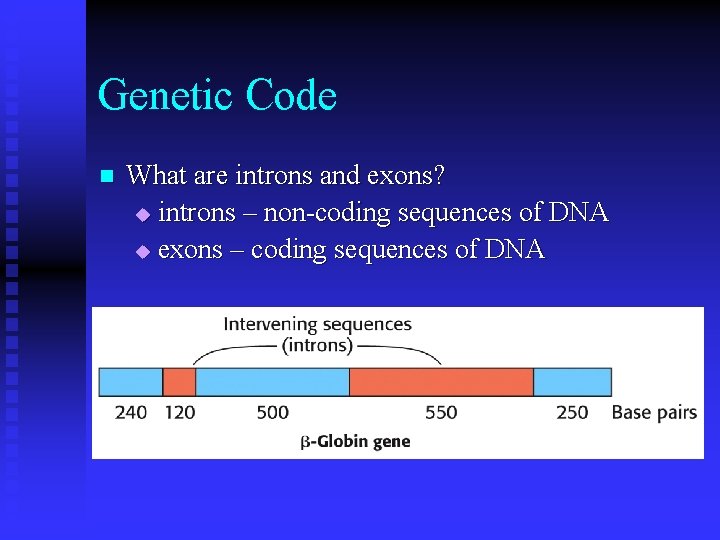
Genetic Code n What are introns and exons? u introns – non-coding sequences of DNA u exons – coding sequences of DNA
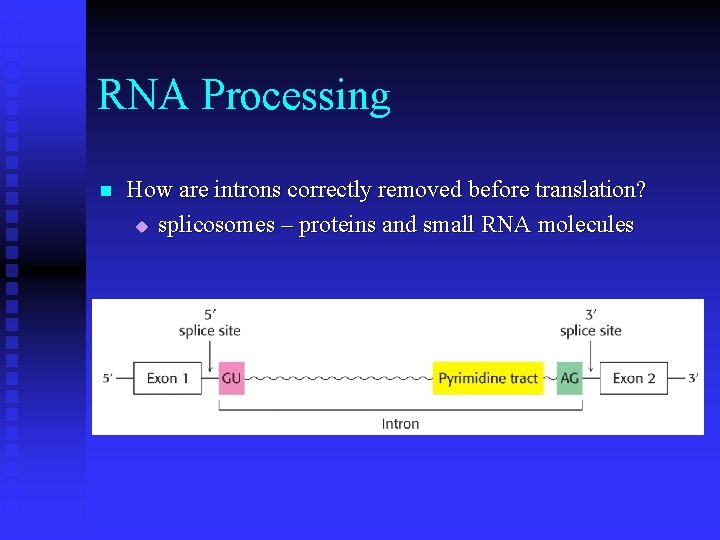
RNA Processing n How are introns correctly removed before translation? u splicosomes – proteins and small RNA molecules
Exons and Introns n Why are many genes in higher eukaryotes discontinuous? u exons code functional domains in proteins u can shuffle exons to produce new proteins u can generate related proteins by splicing m-RNA differently