
DNA RNA and Protein Synthesis SUBT IT LE
DNA, RNA, and Protein Synthesis SUBT IT LE
10. 1 Discovery of DNA
10. 2 DNA Structure LEARNING TARGETS I will be able to: • Evaluate the contributions of Franklin and Wilkins in helping Watson and Crick discover DNA’s double helix structure • Describe the 3 parts of a nucleotide • Relate the role of base-pairing rules to the structure of DNA
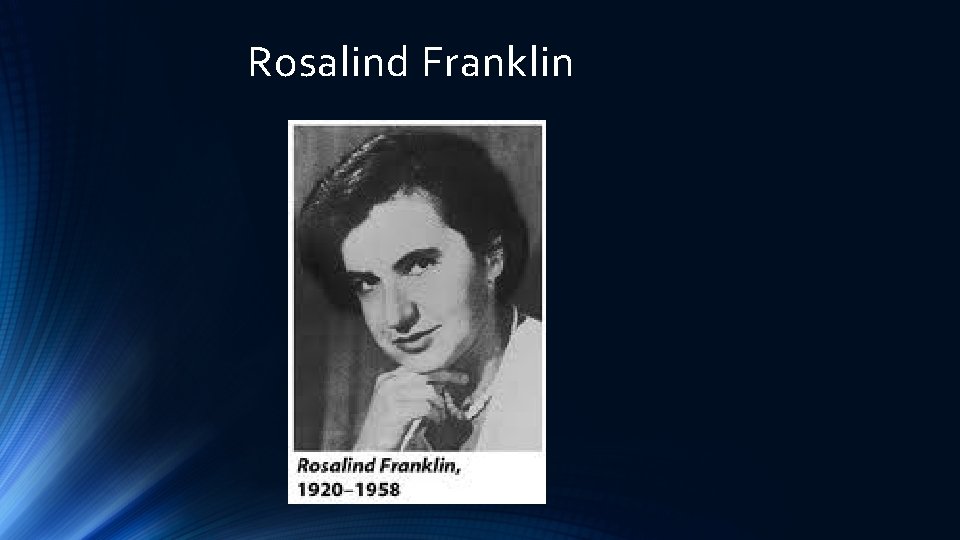
Rosalind Franklin

Rosalind Franklin 1. Took the first ever picture of DNA using x-ray diffraction This information was then used by Watson and Crick
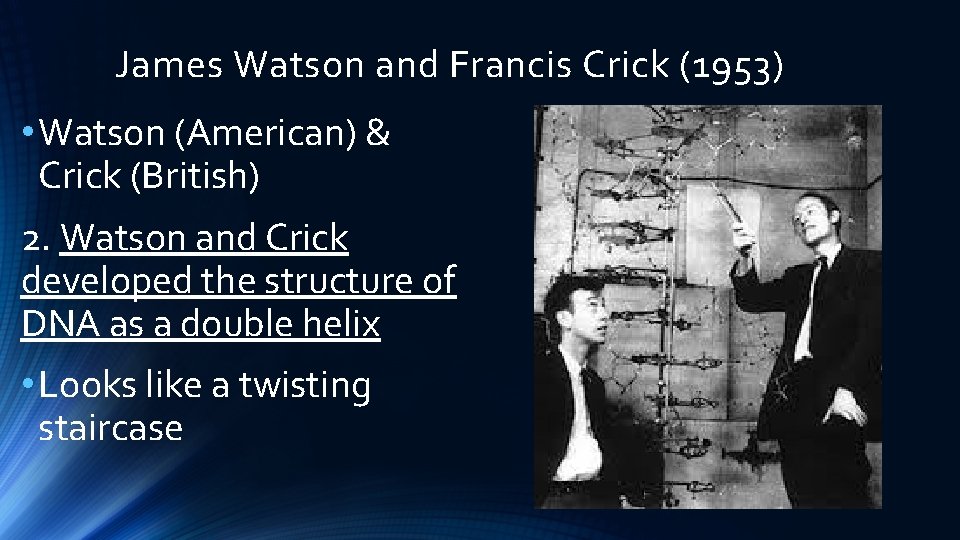
James Watson and Francis Crick (1953) • Watson (American) & Crick (British) 2. Watson and Crick developed the structure of DNA as a double helix • Looks like a twisting staircase
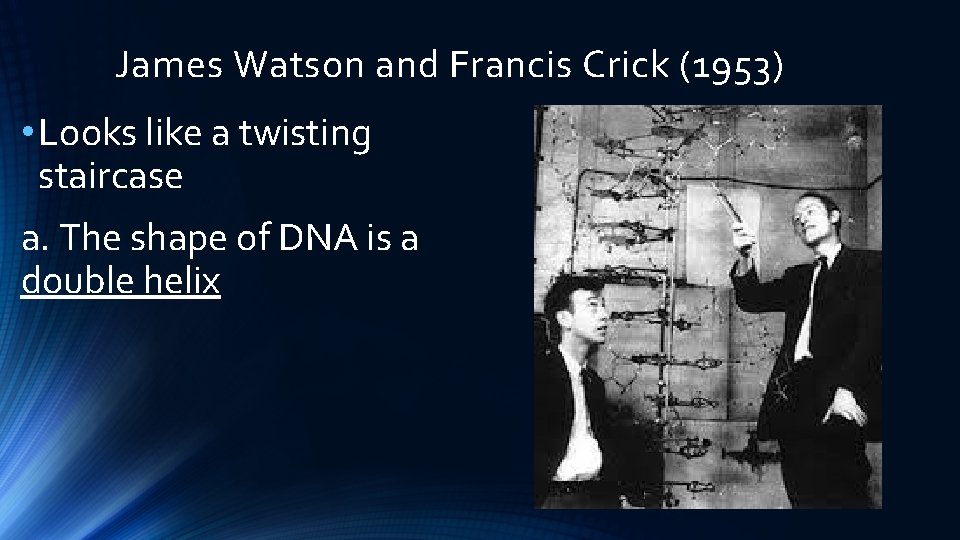
James Watson and Francis Crick (1953) • Looks like a twisting staircase a. The shape of DNA is a double helix
DNA Nucleotides • Nucleotides are the building blocks (monomers) of ………? • A. proteins • B. lipids • C. carbohydrates • D. nucleic acids
DNA Nucleotides • Nucleotides are the building blocks (monomers) of ………? • NUCLEIC ACIDS!!!!!! • If answered correctly… https: //www. youtube. com/watch? v =3 Gwjf. UFy. Y 6 M
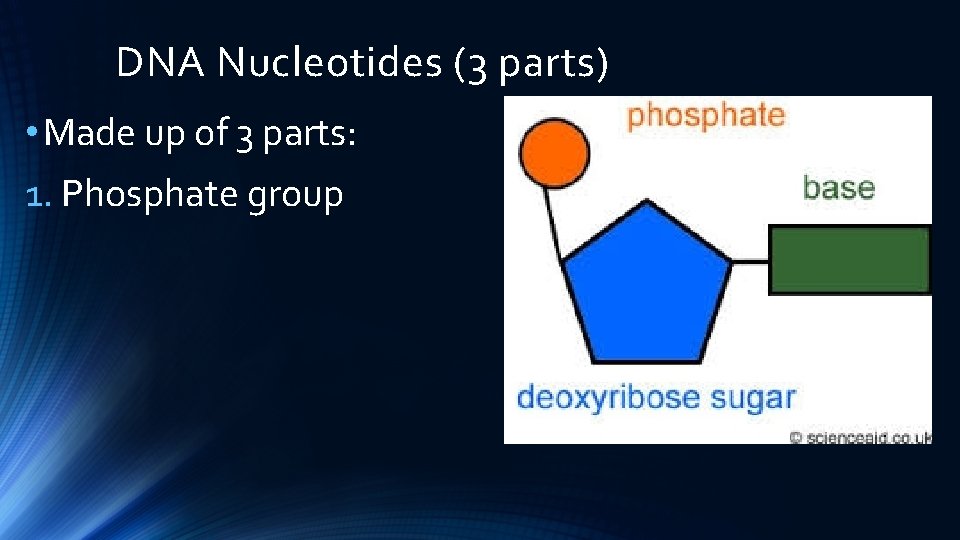
DNA Nucleotides (3 parts) • Made up of 3 parts: 1. Phosphate group
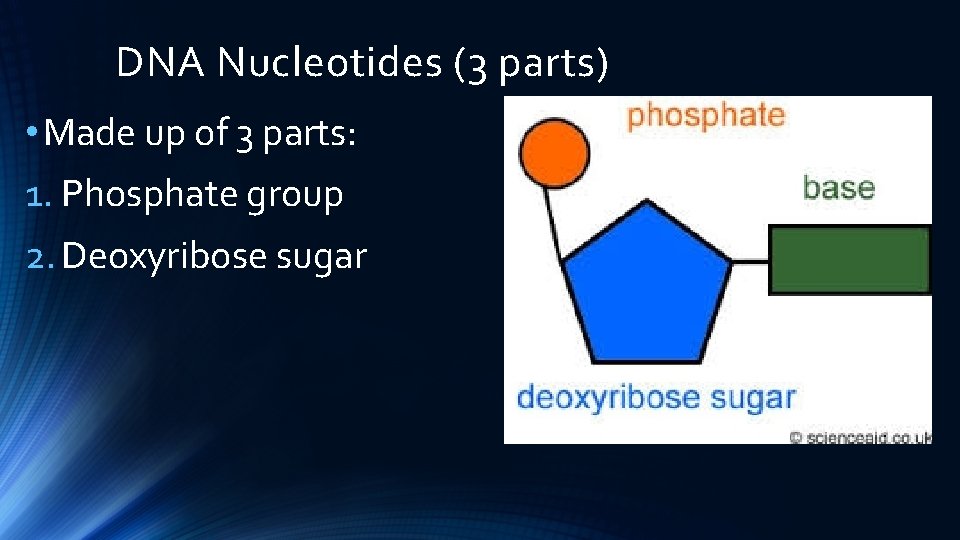
DNA Nucleotides (3 parts) • Made up of 3 parts: 1. Phosphate group 2. Deoxyribose sugar
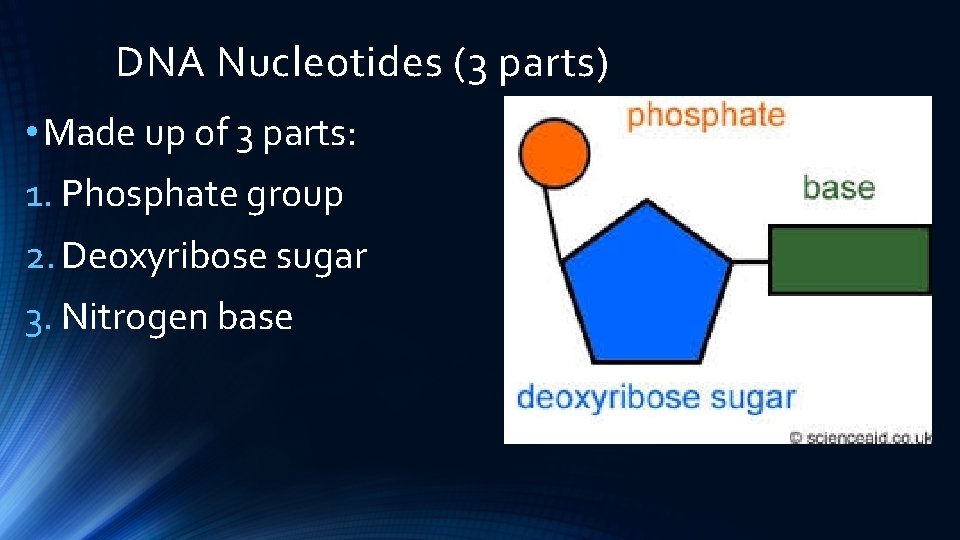
DNA Nucleotides (3 parts) • Made up of 3 parts: 1. Phosphate group 2. Deoxyribose sugar 3. Nitrogen base
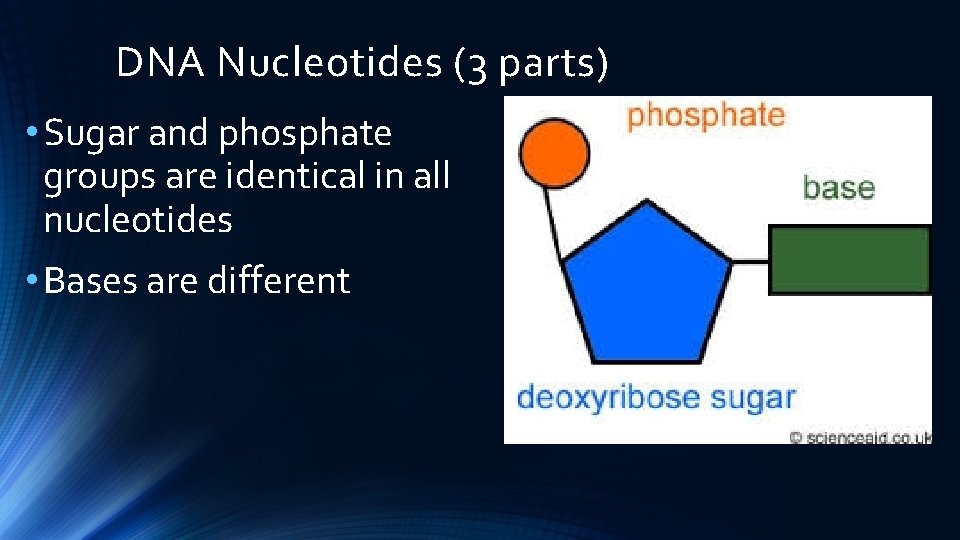
DNA Nucleotides (3 parts) • Sugar and phosphate groups are identical in all nucleotides • Bases are different
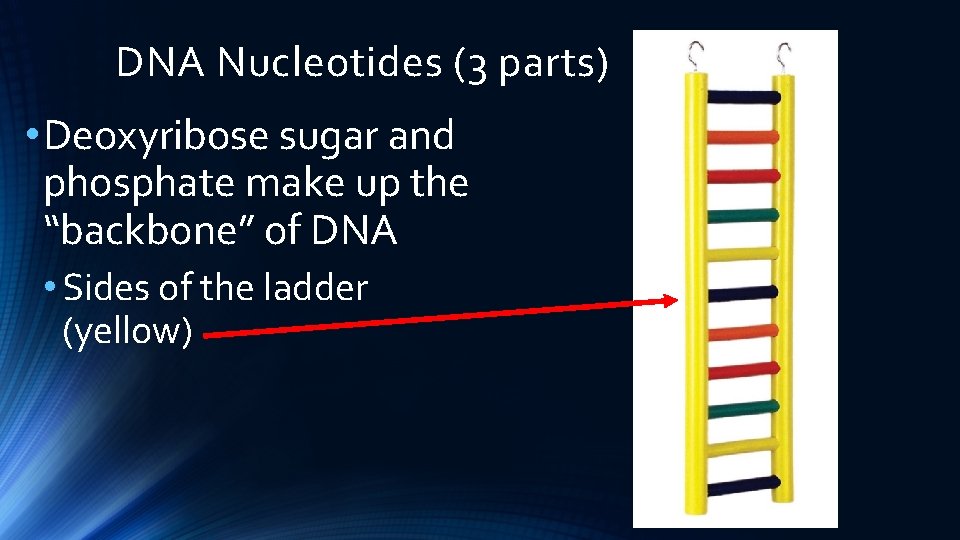
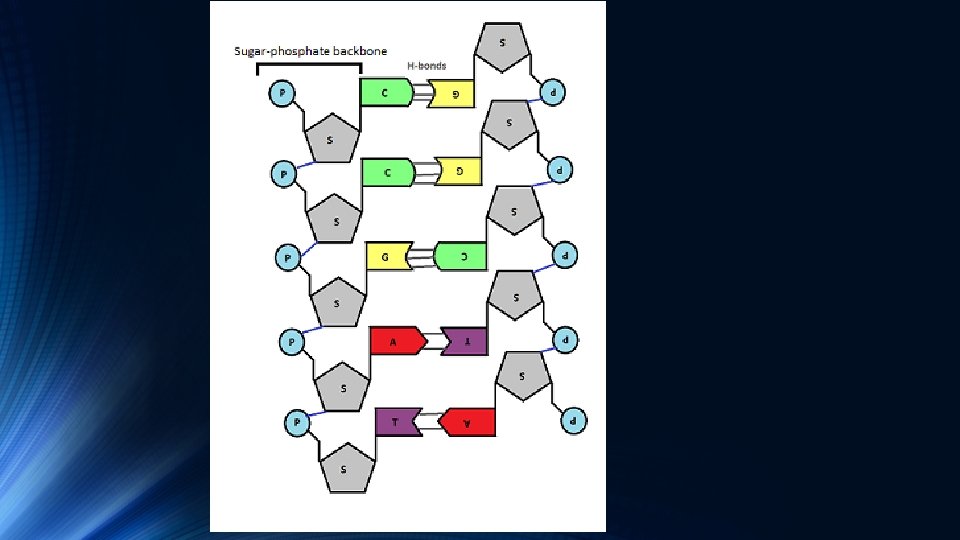
DNA Nucleotides (3 parts) • Deoxyribose sugar and phosphate make up the “backbone” of DNA • Sides of the ladder (yellow)
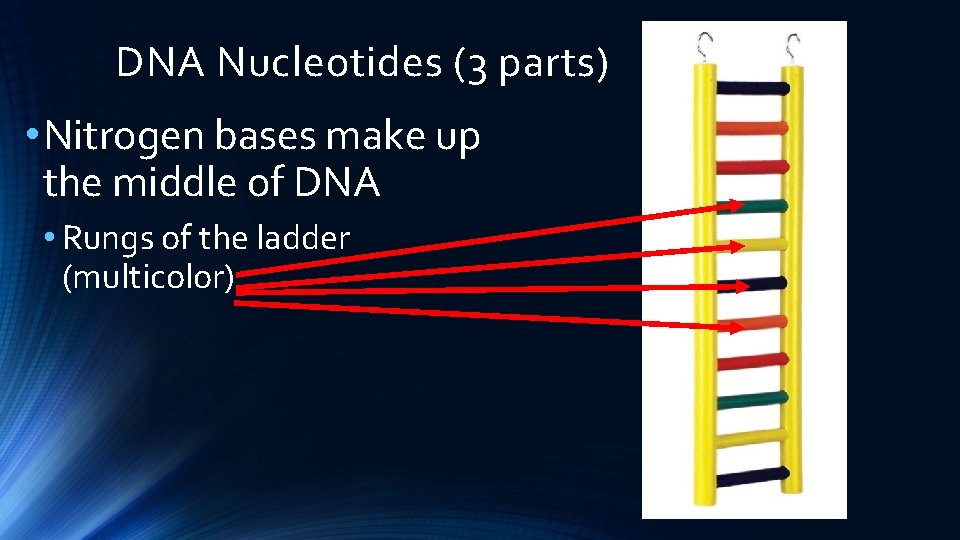
DNA Nucleotides (3 parts) • Nitrogen bases make up the middle of DNA • Rungs of the ladder (multicolor)
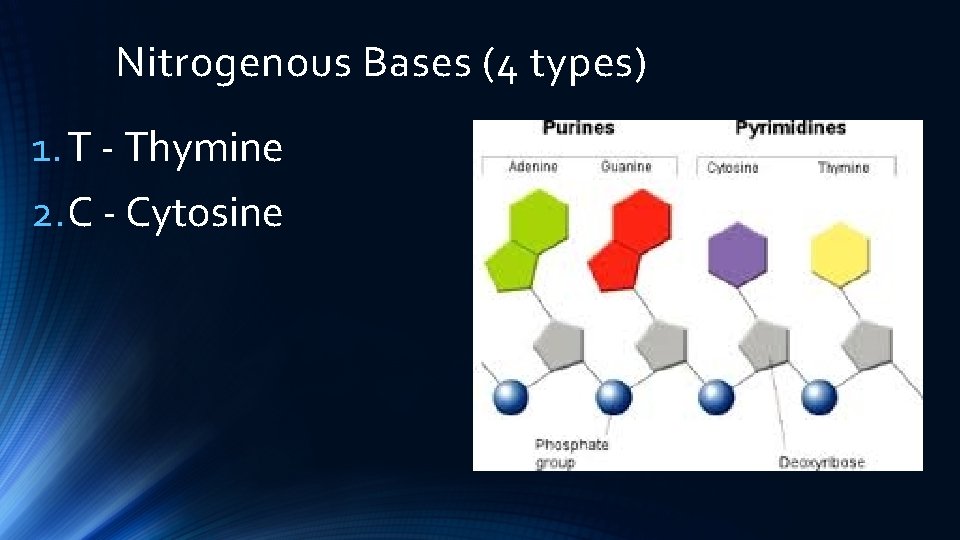
Nitrogenous Bases (4 types) 1. T - Thymine 2. C - Cytosine
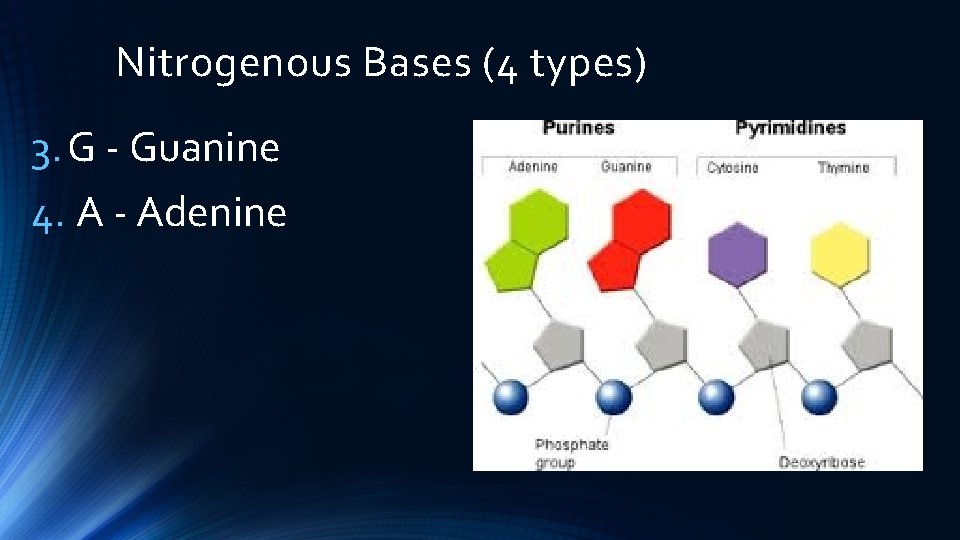
Nitrogenous Bases (4 types) 3. G - Guanine 4. A - Adenine
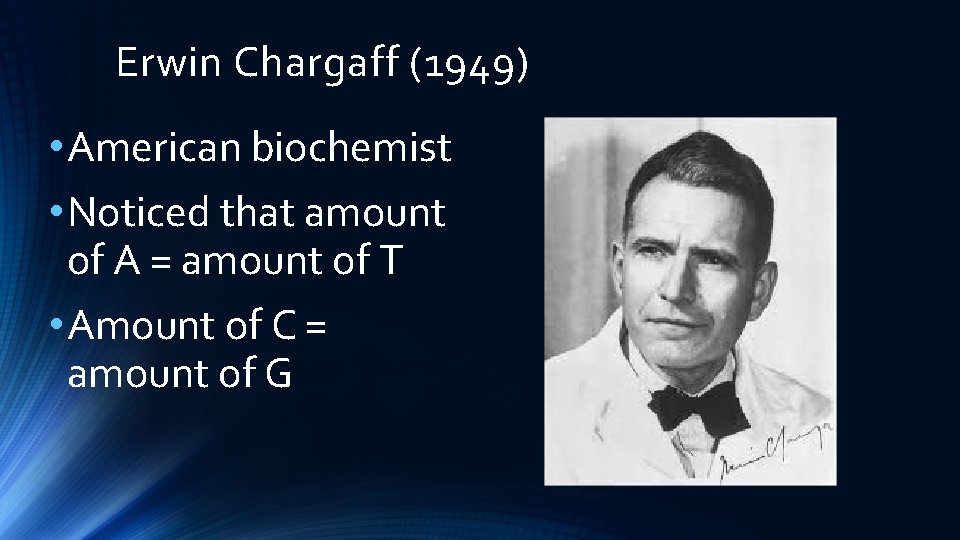
Erwin Chargaff (1949) • American biochemist • Noticed that amount of A = amount of T • Amount of C = amount of G
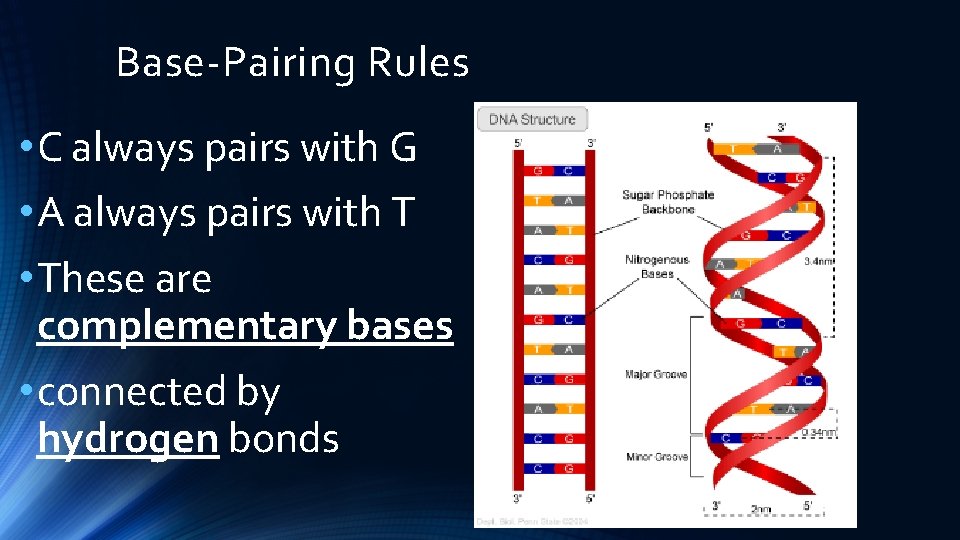
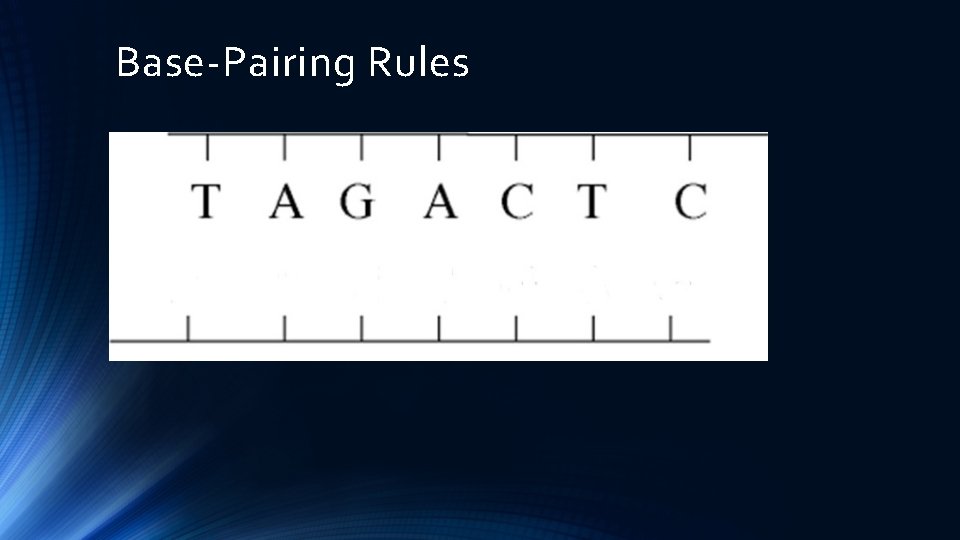
Base-Pairing Rules • C always pairs with G • A always pairs with T • These are complementary bases • connected by hydrogen bonds
Base-Pairing Rules
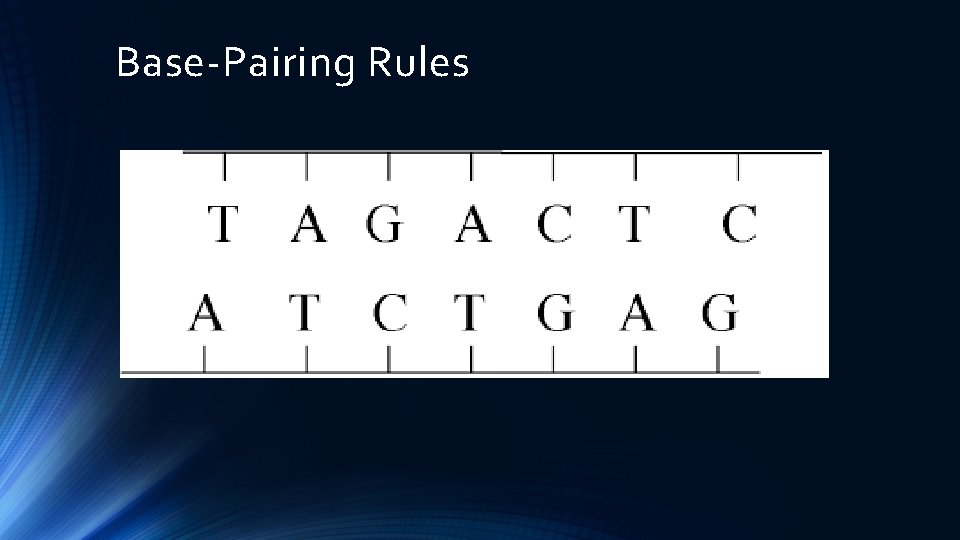
Base-Pairing Rules
10. 3 DNA Replication
10. 3 DNA Replication LEARNING TARGETS I will be able to: • Summarize the process of DNA replication • Identify the role of enzymes if the replication of DNA • Describe how complementary base pairing guides DNA replication • Describe mutations that occur during DNA replication
10. 3 DNA Replication https: //www. youtube. com/watch? v=d. Kuby. IRi. N 84
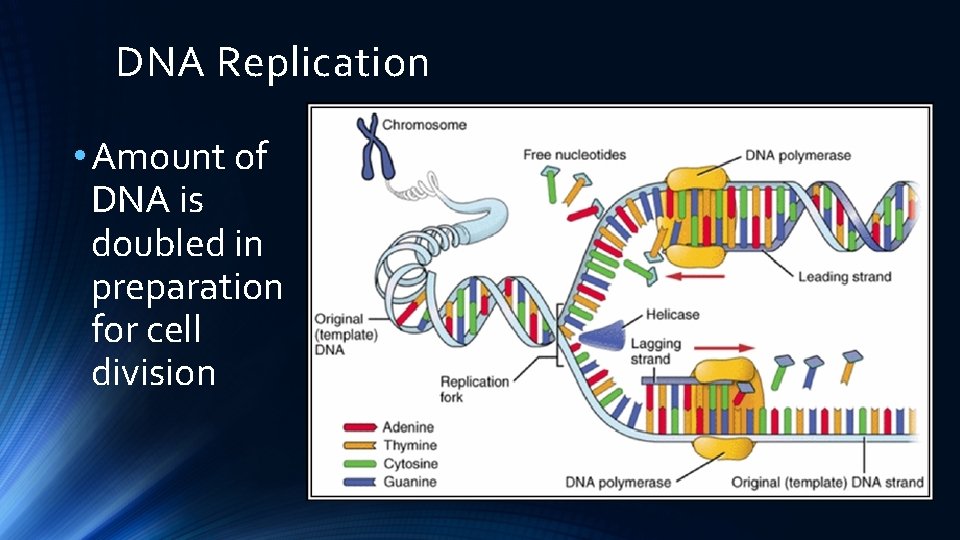
DNA Replication • Amount of DNA is doubled in preparation for cell division
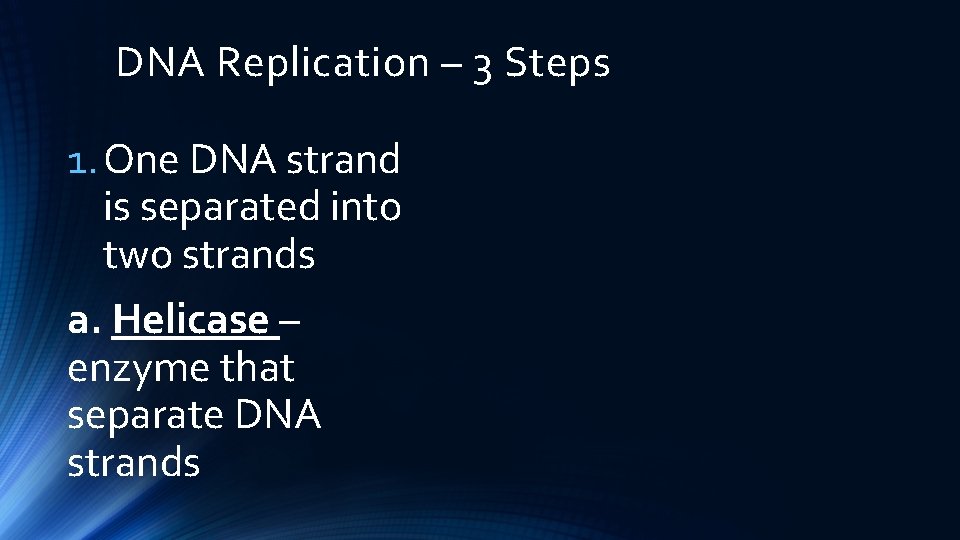
DNA Replication – 3 Steps 1. One DNA strand is separated into two strands a. Helicase – enzyme that separate DNA strands
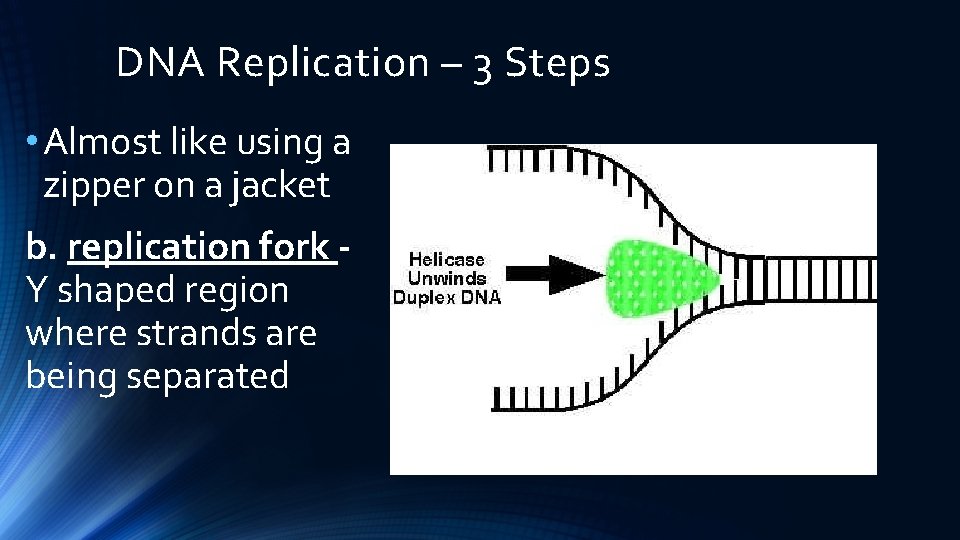
DNA Replication – 3 Steps • Almost like using a zipper on a jacket b. replication fork Y shaped region where strands are being separated
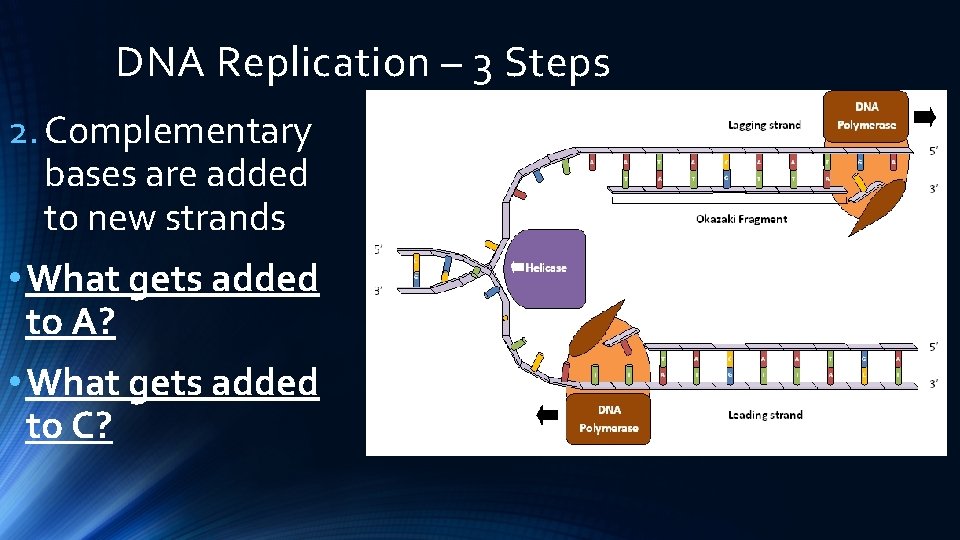
DNA Replication – 3 Steps 2. Complementary bases are added to new strands • What gets added to A? • What gets added to C?
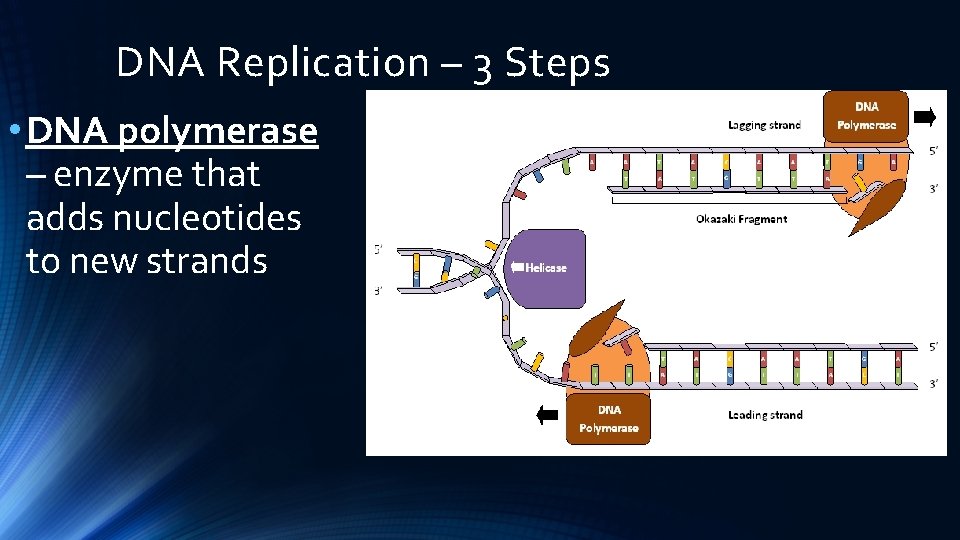
DNA Replication – 3 Steps • DNA polymerase – enzyme that adds nucleotides to new strands
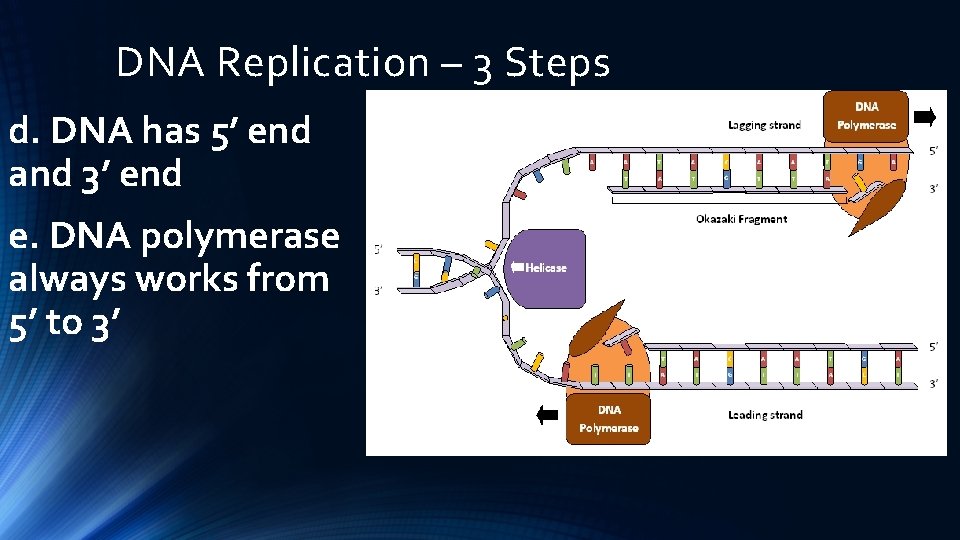
DNA Replication – 3 Steps d. DNA has 5’ end and 3’ end e. DNA polymerase always works from 5’ to 3’
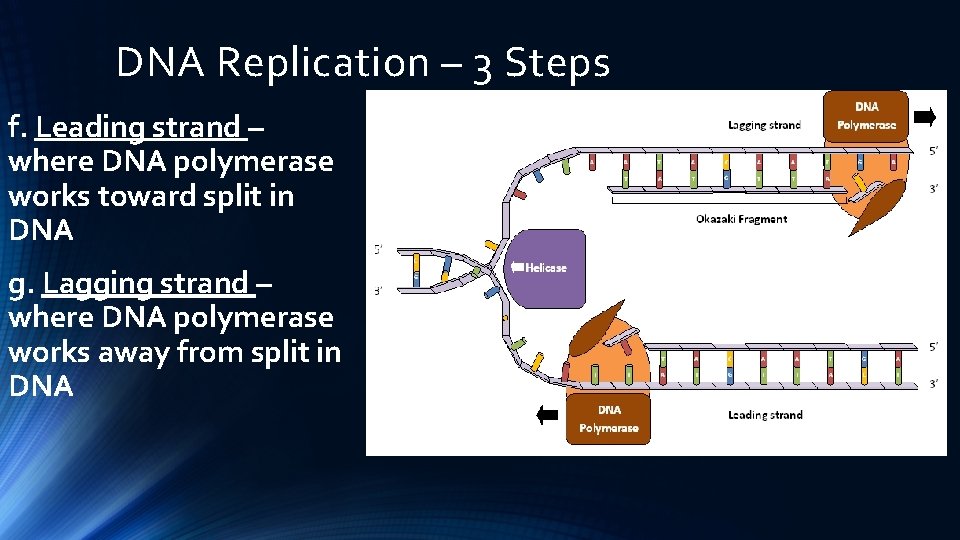
DNA Replication – 3 Steps f. Leading strand – where DNA polymerase works toward split in DNA g. Lagging strand – where DNA polymerase works away from split in DNA
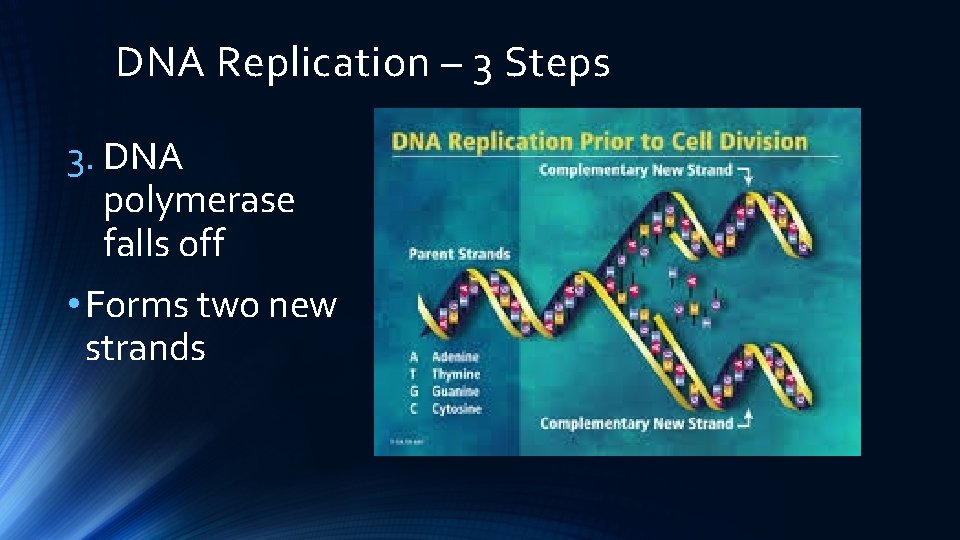
DNA Replication – 3 Steps 3. DNA polymerase falls off • Forms two new strands
Mutations • Mutation – change in nucleotide sequence of DNA
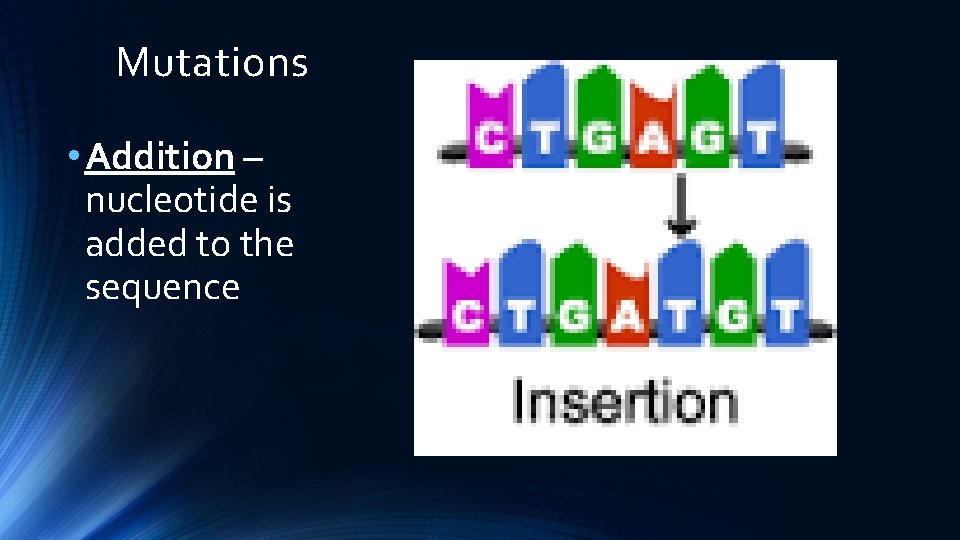
Mutations • Addition – nucleotide is added to the sequence
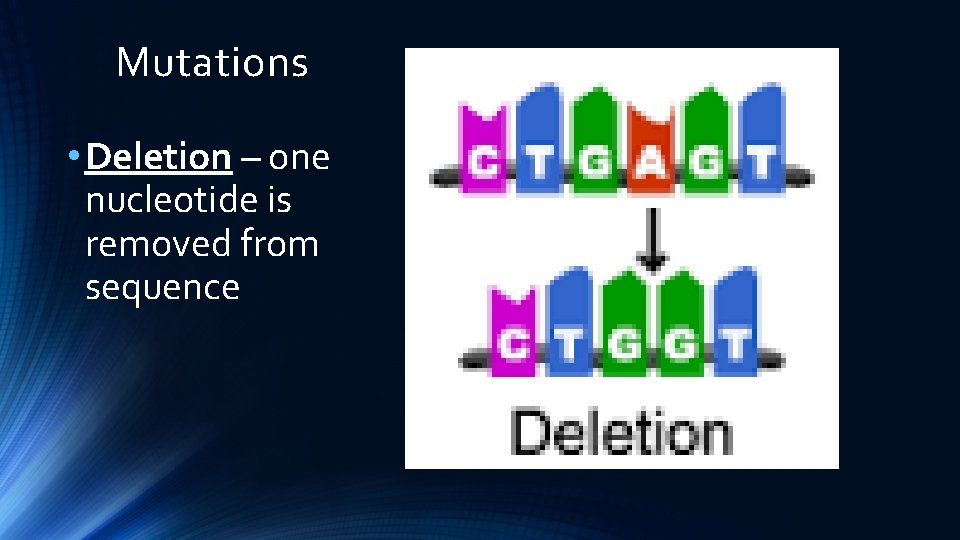
Mutations • Deletion – one nucleotide is removed from sequence
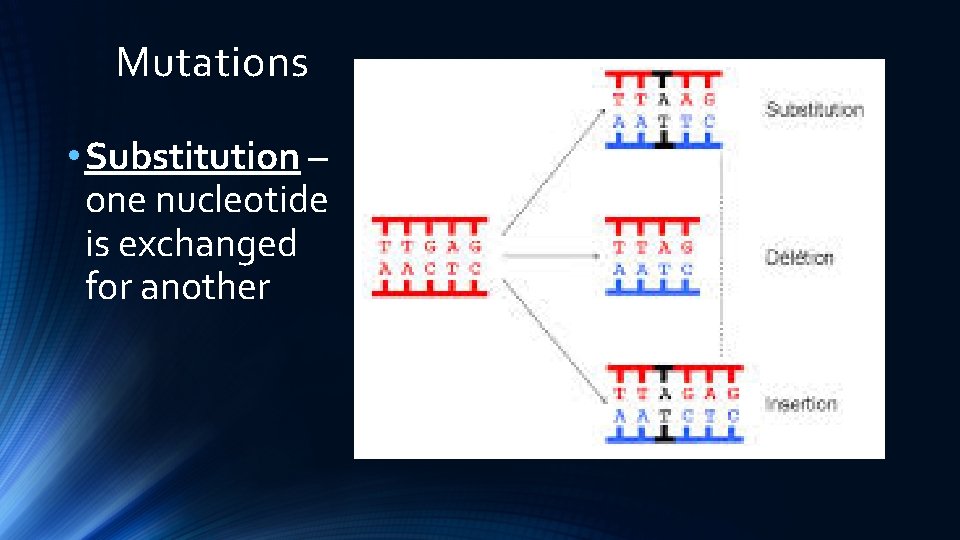
Mutations • Substitution – one nucleotide is exchanged for another
What is the enzyme responsible for splitting DNA apart? Front door left: DNA polymerase Front door right: RNA polymerase Back right corner: helicase Back left corner: peptase
What is the mutation called when you add a nucleotide (letter? Front door left: addition Front door right: deletion Back right corner: substitution Back left corner: transfiguration
10. 4 Protein Synthesis
10. 4 Protein Synthesis LEARNING TARGETS: I will be able to: • Outline the flow of genetic information from DNA to protein • Compare the structures of DNA and RNA • Summarize the process of transcription • Compare the role of m. RNA, t. RNA, and r. RNA • Identify the importance of learning about the human genome
10. 4 Protein Synthesis https: //www. youtube. com/watch? v=41_Ne 5 m. S 2 ls
Protein Synthesis Overview • Consists of transcription and translation • Transcription – DNA m. RNA (happens in nucleus)
Protein Synthesis Overview • Consists of transcription and translation • Translation – m. RNA amino acids (happens on ribosome)
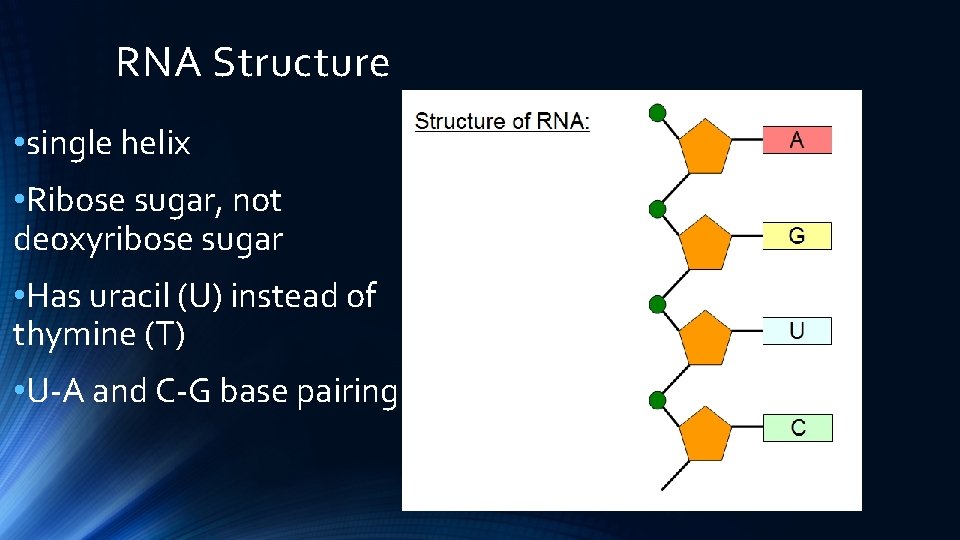
RNA Structure • single helix • Ribose sugar, not deoxyribose sugar • Has uracil (U) instead of thymine (T) • U-A and C-G base pairing
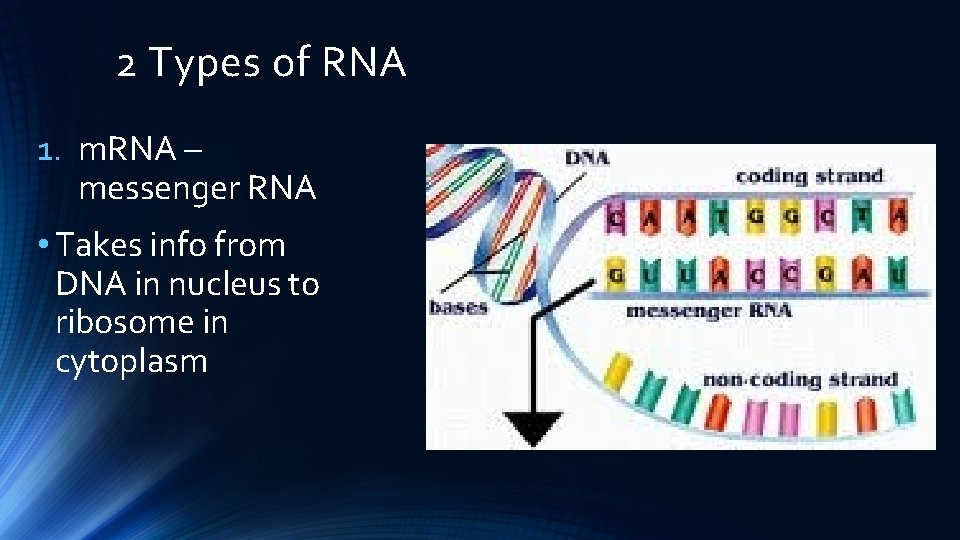
2 Types of RNA 1. m. RNA – messenger RNA • Takes info from DNA in nucleus to ribosome in cytoplasm
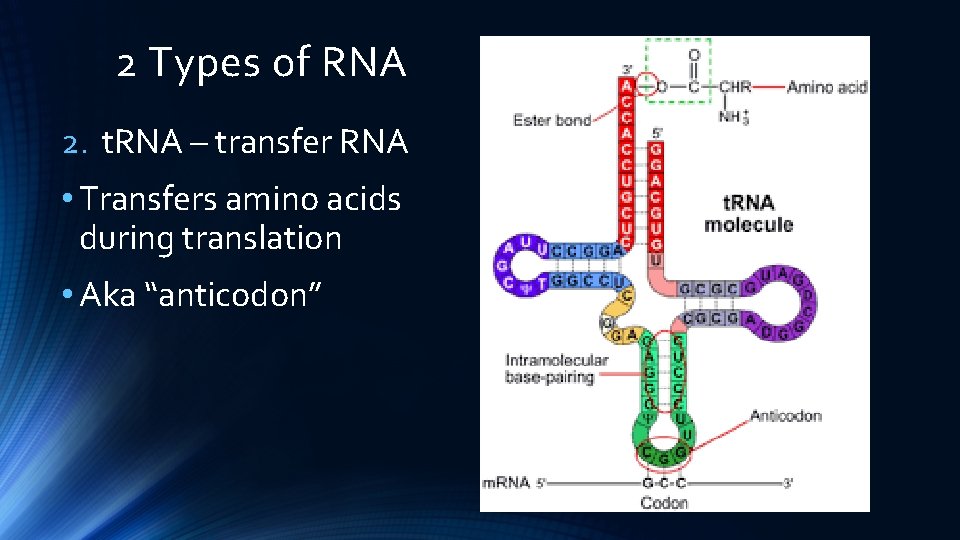
2 Types of RNA 2. t. RNA – transfer RNA • Transfers amino acids during translation • Aka “anticodon”
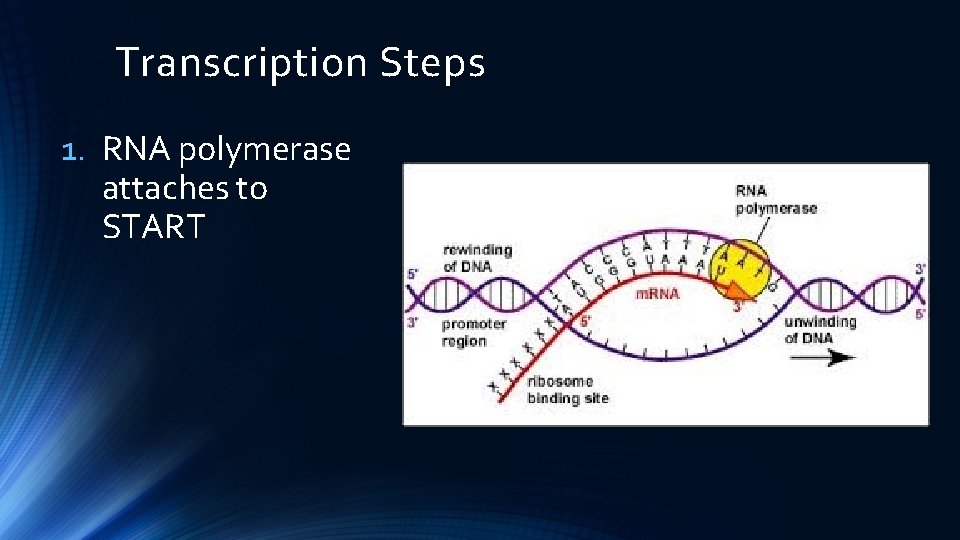
Transcription Steps 1. RNA polymerase attaches to START
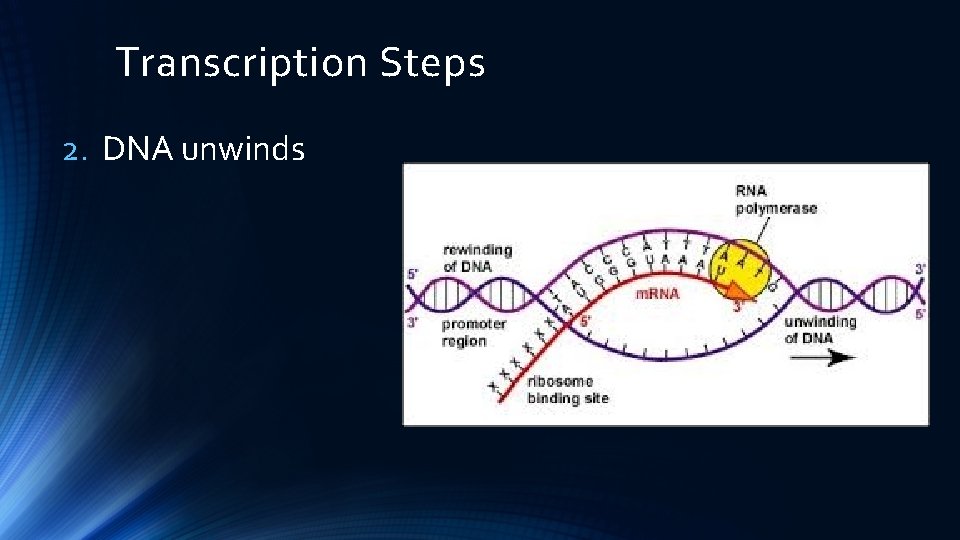
Transcription Steps 2. DNA unwinds
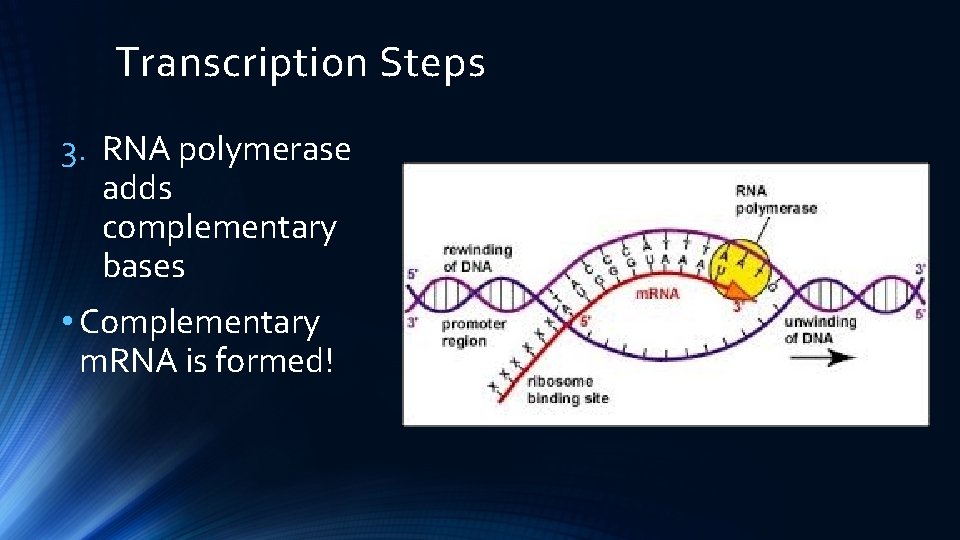
Transcription Steps 3. RNA polymerase adds complementary bases • Complementary m. RNA is formed!
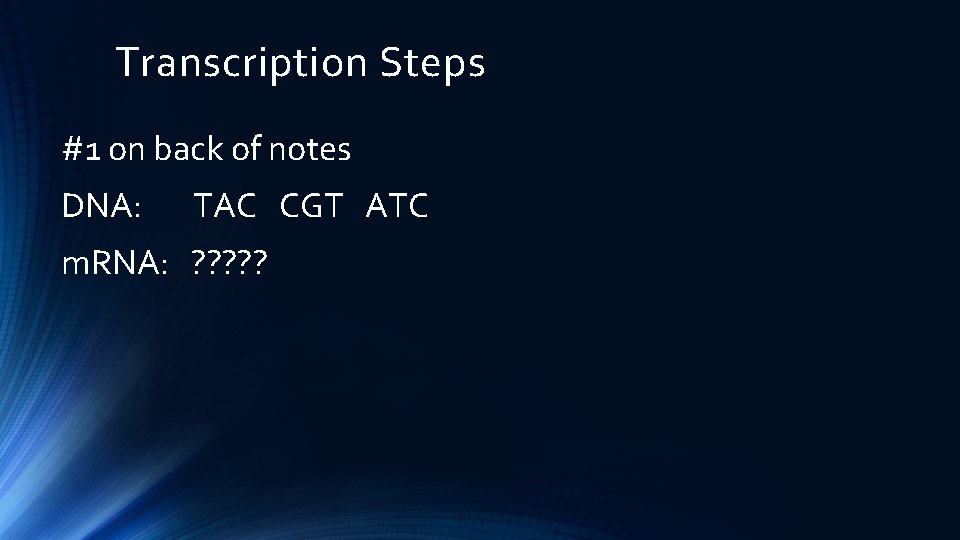
Transcription Steps #1 on back of notes DNA: TAC CGT ATC m. RNA: ? ? ?
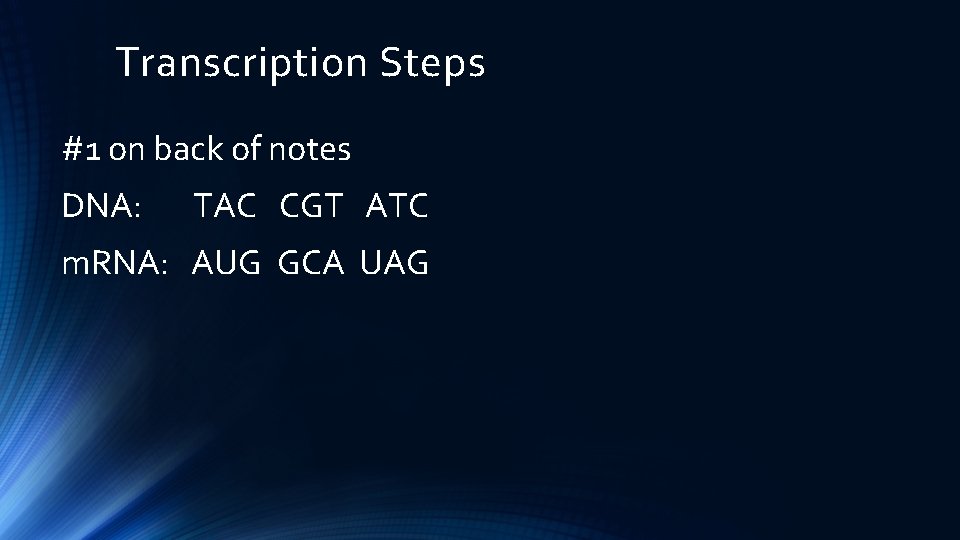
Transcription Steps #1 on back of notes DNA: TAC CGT ATC m. RNA: AUG GCA UAG
Genetic Code • Explains how a sequence of bases creates a specific amino acid
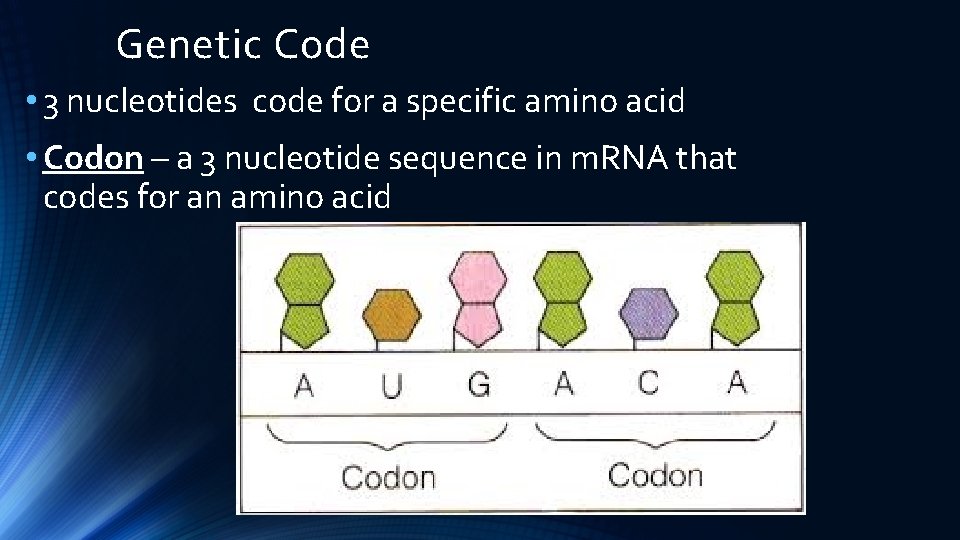
Genetic Code • 3 nucleotides code for a specific amino acid • Codon – a 3 nucleotide sequence in m. RNA that codes for an amino acid
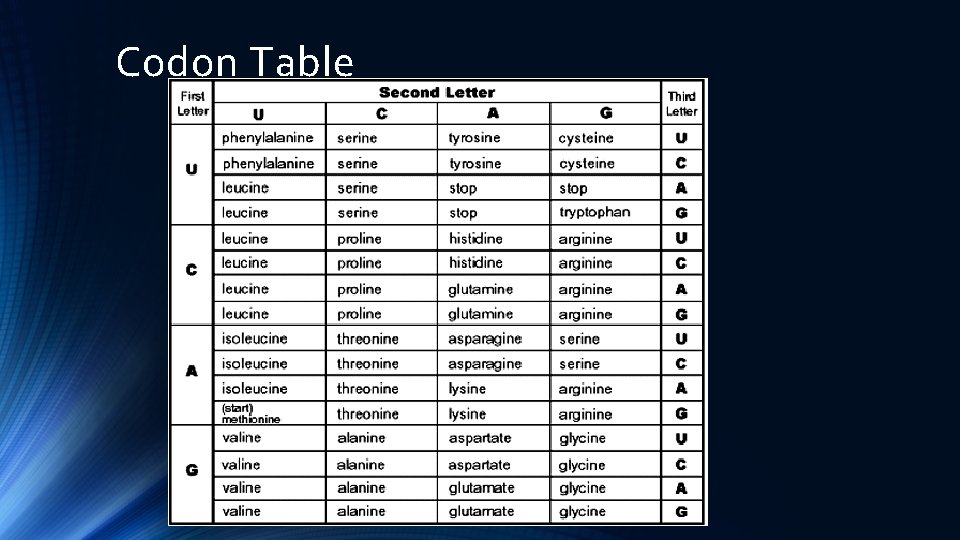
Codon Table
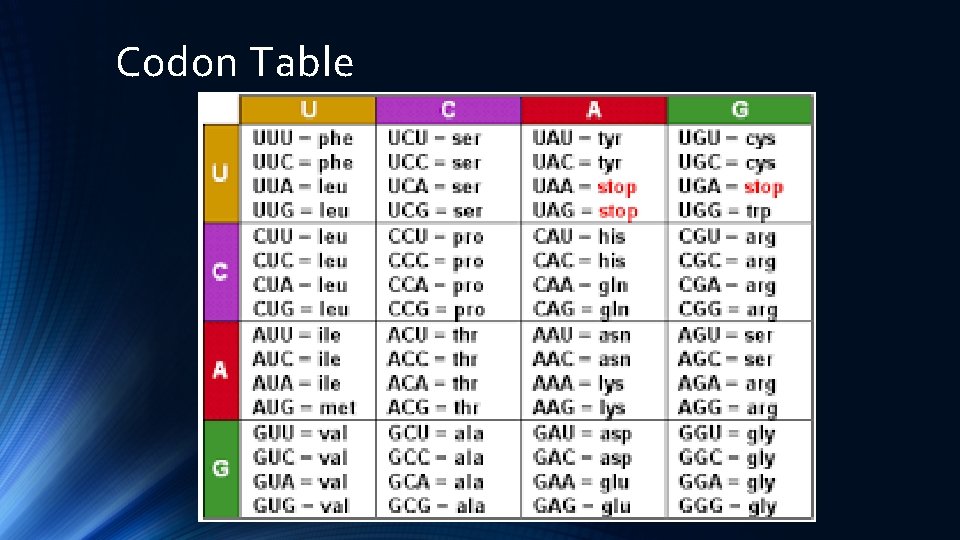
Codon Table
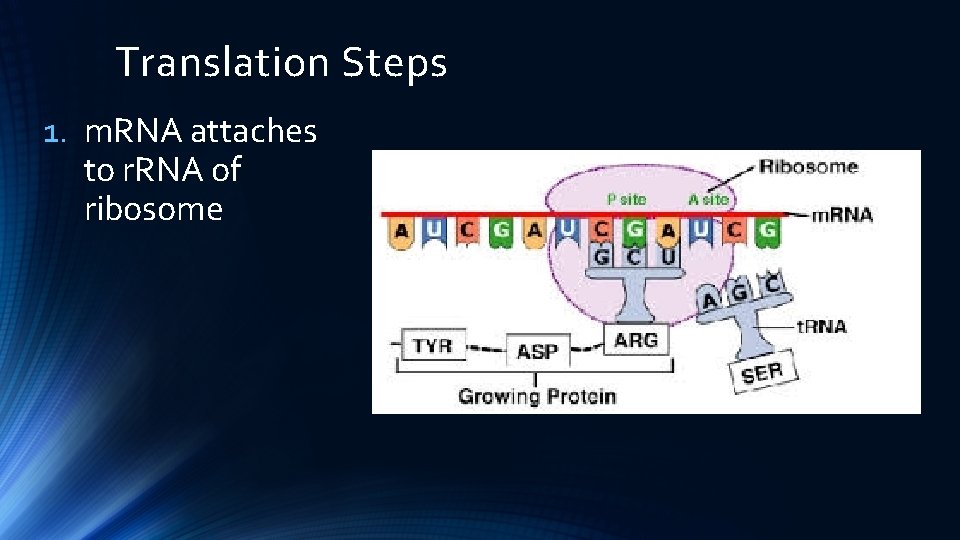
Translation Steps 1. m. RNA attaches to r. RNA of ribosome
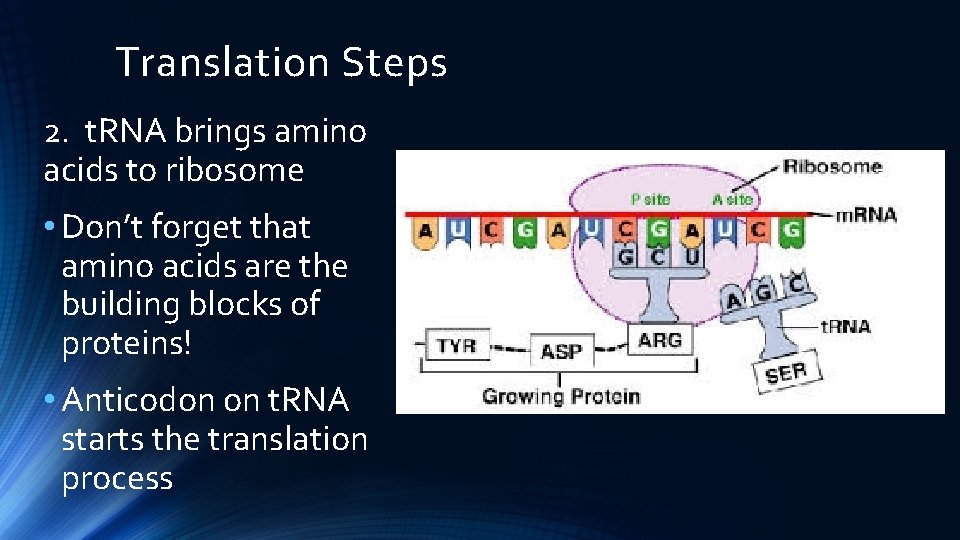
Translation Steps 2. t. RNA brings amino acids to ribosome • Don’t forget that amino acids are the building blocks of proteins! • Anticodon on t. RNA starts the translation process
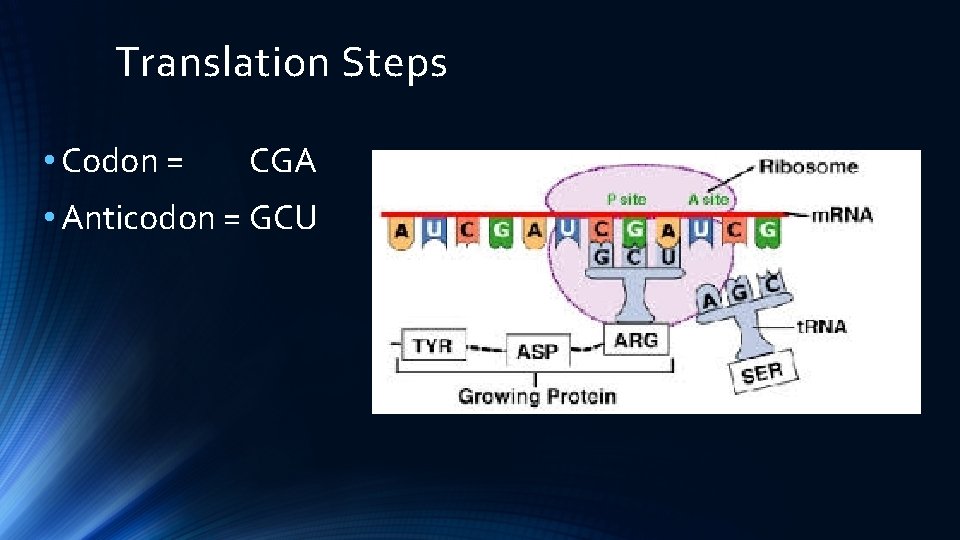
Translation Steps • Codon = CGA • Anticodon = GCU
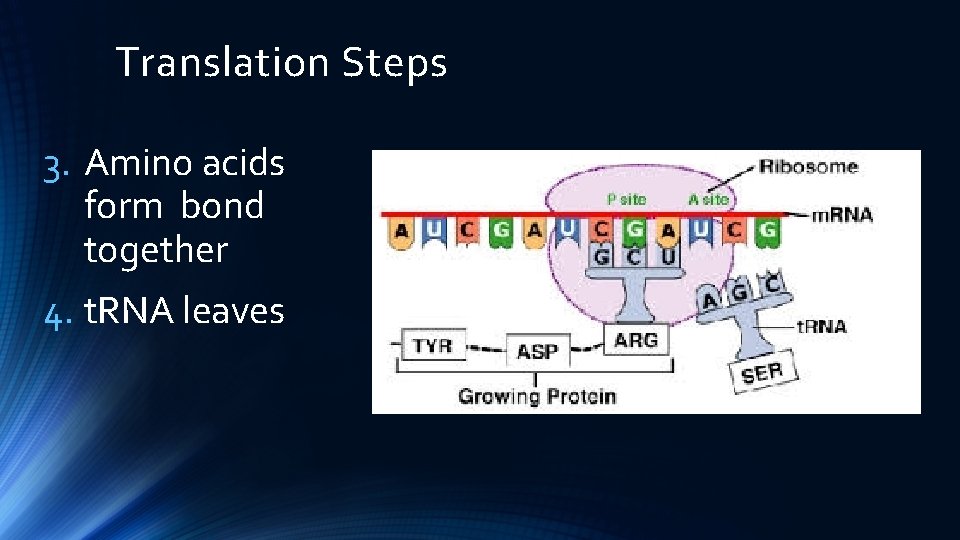
Translation Steps 3. Amino acids form bond together 4. t. RNA leaves
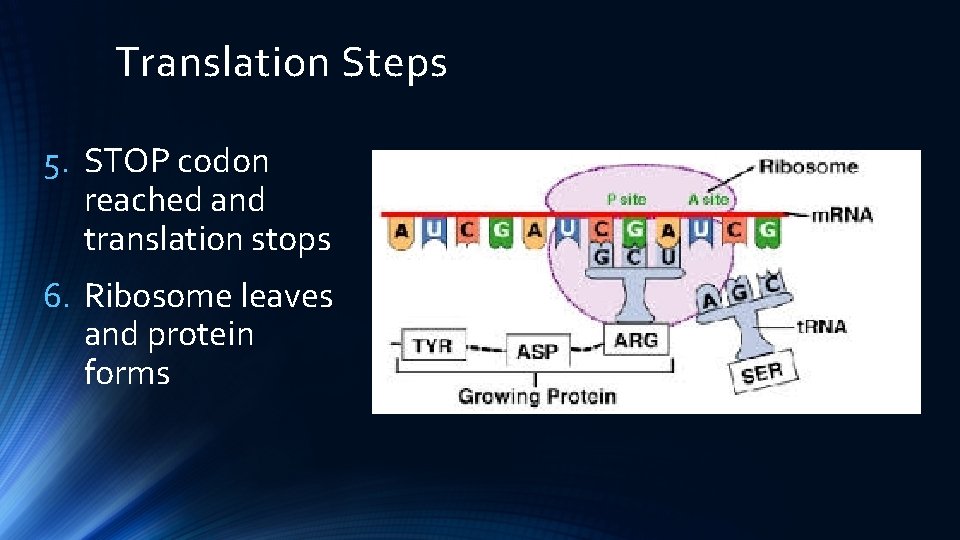
Translation Steps 5. STOP codon reached and translation stops 6. Ribosome leaves and protein forms
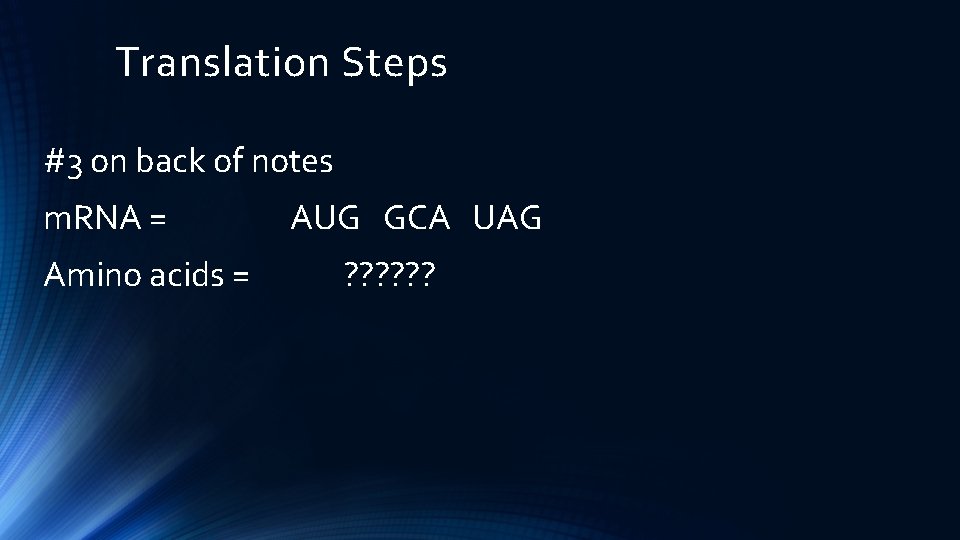
Translation Steps #3 on back of notes m. RNA = Amino acids = AUG GCA UAG ? ? ?
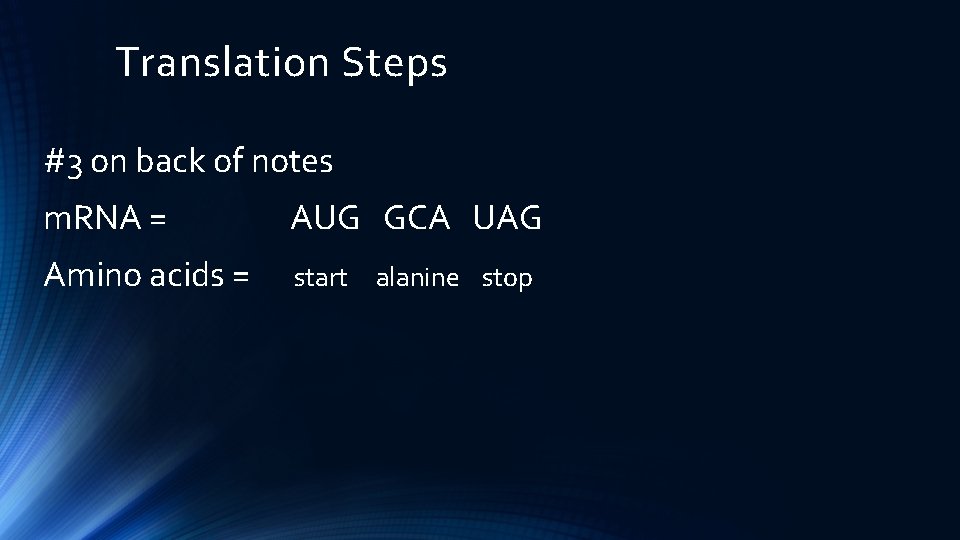
Translation Steps #3 on back of notes m. RNA = AUG GCA UAG Amino acids = start alanine stop
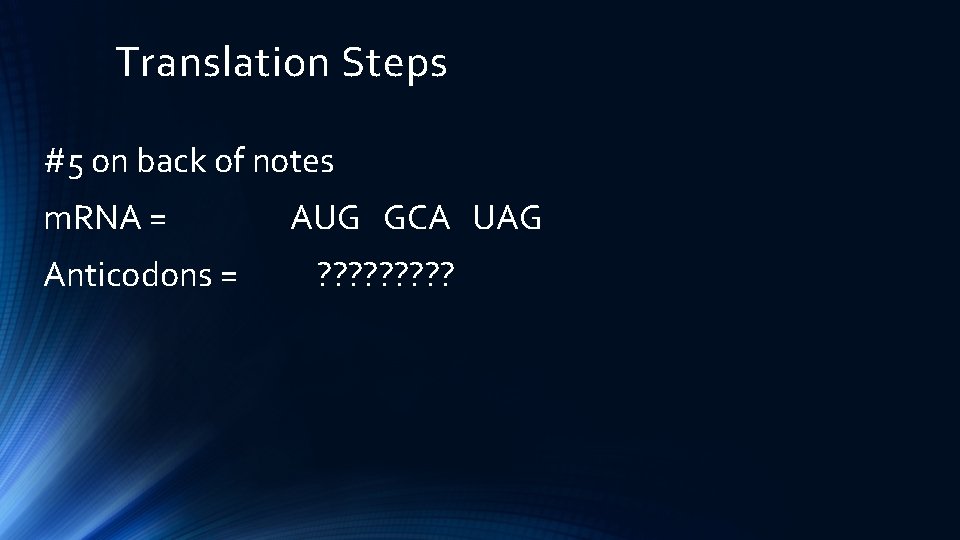
Translation Steps #5 on back of notes m. RNA = Anticodons = AUG GCA UAG ? ? ? ? ?
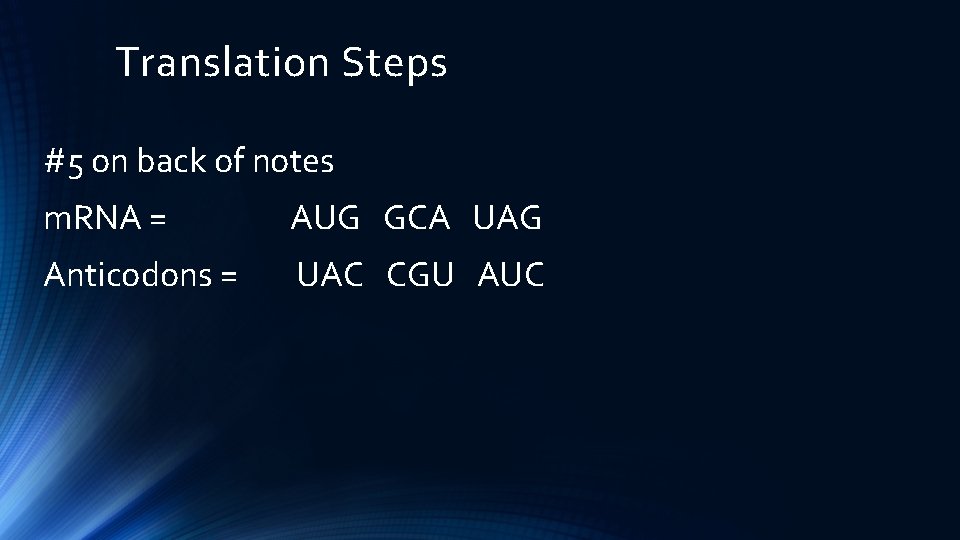
Translation Steps #5 on back of notes m. RNA = AUG GCA UAG Anticodons = UAC CGU AUC
Translation Steps https: //www. youtube. com/watch? v=B 6 O 6 u. Rb 1 D 38
Translation Steps If DNA strand = TAC CGA GAT ATT What would be the complementary m. RNA strand? What would be the amino acids formed? What would be the anti-codons?
Human Genome • We’ve figured out the order of 3. 2 billion base pairs in the 23 human chromosomes!!!!!!! • About 30, 000 genes in human genome • Can help find genes responsible for specific diseases
- Slides: 68