
DNA RNA and Protein Synthesis Chapter 10 DNA
- Slides: 18
DNA, RNA, and Protein Synthesis Chapter 10
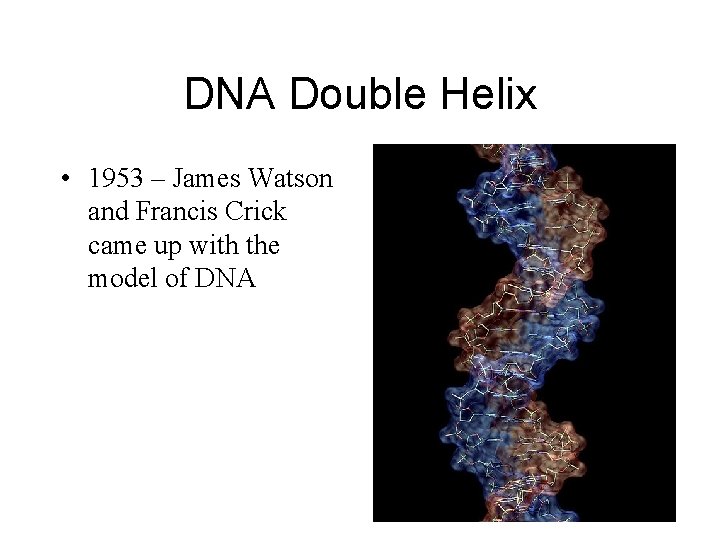
DNA Double Helix • 1953 – James Watson and Francis Crick came up with the model of DNA
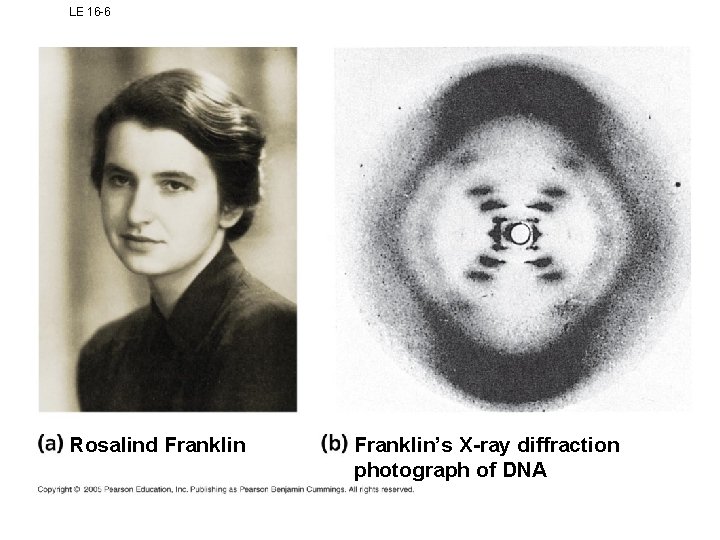
LE 16 -6 Rosalind Franklin’s X-ray diffraction photograph of DNA
DNA • DNA – Deoxyribonucleic acid • Stores and transmits genetic information that tells cells which proteins to make and when to make them. • Proteins, in turn, form the structural units of cells and help control chemical processes within cells.
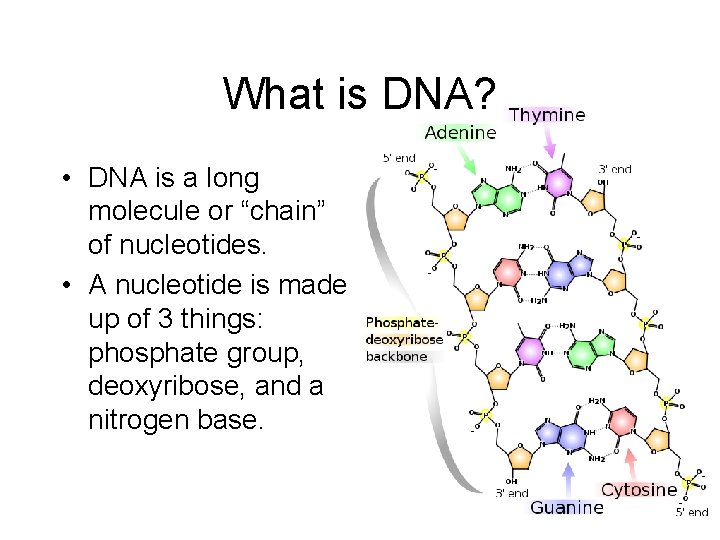
What is DNA? • DNA is a long molecule or “chain” of nucleotides. • A nucleotide is made up of 3 things: phosphate group, deoxyribose, and a nitrogen base.
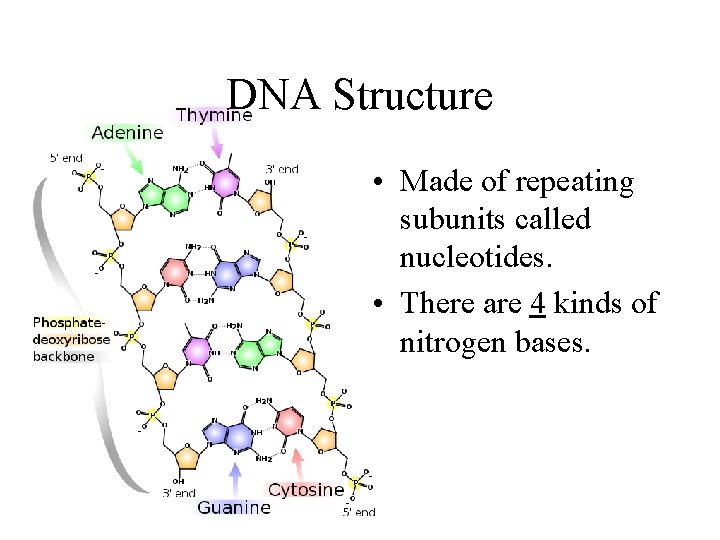
DNA Structure • Made of repeating subunits called nucleotides. • There are 4 kinds of nitrogen bases.
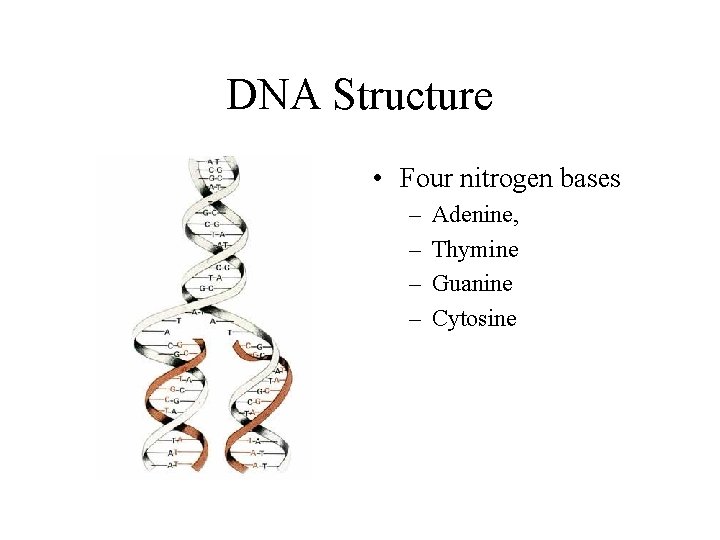
DNA Structure • Four nitrogen bases – – Adenine, Thymine Guanine Cytosine
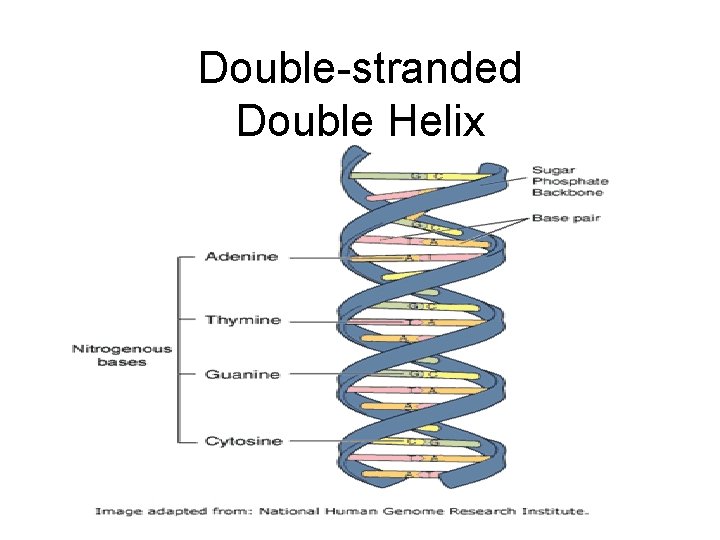
Double-stranded Double Helix
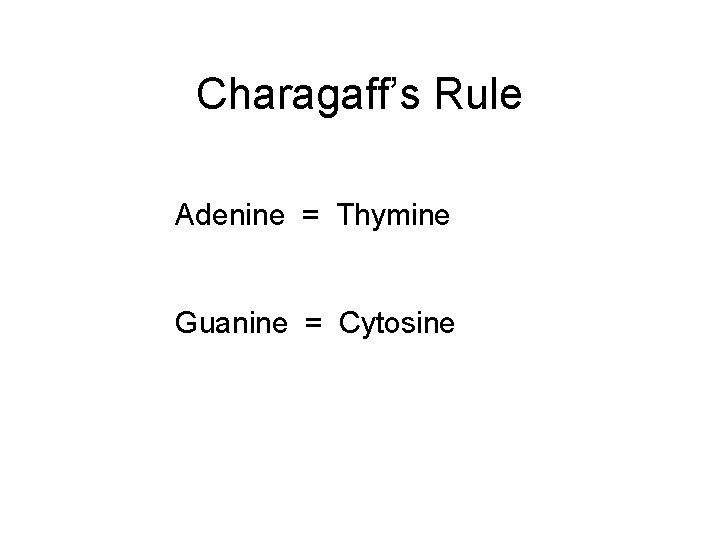
Charagaff’s Rule Adenine = Thymine Guanine = Cytosine
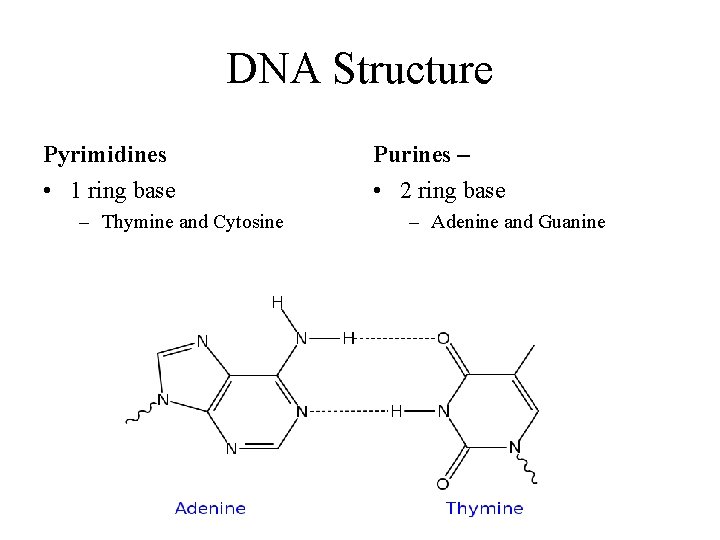
DNA Structure Pyrimidines Purines – • 1 ring base • 2 ring base – Thymine and Cytosine – Adenine and Guanine
DNA REPLICATION
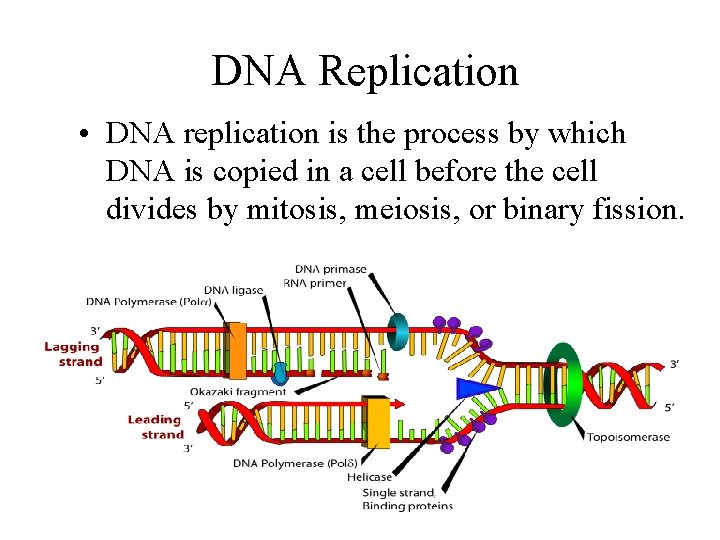
DNA Replication • DNA replication is the process by which DNA is copied in a cell before the cell divides by mitosis, meiosis, or binary fission.
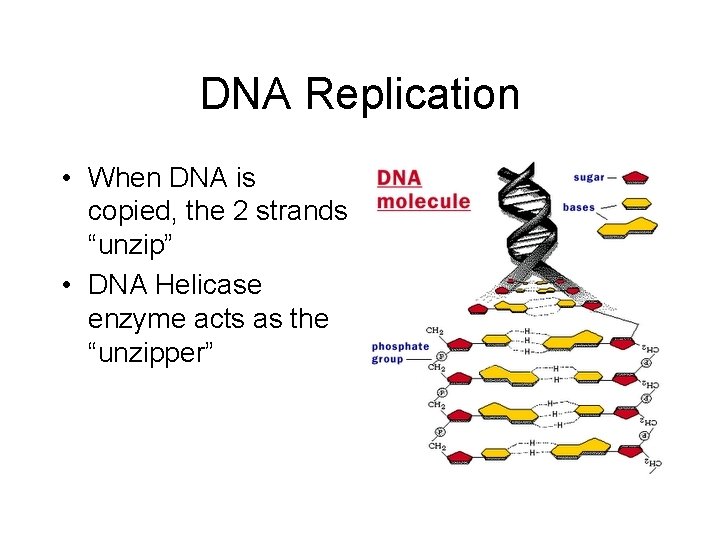
DNA Replication • When DNA is copied, the 2 strands “unzip” • DNA Helicase enzyme acts as the “unzipper”
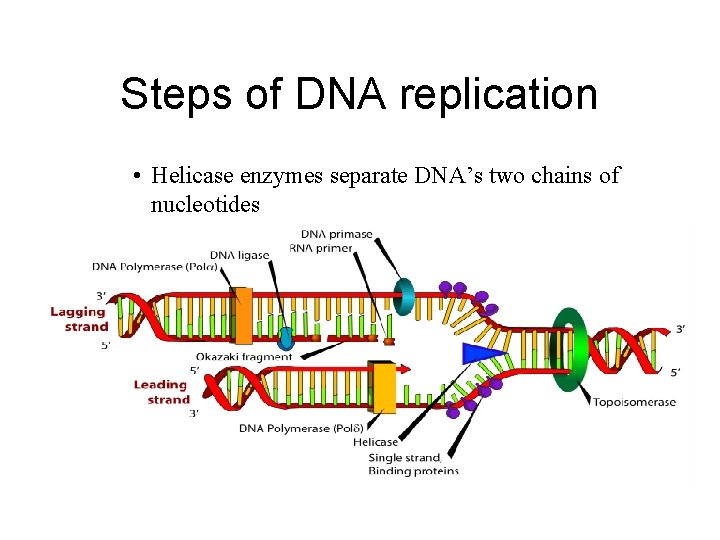
Steps of DNA replication • Helicase enzymes separate DNA’s two chains of nucleotides
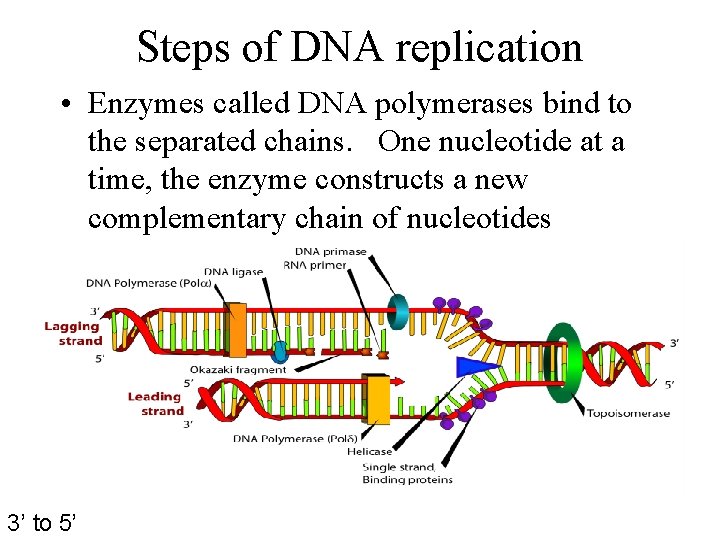
Steps of DNA replication • Enzymes called DNA polymerases bind to the separated chains. One nucleotide at a time, the enzyme constructs a new complementary chain of nucleotides 3’ to 5’
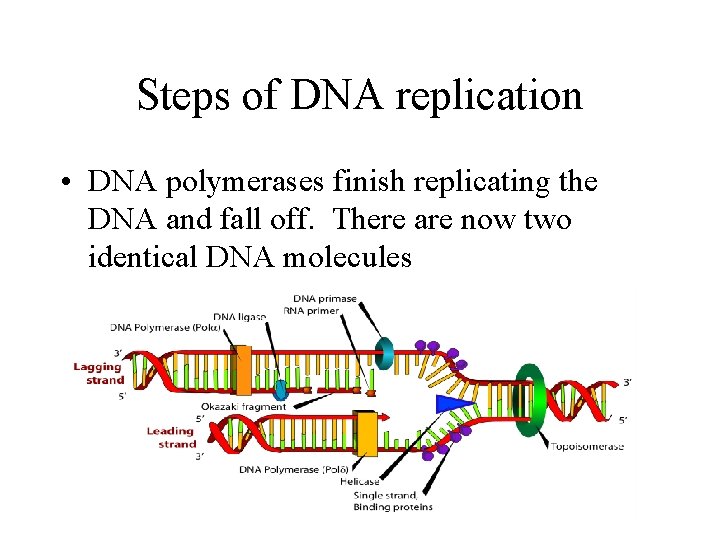
Steps of DNA replication • DNA polymerases finish replicating the DNA and fall off. There are now two identical DNA molecules
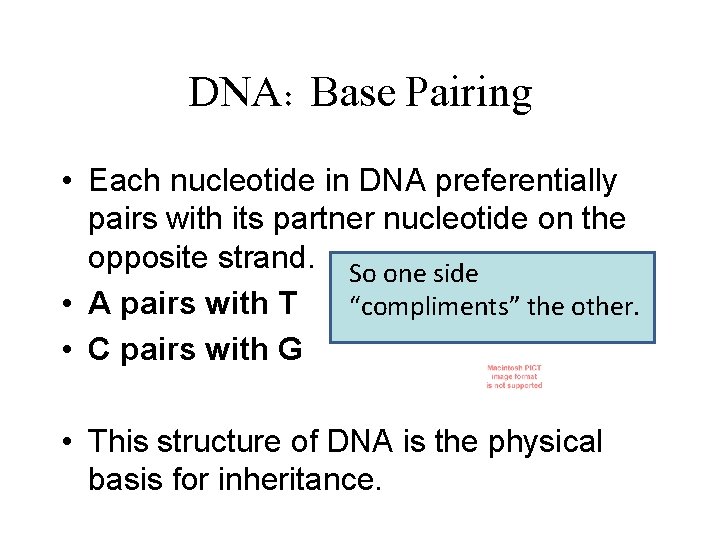
DNA: Base Pairing • Each nucleotide in DNA preferentially pairs with its partner nucleotide on the opposite strand. So one side • A pairs with T “compliments” the other. • C pairs with G • This structure of DNA is the physical basis for inheritance.
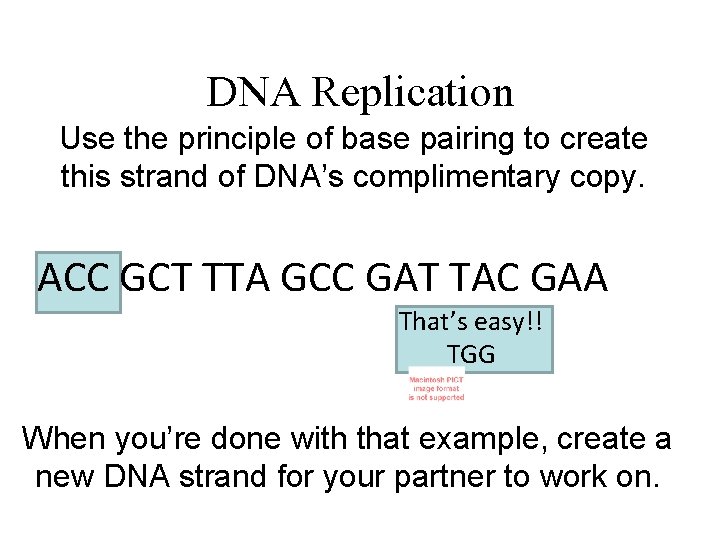
DNA Replication Use the principle of base pairing to create this strand of DNA’s complimentary copy. ACC GCT TTA GCC GAT TAC GAA That’s easy!! TGG When you’re done with that example, create a new DNA strand for your partner to work on.