
DNA Replication Why Does DNA Need to Replicate
![“It has not escaped `our notice that the specific [base] pairing we have postulated](https://slidetodoc.com/presentation_image_h2/f1b9befcdb56f618246ba9d53ebbe52b/image-3.jpg "“It has not escaped `our notice that the specific [base] pairing we have postulated")
- Slides: 17
DNA Replication
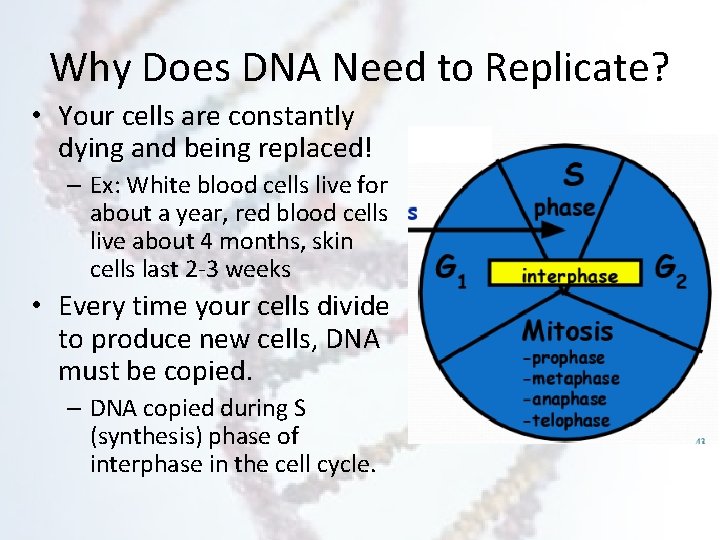
Why Does DNA Need to Replicate? • Your cells are constantly dying and being replaced! – Ex: White blood cells live for about a year, red blood cells live about 4 months, skin cells last 2 -3 weeks • Every time your cells divide to produce new cells, DNA must be copied. – DNA copied during S (synthesis) phase of interphase in the cell cycle.
“It has not escaped `our notice that the specific [base] pairing we have postulated immediately suggests a possible copying mechanism for the genetic material. ” -Watson and Crick
Replication • Nitrogenous bases pair only in one way (A-T, C-G) • One DNA strand serves as a template for a new strand • Replication- the process by which DNA is copied – Ensures that all cells in your body have the same set of genetic information 1. DNA helix “unzips” 2. Complementary (matching) bases added to each separate DNA strand 3. Results in 2 identical DNA molecules
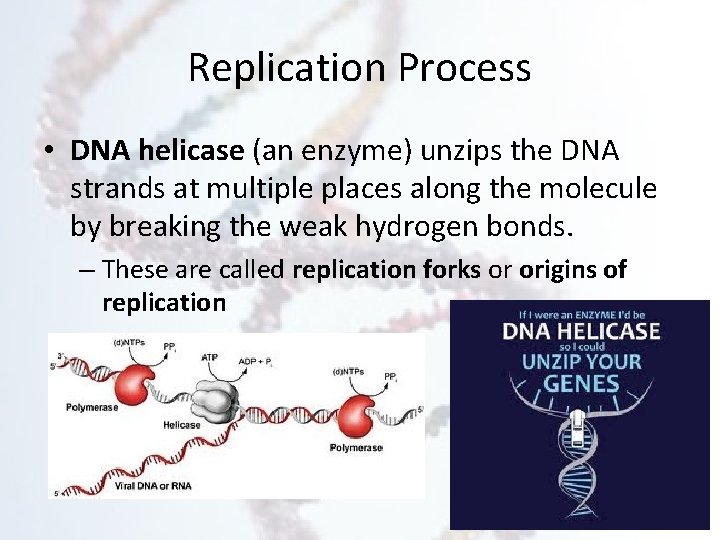
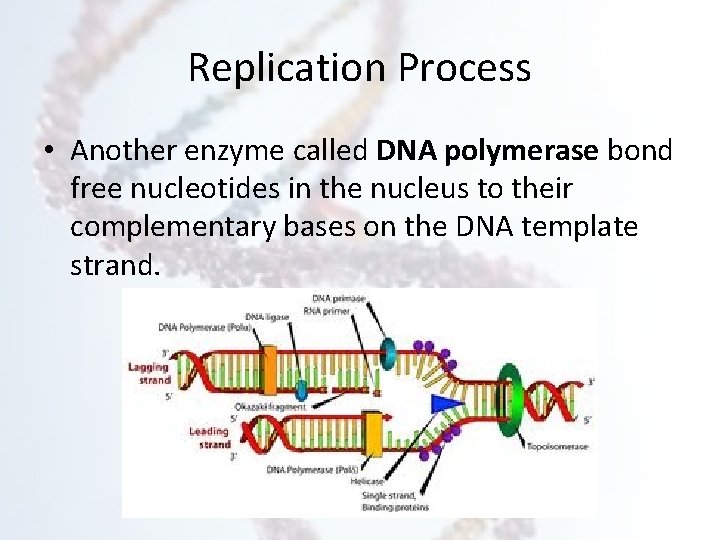
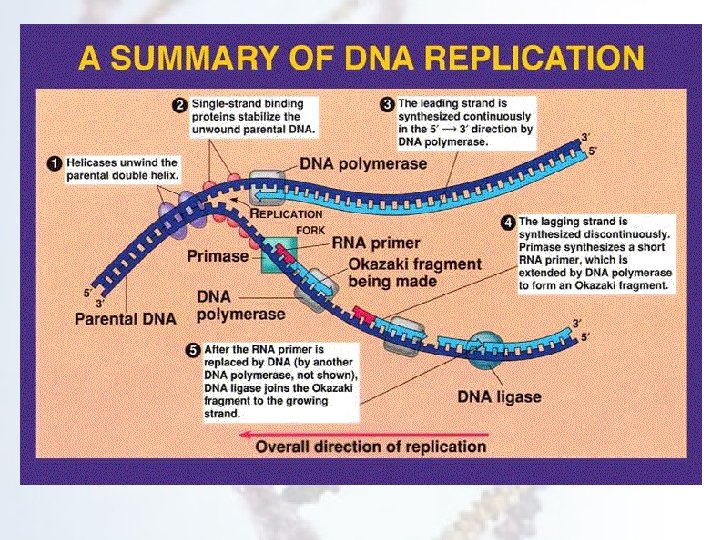
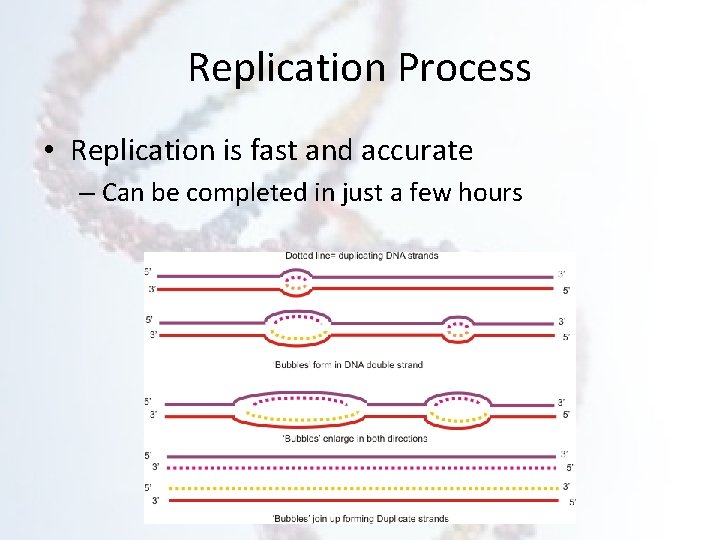
Replication Process • DNA helicase (an enzyme) unzips the DNA strands at multiple places along the molecule by breaking the weak hydrogen bonds. – These are called replication forks or origins of replication
Replication Process • Another enzyme called DNA polymerase bond free nucleotides in the nucleus to their complementary bases on the DNA template strand.
Replication Process • Before DNA strands can form, there must be RNA primers present to start the addition of new nucleotides • Primase is the enzyme that synthesizes the RNA primer • DNA polymerase can then add the new nucleotides
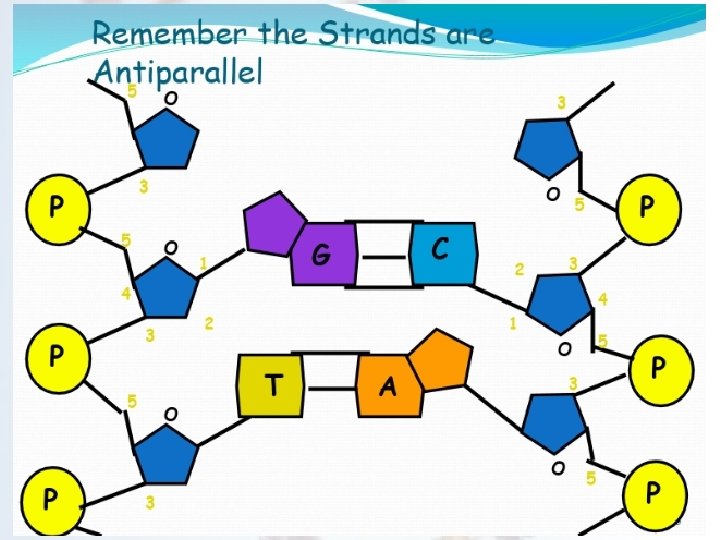
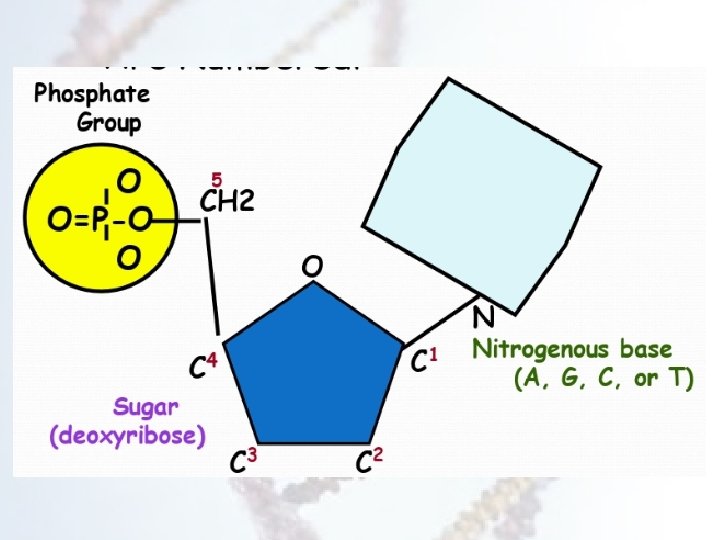
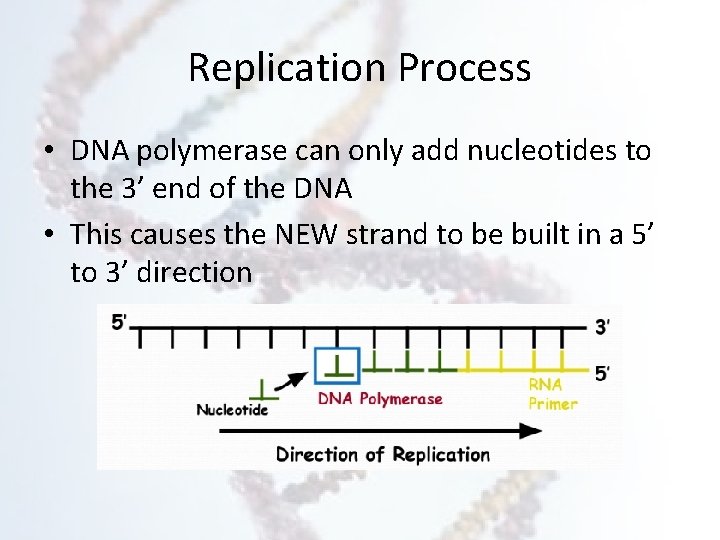
Replication Process • DNA polymerase can only add nucleotides to the 3’ end of the DNA • This causes the NEW strand to be built in a 5’ to 3’ direction
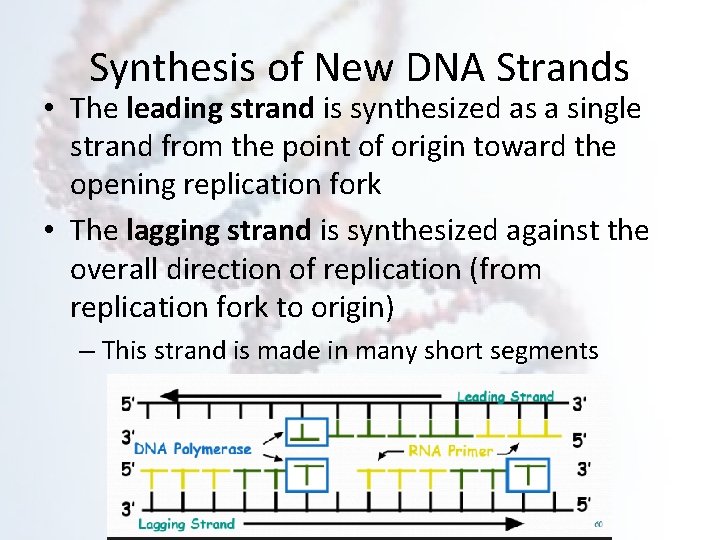
Synthesis of New DNA Strands • The leading strand is synthesized as a single strand from the point of origin toward the opening replication fork • The lagging strand is synthesized against the overall direction of replication (from replication fork to origin) – This strand is made in many short segments
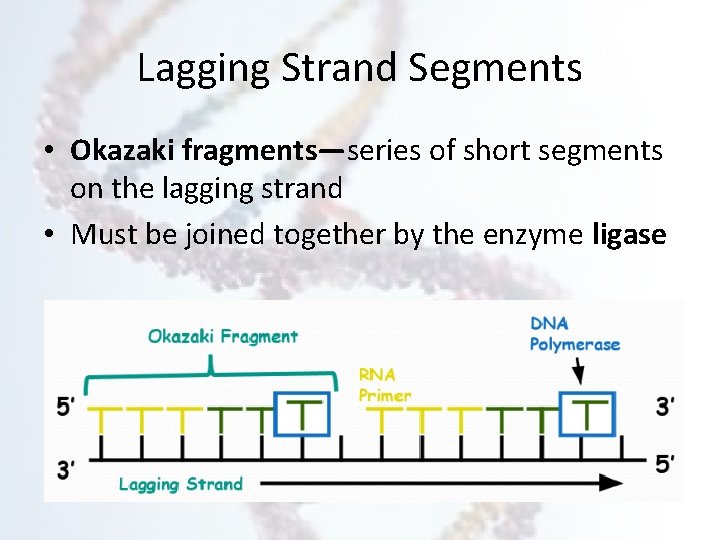
Lagging Strand Segments • Okazaki fragments—series of short segments on the lagging strand • Must be joined together by the enzyme ligase
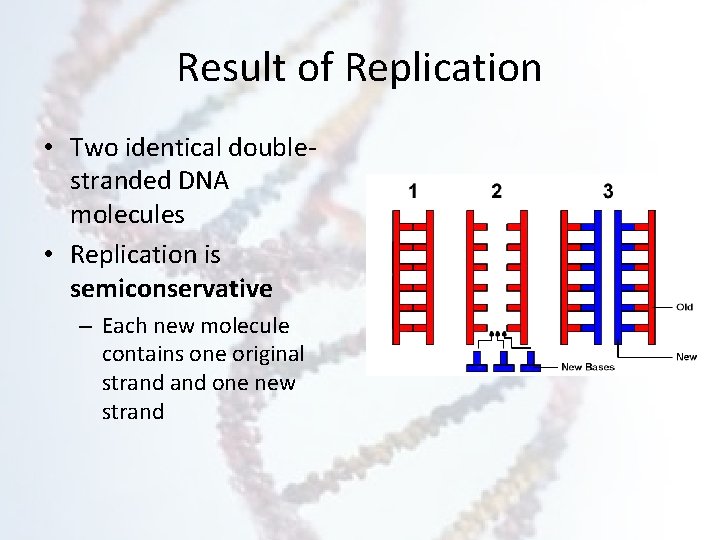
Result of Replication • Two identical doublestranded DNA molecules • Replication is semiconservative – Each new molecule contains one original strand one new strand
Replication Process • Replication is fast and accurate – Can be completed in just a few hours
Do Mistakes Ever Occur? • DNA polymerase “proofreads” as it goes • Occasionally, it adds the wrong base but can usually detect the error and correct it before moving on. • Replication errors happen only about 1 time per billion nucleotides.
DNA Damage & Repair • Chemicals and UV radiation damage the DNA in our body cells • Cells must continuously repair damaged DNA • Excision repair occurs when any of over 50 repair enzymes remove damaged parts of DNA • DNA polymerase and DNA ligase replace and bond the new nucleotides together