
DNA Replication Review of DNA Structure of DNA
- Slides: 12
DNA Replication
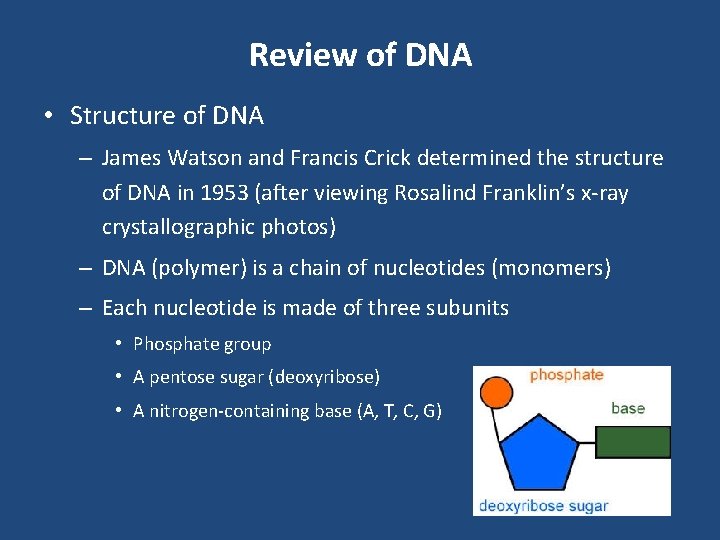
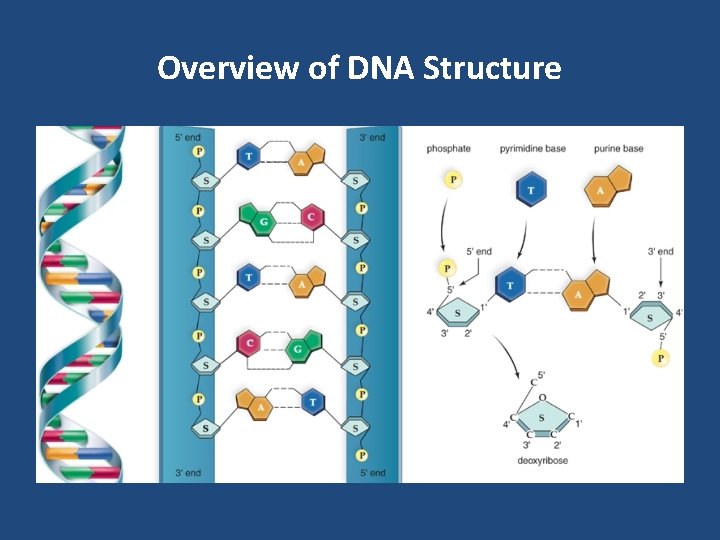
Review of DNA • Structure of DNA – James Watson and Francis Crick determined the structure of DNA in 1953 (after viewing Rosalind Franklin’s x-ray crystallographic photos) – DNA (polymer) is a chain of nucleotides (monomers) – Each nucleotide is made of three subunits • Phosphate group • A pentose sugar (deoxyribose) • A nitrogen-containing base (A, T, C, G)
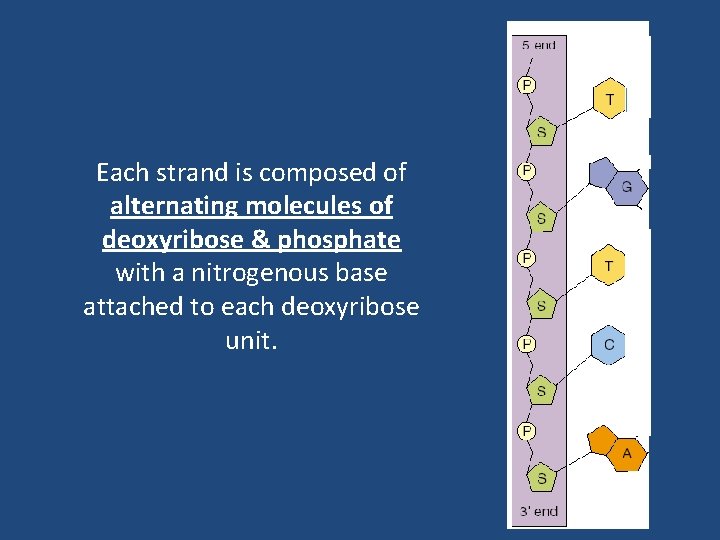
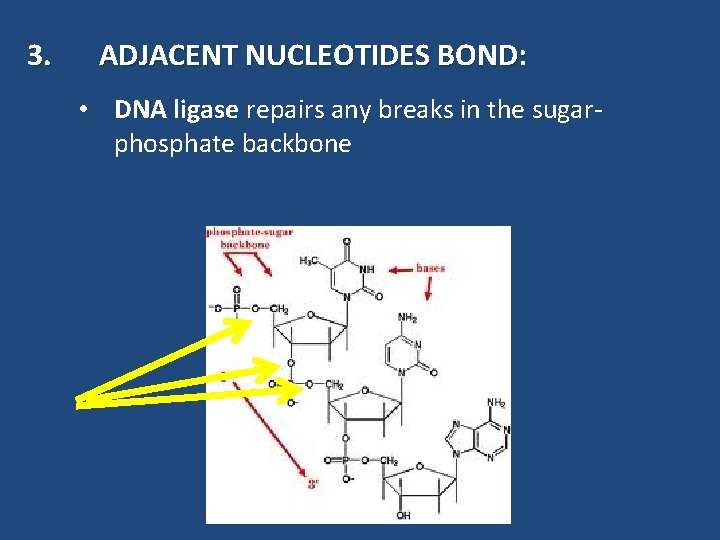
Each strand is composed of alternating molecules of deoxyribose & phosphate with a nitrogenous base attached to each deoxyribose unit.
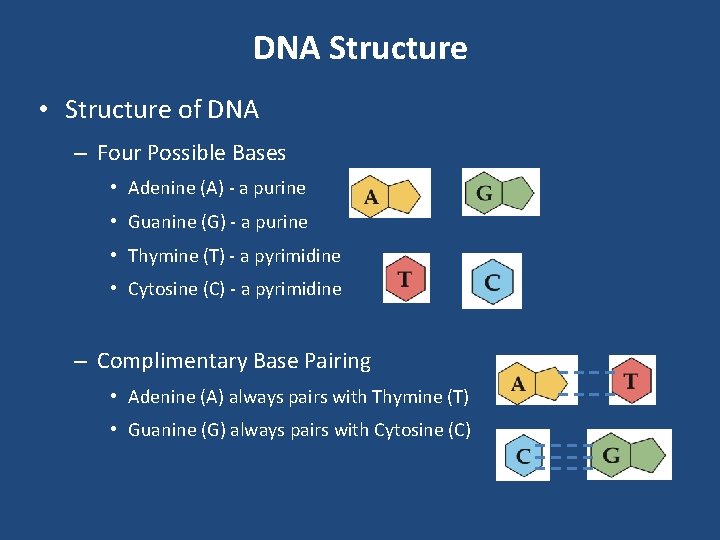
DNA Structure • Structure of DNA – Four Possible Bases • Adenine (A) - a purine • Guanine (G) - a purine • Thymine (T) - a pyrimidine • Cytosine (C) - a pyrimidine – Complimentary Base Pairing • Adenine (A) always pairs with Thymine (T) • Guanine (G) always pairs with Cytosine (C)
Overview of DNA Structure
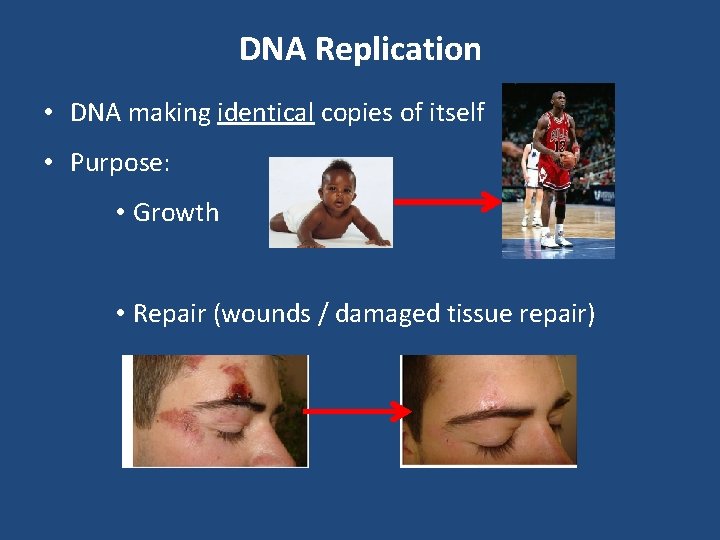
DNA Replication • DNA making identical copies of itself • Purpose: • Growth • Repair (wounds / damaged tissue repair)
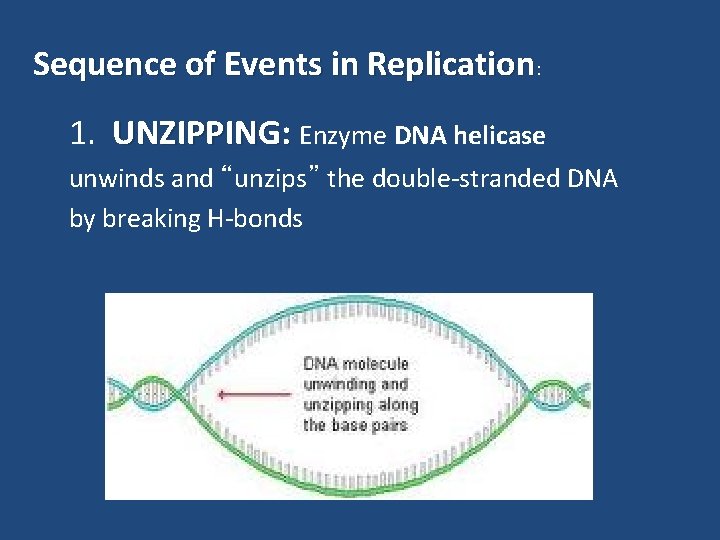
Sequence of Events in Replication: 1. UNZIPPING: Enzyme DNA helicase unwinds and “unzips” the double-stranded DNA by breaking H-bonds
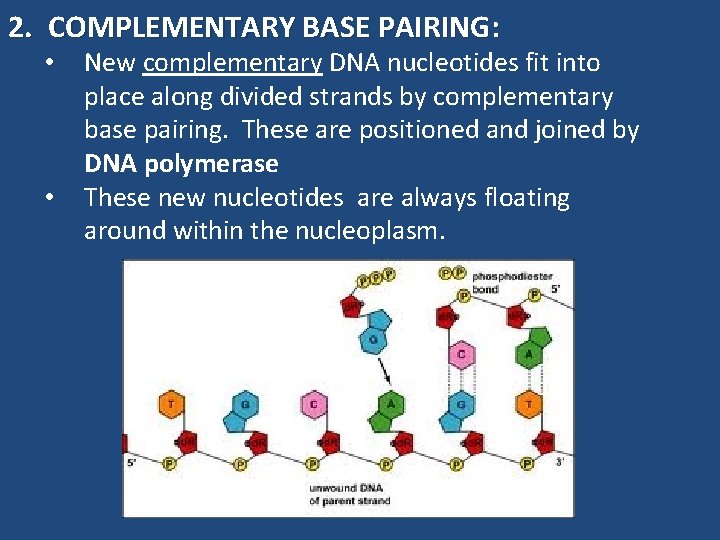
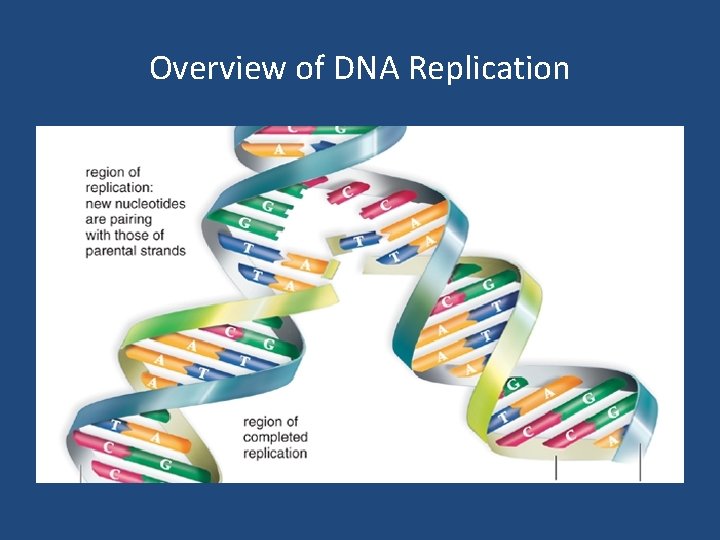
2. COMPLEMENTARY BASE PAIRING: • • New complementary DNA nucleotides fit into place along divided strands by complementary base pairing. These are positioned and joined by DNA polymerase These new nucleotides are always floating around within the nucleoplasm.
3. ADJACENT NUCLEOTIDES BOND: • DNA ligase repairs any breaks in the sugarphosphate backbone
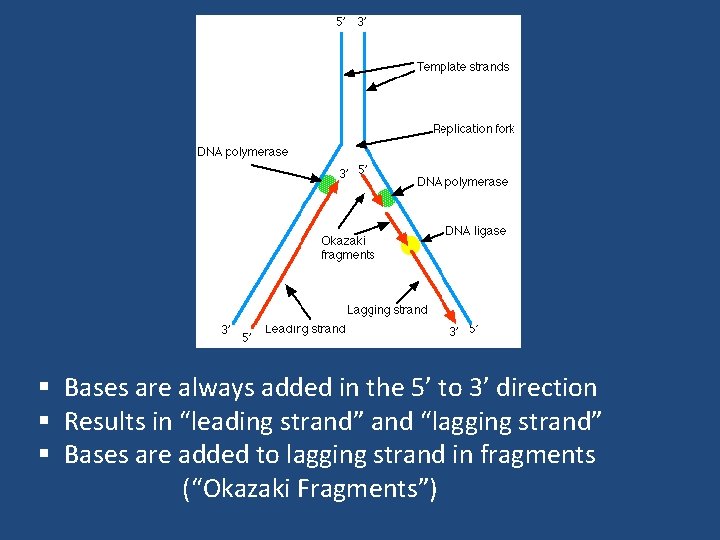
§ Bases are always added in the 5’ to 3’ direction § Results in “leading strand” and “lagging strand” § Bases are added to lagging strand in fragments (“Okazaki Fragments”)
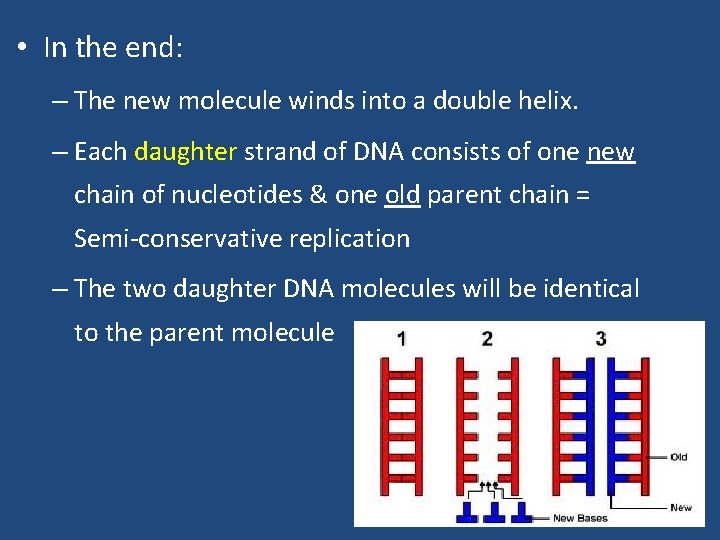
• In the end: – The new molecule winds into a double helix. – Each daughter strand of DNA consists of one new chain of nucleotides & one old parent chain = Semi-conservative replication – The two daughter DNA molecules will be identical to the parent molecule
Overview of DNA Replication