
DNA Replication Nucleotide Opposite sides of the DNA
- Slides: 12
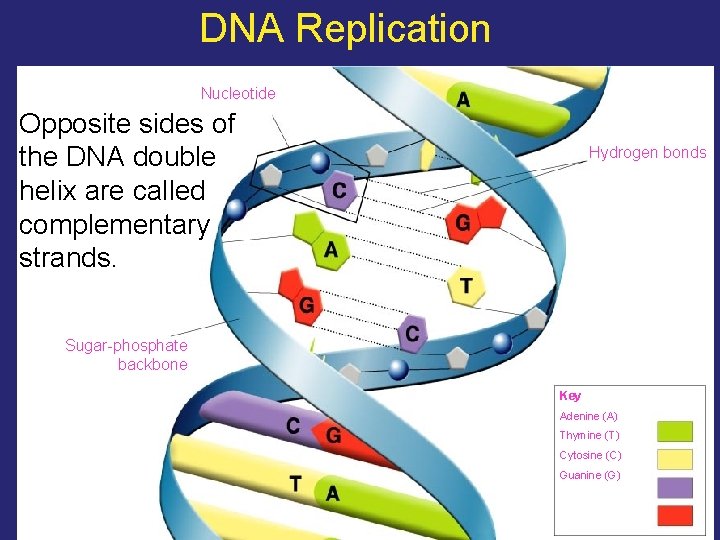
DNA Replication Nucleotide Opposite sides of the DNA double helix are called complementary strands. Hydrogen bonds Sugar-phosphate backbone Key Adenine (A) Thymine (T) Cytosine (C) Guanine (G)
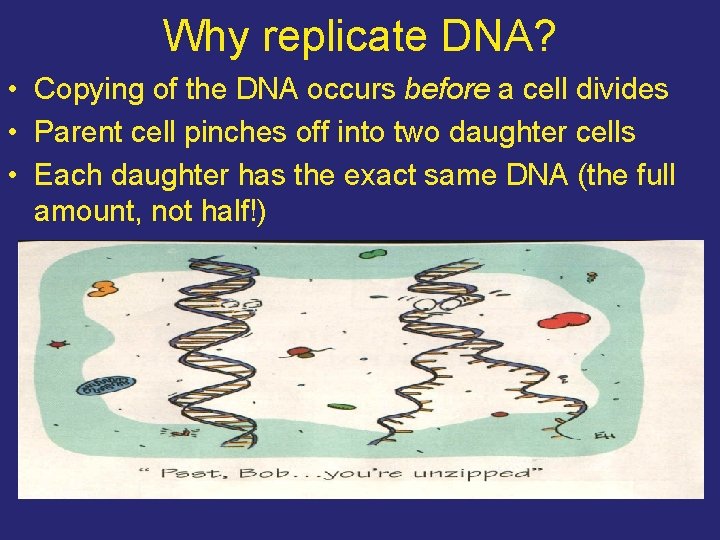
Why replicate DNA? • Copying of the DNA occurs before a cell divides • Parent cell pinches off into two daughter cells • Each daughter has the exact same DNA (the full amount, not half!)
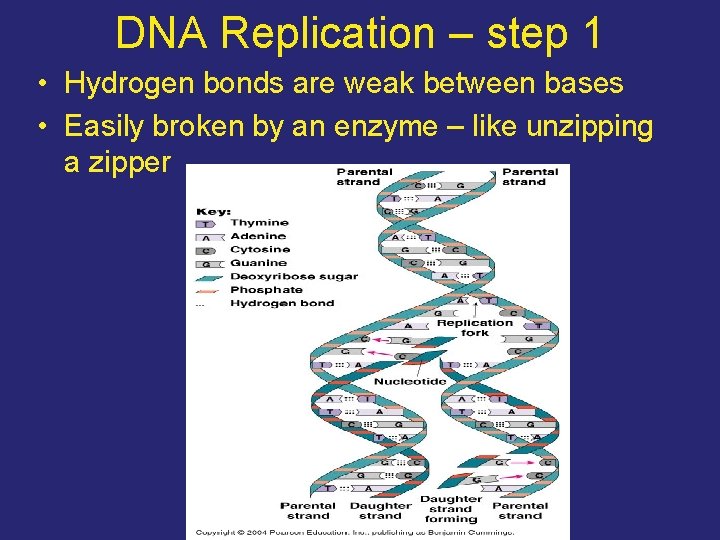
DNA Replication – step 1 • Hydrogen bonds are weak between bases • Easily broken by an enzyme – like unzipping a zipper
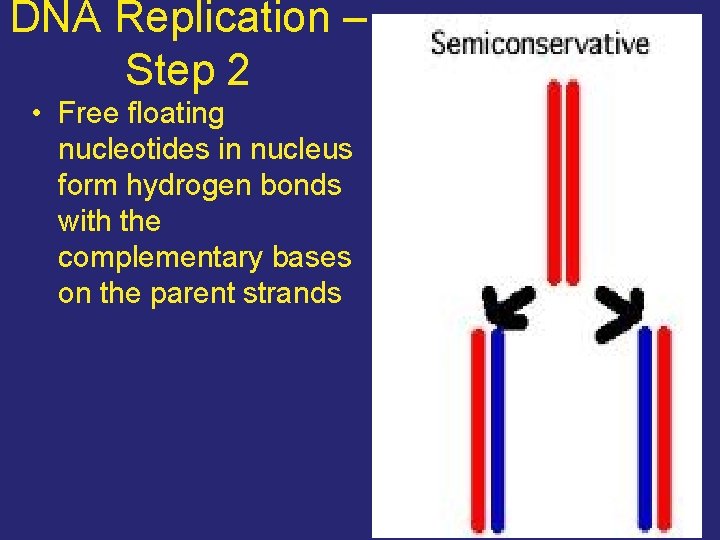
DNA Replication – Step 2 • Free floating nucleotides in nucleus form hydrogen bonds with the complementary bases on the parent strands
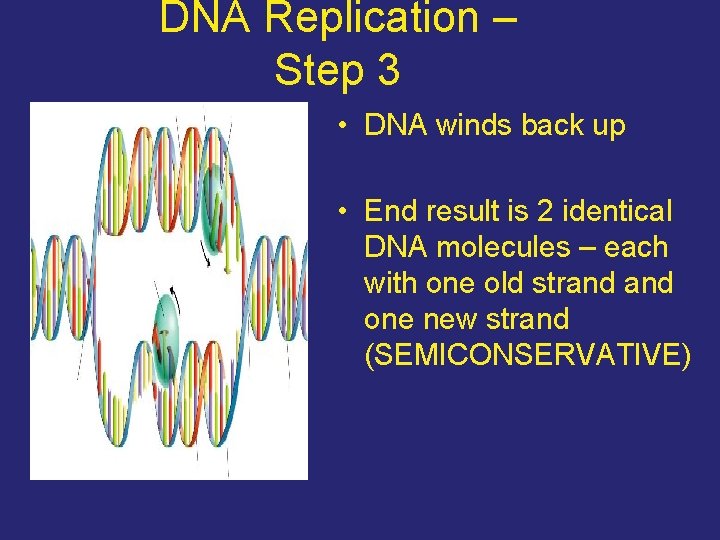
DNA Replication – Step 3 • DNA winds back up • End result is 2 identical DNA molecules – each with one old strand one new strand (SEMICONSERVATIVE)
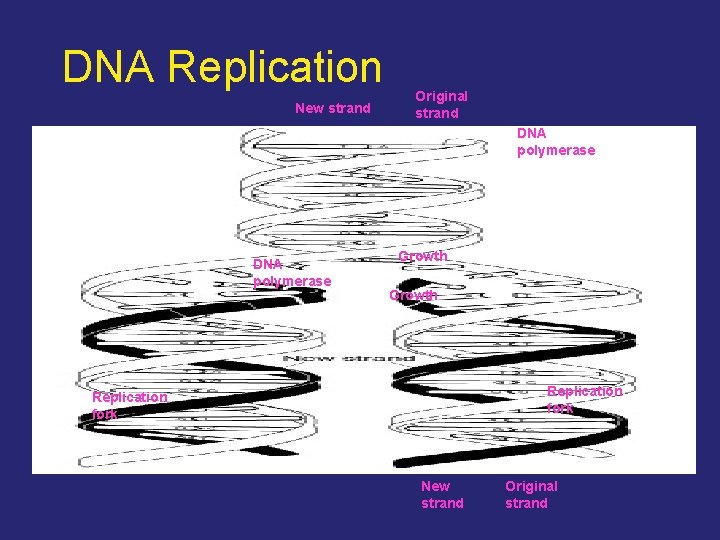
DNA Replication New strand Original strand DNA polymerase Growth Replication fork New strand Original strand
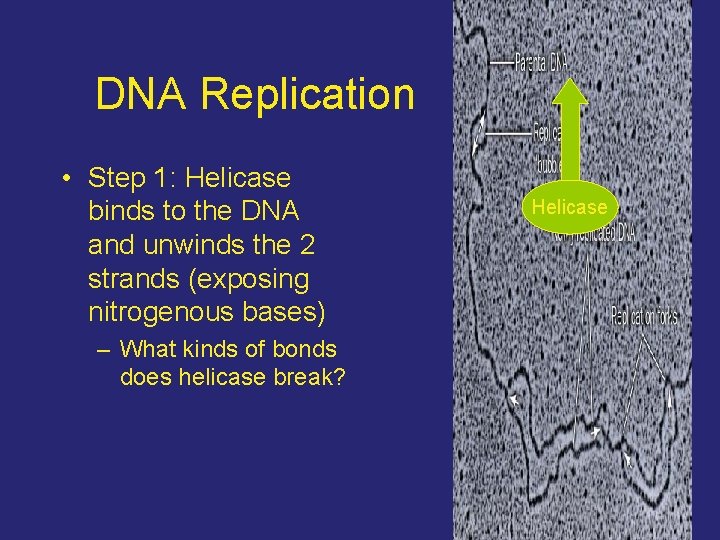
DNA Replication • Step 1: Helicase binds to the DNA and unwinds the 2 strands (exposing nitrogenous bases) – What kinds of bonds does helicase break? Helicase
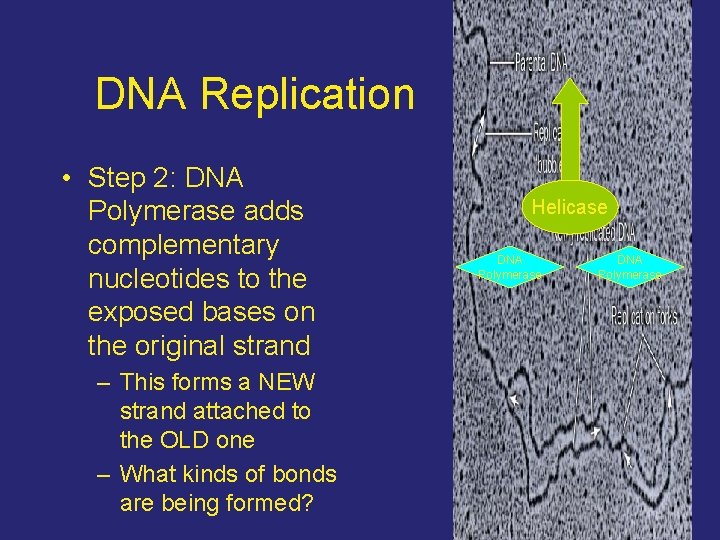
DNA Replication • Step 2: DNA Polymerase adds complementary nucleotides to the exposed bases on the original strand – This forms a NEW strand attached to the OLD one – What kinds of bonds are being formed? Helicase DNA Polymerase
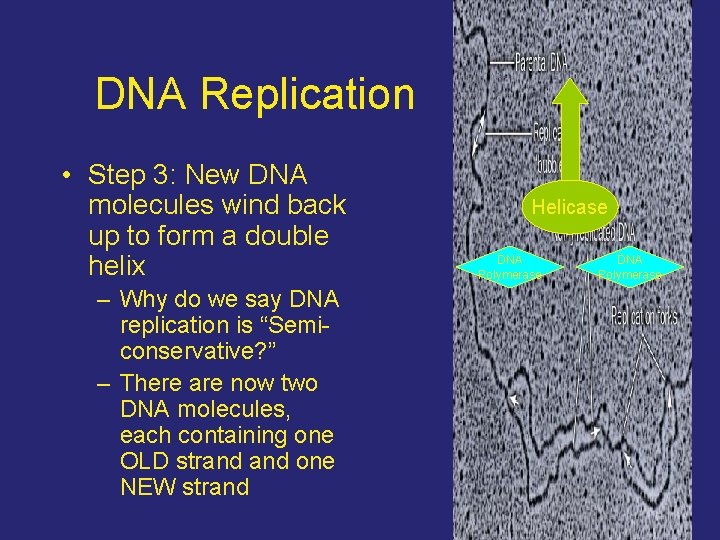
DNA Replication • Step 3: New DNA molecules wind back up to form a double helix – Why do we say DNA replication is “Semiconservative? ” – There are now two DNA molecules, each containing one OLD strand one NEW strand Helicase DNA Polymerase
DNA Replication - Photo
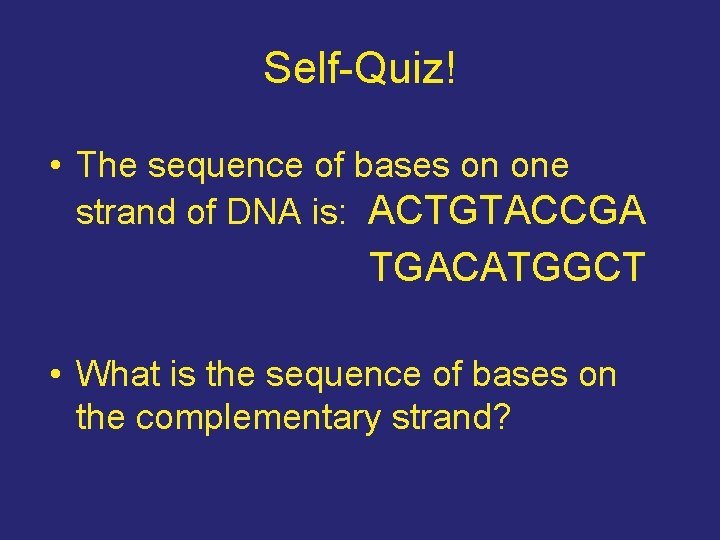
Self-Quiz! • The sequence of bases on one strand of DNA is: ACTGTACCGA TGACATGGCT • What is the sequence of bases on the complementary strand?
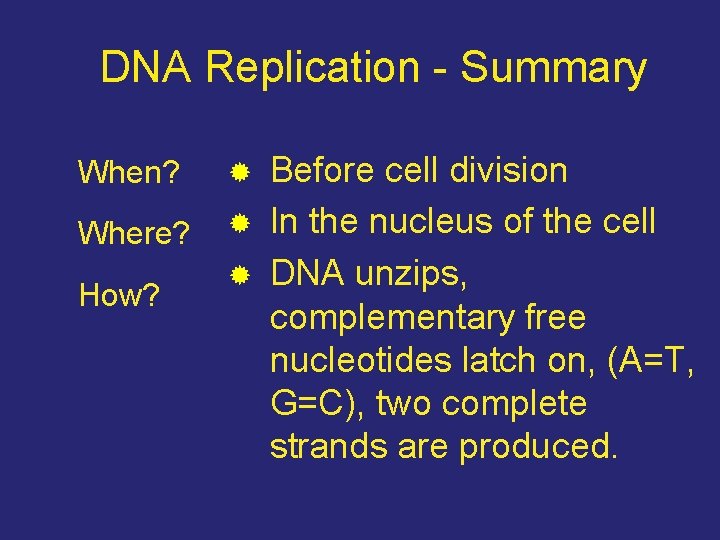
DNA Replication - Summary When? Where? How? Before cell division ® In the nucleus of the cell ® DNA unzips, complementary free nucleotides latch on, (A=T, G=C), two complete strands are produced. ®