
DNA Replication Lecture 9 Ms Day Honors Biology
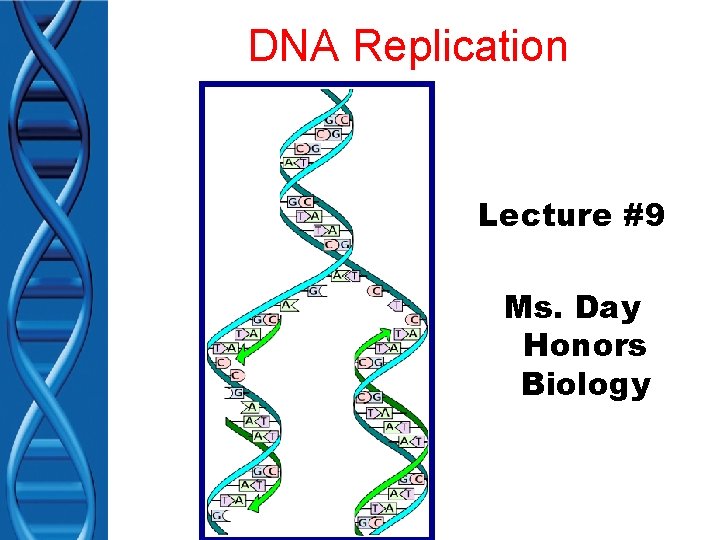
DNA Replication Lecture #9 Ms. Day Honors Biology
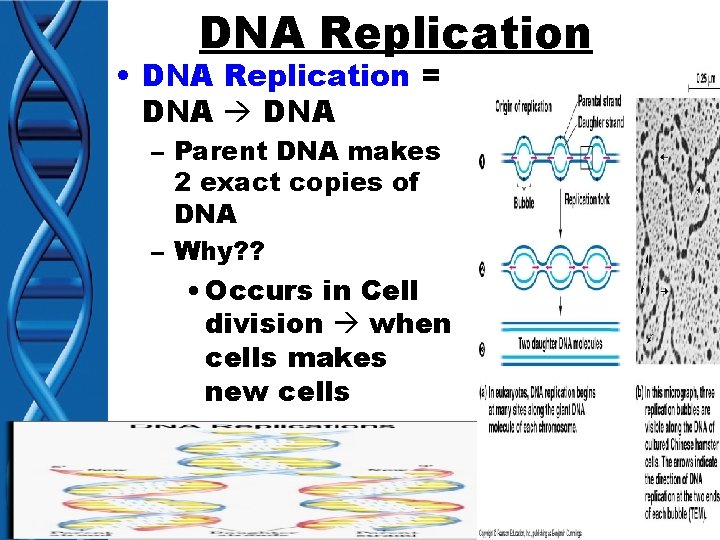
DNA Replication • DNA Replication = DNA – Parent DNA makes 2 exact copies of DNA – Why? ? • Occurs in Cell division when cells makes new cells
DNA is replicated semiconservatively
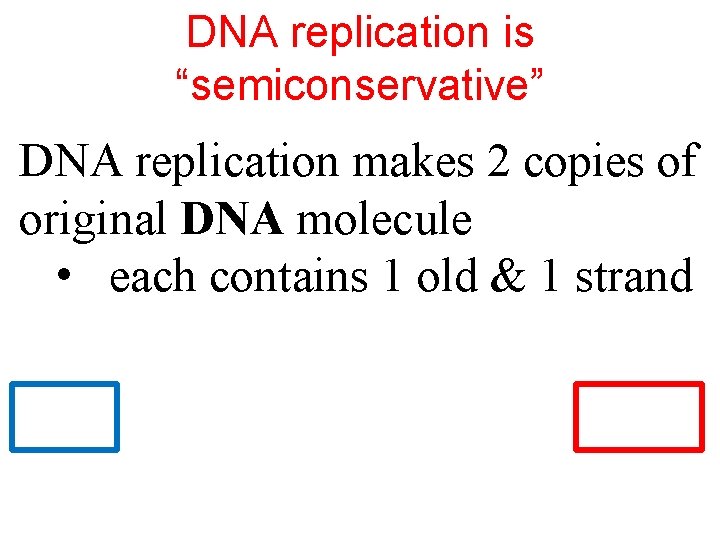
DNA replication is “semiconservative” DNA replication makes 2 copies of original DNA molecule • each contains 1 old & 1 strand
DNA Replication: a closer look http: //henge. bio. miami. edu/mallery/movies/replication. mov

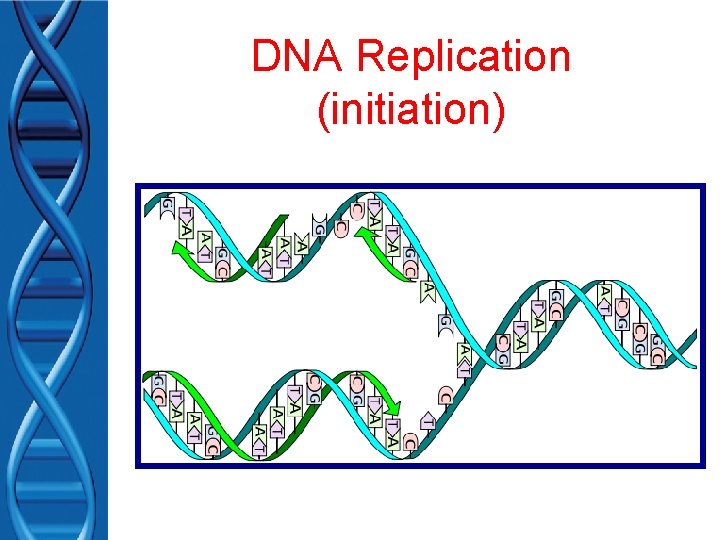
DNA Replication Steps: • Initiation – Makes replication fork (bubble) at origin of replication • sequence of DNA found at specific site • Elongation – Parental strands unwind and daughter strands are made – Bases are added by proteins • Termination: – duplicated DNA separate from each other. – Now, 2 IDENTICAL copies of DNA are present
DNA Replication (initiation)
Segments of single-stranded DNA are called template strands. Copied strand is called the complement strand (think “c” for copy) BEGINNING OF DNA REPLICATION (INITIATION) • DNA helicase (think “helix”) – binds to the DNA at the replication fork – untwist (“unzips”) DNA using energy from ATP – Breaks hydrogen bonds between base pairs THE REPLICATION FORK and BUBBLE IS NOW CREATED!
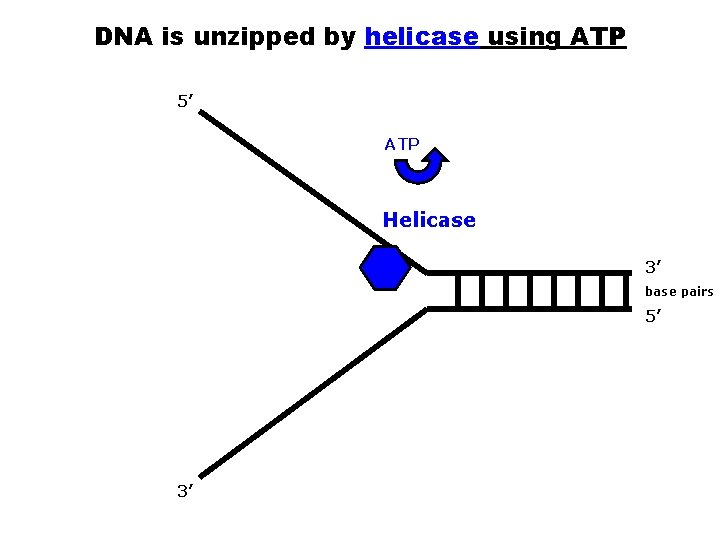
DNA is unzipped by helicase using ATP 5’ ATP Helicase 3’ base pairs 5’ 3’
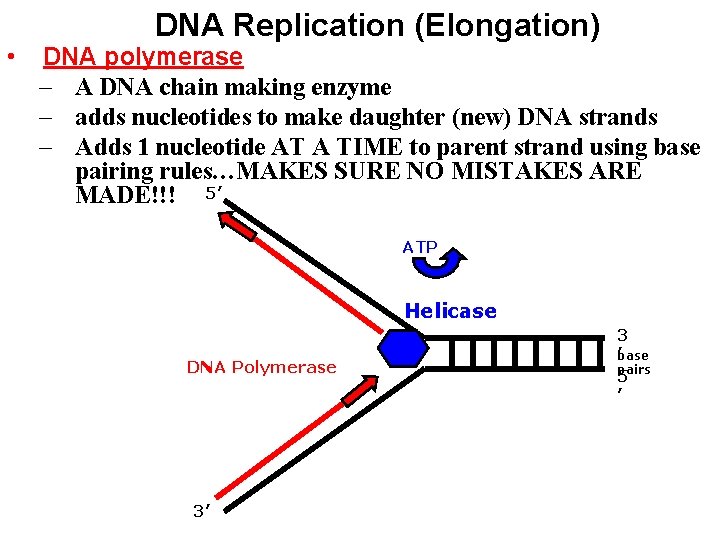
• DNA Replication (Elongation) DNA polymerase – A DNA chain making enzyme – adds nucleotides to make daughter (new) DNA strands – Adds 1 nucleotide AT A TIME to parent strand using base pairing rules…MAKES SURE NO MISTAKES ARE MADE!!! 5’ ATP Helicase DNA Polymerase 3’ 3 ’base pairs 5 ’
- Slides: 10