
DNA REPLICATION DNA copying Each cell division cell
- Slides: 28
DNA REPLICATION
DNA copying • Each cell division cell must copy its entire DNA • So each daughter cell gets a complete copy • Rate of synthesis – Bacteria = 1000 bases per second – Mammals = 100 bases per second • Problem - with a single replication origin in DNA – Bacteria genome is 4 x 10 E 6. Takes 20 minutes to copy. – Human is 3. 2 x 10 E 9. Would take 10, 000 times longer.
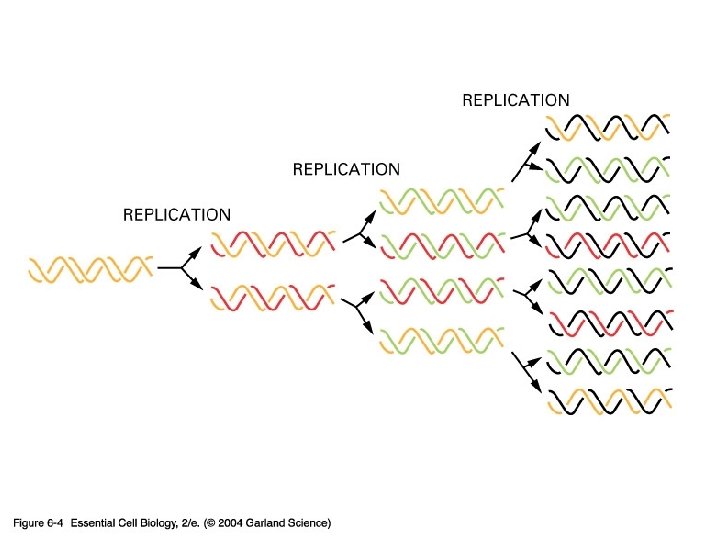
DNA copying solutions • Double helix has to be copied • Semi-conservation solution exists – Each daughter cells gets one of the original copies
06_04_replic. rounds. jpg
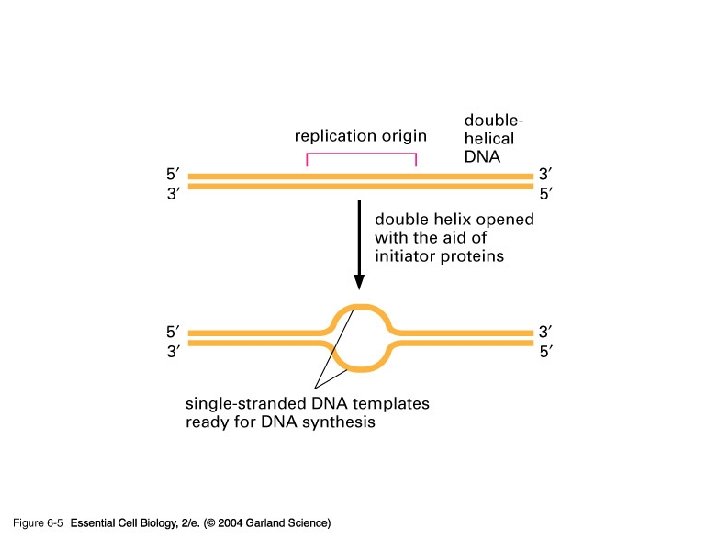
DNA copying solutions • Double helix has to be copied • Semi-conservation solution exists – Each daughter cells gets one of the original copies • Unwind at one point and use that as the origin of replication
06_05_replic. origin. jpg
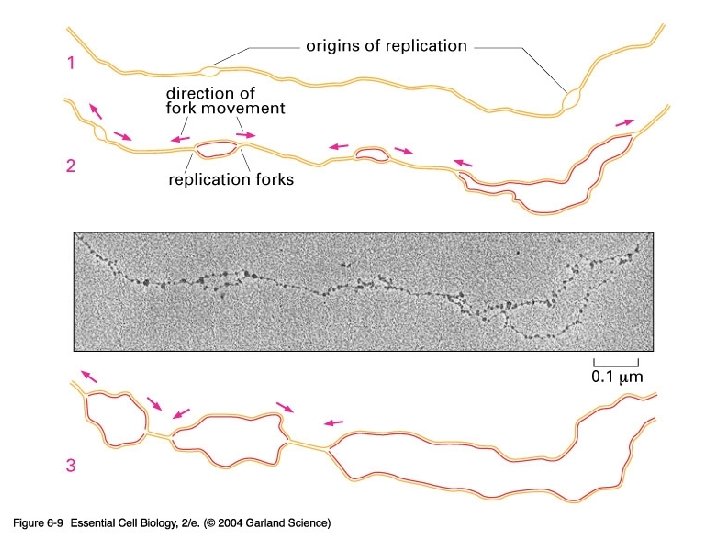
06_09_Replic. forks. jpg
DNA copying solutions • Double helix has to be copied • Semi-conservation solution exists – Each daughter cells gets one of the original copies • Unwind at one point and use that as the origin of replication • Region is AT rich to allow easy separation • Eukaryotes have multiple replication origins (Humans = 10, 000)
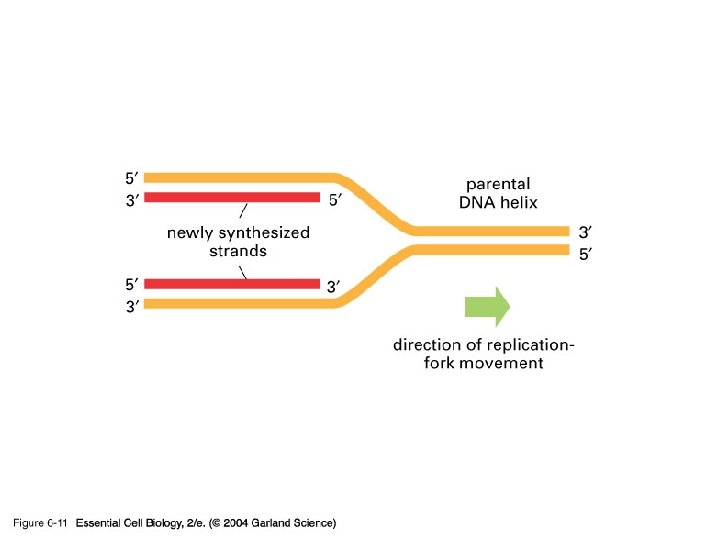
06_11_oppositepolarity. jpg
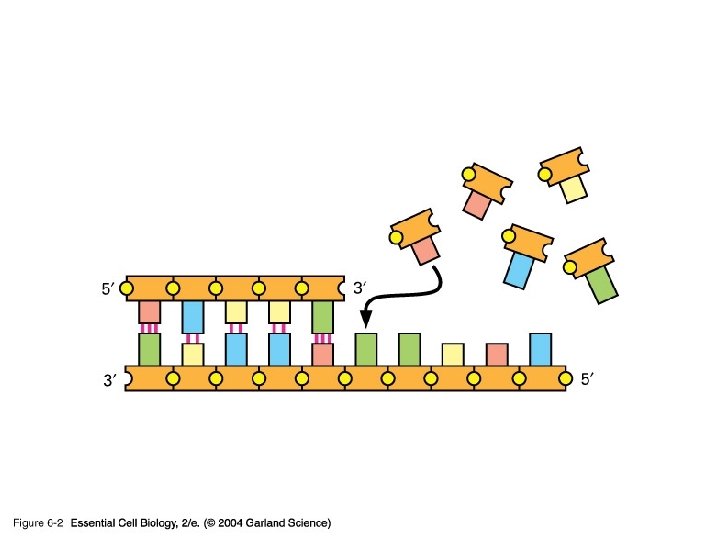
Schematic 1
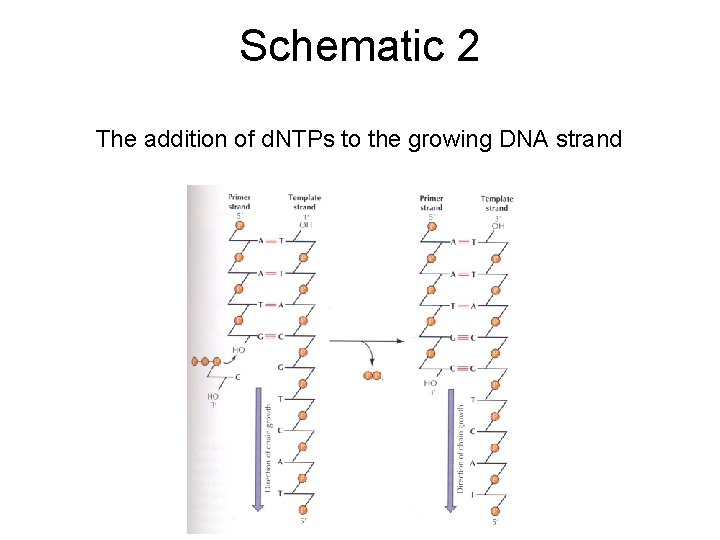
Schematic 2 The addition of d. NTPs to the growing DNA strand
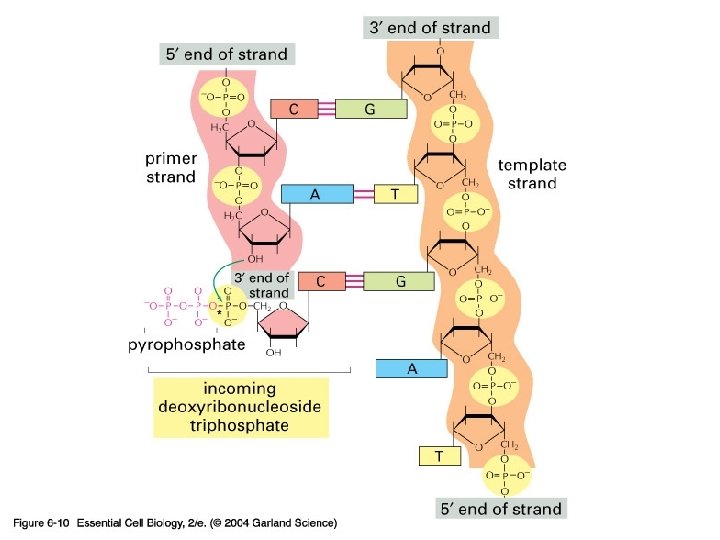
Schematic 3
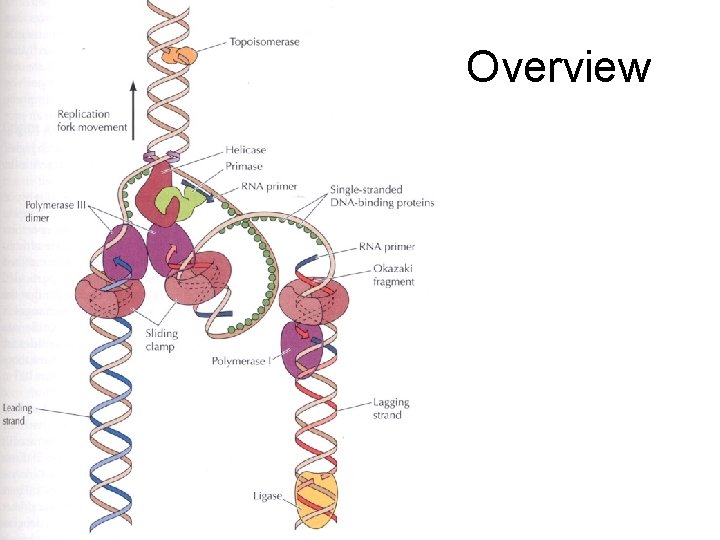
DNA Replication • The DNA is copied by a replication machine that travels along each replication fork. • One of the most important members of this complex is DNA POLYMERASE • It is able to add DNA subunits, making new DNA
DNA Polymerase • First discovered in 1956 by Kornberg • Bacteria E. coli • Bacteria have 3 types – DNA Pol I, II, and III • DNA Pol III involved in replication of DNA • DNA Pol I involved in repair • Humans have 4 types (you need to know, now) • DNA Pol alpha, beta, delta - nuclear DNA • DNA Pol gamma - mitochondrial DNA
DNA Polymerase… • ALL DNA Pol’s have 2 properties – Only synthesize DNA in one direction 5’ to 3’ – Only add to the end of existing double stranded DNA Therefore they CANNOT start synthesis of DNA from scratch. RNA polymerases can, but not DNA polymerases
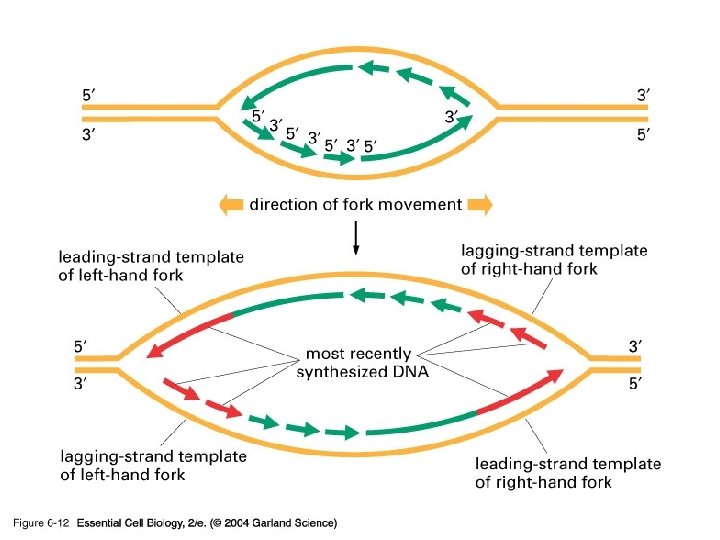
06_12_asymmetrical. jpg
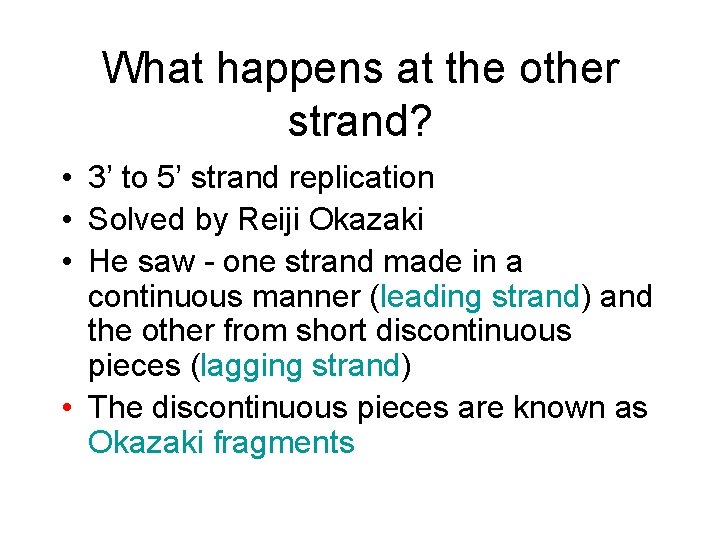
What happens at the other strand? • 3’ to 5’ strand replication • Solved by Reiji Okazaki • He saw - one strand made in a continuous manner (leading strand) and the other from short discontinuous pieces (lagging strand) • The discontinuous pieces are known as Okazaki fragments
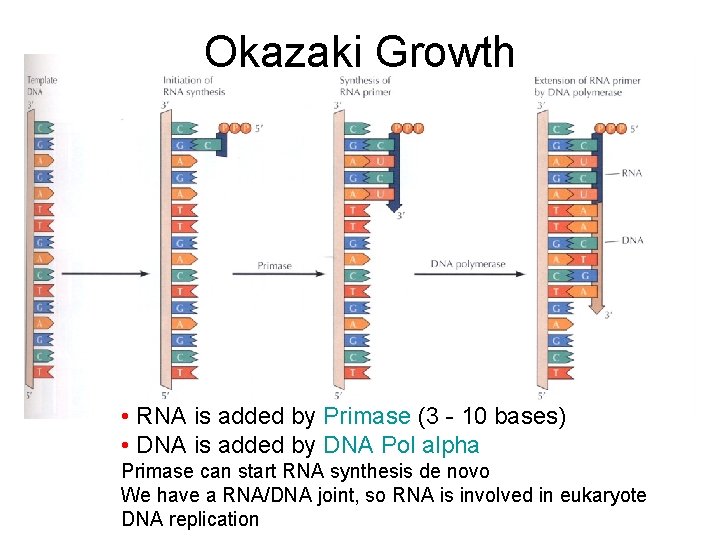
Okazaki Growth • RNA is added by Primase (3 - 10 bases) • DNA is added by DNA Pol alpha Primase can start RNA synthesis de novo We have a RNA/DNA joint, so RNA is involved in eukaryote DNA replication
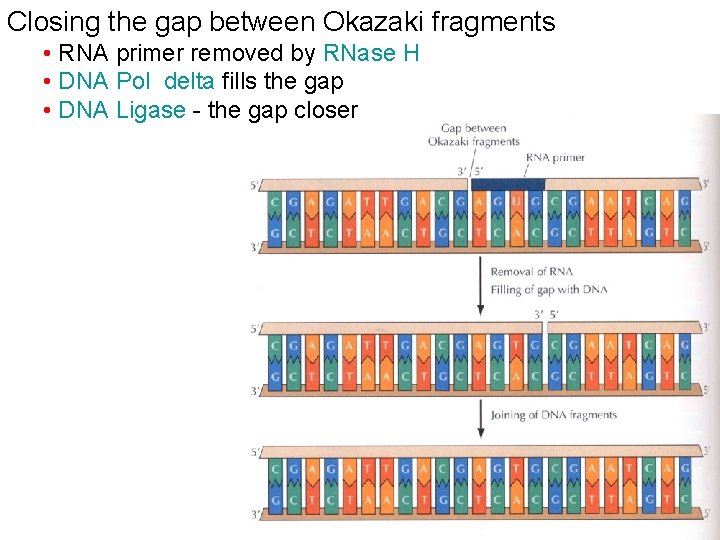
Closing the gap between Okazaki fragments • RNA primer removed by RNase H • DNA Pol delta fills the gap • DNA Ligase - the gap closer
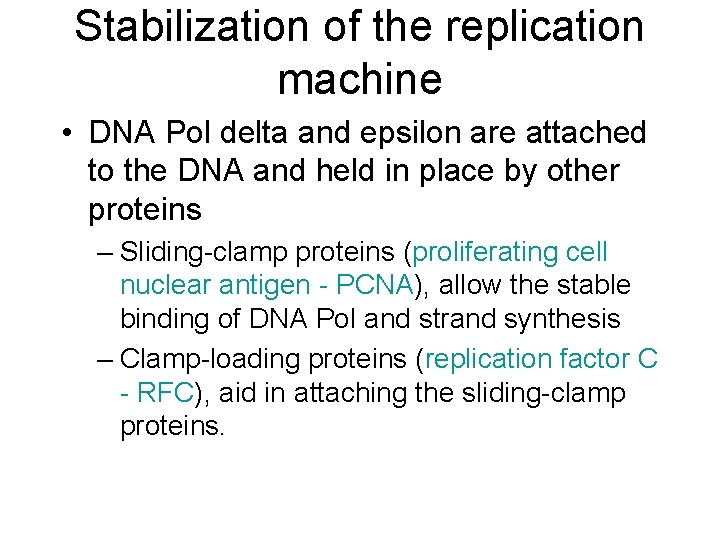
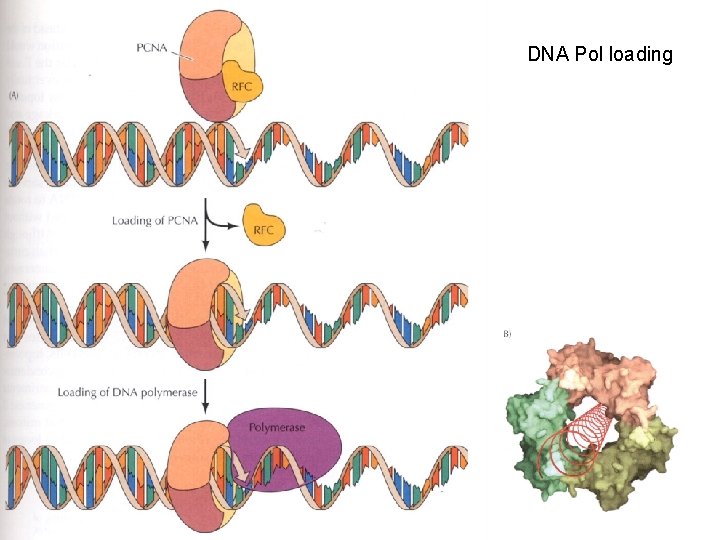
Stabilization of the replication machine • DNA Pol delta and epsilon are attached to the DNA and held in place by other proteins – Sliding-clamp proteins (proliferating cell nuclear antigen - PCNA), allow the stable binding of DNA Pol and strand synthesis – Clamp-loading proteins (replication factor C - RFC), aid in attaching the sliding-clamp proteins.
DNA Pol loading
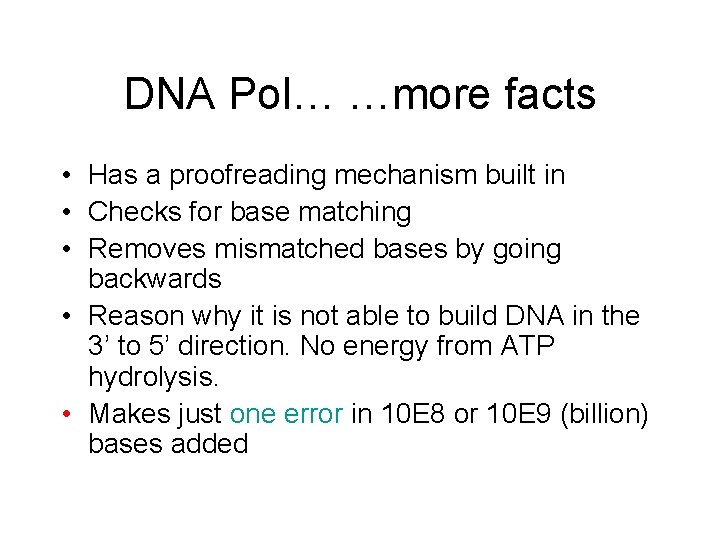
DNA Pol… …more facts • Has a proofreading mechanism built in • Checks for base matching • Removes mismatched bases by going backwards • Reason why it is not able to build DNA in the 3’ to 5’ direction. No energy from ATP hydrolysis. • Makes just one error in 10 E 8 or 10 E 9 (billion) bases added
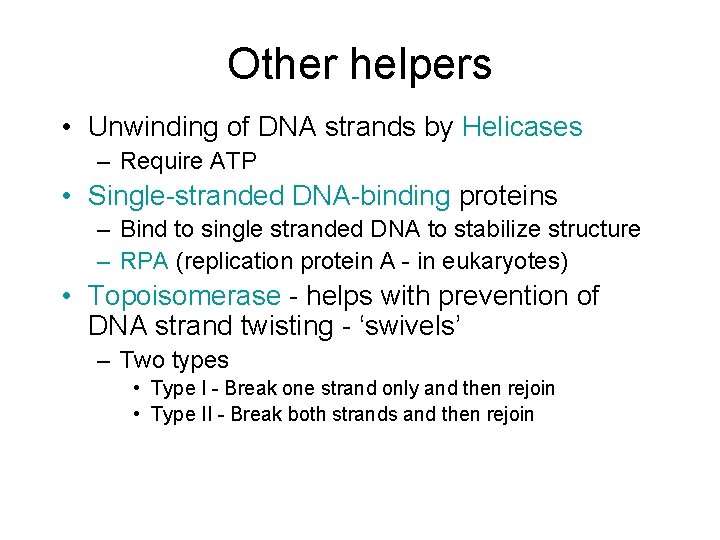
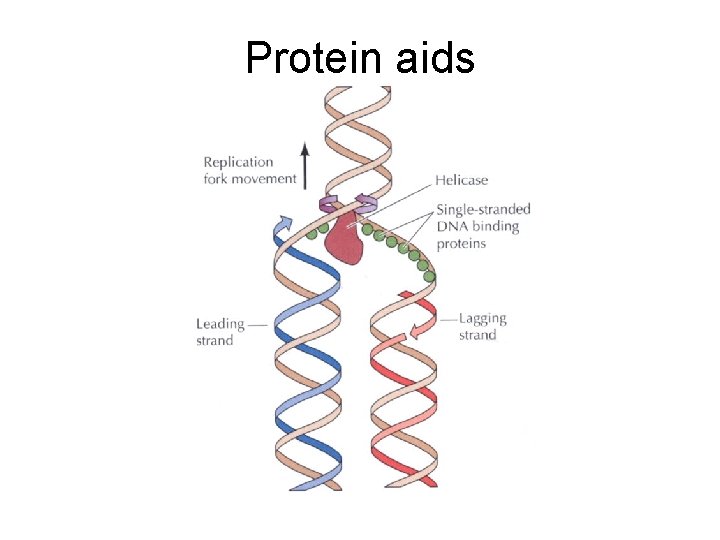
Other helpers • Unwinding of DNA strands by Helicases – Require ATP • Single-stranded DNA-binding proteins – Bind to single stranded DNA to stabilize structure – RPA (replication protein A - in eukaryotes) • Topoisomerase - helps with prevention of DNA strand twisting - ‘swivels’ – Two types • Type I - Break one strand only and then rejoin • Type II - Break both strands and then rejoin
Protein aids
Overview
What happens to the histones • Nucleosomes are disrupted during replication • Each ds strand gets half • New histones added by chromatin assembly factors
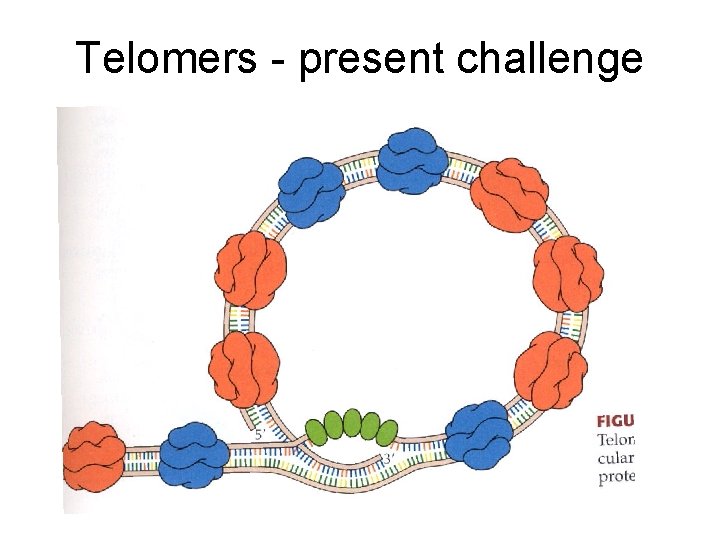
Telomers - present challenge
Telomerase • Enzyme • Reverse transcriptase • Acts without DNA template, as it has its own RNA template stored inside • RESULT = DNA is extended each time it is copied, however other mechanisms restore length in germ cells. Somatic cells do not have enough telomerase to keep this process going so they lose telomere length and this is thought to result in cell death.