
DNA REPLICATION Chapter 11 Section 1 DNA Review
- Slides: 11
DNA REPLICATION Chapter 11, Section 1
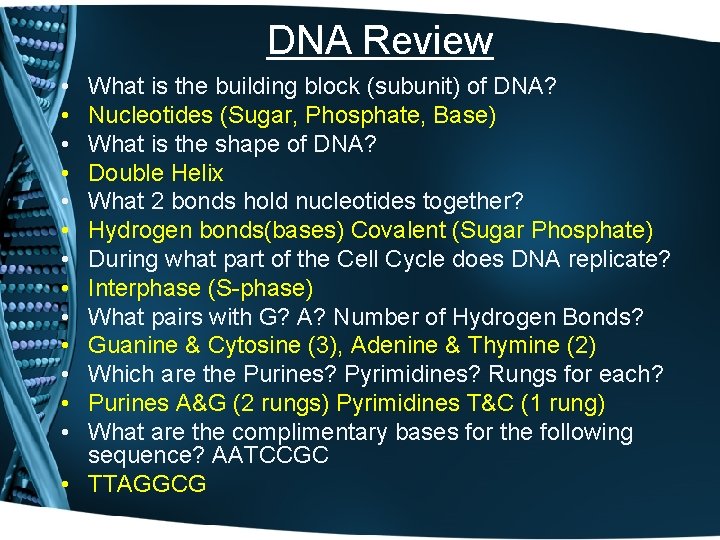
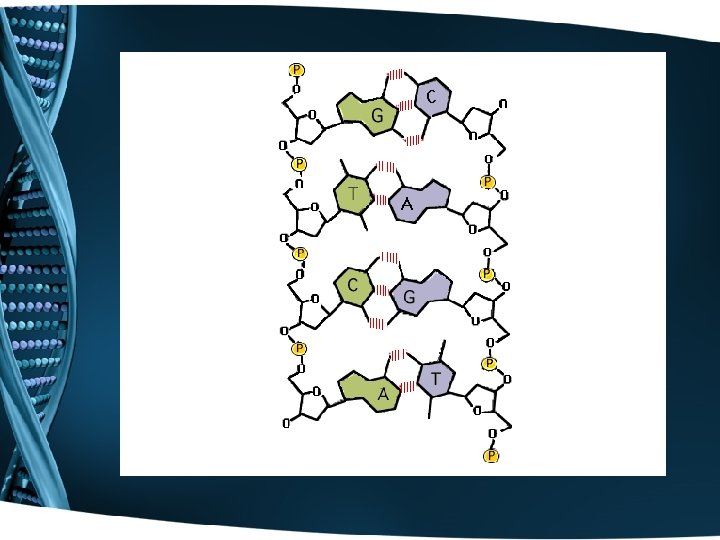
DNA Review • • • • What is the building block (subunit) of DNA? Nucleotides (Sugar, Phosphate, Base) What is the shape of DNA? Double Helix What 2 bonds hold nucleotides together? Hydrogen bonds(bases) Covalent (Sugar Phosphate) During what part of the Cell Cycle does DNA replicate? Interphase (S-phase) What pairs with G? A? Number of Hydrogen Bonds? Guanine & Cytosine (3), Adenine & Thymine (2) Which are the Purines? Pyrimidines? Rungs for each? Purines A&G (2 rungs) Pyrimidines T&C (1 rung) What are the complimentary bases for the following sequence? AATCCGC • TTAGGCG
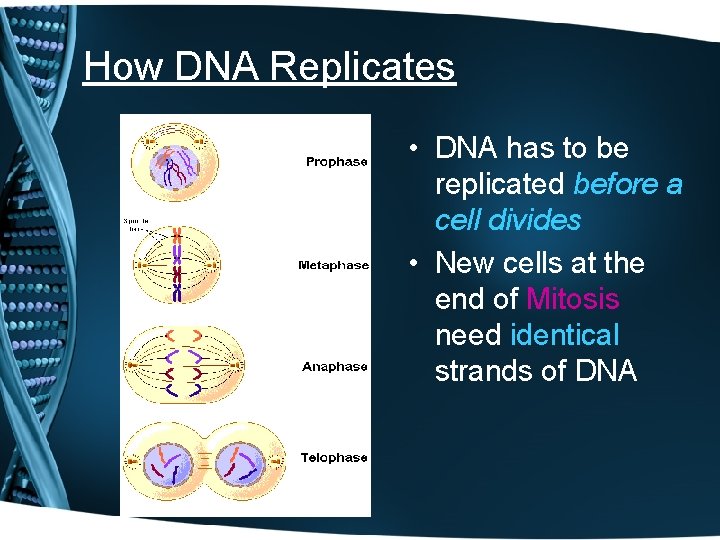
How DNA Replicates • DNA has to be replicated before a cell divides • New cells at the end of Mitosis need identical strands of DNA
• One strand of DNA gets used as a template (pattern) to make a new strand that matches up with it • Special enzymes are required for DNA replication (helicase and polymerase)
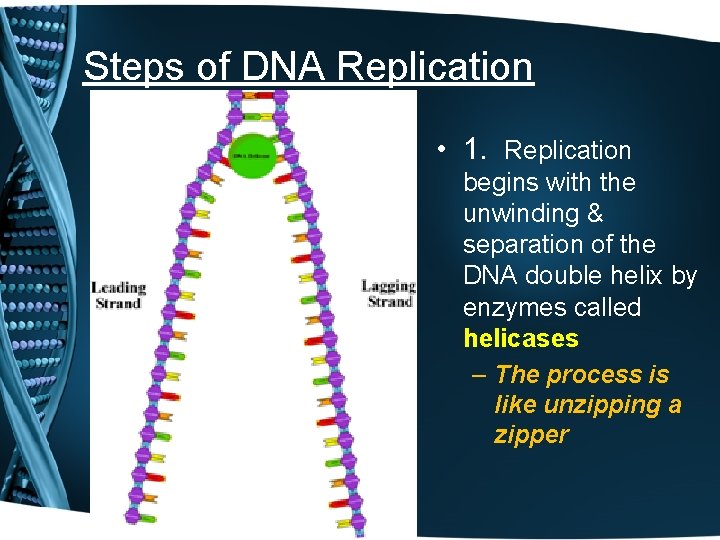
Steps of DNA Replication • 1. Replication begins with the unwinding & separation of the DNA double helix by enzymes called helicases – The process is like unzipping a zipper
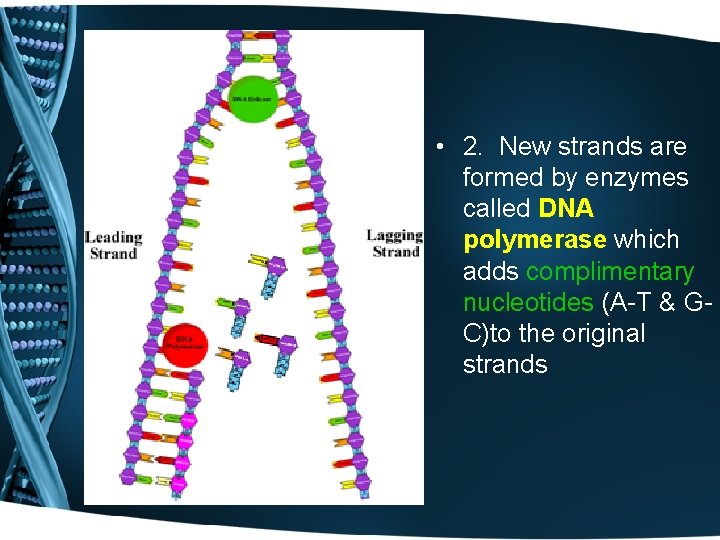
• 2. New strands are formed by enzymes called DNA polymerase which adds complimentary nucleotides (A-T & GC)to the original strands
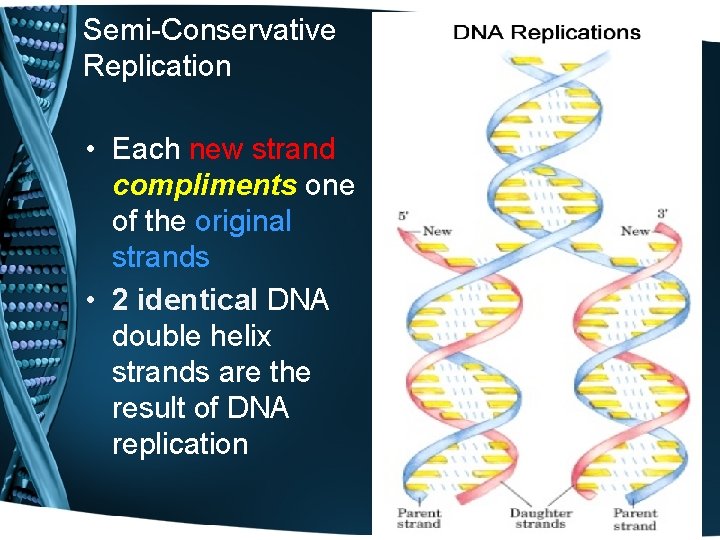
Semi-Conservative Replication • Each new strand compliments one of the original strands • 2 identical DNA double helix strands are the result of DNA replication
• http: //www. wiley. com/college/pratt/0471393878/st udent/animations/dna_replication/index. html
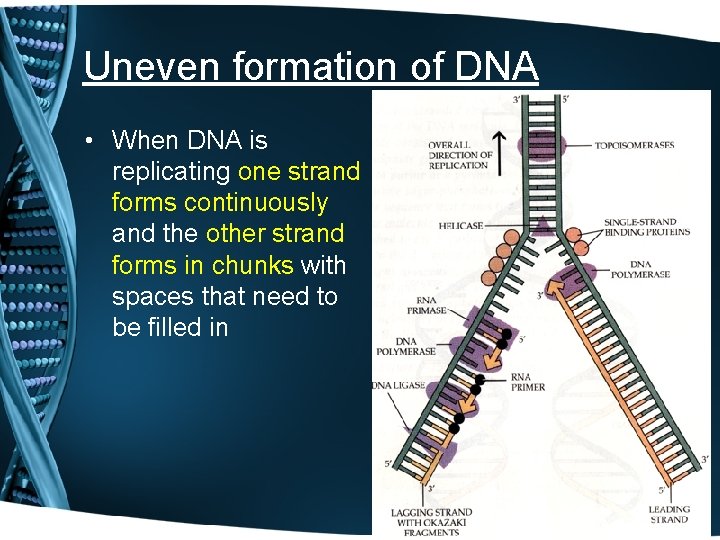
Uneven formation of DNA • When DNA is replicating one strand forms continuously and the other strand forms in chunks with spaces that need to be filled in
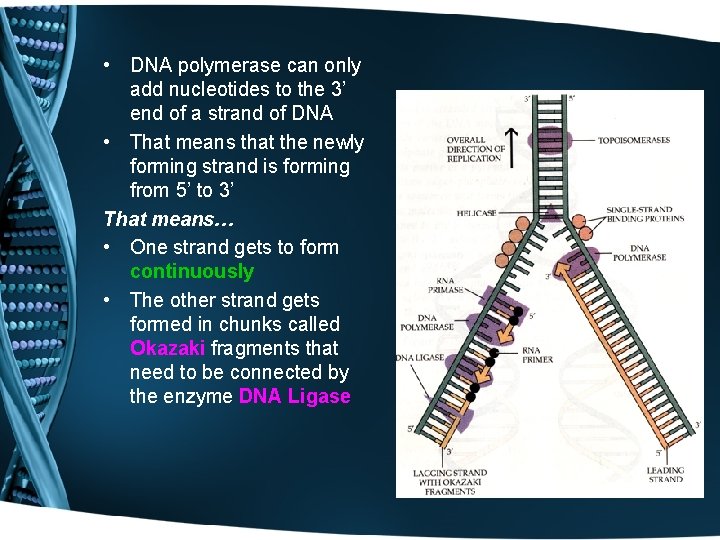
• DNA polymerase can only add nucleotides to the 3’ end of a strand of DNA • That means that the newly forming strand is forming from 5’ to 3’ That means… • One strand gets to form continuously • The other strand gets formed in chunks called Okazaki fragments that need to be connected by the enzyme DNA Ligase