
DNA Replication AP Biology 2007 2008 Watson and
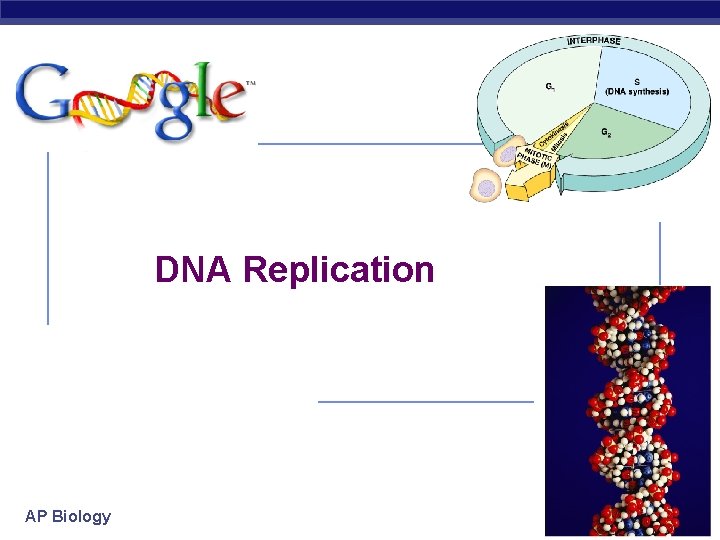
DNA Replication AP Biology 2007 -2008
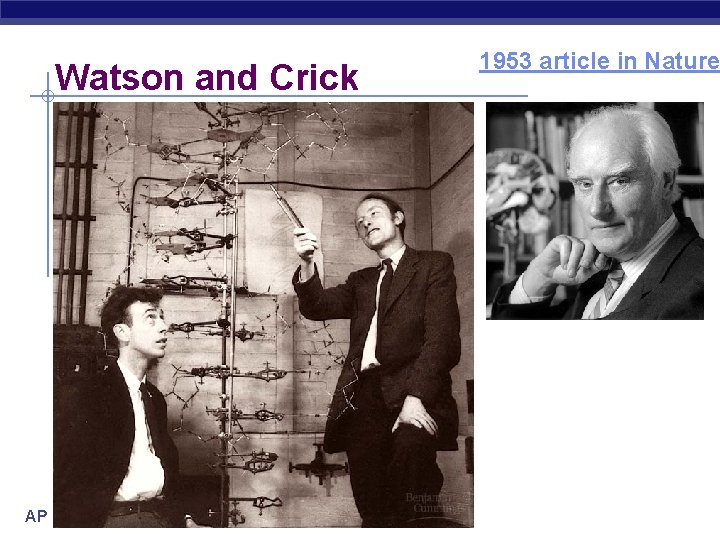
Watson and Crick AP Biology 1953 article in Nature
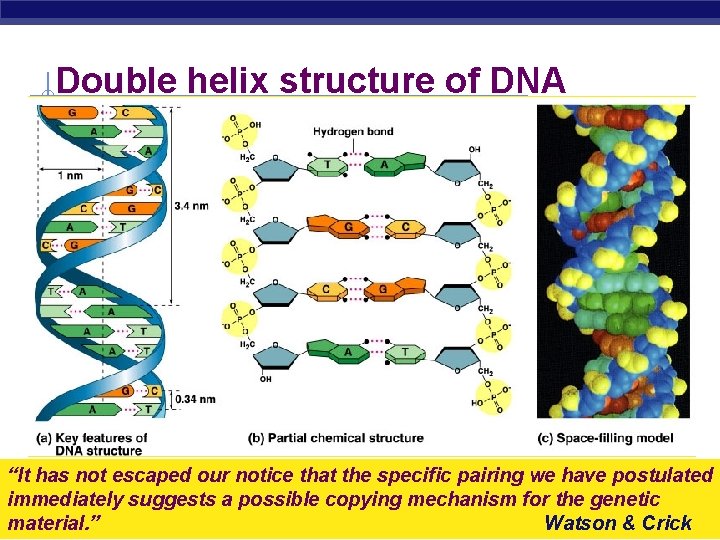
Double helix structure of DNA “It has not escaped our notice that the specific pairing we have postulated immediately suggests a possible copying mechanism for the genetic AP Biology material. ” Watson & Crick
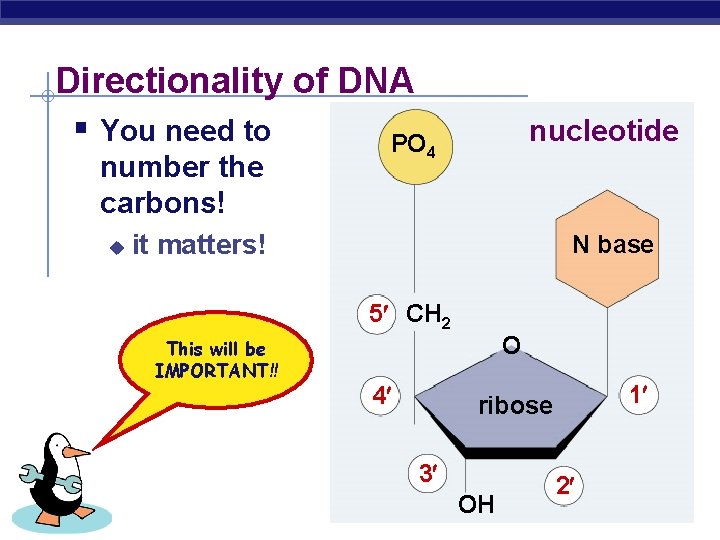
Directionality of DNA § You need to PO 4 nucleotide number the carbons! u it matters! N base 5 CH 2 This will be IMPORTANT!! 4 O 3 AP Biology 1 ribose OH 2
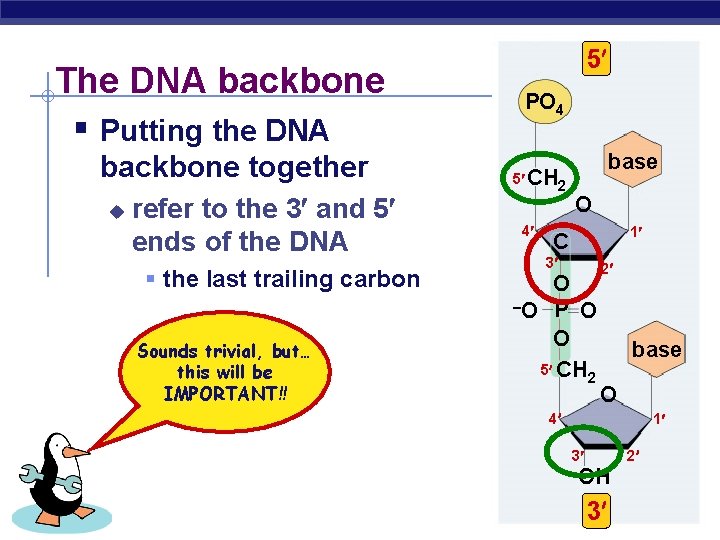
The DNA backbone § Putting the DNA backbone together u refer to the 3 and 5 ends of the DNA § the last trailing carbon Sounds trivial, but… this will be IMPORTANT!! 5 PO 4 5 CH 2 4 base O 1 C 3 O –O P O O 5 CH 2 2 base O 4 1 2 3 OH AP Biology 3
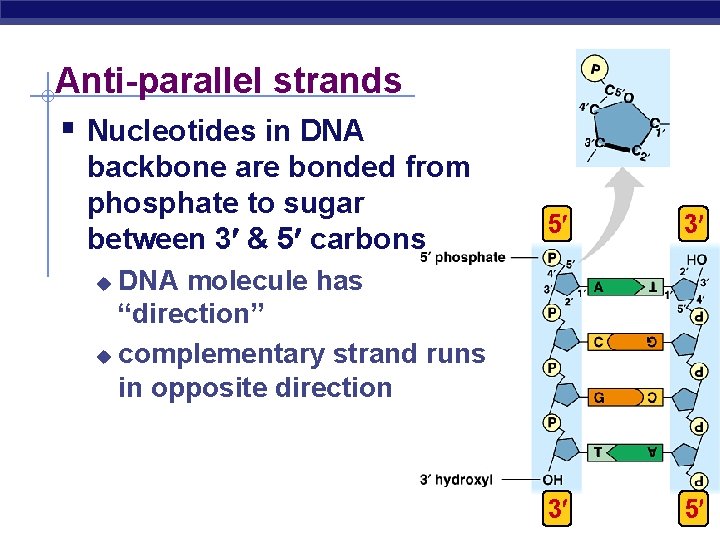
Anti-parallel strands § Nucleotides in DNA backbone are bonded from phosphate to sugar between 3 & 5 carbons 5 3 3 5 DNA molecule has “direction” u complementary strand runs in opposite direction u AP Biology
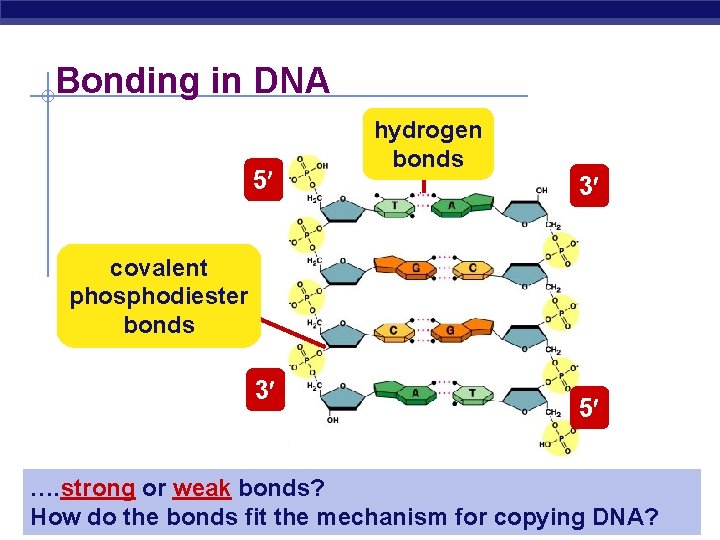
Bonding in DNA 5 hydrogen bonds 3 covalent phosphodiester bonds 3 5 …. strong or weak bonds? AP Biology How do the bonds fit the mechanism for copying DNA?
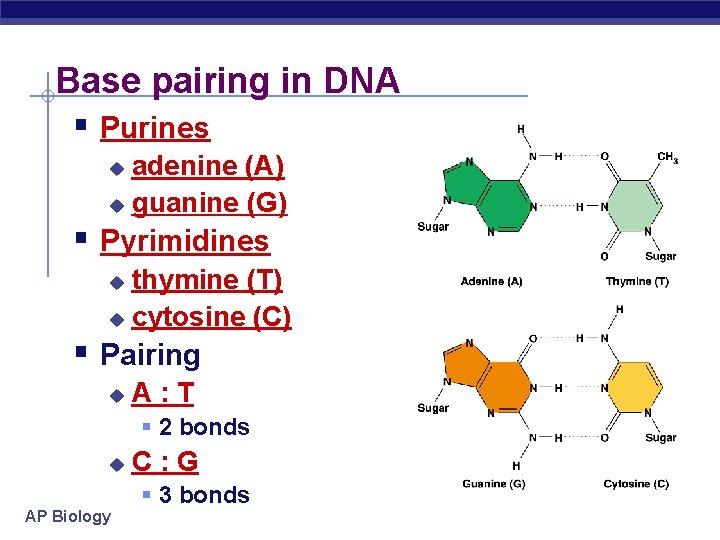
Base pairing in DNA § Purines adenine (A) u guanine (G) u § Pyrimidines thymine (T) u cytosine (C) u § Pairing u A: T § 2 bonds u AP Biology C: G § 3 bonds

Copying DNA § Replication of DNA base pairing allows each strand to serve as a template for a new strand u new strand is 1/2 parent template & 1/2 new DNA u § semi-conservative copy process AP Biology
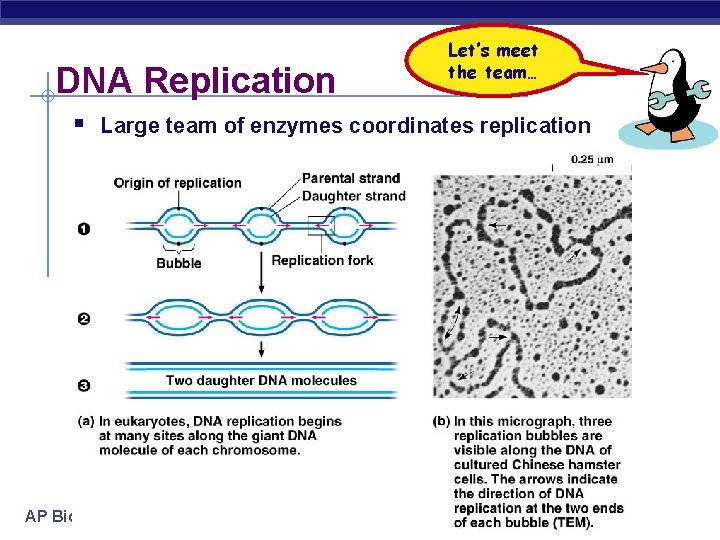
DNA Replication Let’s meet the team… § Large team of enzymes coordinates replication AP Biology
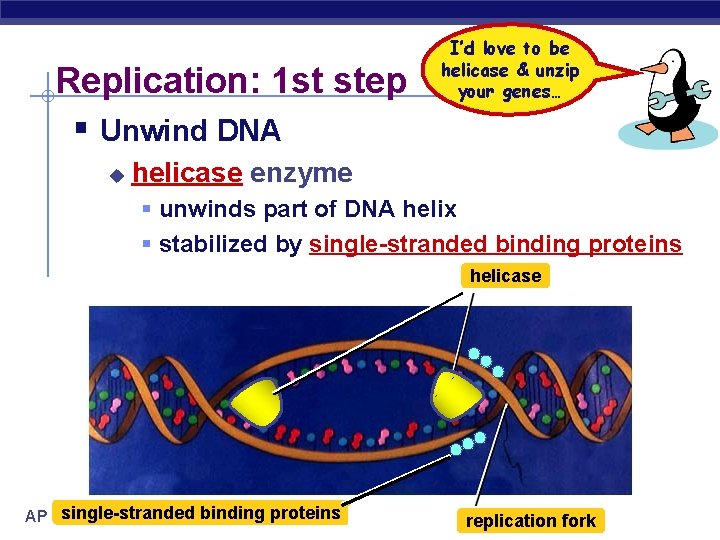
Replication: 1 st step § Unwind DNA u I’d love to be helicase & unzip your genes… helicase enzyme § unwinds part of DNA helix § stabilized by single-stranded binding proteins helicase single-stranded binding proteins AP Biology replication fork
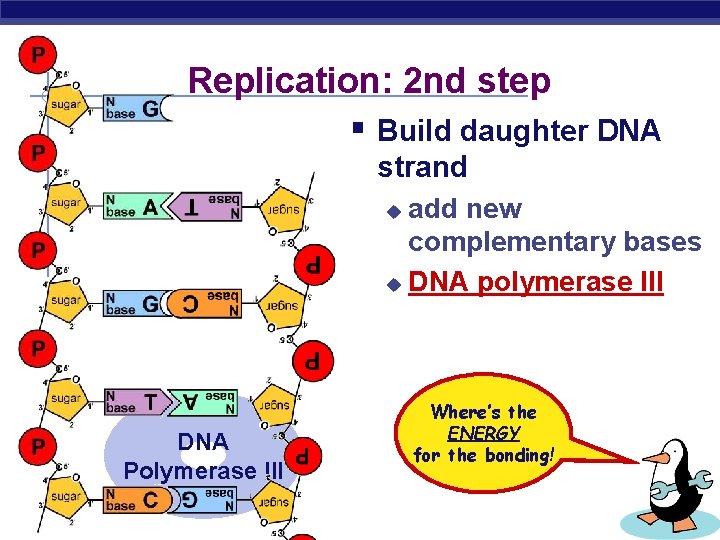
Replication: 2 nd step § Build daughter DNA strand add new complementary bases u DNA polymerase III u DNA Polymerase III AP Biology But… Where’s the We’re missing ENERGY something! for the bonding! What?
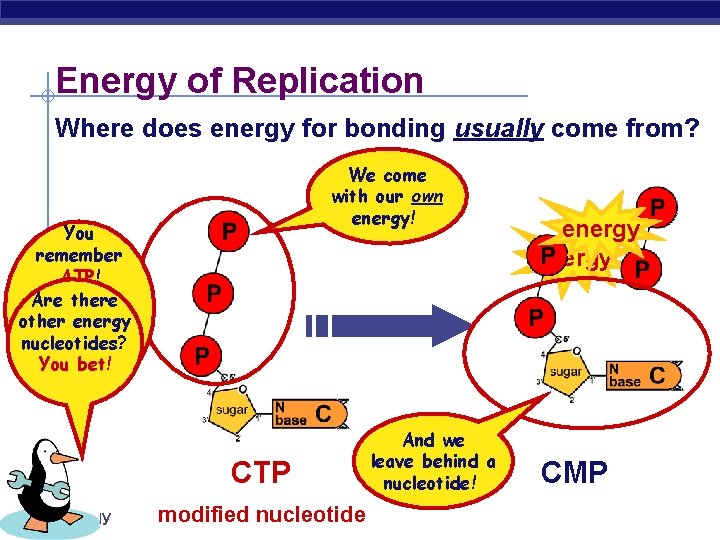
Energy of Replication Where does energy for bonding usually come from? We come with our own energy! You remember ATP! Are there otherenergy ways other to get energy nucleotides? out it? You of bet! ATP GTP TTP CTP AP Biology modified nucleotide And we leave behind a nucleotide! energy AMP CMP ADP GMP TMP
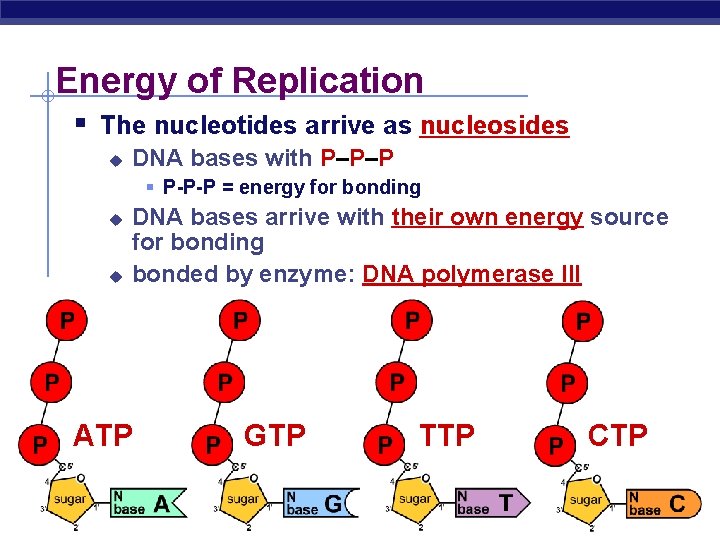
Energy of Replication § The nucleotides arrive as nucleosides u DNA bases with P–P–P § P-P-P = energy for bonding u u DNA bases arrive with their own energy source for bonding bonded by enzyme: DNA polymerase III ATP AP Biology GTP TTP CTP
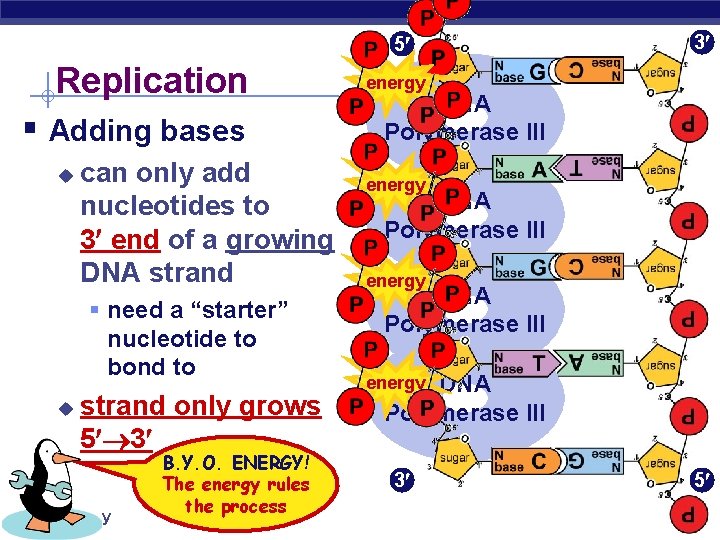
5 Replication § Adding bases u can only add nucleotides to 3 end of a growing DNA strand § need a “starter” nucleotide to bond to u strand only grows 5 3 AP Biology B. Y. O. ENERGY! The energy rules the process 3 energy DNA Polymerase III energy 3 5
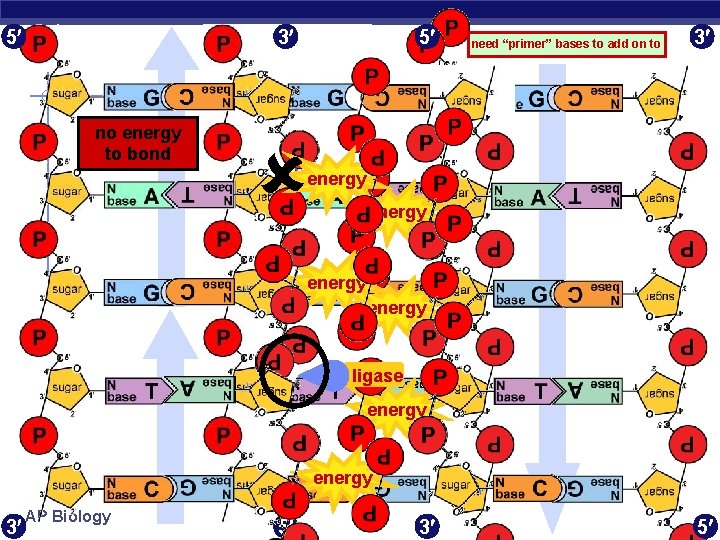
5 3 5 need “primer” bases to add on to 3 energy no energy to bond energy ligase energy 3 AP Biology 5 3 5
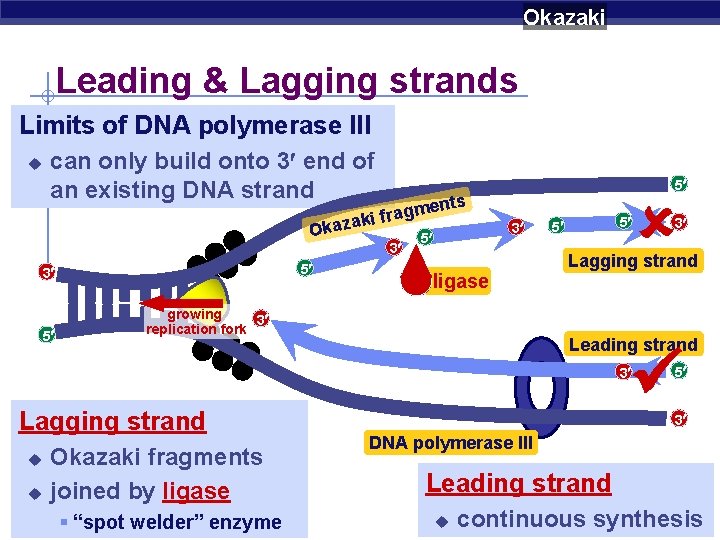
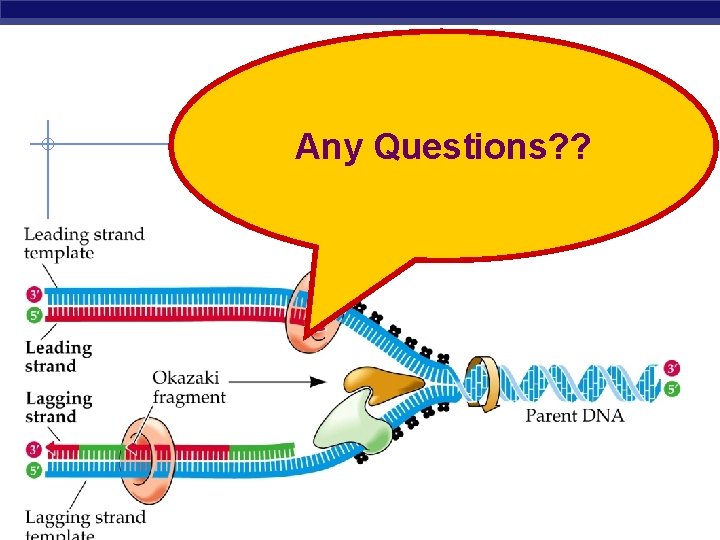
Okazaki Leading & Lagging strands Limits of DNA polymerase III u can only build onto 3 end of an existing DNA strand en m g a r f ki Okaza 3 5 5 ts 3 5 ligase growing 3 replication fork 5 5 Lagging strand Leading strand 3 Lagging strand u u Okazaki fragments joined by ligase AP Biology § “spot welder” enzyme 3 5 3 DNA polymerase III Leading strand u continuous synthesis
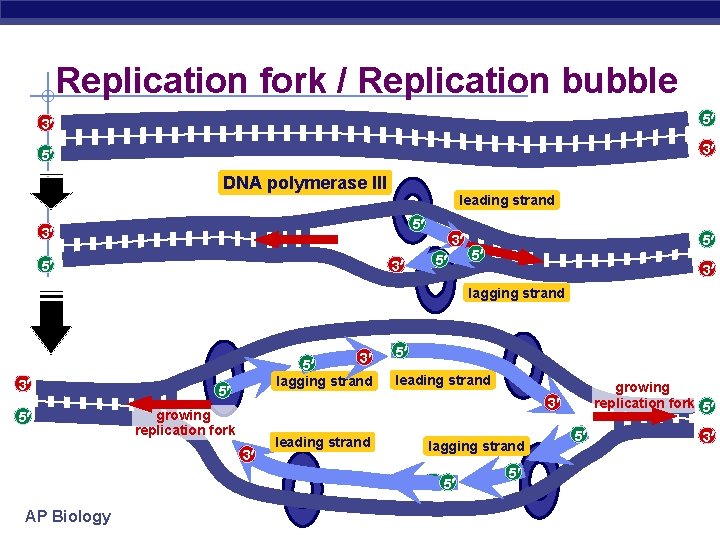
Replication fork / Replication bubble 3 5 5 3 DNA polymerase III leading strand 5 3 3 5 5 5 3 lagging strand 3 5 lagging strand 5 5 leading strand 3 growing replication fork 3 leading strand lagging strand 5 5 AP Biology growing replication fork 5 5 5 3
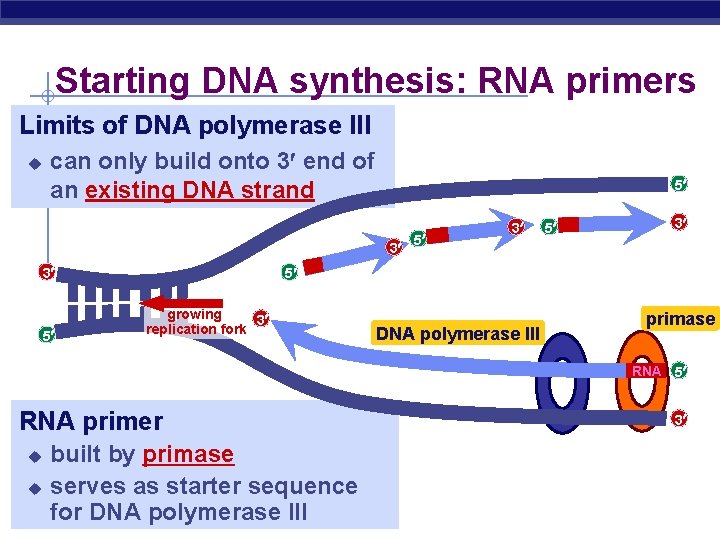
Starting DNA synthesis: RNA primers Limits of DNA polymerase III u can only build onto 3 end of an existing DNA strand 5 3 3 5 5 3 5 growing 3 replication fork DNA polymerase III primase RNA 5 RNA primer built by primase u serves as starter sequence DNA polymerase III AP for Biology u 3
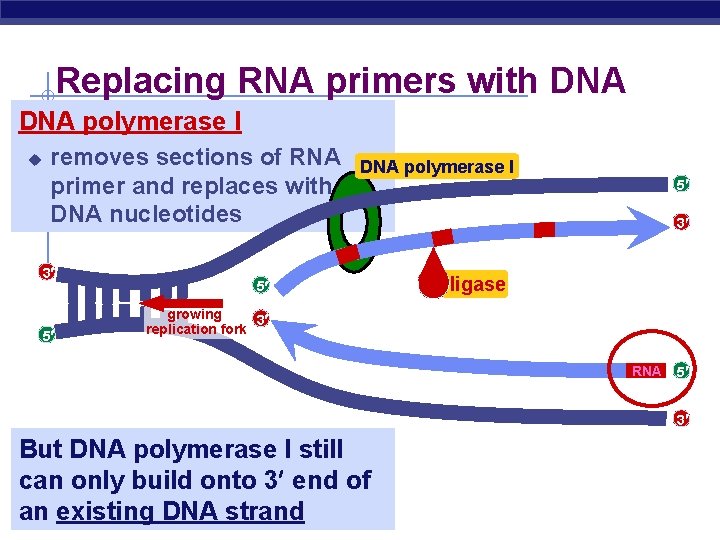
Replacing RNA primers with DNA polymerase I u removes sections of RNA primer and replaces with DNA nucleotides 3 5 DNA polymerase I 5 5 3 ligase growing 3 replication fork RNA 5 3 But DNA polymerase I still can only build onto 3 end of an existing DNA strand AP Biology
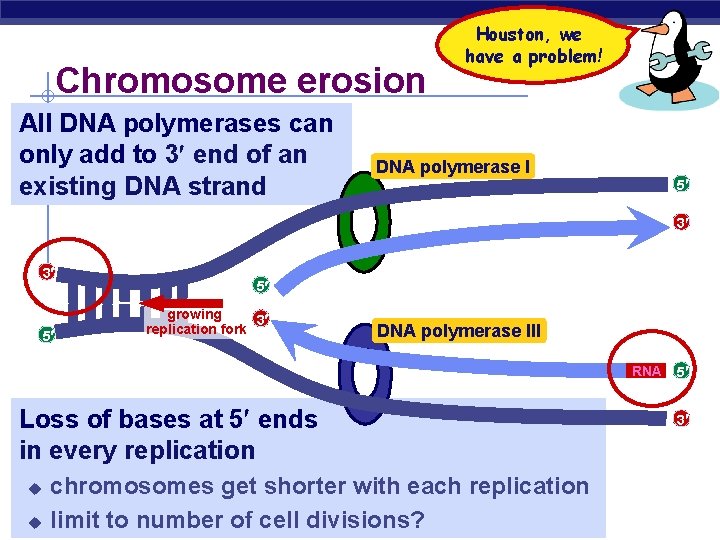
Chromosome erosion All DNA polymerases can only add to 3 end of an existing DNA strand Houston, we have a problem! DNA polymerase I 5 3 3 5 5 growing 3 replication fork DNA polymerase III RNA Loss of bases at 5 ends in every replication chromosomes get shorter with each replication AP Biologyto number of cell divisions? u limit u 5 3
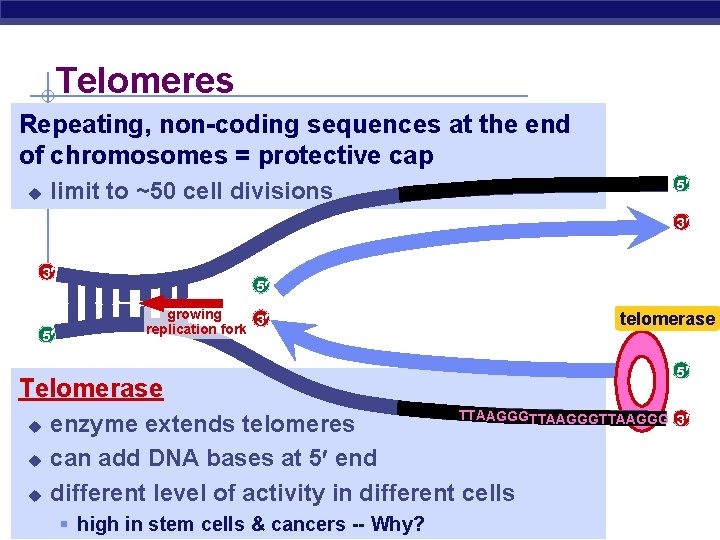
Telomeres Repeating, non-coding sequences at the end of chromosomes = protective cap u 5 limit to ~50 cell divisions 3 3 5 growing 3 replication fork 5 telomerase Telomerase u u u TTAAGGGTTAAGGG enzyme extends telomeres can add DNA bases at 5 end different level of activity in different cells AP Biology § high in stem cells & cancers -- Why? 5 3
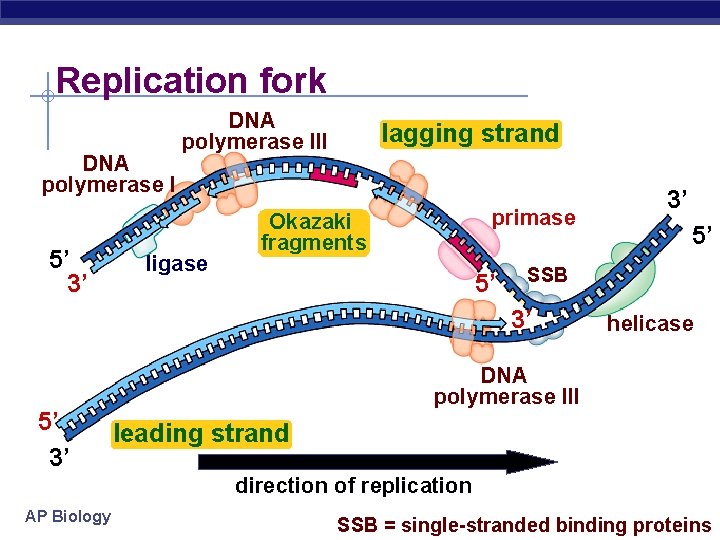
Replication fork DNA polymerase I 5’ 3’ DNA polymerase III ligase lagging strand primase Okazaki fragments 5’ 5’ SSB 3’ 5’ 3’ 3’ helicase DNA polymerase III leading strand direction of replication AP Biology SSB = single-stranded binding proteins
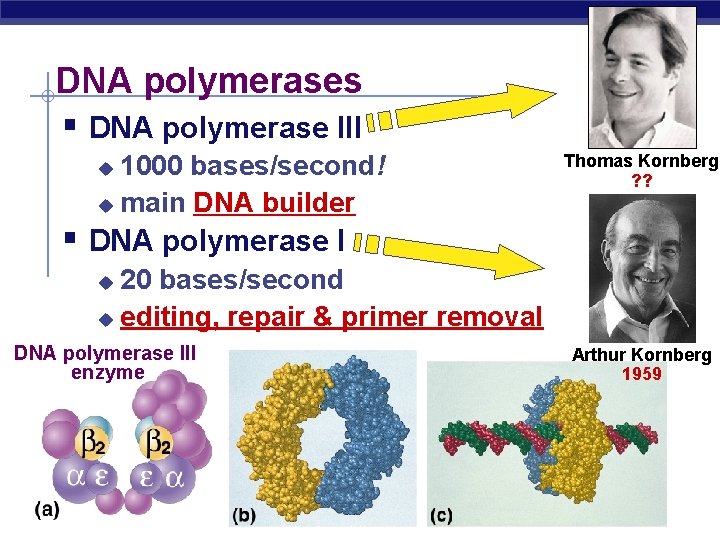
DNA polymerases § DNA polymerase III 1000 bases/second! u main DNA builder u Thomas Kornberg ? ? § DNA polymerase I 20 bases/second u editing, repair & primer removal u DNA polymerase III enzyme AP Biology Arthur Kornberg 1959
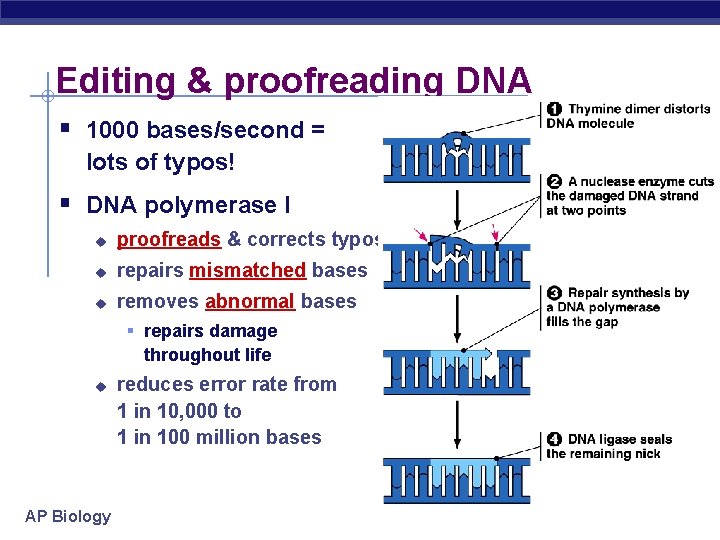
Editing & proofreading DNA § 1000 bases/second = lots of typos! § DNA polymerase I u proofreads & corrects typos u repairs mismatched bases u removes abnormal bases § repairs damage throughout life u AP Biology reduces error rate from 1 in 10, 000 to 1 in 100 million bases
Fast & accurate! § It takes E. coli <1 hour to copy 5 million base pairs in its single chromosome u divide to form 2 identical daughter cells § Human cell copies its 6 billion bases & divide into daughter cells in only few hours remarkably accurate u only ~1 error per 100 million bases u ~30 errors per cell cycle u AP Biology
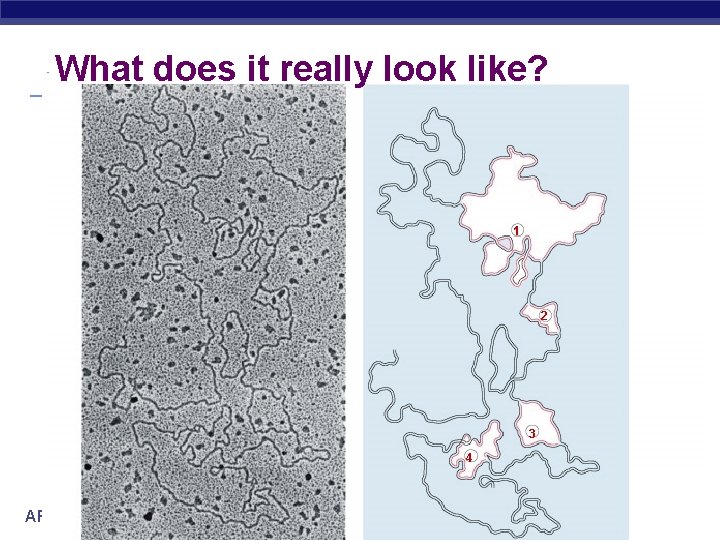
What does it really look like? 1 2 3 4 AP Biology
Any Questions? ? AP Biology 2007 -2008
- Slides: 28