
DNA Part 1 DNA is Genetic Material Evidence
- Slides: 13
DNA Part 1
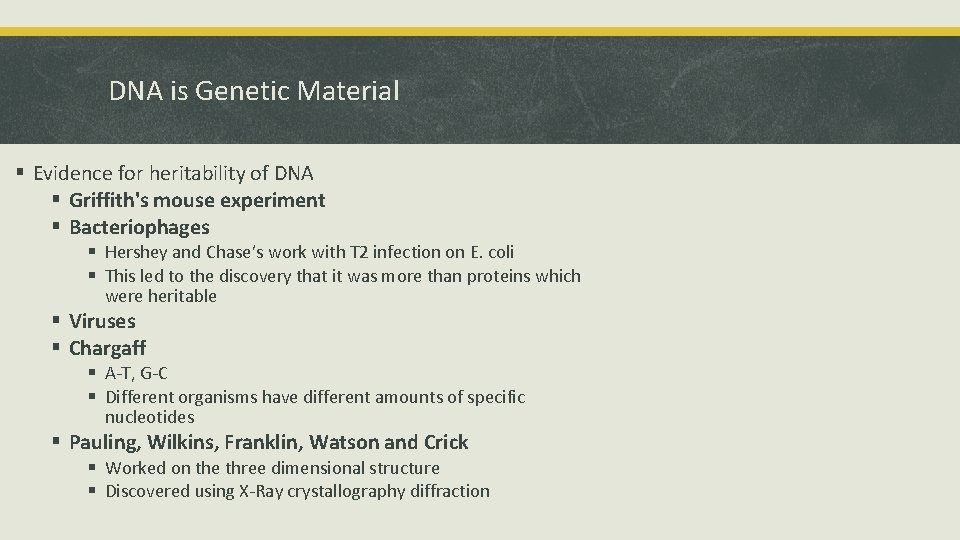
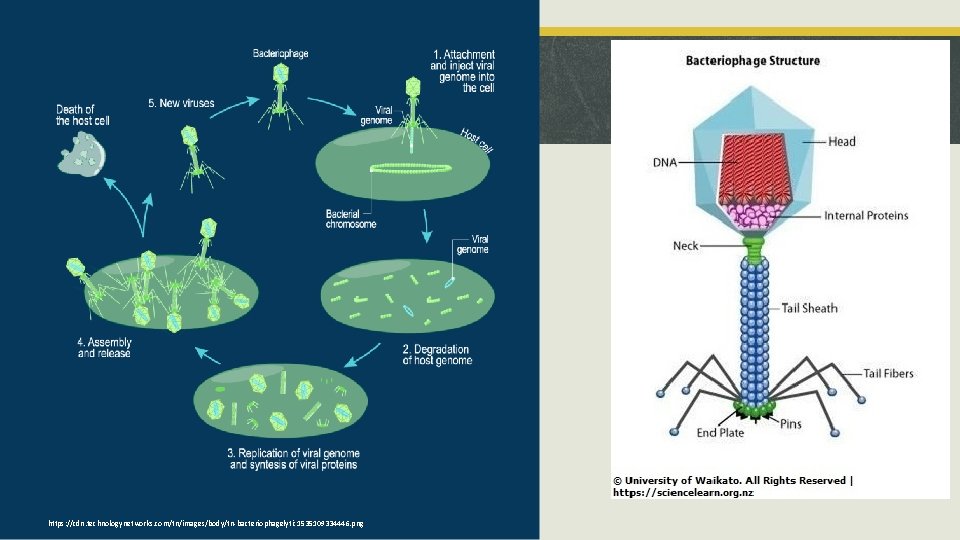
DNA is Genetic Material § Evidence for heritability of DNA § Griffith's mouse experiment § Bacteriophages § Hershey and Chase’s work with T 2 infection on E. coli § This led to the discovery that it was more than proteins which were heritable § Viruses § Chargaff § A-T, G-C § Different organisms have different amounts of specific nucleotides § Pauling, Wilkins, Franklin, Watson and Crick § Worked on the three dimensional structure § Discovered using X-Ray crystallography diffraction
https: //cdn. technologynetworks. com/tn/images/body/tn-bacteriophagelytic 1535109334446. png
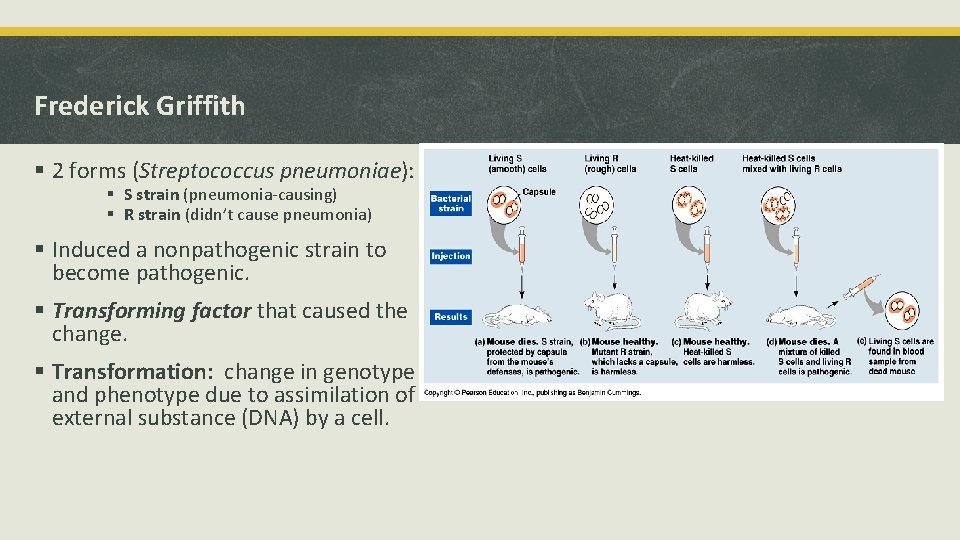
Frederick Griffith § 2 forms (Streptococcus pneumoniae): § S strain (pneumonia-causing) § R strain (didn’t cause pneumonia) § Induced a nonpathogenic strain to become pathogenic. § Transforming factor that caused the change. § Transformation: change in genotype and phenotype due to assimilation of external substance (DNA) by a cell.
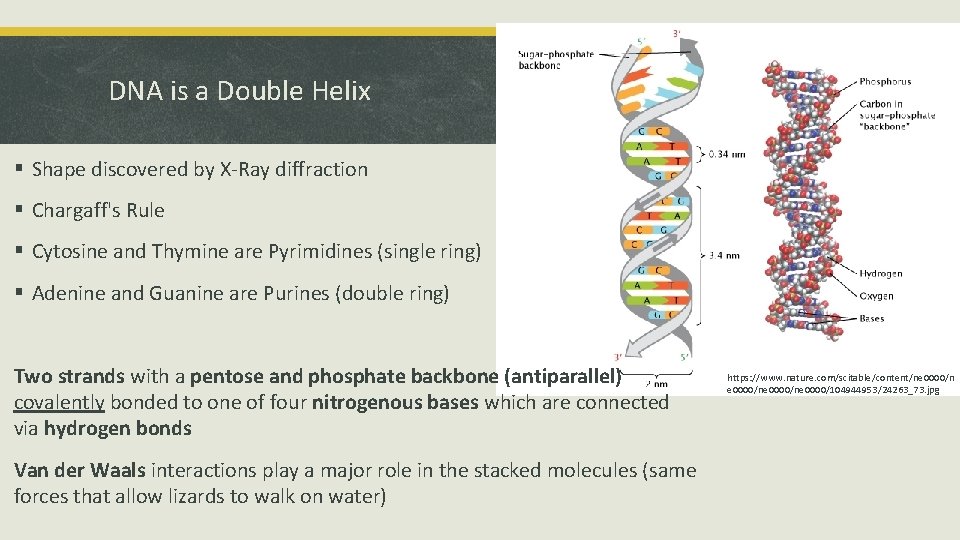
DNA is a Double Helix § Shape discovered by X-Ray diffraction § Chargaff's Rule § Cytosine and Thymine are Pyrimidines (single ring) § Adenine and Guanine are Purines (double ring) Two strands with a pentose and phosphate backbone (antiparallel) covalently bonded to one of four nitrogenous bases which are connected via hydrogen bonds Van der Waals interactions play a major role in the stacked molecules (same forces that allow lizards to walk on water) https: //www. nature. com/scitable/content/ne 0000/ne 0000/104944953/24263_73. jpg
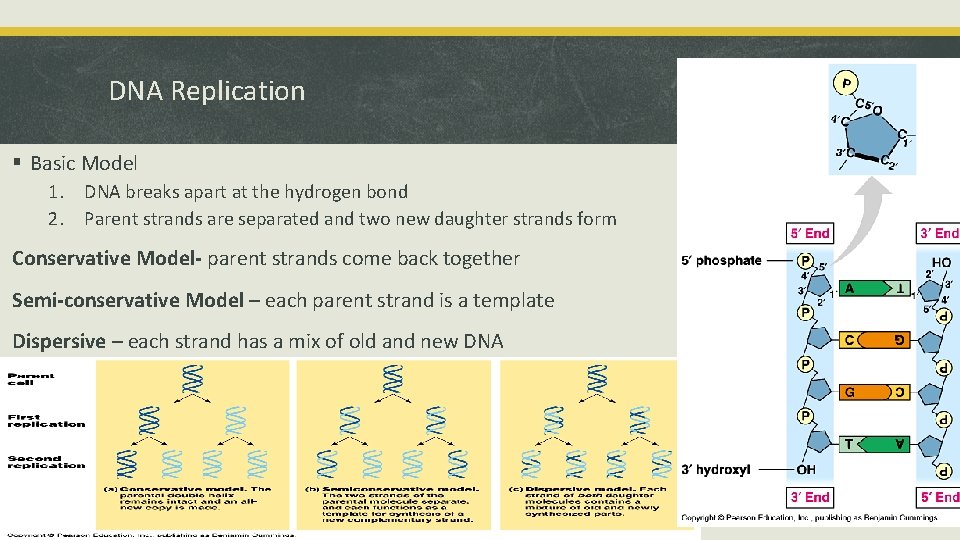
DNA Replication § Basic Model 1. DNA breaks apart at the hydrogen bond 2. Parent strands are separated and two new daughter strands form Conservative Model- parent strands come back together Semi-conservative Model – each parent strand is a template Dispersive – each strand has a mix of old and new DNA
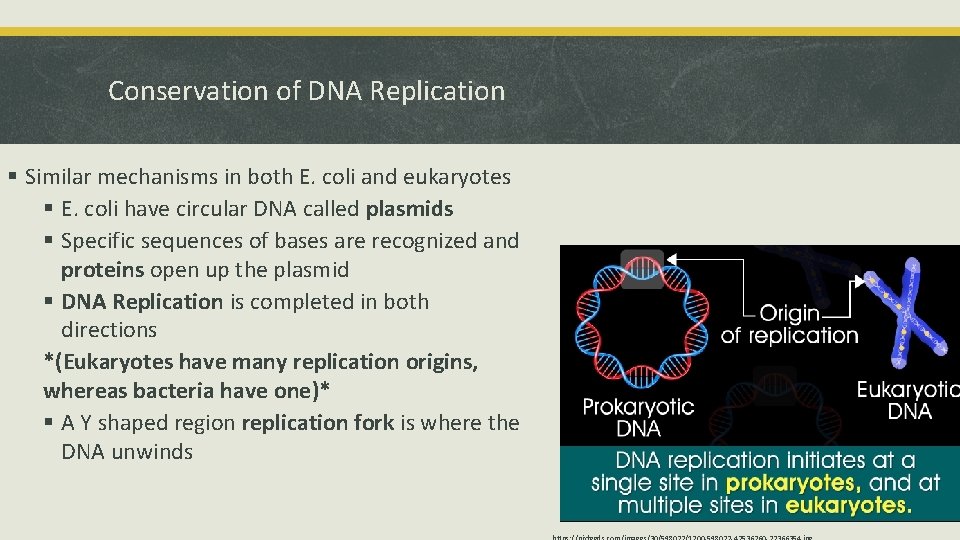
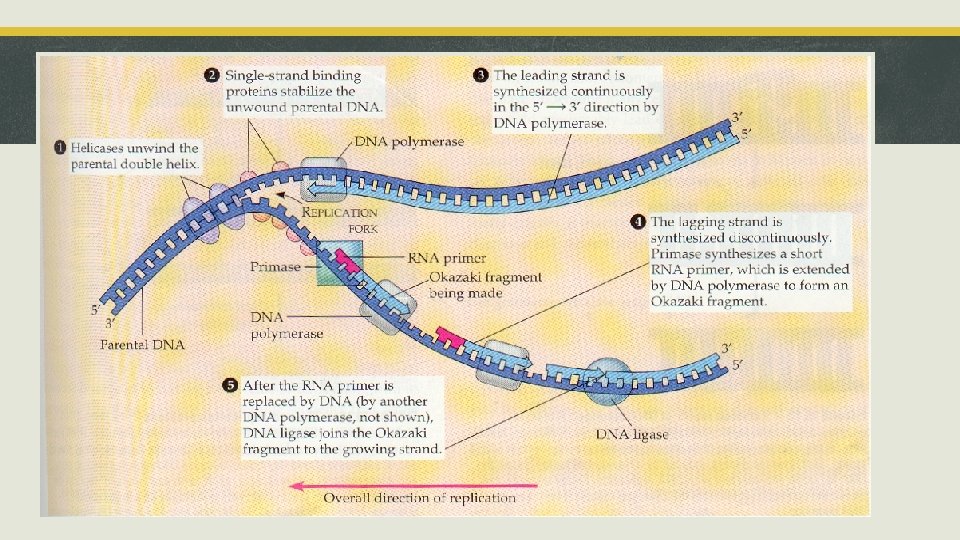
Conservation of DNA Replication § Similar mechanisms in both E. coli and eukaryotes § E. coli have circular DNA called plasmids § Specific sequences of bases are recognized and proteins open up the plasmid § DNA Replication is completed in both directions *(Eukaryotes have many replication origins, whereas bacteria have one)* § A Y shaped region replication fork is where the DNA unwinds
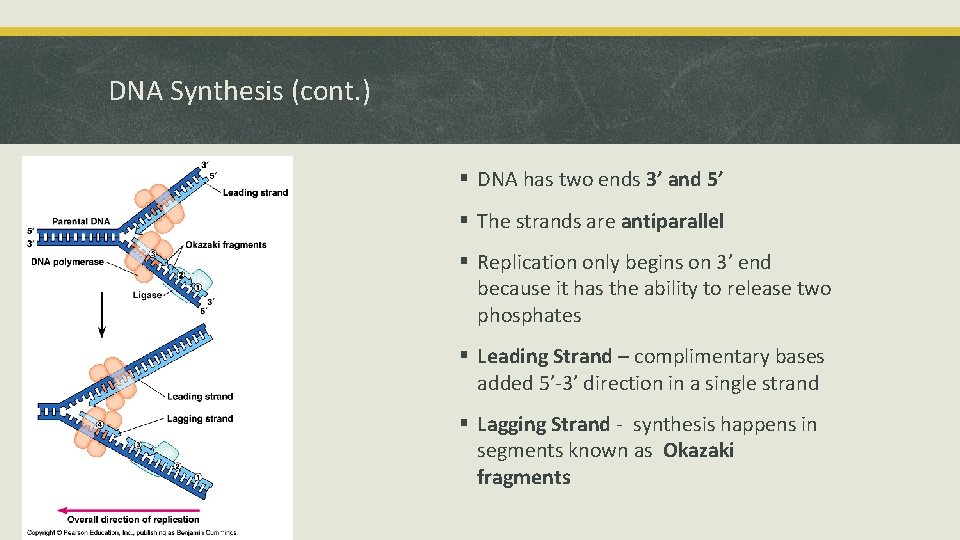
Enzymes § Helicase unzips DNA § Single-Strand Binding Proteins- bind to unpaired DNA strands § Topoisomerase- helps DNA maintain its shape § Primase- creates primer (initial RNA strand created) § DNA Polymerase- catalyzes the synthesis of new DNA by adding nucleotides § DNA pol III – adds nucleotides to RNA primer or pre-existing DNA § DNA pol I – removes RNA nucleotide of primer and replaces with DNA nucleotides § DNA Ligase – Joins Okazaki fragments
DNA Synthesis (cont. ) § DNA has two ends 3’ and 5’ § The strands are antiparallel § Replication only begins on 3’ end because it has the ability to release two phosphates § Leading Strand – complimentary bases added 5’-3’ direction in a single strand § Lagging Strand - synthesis happens in segments known as Okazaki fragments
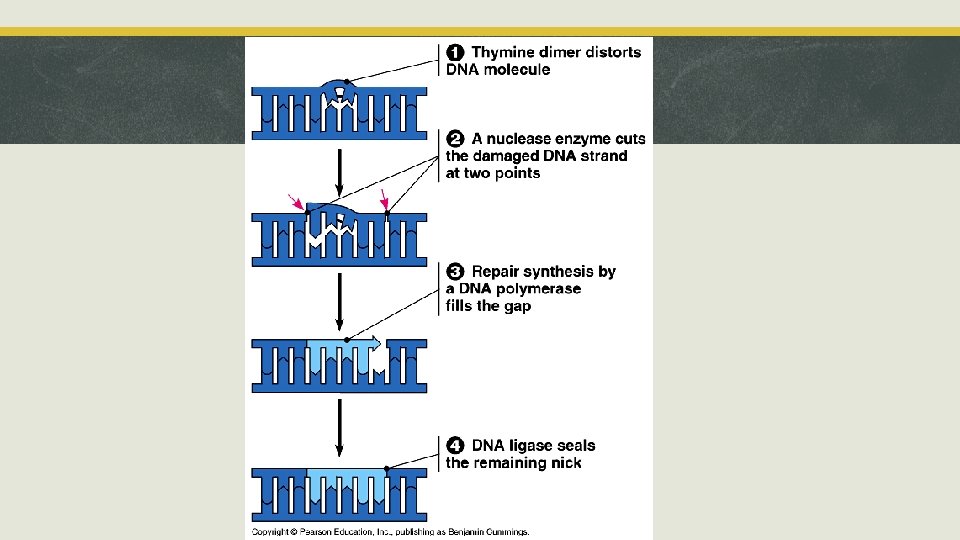
Proofreading and Repairing DNA § 1/ 105 nucleotide paring results in error § 1/ 10, 000, 000 errors in full DNA strand § DNA Polymerase proofreads DNA and removes mismatch nucleotide § Mismatch Repair- other enzymes replace mismatches that DNA polymerase does not correct § DNA can change after replication due to environmental factors such as radiation § Nuclease –cuts out damaged part of the DNA strand (caused by environmental factors)
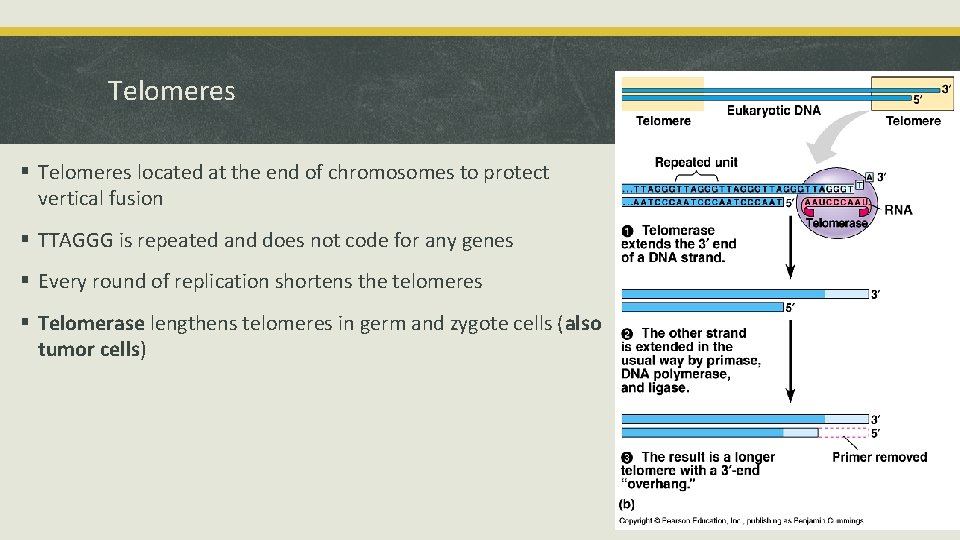
Telomeres § Telomeres located at the end of chromosomes to protect vertical fusion § TTAGGG is repeated and does not code for any genes § Every round of replication shortens the telomeres § Telomerase lengthens telomeres in germ and zygote cells (also tumor cells)