
DNA Packaging Objectives DNA packaging in prokaryotes How
DNA Packaging
Objectives • DNA packaging in prokaryotes. • How and why eukaryotic DNA is packaged. • Super coiling is essential for DNA packaging. • The role of histone in packaging. • How DNA packaging is adjusted during replication and transcription.
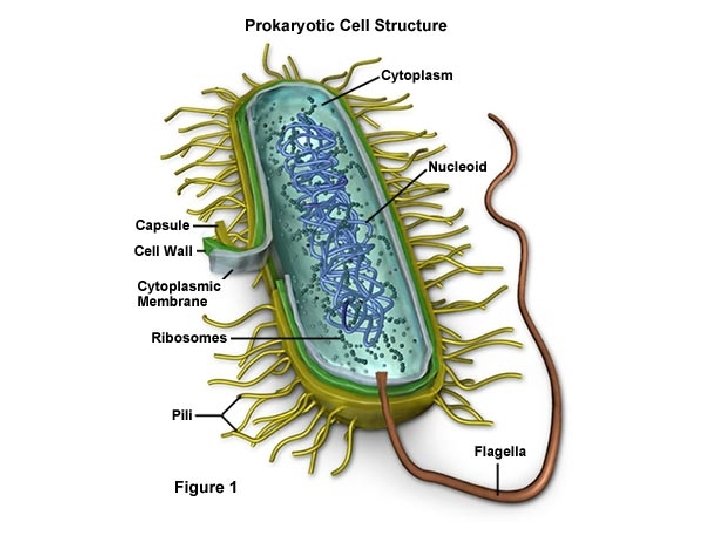
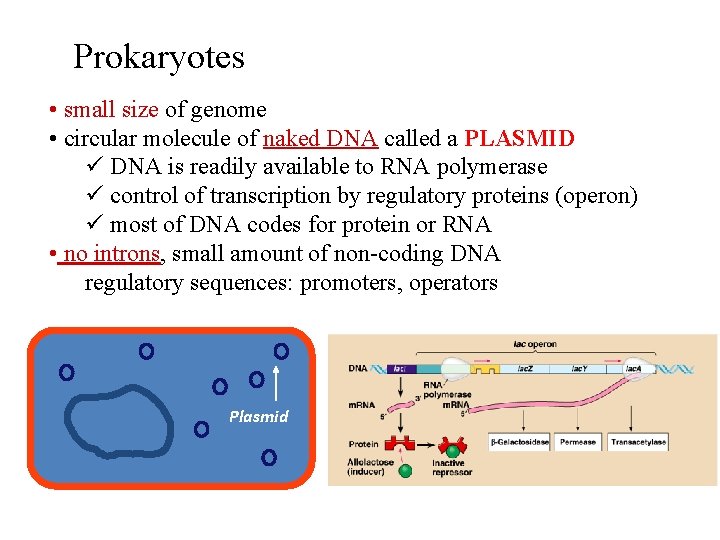
Prokaryotes • small size of genome • circular molecule of naked DNA called a PLASMID ü DNA is readily available to RNA polymerase ü control of transcription by regulatory proteins (operon) ü most of DNA codes for protein or RNA • no introns, small amount of non-coding DNA regulatory sequences: promoters, operators Plasmid
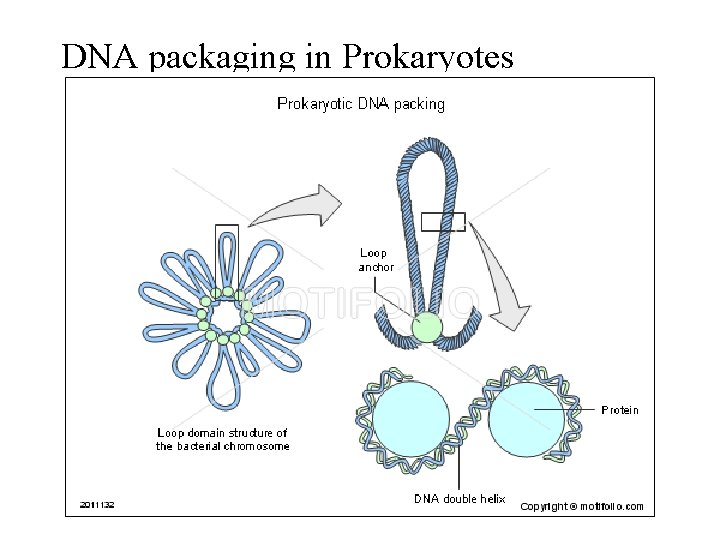
DNA packaging in Prokaryotes
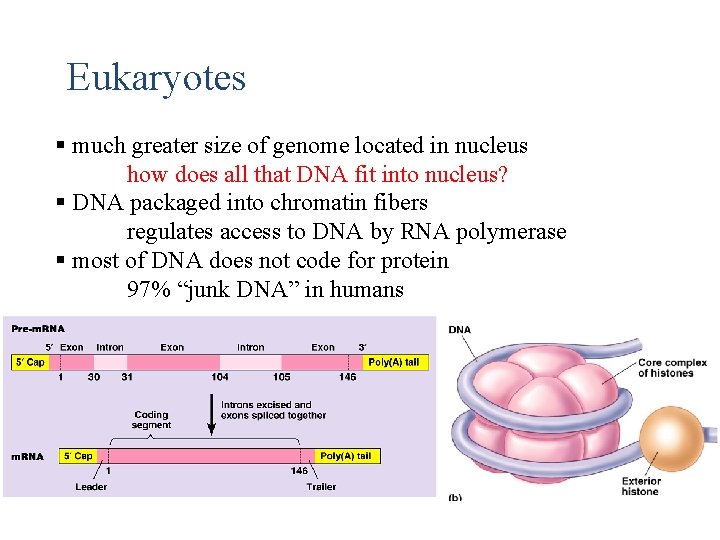
Eukaryotes § much greater size of genome located in nucleus how does all that DNA fit into nucleus? § DNA packaged into chromatin fibers regulates access to DNA by RNA polymerase § most of DNA does not code for protein 97% “junk DNA” in humans
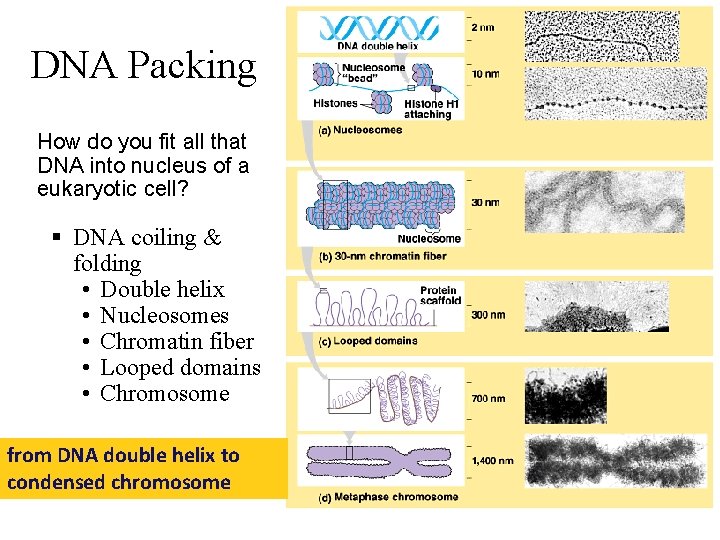
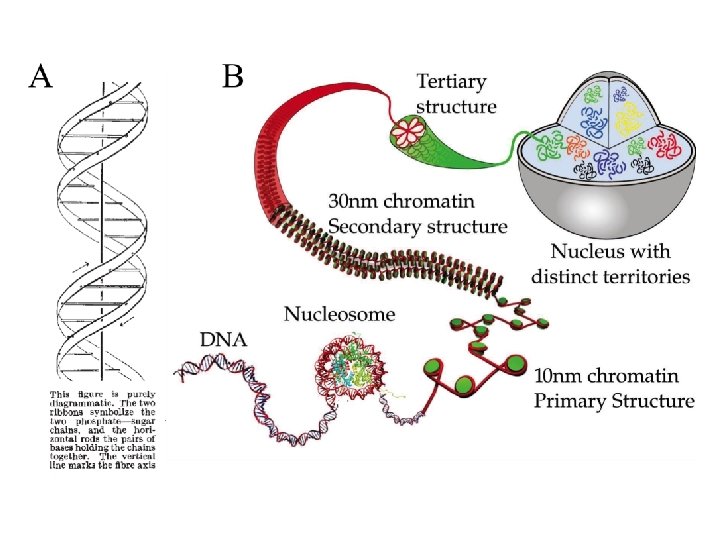
DNA Packing How do you fit all that DNA into nucleus of a eukaryotic cell? § DNA coiling & folding • Double helix • Nucleosomes • Chromatin fiber • Looped domains • Chromosome from DNA double helix to condensed chromosome
Organization of Eukaryotic DNA • Genes that store the cell's information and instructions are made of DNA sequences • In eukaryotic cells, DNA is packaged with proteins to form chromatin fibers that make up chromosomes • This organization of eukaryotic DNA allows DNA to be accurately replicated and sorted into daughter cells without much error and tangling during cell division
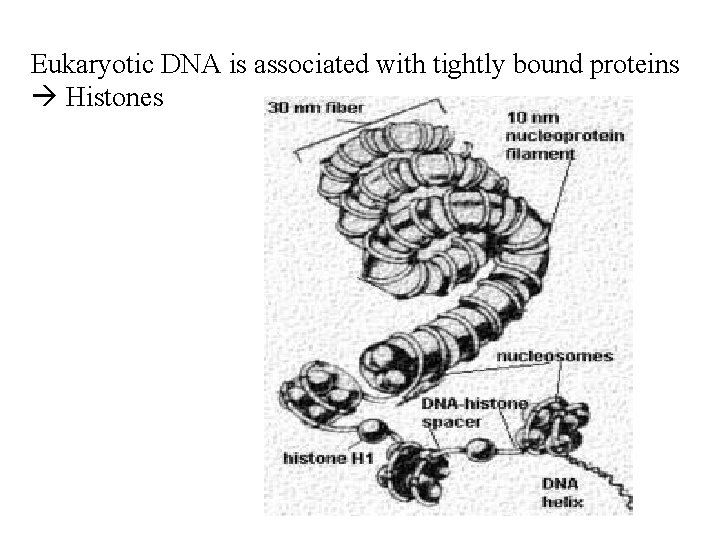
Eukaryotic DNA is associated with tightly bound proteins Histones
Histones and the formation of nucleosomes ü Five classes of histones, designated H 1, H 2 A, H 2 B, H 3, and H 4 ü These small proteins are positively charged at physiologic p. H as a result of their high content of lysine and arginine ü Because of their positive charge, they form ionic bonds with negatively charged DNA ü Histones, along with positively charged ions such as Mg 2+, help neutralize the negatively charged DNA phosphate groups
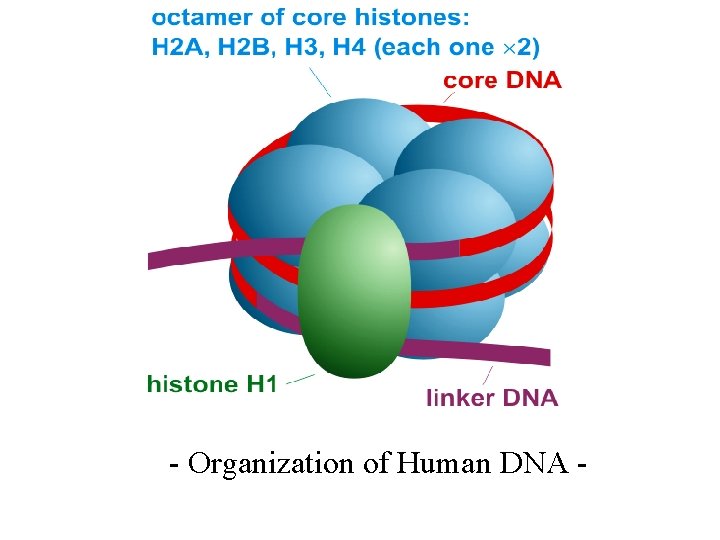
- Organization of Human DNA -
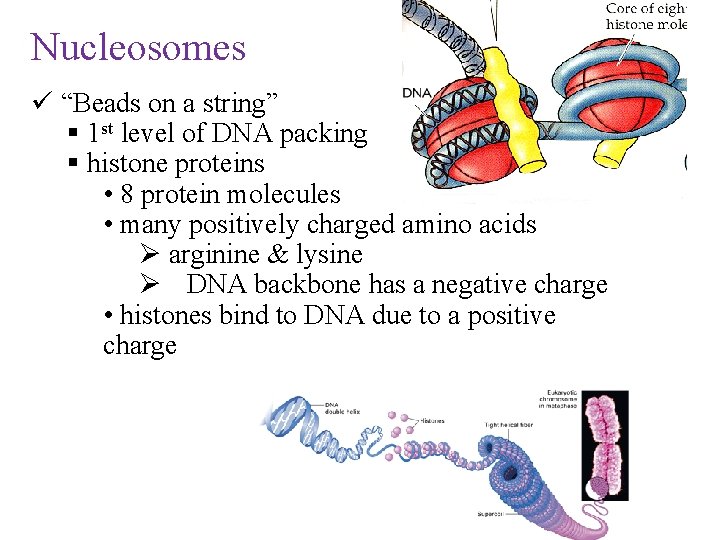
Nucleosomes ü “Beads on a string” § 1 st level of DNA packing § histone proteins • 8 protein molecules • many positively charged amino acids Ø arginine & lysine Ø DNA backbone has a negative charge • histones bind to DNA due to a positive charge
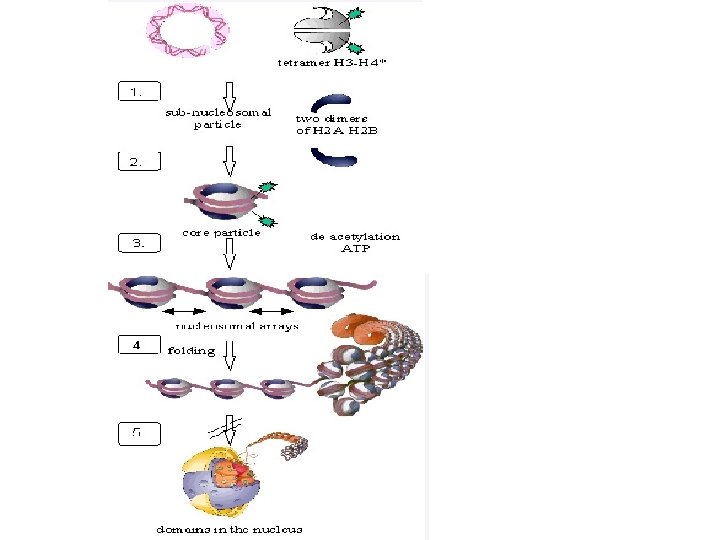
Nucleosomes Basic unit of DNA packaging in eukaryotes, consisting of a segment of DNA wound in sequence around eight histone protein cores v Two molecules each of H 2 A, H 2 B, H 3, and H 4 form the structural core of the individual nucleosome “beads” v Around this core, a segment of the DNA double helix is wound nearly twice, forming a negatively supertwisted helix
v Neighboring nucleosomes are joined by “linker” DNA approximately 50 base pairs long v Histone H 1, of which there are several related species, is not found in the nucleosome core, but instead binds to the linker DNA chain between the nucleosome beads v H 1 is the most tissue-specific and species-specific of the histones v It facilitates the packing of nucleosomes into the more compact structures
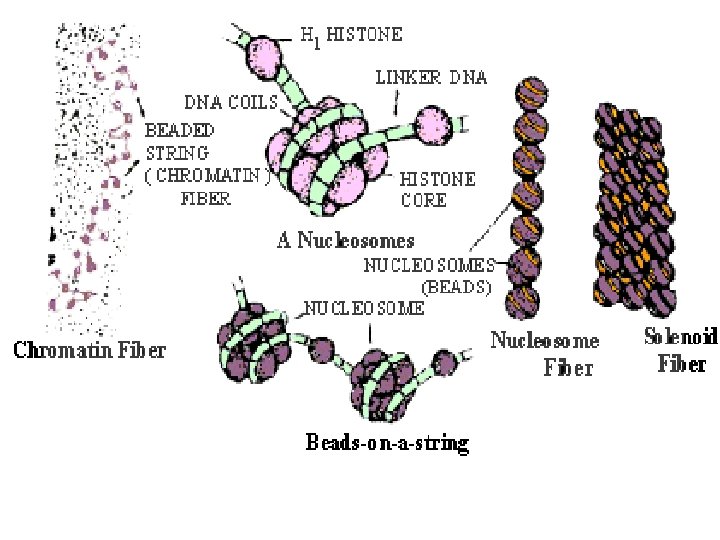
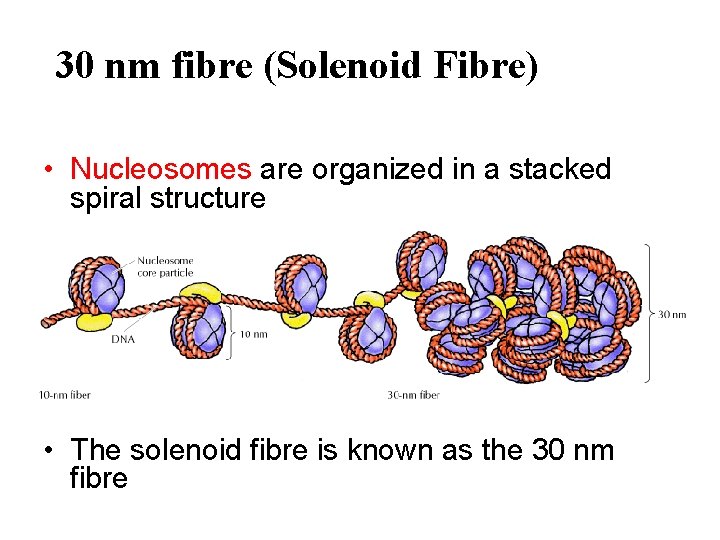
30 nm fibre (Solenoid Fibre) • Nucleosomes are organized in a stacked spiral structure • The solenoid fibre is known as the 30 nm fibre
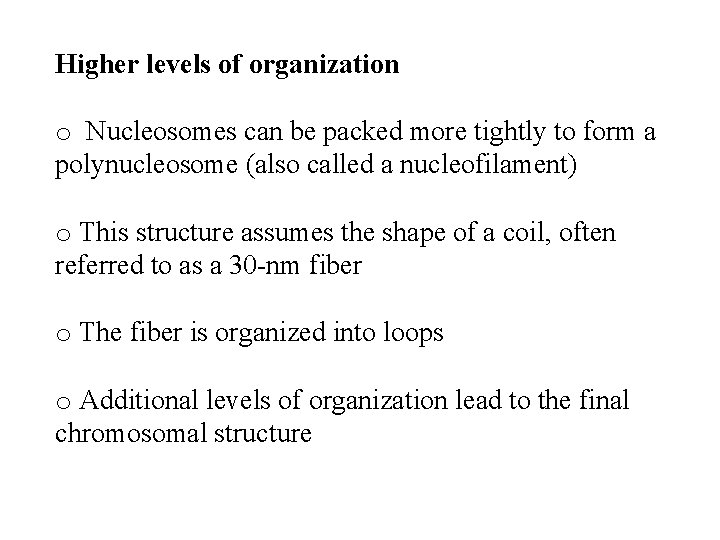
Higher levels of organization o Nucleosomes can be packed more tightly to form a polynucleosome (also called a nucleofilament) o This structure assumes the shape of a coil, often referred to as a 30 -nm fiber o The fiber is organized into loops o Additional levels of organization lead to the final chromosomal structure
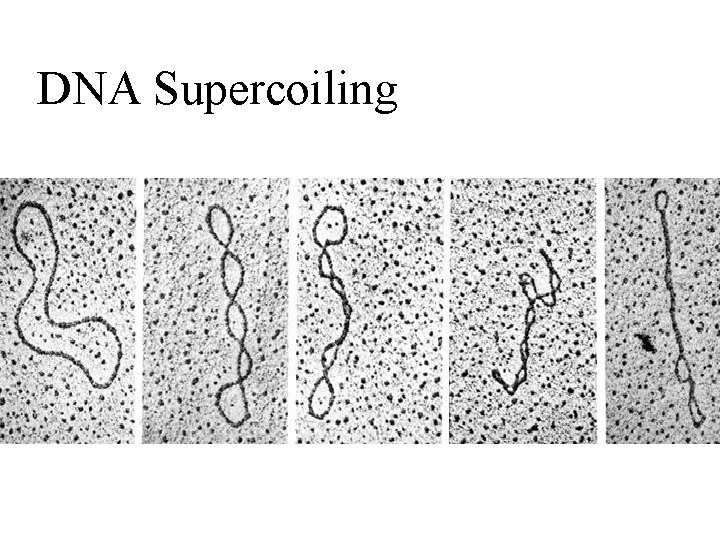
DNA Supercoiling
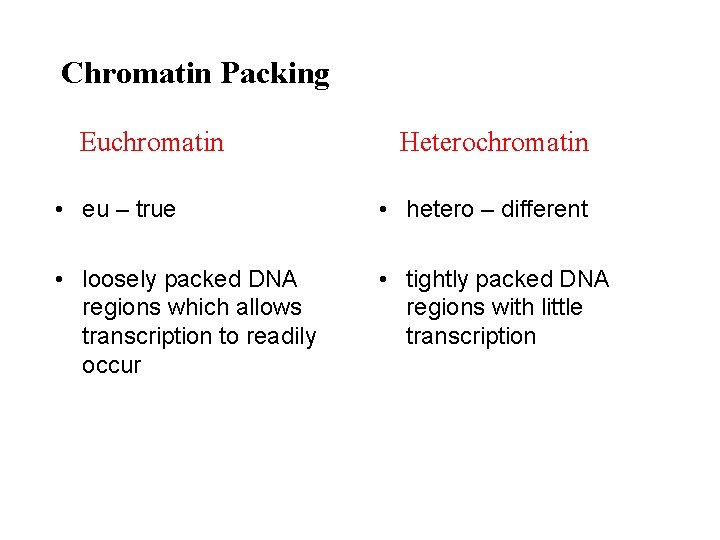
Chromatin Packing Euchromatin Heterochromatin • eu – true • hetero – different • loosely packed DNA regions which allows transcription to readily occur • tightly packed DNA regions with little transcription
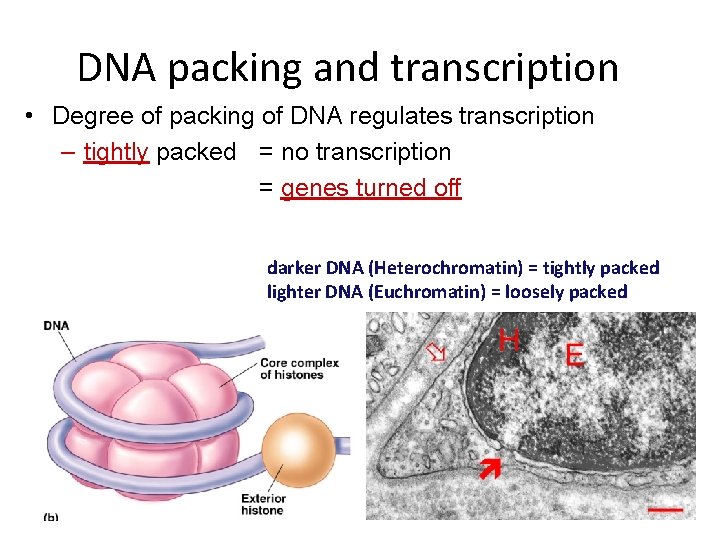
DNA packing and transcription • Degree of packing of DNA regulates transcription – tightly packed = no transcription – = genes turned off darker DNA (Heterochromatin) = tightly packed lighter DNA (Euchromatin) = loosely packed
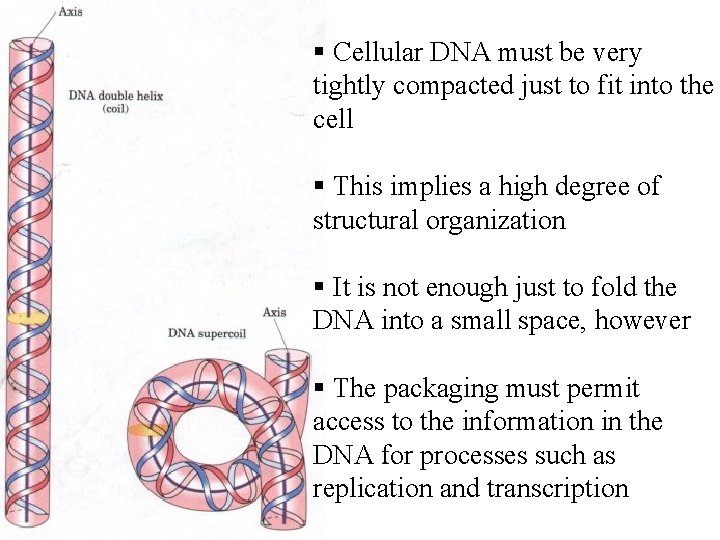
§ Cellular DNA must be very tightly compacted just to fit into the cell § This implies a high degree of structural organization § It is not enough just to fold the DNA into a small space, however § The packaging must permit access to the information in the DNA for processes such as replication and transcription
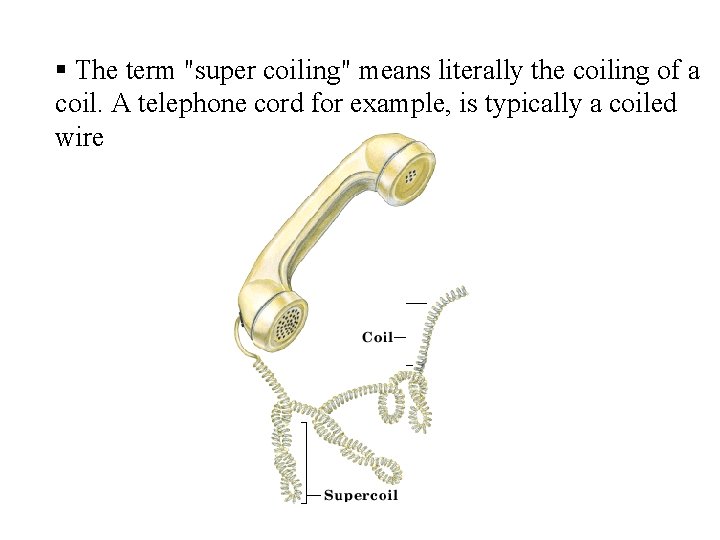
§ The term "super coiling" means literally the coiling of a coil. A telephone cord for example, is typically a coiled wire
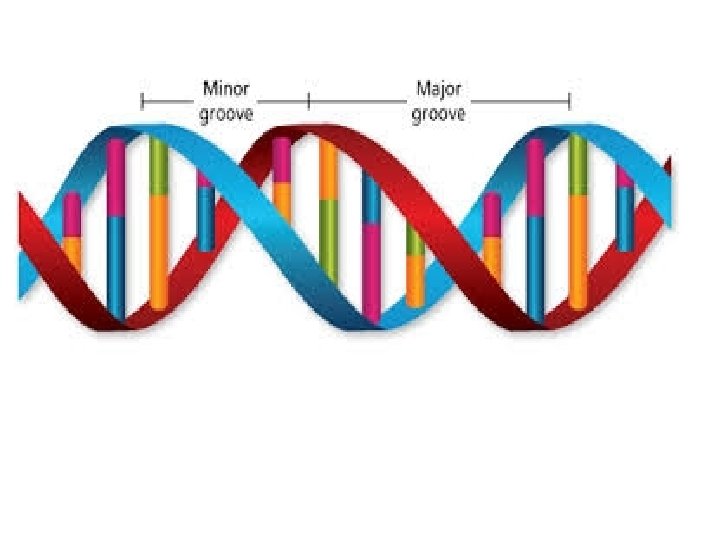
§ DNA is coiled in the form of a double helix § A bending or twisting of that axis upon itself is referred to as DNA supercoiling § DNA supercoiling is generally a manifestation of structural strain § Conversely, if there is no net bending of the DNA axis upon itself, the DNA is said to be in a relaxed state
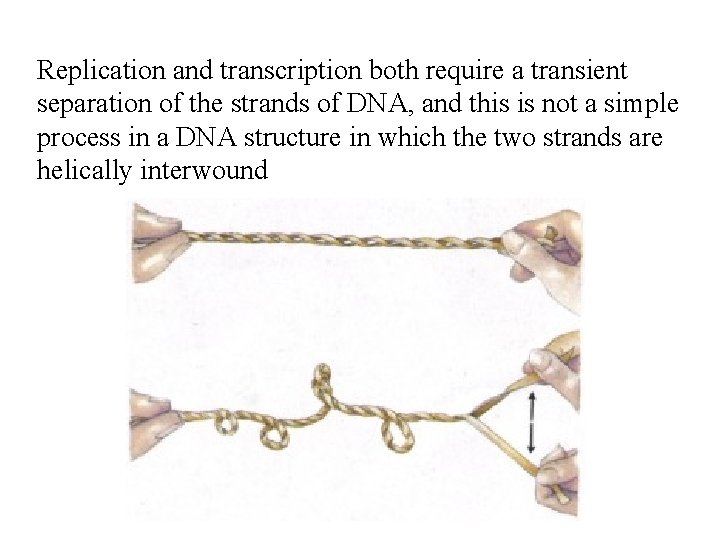
Replication and transcription both require a transient separation of the strands of DNA, and this is not a simple process in a DNA structure in which the two strands are helically interwound
ü DNA is referred to as Negatively supercoiled when it is underwound ü Positively supercoiled when it is overwound ü Negative supercoiling plays a key role in allowing the DNA of the chromosomes to be compacted fit inside the confines of a microscopic cell nucleus because negative supercoiled DNA is underwound , it exerts a force that helps separate the two strands of the helix which is required by both replication ( DNA synthesis) and transcription ( RNA synthesis)
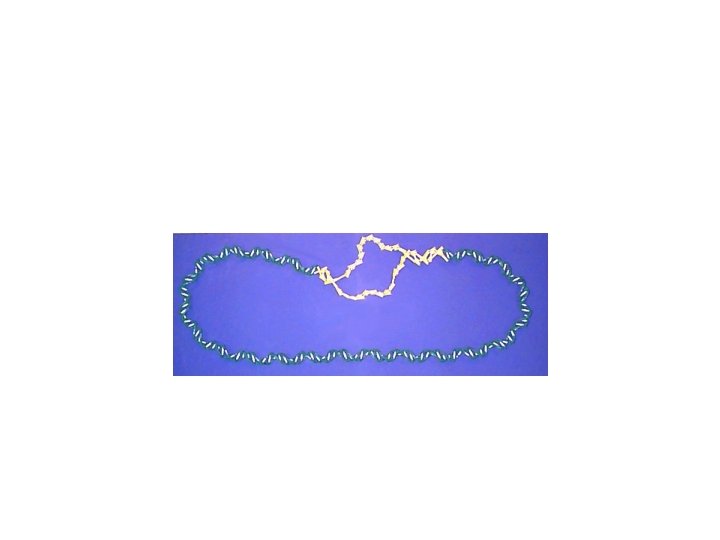
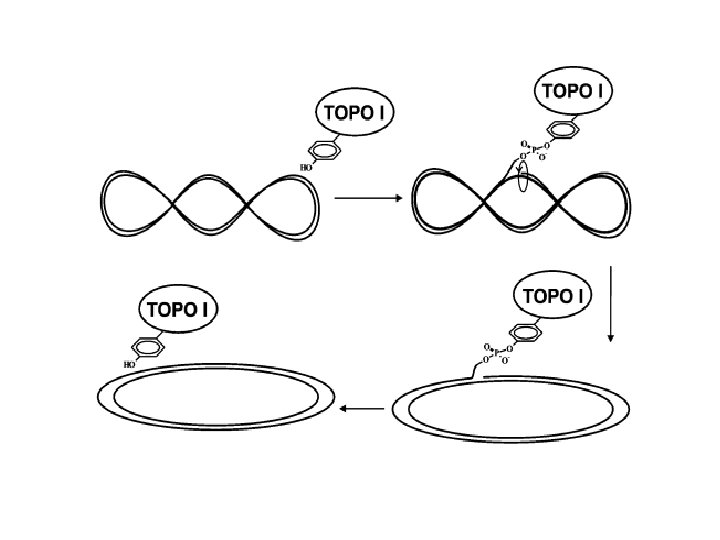
• Cells rely on enzymes to change the supercoiled state of a DNA duplex • These enzymes are called Topoisomerases because they change the topology of the DNA • Cells contain a variety of topoisomerases, which can be divided into two classes • Type 1 Topoisomerases change the supercoiled state of a DNA molecule by creating a transient break in one strand of the duplex • The enzyme cleaves one strand of the DNA and then allows the intact, complementary strand to undergo a controlled rotation, which relaxes the supercoiled molecule
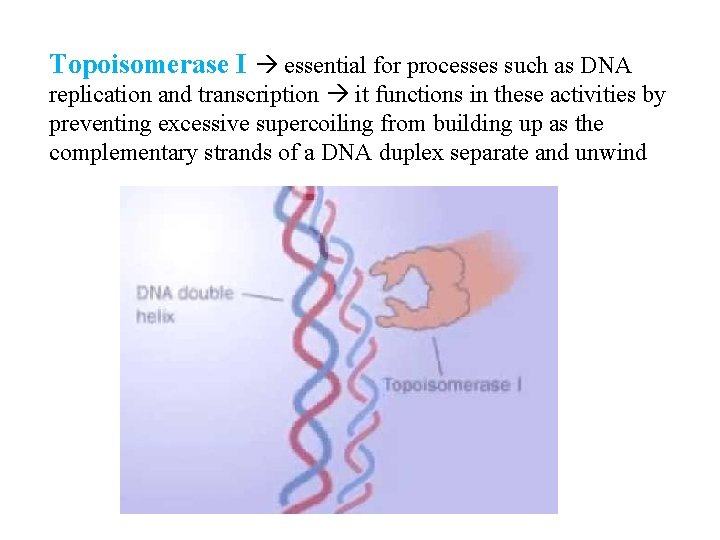
Topoisomerase I essential for processes such as DNA replication and transcription it functions in these activities by preventing excessive supercoiling from building up as the complementary strands of a DNA duplex separate and unwind
• Type II topoisomerases make a transient break in both strands of a DNA duplex • Another segment of the DNA molecule or a separate molecule entirely is then transported through the break, and the severed strands are released
- Slides: 33