
DNA Notes Central Dogma DNA RNA Protein Structure
- Slides: 29
DNA Notes
Central Dogma • DNA RNA Protein
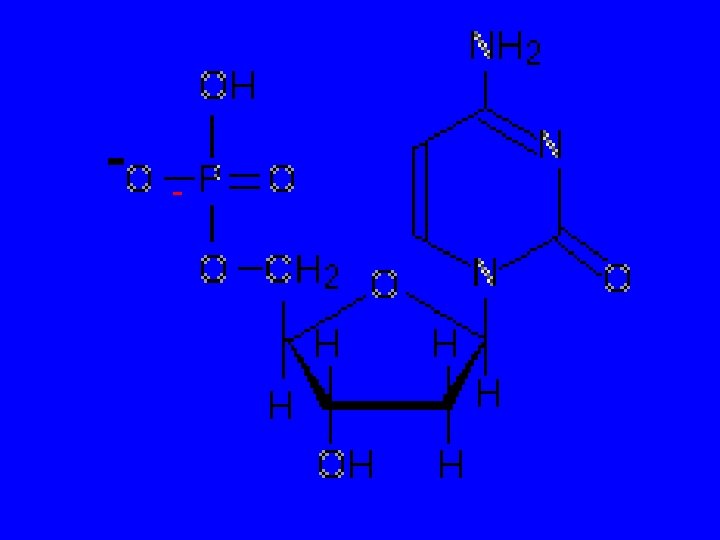
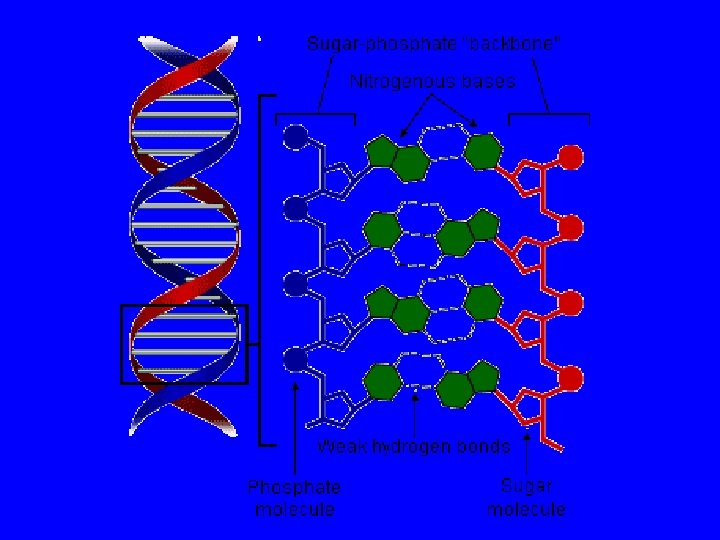
Structure and function • Nucleic acids (DNA and RNA) are made of smaller subunits called nucleotides. • The components of DNA nucleotide are a simple sugar, called deoxyribose, a phosphate group and a nitrogen base.
Structure and function • The 4 nitrogen bases are: adenine, guanine, cytosine and thymine. • Adenine pairs with Thymine • Cytosine pairs with Guanine
Structure and function • In DNA, nucleotides combine to form 2 long chains, producing 1 large molecule. • The 2 chains are joined by a hydrogen bond.
The importance of sequences • DNA in each organism is different because of the sequencing of the nitrogen base.
Replication • In autosomal cells, mitosis is the process by which organisms copy their DNA in the cell to prepare to pass it on to new cells. • In sex cells, meiosis is the process by which organisms copy their DNA in the cell to prepare to pass it on to new cells.
Replication • Every time a cell reproduces it needs to make a copy of the directions for life for it’s offspring.
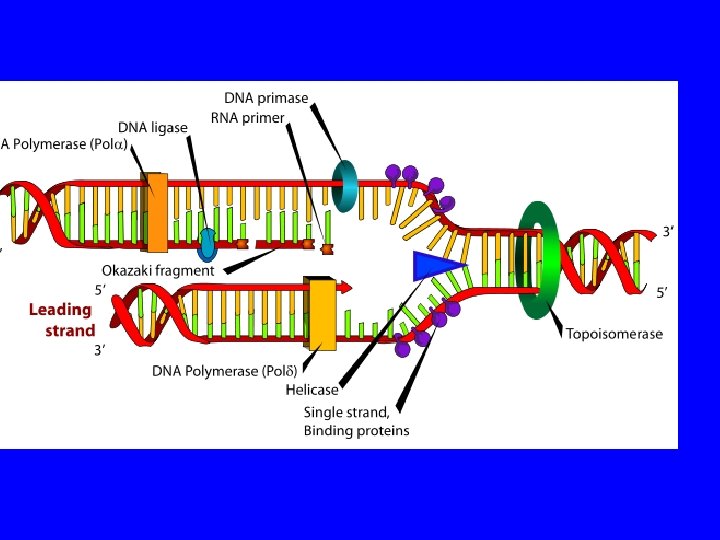
Replication • Replication begins with an enzyme “unzipping” the hydrogen bond between the nitrogen bases. • After the bond is broken, free nucleotides in the nucleus bond with the unpaired nucleotides.
Replication • After this pairing, another enzyme bonds them together with a hydrogen bond. • Each new strand is a perfect copy of the parent.
The DNA code • The sequence of nitrogen bases along one of the DNA strands is a code to make protein.
RNA and DNA • RNA and DNA differ structurally in three ways: – RNA is a single strand – Different sugar (ribose) – Has uracil instead of thymine
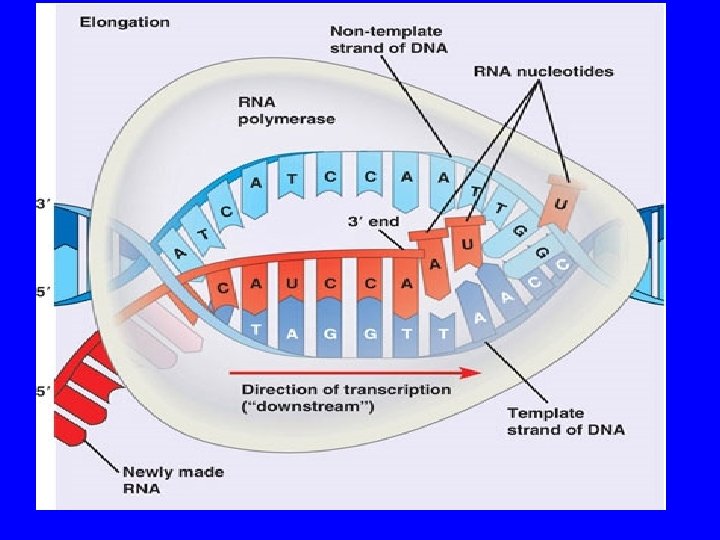
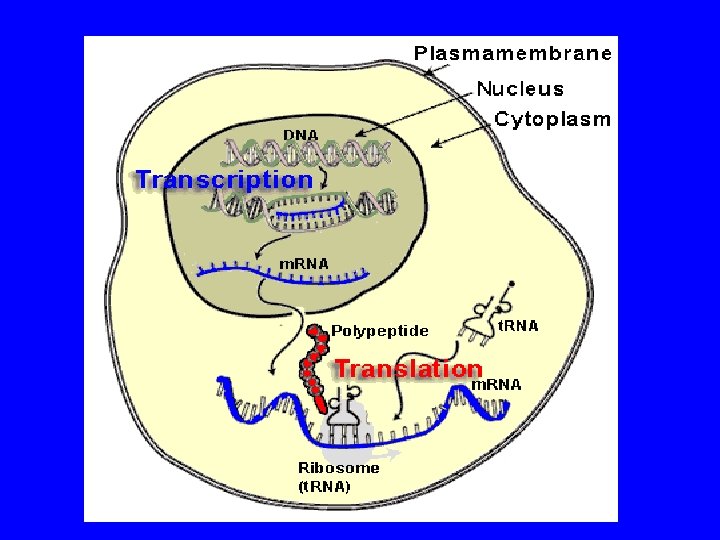
RNA • RNA is the form in which information moves from the nucleus to the ribosome. • Enzymes make a copy of DNA through a process called transcription, the result is RNA.
• m. RNA is the copy of DNA that is taken out into the cytoplasm of the cell.
Proteins • Proteins are made in ribosomes in the cytoplasm of the cell, but DNA is only found in the nucleus.
Proteins • Proteins are built from smaller molecules called amino acids. • There are 20 different kinds of Amino acids. But there are only 4 types of bases in DNA…
Codons • Each set of three bases that codes for an amino acid and is known as a codon, also known as a triplet code.
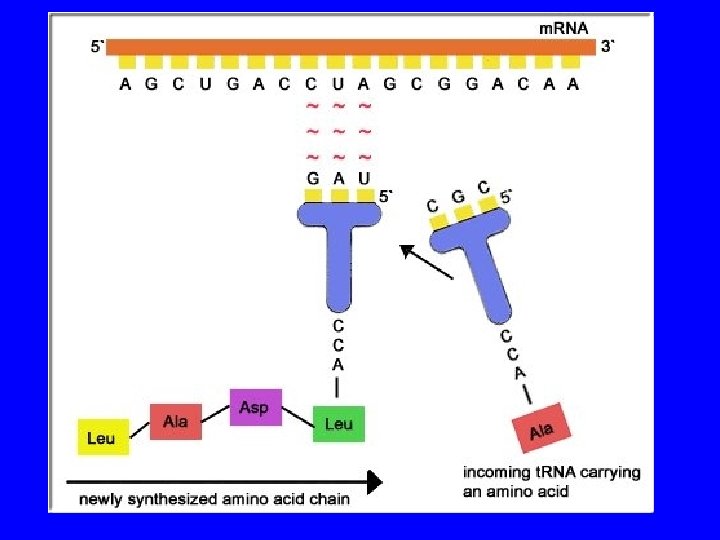
RNA • Translation is the process of converting the information in a sequence of nitrogen bases into amino acids that make up proteins. • This occurs on ribosomes and involves t. RNA
• t. RNA codes the m. RNA and brings the correct amino acid to the ribosome to make it a protein. • r. RNA is a type of RNA that is in the ribosome and helps to guide translation
Mutations • A mutation is any mistake or change in the DNA sequence.
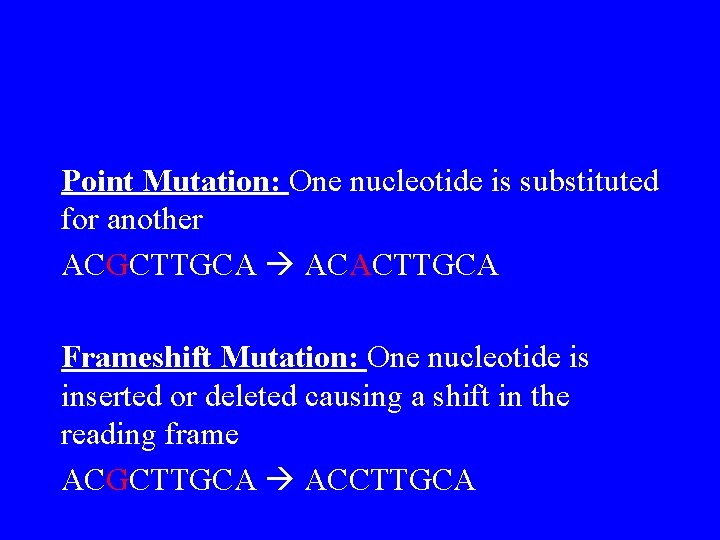
Point Mutation: One nucleotide is substituted for another ACGCTTGCA ACACTTGCA Frameshift Mutation: One nucleotide is inserted or deleted causing a shift in the reading frame ACGCTTGCA ACCTTGCA
Causes of mutations • Errors in DNA can result from exposure to X-rays, ultraviolet light, radioactivity and other chemicals.
Causes of mutations • DNA mutations cause the changes necessary for survival of a species. • But they can cause birth defects and can lead to cancer.