
DNA Mutations Technology What are genetic mutations Mutation

- Slides: 20
DNA Mutations & Technology
What are genetic mutations? Mutation: Permanent change in a cell’s DNA, ranging from changes in a single base pair to deletions of large sections of chromosomes. Causes of mutations include: * Viruses * Radiation * Chemicals * Errors during mitosis and meiosis
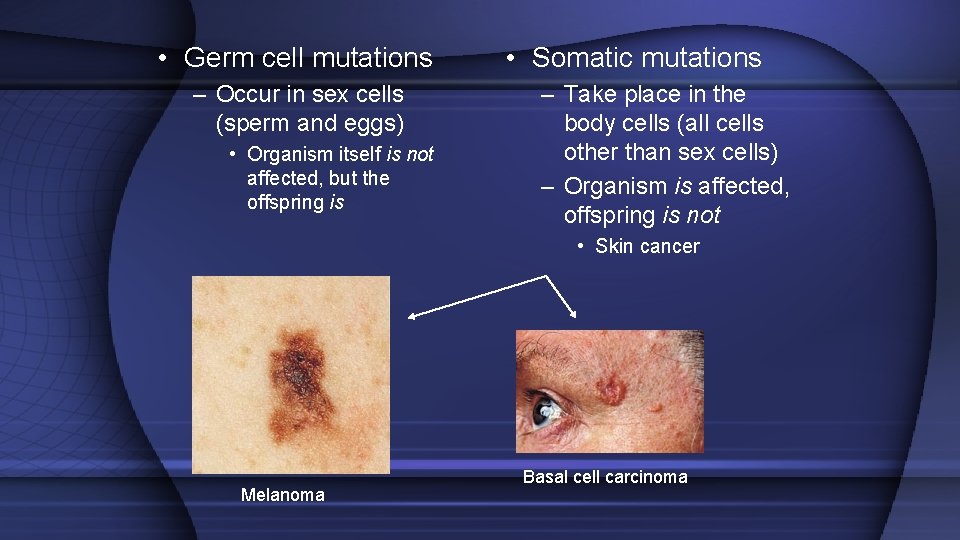
• Germ cell mutations – Occur in sex cells (sperm and eggs) • Organism itself is not affected, but the offspring is • Somatic mutations – Take place in the body cells (all cells other than sex cells) – Organism is affected, offspring is not • Skin cancer Melanoma Basal cell carcinoma
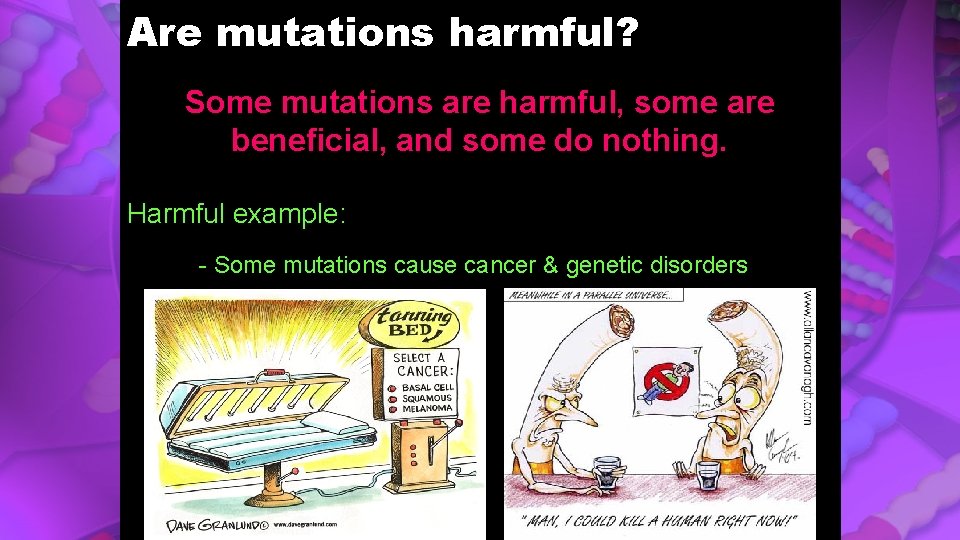
Are mutations harmful? Some mutations are harmful, some are beneficial, and some do nothing. Harmful example: - Some mutations cause cancer & genetic disorders
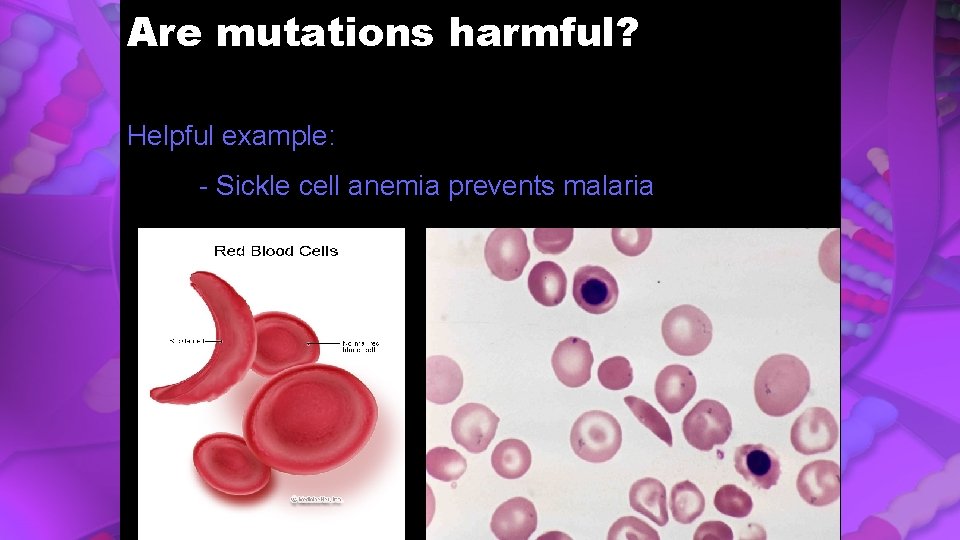
Are mutations harmful? Helpful example: - Sickle cell anemia prevents malaria
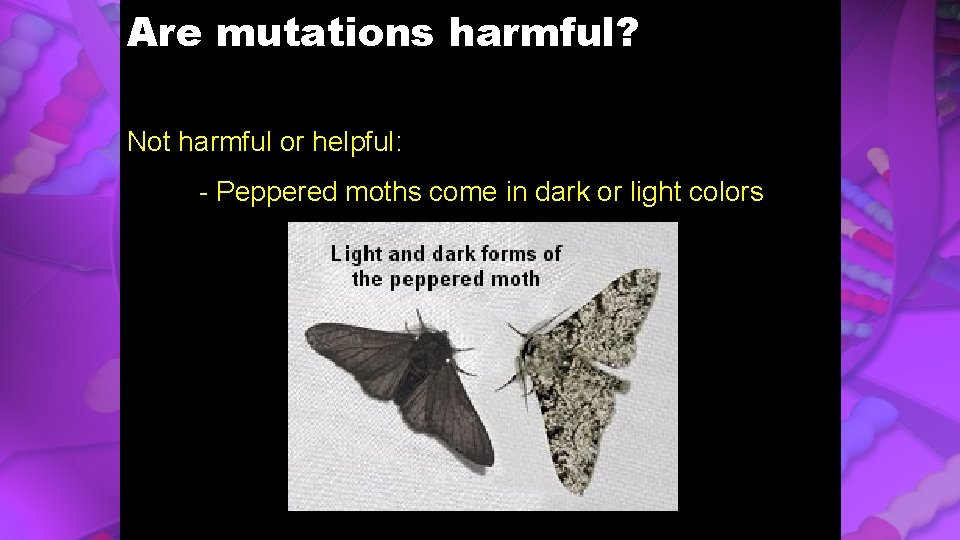
Are mutations harmful? Not harmful or helpful: - Peppered moths come in dark or light colors
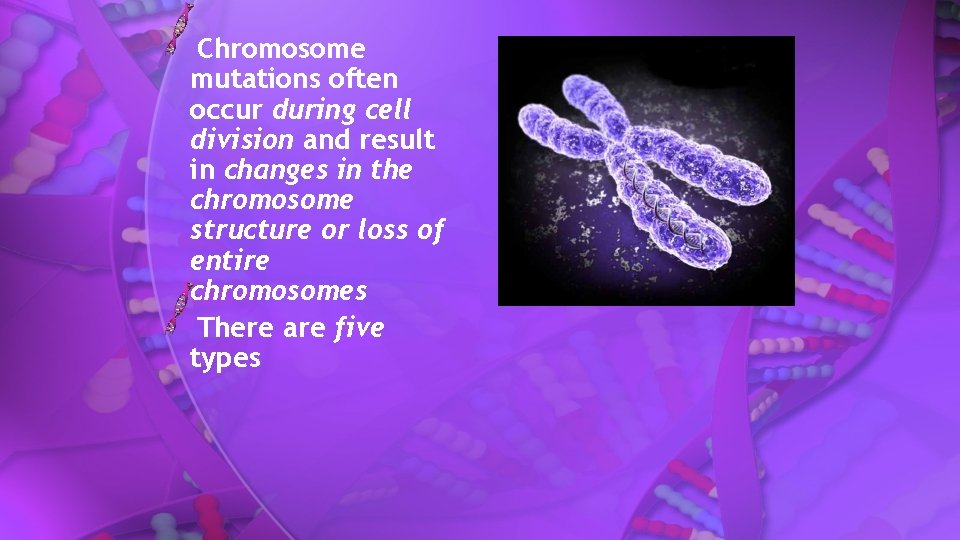
Chromosome mutations often occur during cell division and result in changes in the chromosome structure or loss of entire chromosomes There are five types
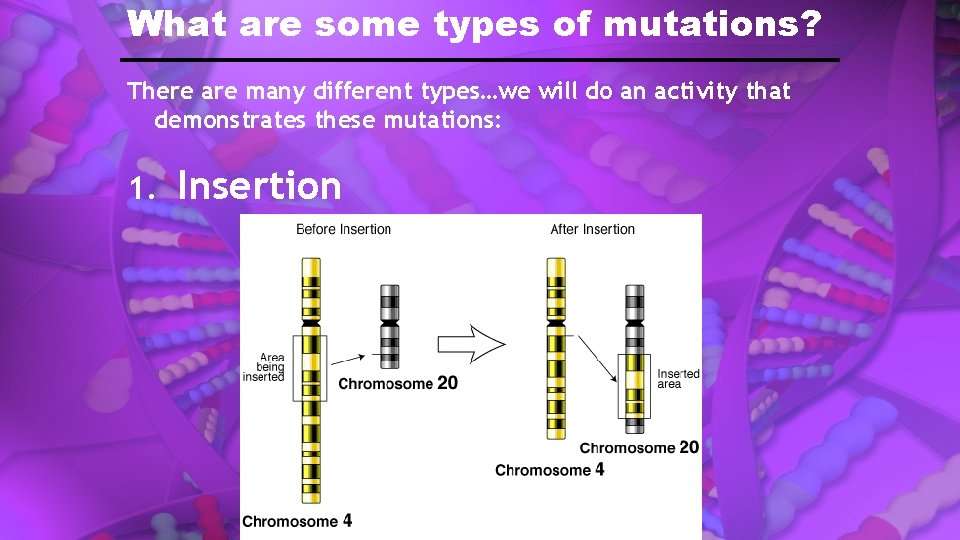
What are some types of mutations? There are many different types…we will do an activity that demonstrates these mutations: 1. Insertion
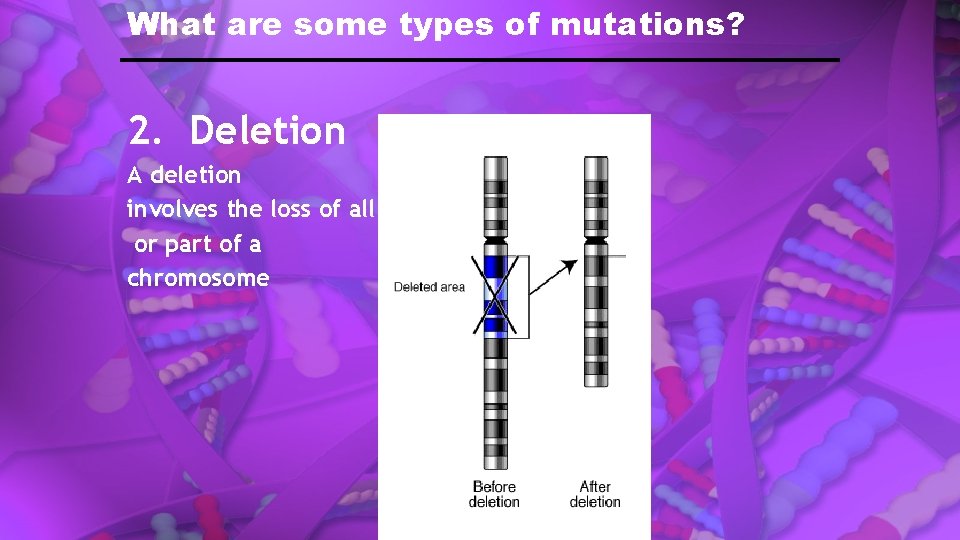
What are some types of mutations? 2. Deletion A deletion involves the loss of all or part of a chromosome
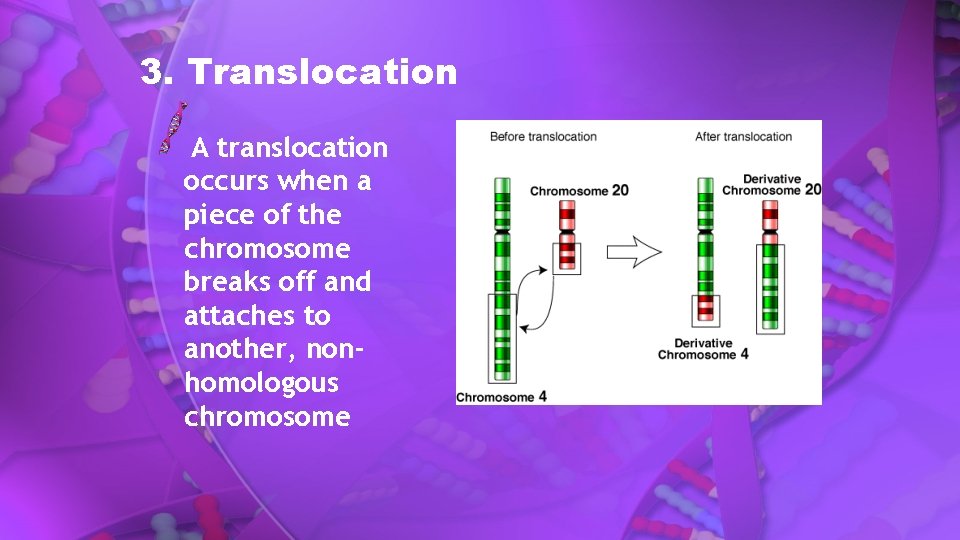
3. Translocation A translocation occurs when a piece of the chromosome breaks off and attaches to another, nonhomologous chromosome
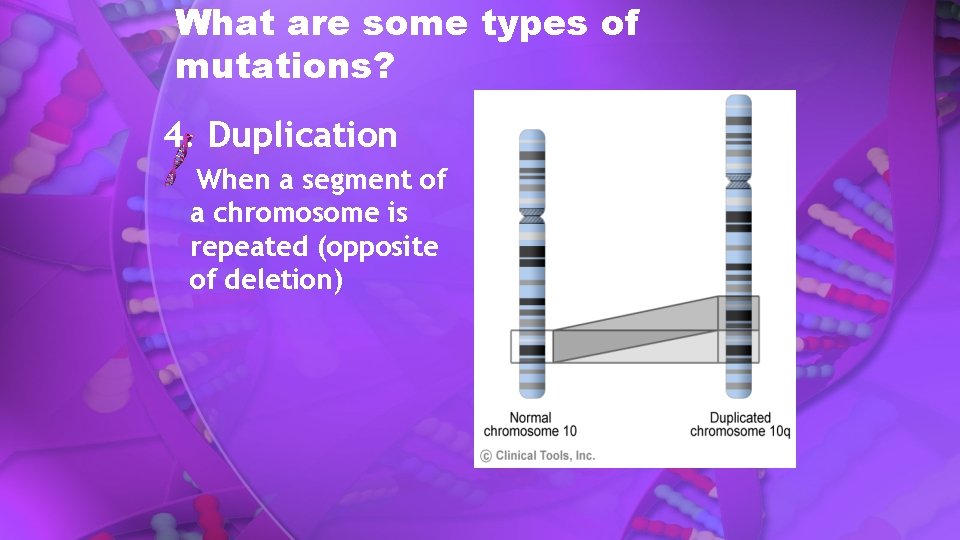
What are some types of mutations? 4. Duplication When a segment of a chromosome is repeated (opposite of deletion)
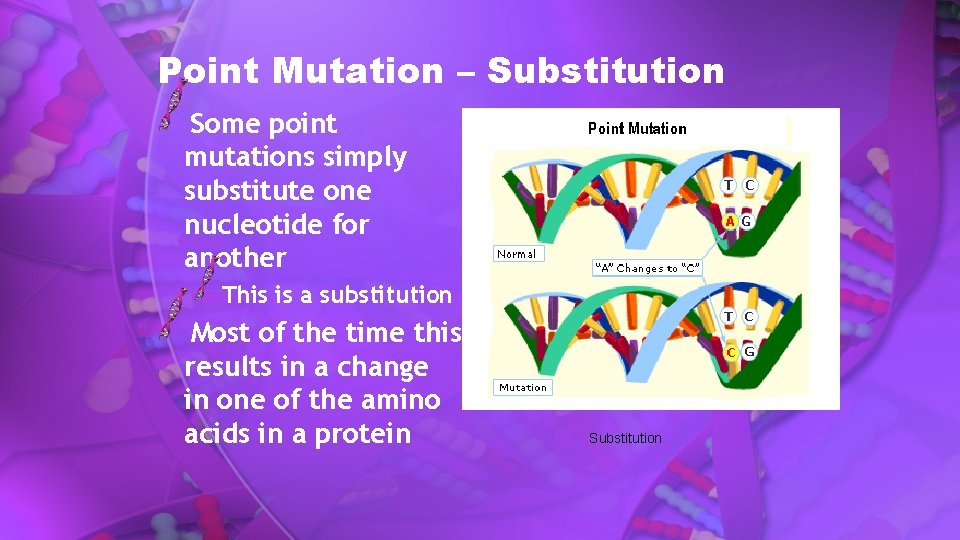
Gene mutations involve a single nucleotide within a codon or larger segments of DNA Mutations that affect a single nucleotide are called point mutations because they occur at a single point in the DNA sequence
Point Mutation – Substitution Some point mutations simply substitute one nucleotide for another This is a substitution Most of the time this results in a change in one of the amino acids in a protein Substitution
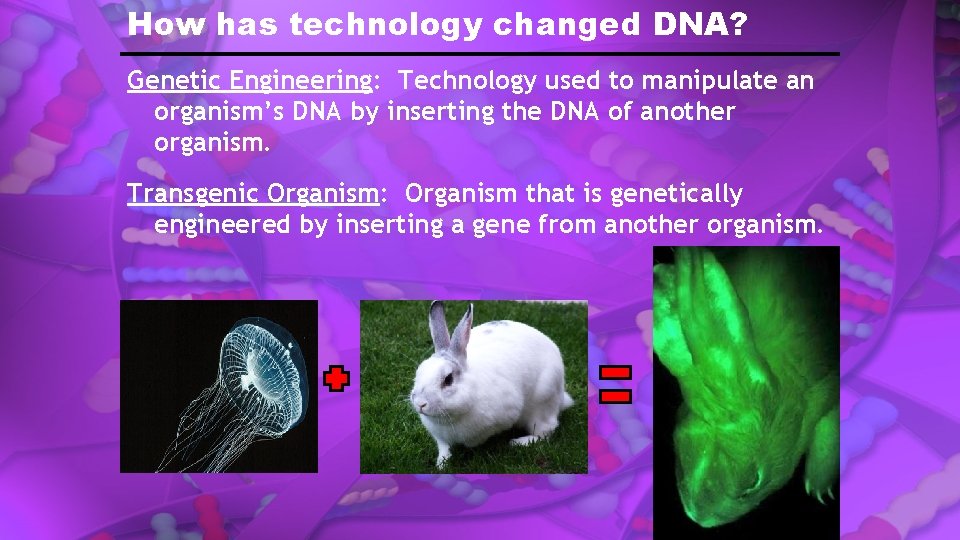
How has technology changed DNA? Genetic Engineering: Technology used to manipulate an organism’s DNA by inserting the DNA of another organism. Transgenic Organism: Organism that is genetically engineered by inserting a gene from another organism.
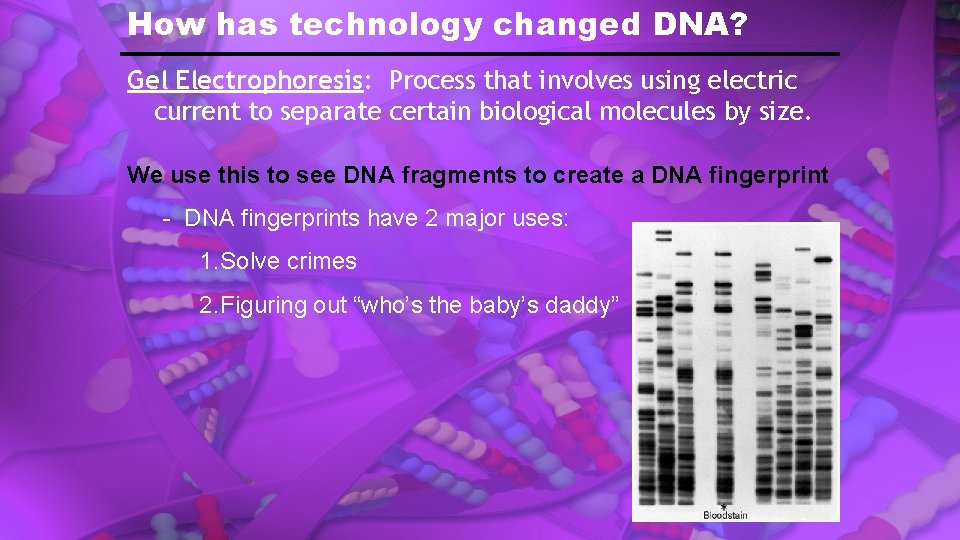
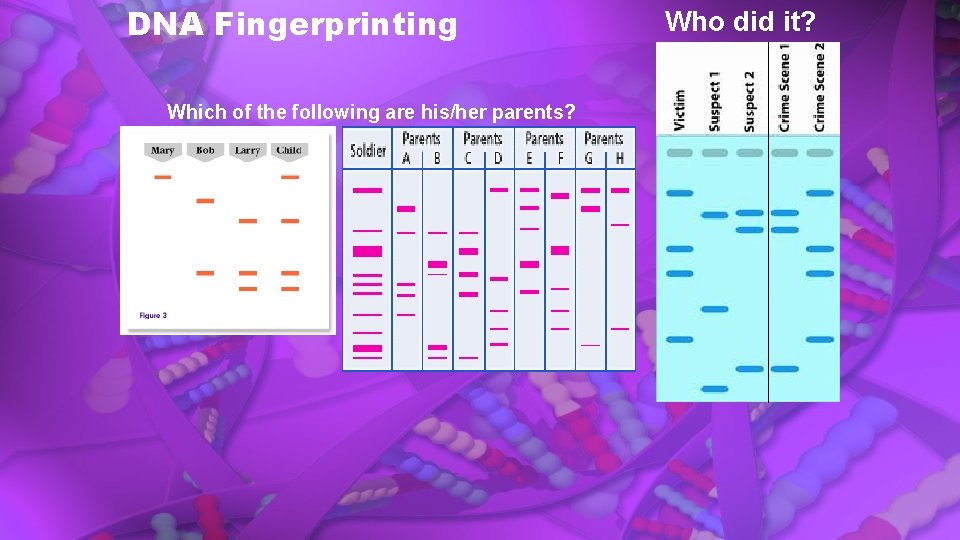
How has technology changed DNA? Gel Electrophoresis: Process that involves using electric current to separate certain biological molecules by size. We use this to see DNA fragments to create a DNA fingerprint - DNA fingerprints have 2 major uses: 1. Solve crimes 2. Figuring out “who’s the baby’s daddy”
DNA Fingerprinting Which of the following are his/her parents? Who did it?
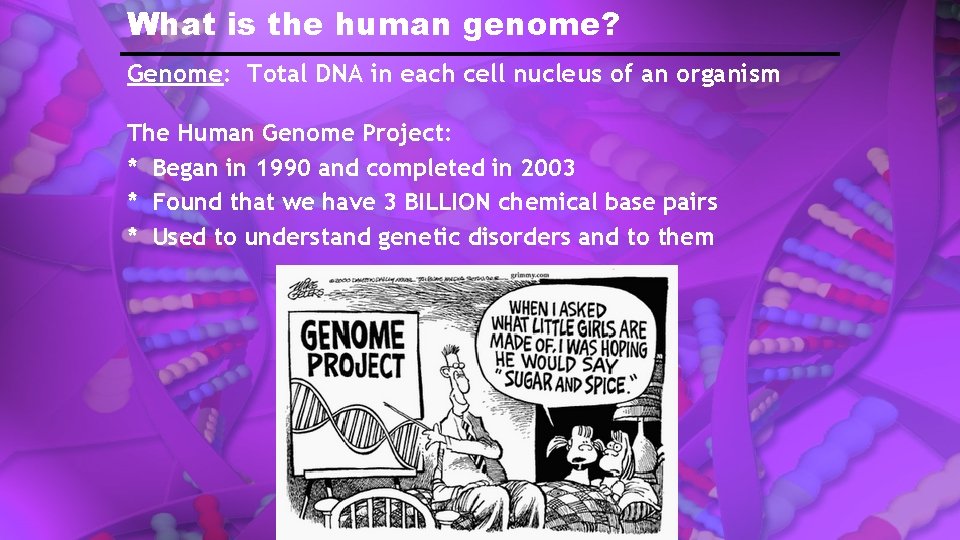
What is the human genome? Genome: Total DNA in each cell nucleus of an organism The Human Genome Project: * Began in 1990 and completed in 2003 * Found that we have 3 BILLION chemical base pairs * Used to understand genetic disorders and to them
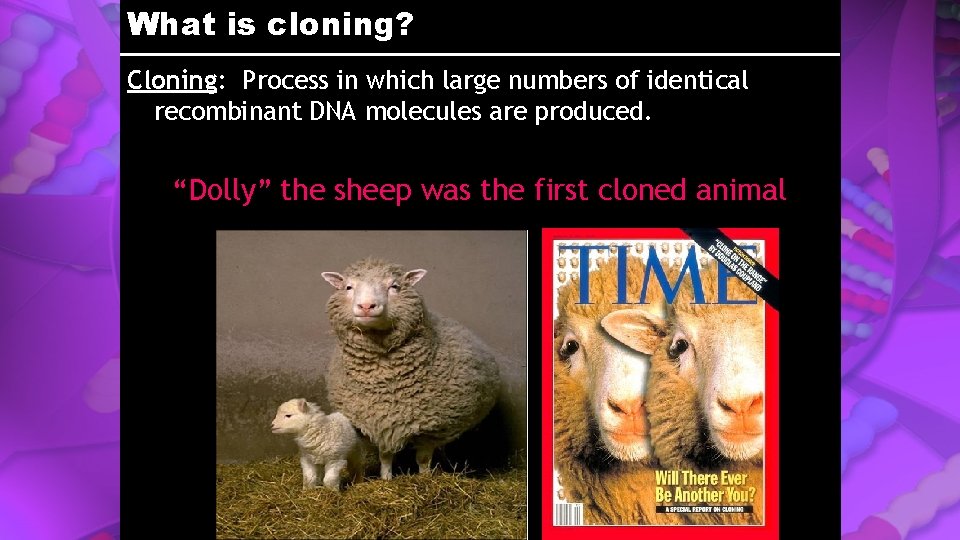
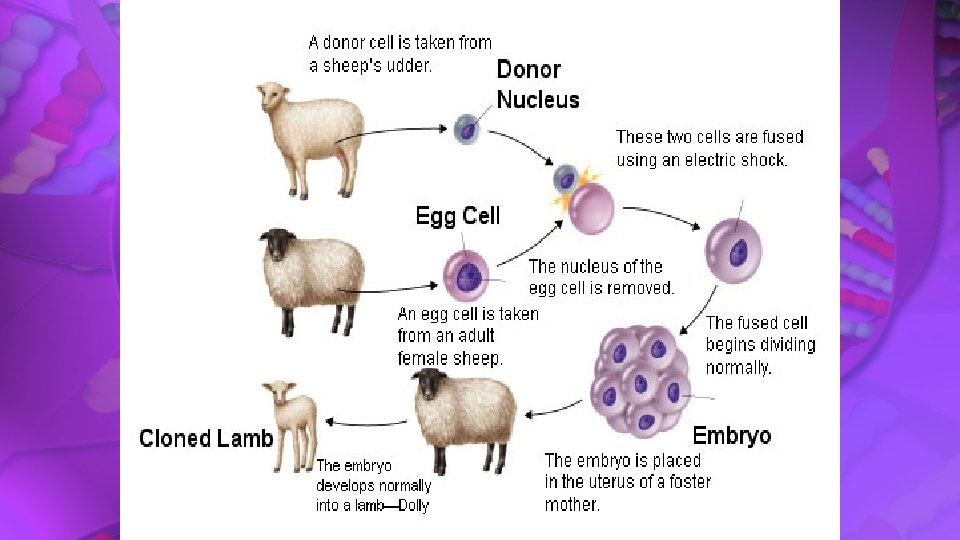
What is cloning? Cloning: Process in which large numbers of identical recombinant DNA molecules are produced. “Dolly” the sheep was the first cloned animal