
DNA is the Genetic Material Therefore it must



- Slides: 22
DNA is the Genetic Material Therefore it must 1. Replicate faithfully 2. Have the coding capacity to generate proteins and other products for all cellular functioning 3. • “A genetic material must carry out two jobs: duplicate itself and control the development of the rest of the cell in a specific way”. 4. - Francis
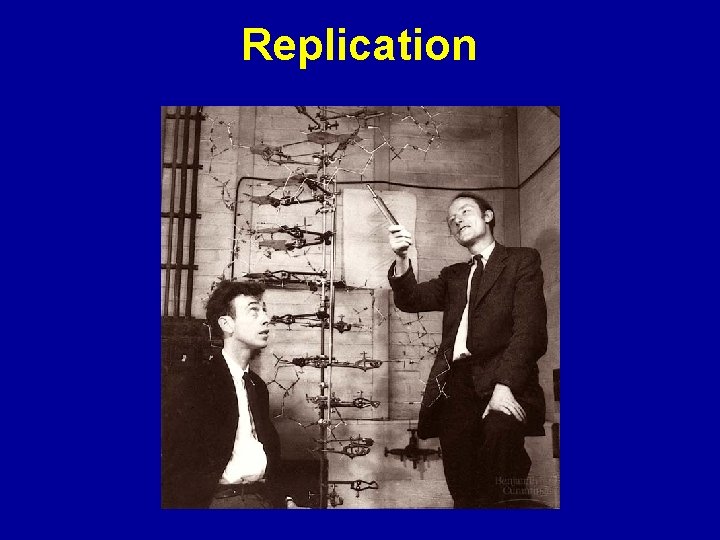
Replication
The Dawn of Molecular Biology April 25, 1953 Watson and Crick: "It has not escaped our notice that the specific (base) pairing we have postulated immediately suggests a possible copying mechanism for the genetic material. "
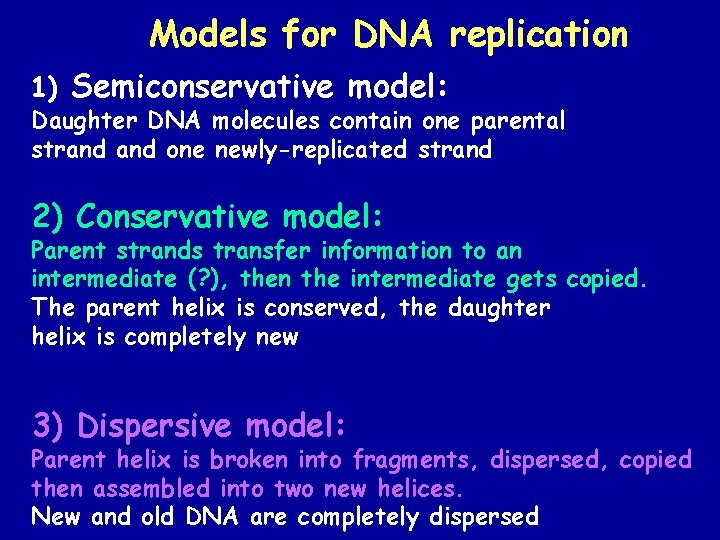
Models for DNA replication 1) Semiconservative model: Daughter DNA molecules contain one parental strand one newly-replicated strand 2) Conservative model: Parent strands transfer information to an intermediate (? ), then the intermediate gets copied. The parent helix is conserved, the daughter helix is completely new 3) Dispersive model: Parent helix is broken into fragments, dispersed, copied then assembled into two new helices. New and old DNA are completely dispersed
MODELS OF DNA REPLICATION (a) Hypothesis 1: (b) Hypothesis 2: (c) Hypothesis 3: Semi-conservative replication Conservative replication Dispersive replication Intermediate molecule
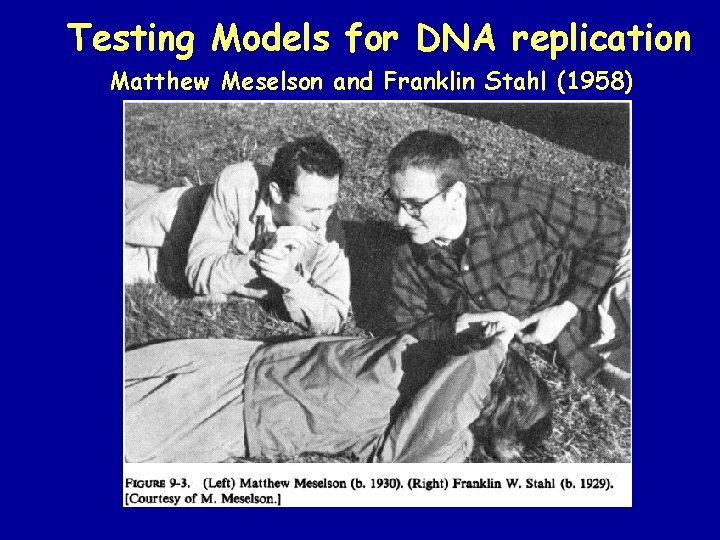
Testing Models for DNA replication Matthew Meselson and Franklin Stahl (1958)
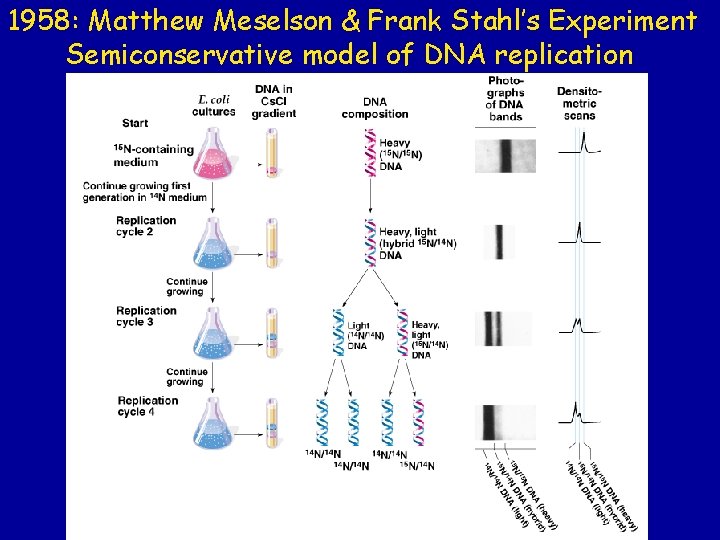
1958: Matthew Meselson & Frank Stahl’s Experiment Semiconservative model of DNA replication
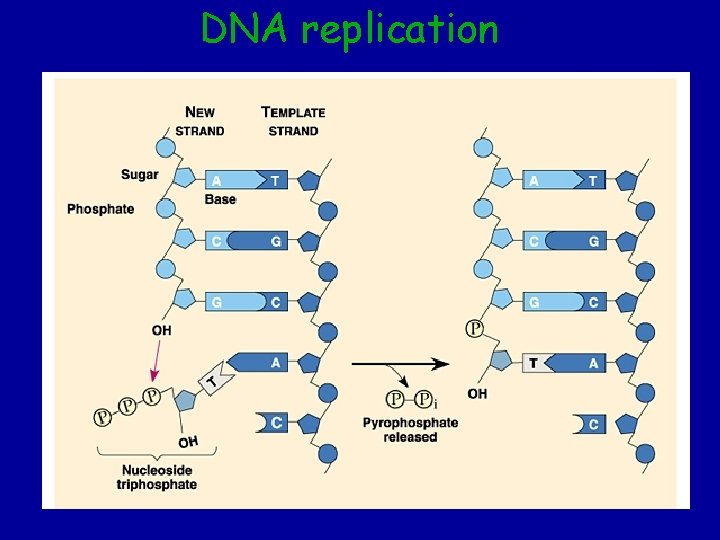
DNA replication
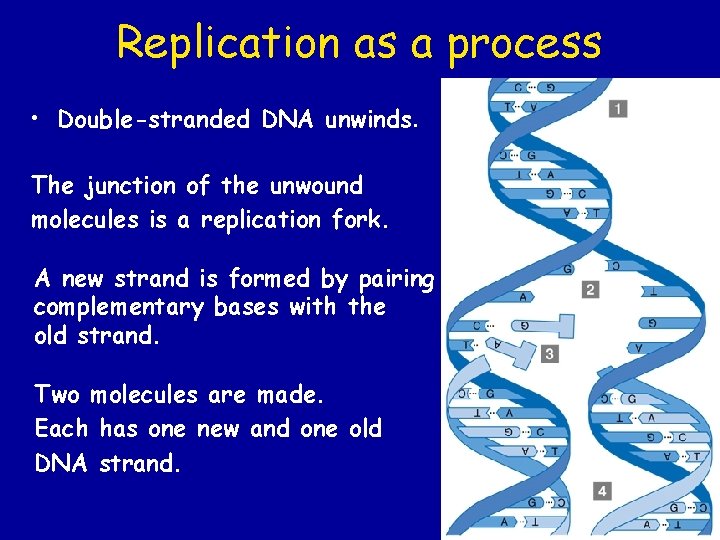
Replication as a process • Double-stranded DNA unwinds. The junction of the unwound molecules is a replication fork. A new strand is formed by pairing complementary bases with the old strand. Two molecules are made. Each has one new and one old DNA strand.
DNA Replication • Since DNA replication is semiconservative, therefore the helix must be unwound. • John Cairns (1963) showed that initial unwinding is localized to a region of the bacterial circular genome, called an “origin” or “ori” for short.
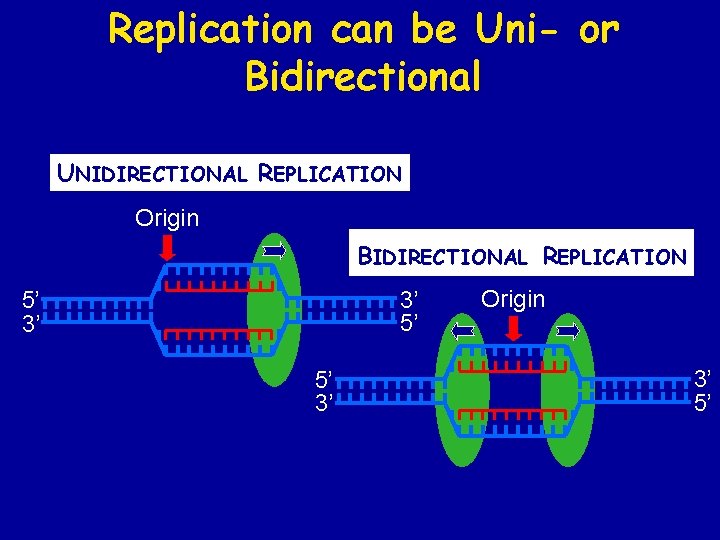
Replication can be Uni- or Bidirectional UNIDIRECTIONAL REPLICATION Origin BIDIRECTIONAL REPLICATION 3’ 5’ 5’ 3’ Origin 3’ 5’
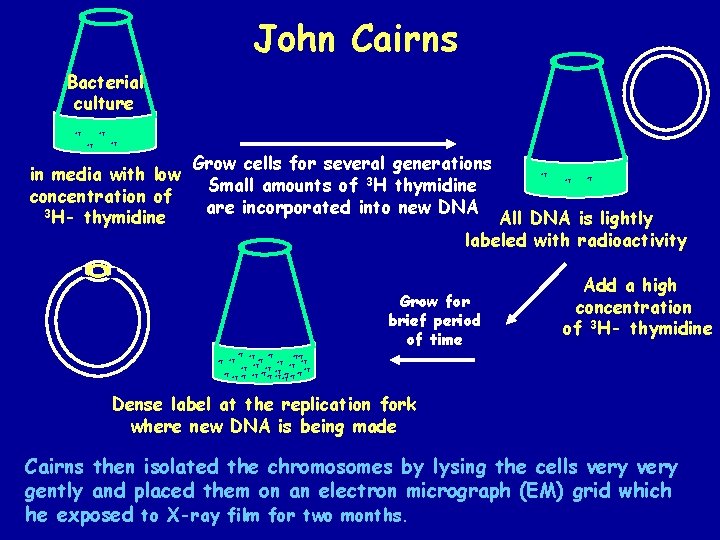
John Cairns Bacterial culture *T *T in media with low concentration of 3 H- thymidine Grow cells for several generations Small amounts of 3 H thymidine are incorporated into new DNA *T *T *T All DNA is lightly labeled with radioactivity Grow for brief period of time Add a high concentration of 3 H- thymidine *T *T*T *T *T *T *T *T Dense label at the replication fork where new DNA is being made Cairns then isolated the chromosomes by lysing the cells very gently and placed them on an electron micrograph (EM) grid which he exposed to X-ray film for two months.
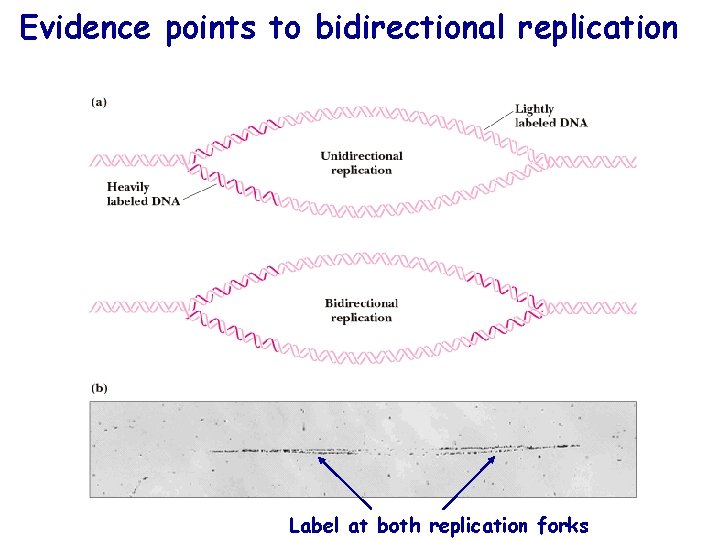
Evidence points to bidirectional replication Label at both replication forks
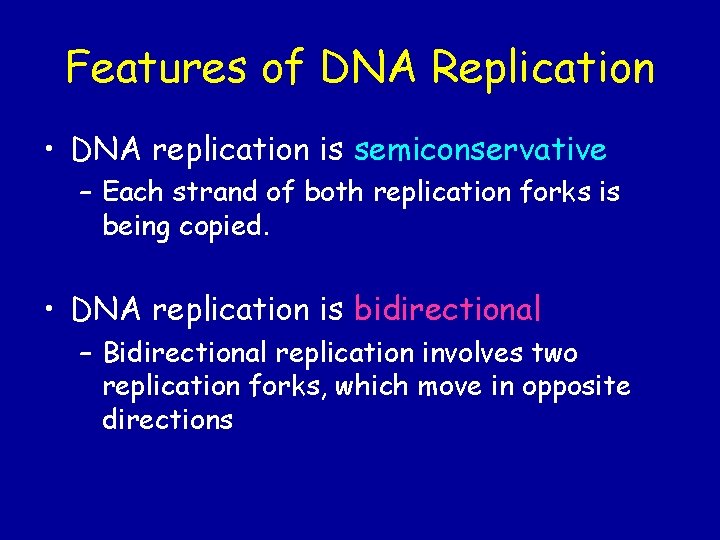
Features of DNA Replication • DNA replication is semiconservative – Each strand of both replication forks is being copied. • DNA replication is bidirectional – Bidirectional replication involves two replication forks, which move in opposite directions
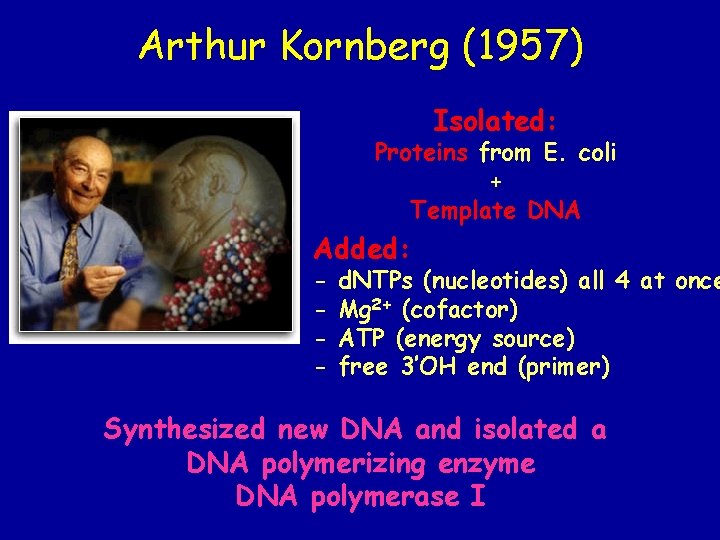
Arthur Kornberg (1957) Isolated: Proteins from E. coli + Template DNA Added: - d. NTPs (nucleotides) all 4 at once Mg 2+ (cofactor) ATP (energy source) free 3’OH end (primer) Synthesized new DNA and isolated a DNA polymerizing enzyme DNA polymerase I
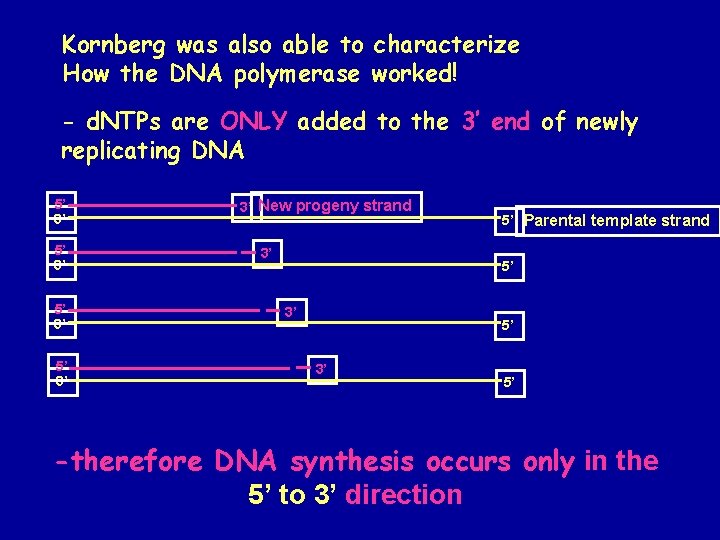
Kornberg was also able to characterize How the DNA polymerase worked! - d. NTPs are ONLY added to the 3’ end of newly replicating DNA 5’ 3’ 3’ New progeny strand 3’ 5’ Parental template strand 5’ 3’ 5’ -therefore DNA synthesis occurs only in the 5’ to 3’ direction
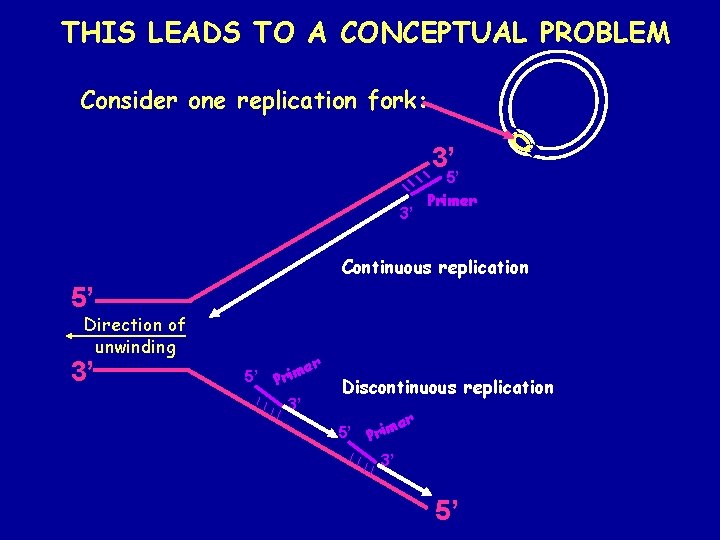
THIS LEADS TO A CONCEPTUAL PROBLEM Consider one replication fork: 3’ 3’ 5’ Primer Continuous replication 5’ Direction of unwinding 3’ 5’ er m Pri 3’ Discontinuous replication 5’ er m Pri 3’ 5’
Evidence for the Semi-Discontinuous replication model was provided by the Okazakis (1968)
Evidence for Semi-Discontinuous Replication (pulse-chase experiment) Bacterial culture Add 3 H Thymidine For a SHORT time (i. e. seconds) Flood with non-radioactive T Allow replication To continue Harvest the bacteria at different times after the chase Bacteria are replicating smallest Isolate their DNA Separate the strands Run on a sizing gradient Radioactivity will only be in the DNA that was made during the pulse largest
Results of pulse-chase experiment Chase Pulse 3’ ** * 3’ 5’ Primer smallest 5’ Direction of unwinding 3’ 5’ me i r P r 3’ 5’ r largest me Pri 3’ *** 5’
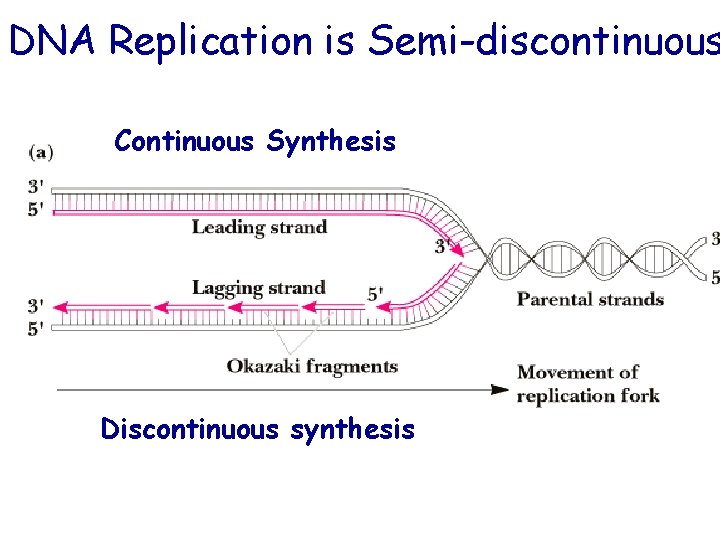
DNA Replication is Semi-discontinuous DNA replication is semi-discontinuous Continuous synthesis Synthesis Continuous Discontinuous synthesis
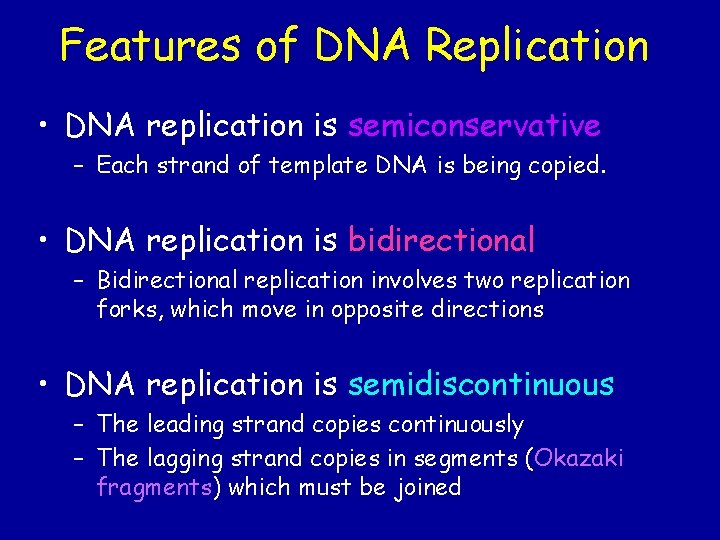
Features of DNA Replication • DNA replication is semiconservative – Each strand of template DNA is being copied. • DNA replication is bidirectional – Bidirectional replication involves two replication forks, which move in opposite directions • DNA replication is semidiscontinuous – The leading strand copies continuously – The lagging strand copies in segments (Okazaki fragments) which must be joined