
DNA is a linear polymer composed of monomers
![From this, we can calculate At p. H 7, [H+] = [OH-] = 10](https://slidetodoc.com/presentation_image_h/9c7cfe7c3c7269633d08925ea4bca8b1/image-10.jpg "From this, we can calculate At p. H 7, [H+] = [OH-] = 10")
- Slides: 20
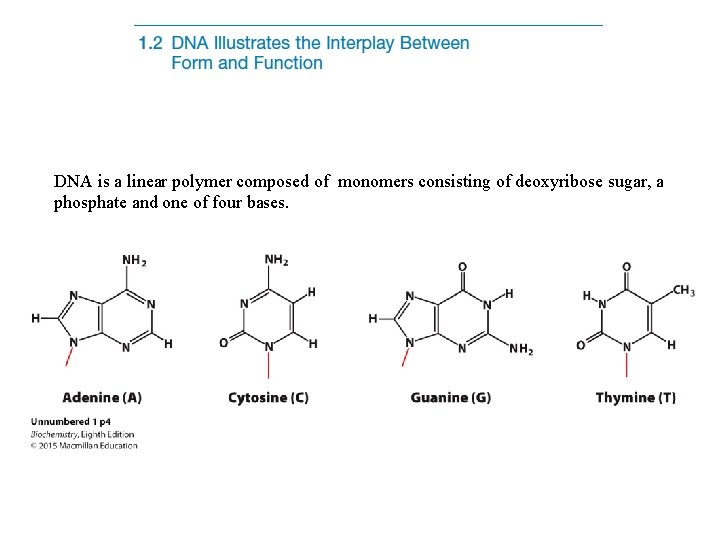
DNA is a linear polymer composed of monomers consisting of deoxyribose sugar, a phosphate and one of four bases.
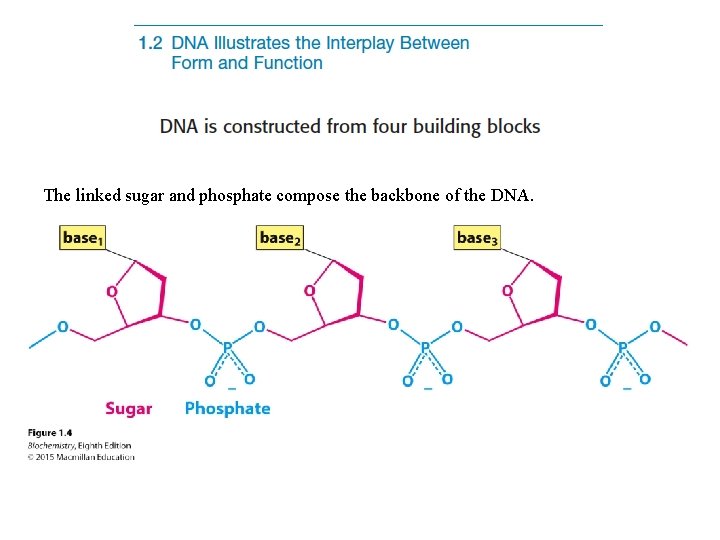
The linked sugar and phosphate compose the backbone of the DNA.
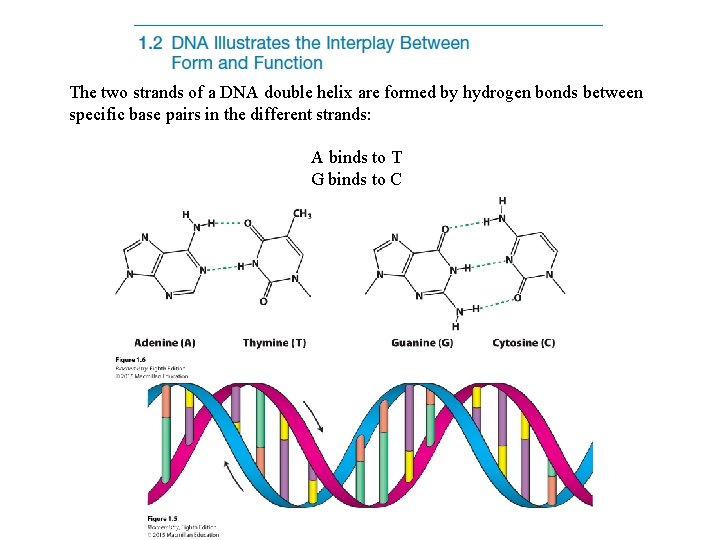
The two strands of a DNA double helix are formed by hydrogen bonds between specific base pairs in the different strands: A binds to T G binds to C
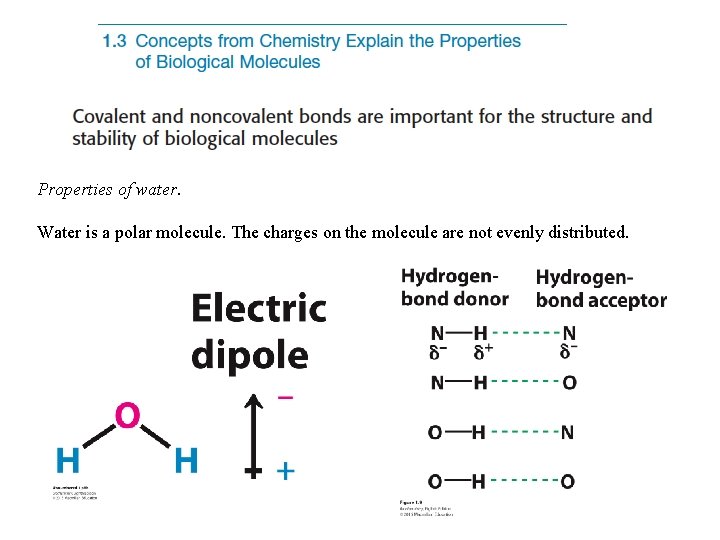
Properties of water. Water is a polar molecule. The charges on the molecule are not evenly distributed.
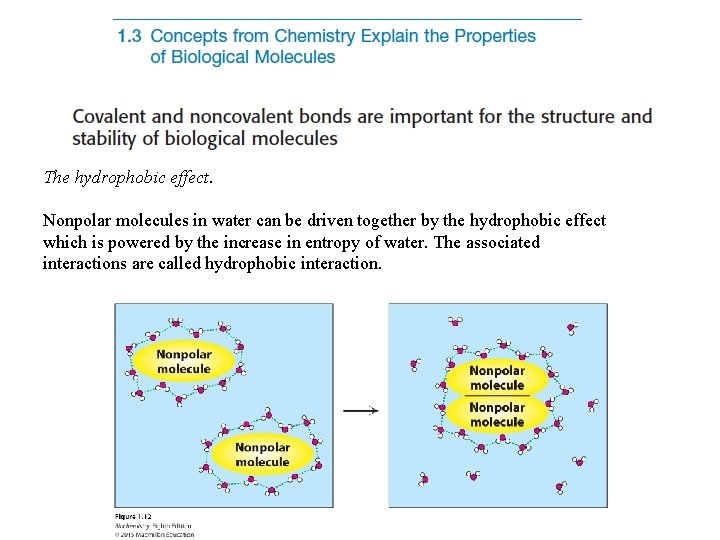
The hydrophobic effect. Nonpolar molecules in water can be driven together by the hydrophobic effect which is powered by the increase in entropy of water. The associated interactions are called hydrophobic interaction.
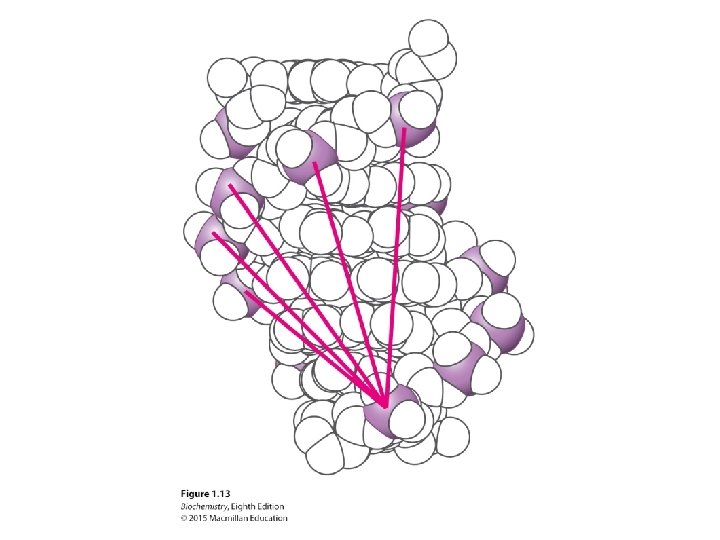
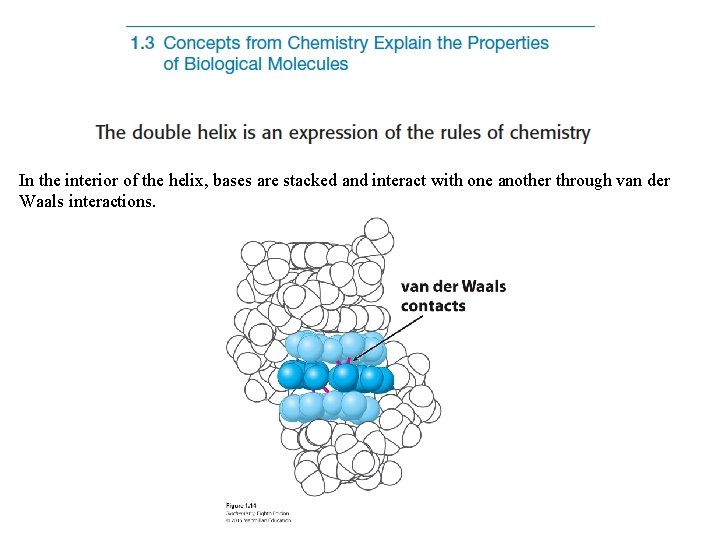
In the interior of the helix, bases are stacked and interact with one another through van der Waals interactions.
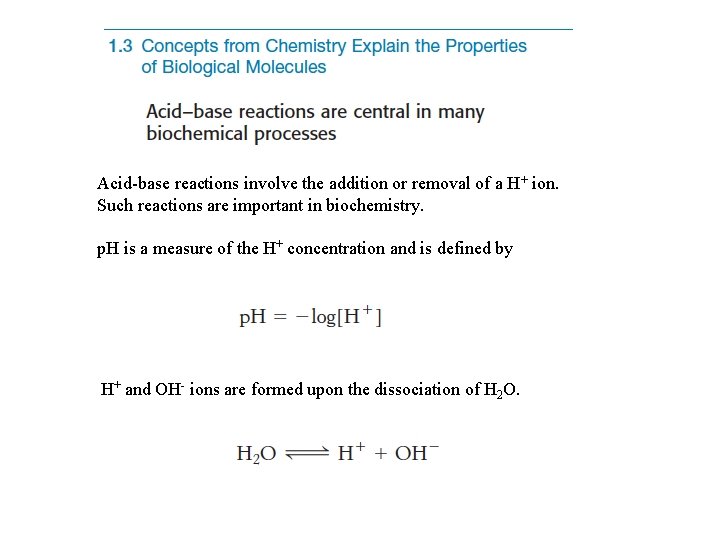
Acid-base reactions involve the addition or removal of a H+ ion. Such reactions are important in biochemistry. p. H is a measure of the H+ concentration and is defined by H+ and OH- ions are formed upon the dissociation of H 2 O.
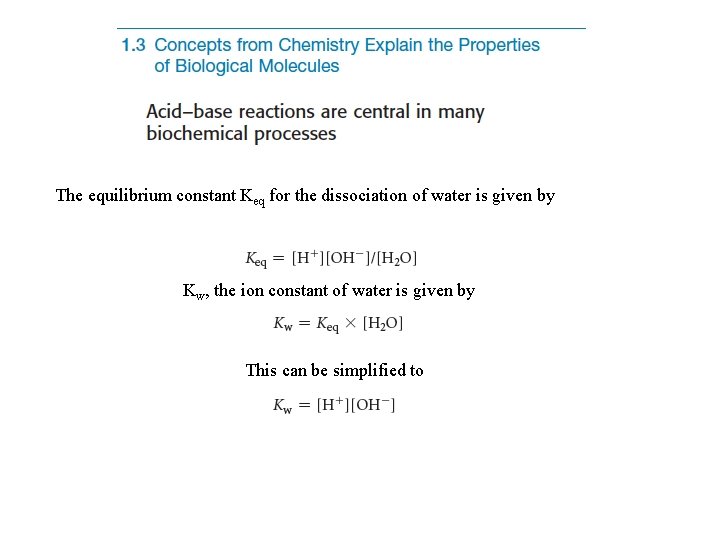
The equilibrium constant Keq for the dissociation of water is given by Kw, the ion constant of water is given by This can be simplified to
From this, we can calculate At p. H 7, [H+] = [OH-] = 10 -7
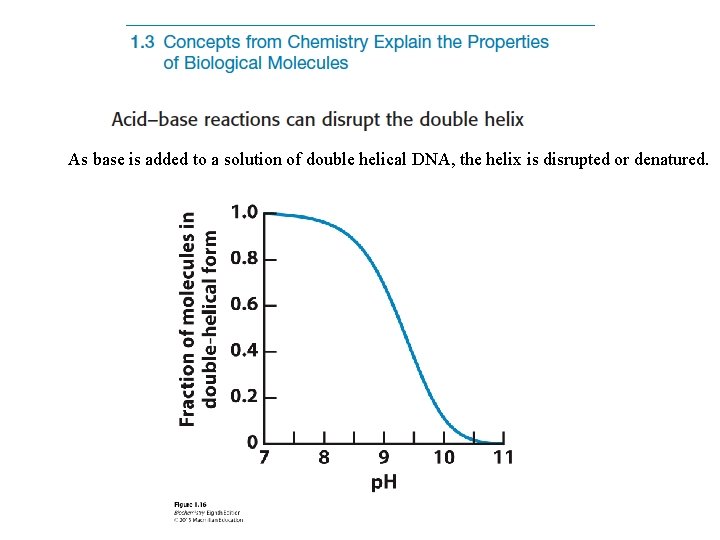
As base is added to a solution of double helical DNA, the helix is disrupted or denatured.
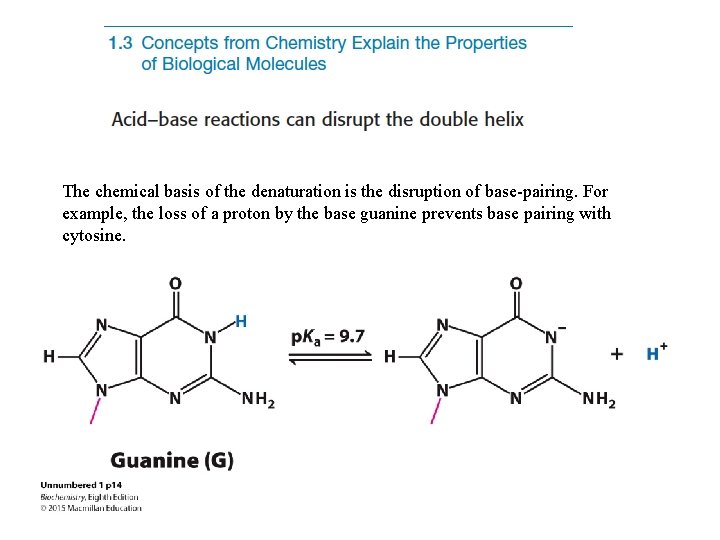
The chemical basis of the denaturation is the disruption of base-pairing. For example, the loss of a proton by the base guanine prevents base pairing with cytosine.
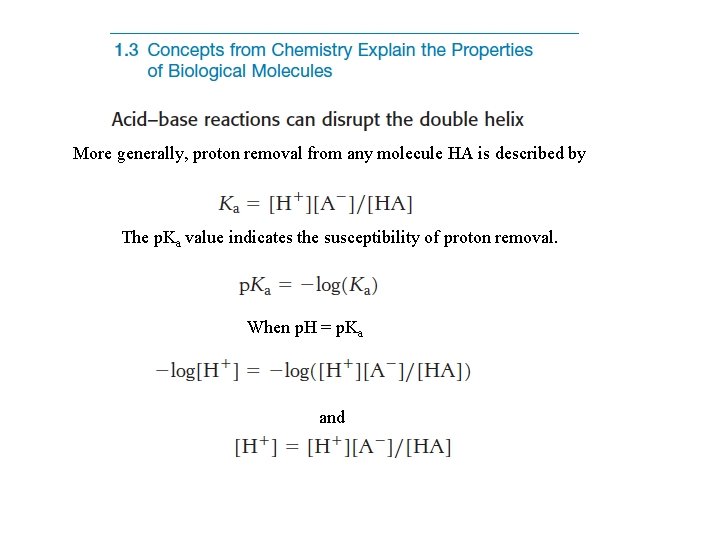
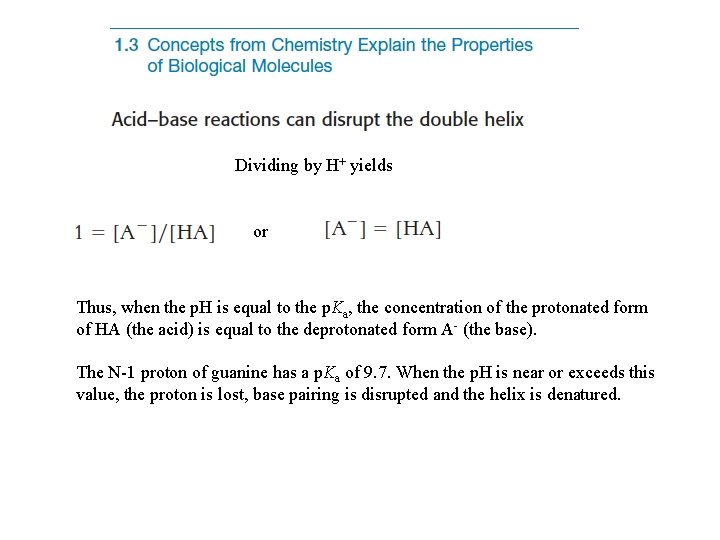
More generally, proton removal from any molecule HA is described by The p. Ka value indicates the susceptibility of proton removal. When p. H = p. Ka and
Dividing by H+ yields or Thus, when the p. H is equal to the p. Ka, the concentration of the protonated form of HA (the acid) is equal to the deprotonated form A- (the base). The N-1 proton of guanine has a p. Ka of 9. 7. When the p. H is near or exceeds this value, the proton is lost, base pairing is disrupted and the helix is denatured.
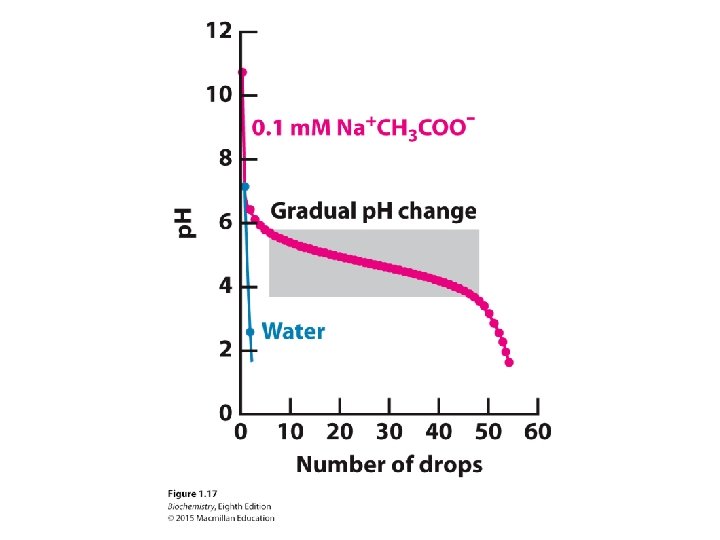
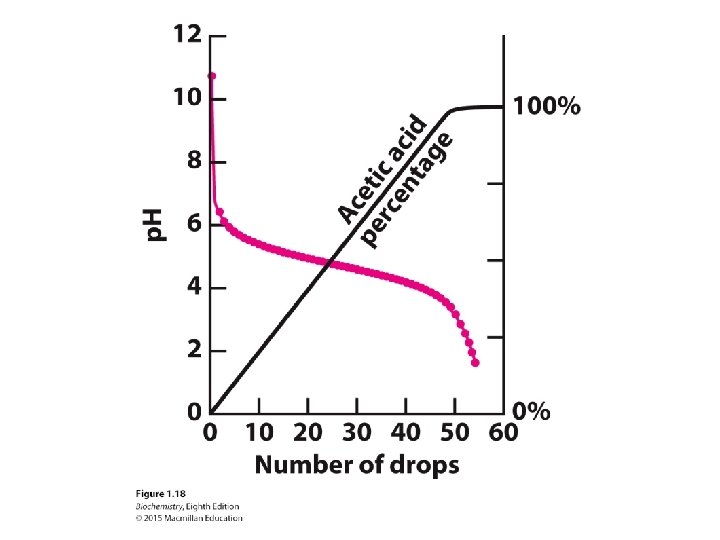
An acid-base conjugate pair resists changes in the p. H of a solution. In other words, it acts as a buffer. A buffer is most effective at a p. H near its p. Ka.
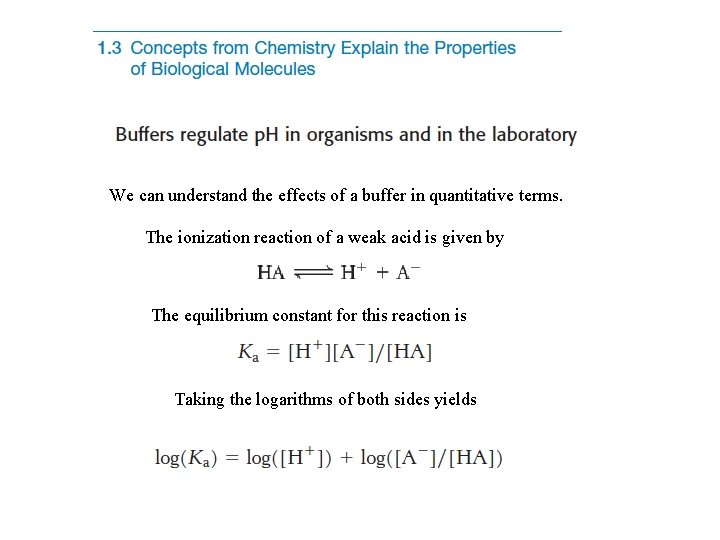
We can understand the effects of a buffer in quantitative terms. The ionization reaction of a weak acid is given by The equilibrium constant for this reaction is Taking the logarithms of both sides yields
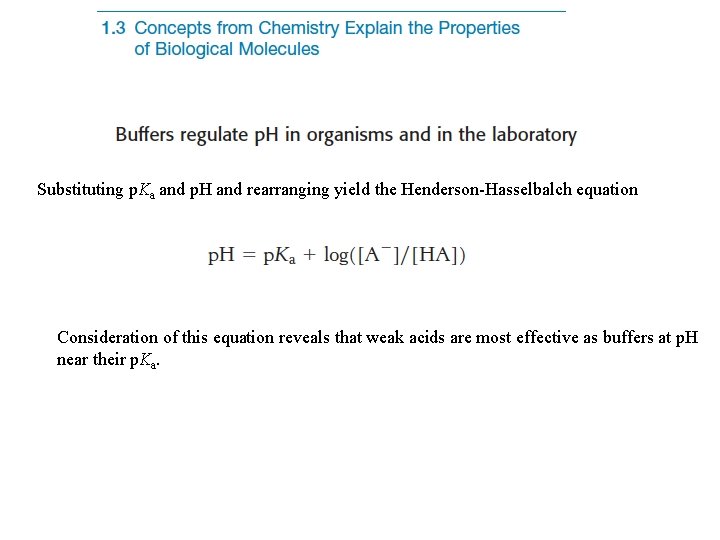
Substituting p. Ka and p. H and rearranging yield the Henderson-Hasselbalch equation Consideration of this equation reveals that weak acids are most effective as buffers at p. H near their p. Ka.
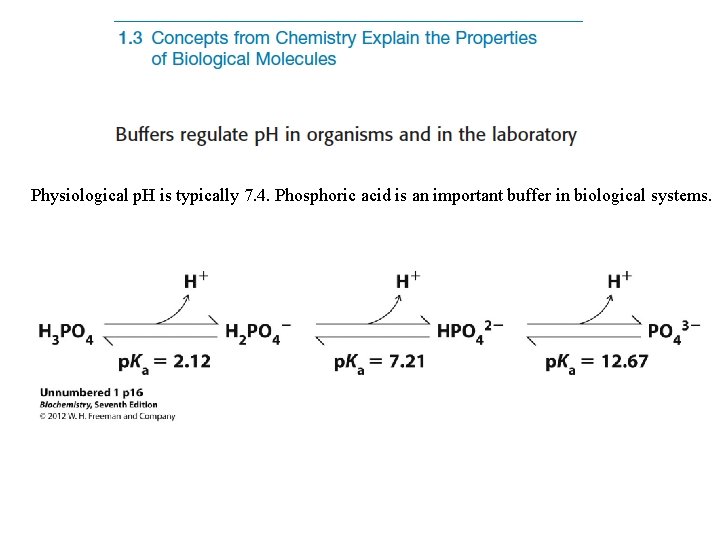
Physiological p. H is typically 7. 4. Phosphoric acid is an important buffer in biological systems.