
DNA Identification Mixture Interpretation Mark W Perlin Ph


- Slides: 15
DNA Identification: Mixture Interpretation Mark W Perlin, Ph. D, MD, Ph. D Cybergenetics, Pittsburgh, PA Continuing Legal Education Allegheny County Courthouse March, 2011 Cybergenetics © 2003 -2011
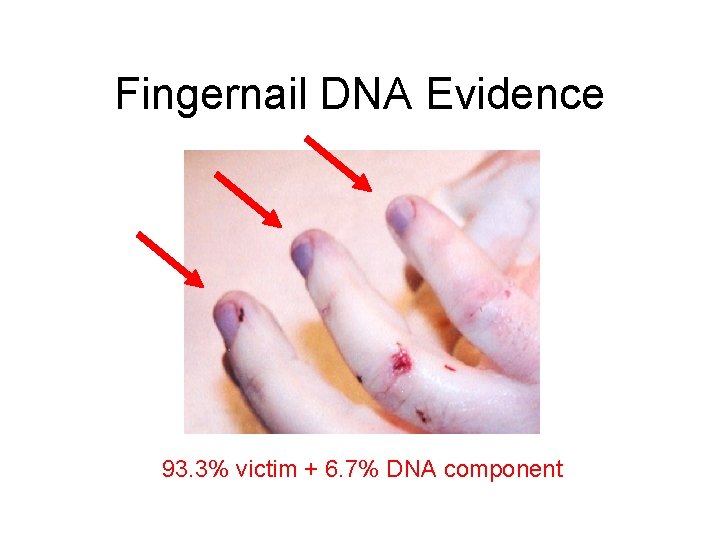
Fingernail DNA Evidence 93. 3% victim + 6. 7% DNA component
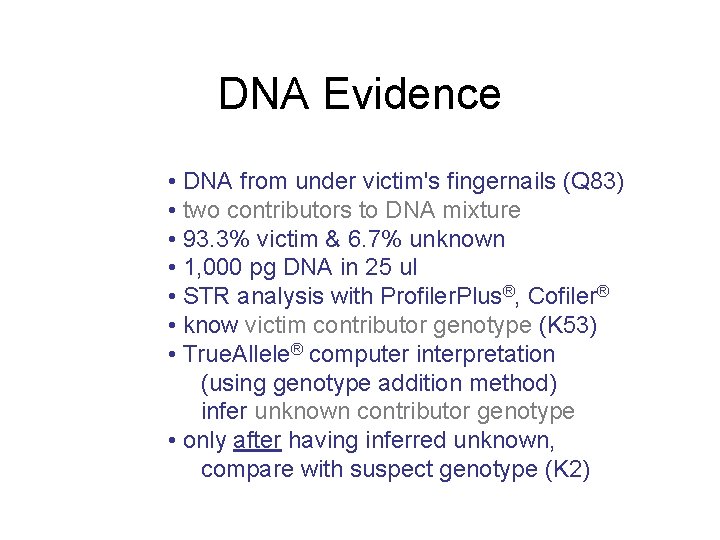
DNA Evidence • DNA from under victim's fingernails (Q 83) • two contributors to DNA mixture • 93. 3% victim & 6. 7% unknown • 1, 000 pg DNA in 25 ul • STR analysis with Profiler. Plus®, Cofiler® • know victim contributor genotype (K 53) • True. Allele® computer interpretation (using genotype addition method) infer unknown contributor genotype • only after having inferred unknown, compare with suspect genotype (K 2)
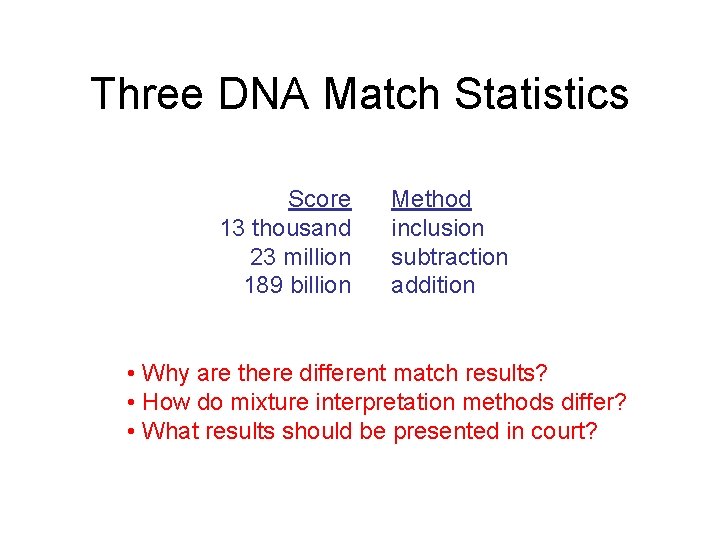
Three DNA Match Statistics Score 13 thousand 23 million 189 billion Method inclusion subtraction addition • Why are there different match results? • How do mixture interpretation methods differ? • What results should be presented in court?
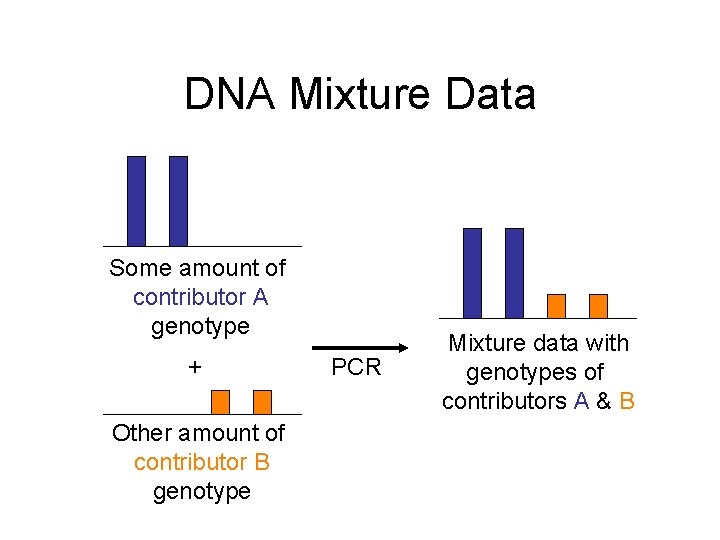
DNA Mixture Data Some amount of contributor A genotype + Other amount of contributor B genotype PCR Mixture data with genotypes of contributors A & B
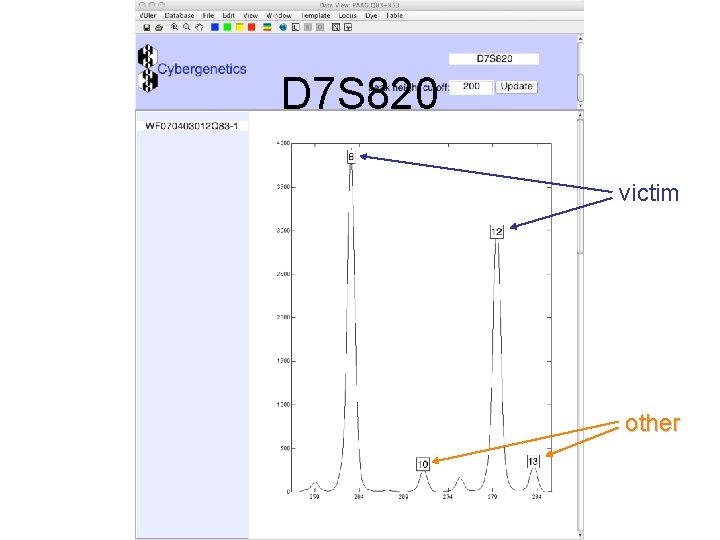
D 7 S 820 victim other
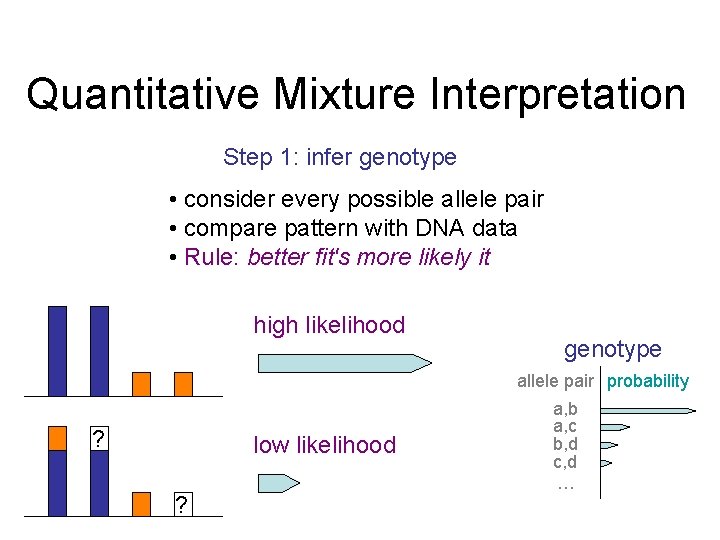
Quantitative Mixture Interpretation Step 1: infer genotype • consider every possible allele pair • compare pattern with DNA data • Rule: better fit's more likely it high likelihood genotype allele pair probability ? low likelihood ? a, b a, c b, d c, d …
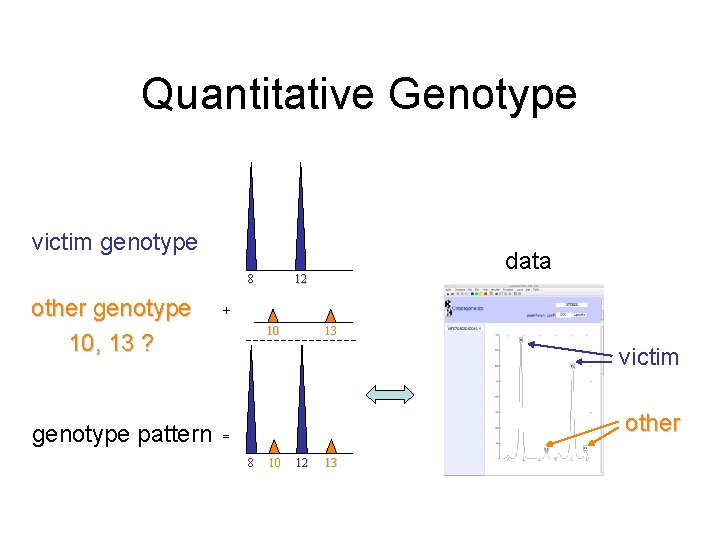
Quantitative Genotype victim genotype 8 other genotype 10, 13 ? genotype pattern data 12 + 10 13 victim other = 8 10 12 13
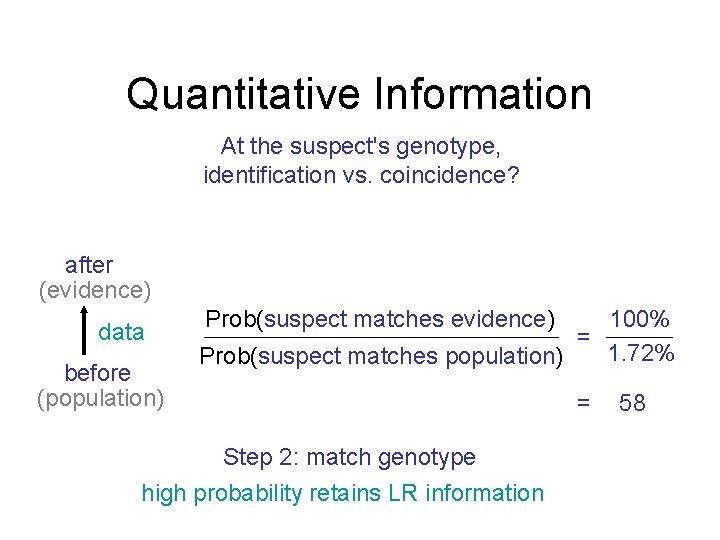
Quantitative Information At the suspect's genotype, identification vs. coincidence? after (evidence) data before (population) Prob(suspect matches evidence) 100% = 1. 72% Prob(suspect matches population) Step 2: match genotype high probability retains LR information = 58
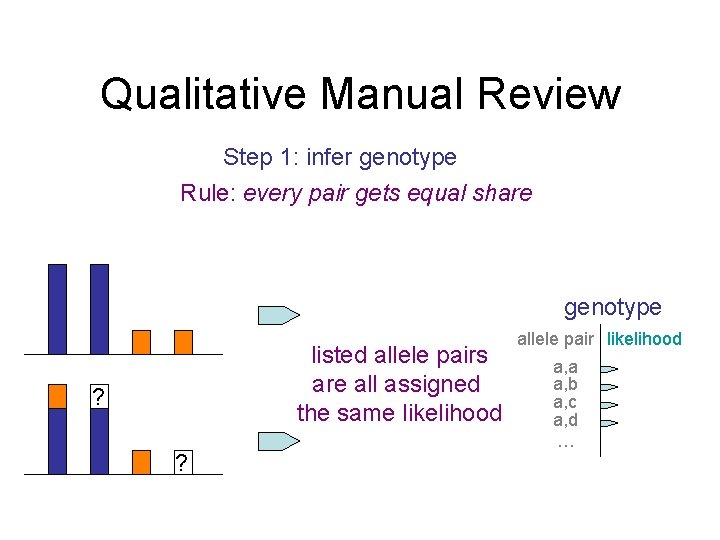
Qualitative Manual Review Step 1: infer genotype Rule: every pair gets equal share genotype listed allele pairs are all assigned the same likelihood ? ? allele pair likelihood a, a a, b a, c a, d …
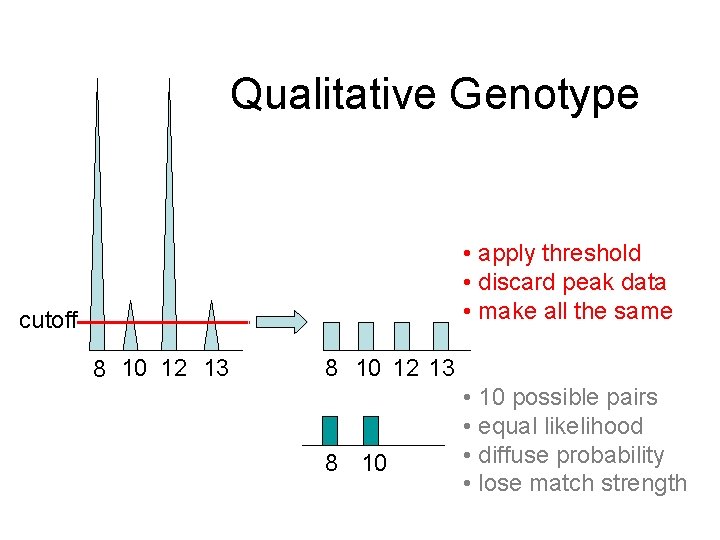
Qualitative Genotype • apply threshold • discard peak data • make all the same cutoff 8 10 12 13 8 10 • 10 possible pairs • equal likelihood • diffuse probability • lose match strength
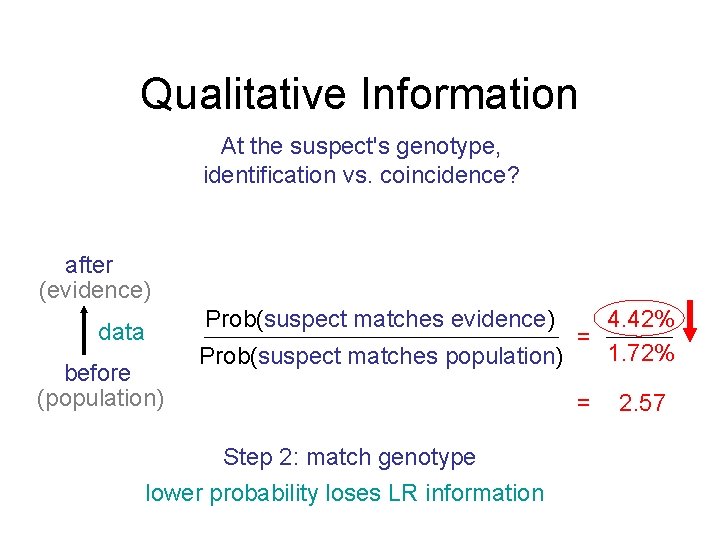
Qualitative Information At the suspect's genotype, identification vs. coincidence? after (evidence) Prob(suspect matches evidence) data before (population) 4. 42% = 1. 72% Prob(suspect matches population) Step 2: match genotype lower probability loses LR information = 2. 57
DNA Match Comparison Joint genotype product rule, combines loci 13 thousand (4) 23 million (7) 189 billion (11)
Computer Preserves Information 13. 26
Human Review Loses Information 6. 24 13. 26 7. 03