
DNA HOW MUCH DO YOU REMEMBER Starter DNA
DNA HOW MUCH DO YOU REMEMBER?
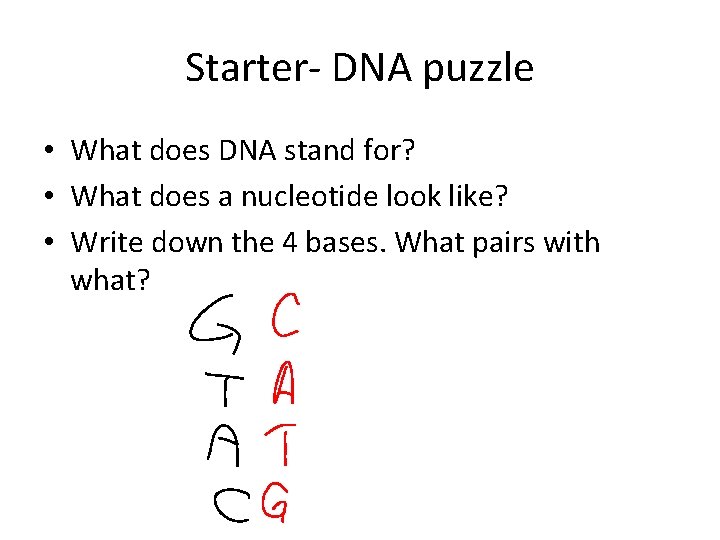
Starter- DNA puzzle • What does DNA stand for? • What does a nucleotide look like? • Write down the 4 bases. What pairs with what?
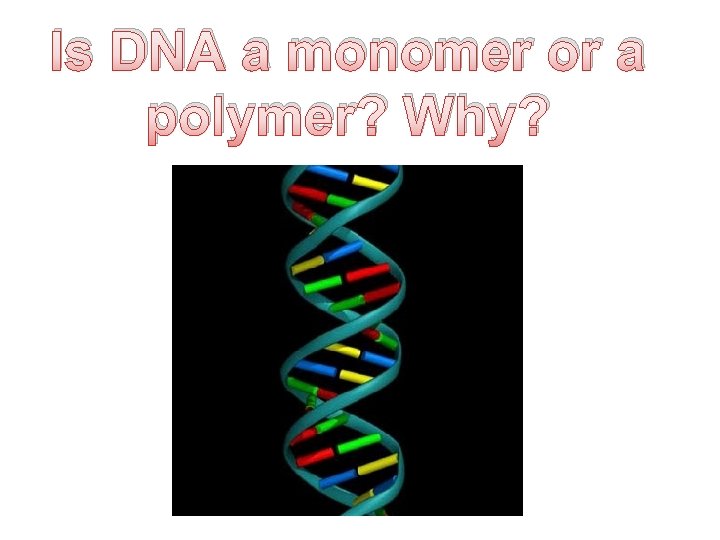
Is DNA a monomer or a polymer? Why?
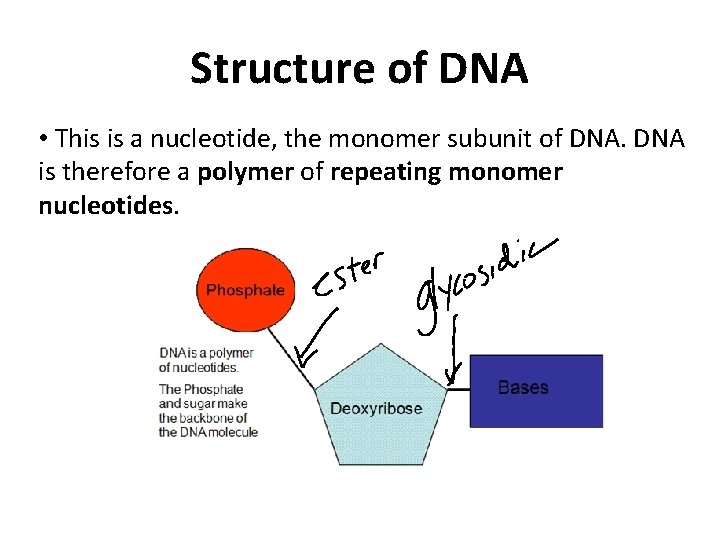
Structure of DNA • This is a nucleotide, the monomer subunit of DNA is therefore a polymer of repeating monomer nucleotides.
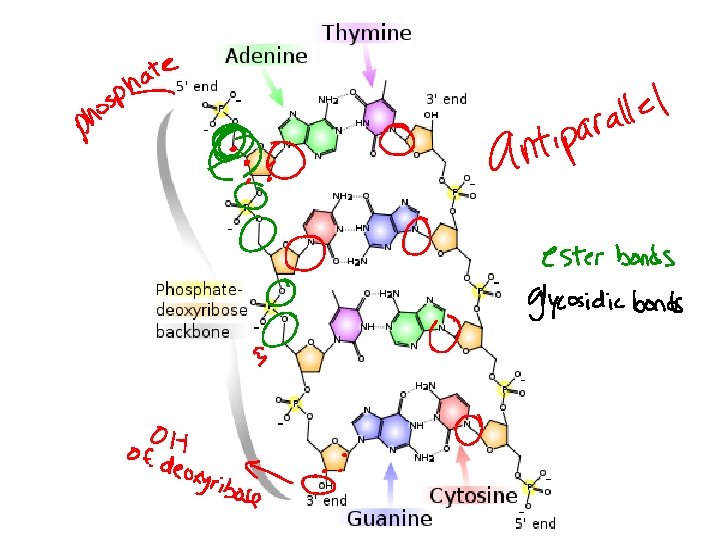
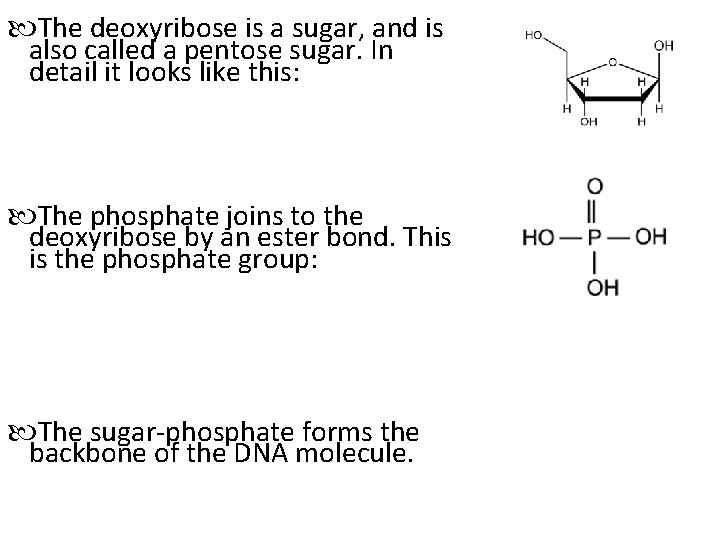
The deoxyribose is a sugar, and is also called a pentose sugar. In detail it looks like this: The phosphate joins to the deoxyribose by an ester bond. This is the phosphate group: The sugar-phosphate forms the backbone of the DNA molecule.
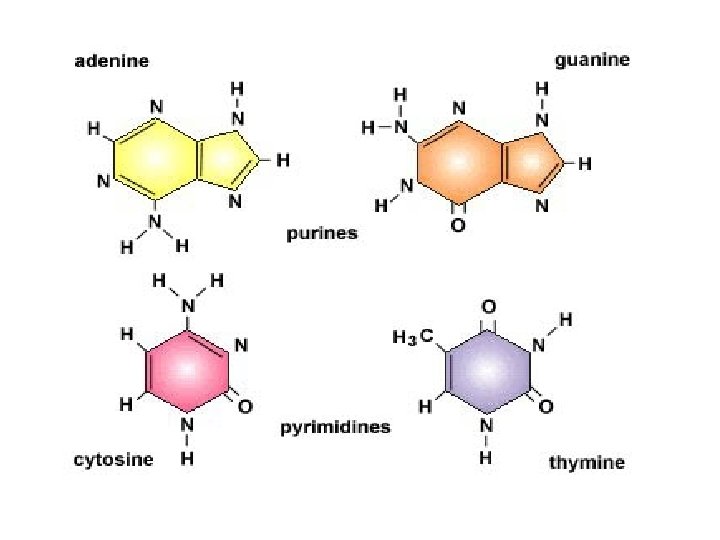
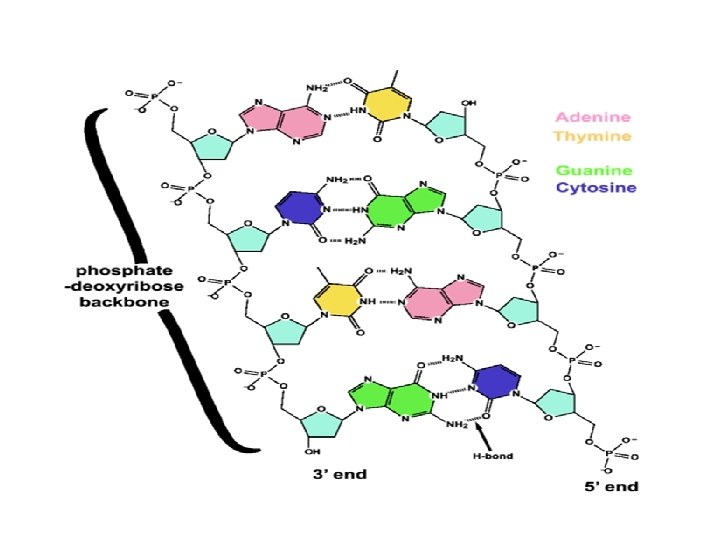
Bases • Joined to the deoxyribose by a glycosidic bond. • They contain Nitrogen – so known as nitrogenous bases. • There are four bases, Adenine, Cytosine, Guanine, and Thymine. • A always pairs with T, and C with G. This is known as complementary base pairing.
Bases • The base pairs are held together by H-bonds. 2 H-bonds form between A and T. 3 H-bonds form between C and G. • A and G are purines. They have 2 rings in their molecules. • T and C are pyrimidines. They have only 1 ring in their molecule. • There is only space between the sugar backbone for a purine and a pyrimidine to bind together.
You have 1 minute to make a phrase to help you remember that… • A and G are purines. They have 2 rings in their molecules. • T and C are pyrimidines. They have only 1 ring in their molecule.
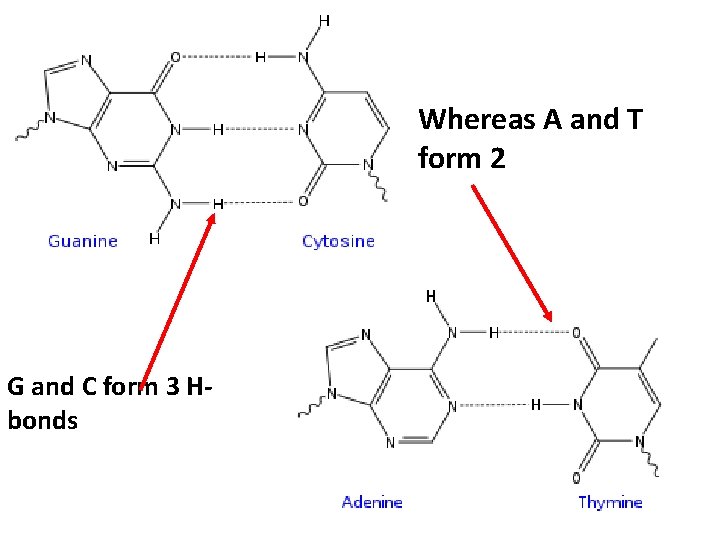
Whereas A and T form 2 G and C form 3 Hbonds
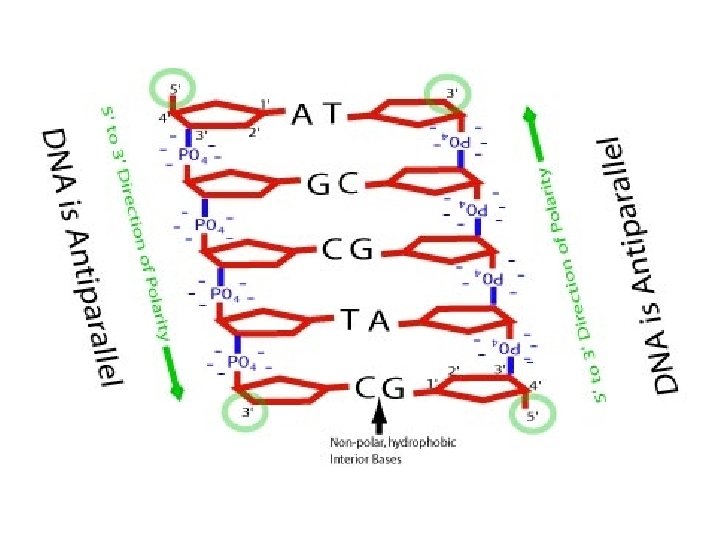
DNA is Anti-parallel • That DNA is anti-parallel means that the sugar-phosphate backbones run in opposite directions. • Direction of, and in reference to, DNA molecules is then specified relative to carbons 5’ and 3’ in the ribose ring. • Transcription, the act of transcribing DNA to RNA for eventual expression, always occurs in the 5' to 3' direction. • (Nucleic acid polymerization cannot occur in the opposite direction, 3' to 5', because of the difference in chemical properties between the 5' methyl group and the 3' ring-carbon with an attached hydroxyl group. )
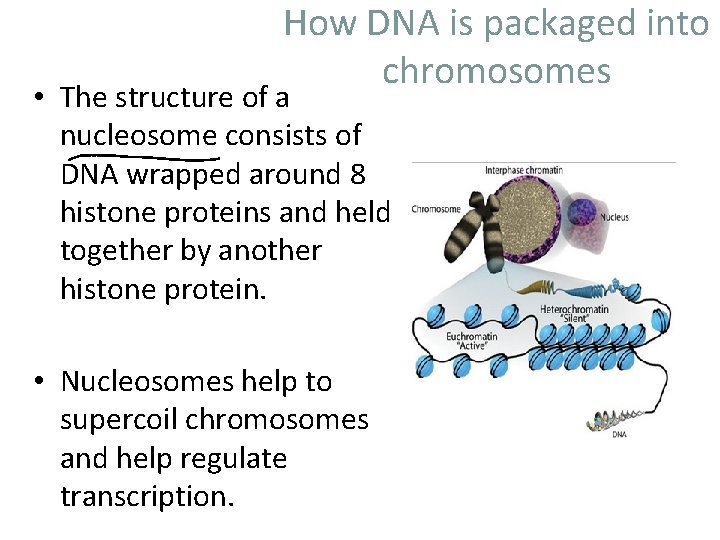
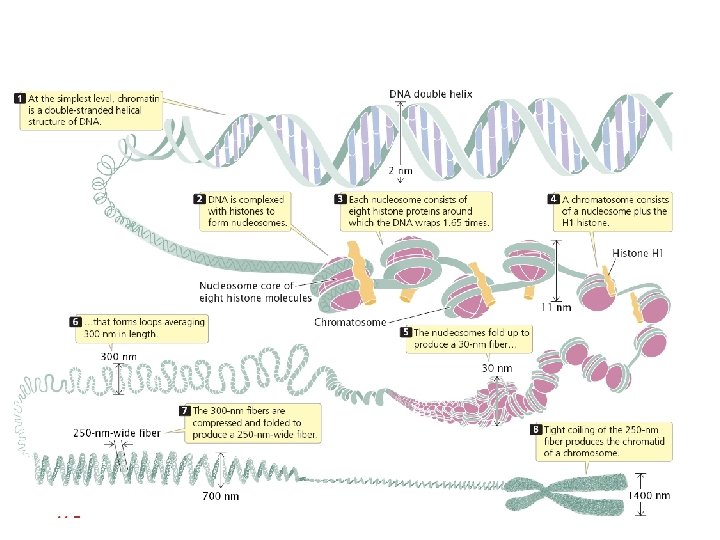
How DNA is packaged into chromosomes • The structure of a nucleosome consists of DNA wrapped around 8 histone proteins and held together by another histone protein. • Nucleosomes help to supercoil chromosomes and help regulate transcription.
How DNA codes for proteins • Attached to each sugar is one of four types of molecules called bases. It is the sequence of these four bases along the backbone that encodes information. • Three bases code for one amino acid. So the sequence of amino acids in a protein in specified by the sequence of bases in the DNA. • The code is read by copying stretches of DNA into the related nucleic acid m. RNA, in a process called transcription.
DNA Differences Eukaryotes Hints: Eukaryotes have membrane bound organelles unlike bacteria. Prokaryotes
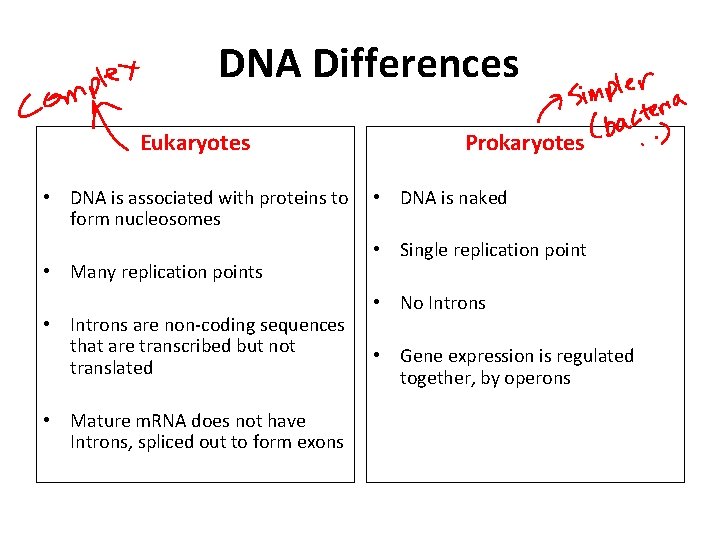
DNA Differences Eukaryotes • DNA is associated with proteins to form nucleosomes • Many replication points • Introns are non-coding sequences that are transcribed but not translated • Mature m. RNA does not have Introns, spliced out to form exons Prokaryotes • DNA is naked • Single replication point • No Introns • Gene expression is regulated together, by operons
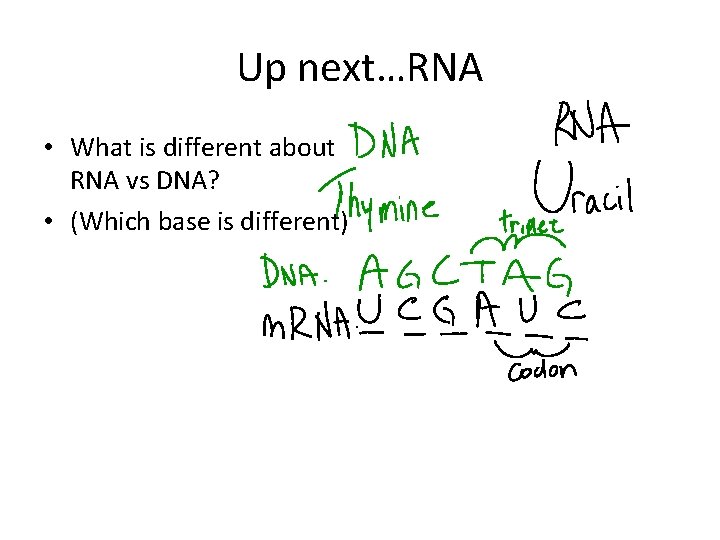
Up next…RNA • What is different about RNA vs DNA? • (Which base is different)
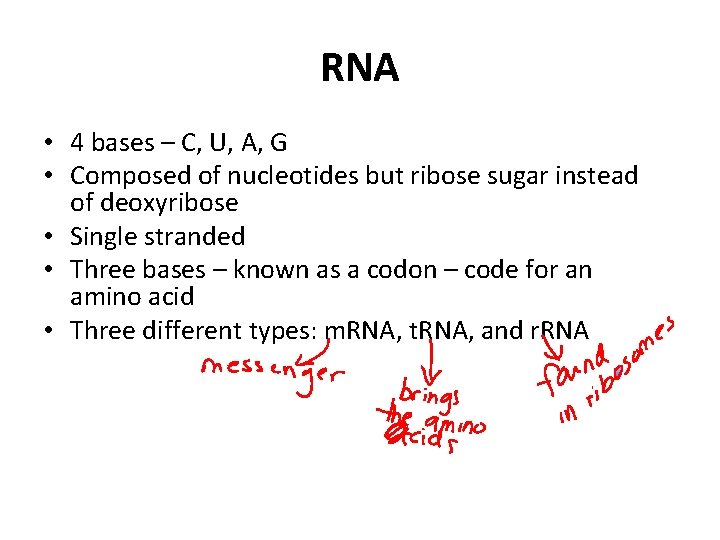
RNA • 4 bases – C, U, A, G • Composed of nucleotides but ribose sugar instead of deoxyribose • Single stranded • Three bases – known as a codon – code for an amino acid • Three different types: m. RNA, t. RNA, and r. RNA
Make your own table to compare DNA and RNA DNA RNA
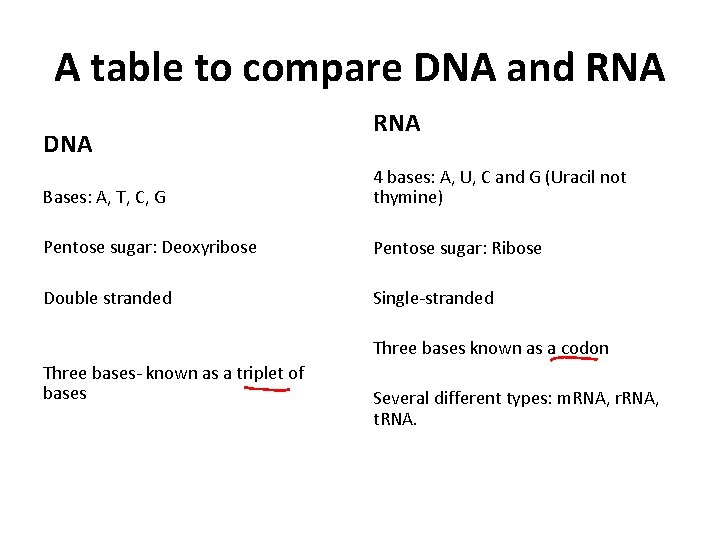
A table to compare DNA and RNA DNA RNA Bases: A, T, C, G 4 bases: A, U, C and G (Uracil not thymine) Pentose sugar: Deoxyribose Pentose sugar: Ribose Double stranded Single-stranded Three bases known as a codon Three bases- known as a triplet of bases Several different types: m. RNA, r. RNA, t. RNA.
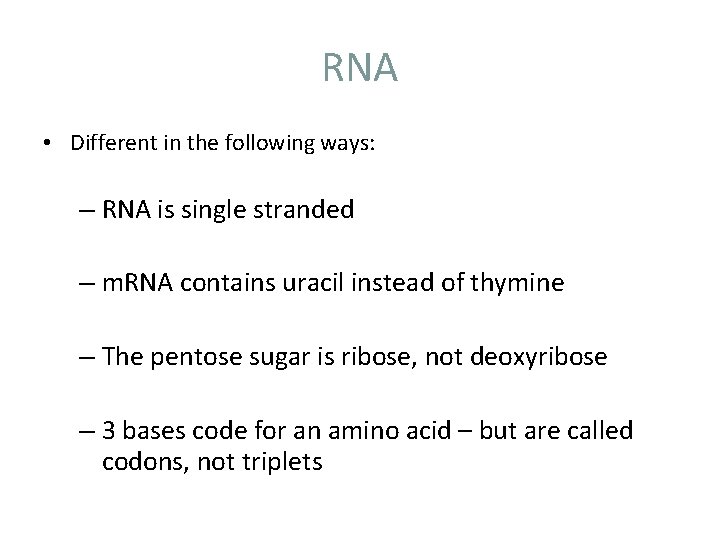
RNA • Different in the following ways: – RNA is single stranded – m. RNA contains uracil instead of thymine – The pentose sugar is ribose, not deoxyribose – 3 bases code for an amino acid – but are called codons, not triplets
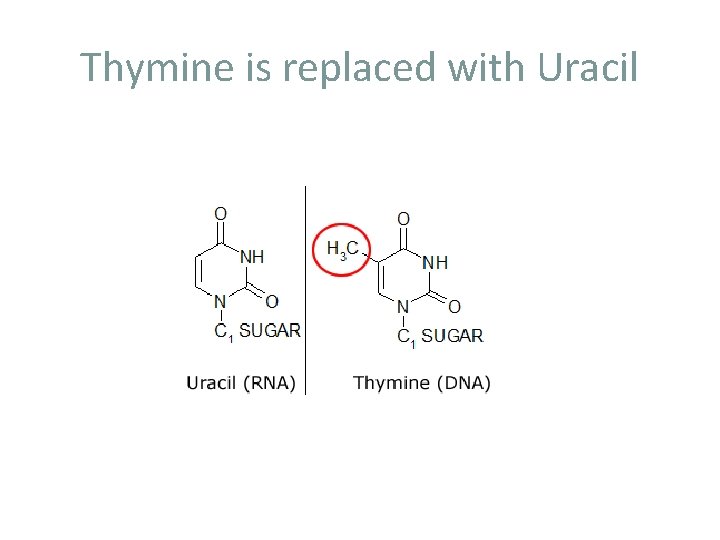
Thymine is replaced with Uracil
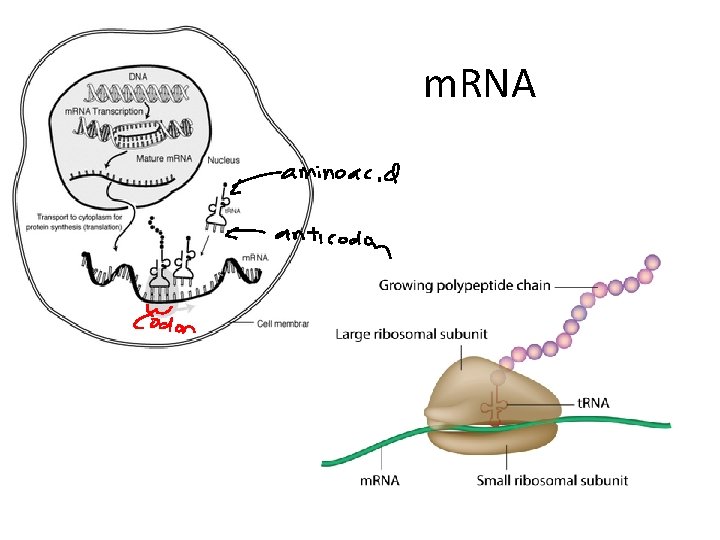
m. RNA
m. RNA • Only one strand of DNA is copied – the “sense strand” • m. RNA is used to copy one gene which is the code for one protein • So DNA is “transcribed” into m. RNA • m. RNA, is “translated” into a sequence of amino acids by ribosomes.
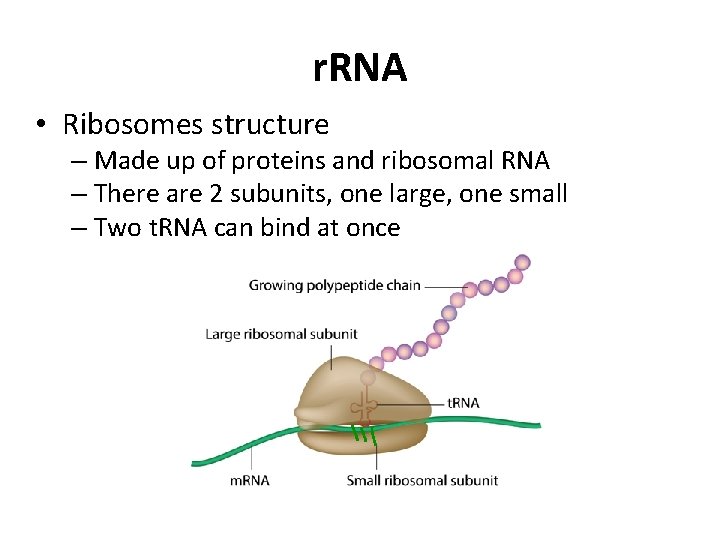
r. RNA • Ribosomes structure – Made up of proteins and ribosomal RNA – There are 2 subunits, one large, one small – Two t. RNA can bind at once
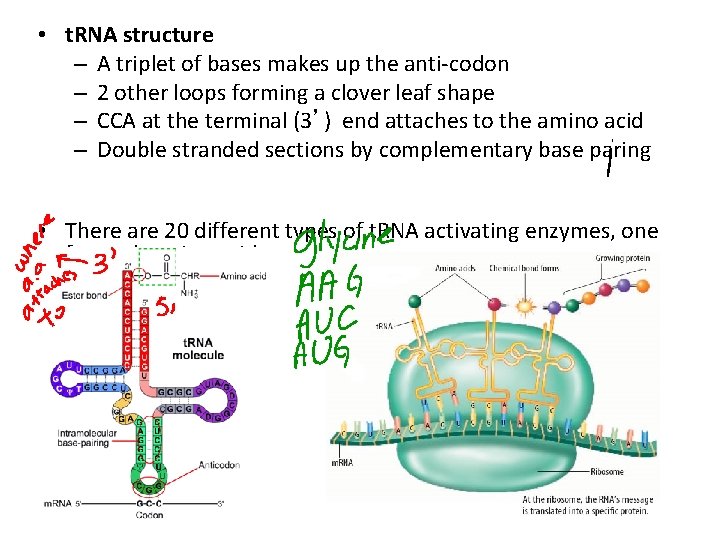
• t. RNA structure – A triplet of bases makes up the anti-codon – 2 other loops forming a clover leaf shape – CCA at the terminal (3’) end attaches to the amino acid – Double stranded sections by complementary base paring • There are 20 different types of t. RNA activating enzymes, one for each amino acid.
Genetic Code • All the proteins, in all the organisms, all over the earth are made from just 20 amino acids! • It is just the amount and sequences that create this huge diversity • The genetic code is a triplet code, non-overlapping, degenerate, and universal • There are only 4 bases, but when arranged in triplets they can code for up to 64 different amino acids • Most amino acids have more than one code! There also STOP and START codes to specify a sequence and an amino acid
- Slides: 30