
DNA Genetic material is located in nucleus The
- Slides: 19
DNA
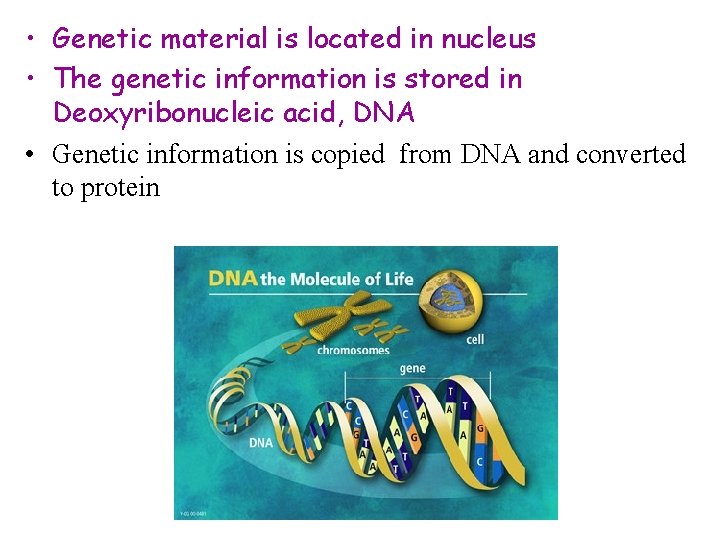
• Genetic material is located in nucleus • The genetic information is stored in Deoxyribonucleic acid, DNA • Genetic information is copied from DNA and converted to protein
The Nucleus • Most cells only have 1 nucleus. • How ever a few cells have more than nuclei making them multinucleated. • This only occurs in cells that have a large volume and there fore a large mass. • One type of cell (Red Blood Cells) do not have a nucleus making them anucleated.
Nucleus • The nucleus is bound by a membrane called the nuclear envelope. • It’s a double layer membrane with fluid in between. • At certain points the layers fuse and nuclear pores form. • These pores are large and allow many molecules as well as m. RNA to easily pass through.
Nucleus • Inside of the nucleus there are the chromatin (pre-condensed Chromosomes) and a couple of nucleoli. • The nucleoli are where ribosmomes are made.
Nucleus • Chromatins are made up of DNA and histone proteins. • Histone proteins are simply globular proteins that help DNA to keep it’s shape and be supported.
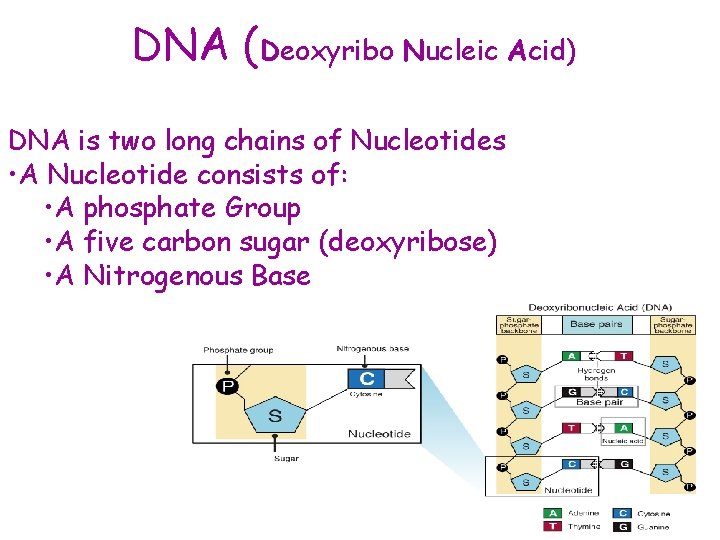
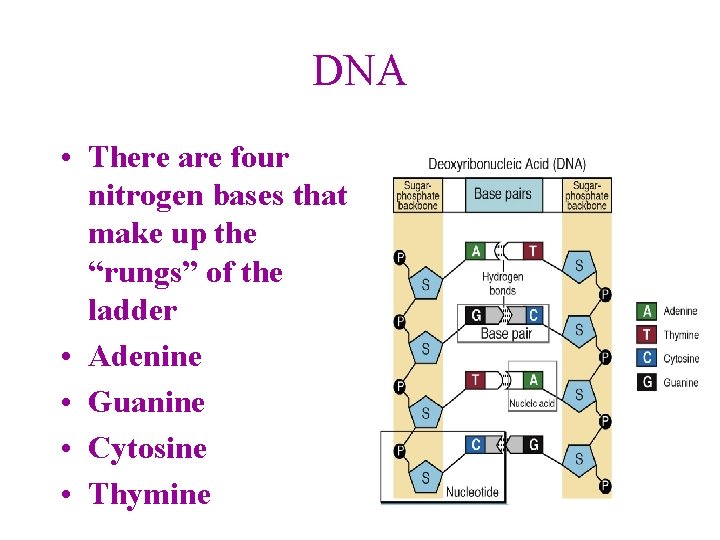
DNA (Deoxyribo Nucleic Acid) DNA is two long chains of Nucleotides • A Nucleotide consists of: • A phosphate Group • A five carbon sugar (deoxyribose) • A Nitrogenous Base
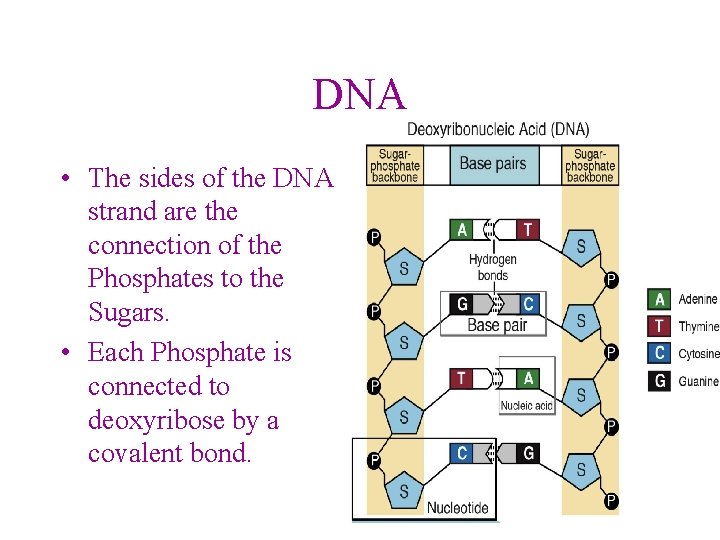
DNA • The sides of the DNA strand are the connection of the Phosphates to the Sugars. • Each Phosphate is connected to deoxyribose by a covalent bond.
DNA • There are four nitrogen bases that make up the “rungs” of the ladder • Adenine • Guanine • Cytosine • Thymine
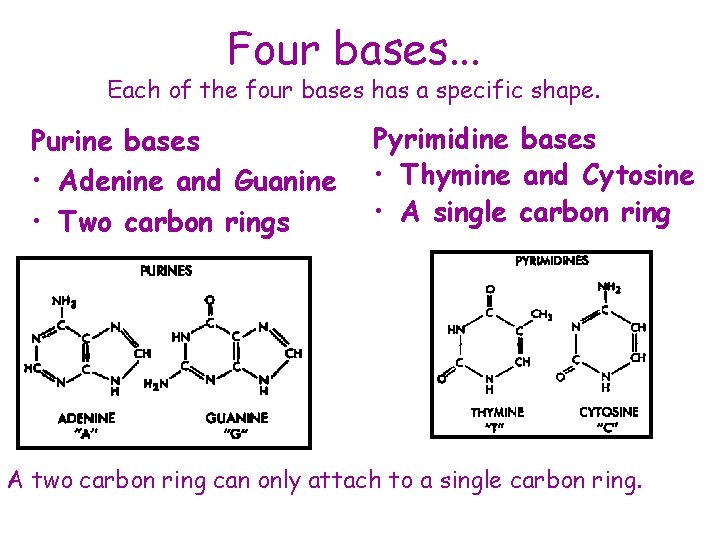
Four bases. . . Each of the four bases has a specific shape. Purine bases • Adenine and Guanine • Two carbon rings Pyrimidine bases • Thymine and Cytosine • A single carbon ring A two carbon ring can only attach to a single carbon ring.
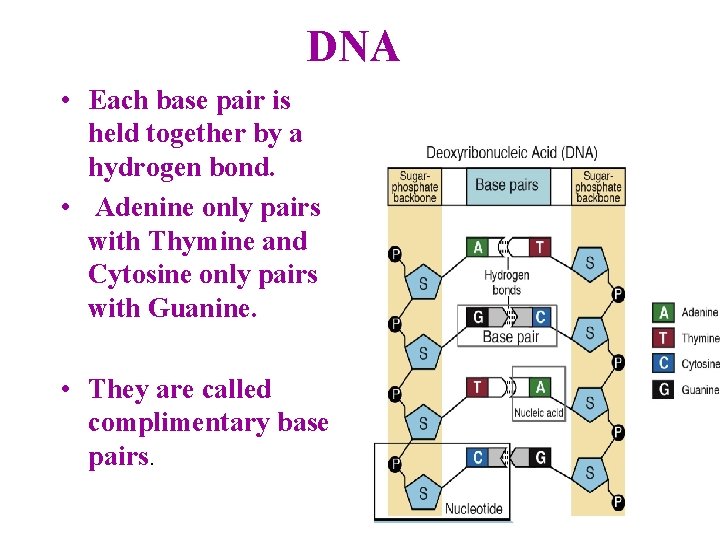
DNA • Each base pair is held together by a hydrogen bond. • Adenine only pairs with Thymine and Cytosine only pairs with Guanine. • They are called complimentary base pairs.
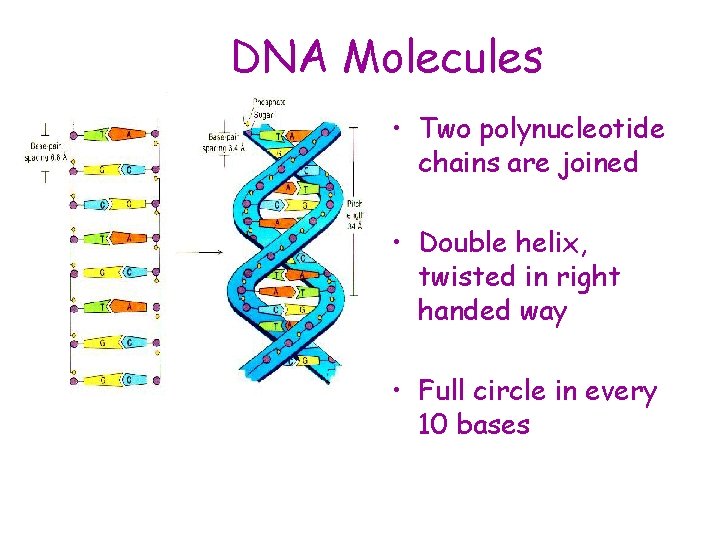
DNA Molecules • Two polynucleotide chains are joined • Double helix, twisted in right handed way • Full circle in every 10 bases
DNA Replication Preparing for mitosis or meiosis copyright cmassengale 13
Replication Facts • DNA has to be copied before a cell divides • DNA is copied during the S or synthesis phase of interphase • New cells will need identical DNA strands copyright cmassengale 14
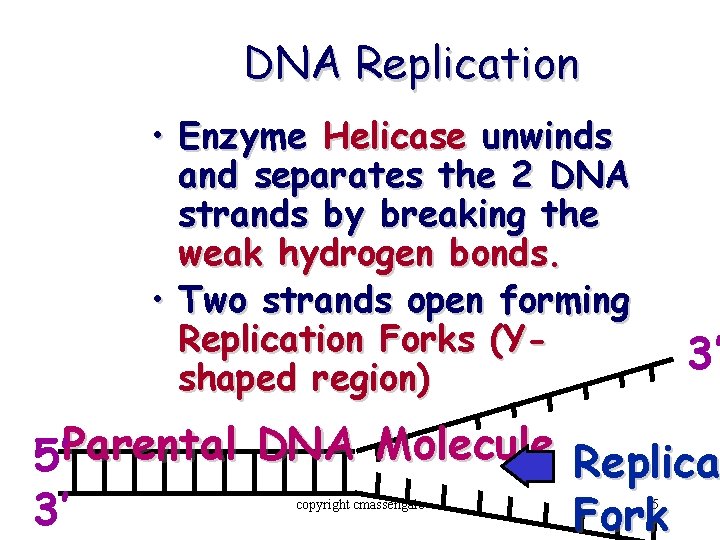
DNA Replication • Enzyme Helicase unwinds and separates the 2 DNA strands by breaking the weak hydrogen bonds. • Two strands open forming Replication Forks (Yshaped region) 3’ 5’Parental DNA Molecule Replica 3’ Fork copyright cmassengale 15
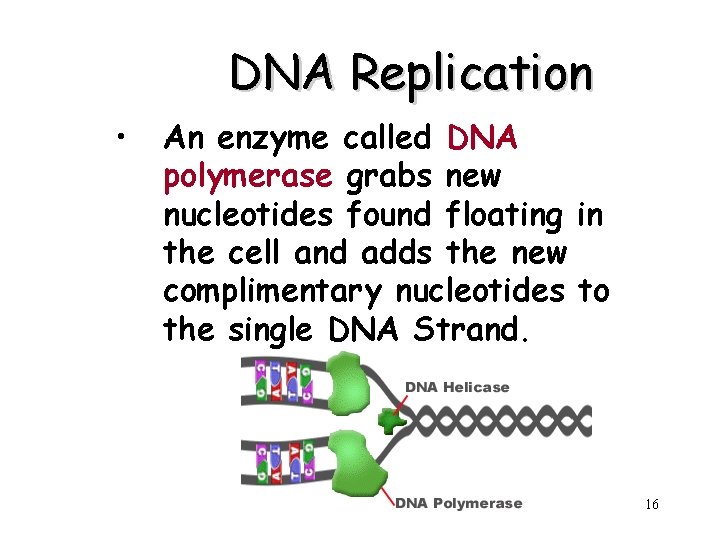
DNA Replication • An enzyme called DNA polymerase grabs new nucleotides found floating in the cell and adds the new complimentary nucleotides to the single DNA Strand. 16
DNA Replication • As the new nucleotides are attached Covalent bonds form between the sugar of one nucleotide and the phosphate of the other nucleotide. copyright cmassengale 17
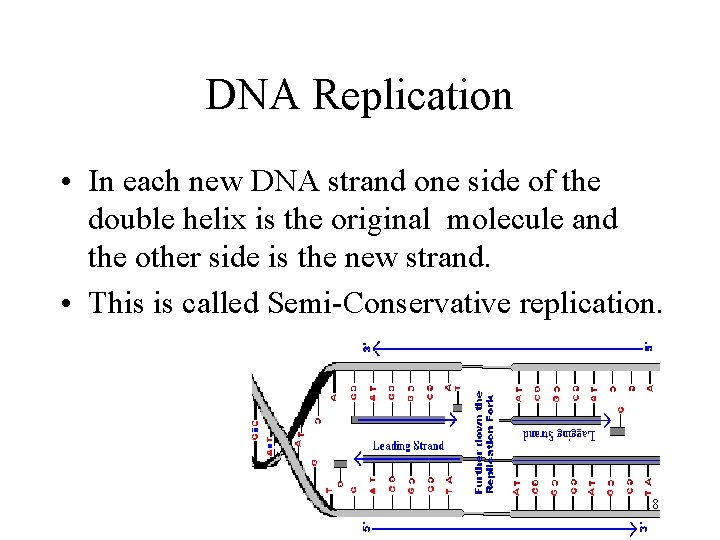
DNA Replication • In each new DNA strand one side of the double helix is the original molecule and the other side is the new strand. • This is called Semi-Conservative replication. 18
Stages of Mitosis • What are they? ? ? ?