
DNA Fingerprinting AP Biology 2007 2008 Many uses
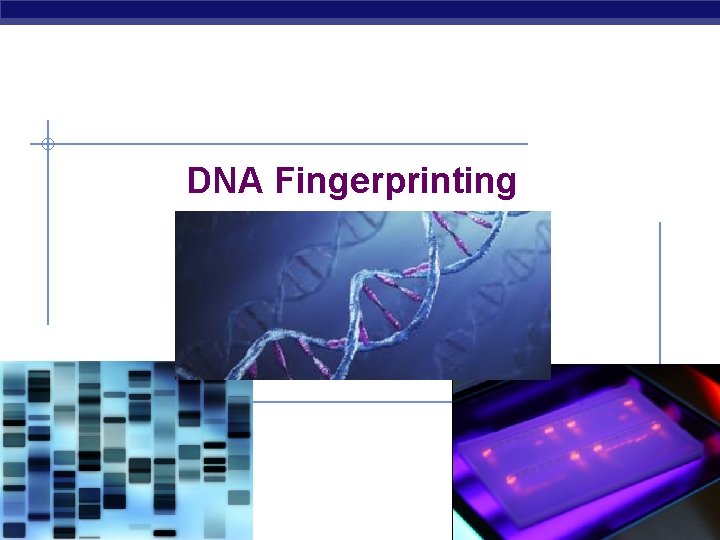
DNA Fingerprinting AP Biology 2007 -2008
Many uses of restriction enzymes… § Now that we can cut DNA with restriction enzymes… we can cut up DNA from different people… or different organisms… and compare it u why? u § § AP Biology forensics medical diagnostics paternity evolutionary relationships
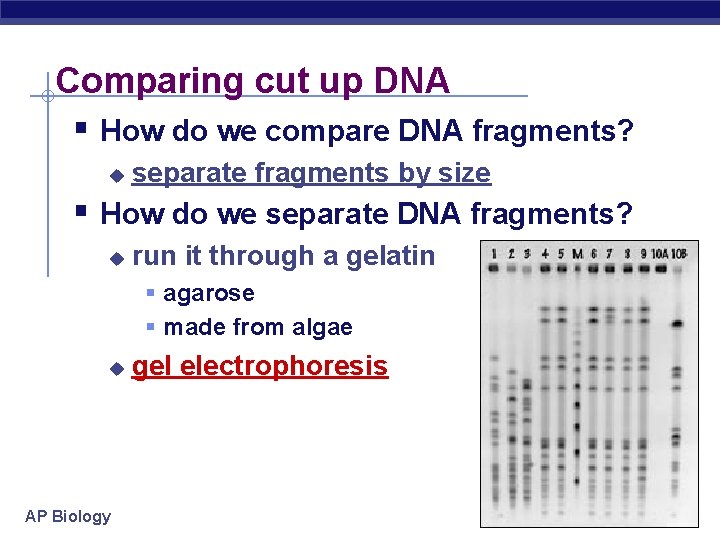
Comparing cut up DNA § How do we compare DNA fragments? u separate fragments by size § How do we separate DNA fragments? u run it through a gelatin § agarose § made from algae u AP Biology gel electrophoresis
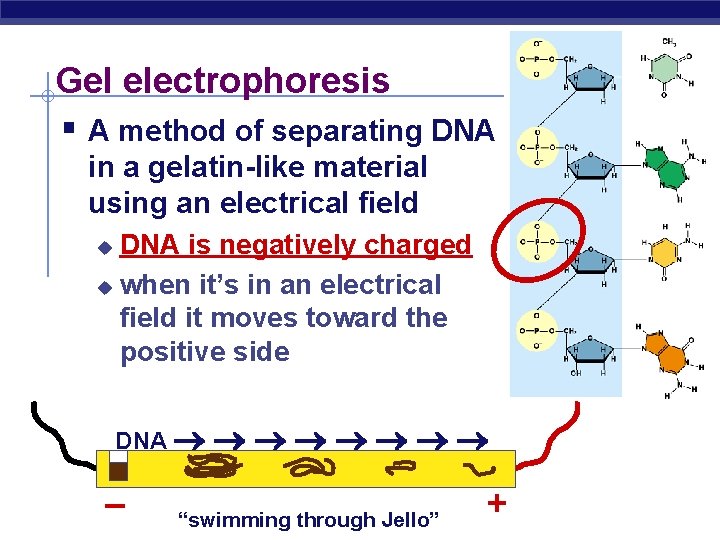
Gel electrophoresis § A method of separating DNA in a gelatin-like material using an electrical field DNA is negatively charged u when it’s in an electrical field it moves toward the positive side u DNA – AP Biology “swimming through Jello” +
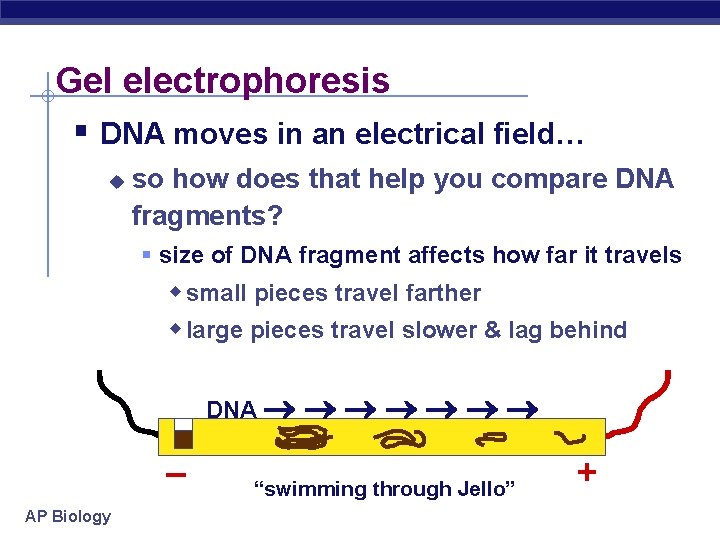
Gel electrophoresis § DNA moves in an electrical field… u so how does that help you compare DNA fragments? § size of DNA fragment affects how far it travels w small pieces travel farther w large pieces travel slower & lag behind DNA – AP Biology “swimming through Jello” +
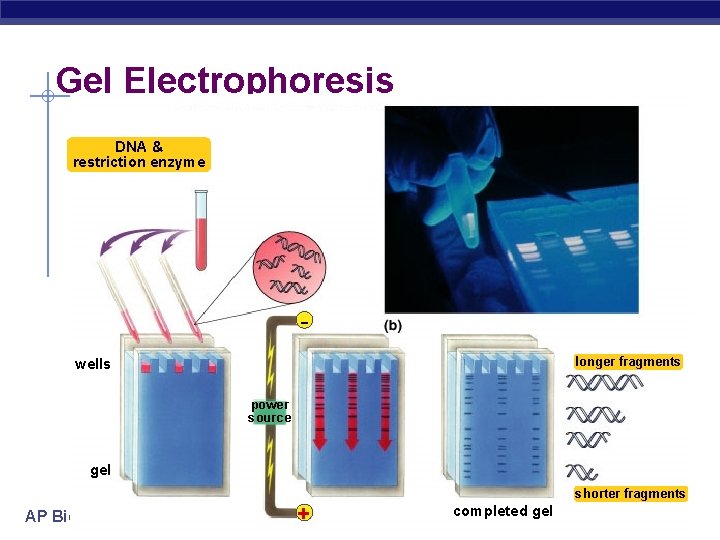
Gel Electrophoresis DNA & restriction enzyme longer fragments wells power source gel AP Biology + shorter fragments completed gel
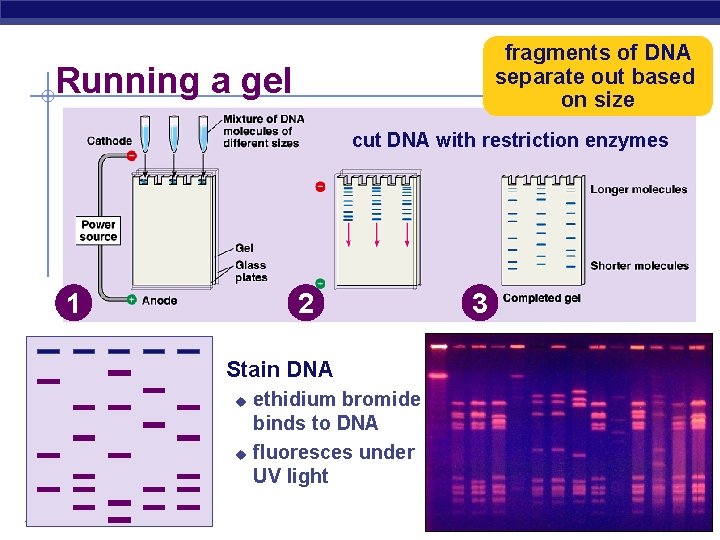
fragments of DNA separate out based on size Running a gel cut DNA with restriction enzymes 1 2 Stain DNA ethidium bromide binds to DNA u fluoresces under UV light u AP Biology 3
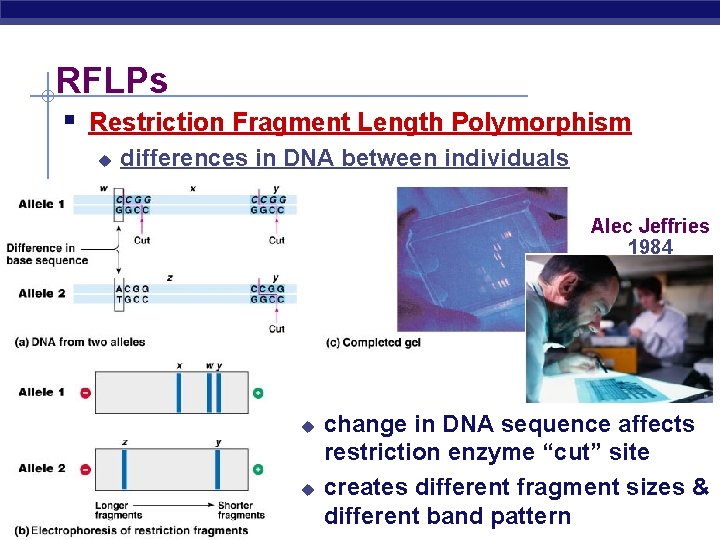
RFLPs § Restriction Fragment Length Polymorphism u differences in DNA between individuals Alec Jeffries 1984 u u AP Biology change in DNA sequence affects restriction enzyme “cut” site creates different fragment sizes & different band pattern
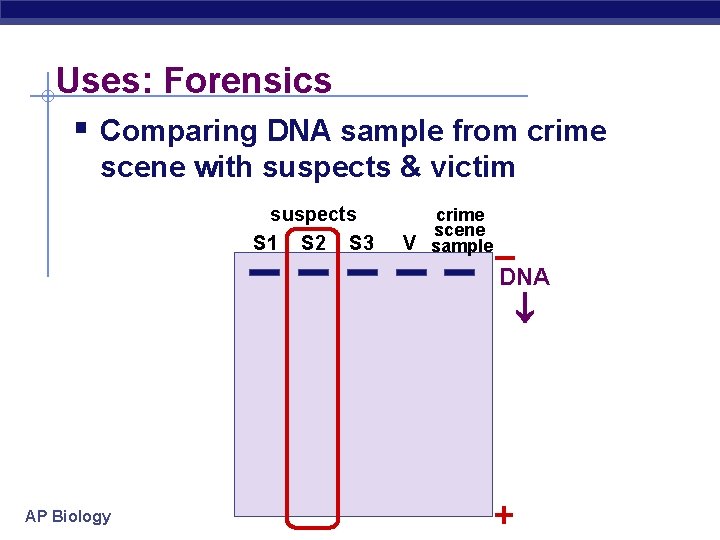
Uses: Forensics § Comparing DNA sample from crime scene with suspects & victim suspects S 1 S 2 S 3 crime scene V sample – DNA AP Biology +
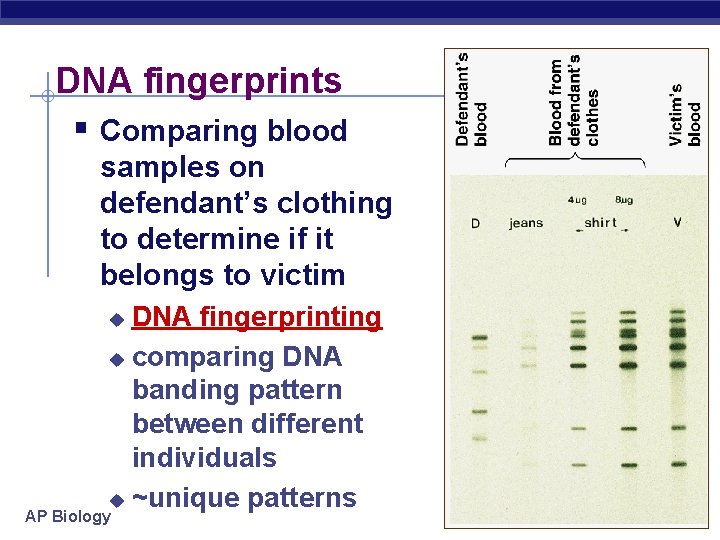
DNA fingerprints § Comparing blood samples on defendant’s clothing to determine if it belongs to victim DNA fingerprinting u comparing DNA banding pattern between different individuals u ~unique patterns u AP Biology
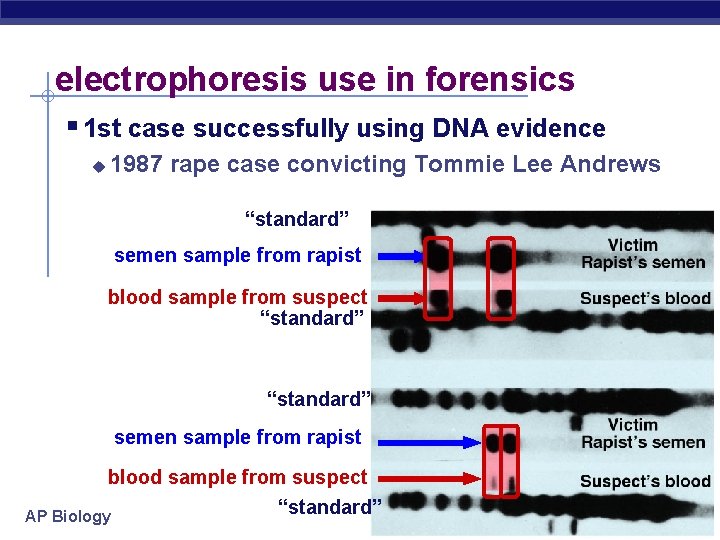
electrophoresis use in forensics § 1 st case successfully using DNA evidence u 1987 rape case convicting Tommie Lee Andrews “standard” semen sample from rapist blood sample from suspect “standard” AP Biology
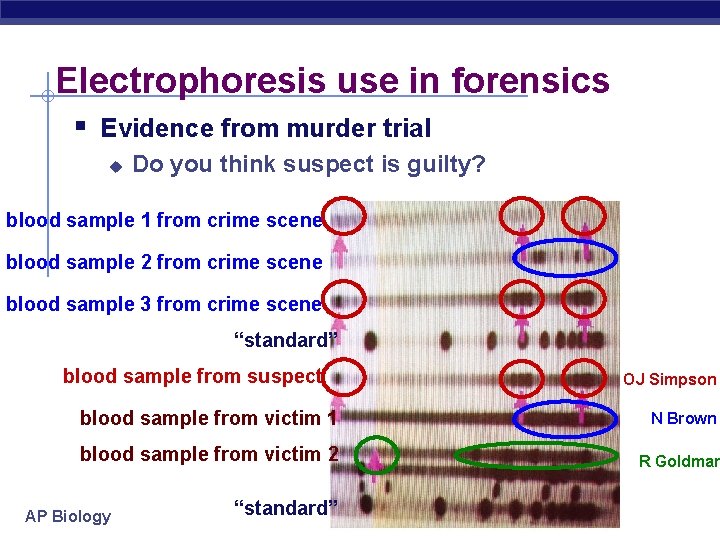
Electrophoresis use in forensics § Evidence from murder trial u Do you think suspect is guilty? blood sample 1 from crime scene blood sample 2 from crime scene blood sample 3 from crime scene “standard” blood sample from suspect OJ Simpson blood sample from victim 1 N Brown blood sample from victim 2 R Goldman AP Biology “standard”

Uses: Medical diagnostic § Comparing normal allele to disease allele chromosome with normal allele 1 chromosome with disease-causing allele 2 all ele 1 all ele 2 – DNA Example: test for Huntington’s disease + AP Biology
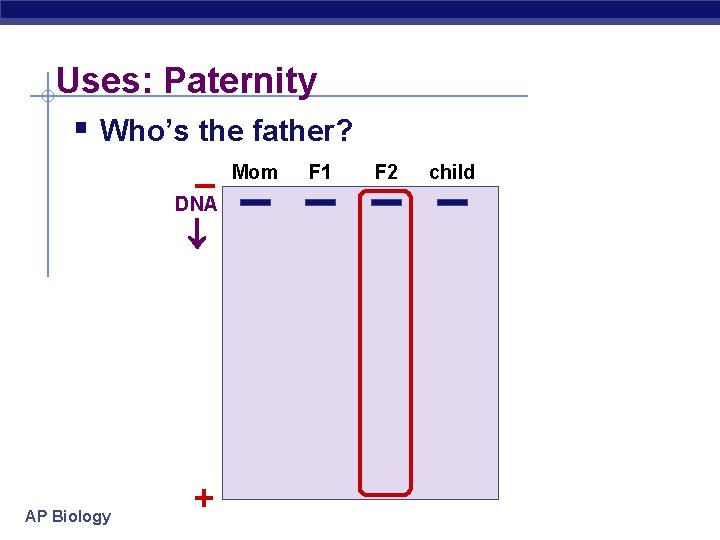
Uses: Paternity § Who’s the father? Mom F 1 – DNA AP Biology + F 2 child
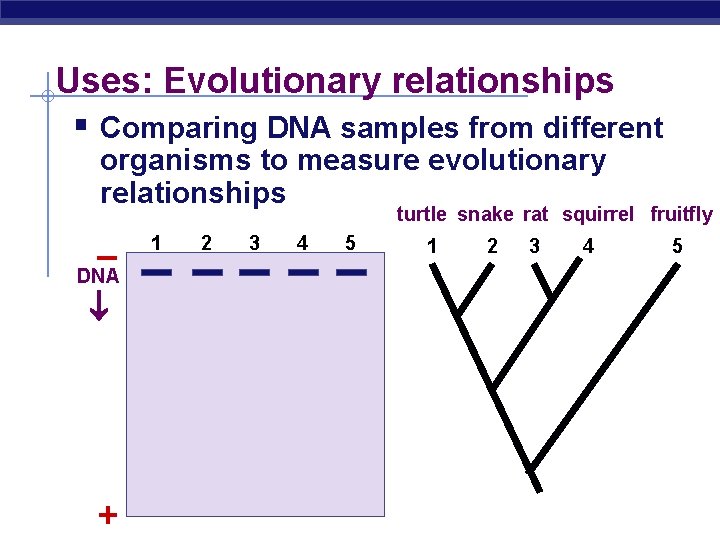
Uses: Evolutionary relationships § Comparing DNA samples from different organisms to measure evolutionary relationships turtle snake rat squirrel fruitfly – DNA + AP Biology 1 2 3 4 5
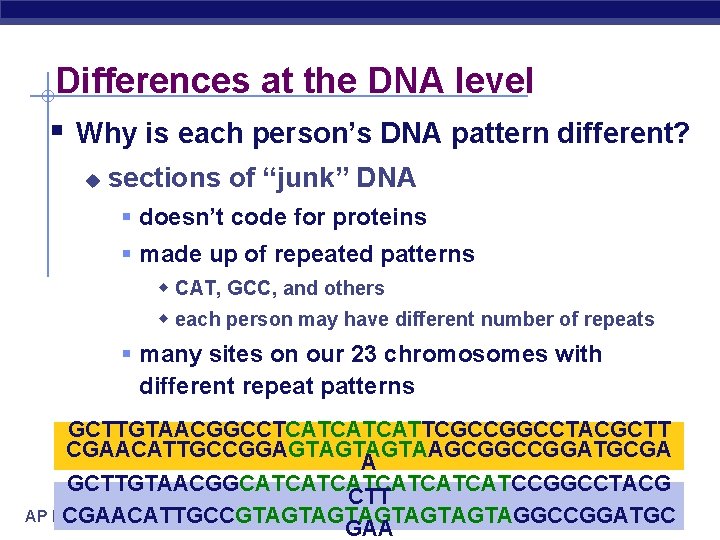
Differences at the DNA level § Why is each person’s DNA pattern different? u sections of “junk” DNA § doesn’t code for proteins § made up of repeated patterns w CAT, GCC, and others w each person may have different number of repeats § many sites on our 23 chromosomes with different repeat patterns GCTTGTAACGGCCTCATCATCATTCGCCGGCCTACGCTT CGAACATTGCCGGAGTAGTAGTAAGCGGCCGGATGCGA A GCTTGTAACGGCATCATCATCCGGCCTACG CTT AP Biology CGAACATTGCCGTAGTAGTAGGCCGGATGC GAA
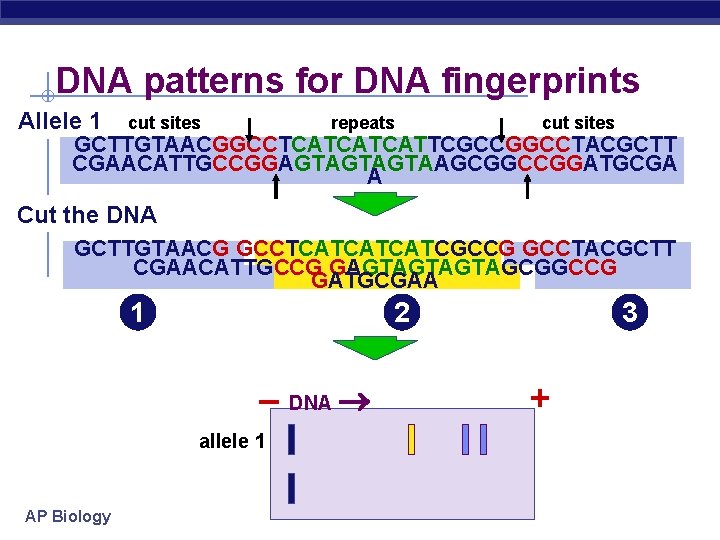
DNA patterns for DNA fingerprints Allele 1 cut sites repeats cut sites GCTTGTAACGGCCTCATCATCATTCGCCGGCCTACGCTT CGAACATTGCCGGAGTAGTAGTAAGCGGCCGGATGCGA A Cut the DNA GCTTGTAACG GCCTCATCATCATCGCCG GCCTACGCTT CGAACATTGCCG GAGTAGTAGTAGCGGCCG GATGCGAA 1 2 – DNA allele 1 AP Biology 3 +
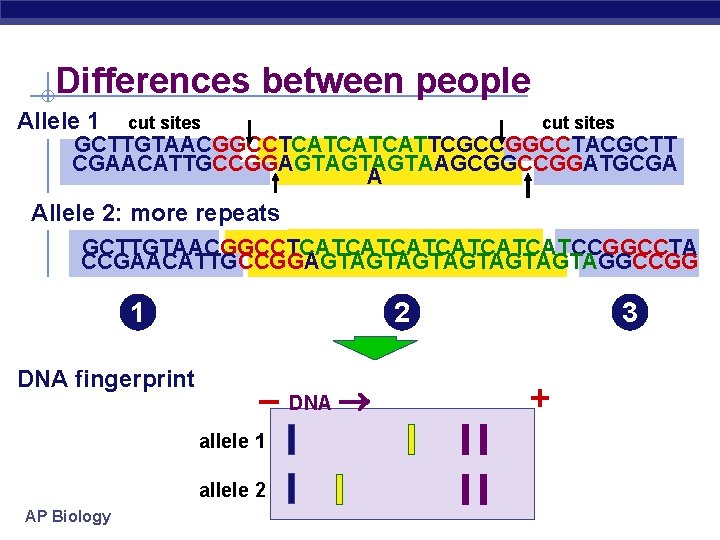
Differences between people Allele 1 cut sites GCTTGTAACGGCCTCATCATCATTCGCCGGCCTACGCTT CGAACATTGCCGGAGTAGTAGTAAGCGGCCGGATGCGA A Allele 2: more repeats GCTTGTAACGGCCTCATCATCATCCGGCCTA CCGAACATTGCCGGAGTAGTAGTAGGCCGG 1 DNA fingerprint 2 – DNA allele 1 allele 2 AP Biology 3 +
- Slides: 18