
DNA DO Now What is DNA What is
- Slides: 44
DNA DO Now: ◦ What is DNA? ◦ What is it used for? ◦ Why do we need it?
WHAT IS IT? DNA = Makes up genes for all living things. What are genes? ? ◦ Blueprints for us!! Genes are parts of DNA that code for particular traits or proteins.
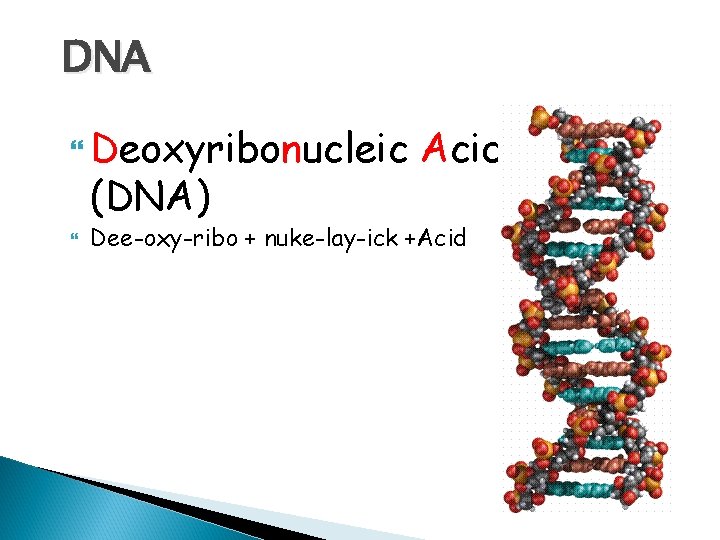
DNA Deoxyribonucleic (DNA) Acid Dee-oxy-ribo + nuke-lay-ick +Acid
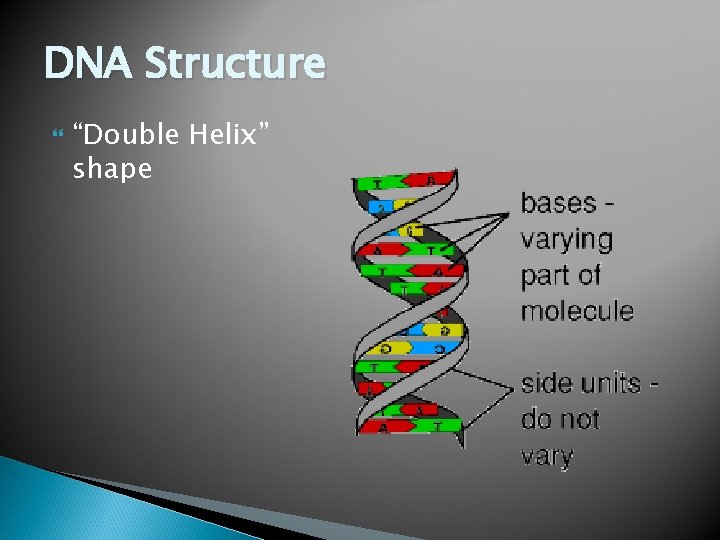
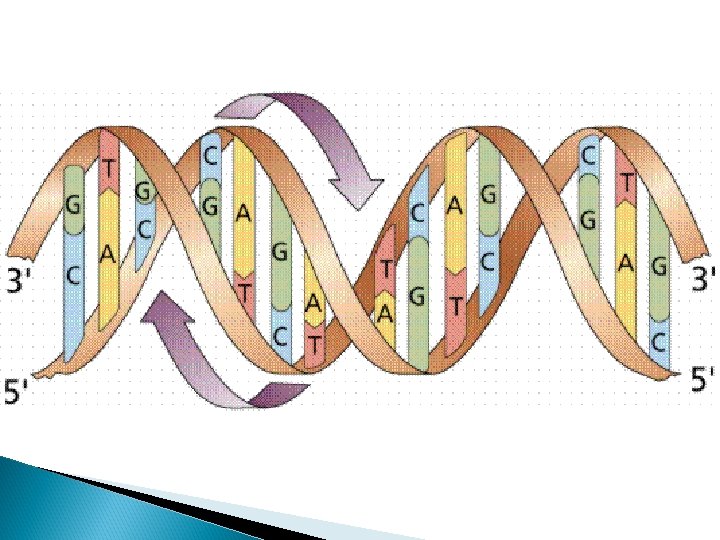
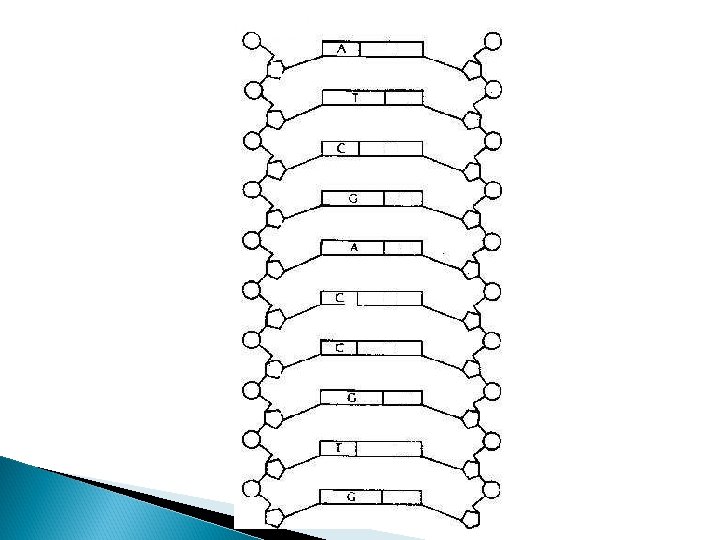
DNA Structure “Double Helix” shape
DNA is made up of Nucleotides are the basic units of DNA Recognize the similarities between the terms: ◦ Nucleotide ◦ Deoxyribonucleic acid ◦ nucleus.
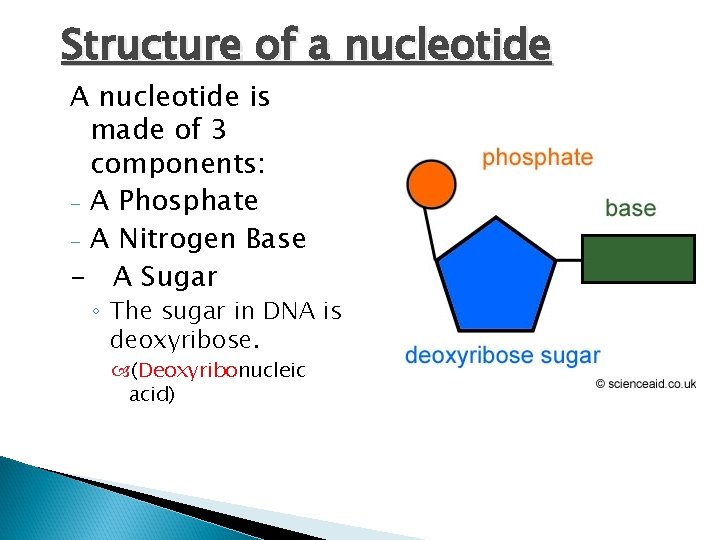
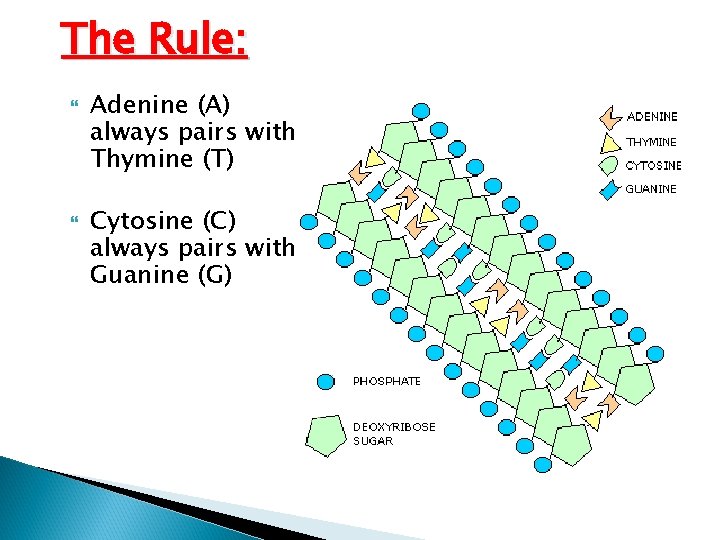
Structure of a nucleotide A nucleotide is made of 3 components: - A Phosphate - A Nitrogen Base - A Sugar ◦ The sugar in DNA is deoxyribose. (Deoxyribonucleic acid)
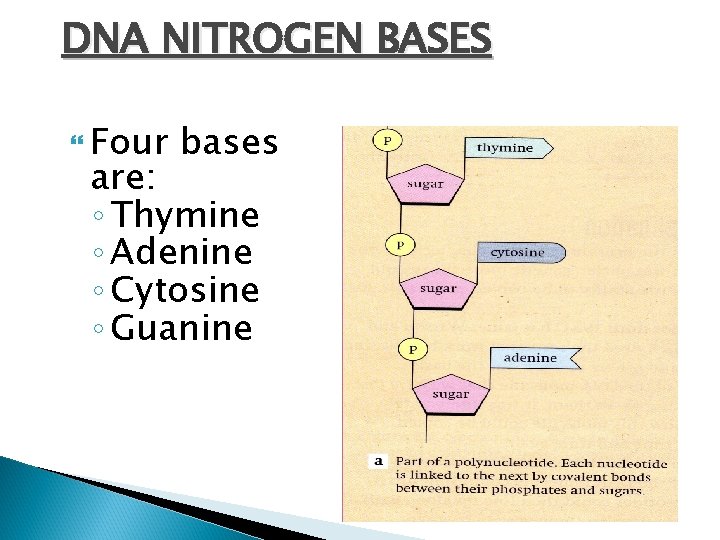
DNA NITROGEN BASES Four bases are: ◦ Thymine ◦ Adenine ◦ Cytosine ◦ Guanine
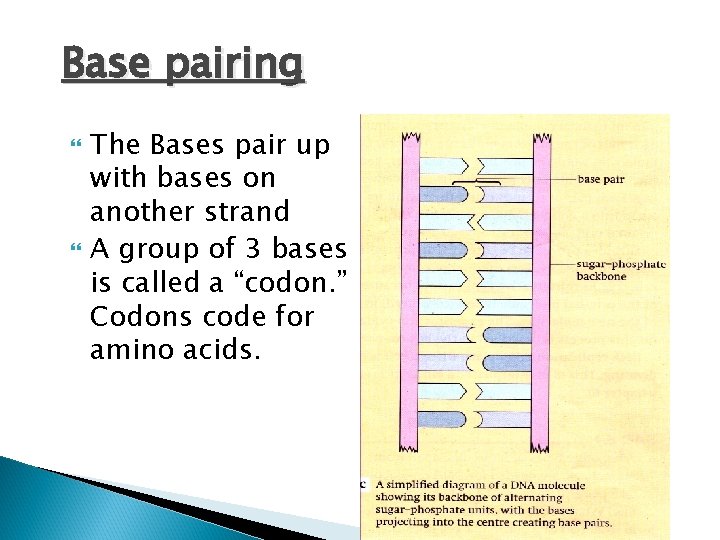
Base pairing The Bases pair up with bases on another strand A group of 3 bases is called a “codon. ” Codons code for amino acids.
The Rule: Adenine (A) always pairs with Thymine (T) Cytosine (C) always pairs with Guanine (G)
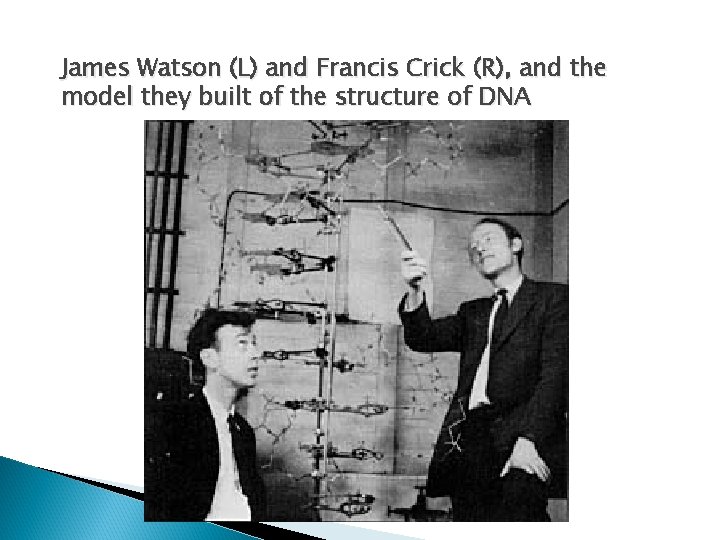
James Watson (L) and Francis Crick (R), and the model they built of the structure of DNA
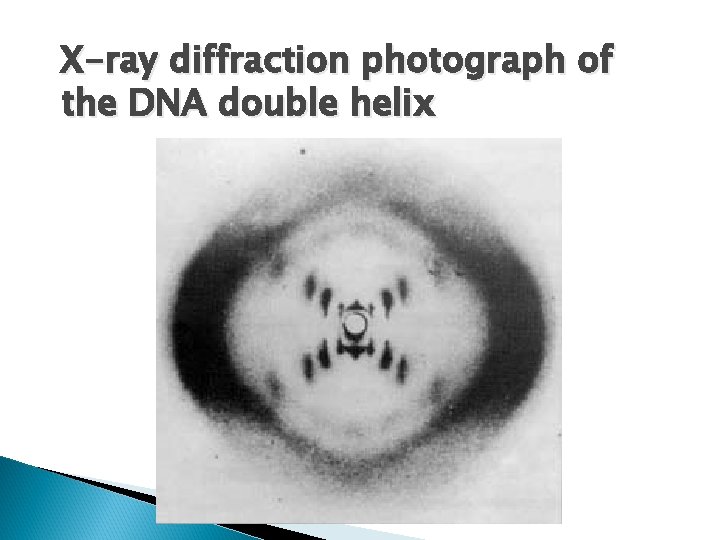
X-ray diffraction photograph of the DNA double helix
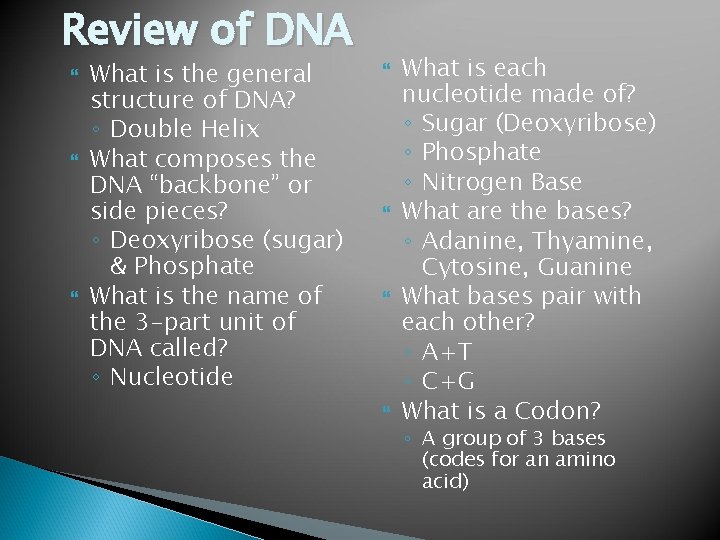
Review of DNA What is the general structure of DNA? ◦ Double Helix What composes the DNA “backbone” or side pieces? ◦ Deoxyribose (sugar) & Phosphate What is the name of the 3 -part unit of DNA called? ◦ Nucleotide What is each nucleotide made of? ◦ Sugar (Deoxyribose) ◦ Phosphate ◦ Nitrogen Base What are the bases? ◦ Adanine, Thyamine, Cytosine, Guanine What bases pair with each other? ◦ A+T ◦ C+G What is a Codon? ◦ A group of 3 bases (codes for an amino acid)
RNA
What is RNA? Ribonucleic Acid
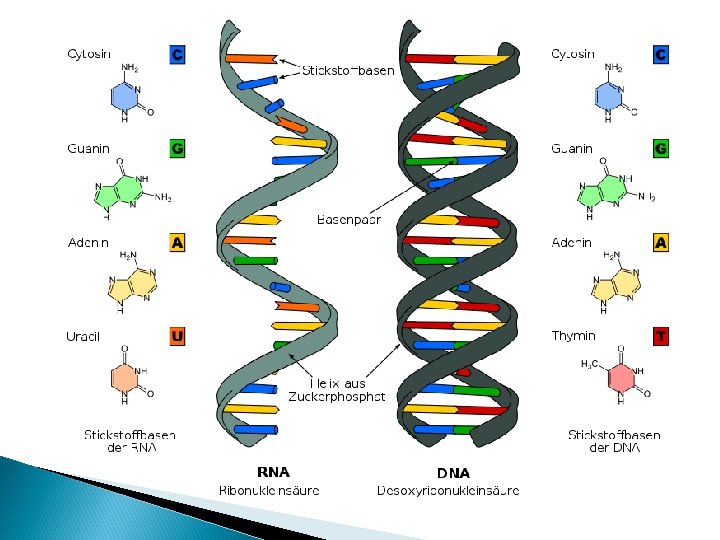
Structure Created from DNA replication Single-strand Uracil base instead of Thyamine base Ribonucleic acid ◦ Uses ribose instead of deoxyribose
What is RNA used for? Protein Synthesis
Types: m. RNA & t. RNA “Messenger” RNA is used to send messages from DNA to be used elsewhere (e. g. create proteins for hormones, repair cells, help the immune system, etc. ) “Transfer” RNA uses “anticodons” to put amino acids in the correct order of m. RNA codons
Protein Synthesis using RNA? Protein Synthesis = Making proteins Examples include: Hormones, Enzymes, Cell parts, Immune response, etc. Two steps are involved: Transcription & Translation
Transcription and Translation What does it mean to Transcribe? ◦ Hint: Trans + Scribe “To re-write” or “To copy” What does it mean to Translate? ◦ Hint: Trans + Late “To determine” or “to decipher”
Transcription vs. Translation The majority of genes are expressed as the proteins they encode. The process occurs in two steps: ◦ Transcription = DNA → RNA ◦ Translation = RNA → protein
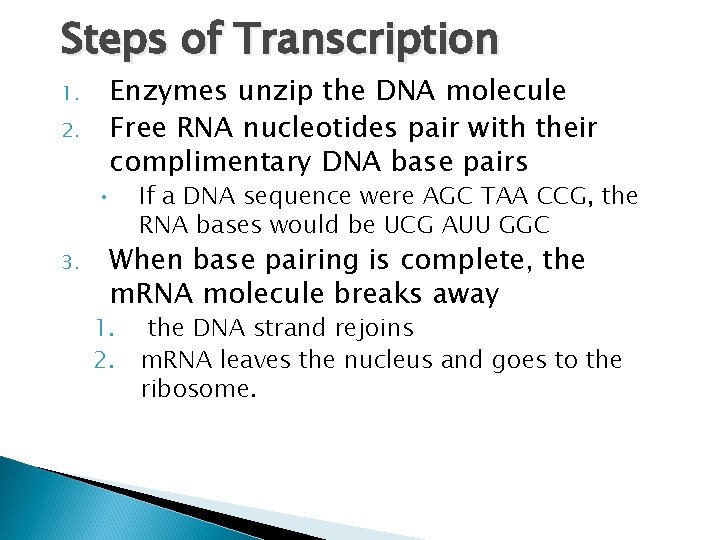
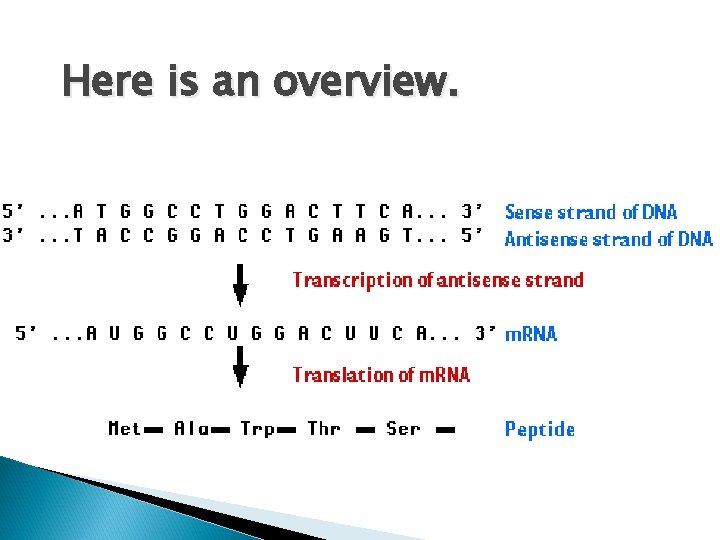
Transcription DNA> RNA ◦ DNA is “unzipped” and new nucleotides are added to one side (creates m. RNA) This is the template to be read later Occurs in the nucleus
Steps of Transcription 1. 2. Enzymes unzip the DNA molecule Free RNA nucleotides pair with their complimentary DNA base pairs • 3. If a DNA sequence were AGC TAA CCG, the RNA bases would be UCG AUU GGC When base pairing is complete, the m. RNA molecule breaks away 1. 2. the DNA strand rejoins m. RNA leaves the nucleus and goes to the ribosome.
Transcription Video http: //youtu. be/Ot. Yz_3 rkv. Pk http: //youtu. be/5 Mf. SYn. It. Yvg
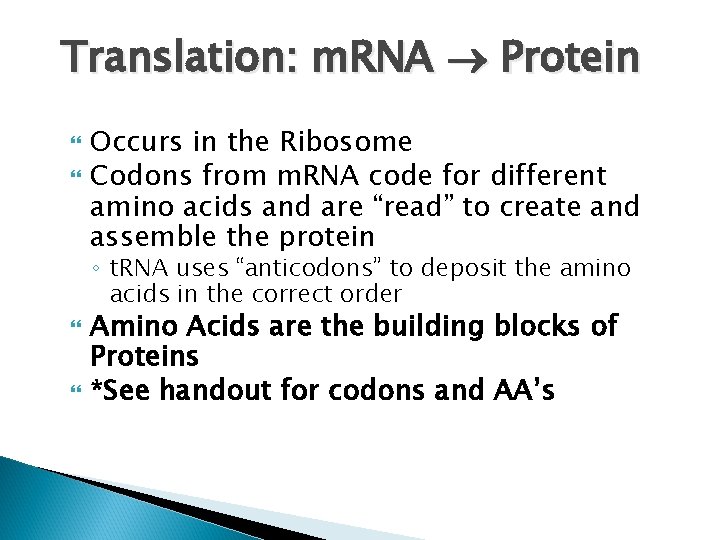
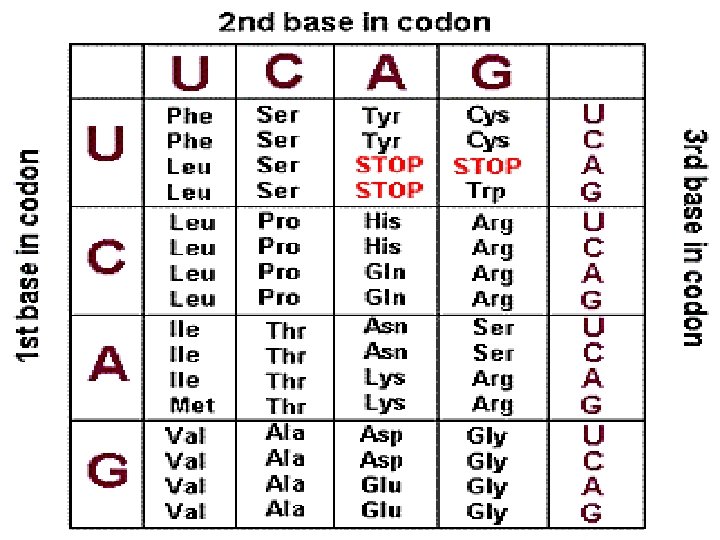
Translation: m. RNA Protein Occurs in the Ribosome Codons from m. RNA code for different amino acids and are “read” to create and assemble the protein ◦ t. RNA uses “anticodons” to deposit the amino acids in the correct order Amino Acids are the building blocks of Proteins *See handout for codons and AA’s
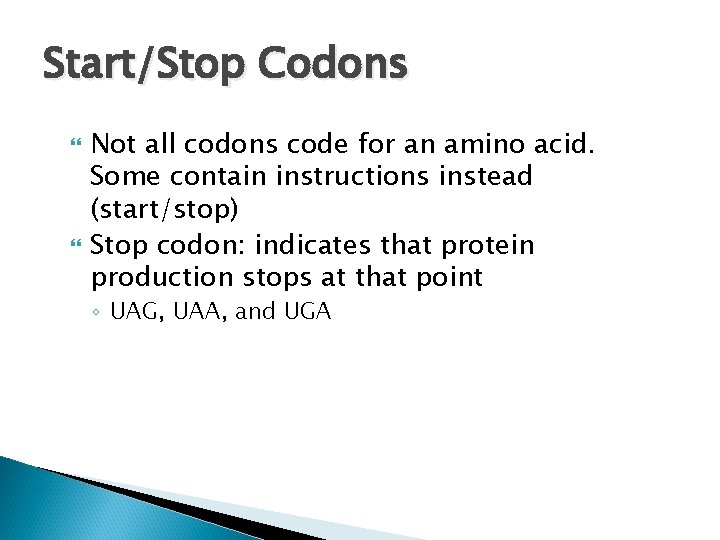
Start/Stop Codons Not all codons code for an amino acid. Some contain instructions instead (start/stop) Stop codon: indicates that protein production stops at that point ◦ UAG, UAA, and UGA
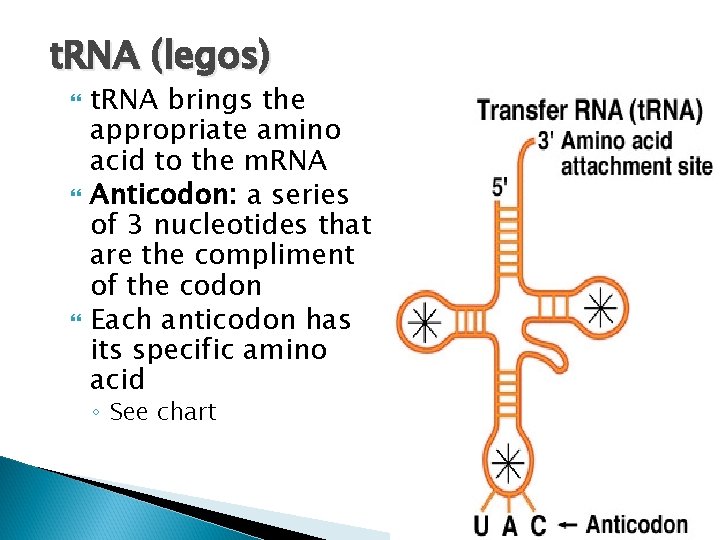
t. RNA (legos) t. RNA brings the appropriate amino acid to the m. RNA Anticodon: a series of 3 nucleotides that are the compliment of the codon Each anticodon has its specific amino acid ◦ See chart
Translation 1) m. RNA enters the Ribosome 2) t. RNA attempts to bind to to complimentary codon on the m. RNA ◦ If it “fits” the t. RNA’s protein is deposited and the t. RNA leaves
Translation continued. . 4) Strands of deposited amino acids create a protein 5) When the “stop” codon is reached (UAG) the process is finished.
Translation Videos http: //youtu. be/-zb 6 r 1 MMTkc http: //youtu. be/8 ds. Tv. Ba. UMvw
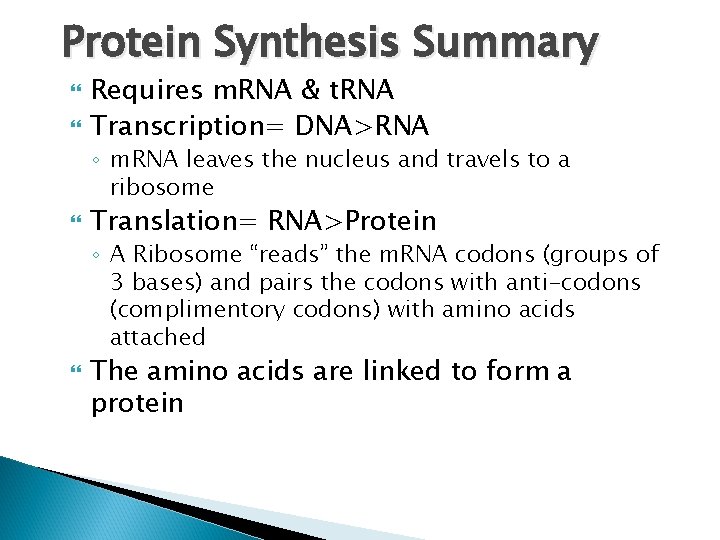
Protein Synthesis Summary Requires m. RNA & t. RNA Transcription= DNA>RNA ◦ m. RNA leaves the nucleus and travels to a ribosome Translation= RNA>Protein ◦ A Ribosome “reads” the m. RNA codons (groups of 3 bases) and pairs the codons with anti-codons (complimentory codons) with amino acids attached The amino acids are linked to form a protein
Transcription & Translation Video http: //youtu. be/983 lhh 20 r. GY
Here is an overview.
Recall differences of RNA and DNA 1. 2. 3. RNA is single stranded while DNA is double RNA sugar is ribose. DNA sugar is deoxyribose RNA contains the nitrogen base uracil (U) in place of DNA’s thymine (T)
DNA REPLICATION
REPLICTION OF DNA Chromosomes Occurs when cells multiply Copies the entire DNA strand
Partial or complete replication? Replication of a portion of DNA= protein Synthesis Replication of an entire strand of DNA= replication of Chromosomes
Replication Steps DNA “unzips” like in the first step of transcription As the DNA unzips, the nucleotides are exposed Free nucleotides base pair with the exposed nucleotides ◦ If a nucleotide on the strand is a thymine, the free nucleotide that pairs with it would be adenine
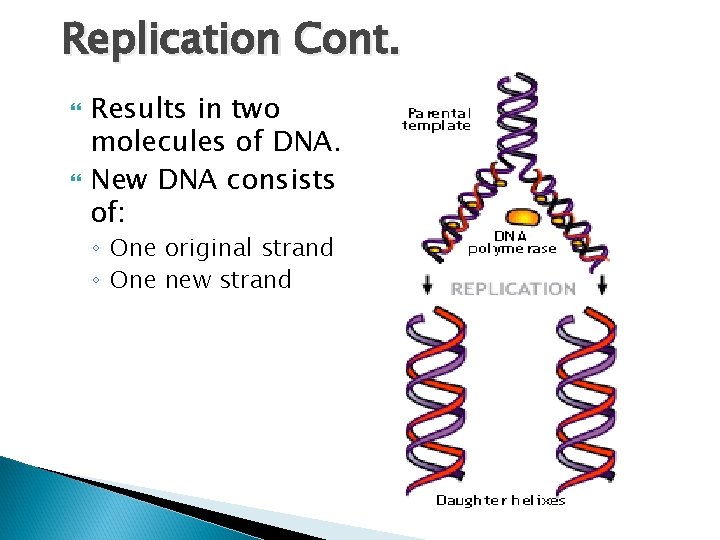
Replication Cont. Results in two molecules of DNA. New DNA consists of: ◦ One original strand ◦ One new strand
DNA Replication http: //youtu. be/hf. Z 8 o 9 D 1 tus
DNA Replication…to be continued…. . Why would cells need to replicate? What kind of cells would need to be produced for YOU to survive AND reproduce?