
DNA Deoxyribonucleic Acid What is DNA Humans have
DNA: Deoxyribonucleic Acid
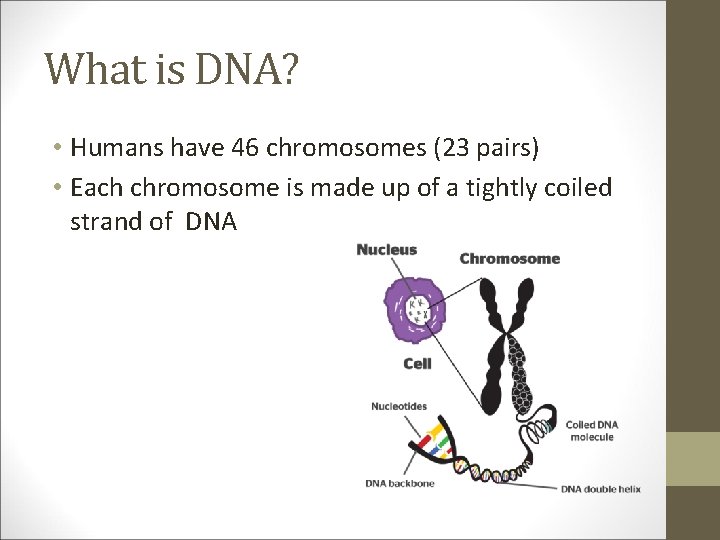
What is DNA? • Humans have 46 chromosomes (23 pairs) • Each chromosome is made up of a tightly coiled strand of DNA
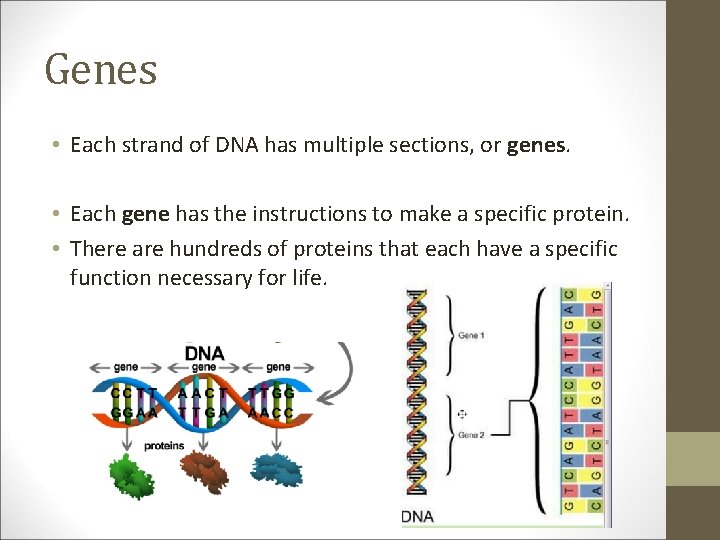
Genes • Each strand of DNA has multiple sections, or genes. • Each gene has the instructions to make a specific protein. • There are hundreds of proteins that each have a specific function necessary for life.
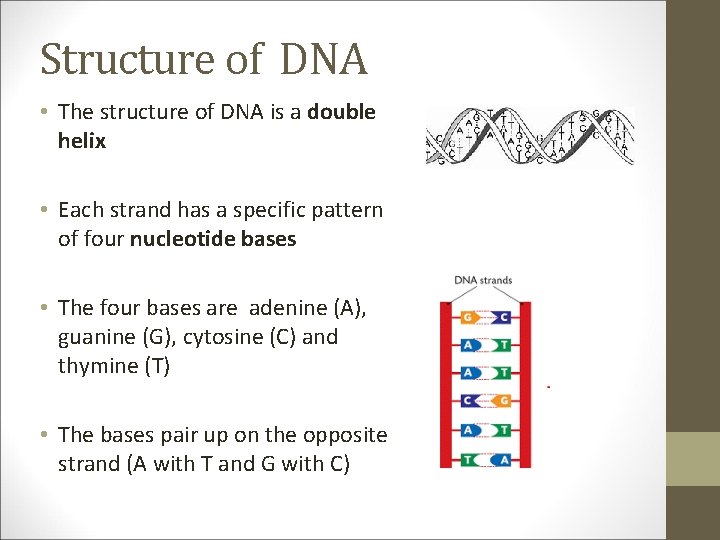
Structure of DNA • The structure of DNA is a double helix • Each strand has a specific pattern of four nucleotide bases • The four bases are adenine (A), guanine (G), cytosine (C) and thymine (T) • The bases pair up on the opposite strand (A with T and G with C)
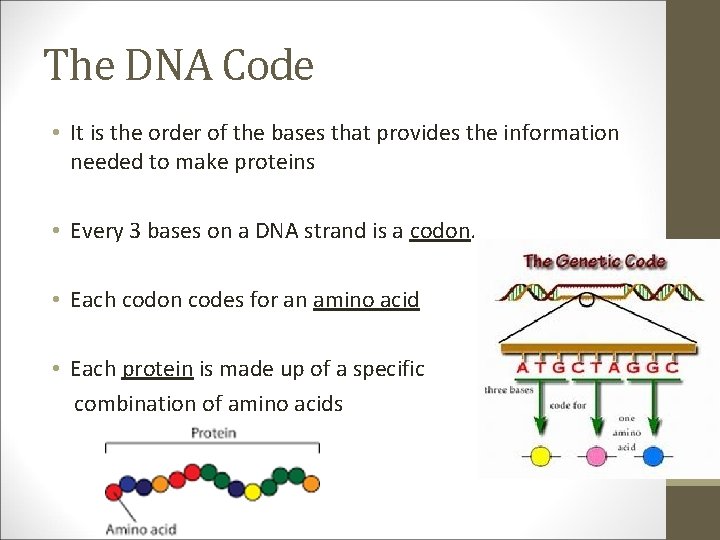
The DNA Code • It is the order of the bases that provides the information needed to make proteins • Every 3 bases on a DNA strand is a codon. • Each codon codes for an amino acid • Each protein is made up of a specific combination of amino acids
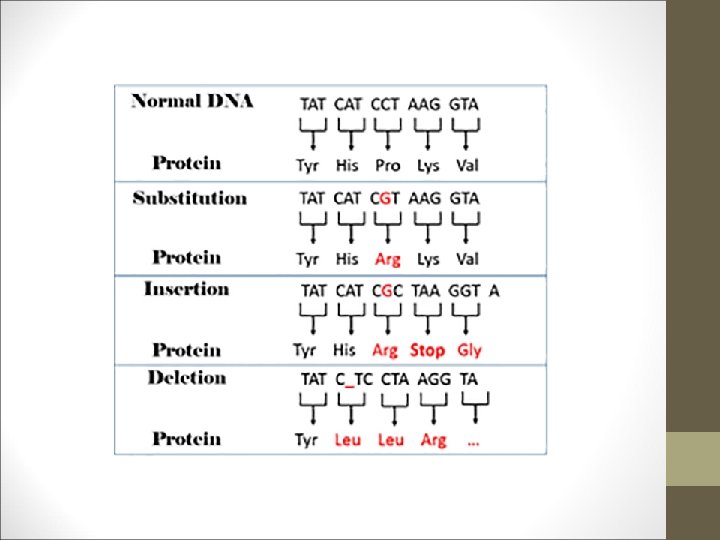
Mutations • A mistake can occur when the section of DNA is copied to make a protein • Any change in the order of the bases on a strand of DNA is called a mutation • These changes in the code can (sometimes) cause a change to the amino acid being coded for. This can cause the protein to form incorrectly or possibly not at all.
Effects of mutations • Neutral - No visible effect –or- does not impact organisms survival • Harmful – results cause protein to be faulty/not function properly (can be lethal or cause serious problems) • Beneficial – sometimes the change causes a variation that benefits the organism (Ex/ developing resistance to a disease)
Homework • Use the following terms in a paragraph: • DNA, gene, bases, amino acid, protein • Model a section of DNA, then make a second model showing a mutation to the code.
- Slides: 9