
DNA Deoxyribonucleic Acid Mr Coleman Biology DNA DNA
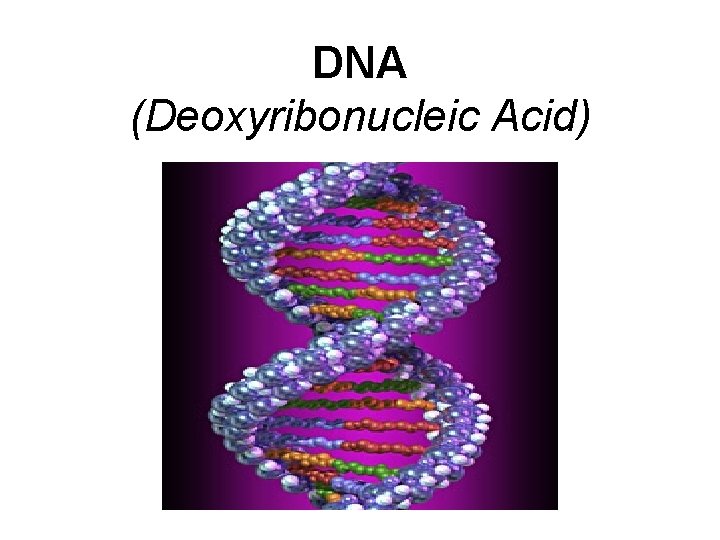
DNA (Deoxyribonucleic Acid)
Mr. Coleman Biology
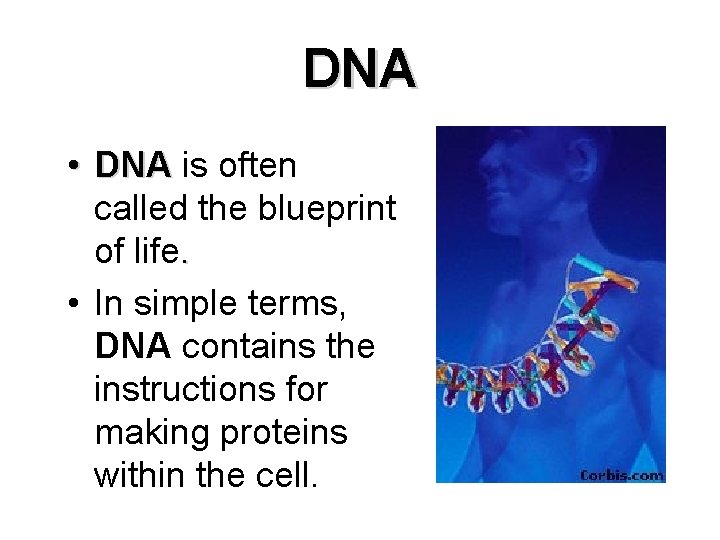
DNA • DNA is often called the blueprint of life. • In simple terms, DNA contains the instructions for making proteins within the cell.
Genetic material of cells… • GENES – units of genetic material that CODES FOR A SPECIFIC TRAIT • Called NUCLEIC ACIDS • DNA is made up of repeating molecules called NUCLEOTIDES
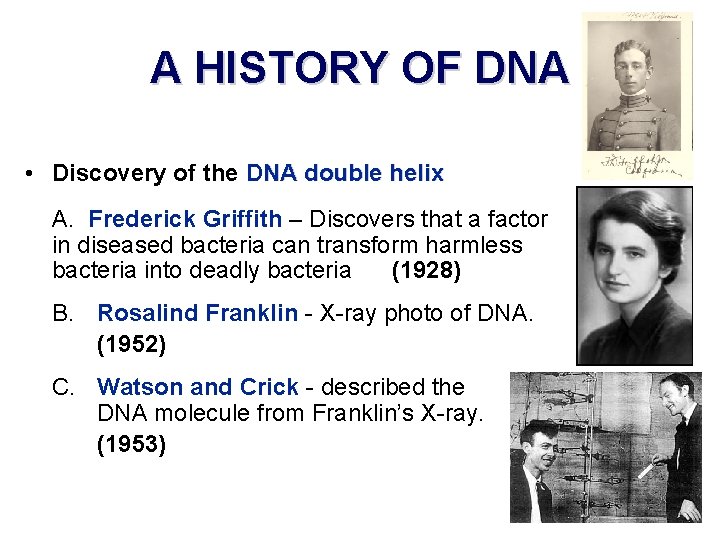
A HISTORY OF DNA • Discovery of the DNA double helix A. Frederick Griffith – Discovers that a factor in diseased bacteria can transform harmless bacteria into deadly bacteria (1928) B. Rosalind Franklin - X-ray photo of DNA. (1952) C. Watson and Crick - described the DNA molecule from Franklin’s X-ray. (1953)
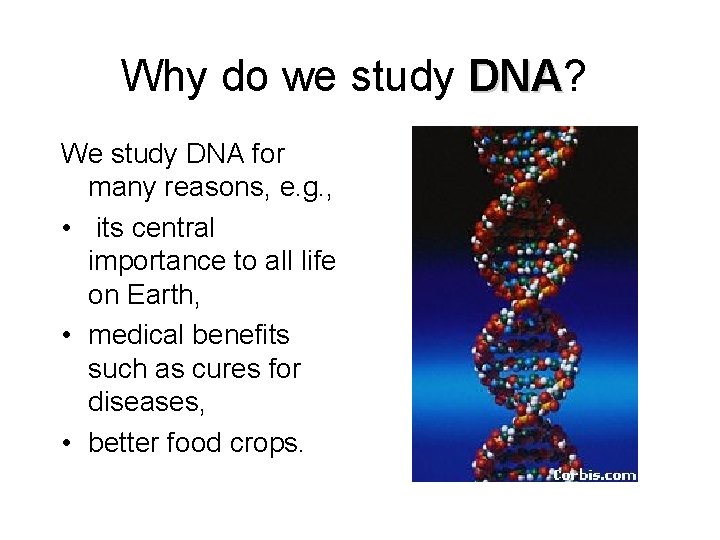
Why do we study DNA? DNA We study DNA for many reasons, e. g. , • its central importance to all life on Earth, • medical benefits such as cures for diseases, • better food crops.
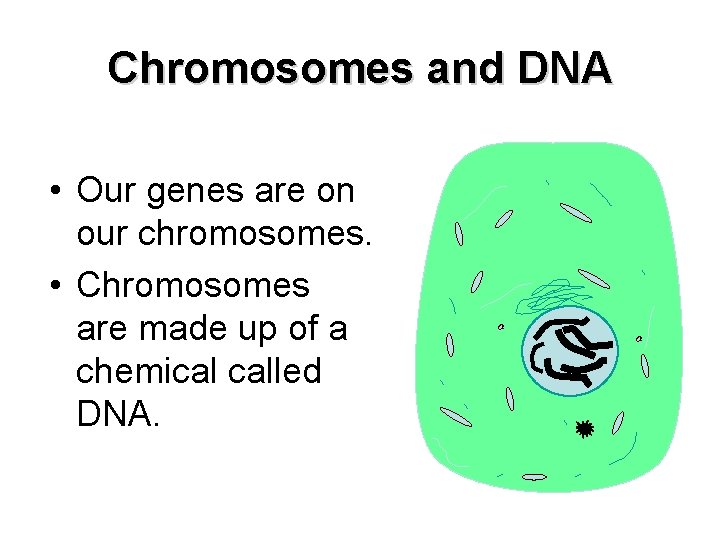
Chromosomes and DNA • Our genes are on our chromosomes. • Chromosomes are made up of a chemical called DNA.
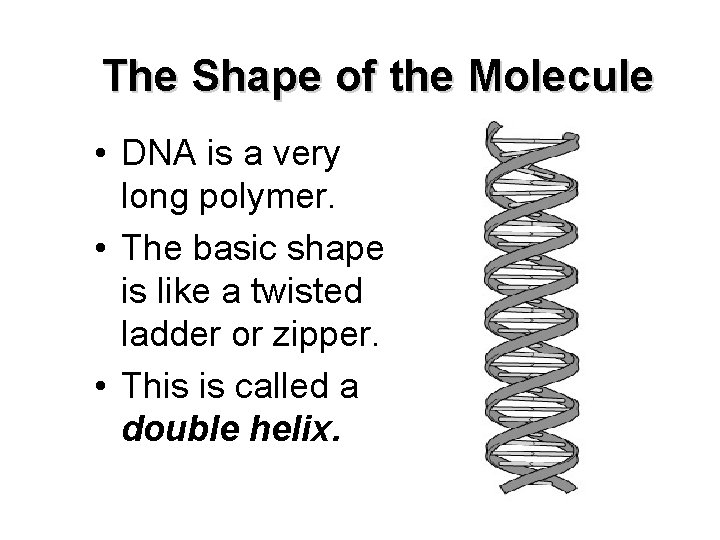
The Shape of the Molecule • DNA is a very long polymer. • The basic shape is like a twisted ladder or zipper. • This is called a double helix.
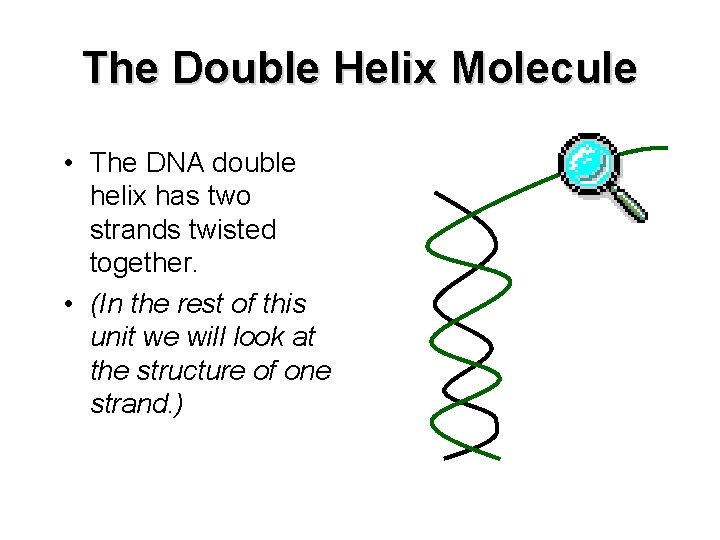
The Double Helix Molecule • The DNA double helix has two strands twisted together. • (In the rest of this unit we will look at the structure of one strand. )
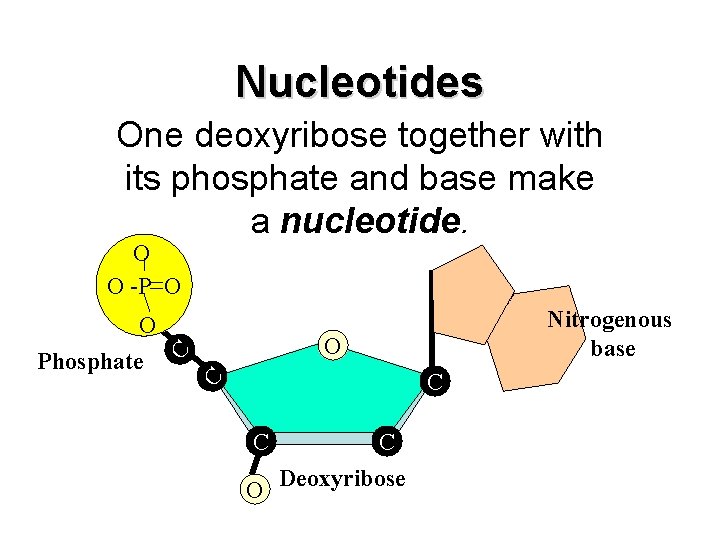
Nucleotides One deoxyribose together with its phosphate and base make a nucleotide. O O -P O Nitrogenous base O C C C O Phosphate C C O Deoxyribose
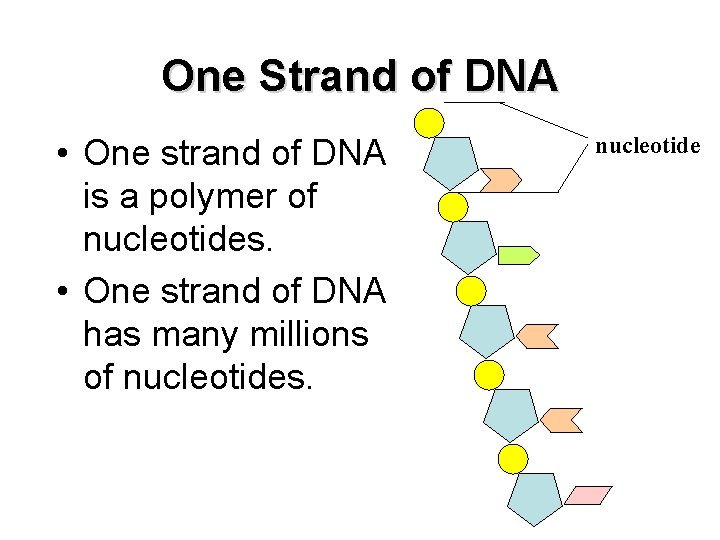
One Strand of DNA • One strand of DNA is a polymer of nucleotides. • One strand of DNA has many millions of nucleotides. nucleotide
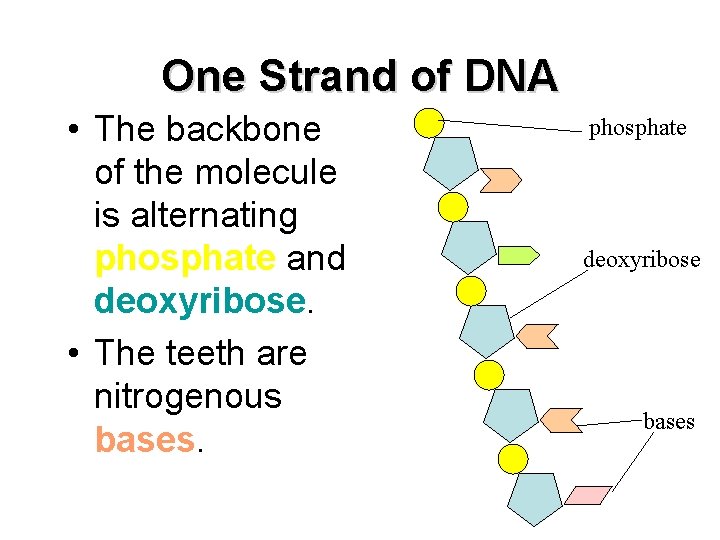
One Strand of DNA • The backbone of the molecule is alternating phosphate and deoxyribose. • The teeth are nitrogenous bases. phosphate deoxyribose bases
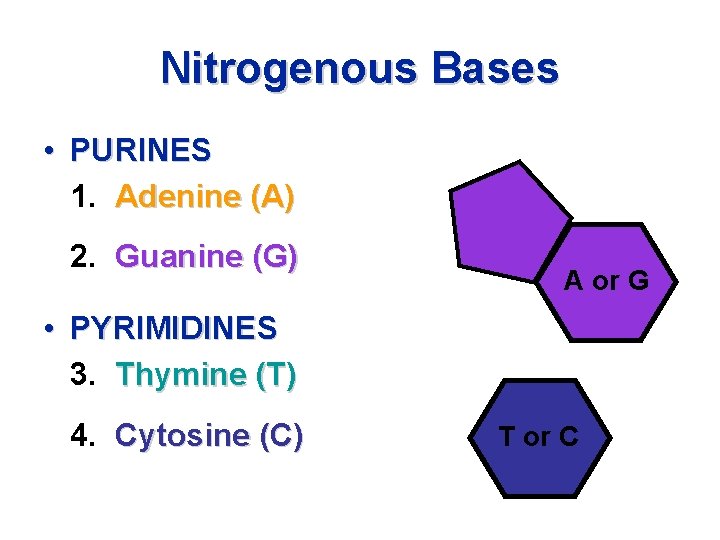
Nitrogenous Bases • PURINES 1. Adenine (A) 2. Guanine (G) A or G • PYRIMIDINES 3. Thymine (T) 4. Cytosine (C) T or C
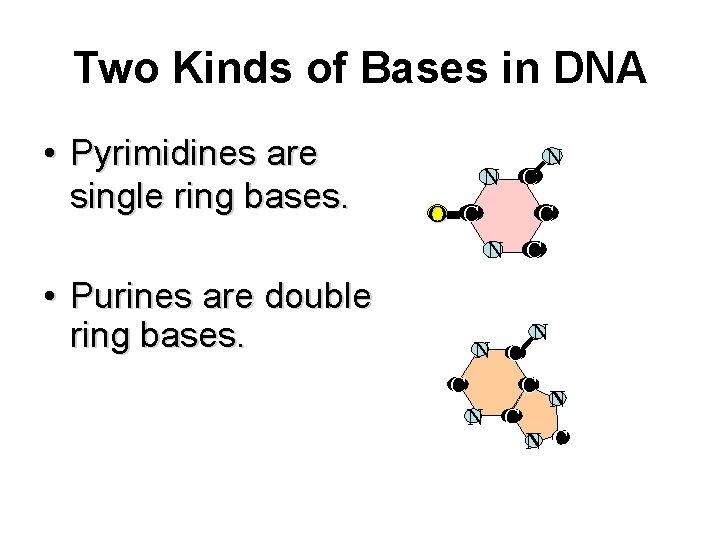
Two Kinds of Bases in DNA • Pyrimidines are single ring bases. N C O C N C • Purines are double ring bases. N N C C C N N C
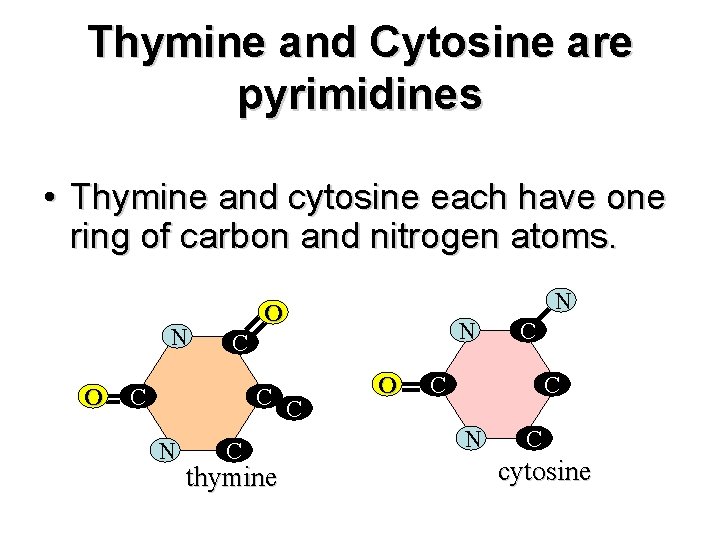
Thymine and Cytosine are pyrimidines • Thymine and cytosine each have one ring of carbon and nitrogen atoms. N O N C C N N O C thymine O C C C N C cytosine
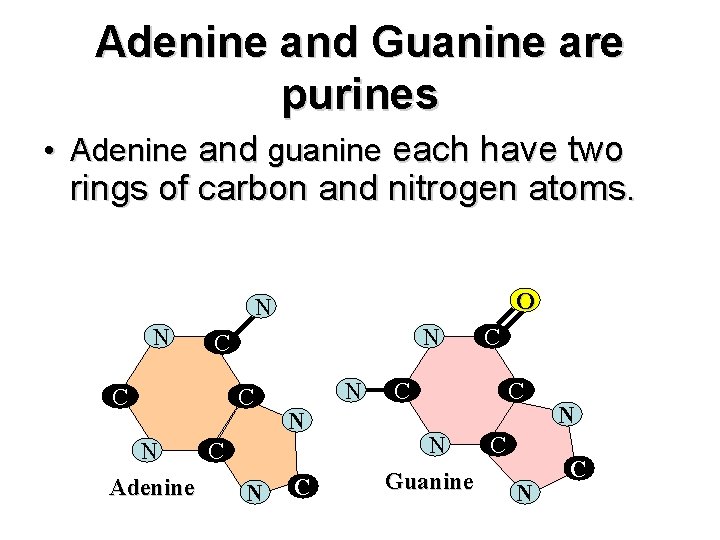
Adenine and Guanine are purines • Adenine and guanine each have two rings of carbon and nitrogen atoms. O N N C C N C Adenine N N N C C N C Guanine N N C
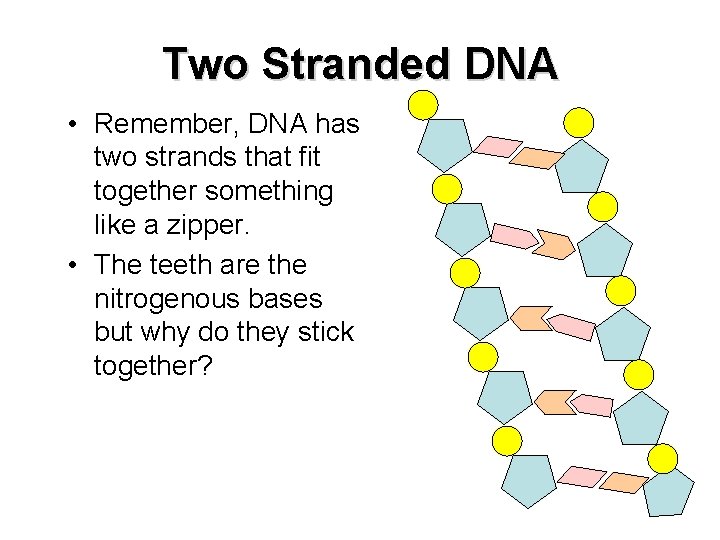
Two Stranded DNA • Remember, DNA has two strands that fit together something like a zipper. • The teeth are the nitrogenous bases but why do they stick together?
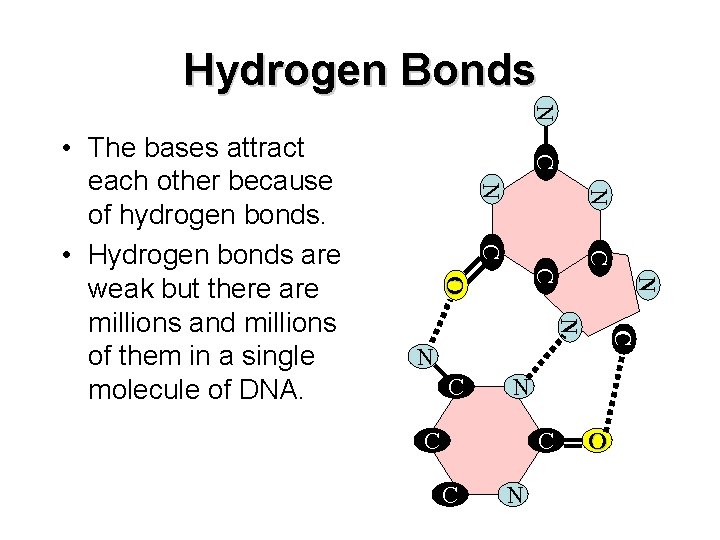
Hydrogen Bonds N C N N C C N C O C N • The bases attract each other because of hydrogen bonds. • Hydrogen bonds are weak but there are millions and millions of them in a single molecule of DNA. N C C C N O
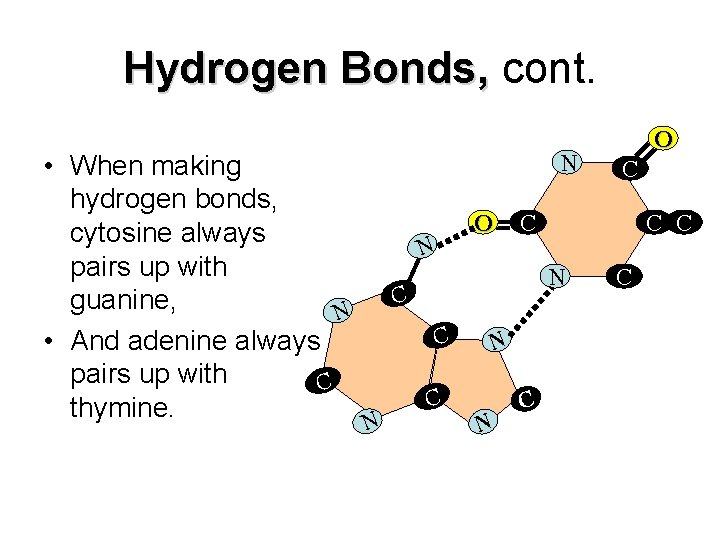
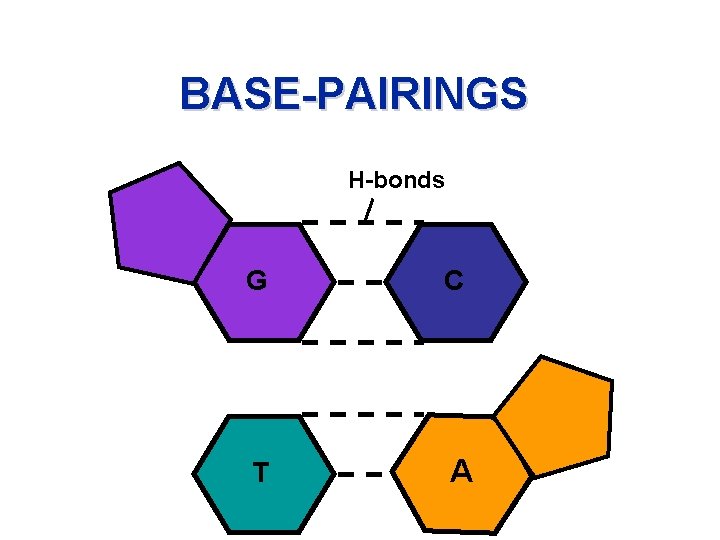
Hydrogen Bonds, cont. • When making hydrogen bonds, cytosine always pairs up with guanine, N • And adenine always pairs up with C thymine. N N O C N N C C N C O C C
BASE-PAIRINGS H-bonds G C T A
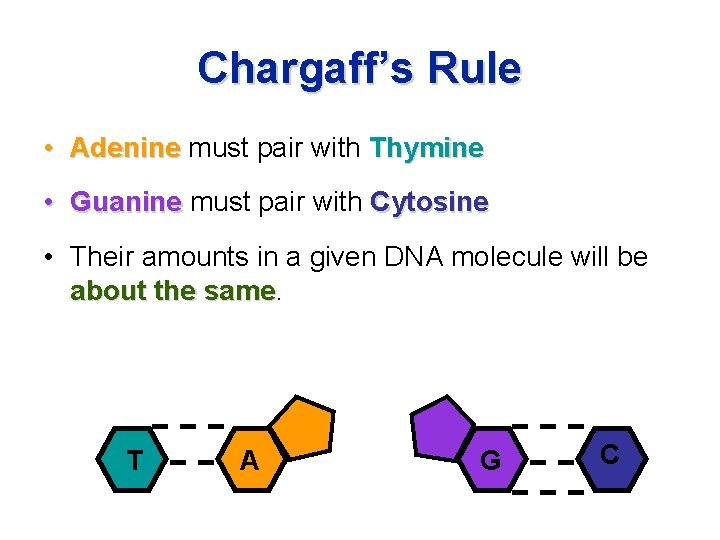
Chargaff’s Rule • Adenine must pair with Thymine • Guanine must pair with Cytosine • Their amounts in a given DNA molecule will be about the same T A G C
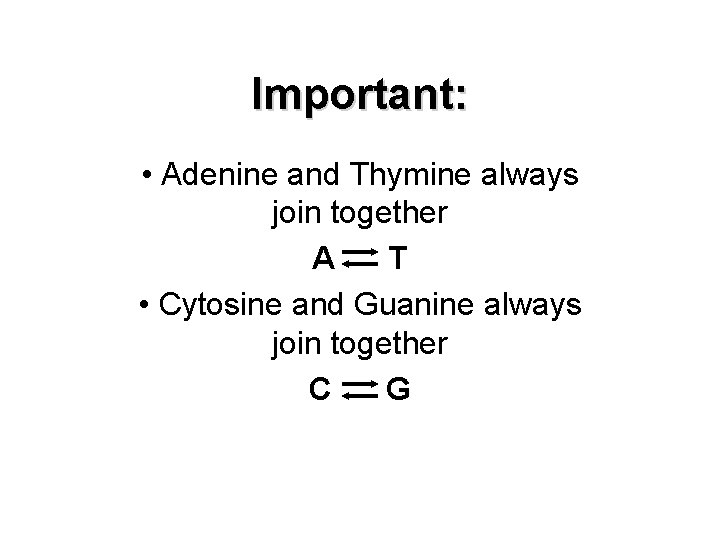
Important: • Adenine and Thymine always join together A T • Cytosine and Guanine always join together C G
Watson & Crick proposed… • DNA had specific pairing between the nitrogen bases: ADENINE – THYMINE CYTOSINE - GUANINE • DNA was made of 2 long stands of nucleotides arranged in a specific way called the “Complementary Rule”
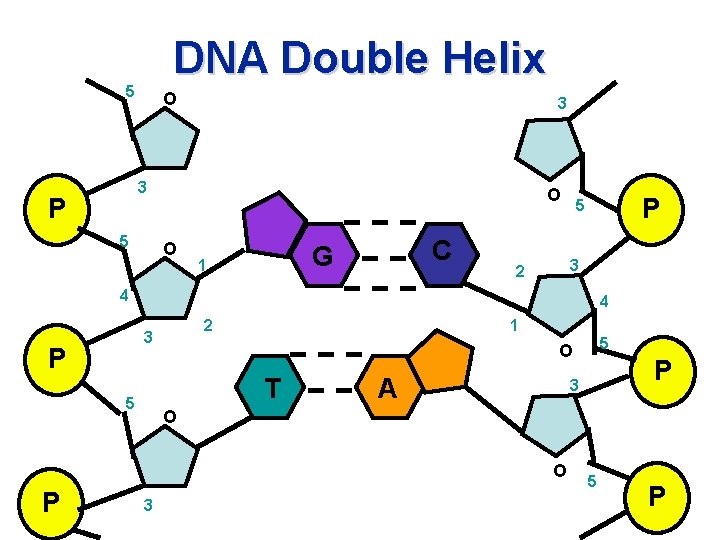
DNA Double Helix 5 O 3 3 P 5 O O C G 1 P 5 3 2 4 4 2 3 P 1 T 5 A P 3 O O P 5 O 3 5 P
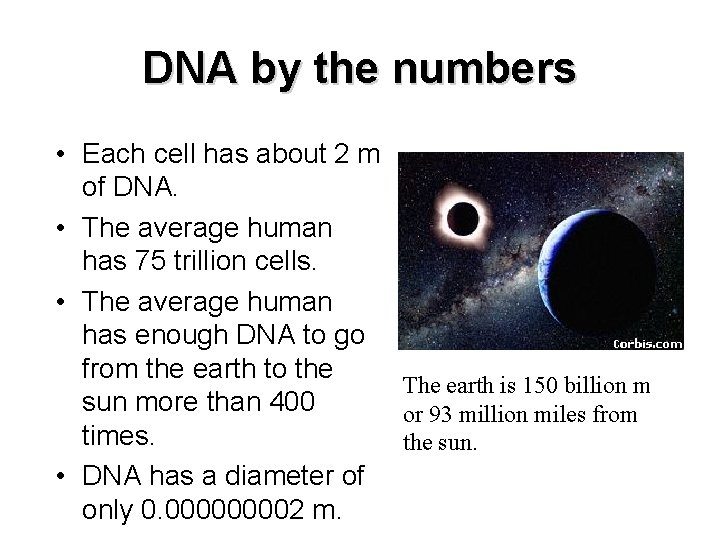
DNA by the numbers • Each cell has about 2 m of DNA. • The average human has 75 trillion cells. • The average human has enough DNA to go from the earth to the The earth is 150 billion m sun more than 400 or 93 million miles from times. the sun. • DNA has a diameter of only 0. 00002 m.
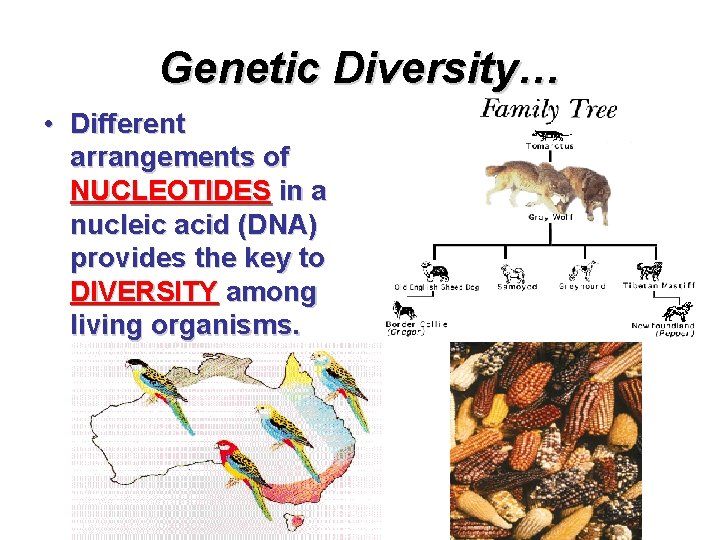
Genetic Diversity… • Different arrangements of NUCLEOTIDES in a nucleic acid (DNA) provides the key to DIVERSITY among living organisms.
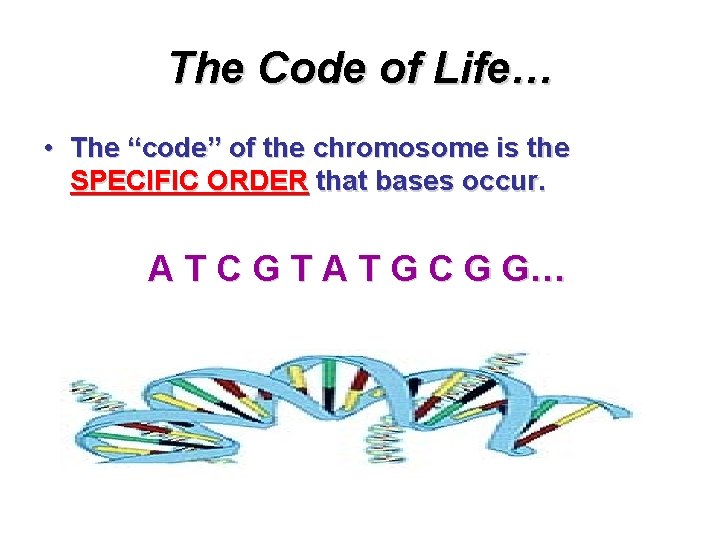
The Code of Life… • The “code” of the chromosome is the SPECIFIC ORDER that bases occur. A T C G T A T G C G G…
- Slides: 27