
DNA Deoxyribonucleic Acid Genes are made of DNA
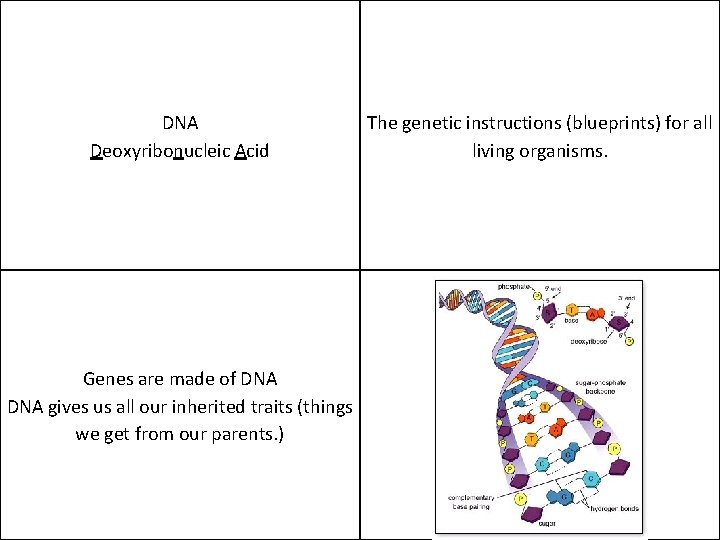
DNA Deoxyribonucleic Acid Genes are made of DNA gives us all our inherited traits (things we get from our parents. ) The genetic instructions (blueprints) for all living organisms.
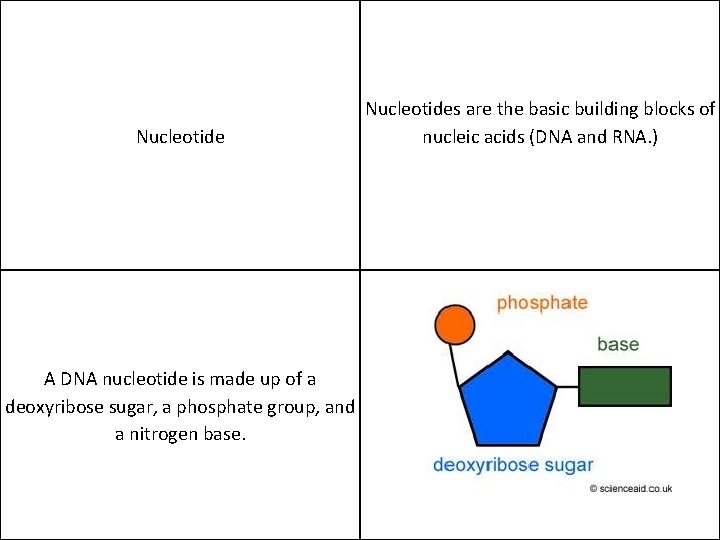
Nucleotide A DNA nucleotide is made up of a deoxyribose sugar, a phosphate group, and a nitrogen base. Nucleotides are the basic building blocks of nucleic acids (DNA and RNA. )
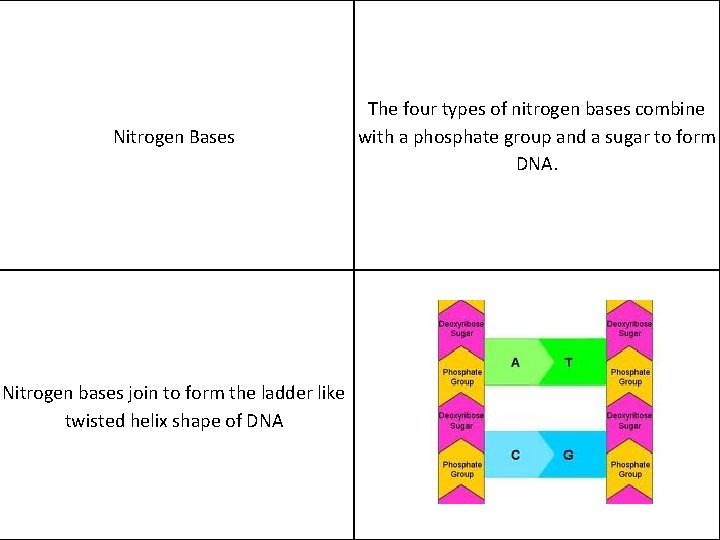
Nitrogen Bases Nitrogen bases join to form the ladder like twisted helix shape of DNA The four types of nitrogen bases combine with a phosphate group and a sugar to form DNA.
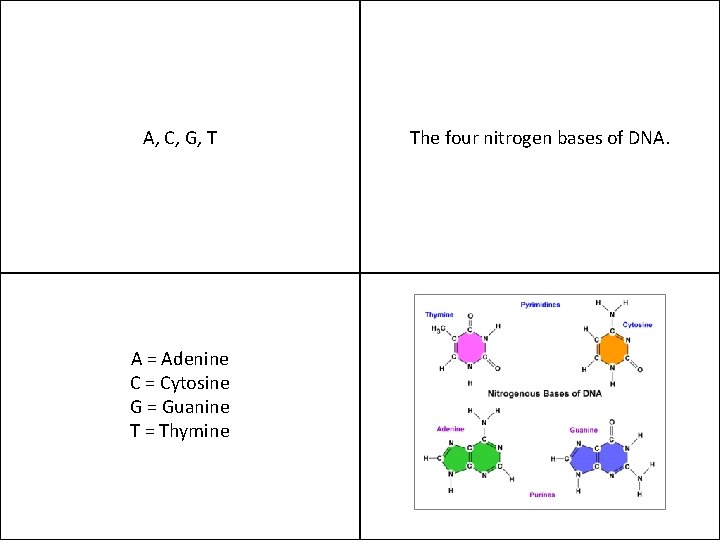
A, C, G, T A = Adenine C = Cytosine G = Guanine T = Thymine The four nitrogen bases of DNA.
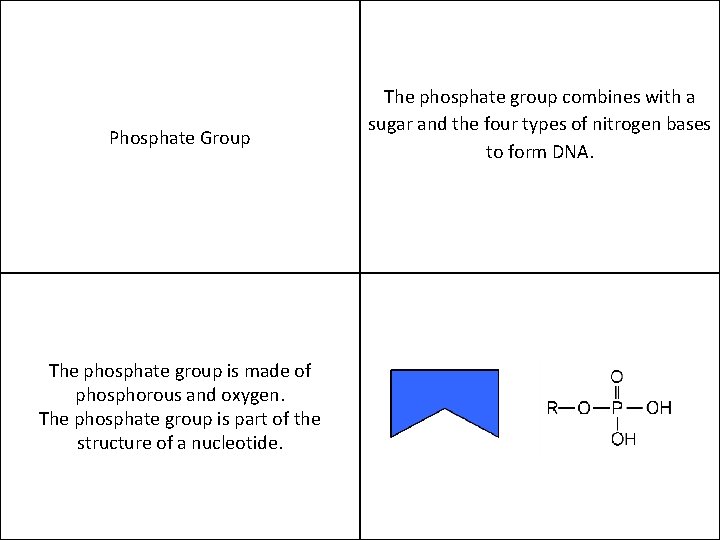
Phosphate Group The phosphate group is made of phosphorous and oxygen. The phosphate group is part of the structure of a nucleotide. The phosphate group combines with a sugar and the four types of nitrogen bases to form DNA.
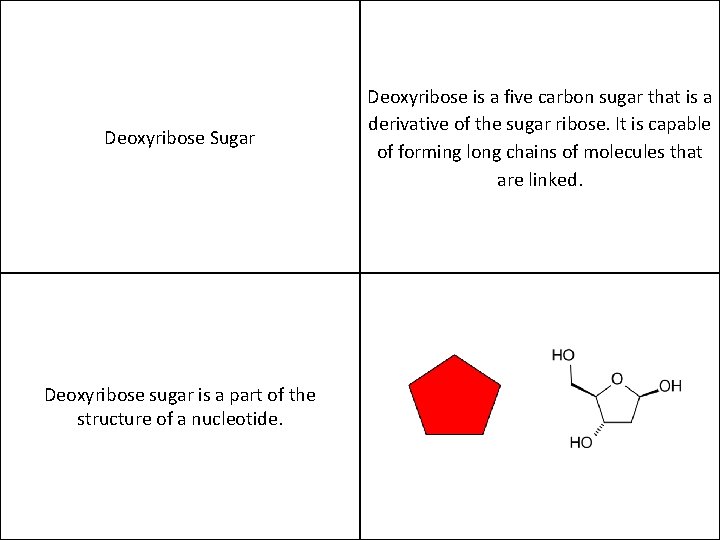
Deoxyribose Sugar Deoxyribose sugar is a part of the structure of a nucleotide. Deoxyribose is a five carbon sugar that is a derivative of the sugar ribose. It is capable of forming long chains of molecules that are linked.
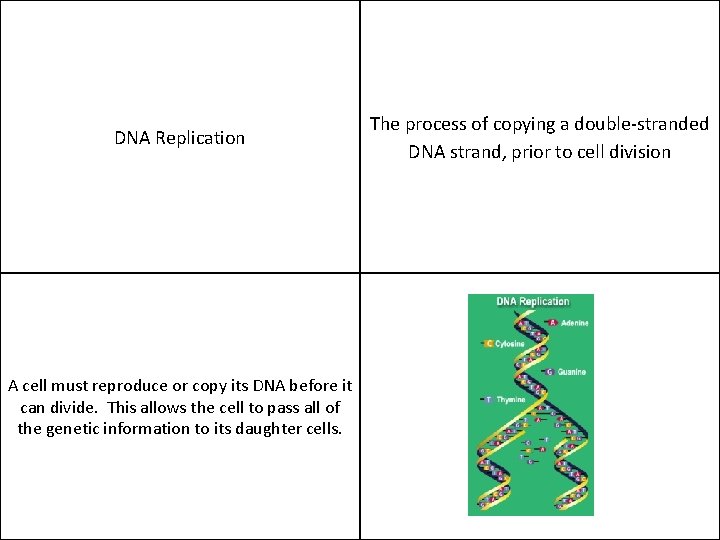
DNA Replication A cell must reproduce or copy its DNA before it can divide. This allows the cell to pass all of the genetic information to its daughter cells. The process of copying a double-stranded DNA strand, prior to cell division
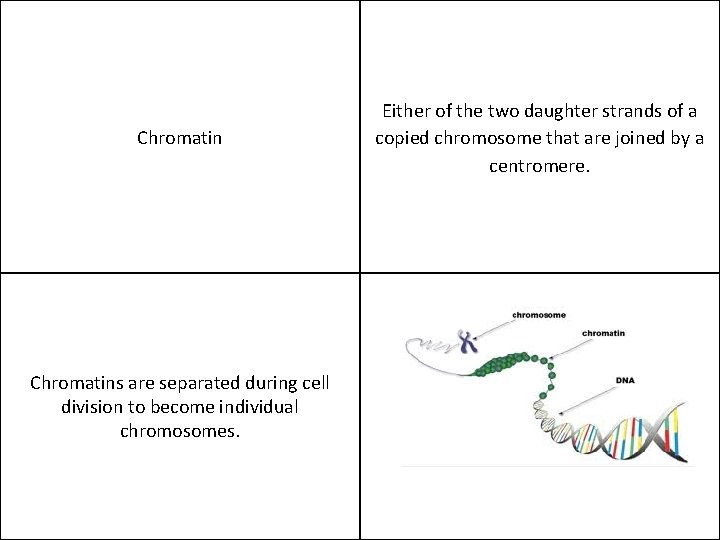
Chromatins are separated during cell division to become individual chromosomes. Either of the two daughter strands of a copied chromosome that are joined by a centromere.
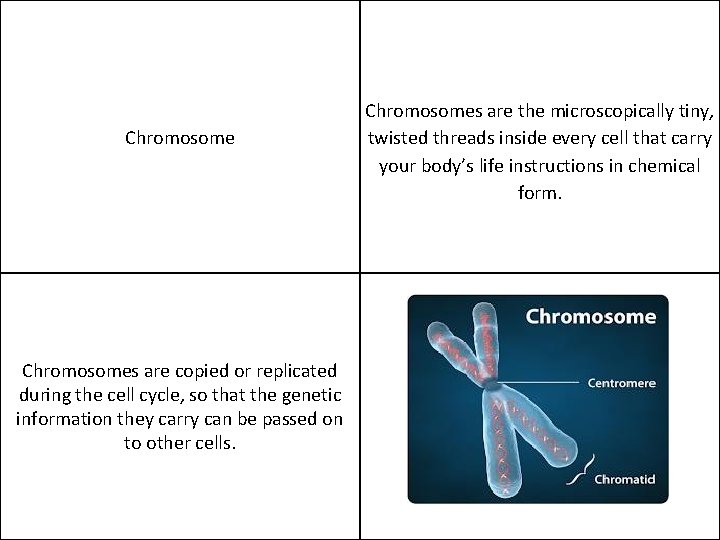
Chromosomes are copied or replicated during the cell cycle, so that the genetic information they carry can be passed on to other cells. Chromosomes are the microscopically tiny, twisted threads inside every cell that carry your body’s life instructions in chemical form.
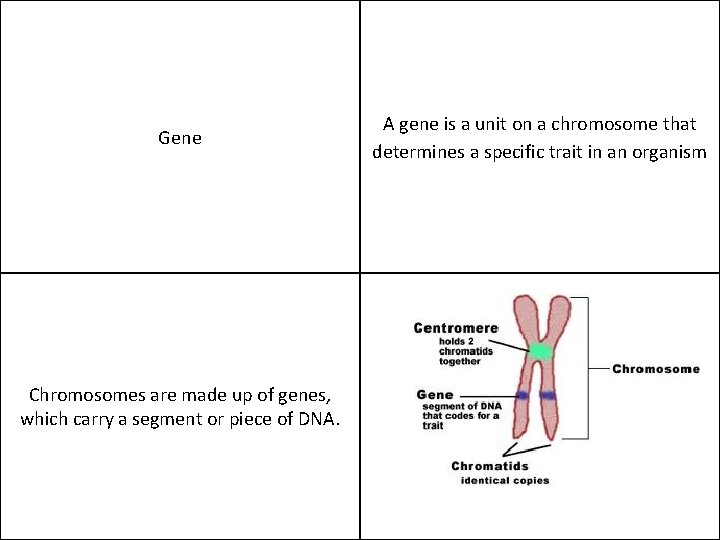
Gene Chromosomes are made up of genes, which carry a segment or piece of DNA. A gene is a unit on a chromosome that determines a specific trait in an organism
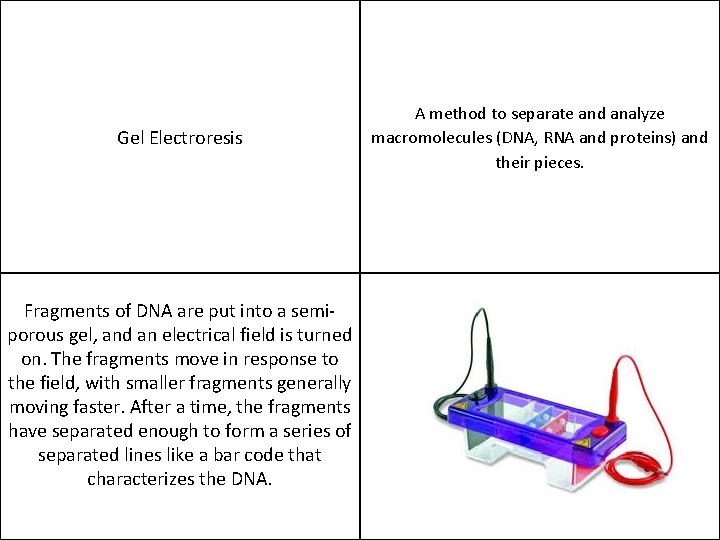
Gel Electroresis Fragments of DNA are put into a semiporous gel, and an electrical field is turned on. The fragments move in response to the field, with smaller fragments generally moving faster. After a time, the fragments have separated enough to form a series of separated lines like a bar code that characterizes the DNA. A method to separate and analyze macromolecules (DNA, RNA and proteins) and their pieces.
- Slides: 11