
DNA Deoxyribo Nucleic Acid DNA holds the code
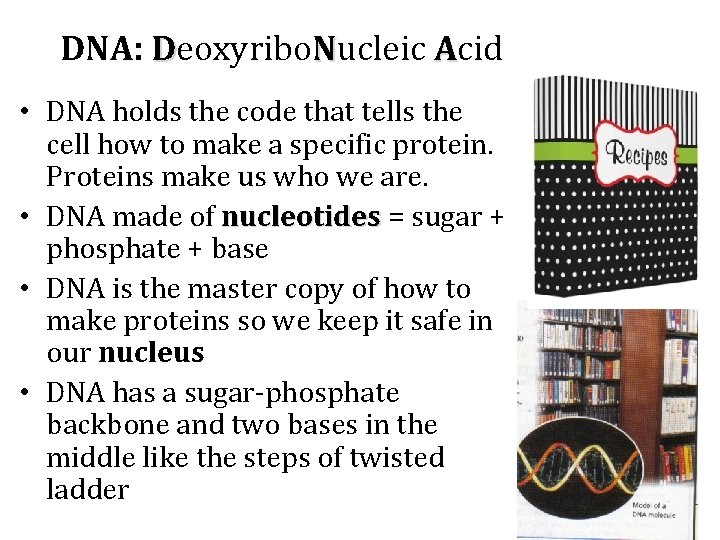
DNA: Deoxyribo. Nucleic Acid • DNA holds the code that tells the cell how to make a specific protein. Proteins make us who we are. • DNA made of nucleotides = sugar + phosphate + base • DNA is the master copy of how to make proteins so we keep it safe in our nucleus • DNA has a sugar-phosphate backbone and two bases in the middle like the steps of twisted ladder
G. C. A. T. That CAT is G!!! G+C A+T
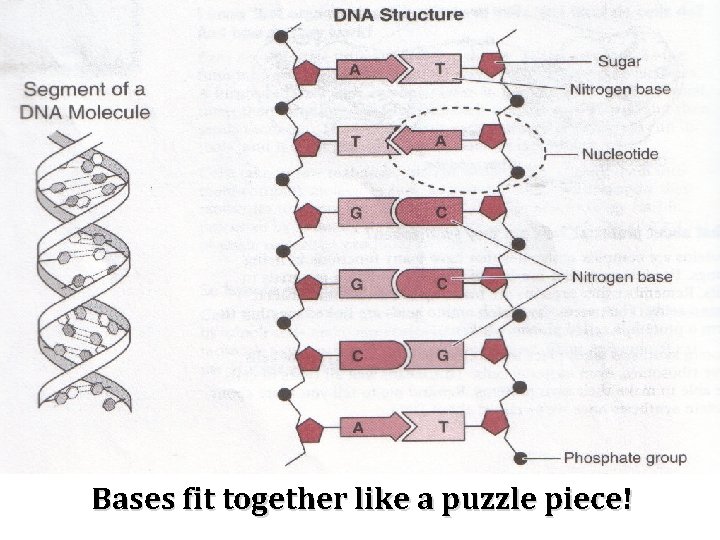
Bases fit together like a puzzle piece!
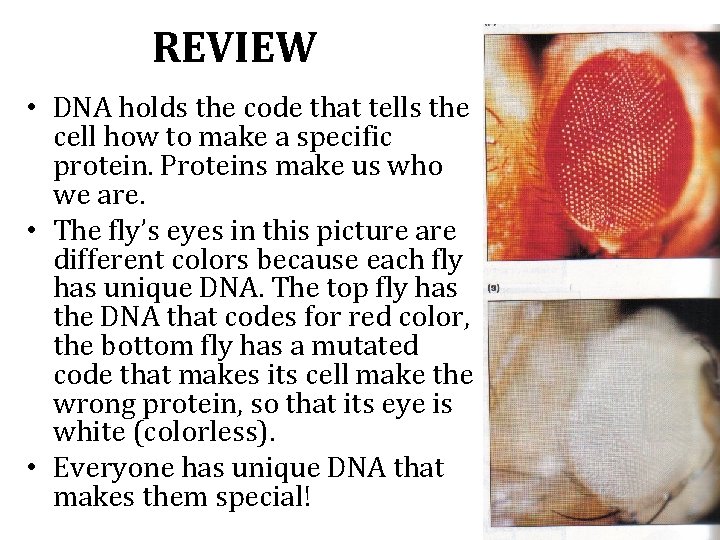
REVIEW • DNA holds the code that tells the cell how to make a specific protein. Proteins make us who we are. • The fly’s eyes in this picture are different colors because each fly has unique DNA. The top fly has the DNA that codes for red color, the bottom fly has a mutated code that makes its cell make the wrong protein, so that its eye is white (colorless). • Everyone has unique DNA that makes them special!
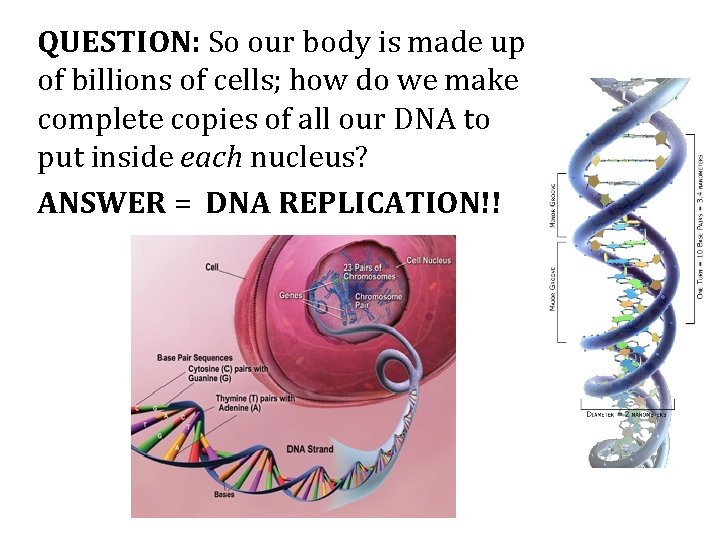
QUESTION: So our body is made up of billions of cells; how do we make complete copies of all our DNA to put inside each nucleus? ANSWER = DNA REPLICATION!!
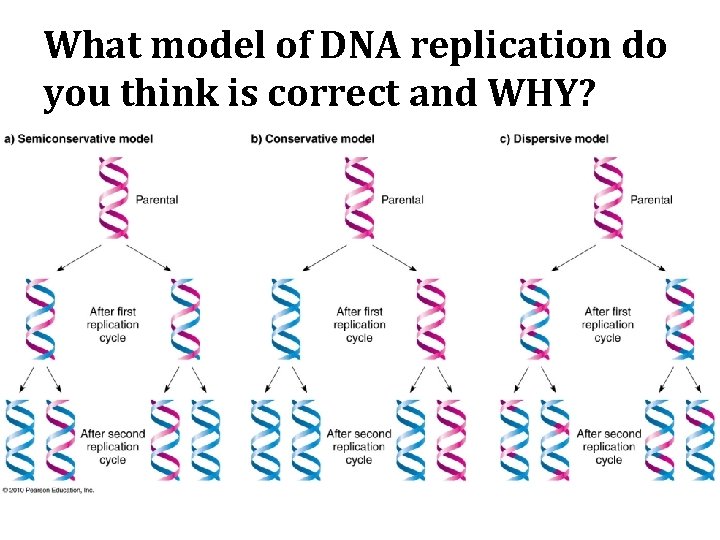
What model of DNA replication do you think is correct and WHY?
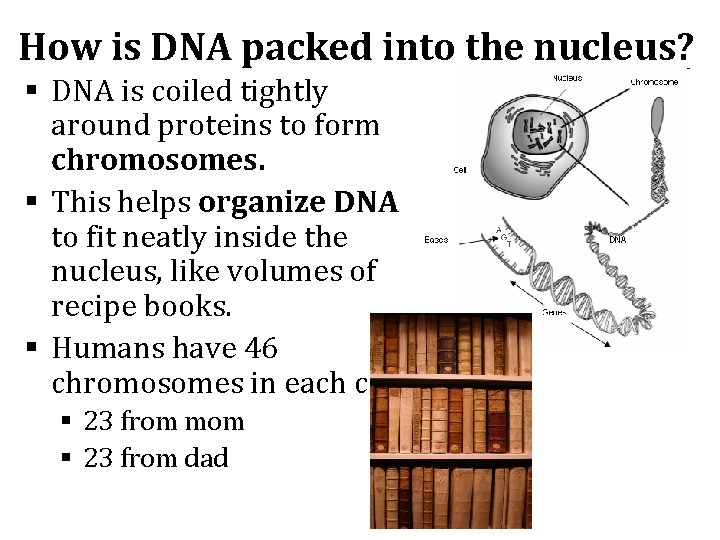
How is DNA packed into the nucleus? § DNA is coiled tightly around proteins to form chromosomes. § This helps organize DNA to fit neatly inside the nucleus, like volumes of recipe books. § Humans have 46 chromosomes in each cell. § 23 from mom § 23 from dad
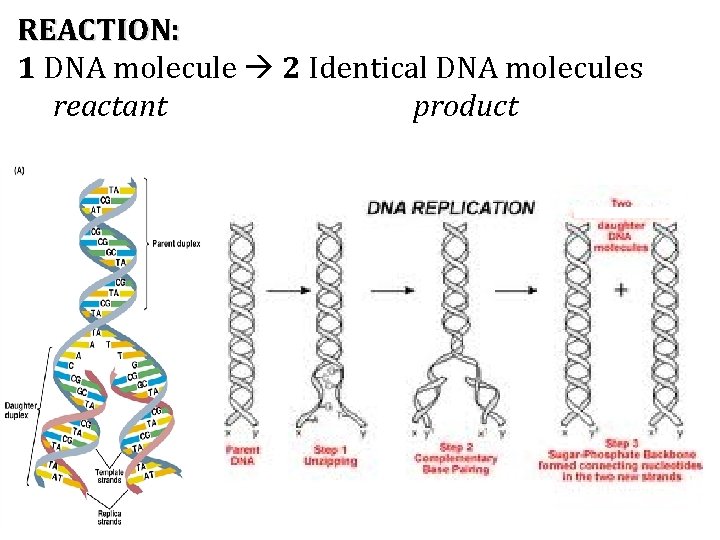
REACTION: 1 DNA molecule 2 Identical DNA molecules reactant product
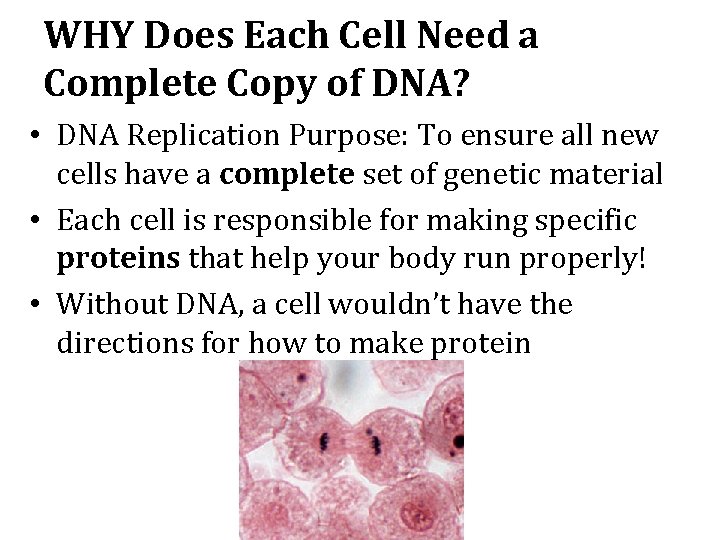
WHY Does Each Cell Need a Complete Copy of DNA? • DNA Replication Purpose: To ensure all new cells have a complete set of genetic material • Each cell is responsible for making specific proteins that help your body run properly! • Without DNA, a cell wouldn’t have the directions for how to make protein
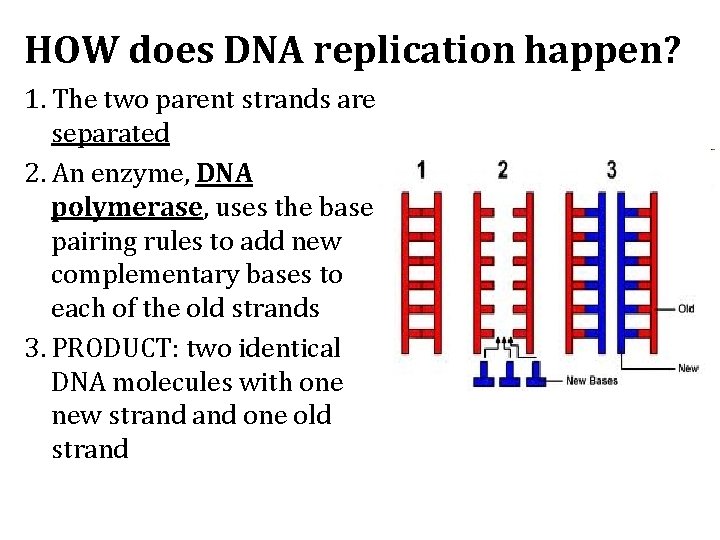
HOW does DNA replication happen? 1. The two parent strands are separated 2. An enzyme, DNA polymerase, uses the base pairing rules to add new complementary bases to each of the old strands 3. PRODUCT: two identical DNA molecules with one new strand one old strand
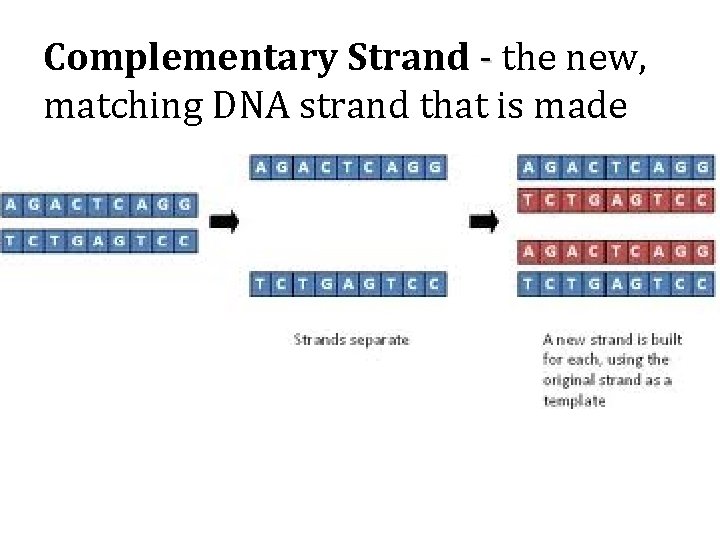
Complementary Strand - the new, matching DNA strand that is made
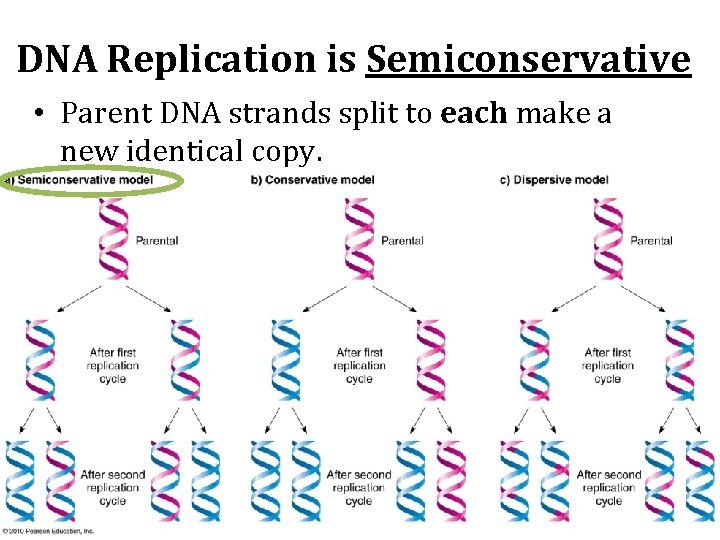
DNA Replication is Semiconservative • Parent DNA strands split to each make a new identical copy.
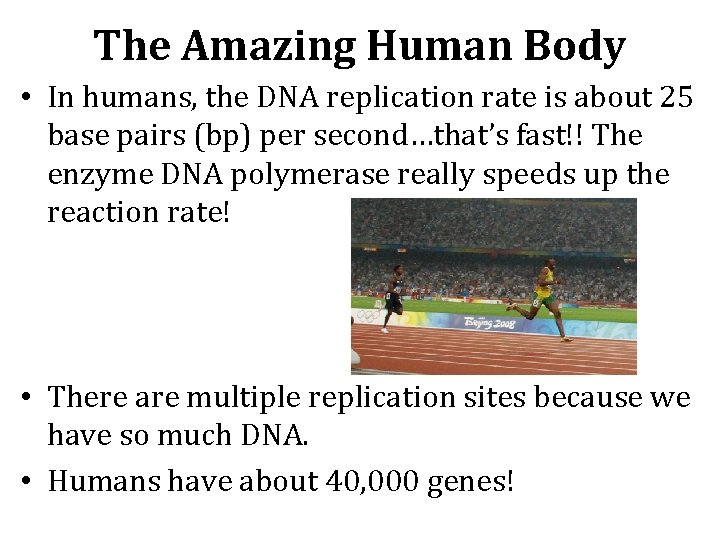
The Amazing Human Body • In humans, the DNA replication rate is about 25 base pairs (bp) per second…that’s fast!! The enzyme DNA polymerase really speeds up the reaction rate! • There are multiple replication sites because we have so much DNA. • Humans have about 40, 000 genes!
SCRAPBOOK PROJECT: DNA Replication Page Questions 1. Actinomyocin-D is a drug that was found to be effective in preventing the growth of rapidly dividing tumor cells by blocking DNA replication. WHY is blocking DNA replication an effective method of halting cell division? Use the bullet points below to guide your answer. § What is the purpose of DNA? § What can you NOT make if you do not have DNA? § What is the purpose AND product of DNA replication? § What would happen to new cells that did NOT perform DNA replication beforehand? § Why does blocking DNA replication effectively halt cell division?
- Slides: 14