
DNA damage mutagenicity and genotoxicity DNA principal molecule
- Slides: 20
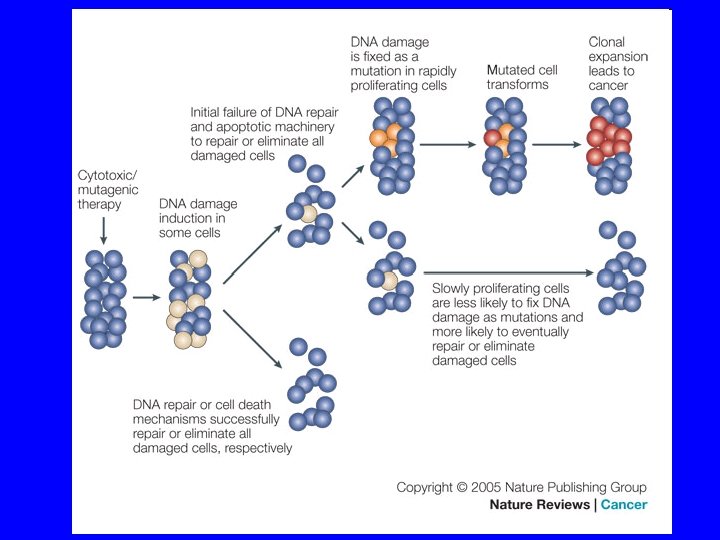
DNA damage mutagenicity and genotoxicity DNA: - principal molecule for life of the cell - structure and function carefully checked - changes rapidly repaired - irreversible changes -> cell death (apoptosis) Mutagenesis - MUTATIONS - changes in the sequences of deoxynucleotides - natural mutations (billions of nucleotides/day) : variability in genoms; reparations - chemical-induced mutagenesis
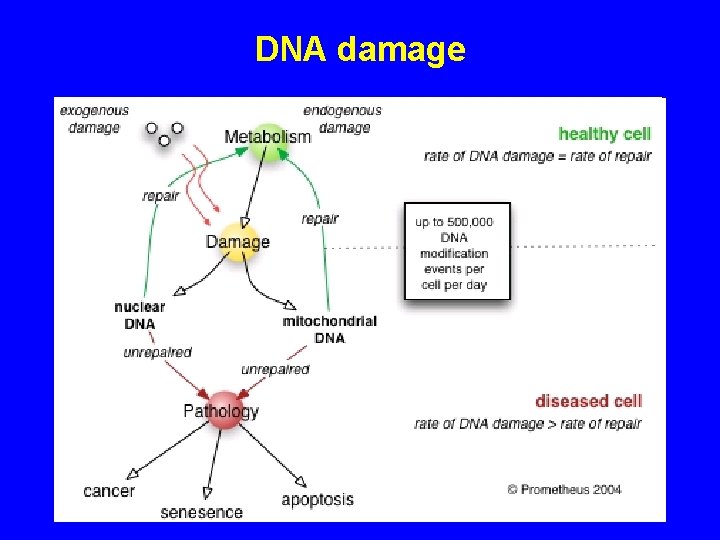
DNA damage
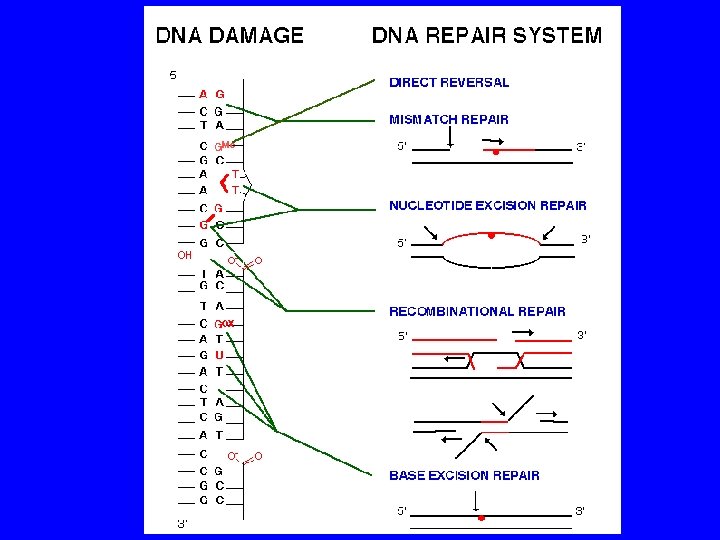
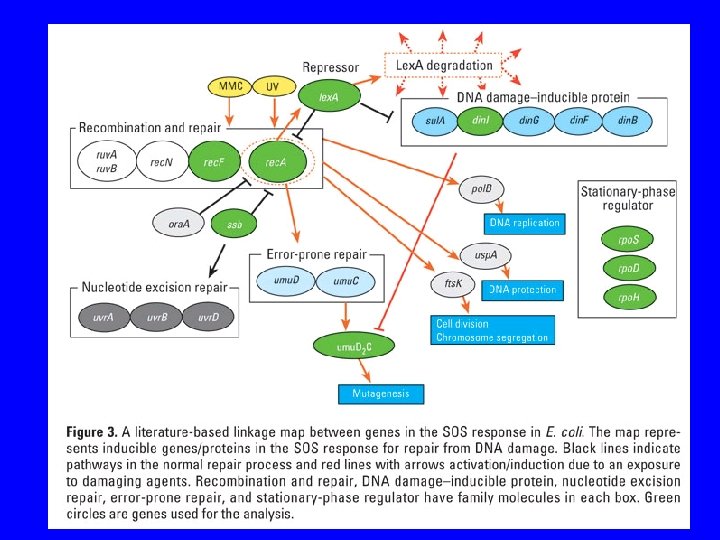
DNA repair Damage of DNA is carefully controlled constitutively expressed proteins Changes in DNA induction of reparation enzymes ("SOS-repair") = biomarker of DNA damage
Induced mutations MUTAGENS - ionizing radiation and UV - chemicals Base analogs - inserted into the DNA strand during replication in place of the substrates. Agents reacting with DNA - structural changes leading to miscopying of the template strand Indirect mutagens - affect cells that synthesize chemicals with direct mutagenic effect
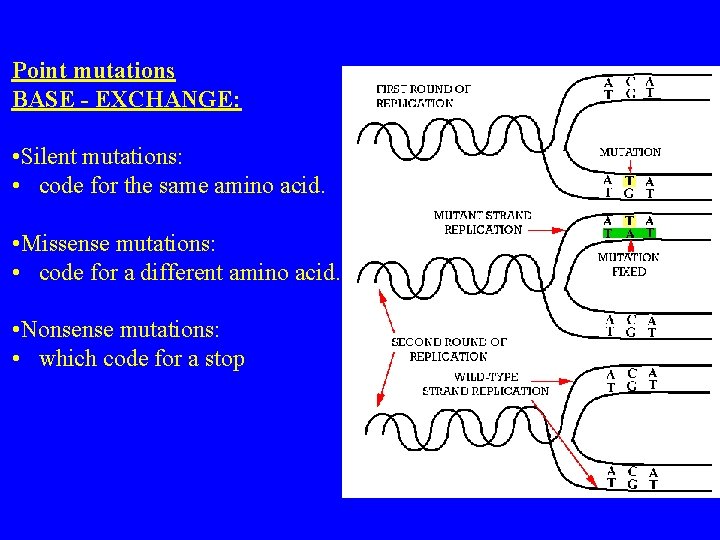
Point mutations BASE - EXCHANGE: • Silent mutations: • code for the same amino acid. • Missense mutations: • code for a different amino acid. • Nonsense mutations: • which code for a stop
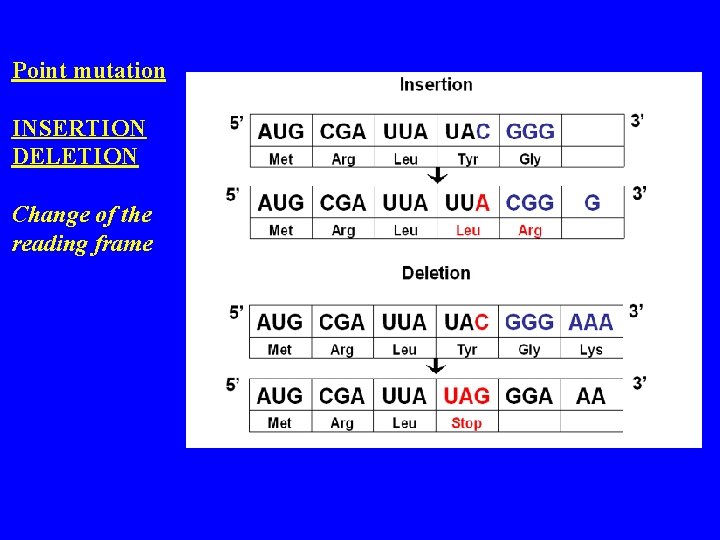
Point mutation INSERTION DELETION Change of the reading frame
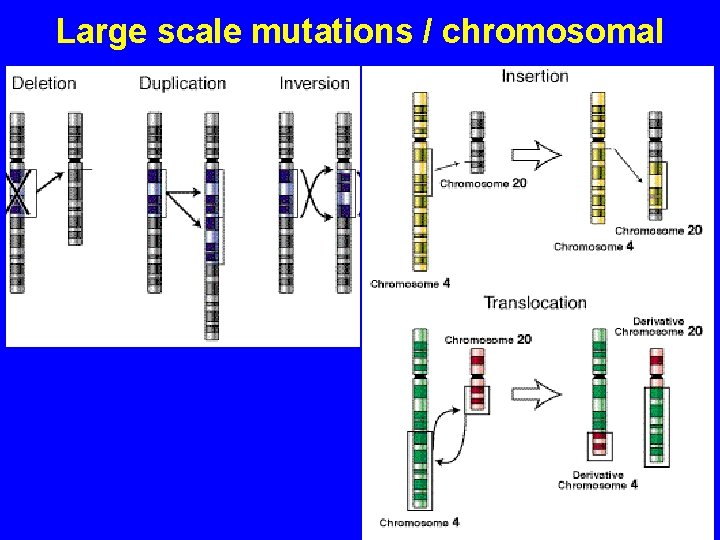
Large scale mutations / chromosomal
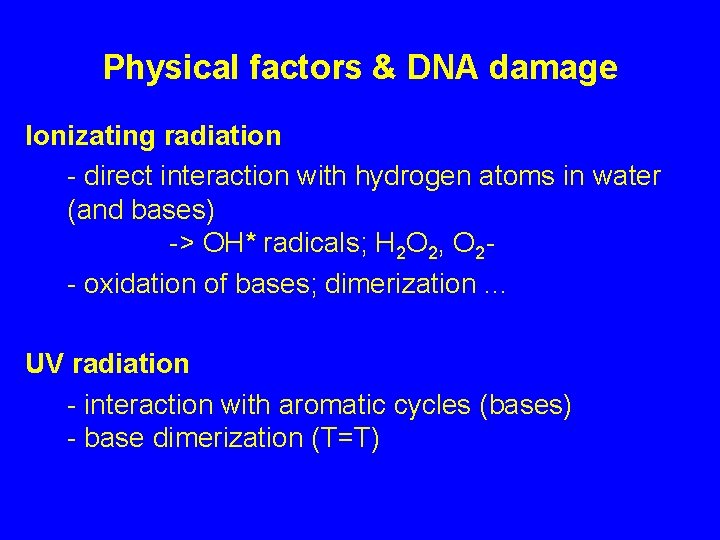
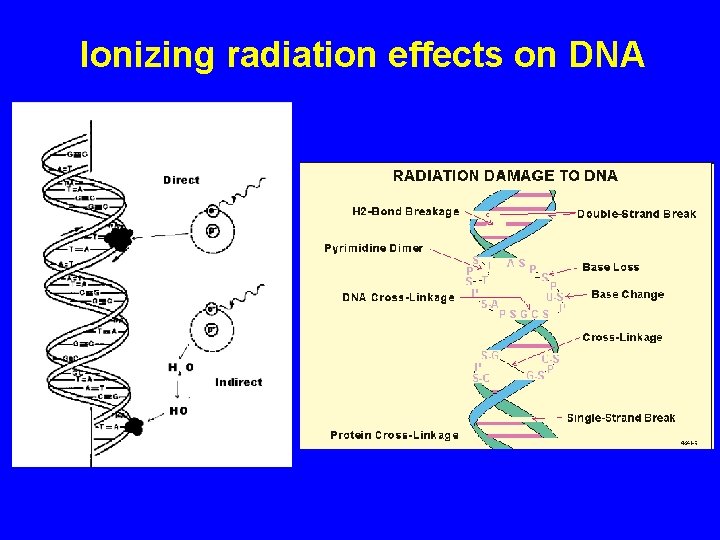
Physical factors & DNA damage Ionizating radiation - direct interaction with hydrogen atoms in water (and bases) -> OH* radicals; H 2 O 2, O 2 - oxidation of bases; dimerization. . . UV radiation - interaction with aromatic cycles (bases) - base dimerization (T=T)
Ionizing radiation effects on DNA
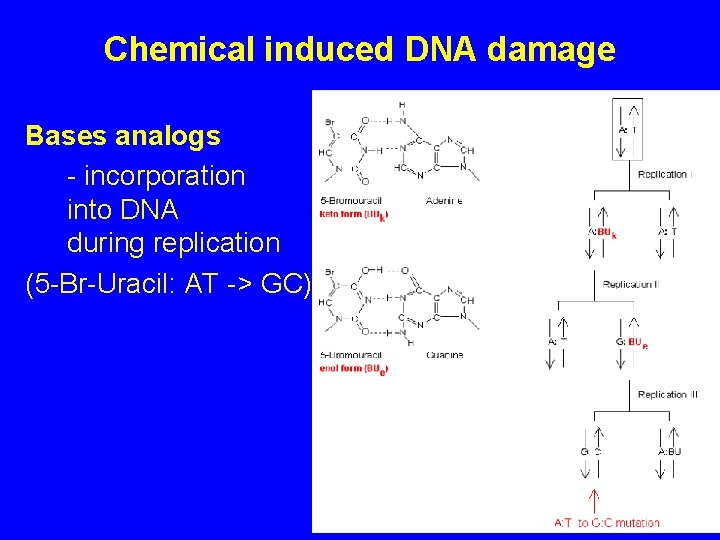
Chemical induced DNA damage Bases analogs - incorporation into DNA during replication (5 -Br-Uracil: AT -> GC)
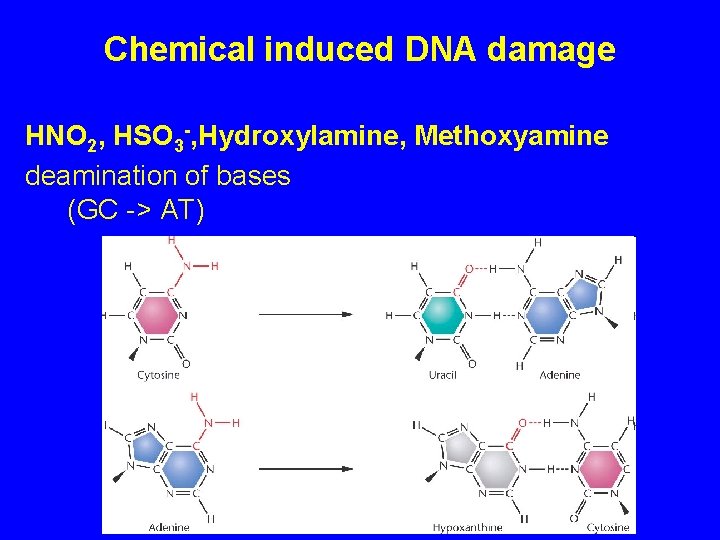
Chemical induced DNA damage HNO 2, HSO 3 -, Hydroxylamine, Methoxyamine deamination of bases (GC -> AT)
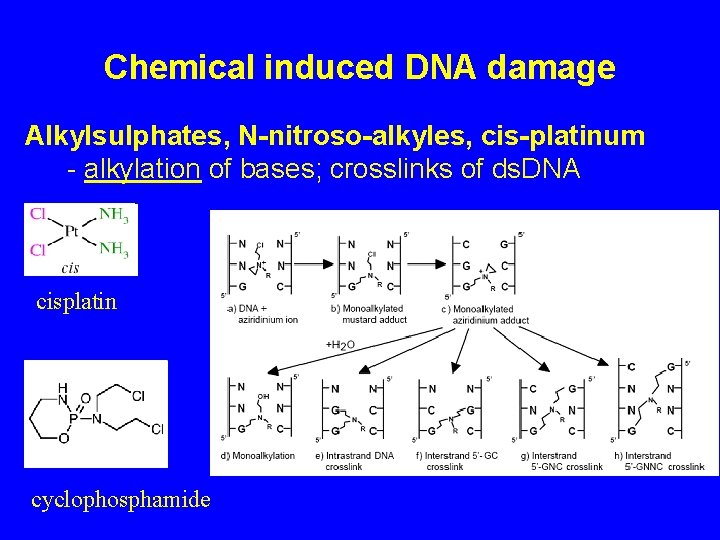
Chemical induced DNA damage Alkylsulphates, N-nitroso-alkyles, cis-platinum - alkylation of bases; crosslinks of ds. DNA cisplatin cyclophosphamide
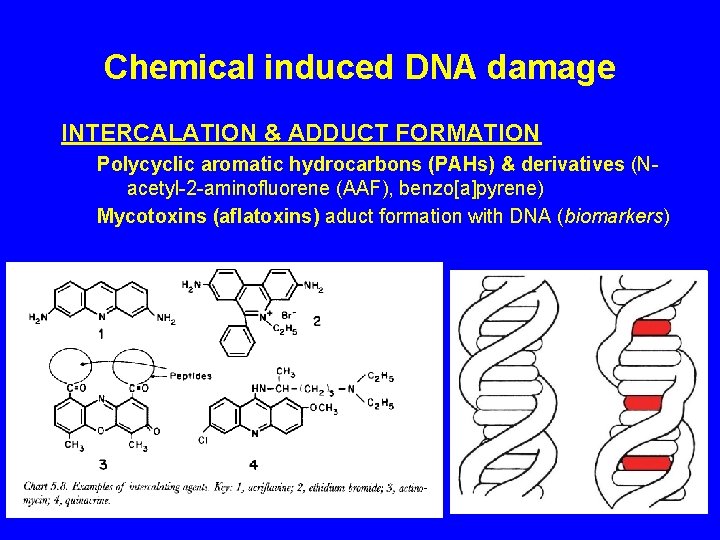
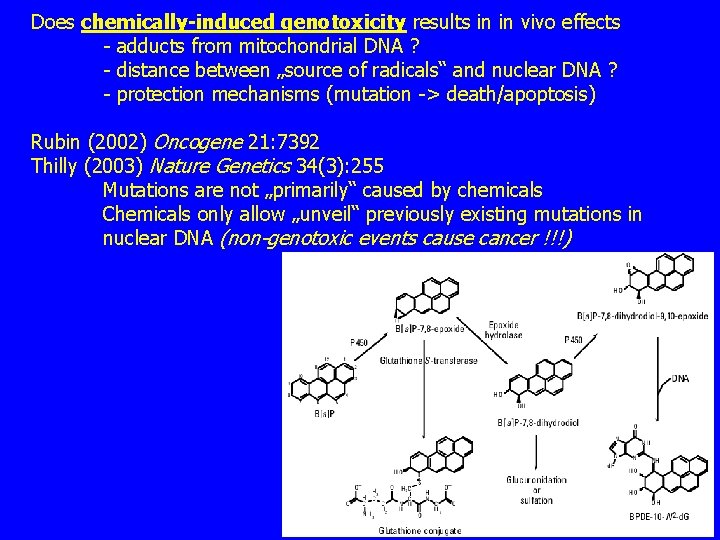
Chemical induced DNA damage INTERCALATION & ADDUCT FORMATION Polycyclic aromatic hydrocarbons (PAHs) & derivatives (Nacetyl-2 -aminofluorene (AAF), benzo[a]pyrene) Mycotoxins (aflatoxins) aduct formation with DNA (biomarkers)
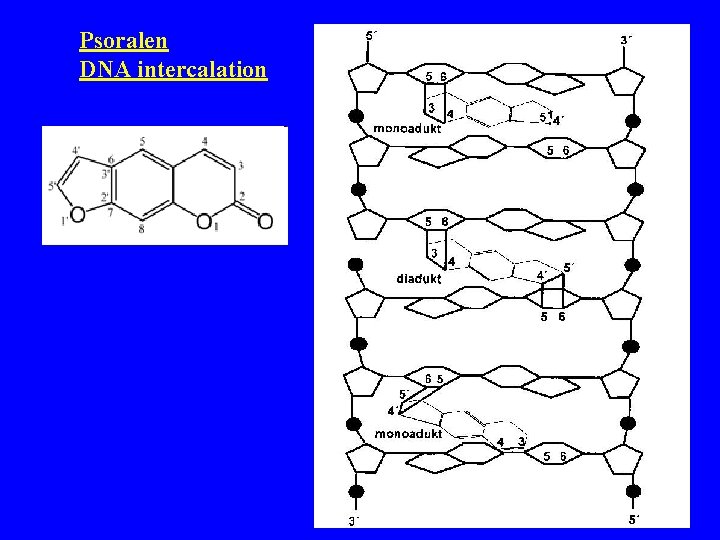
Psoralen DNA intercalation
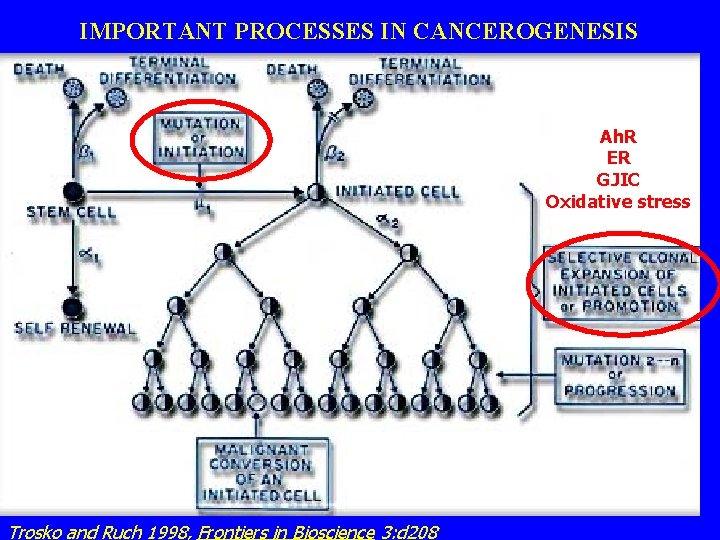
IMPORTANT PROCESSES IN CANCEROGENESIS Ah. R ER GJIC Oxidative stress Trosko and Ruch 1998, Frontiers in Bioscience 3: d 208
Does chemically-induced genotoxicity results in in vivo effects - adducts from mitochondrial DNA ? - distance between „source of radicals“ and nuclear DNA ? - protection mechanisms (mutation -> death/apoptosis) Rubin (2002) Oncogene 21: 7392 Thilly (2003) Nature Genetics 34(3): 255 Mutations are not „primarily“ caused by chemicals Chemicals only allow „unveil“ previously existing mutations in nuclear DNA (non-genotoxic events cause cancer !!!)