
DNA Damage and Biodosimetry Radiation through free radical
DNA Damage and Biodosimetry • Radiation, through free radical formation, causes damage to DNA • Cells have very efficient DNA repair mechanisms (argues against LNT hypothesis) • Damage to DNA/chromosomes from radiation can be measured to determine amount of radiation exposure. 1
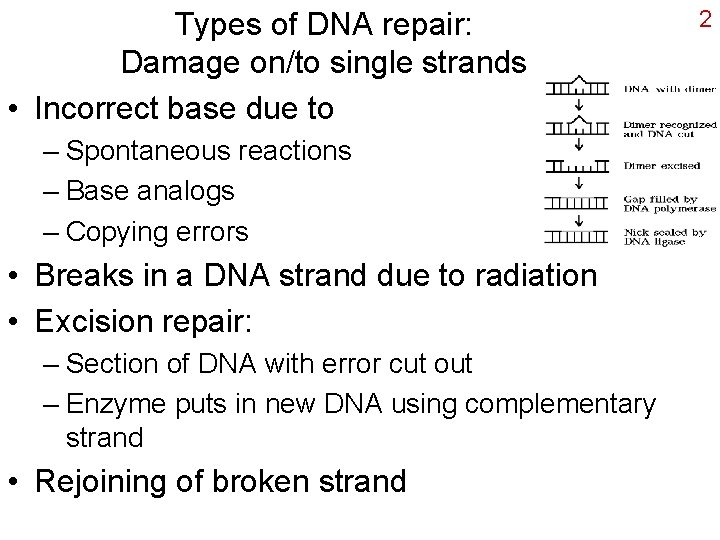
Types of DNA repair: Damage on/to single strands • Incorrect base due to – Spontaneous reactions – Base analogs – Copying errors • Breaks in a DNA strand due to radiation • Excision repair: – Section of DNA with error cut out – Enzyme puts in new DNA using complementary strand • Rejoining of broken strand 2
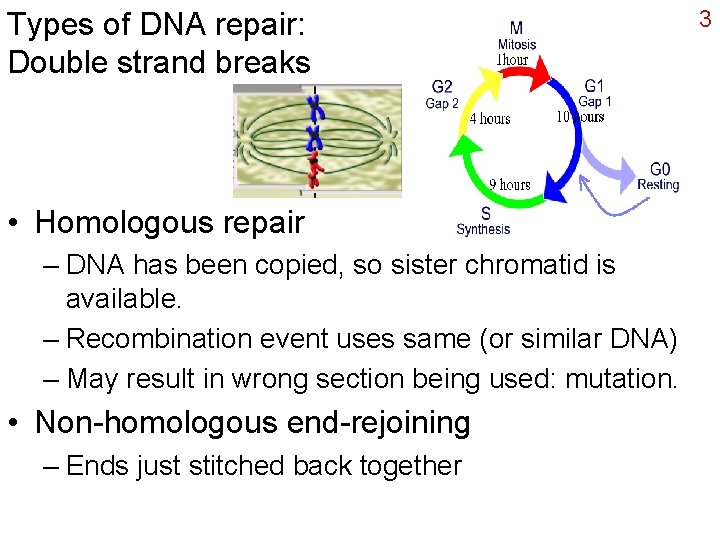
Types of DNA repair: Double strand breaks • Homologous repair – DNA has been copied, so sister chromatid is available. – Recombination event uses same (or similar DNA) – May result in wrong section being used: mutation. • Non-homologous end-rejoining – Ends just stitched back together 3
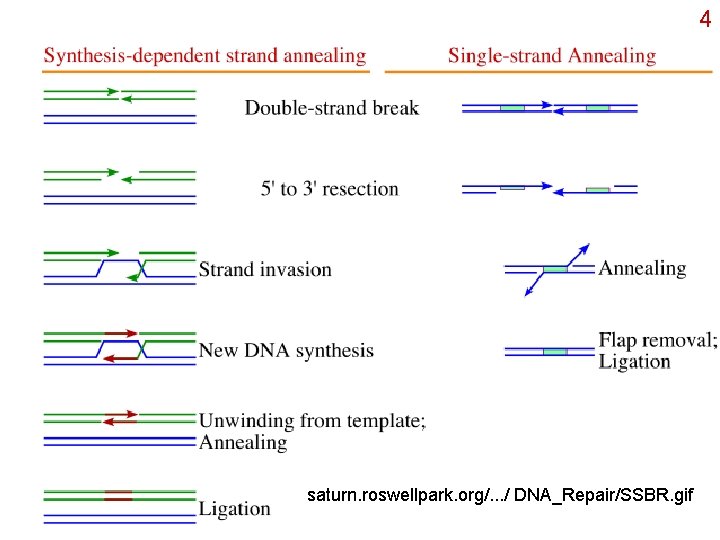
4 saturn. roswellpark. org/. . . / DNA_Repair/SSBR. gif
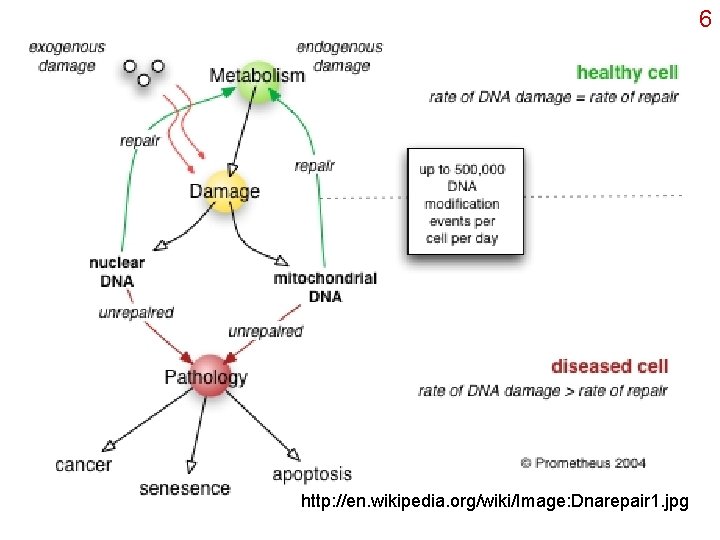
Failure to repair • Damaged DNA has consequences – Senesence: cell stops dividing when it should continue – Apoptosis: damaged DNA stimulates programmed cell death – Carcinogenesis: damage DNA interferes with cell regulation, cells divide out of control. 5
6 http: //en. wikipedia. org/wiki/Image: Dnarepair 1. jpg
Deinococcus radiodurans 7 • Gram positive bacterium – Apparently fairly ancient – High resistance to radiation damage – Why? Earth never that radioactive. • Highly efficient DNA repair – Adapted to resist dessiccation, oxidation damage to DNA – Multiple copies of genes for DNA repair enzymes
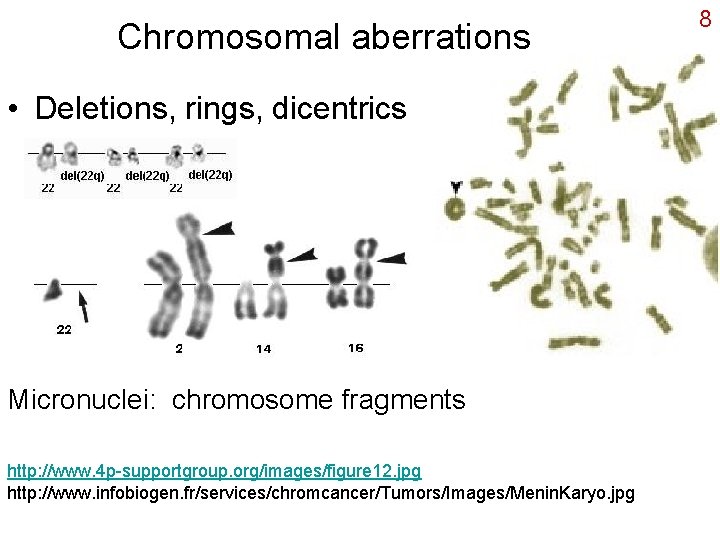
Chromosomal aberrations • Deletions, rings, dicentrics Micronuclei: chromosome fragments http: //www. 4 p-supportgroup. org/images/figure 12. jpg http: //www. infobiogen. fr/services/chromcancer/Tumors/Images/Menin. Karyo. jpg 8

Translocations • Chromosomes swab pieces – DNA breaks, attaches elsewhere http: //www. ucl. ac. uk/~ucbhjow/bmsi/lec 7_images/rectrans. gif 9
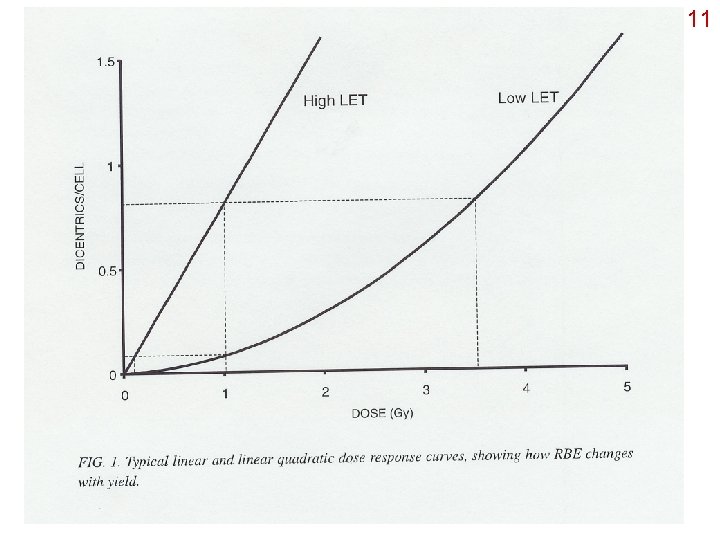
Biodosimetry: use of chromosomal change to estimate radiation dose 10 • Chromosomal aberrations – Effective range: 35 -500 rem exposure – Time from dosage must be considered due to repair • 1000 hits occur and repaired before one seen • Repair is continual, so #s decrease over time – Dicentrics most commonly used • Most dicentric chromosomes are radiation induced – Micronuclei • From as low as 1 rem exposure; recent exposures only.
11
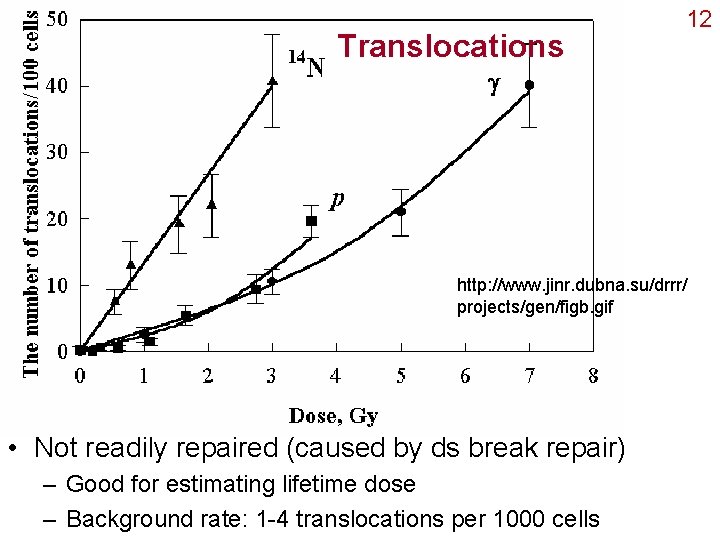
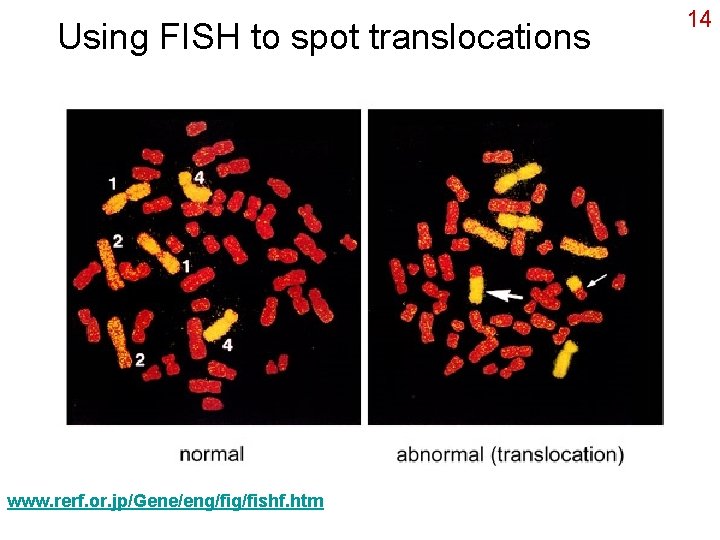
Translocations 12 http: //www. jinr. dubna. su/drrr/ projects/gen/figb. gif • Not readily repaired (caused by ds break repair) – Good for estimating lifetime dose – Background rate: 1 -4 translocations per 1000 cells
Radiation Protection Dosimetry 88: 77 -86 (2000) © 2000 Oxford University Press Our Views on Issues in Radiation Biodosimetry Based on Chromosome Translocations Measured by FISH J. N. Lucas and W. Deng A biomarker for retrospective biodosimetry for radiation exposure and human health risk assessment would be most useful if it employed an endpoint that is highly quantitative, is stable over time, and is relevant to human health risk. The frequency of chromosome translocations in individuals exposed to low to medium doses of whole-body radiation serves these goals. Recent advances in chromosome painting using fluorescence in situ hybridisation (FISH) facilitate fast and reliable measurement of chromosome translocations, a kind of DNA damage linked to both prior clastogenic exposure and to human health risk. 13
Using FISH to spot translocations www. rerf. or. jp/Gene/eng/fishf. htm 14
Current trends in biodosimetry 15 • Molecular biomarkers for ionizing radiation exposure (gene expression changes, blood proteins) can be measured in real time using such diagnostic detection technologies as miniaturized nucleic acid sequences and antigen-based biosensors – Certain genes are turned off or on by acute radiation exposure; RT-PCR to detect, quantify. • Examination of biological tissue (e. g. teeth) using EPR (electron paramagnetic resonance) – Ionization affects electron spin changes
Follow the money 16 • After a large-scale radiological event, there would be a major need to assess, within a few days, the radiation doses received by tens of thousands of individuals. By contrast, current “high throughput” biodosimetry can, at best, assess a few hundred individuals / day. The Center for High-Throughput Minimally-Invasive Radiation Biodosimetry is a research consortium devoted to developing highthroughput radiation dose assessment techniques.
- Slides: 16