
DNA Computing and Robotics Using DNAymes Engineering Science
DNA Computing and Robotics Using DNAymes: Engineering (Science? ), Fun, and Applications Milan N. Stojanovic NSF Center for Molecular Cybernetics Department of Medicine Columbia University
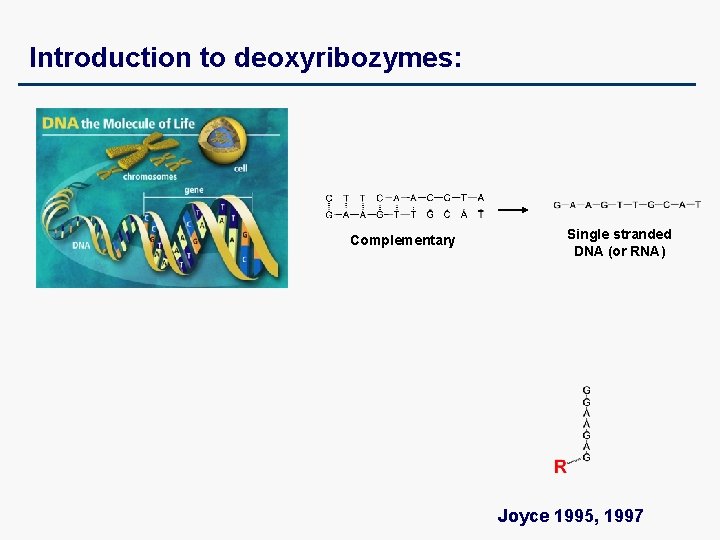
Introduction to deoxyribozymes: Complementary Single stranded DNA (or RNA) Joyce 1995, 1997
Before we give examples of gates, a reminder: 1 is an increase in fluorescence, 0 no such increase!
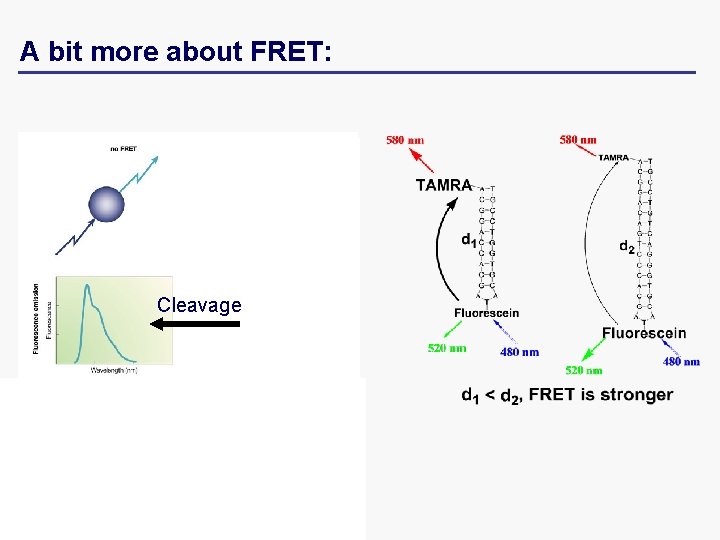
A bit more about FRET: Cleavage
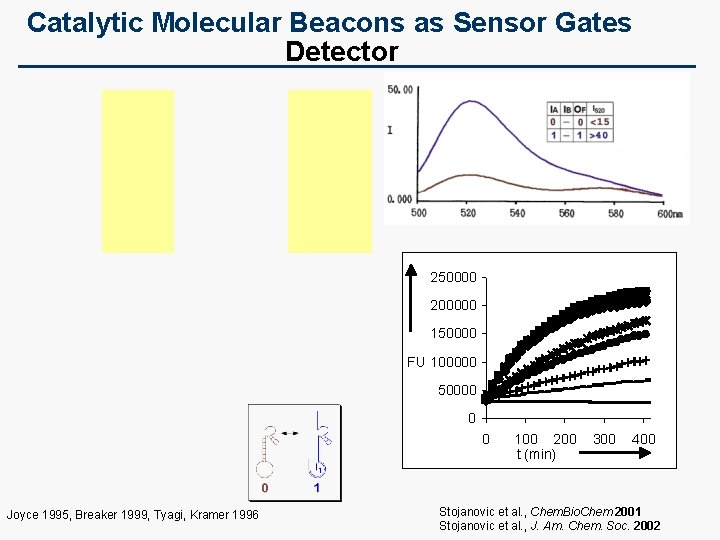
Catalytic Molecular Beacons as Sensor Gates Detector 250000 200000 150000 FU 100000 50000 0 0 Joyce 1995, Breaker 1999, Tyagi, Kramer 1996 100 200 t (min) 300 400 Stojanovic et al. , Chem. Bio. Chem 2001 Stojanovic et al. , J. Am. Chem. Soc. 2002
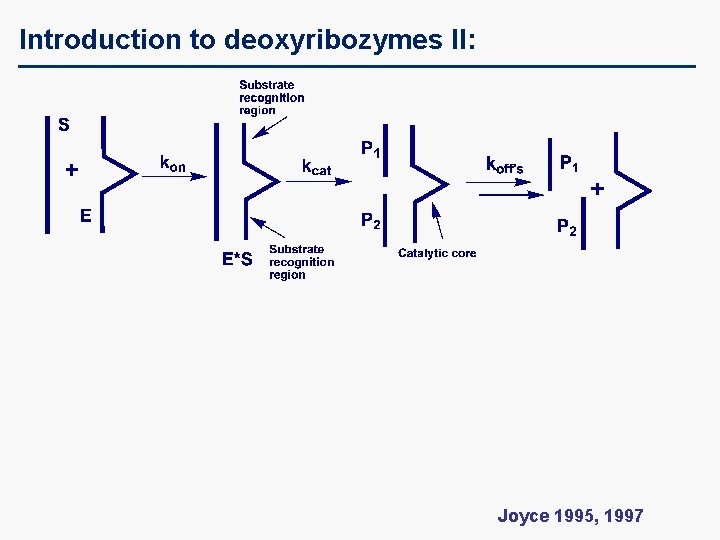
Introduction to deoxyribozymes II: Joyce 1995, 1997
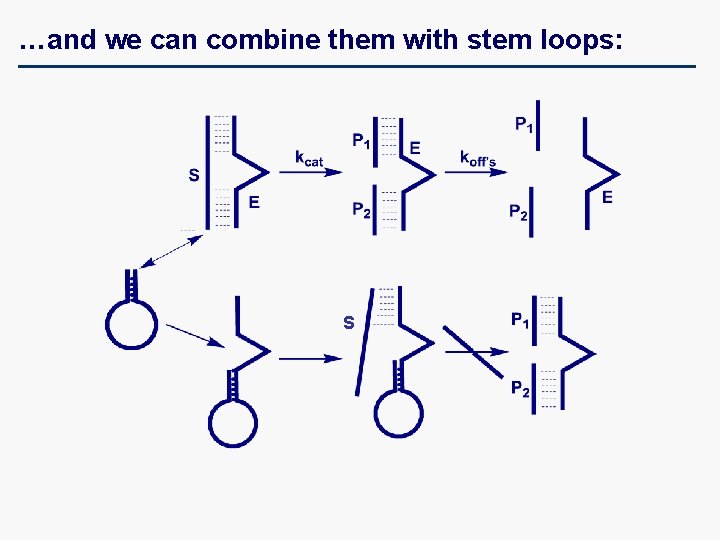
…and we can combine them with stem loops: S
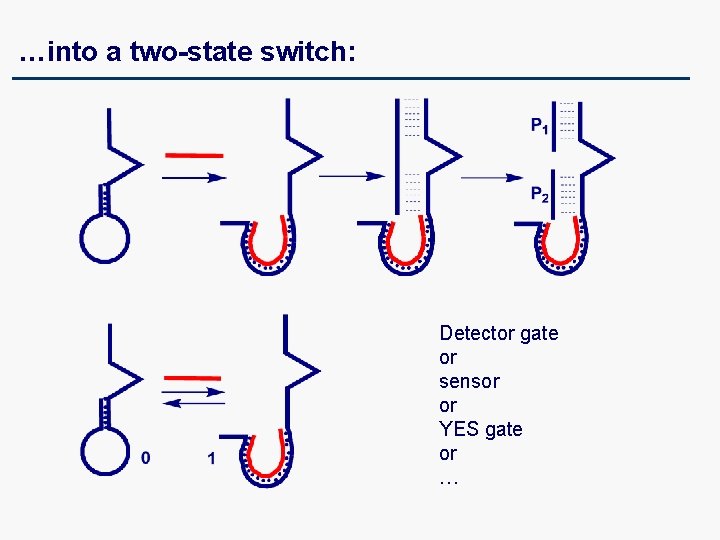
…into a two-state switch: Detector gate or sensor or YES gate or …
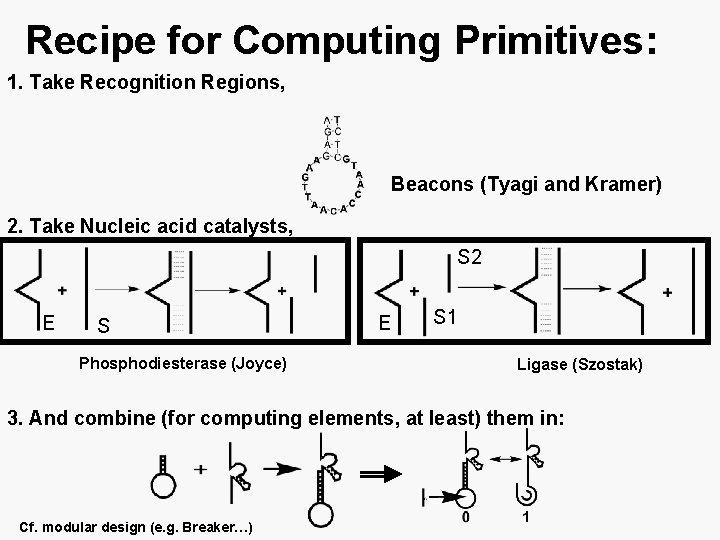
Recipe for Computing Primitives: 1. Take Recognition Regions, Beacons (Tyagi and Kramer) 2. Take Nucleic acid catalysts, S 2 E S Phosphodiesterase (Joyce) E S 1 Ligase (Szostak) 3. And combine (for computing elements, at least) them in: Cf. modular design (e. g. Breaker…)
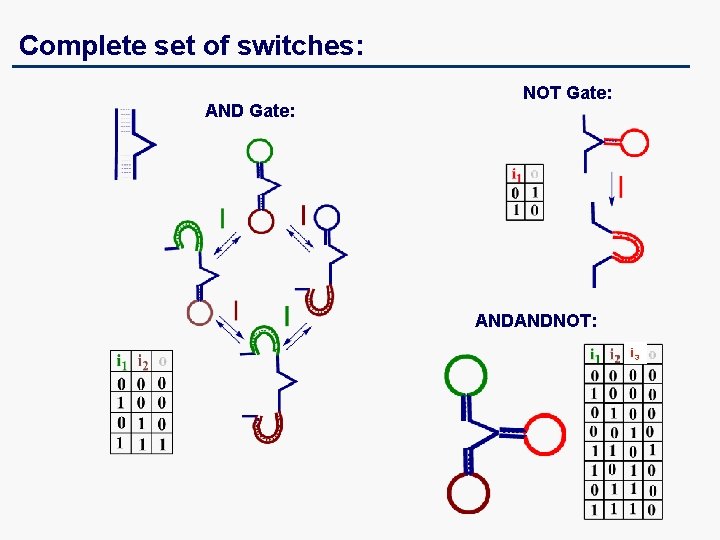
Complete set of switches: AND Gate: NOT Gate: ANDANDNOT: i 3
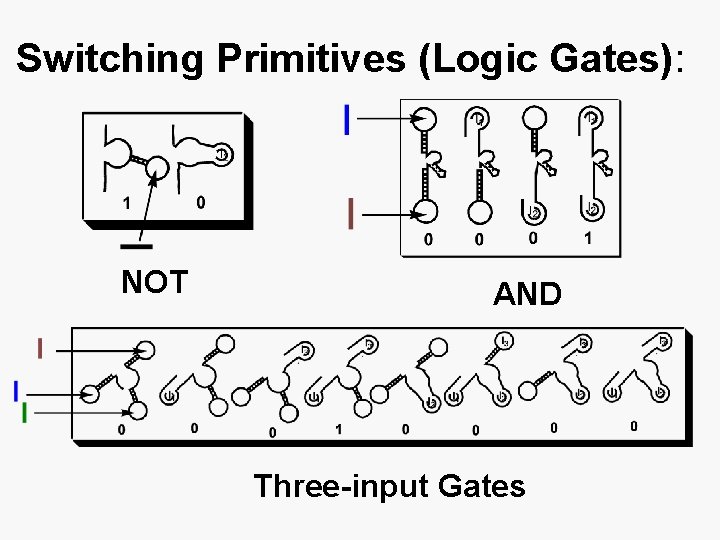
Switching Primitives (Logic Gates): NOT AND Three-input Gates
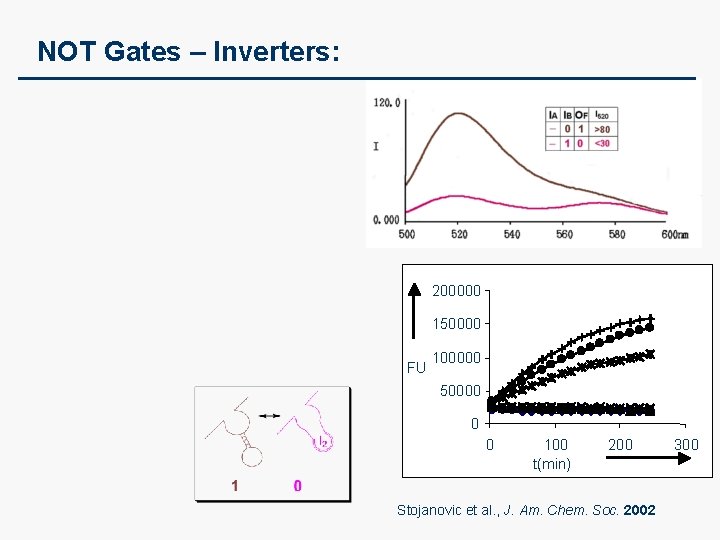
NOT Gates – Inverters: 200000 150000 FU 100000 50000 0 0 100 t(min) 200 Stojanovic et al. , J. Am. Chem. Soc. 2002 300
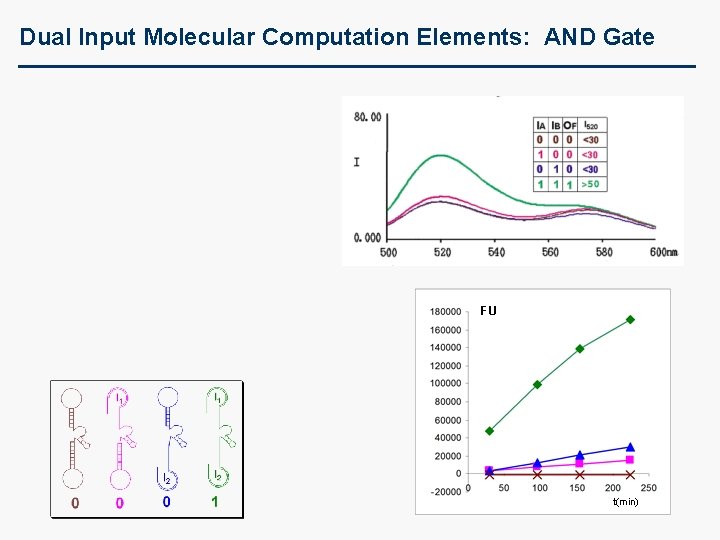
Dual Input Molecular Computation Elements: AND Gate FU t(min)
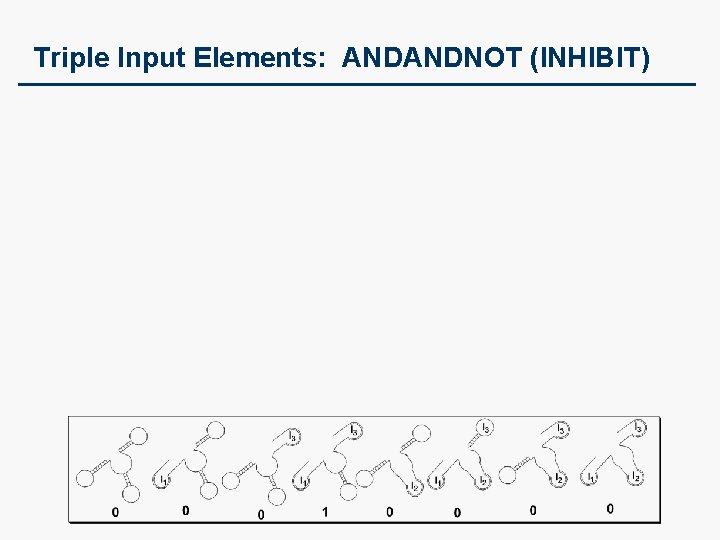
Triple Input Elements: ANDANDNOT (INHIBIT)
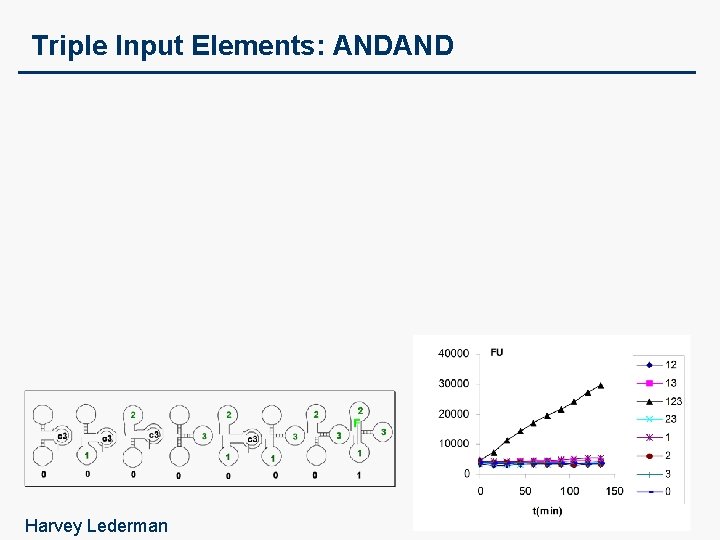
Triple Input Elements: ANDAND Harvey Lederman
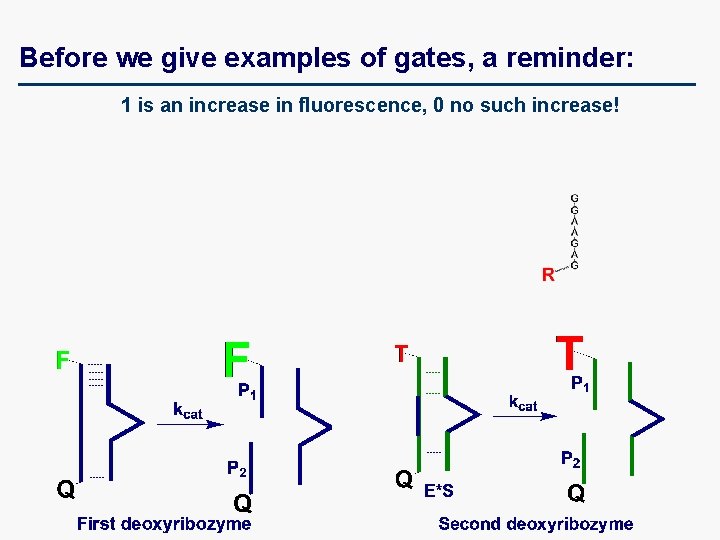
Before we give examples of gates, a reminder: 1 is an increase in fluorescence, 0 no such increase!
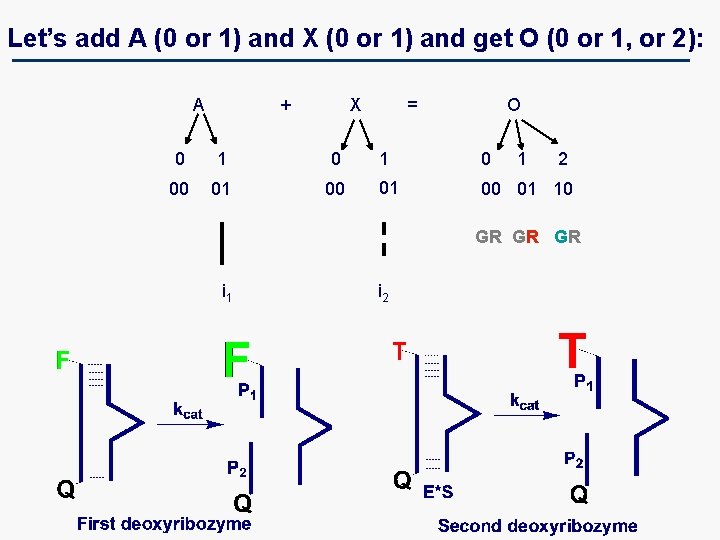
Let’s add A (0 or 1) and X (0 or 1) and get O (0 or 1, or 2): A + X = O 0 1 0 1 2 00 01 10 GR GR GR i 1 i 2
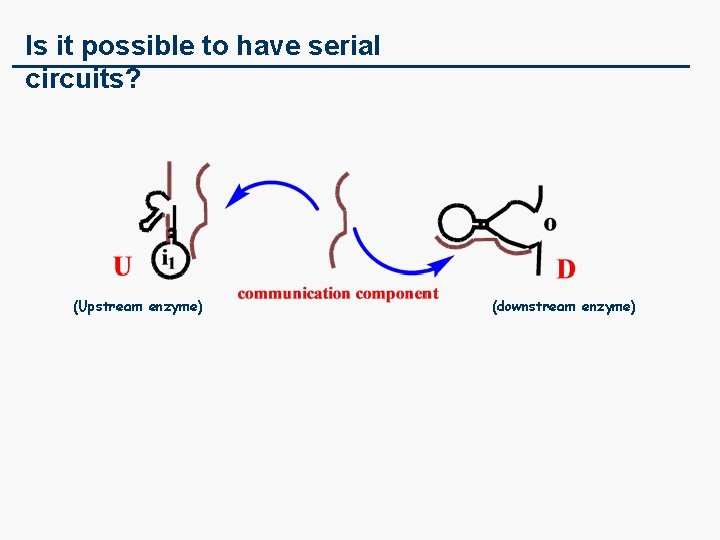
Is it possible to have serial circuits? (Upstream enzyme) (downstream enzyme)
Intergate Communication : Ligase-Cleavase Stanka Semova, Dmitry Kolpashchikov
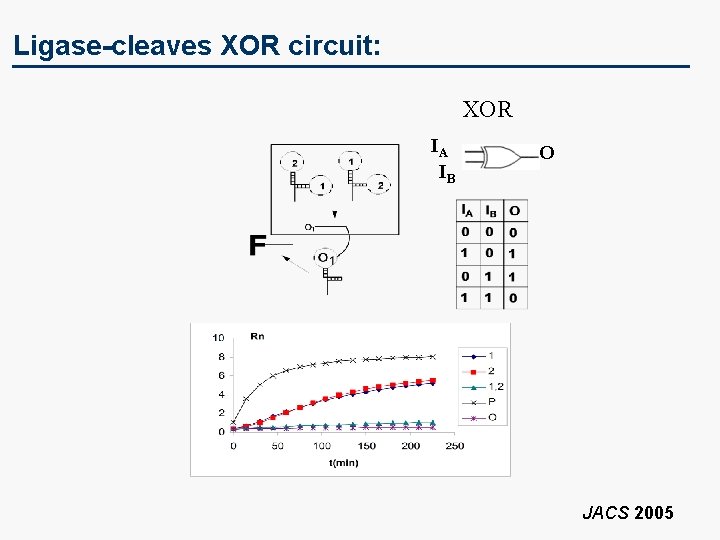
Ligase-cleaves XOR circuit: XOR IA IB O JACS 2005
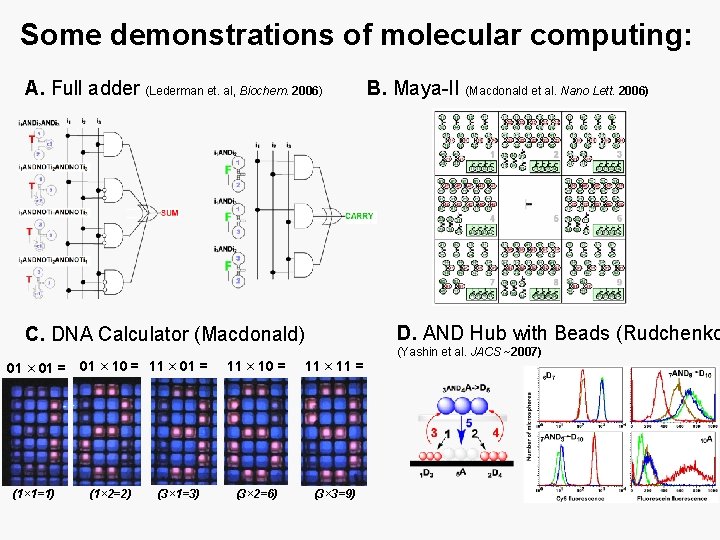
Some demonstrations of molecular computing: A. Full adder (Lederman et. al, Biochem. 2006) D. AND Hub with Beads (Rudchenko C. DNA Calculator (Macdonald) 01 × 01 = (1× 1=1) 01 × 10 = 11 × 01 = (1× 2=2) (3× 1=3) B. Maya-II (Macdonald et al. Nano Lett. 2006) 11 × 10 = 11 × 11 = (3× 2=6) (3× 3=9) (Yashin et al. JACS ~2007)
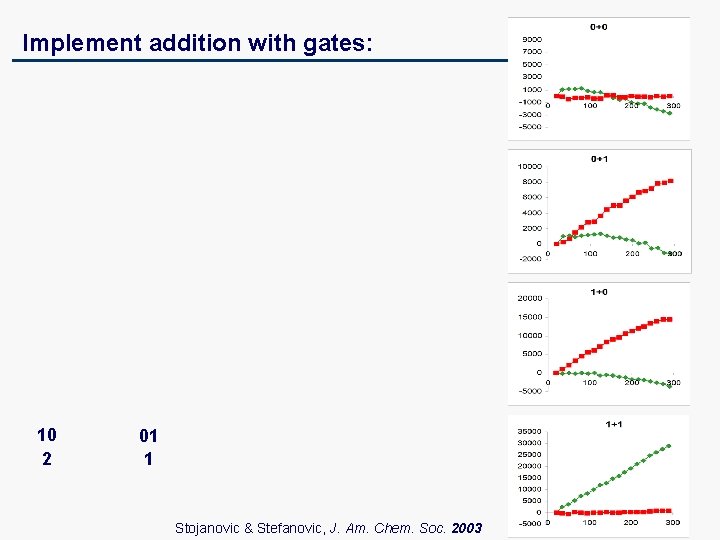
Implement addition with gates: 10 2 01 1 Stojanovic & Stefanovic, J. Am. Chem. Soc. 2003
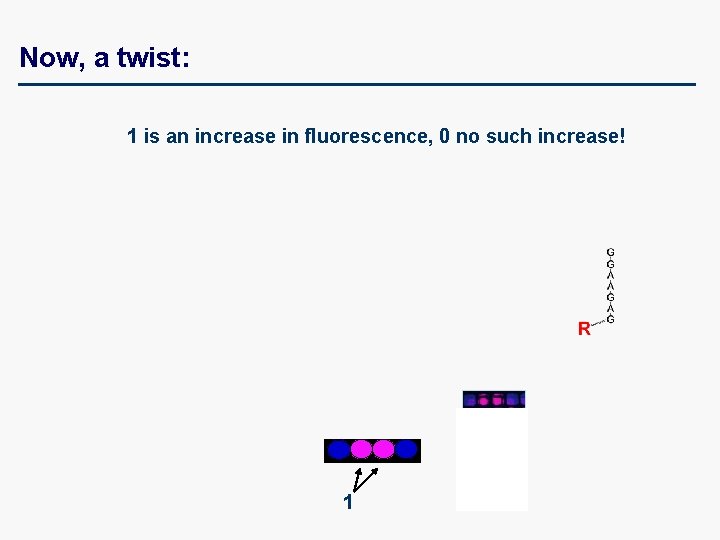
Now, a twist: 1 is an increase in fluorescence, 0 no such increase! 1
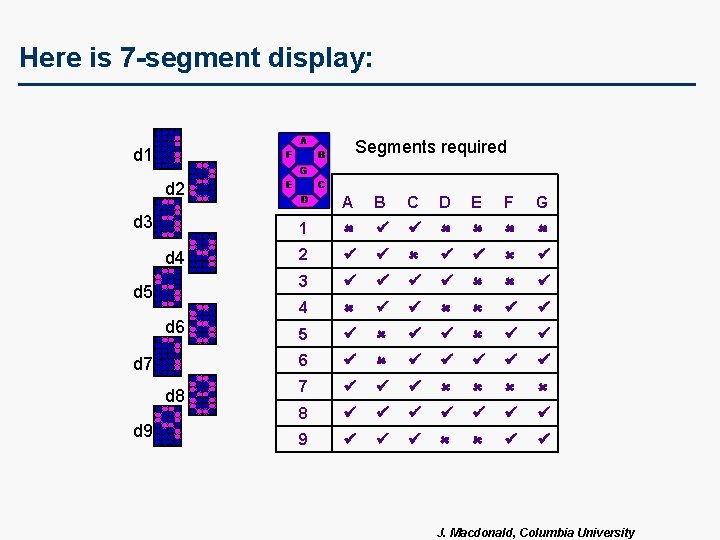
Here is 7 -segment display: Segments required d 1 d 2 d 3 d 4 d 5 d 6 d 7 d 8 d 9 A B C D E F G 1 ü ü 2 ü ü ü 3 ü ü ü 4 ü ü 5 ü ü ü 6 ü ü ü 7 ü ü ü 8 ü ü ü ü 9 ü ü ü J. Macdonald, Columbia University
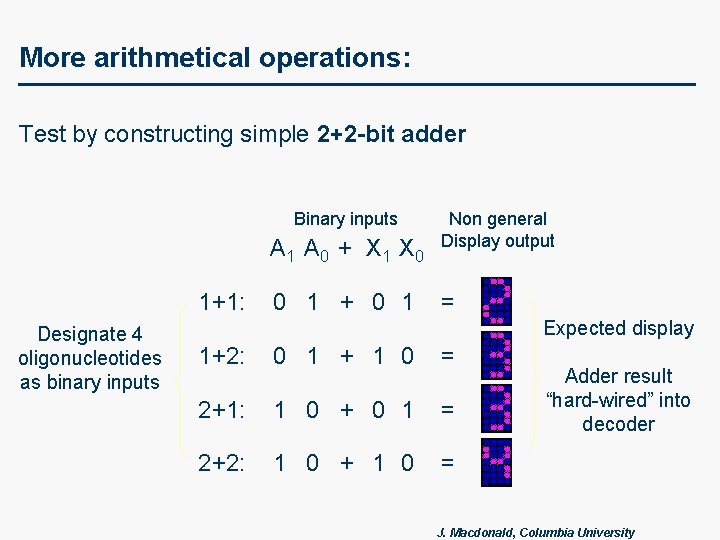
More arithmetical operations: Test by constructing simple 2+2 -bit adder Binary inputs A 1 A 0 + X 1 X 0 1+1: Designate 4 oligonucleotides as binary inputs 0 1 + 0 1 Non general Display output = Expected display 1+2: 0 1 + 1 0 = 2+1: 1 0 + 0 1 = 2+2: 1 0 + 1 0 = Adder result “hard-wired” into decoder J. Macdonald, Columbia University
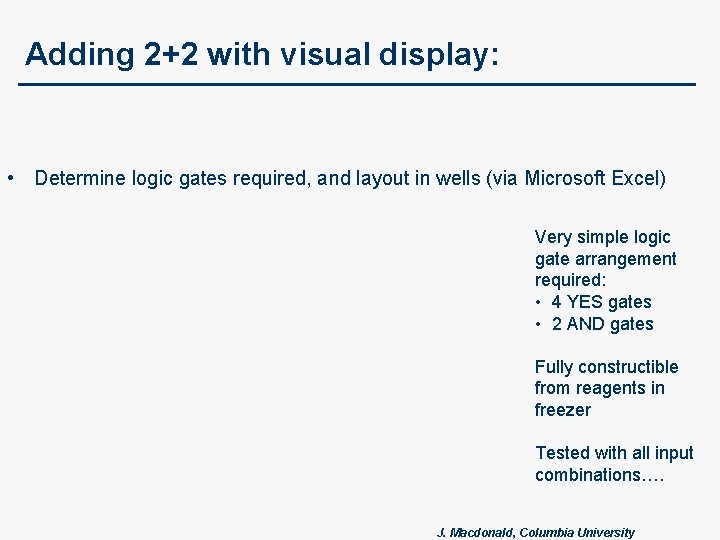
Adding 2+2 with visual display: • Determine logic gates required, and layout in wells (via Microsoft Excel) Very simple logic gate arrangement required: • 4 YES gates • 2 AND gates Fully constructible from reagents in freezer Tested with all input combinations…. J. Macdonald, Columbia University
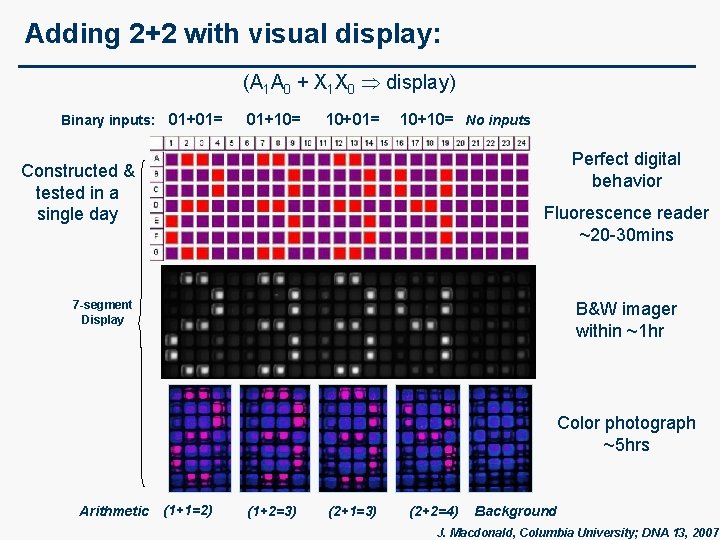
Adding 2+2 with visual display: (A 1 A 0 + X 1 X 0 display) Binary inputs: 01+01= 01+10= 10+01= 10+10= No inputs Perfect digital behavior Constructed & tested in a single day Fluorescence reader ~20 -30 mins 7 -segment Display B&W imager within ~1 hr Color photograph ~5 hrs Arithmetic (1+1=2) (1+2=3) (2+1=3) (2+2=4) Background J. Macdonald, Columbia University; DNA 13, 2007
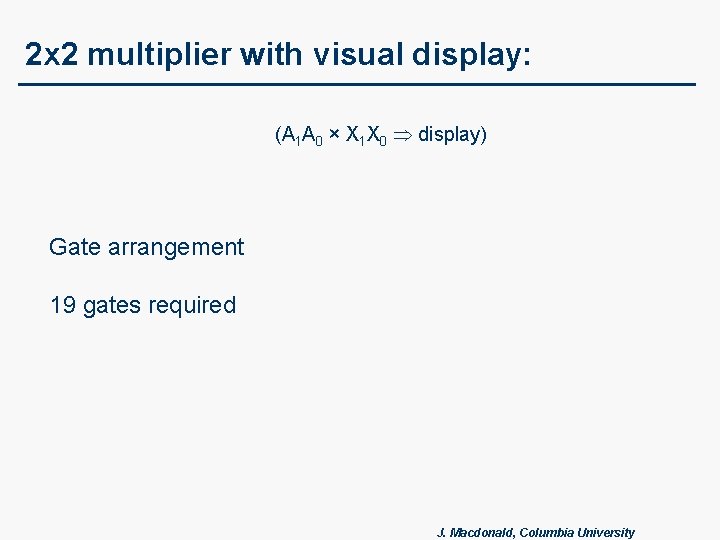
2 x 2 multiplier with visual display: (A 1 A 0 × X 1 X 0 display) Gate arrangement 19 gates required J. Macdonald, Columbia University
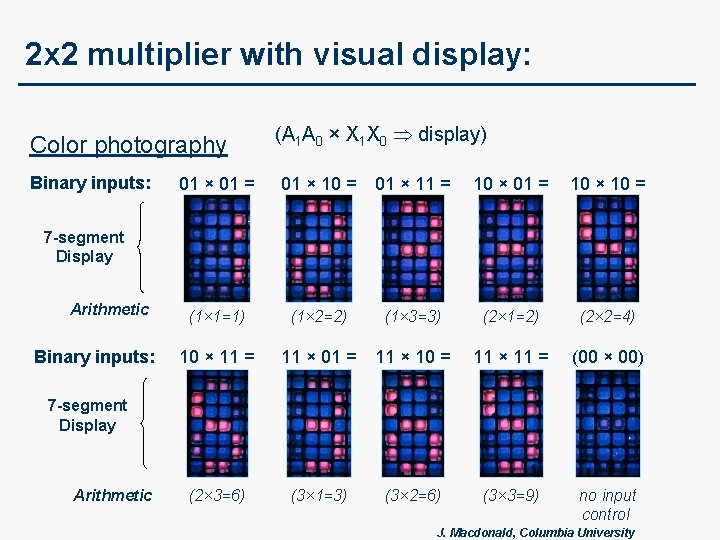
2 x 2 multiplier with visual display: Color photography Binary inputs: (A 1 A 0 × X 1 X 0 display) 01 × 01 = 01 × 10 = 01 × 11 = 10 × 01 = 10 × 10 = (1× 1=1) (1× 2=2) (1× 3=3) (2× 1=2) (2× 2=4) 10 × 11 = 11 × 01 = 11 × 10 = 11 × 11 = (00 × 00) (2× 3=6) (3× 1=3) (3× 2=6) (3× 3=9) no input control 7 -segment Display Arithmetic Binary inputs: 7 -segment Display Arithmetic J. Macdonald, Columbia University
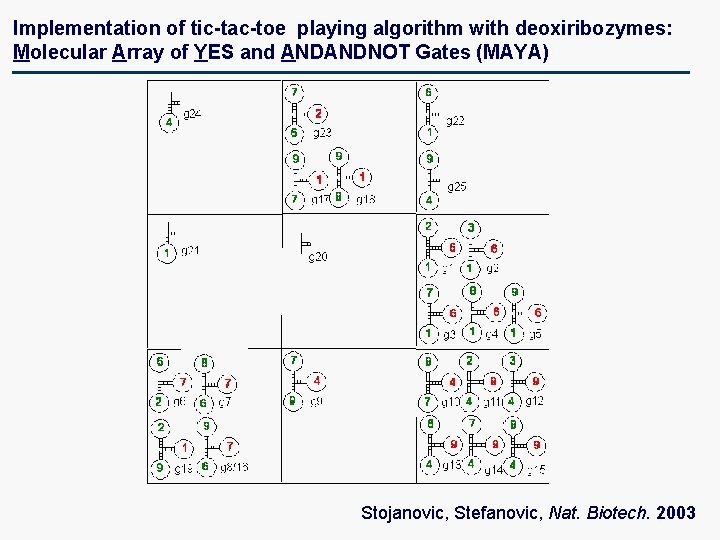
Implementation of tic-tac-toe playing algorithm with deoxiribozymes: Molecular Array of YES and ANDANDNOT Gates (MAYA) Stojanovic, Stefanovic, Nat. Biotech. 2003
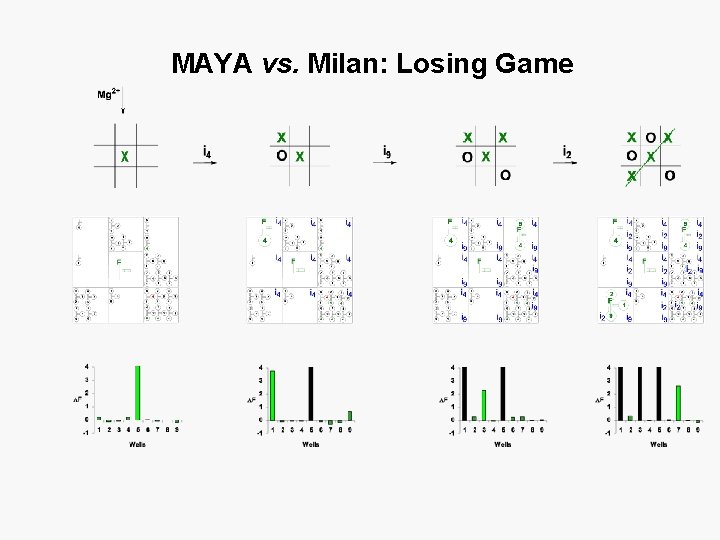
MAYA vs. Milan: Losing Game
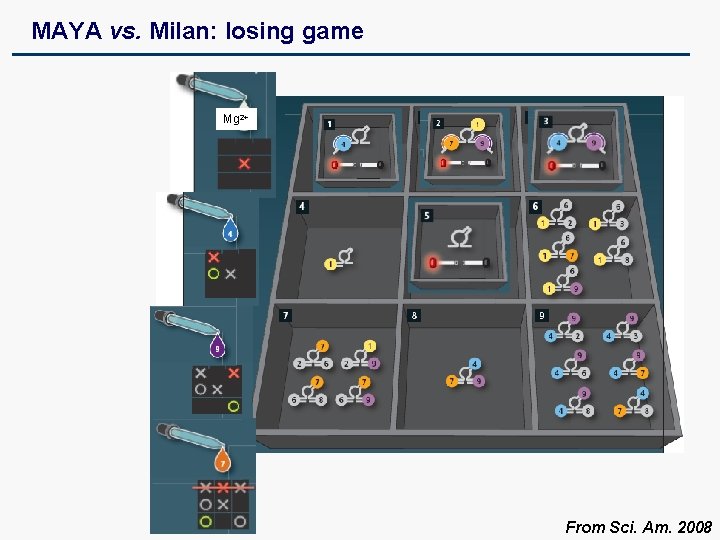
MAYA vs. Milan: losing game Mg 2+ From Sci. Am. 2008
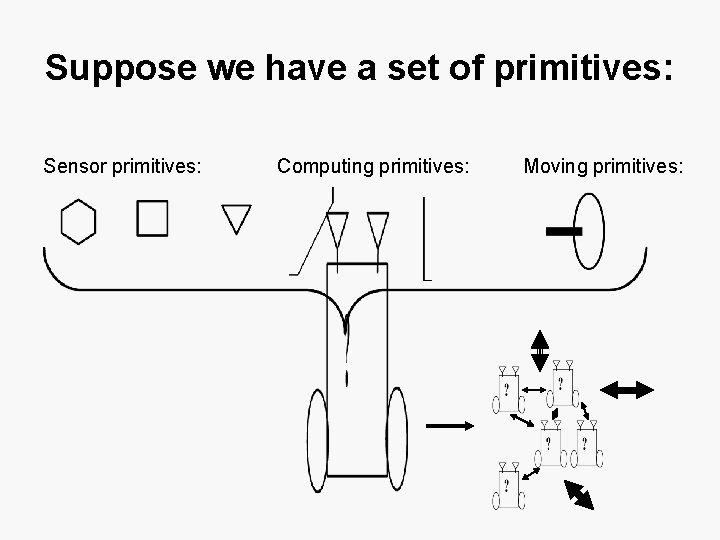
Suppose we have a set of primitives: Sensor primitives: Computing primitives: Moving primitives:
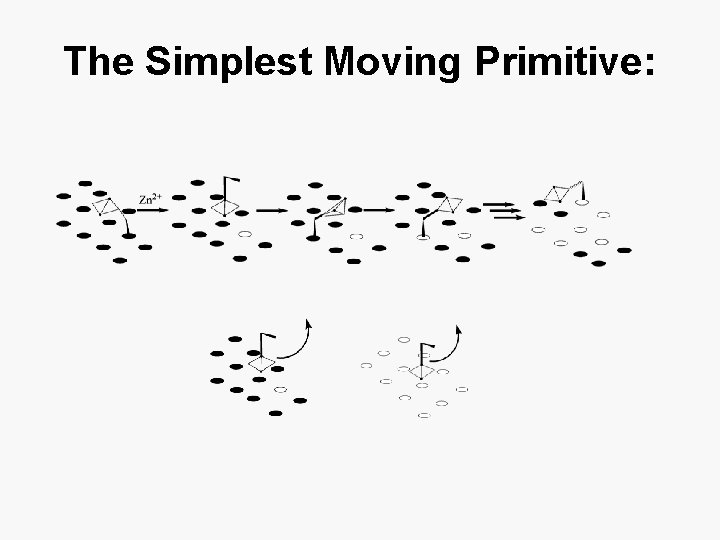
The Simplest Moving Primitive:
![But, what about multivalent design? => Molecular Spider [Pei et. al JACS, 2006] R](http://slidetodoc.com/presentation_image/c3188229ff65eb341500e4bebb68b0e6/image-35.jpg "But, what about multivalent design? => Molecular Spider [Pei et. al JACS, 2006] R")
But, what about multivalent design? => Molecular Spider [Pei et. al JACS, 2006] R Pei, S Taylor, D Stefanovic, S Rudchenko, T Mitchell, M Stojanovic, Behavior of Poly- catalytic Assemblies in a Substrate-displaying Matrix, Journal of the American Chemical Society, vol. 128, no. 39, pp. 12693 -12699, 2006.
![Molecular Spider [Pei et. al JACS, 2006] Molecular spider performing biased random walk. Diffusion](http://slidetodoc.com/presentation_image/c3188229ff65eb341500e4bebb68b0e6/image-36.jpg "Molecular Spider [Pei et. al JACS, 2006] Molecular spider performing biased random walk. Diffusion")
Molecular Spider [Pei et. al JACS, 2006] Molecular spider performing biased random walk. Diffusion of a multi-pedal DNA walker (spider) on a 2 D substrate. The legs form duplexes - double stranded links - to the complementary strands in the surface. One of the duplexes is cleaved and the leg explores the surrounding surface forming another duplex at another position. If the leg binds to a position already visited, its stay there is brief as it 'remembers' the process; for new positions, the cleavage takes longer. By repeating this process the walker moves along the surface independently. At the end of the track the walker binds to uncleavable DNA strands and stops.
![Molecular Spider [Pei et. al JACS, 2006] Molecular spider performing biased random walk. Diffusion](http://slidetodoc.com/presentation_image/c3188229ff65eb341500e4bebb68b0e6/image-37.jpg "Molecular Spider [Pei et. al JACS, 2006] Molecular spider performing biased random walk. Diffusion")
Molecular Spider [Pei et. al JACS, 2006] Molecular spider performing biased random walk. Diffusion of a multi-pedal DNA walker (spider) on a 2 D substrate. • Body of spider is a molecule of streptavidin, and • The 4 legs are DNAzyme molecules attached to the body. • • The spiders crawls a surface by attaching and detaching from RNA substrates via DNAzyme. Leg attachment occurs via DNA-RNA hybridization while the detachment is via the catalytic restriction of the RNA stator by the DNAzyme followed by spontaneous denaturation from short strands due to entropic effects. Once a leg detaches from a substrate it binds (with high probability) to a new substrate and the process continues. The spider is biased towards binding unvisited substrates.
![Molecular Spider [Pei et. al JACS, 2006] Molecular spider performing biased random walk. Diffusion](http://slidetodoc.com/presentation_image/c3188229ff65eb341500e4bebb68b0e6/image-38.jpg "Molecular Spider [Pei et. al JACS, 2006] Molecular spider performing biased random walk. Diffusion")
Molecular Spider [Pei et. al JACS, 2006] Molecular spider performing biased random walk. Diffusion of a multi-pedal DNA walker (spider) on a 2 D substrate.
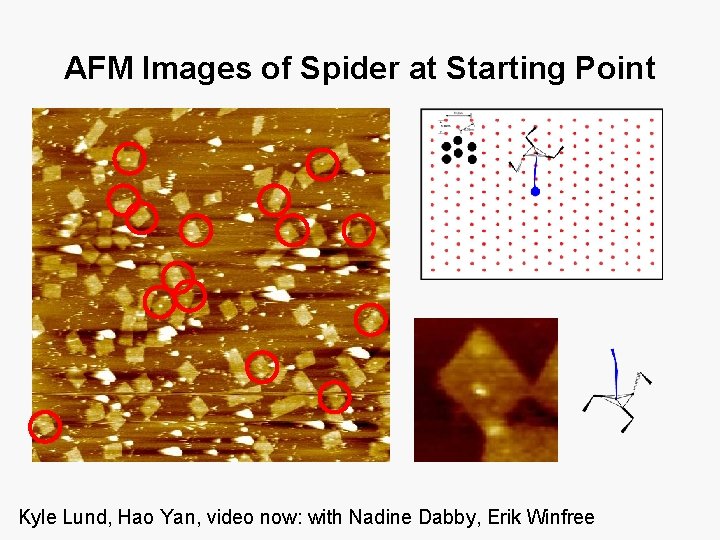
AFM Images of Spider at Starting Point Kyle Lund, Hao Yan, video now: with Nadine Dabby, Erik Winfree
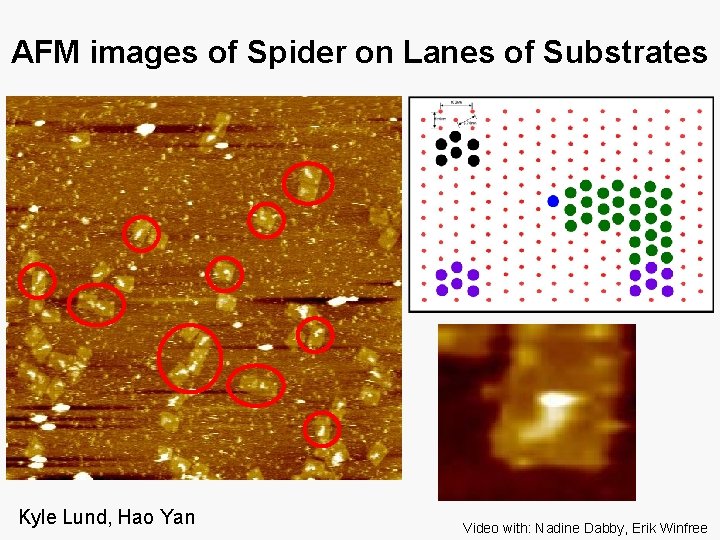
AFM images of Spider on Lanes of Substrates Kyle Lund, Hao Yan Video with: Nadine Dabby, Erik Winfree
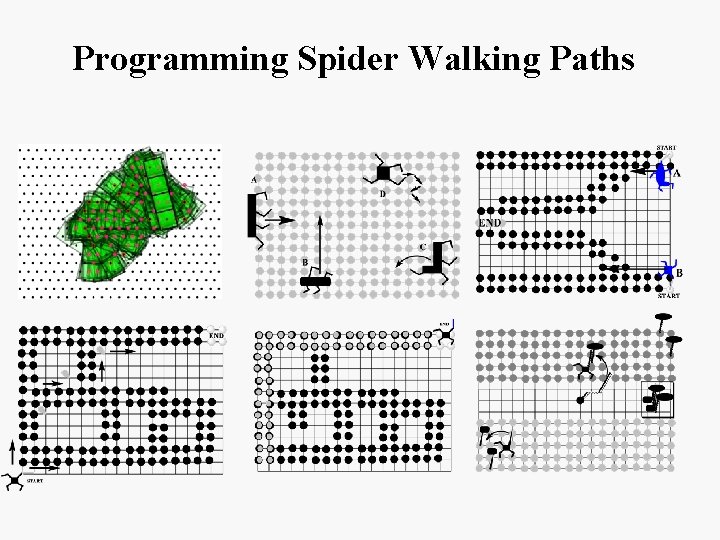
Programming Spider Walking Paths
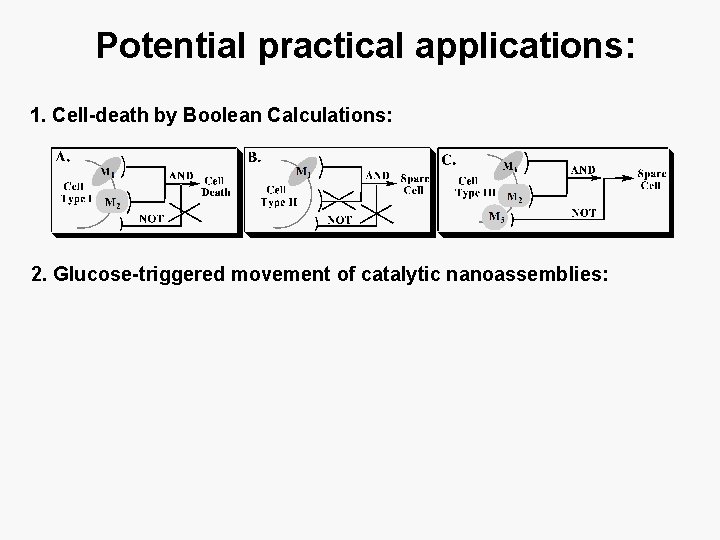
Potential practical applications: 1. Cell-death by Boolean Calculations: 2. Glucose-triggered movement of catalytic nanoassemblies:
- Slides: 42