
DNA as the molecule of heredity part A
- Slides: 18
DNA as the molecule of heredity: part A • What experiments identified DNA as the hereditary material? • What is the structure of DNA, and what does the structure suggest about DNA function? • How do cells replicate DNA?
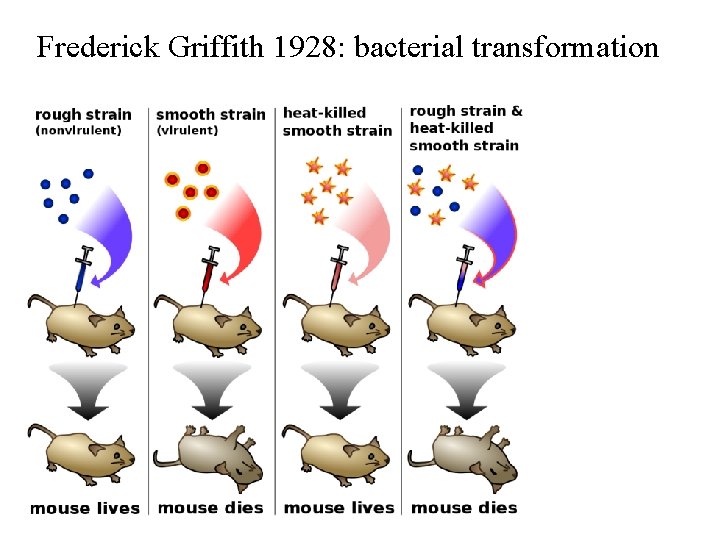
Frederick Griffith 1928: bacterial transformation
Avery, Mc. Leod & Mc. Carty - 1944 What is the material that transforms bacteria? • • DNA transformed bacteria, but not proteins. Treatment with DNase, but not RNase or proteases, eliminated transformation activity.
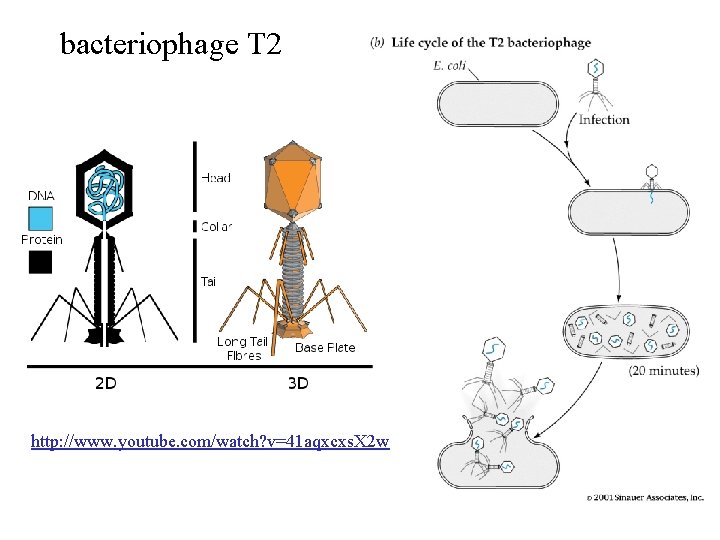
bacteriophage T 2 http: //www. youtube. com/watch? v=41 aqxcxs. X 2 w
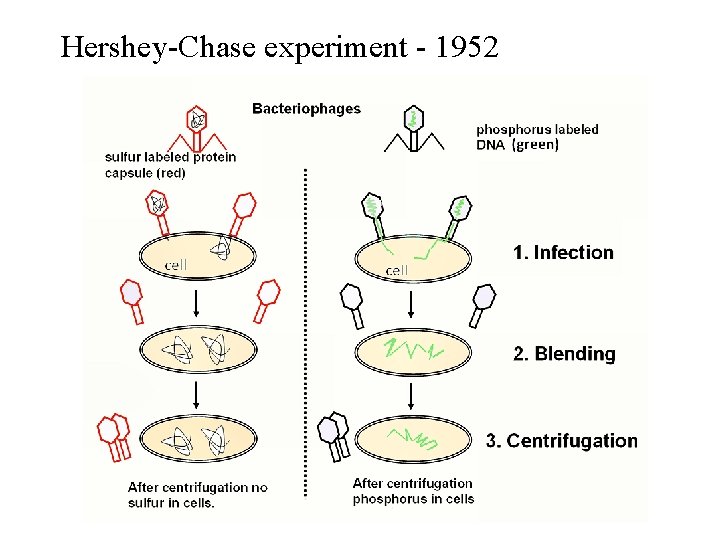
Hershey-Chase experiment - 1952
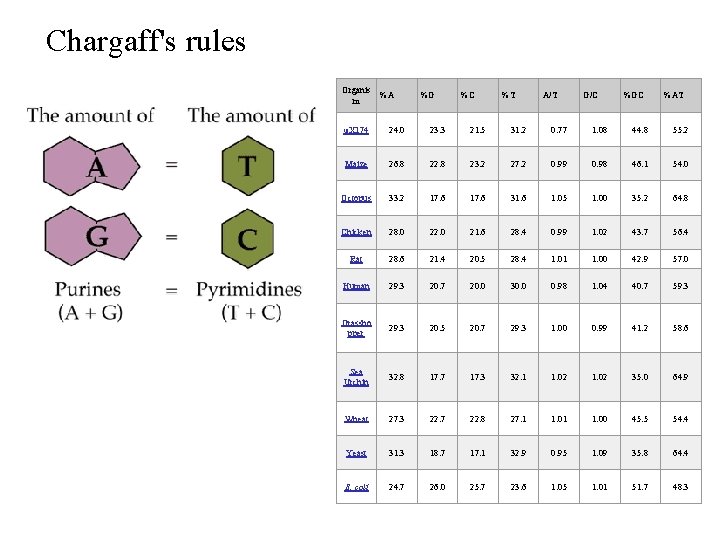
Chargaff's rules Organis m %A %G %C %T A/T G/C %GC %AT φX 174 24. 0 23. 3 21. 5 31. 2 0. 77 1. 08 44. 8 55. 2 Maize 26. 8 22. 8 23. 2 27. 2 0. 99 0. 98 46. 1 54. 0 Octopus 33. 2 17. 6 31. 6 1. 05 1. 00 35. 2 64. 8 Chicken 28. 0 22. 0 21. 6 28. 4 0. 99 1. 02 43. 7 56. 4 Rat 28. 6 21. 4 20. 5 28. 4 1. 01 1. 00 42. 9 57. 0 Human 29. 3 20. 7 20. 0 30. 0 0. 98 1. 04 40. 7 59. 3 Grassho pper 29. 3 20. 5 20. 7 29. 3 1. 00 0. 99 41. 2 58. 6 Sea Urchin 32. 8 17. 7 17. 3 32. 1 1. 02 35. 0 64. 9 Wheat 27. 3 22. 7 22. 8 27. 1 1. 00 45. 5 54. 4 Yeast 31. 3 18. 7 17. 1 32. 9 0. 95 1. 09 35. 8 64. 4 E. coli 24. 7 26. 0 25. 7 23. 6 1. 05 1. 01 51. 7 48. 3
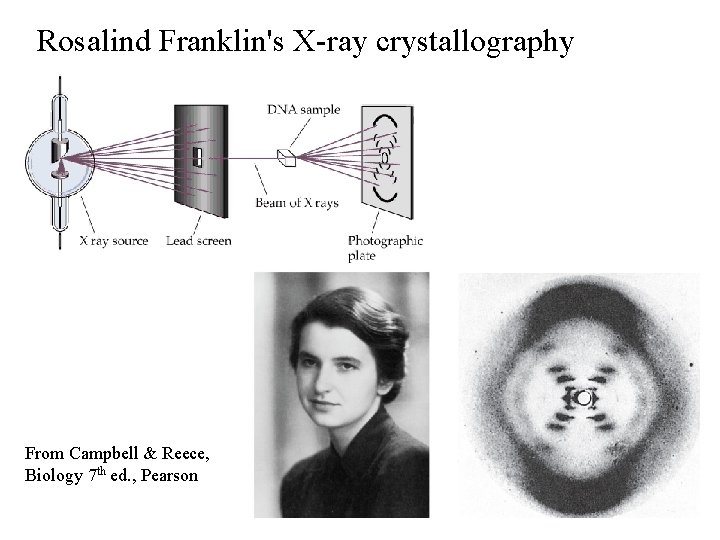
Rosalind Franklin's X-ray crystallography From Campbell & Reece, Biology 7 th ed. , Pearson
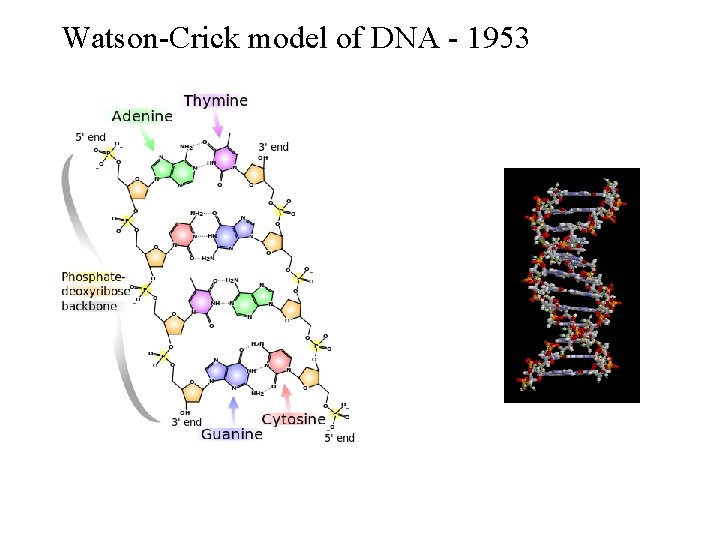
Watson-Crick model of DNA - 1953
DNA as the molecule of heredity: part B • How do cells replicate DNA? • Meselson-Stahl experiment • Model of DNA replication “It has not escaped our notice that the specific pairing we have postulated immediately suggests a possible copying mechanism for the genetic material. ” - Watson and Crick, 1953, Nature 171: 737 -738
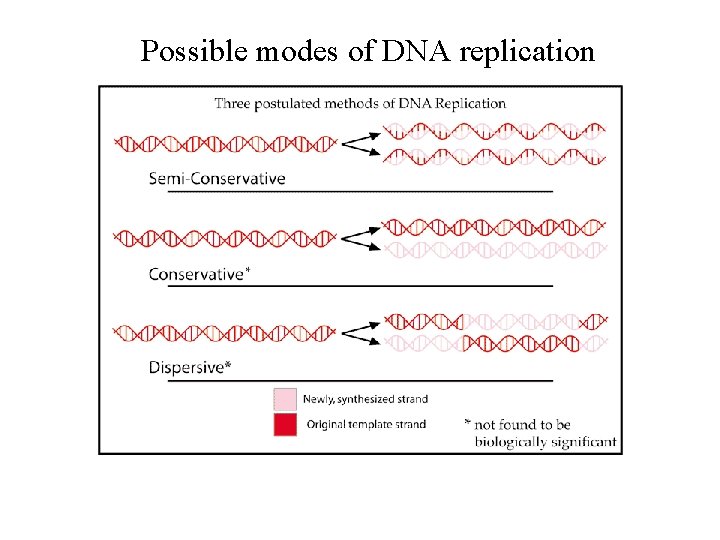
Possible modes of DNA replication
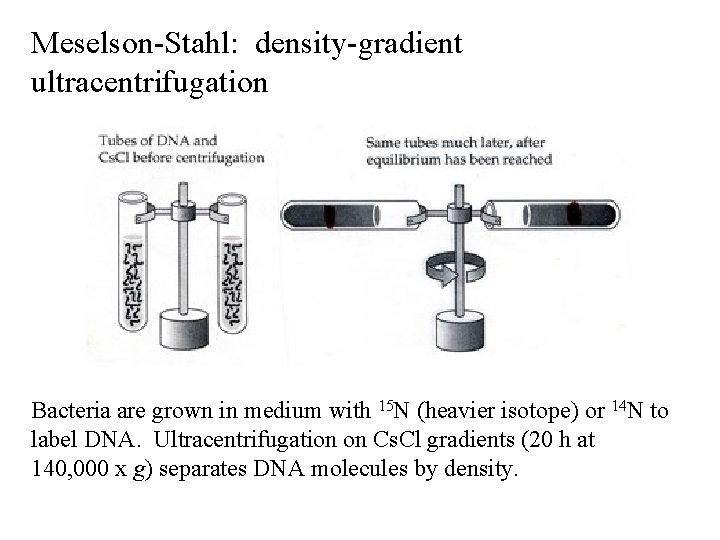
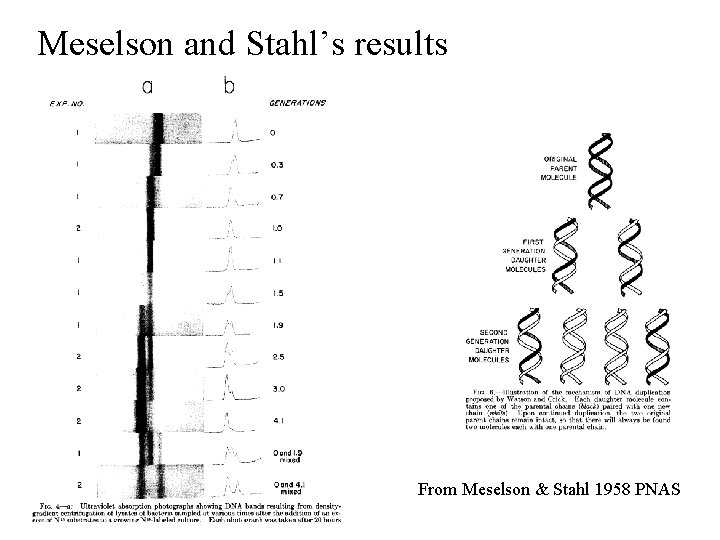
Meselson-Stahl: density-gradient ultracentrifugation Bacteria are grown in medium with 15 N (heavier isotope) or 14 N to label DNA. Ultracentrifugation on Cs. Cl gradients (20 h at 140, 000 x g) separates DNA molecules by density.
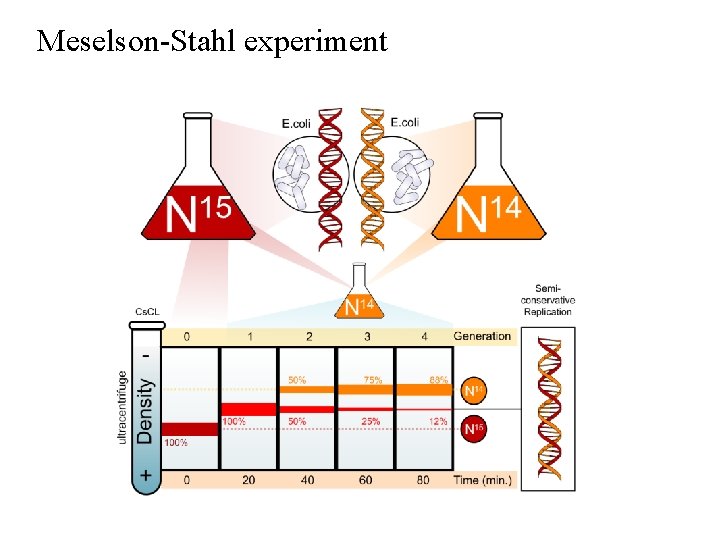
Meselson-Stahl experiment
Meselson and Stahl’s results From Meselson & Stahl 1958 PNAS
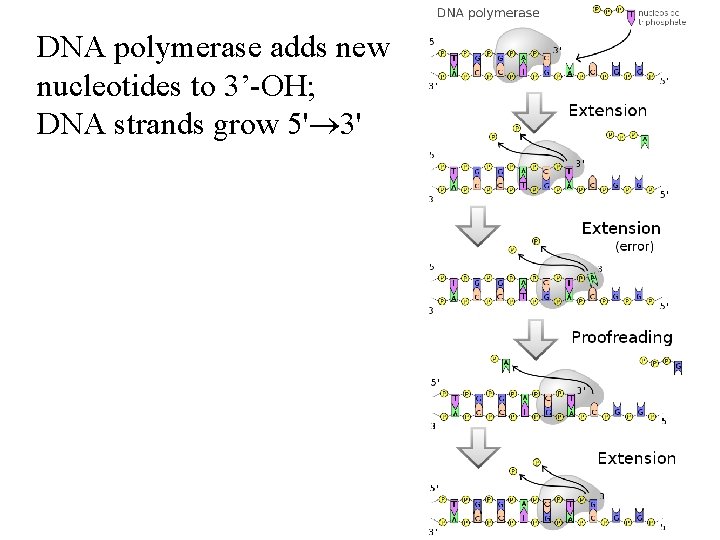
DNA polymerase adds new nucleotides to 3’-OH; DNA strands grow 5' 3'
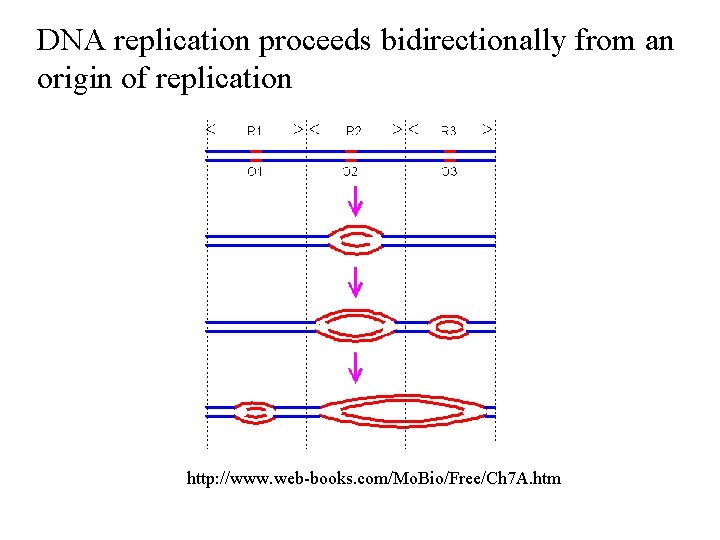
DNA replication proceeds bidirectionally from an origin of replication http: //www. web-books. com/Mo. Bio/Free/Ch 7 A. htm
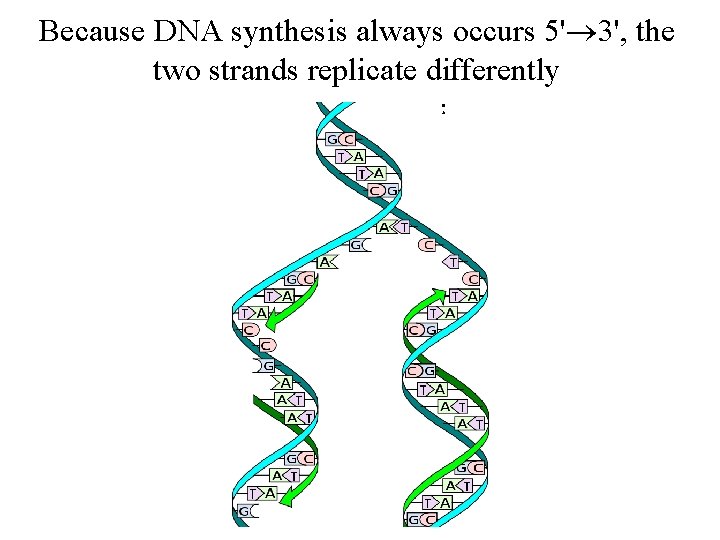
Because DNA synthesis always occurs 5' 3', the two strands replicate differently
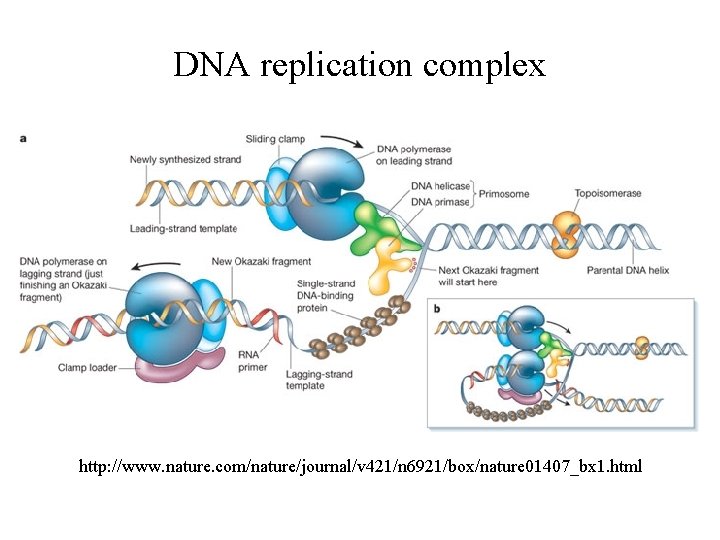
DNA replication complex http: //www. nature. com/nature/journal/v 421/n 6921/box/nature 01407_bx 1. html
More complex views of DNA replication • The trombone model – http: //www. mcb. harvard. edu/Losick/images/Tro mbone. FINALd. swf • Molecular visualization of DNA replication