
DNA and RNA Structure of DNA Deoxyribonucleic Acid
DNA and RNA Structure of DNA
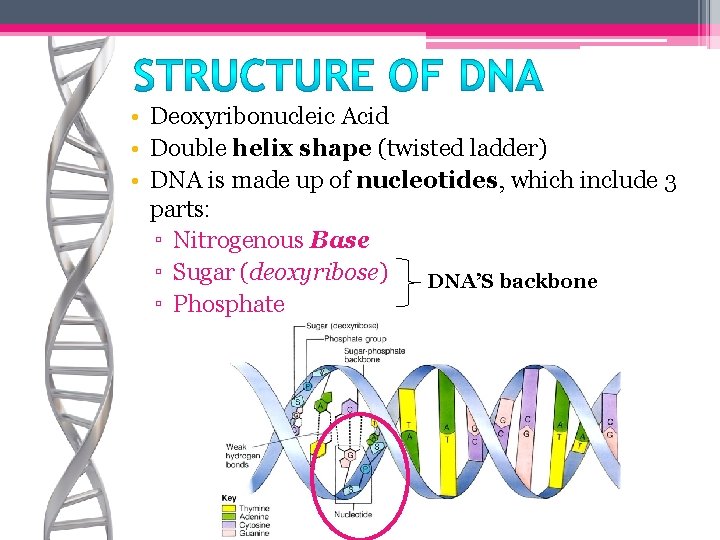
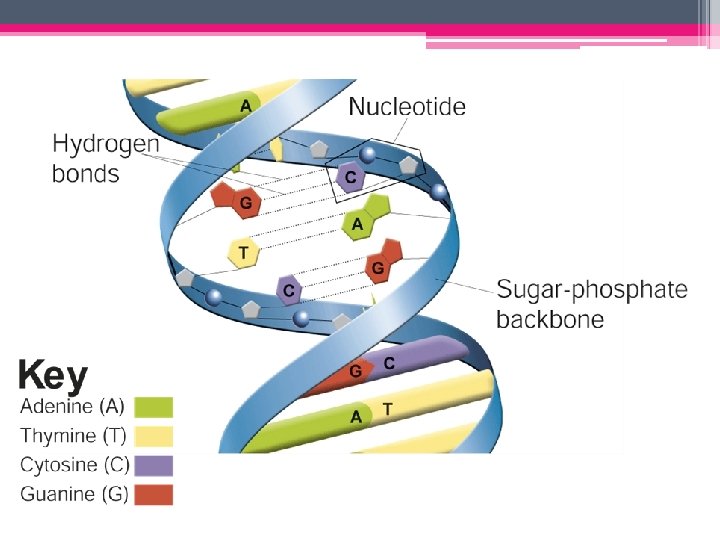
• Deoxyribonucleic Acid • Double helix shape (twisted ladder) • DNA is made up of nucleotides, which include 3 parts: ▫ Nitrogenous Base ▫ Sugar (deoxyribose) DNA’S backbone ▫ Phosphate
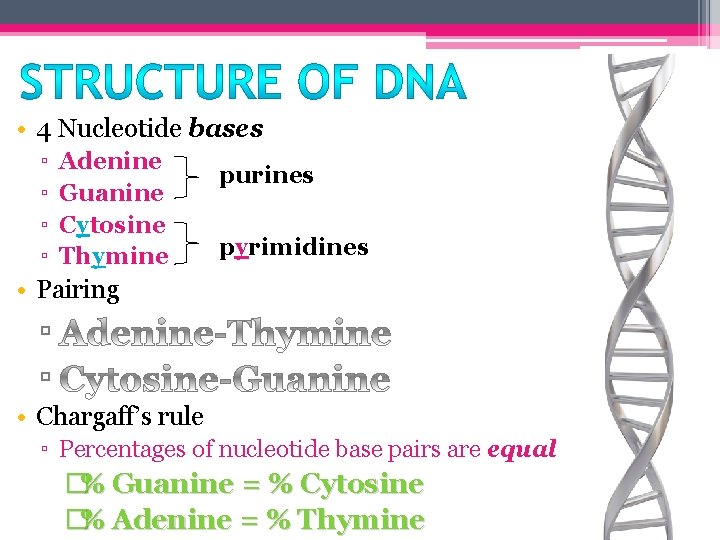
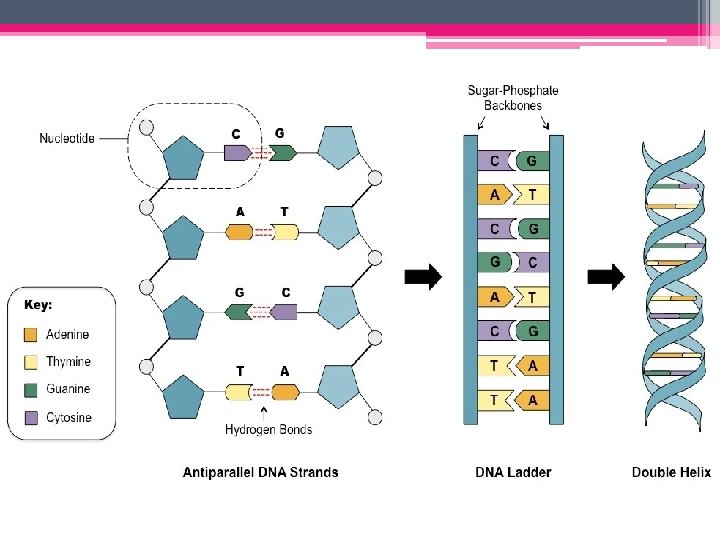
• 4 Nucleotide bases ▫ ▫ Adenine Guanine Cytosine Thymine purines pyrimidines • Pairing ▫ ▫ • Chargaff’s rule ▫ Percentages of nucleotide base pairs are equal �% Guanine = % Cytosine �% Adenine = % Thymine
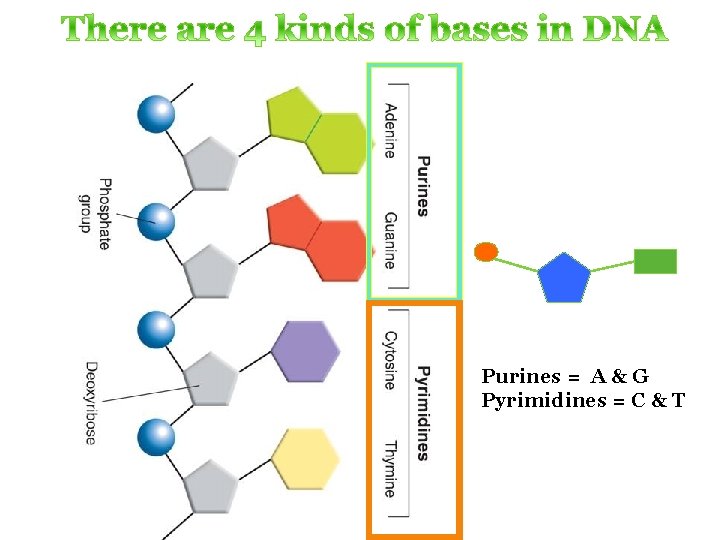
Purines = A & G Pyrimidines = C & T
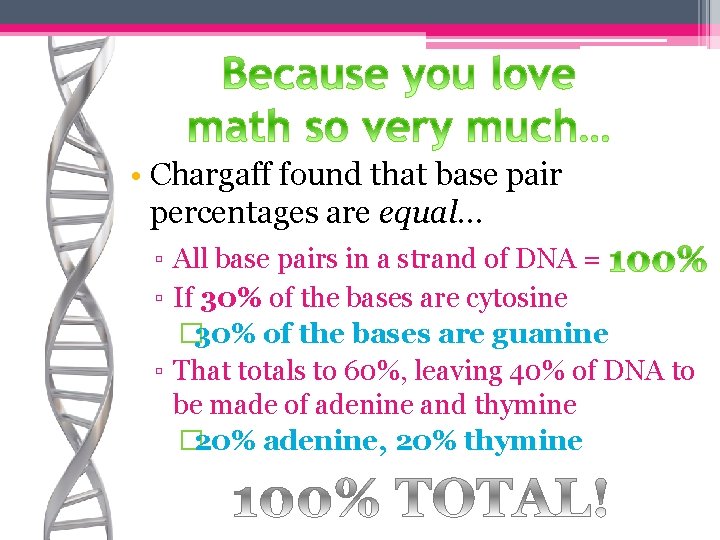
• Chargaff found that base pair percentages are equal… ▫ All base pairs in a strand of DNA = ▫ If 30% of the bases are cytosine � 30% of the bases are guanine ▫ That totals to 60%, leaving 40% of DNA to be made of adenine and thymine � 20% adenine, 20% thymine
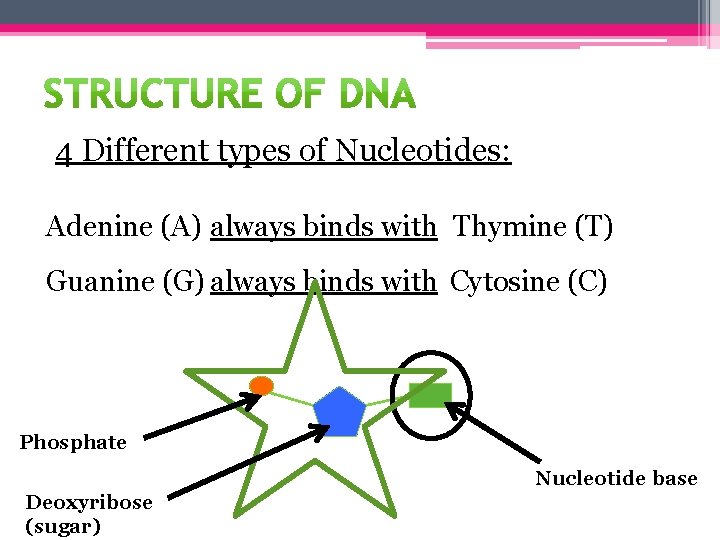
4 Different types of Nucleotides: always binds with Adenine (A) Thymine (T) always binds with Guanine (G) Cytosine (C) Phosphate Nucleotide base Deoxyribose (sugar)
Original strand Complementary strand
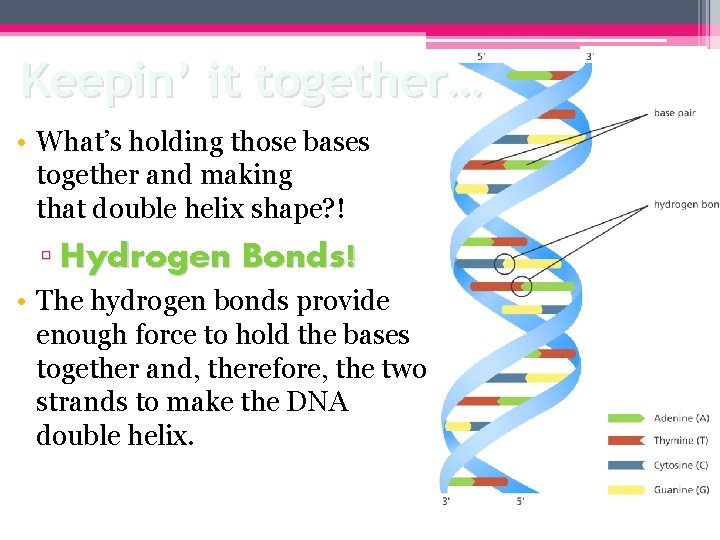
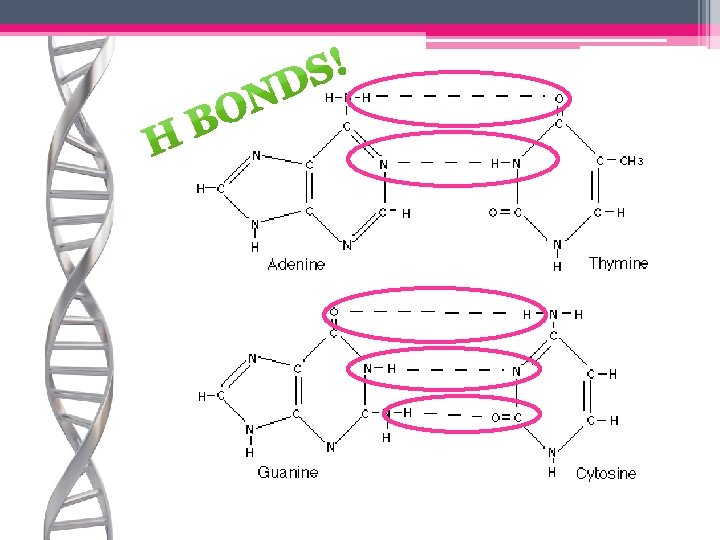
Keepin’ it together… • What’s holding those bases together and making that double helix shape? ! ▫ Hydrogen Bonds! • The hydrogen bonds provide enough force to hold the bases together and, therefore, the two strands to make the DNA double helix.
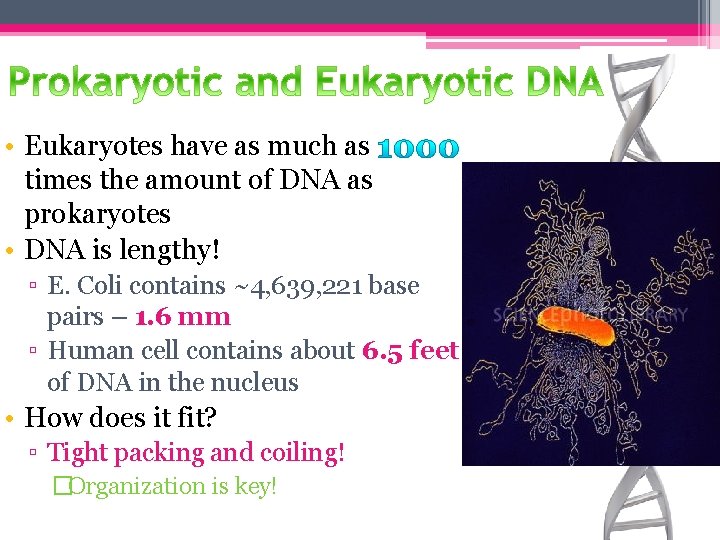
• Eukaryotes have as much as times the amount of DNA as prokaryotes • DNA is lengthy! ▫ E. Coli contains ~4, 639, 221 base pairs – 1. 6 mm ▫ Human cell contains about 6. 5 feet of DNA in the nucleus • How does it fit? ▫ Tight packing and coiling! �Organization is key!
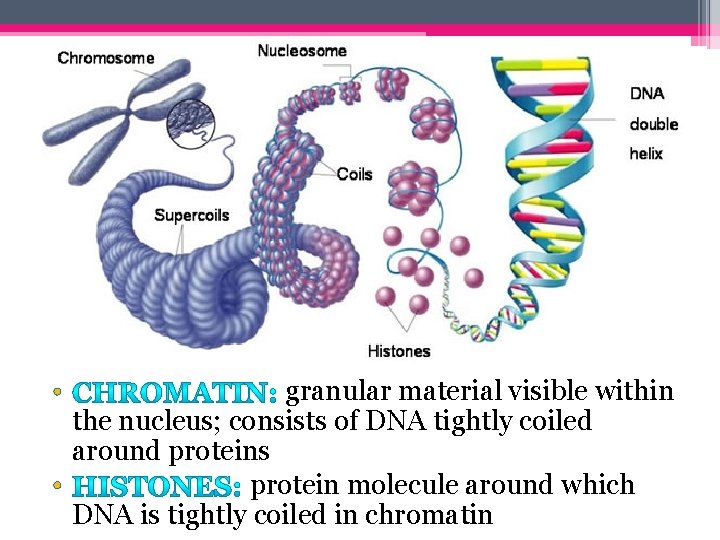
• granular material visible within the nucleus; consists of DNA tightly coiled around proteins • protein molecule around which DNA is tightly coiled in chromatin
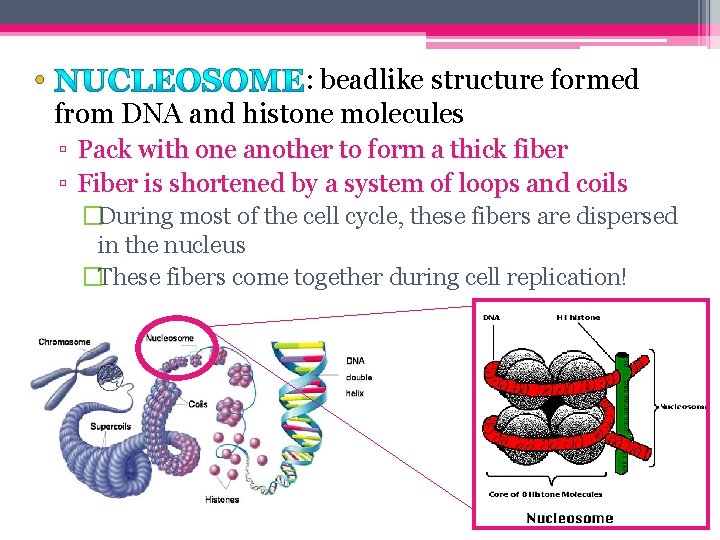
• : beadlike structure formed from DNA and histone molecules ▫ Pack with one another to form a thick fiber ▫ Fiber is shortened by a system of loops and coils �During most of the cell cycle, these fibers are dispersed in the nucleus �These fibers come together during cell replication!
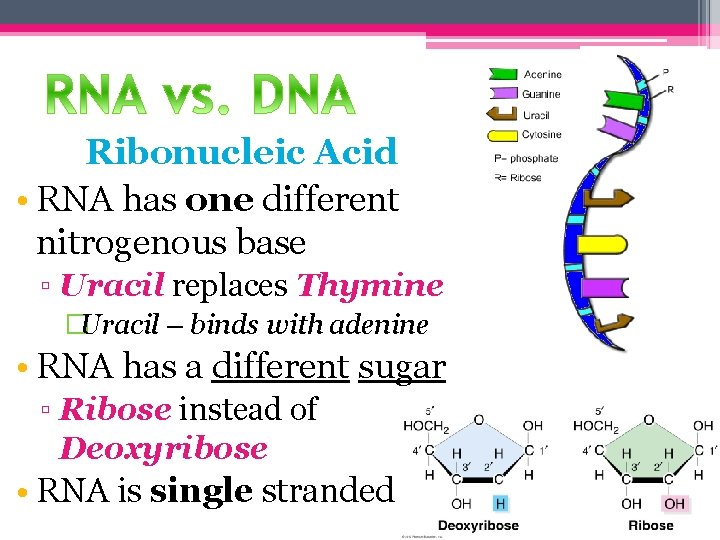
Ribonucleic Acid • RNA has one different nitrogenous base ▫ Uracil replaces Thymine �Uracil – binds with adenine • RNA has a different sugar ▫ Ribose instead of Deoxyribose • RNA is single stranded
DNA and RNA DNA Replication
DNA Replication • Each strand of DNA has everything it needs to reconstruct the other half through base pairing ▫ In prokaryotes: replication occurs at a prokaryotes single point in the chromosome and proceeds (often in 2 directions) until chromosome has been replicated ▫ In eukaryotes: replication occurs at eukaryotes hundreds of places; proceeds in both directions until chromosome has been replicated �Sites where separation and replication occur = replication forks
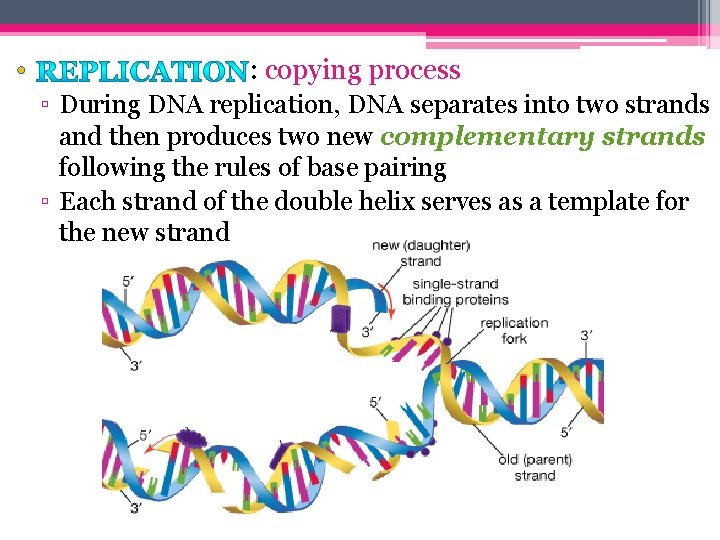
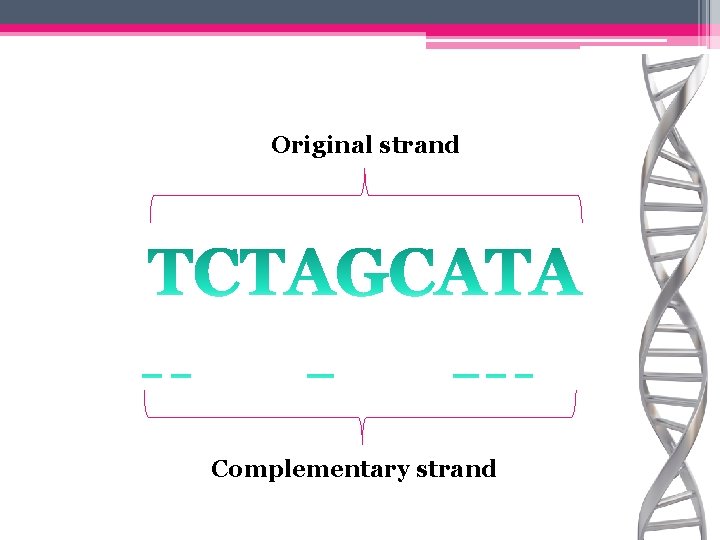
• : copying process ▫ During DNA replication, DNA separates into two strands and then produces two new complementary strands following the rules of base pairing ▫ Each strand of the double helix serves as a template for the new strand
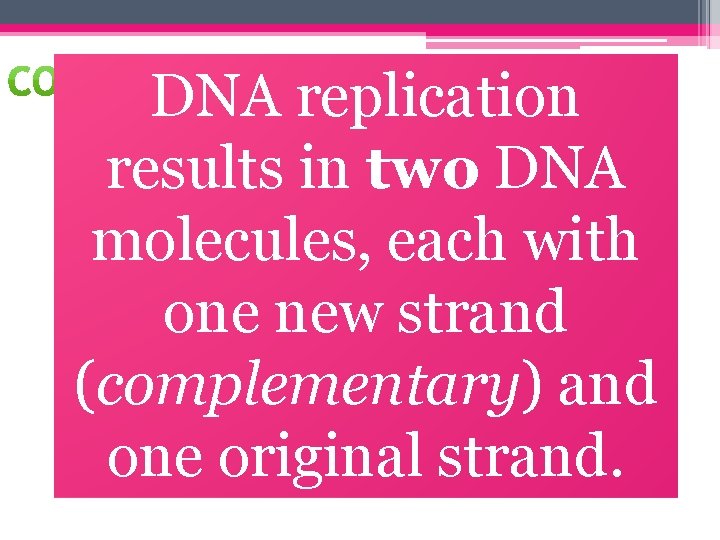
DNA replication results in two DNA molecules, each with one new strand (complementary) and one original strand. Original strand Complementary strand
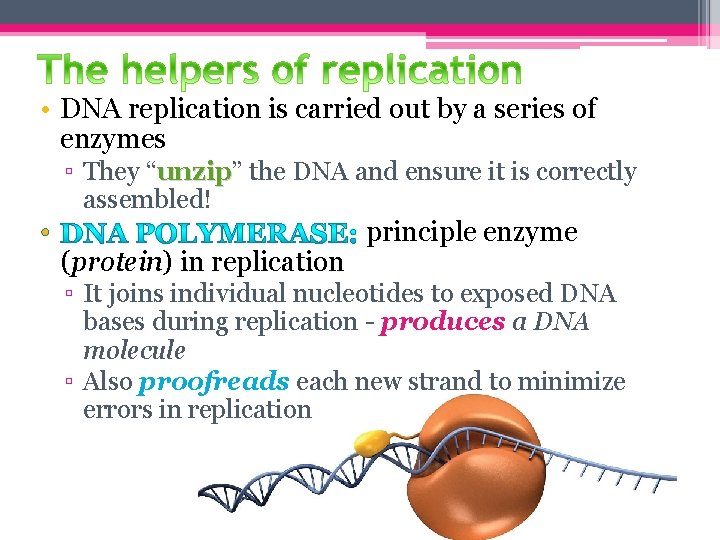
• DNA replication is carried out by a series of enzymes ▫ They “unzip” the DNA and ensure it is correctly unzip assembled! • (protein) in replication principle enzyme ▫ It joins individual nucleotides to exposed DNA bases during replication - produces a DNA molecule ▫ Also proofreads each new strand to minimize errors in replication
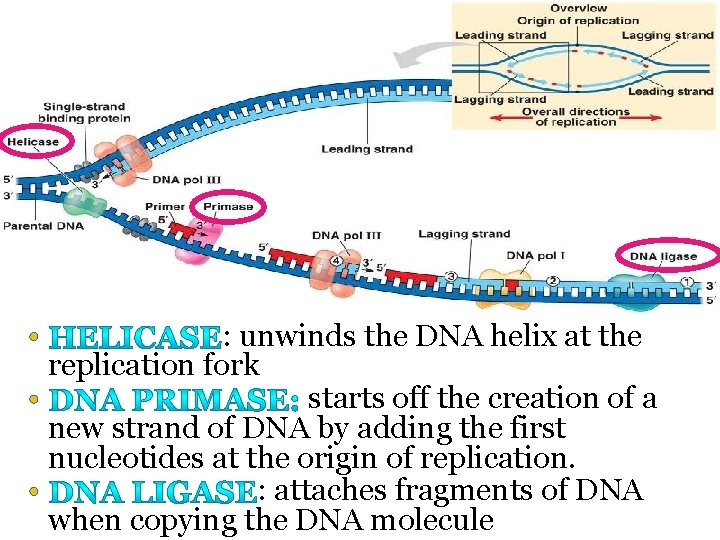
• : unwinds the DNA helix at the replication fork • starts off the creation of a new strand of DNA by adding the first nucleotides at the origin of replication. • : attaches fragments of DNA when copying the DNA molecule
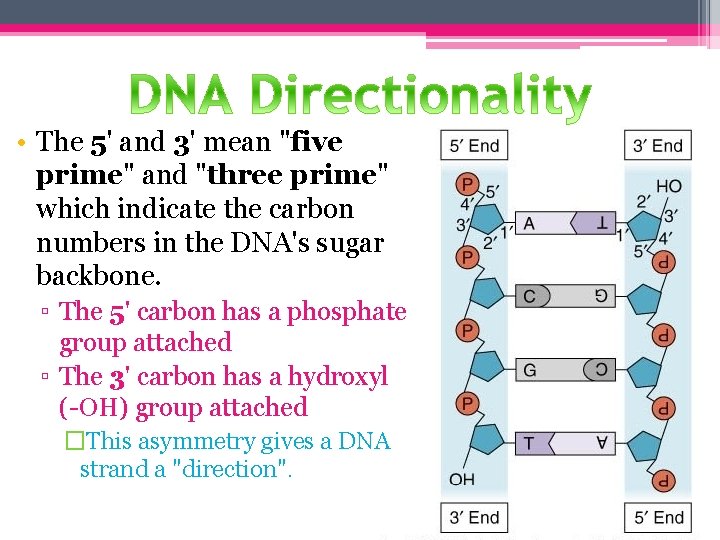
• The 5' and 3' mean "five prime" and "three prime" which indicate the carbon numbers in the DNA's sugar backbone. ▫ The 5' carbon has a phosphate group attached ▫ The 3' carbon has a hydroxyl (-OH) group attached � This asymmetry gives a DNA strand a "direction".
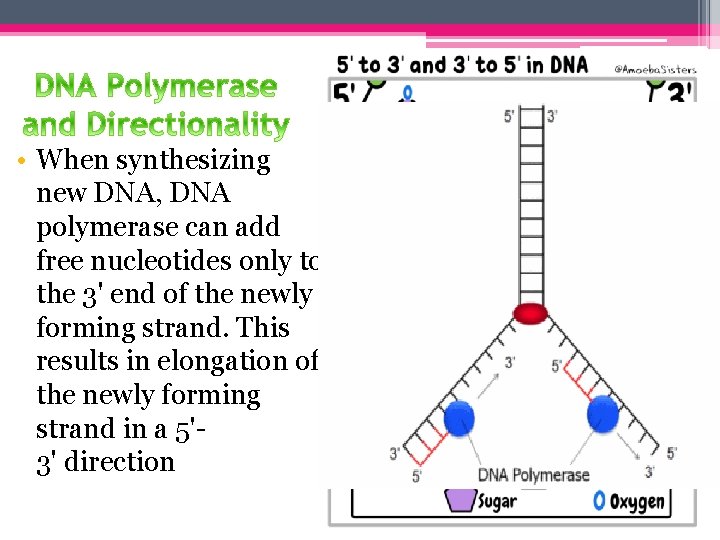
• When synthesizing new DNA, DNA polymerase can add free nucleotides only to the 3' end of the newly forming strand. This results in elongation of the newly forming strand in a 5'3' direction
DNA and RNA Protein Synthesis
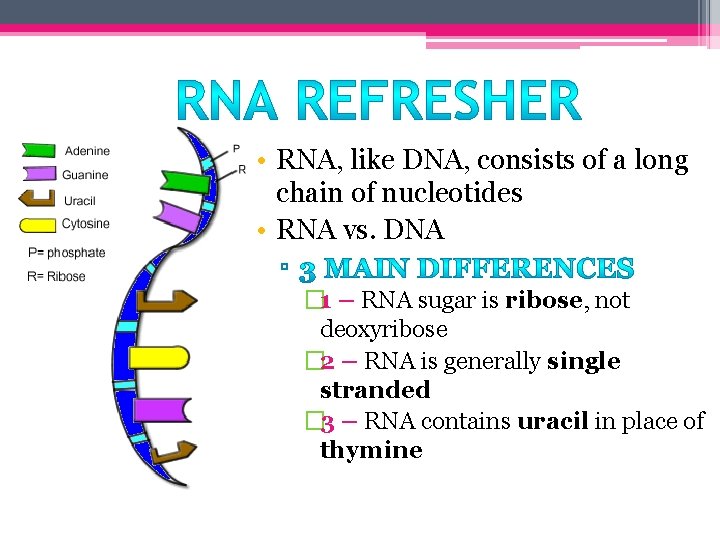
• RNA, like DNA, consists of a long chain of nucleotides • RNA vs. DNA ▫ � 1 – RNA sugar is ribose, not deoxyribose � 2 – RNA is generally single stranded � 3 – RNA contains uracil in place of thymine
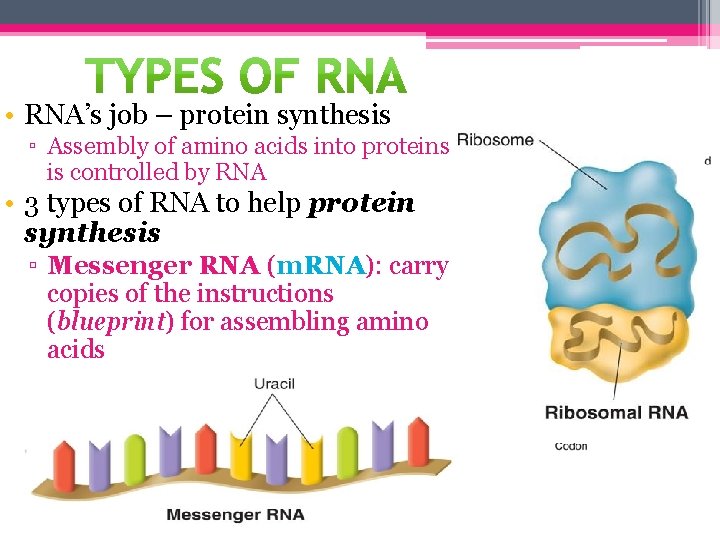
• RNA’s job – protein synthesis ▫ Assembly of amino acids into proteins is controlled by RNA • 3 types of RNA to help protein synthesis ▫ Messenger RNA (m. RNA): carry copies of the instructions (blueprint) for assembling amino acids ▫ Ribosomal RNA (r. RNA): makes up major part of ribosomes ▫ Transfer RNA (t. RNA): transfers each amino acid to the ribosome as it is specified by coded messages
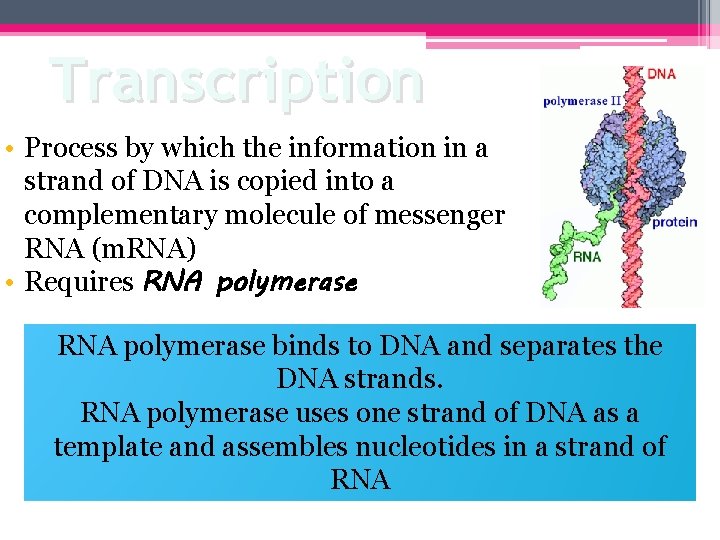
Transcription • Process by which the information in a strand of DNA is copied into a complementary molecule of messenger RNA (m. RNA) • Requires RNA polymerase binds to DNA and separates the DNA strands. RNA polymerase uses one strand of DNA as a template and assembles nucleotides in a strand of RNA
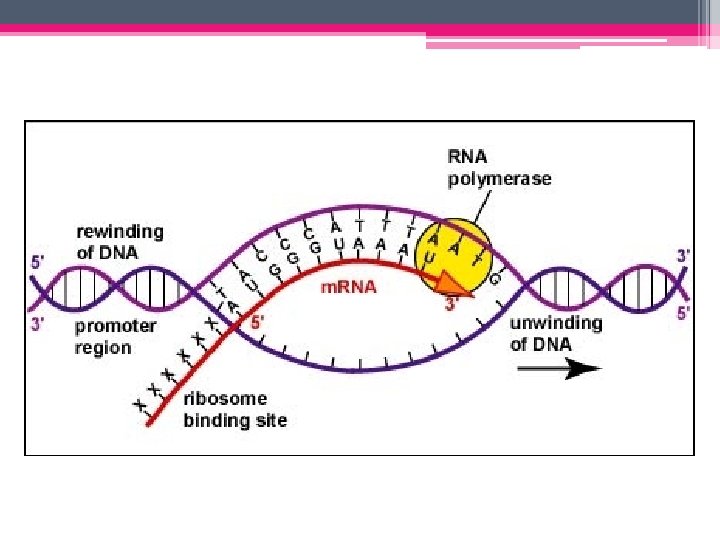
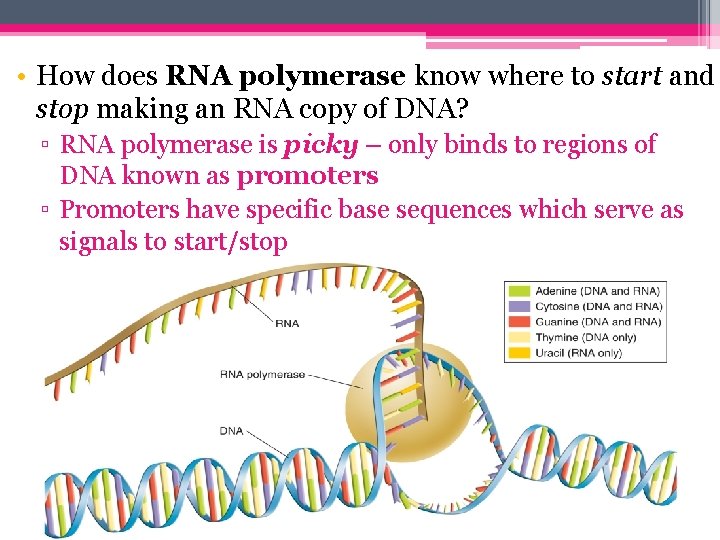
• How does RNA polymerase know where to start and stop making an RNA copy of DNA? ▫ RNA polymerase is picky – only binds to regions of DNA known as promoters ▫ Promoters have specific base sequences which serve as signals to start/stop
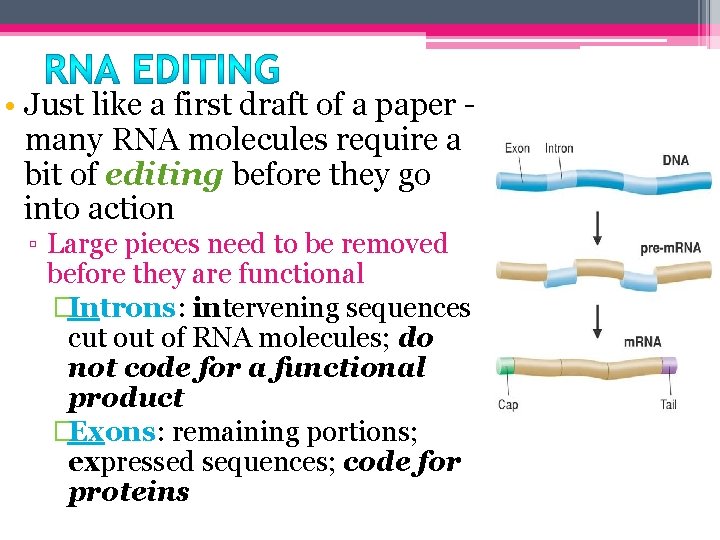
• Just like a first draft of a paper - many RNA molecules require a bit of editing before they go into action ▫ Large pieces need to be removed before they are functional �Introns: intervening sequences cut of RNA molecules; do not code for a functional product �Exons: remaining portions; expressed sequences; code for proteins
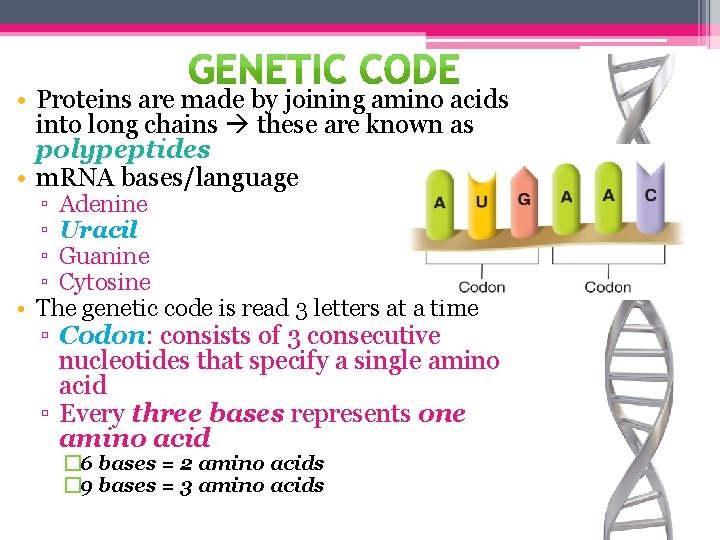
• Proteins are made by joining amino acids into long chains these are known as polypeptides • m. RNA bases/language ▫ Adenine ▫ Uracil ▫ Guanine ▫ Cytosine • The genetic code is read 3 letters at a time ▫ Codon: consists of 3 consecutive nucleotides that specify a single amino acid ▫ Every three bases represents one amino acid � 6 bases = 2 amino acids � 9 bases = 3 amino acids
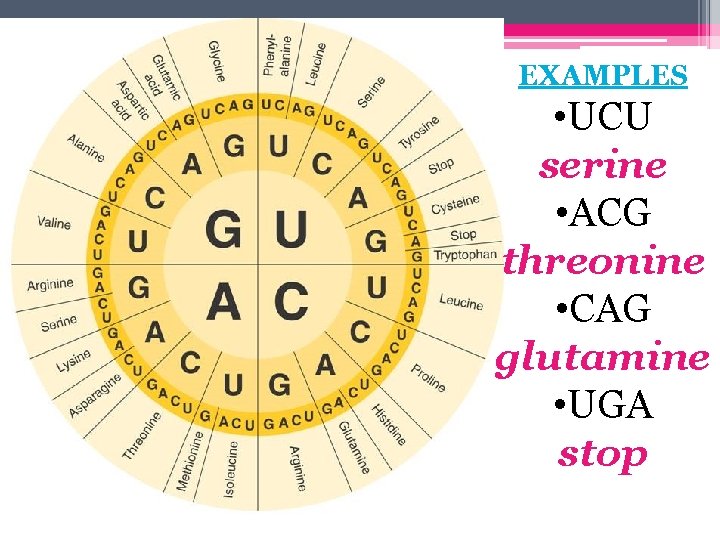
EXAMPLES • UCU serine • ACG threonine • CAG glutamine • UGA stop
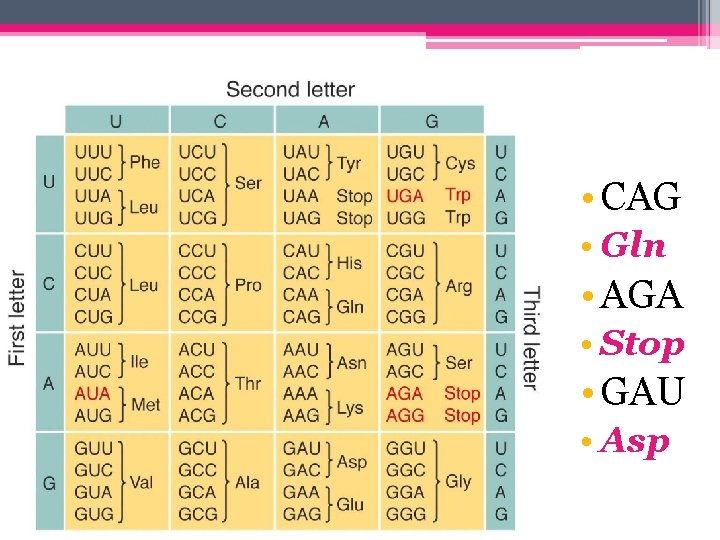
• CAG • Gln • AGA • Stop • GAU • Asp
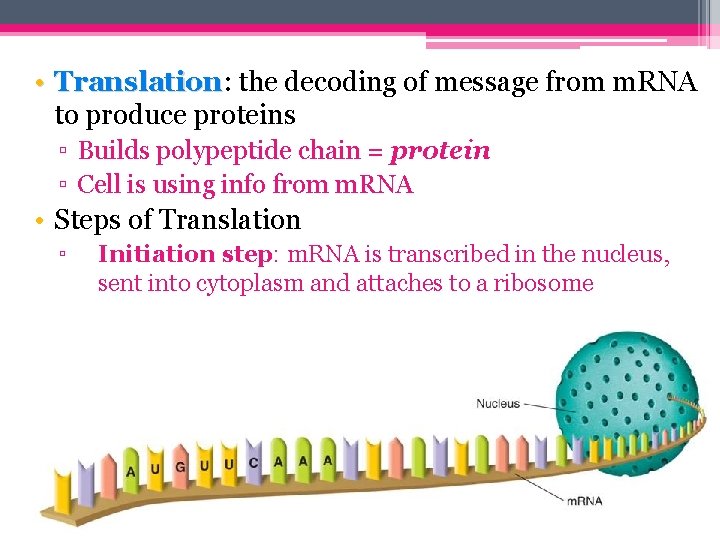
• Translation: the decoding of message from m. RNA Translation to produce proteins ▫ Builds polypeptide chain = protein ▫ Cell is using info from m. RNA • Steps of Translation ▫ Initiation step: m. RNA is transcribed in the nucleus, sent into cytoplasm and attaches to a ribosome
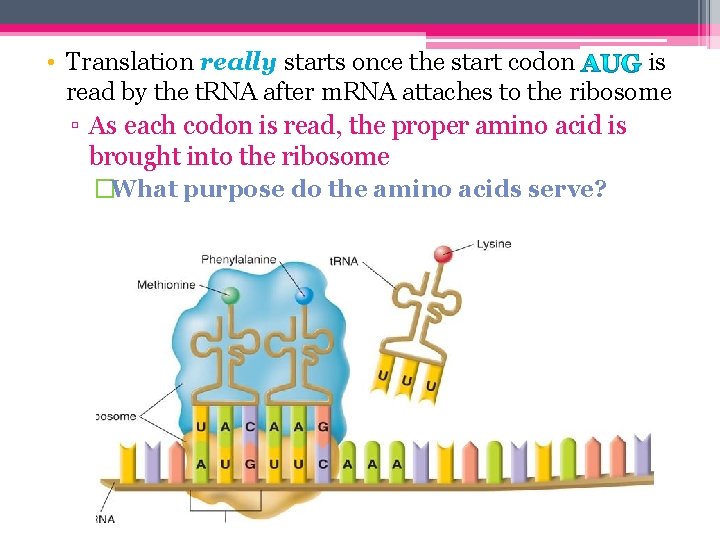
• Translation really starts once the start codon is read by the t. RNA after m. RNA attaches to the ribosome ▫ As each codon is read, the proper amino acid is brought into the ribosome �What purpose do the amino acids serve?
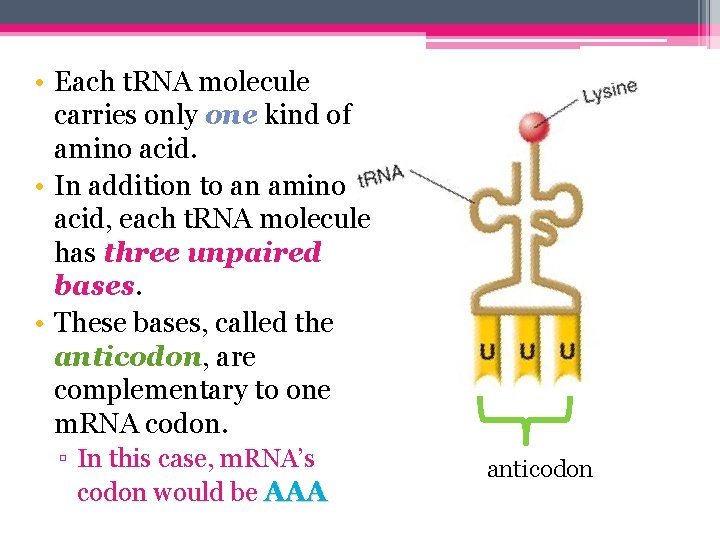
• Each t. RNA molecule carries only one kind of amino acid. • In addition to an amino acid, each t. RNA molecule has three unpaired bases. • These bases, called the anticodon, are complementary to one m. RNA codon. ▫ In this case, m. RNA’s codon would be AAA anticodon
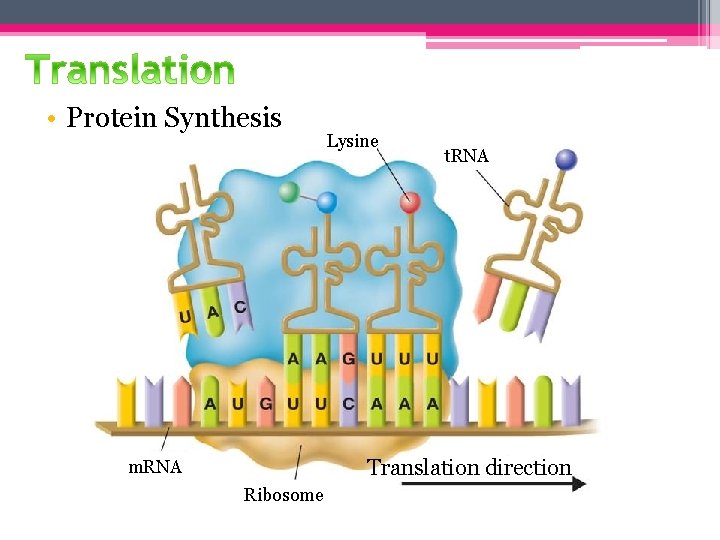
• Protein Synthesis Lysine t. RNA Translation direction m. RNA Ribosome
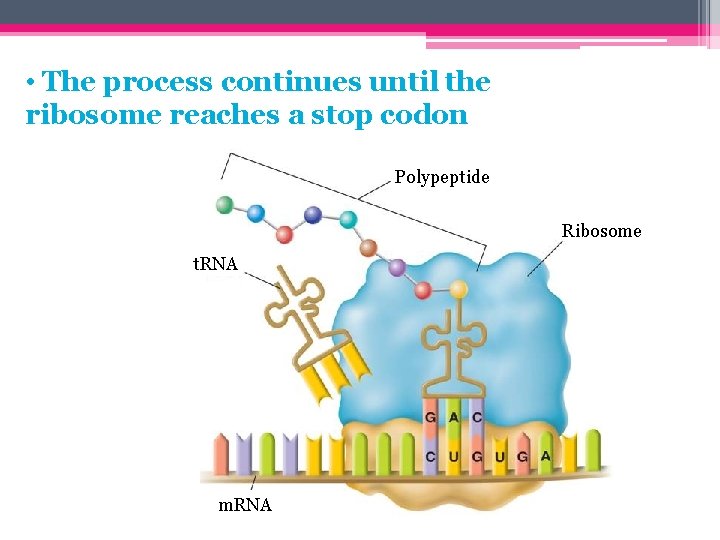
• The process continues until the ribosome reaches a stop codon Polypeptide Ribosome t. RNA m. RNA
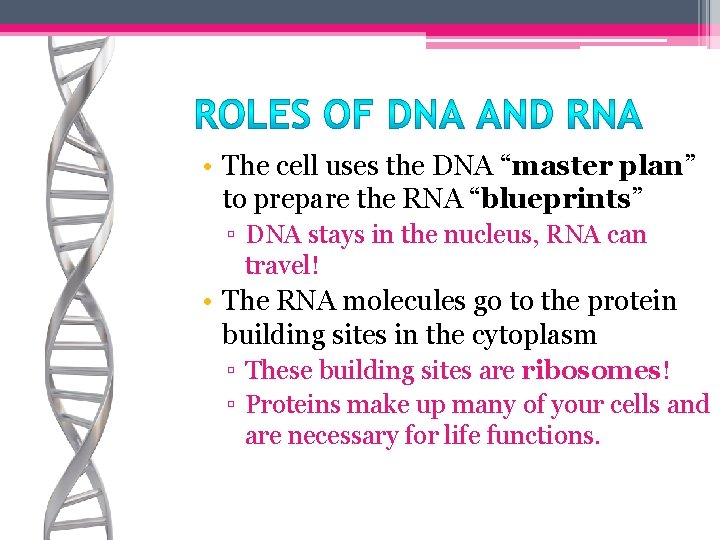
• The cell uses the DNA “master plan” to prepare the RNA “blueprints” ▫ DNA stays in the nucleus, RNA can travel! • The RNA molecules go to the protein building sites in the cytoplasm ▫ These building sites are ribosomes! ▫ Proteins make up many of your cells and are necessary for life functions.
DNA and RNA Day 4 - Mutations
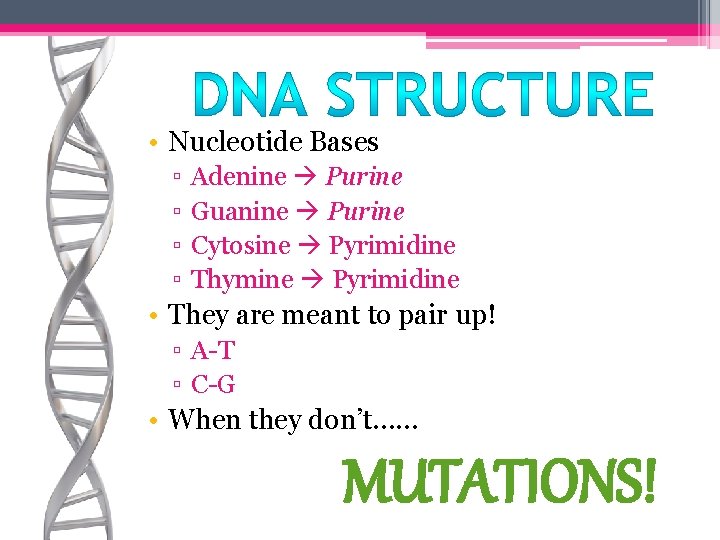
• Nucleotide Bases ▫ ▫ Adenine Purine Guanine Purine Cytosine Pyrimidine Thymine Pyrimidine • They are meant to pair up! ▫ A-T ▫ C-G • When they don’t…… MUTATIONS!
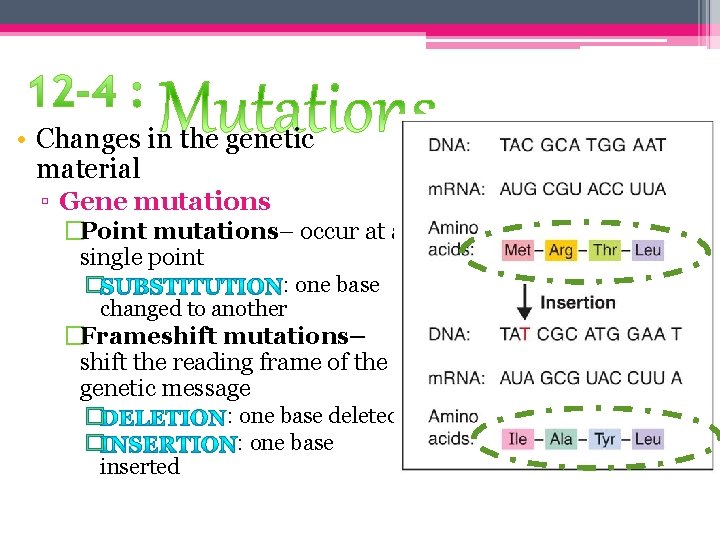
• Changes in the genetic material ▫ Gene mutations �Point mutations– occur at a single point � : one base changed to another �Frameshift mutations– shift the reading frame of the genetic message � � inserted : one base deleted : one base
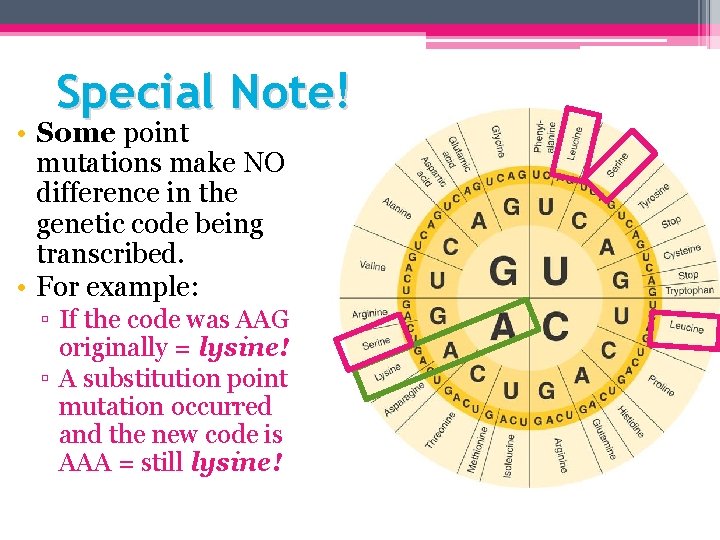
Special Note! • Some point mutations make NO difference in the genetic code being transcribed. • For example: ▫ If the code was AAG originally = lysine! ▫ A substitution point mutation occurred and the new code is AAA = still lysine!
Chromosomal Mutations • Involve changes in the # or structure of chromosomes ▫ May even change the locations of genes on chromosomes �Deletion: involves the loss of all or part of the chromosome �Duplication: produce extra copies of parts of the chromosome �Inversion: reverse the direction of parts of the chromosome �Translocation: part of chromosome breaks off and attaches to another chromosome
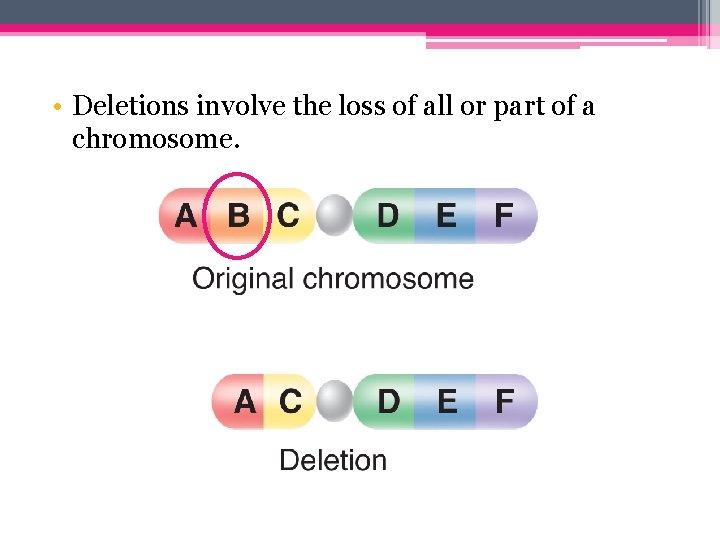
• Deletions involve the loss of all or part of a chromosome.
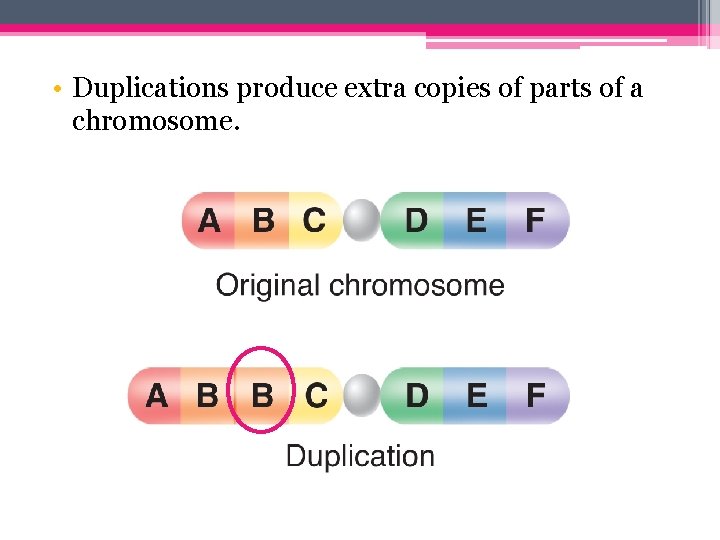
• Duplications produce extra copies of parts of a chromosome.
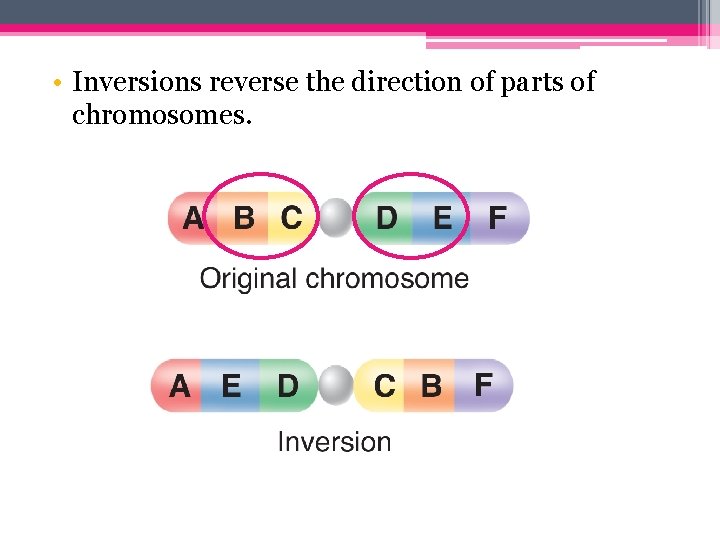
• Inversions reverse the direction of parts of chromosomes.
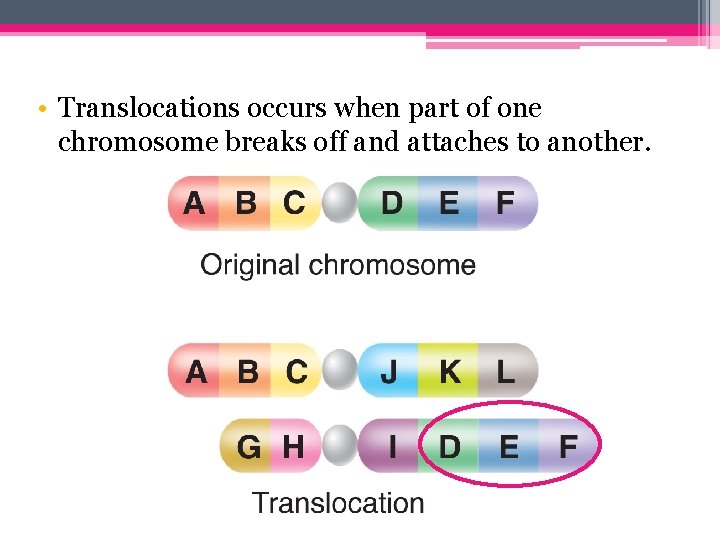
• Translocations occurs when part of one chromosome breaks off and attaches to another.
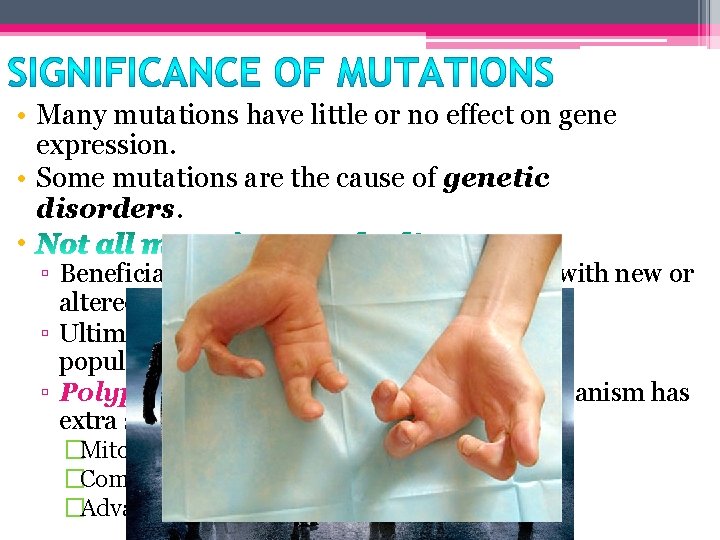
• Many mutations have little or no effect on gene expression. • Some mutations are the cause of genetic disorders. • ▫ Beneficial mutations may produce proteins with new or altered activities that can be useful. ▫ Ultimate source of genetic variation within a population ▫ Polyploidy is the condition in which an organism has extra sets of chromosomes. �Mitotic/Meiotic disaster! �Common in plants, sometimes in fish/frogs �Advantageous, at same time – disadvantages
• ▫ As cells grow and divide, they undergo differentiation, meaning they become specialized in structure and function. ▫ Gene regulation allows for specialization • control the differentiation of cells and tissues in the embryo ▫ Careful control of expression in hox genes is essential for normal development. ▫ For your cells, they have the similar DNA but certain genes are turned off and on depending on what your cell’s function is
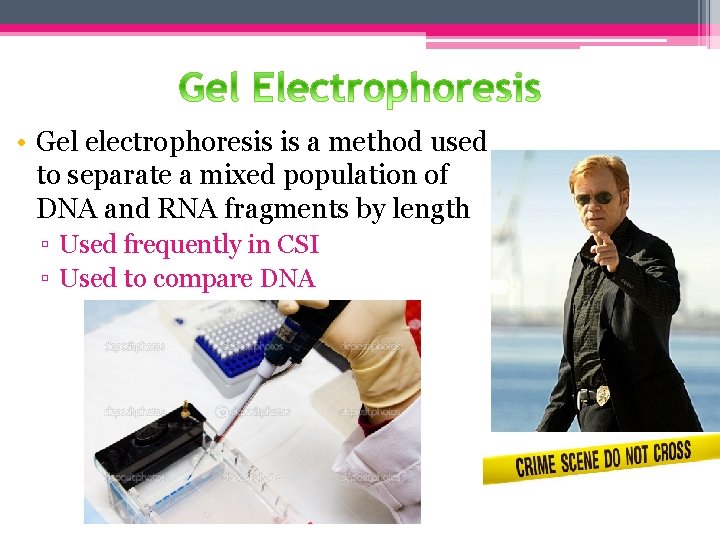
• Gel electrophoresis is a method used to separate a mixed population of DNA and RNA fragments by length ▫ Used frequently in CSI ▫ Used to compare DNA
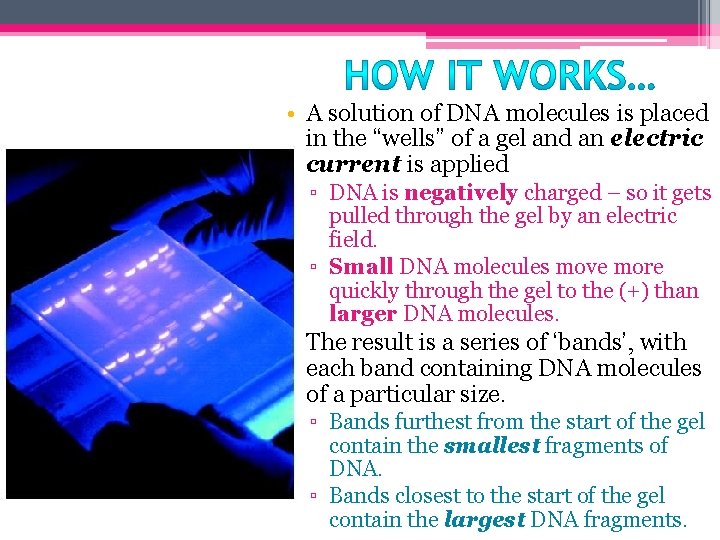
• A solution of DNA molecules is placed in the “wells” of a gel and an electric current is applied ▫ DNA is negatively charged – so it gets pulled through the gel by an electric field. ▫ Small DNA molecules move more quickly through the gel to the (+) than larger DNA molecules. • The result is a series of ‘bands’, with each band containing DNA molecules of a particular size. ▫ Bands furthest from the start of the gel contain the smallest fragments of DNA. ▫ Bands closest to the start of the gel contain the largest DNA fragments.
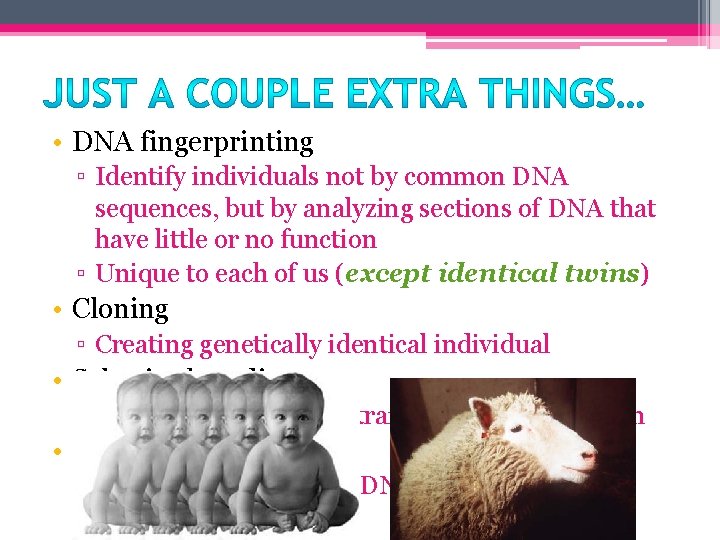
• DNA fingerprinting ▫ Identify individuals not by common DNA sequences, but by analyzing sections of DNA that have little or no function ▫ Unique to each of us (except identical twins) • Cloning ▫ Creating genetically identical individual • Selective breeding ▫ Used to create desired traits within a generation • Genetic Engineering ▫ Making changes in the DNA code
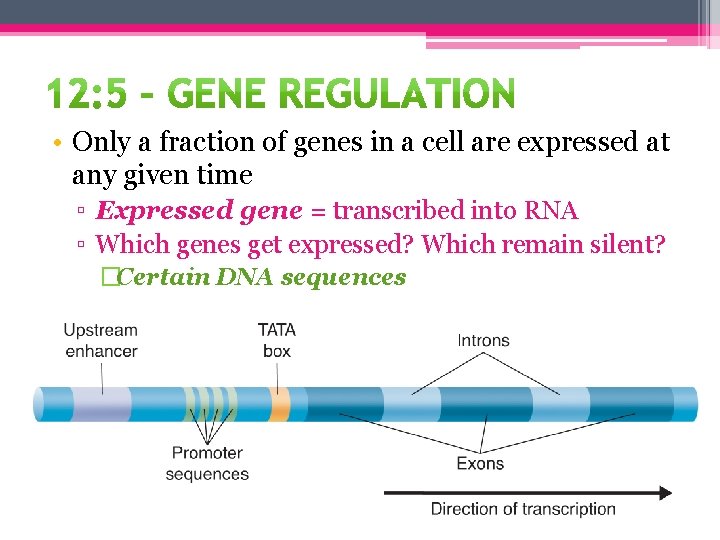
• Only a fraction of genes in a cell are expressed at any given time ▫ Expressed gene = transcribed into RNA ▫ Which genes get expressed? Which remain silent? �Certain DNA sequences
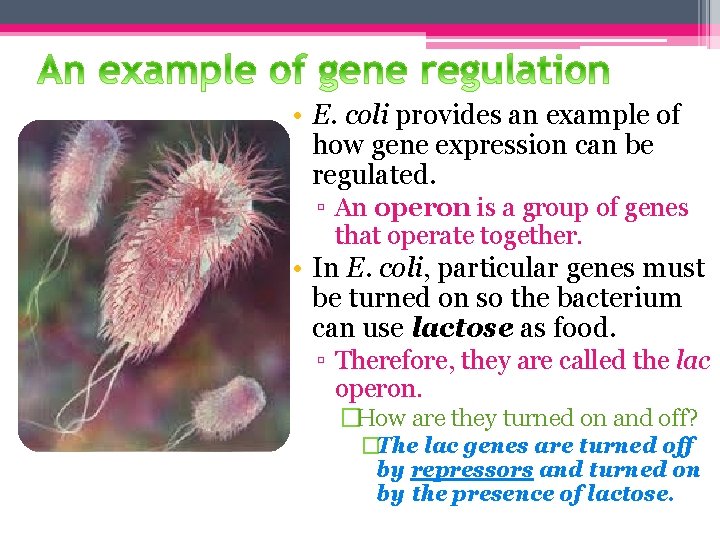
• E. coli provides an example of how gene expression can be regulated. ▫ An operon is a group of genes that operate together. • In E. coli, particular genes must be turned on so the bacterium can use lactose as food. ▫ Therefore, they are called the lac operon. �How are they turned on and off? �The lac genes are turned off by repressors and turned on by the presence of lactose.
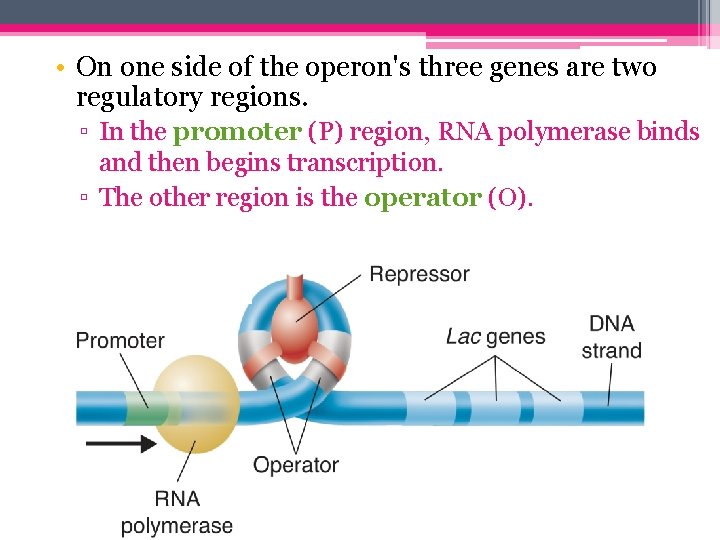
• On one side of the operon's three genes are two regulatory regions. ▫ In the promoter (P) region, RNA polymerase binds and then begins transcription. ▫ The other region is the operator (O).
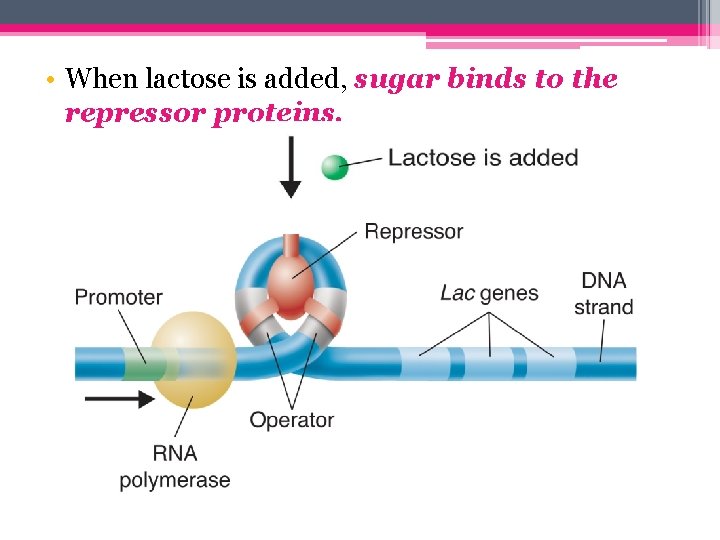
• When lactose is added, sugar binds to the repressor proteins.
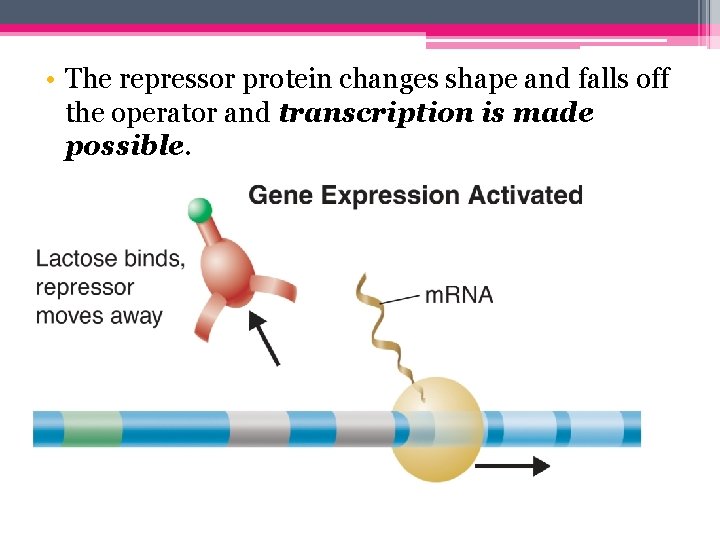
• The repressor protein changes shape and falls off the operator and transcription is made possible.
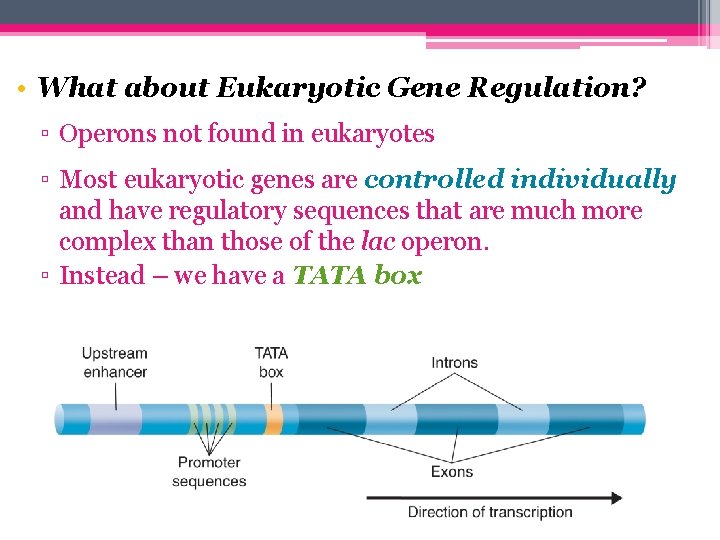
• What about Eukaryotic Gene Regulation? ▫ Operons not found in eukaryotes ▫ Most eukaryotic genes are controlled individually and have regulatory sequences that are much more complex than those of the lac operon. ▫ Instead – we have a TATA box
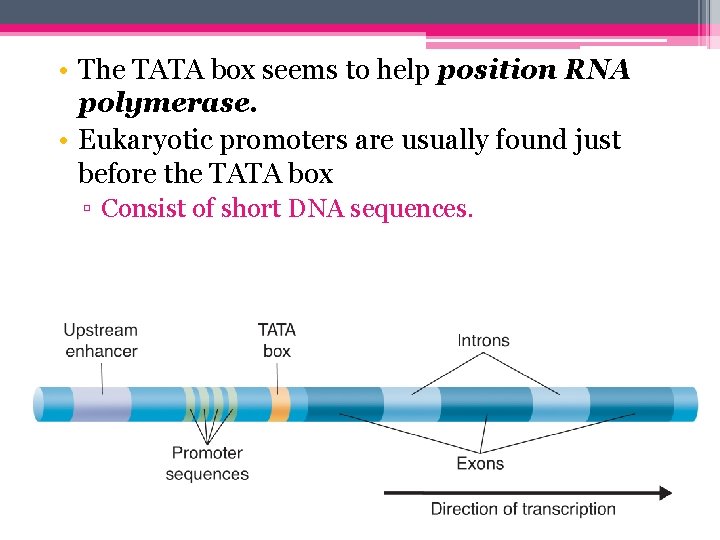
• The TATA box seems to help position RNA polymerase. • Eukaryotic promoters are usually found just before the TATA box ▫ Consist of short DNA sequences.
Your Lab – Who Killed Jane? • Your lab is a simulation of electrophoresis to figure out which one of the three men killed Jane • Read carefully! One tiny mistake could result in you having to restart the entire lab! • You will be analyzing multiple DNA samples ▫ ▫ ▫ ▫ Jane’s blood Skin found underneath Jane’s nails Mike’s blood Blood found on Mike’s shirt George’s blood Bob’s blood Blood found on Bob’s shirt
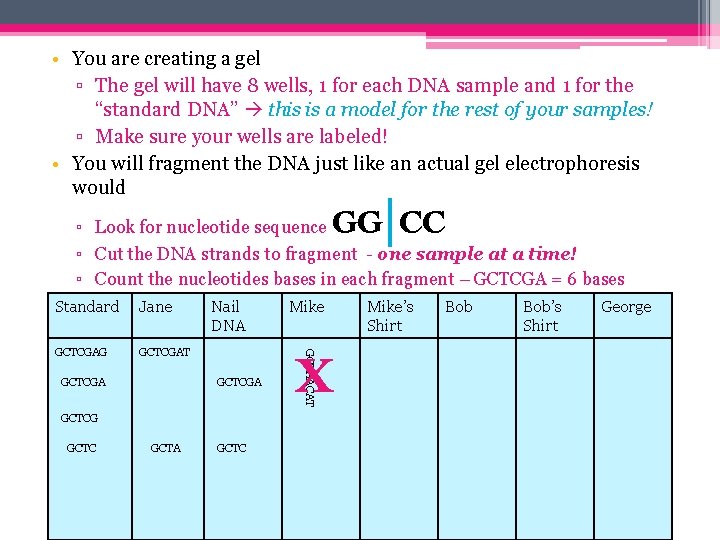
• You are creating a gel ▫ The gel will have 8 wells, 1 for each DNA sample and 1 for the “standard DNA” this is a model for the rest of your samples! ▫ Make sure your wells are labeled! • You will fragment the DNA just like an actual gel electrophoresis would ▫ Look for nucleotide sequence GG CC ▫ Cut the DNA strands to fragment - one sample at a time! ▫ Count the nucleotides bases in each fragment – GCTCGA = 6 bases Jane GCTCGAG GCTCGAT GCTCGA Nail DNA GCTCG GCTC GCTA GCTC Mike X GCTAACAT Standard Mike’s Shirt Bob’s Shirt George
- Slides: 63