
DNA and RNA Genetics Frederick Griffith 1928 Transformation
- Slides: 49
DNA and RNA Genetics
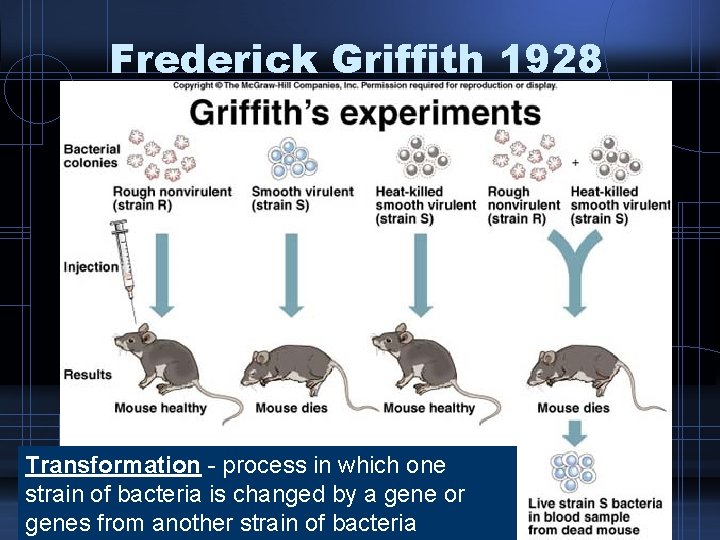
Frederick Griffith 1928 Transformation - process in which one strain of bacteria is changed by a gene or genes from another strain of bacteria
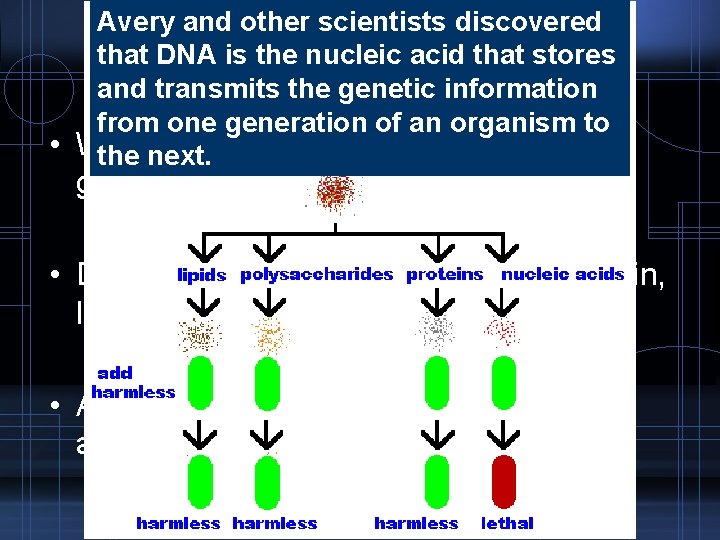
Avery and other scientists discovered that. Oswald DNA is the nucleic acid 1944 that stores Avery and transmits the genetic information from one generation of an organism to • World knows a molecule carries the next. genetic information. • Doesn’t know if the molecule is a: protein, lipid, carbohydrate, RNA, or DNA • Avery performs Griffith’s experiment again with a twist.
Do Now 1. What did Griffith’s and Avery’s experiments prove? Give a brief paragraph explaining the importance of their findings.
Quiz • Explain the importance of Griffith’s and Avery’s experiments in determining the molecule responsible for determining genetic inheritance…
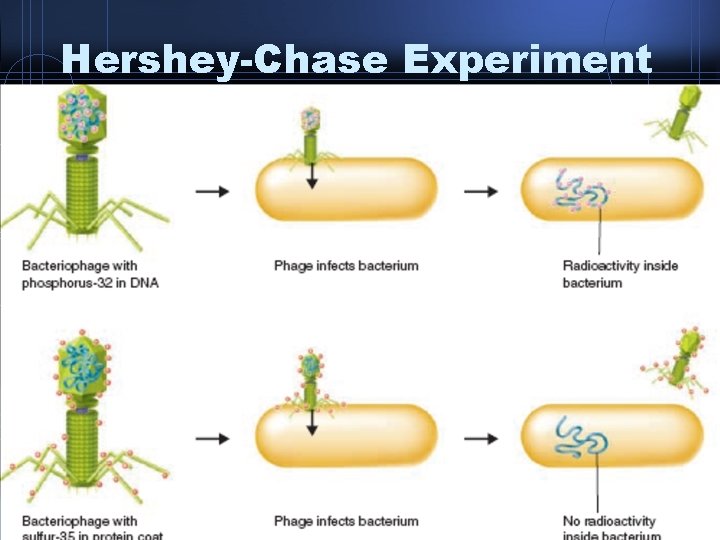
Hershey-Chase Experiment 1952 • Good scientists are naturally skeptical. • Hershey-Chase are testing to see if DNA is the molecule that carries genetic information. • Bacteriophage - virus that infects bacteria
Hershey-Chase Experiment
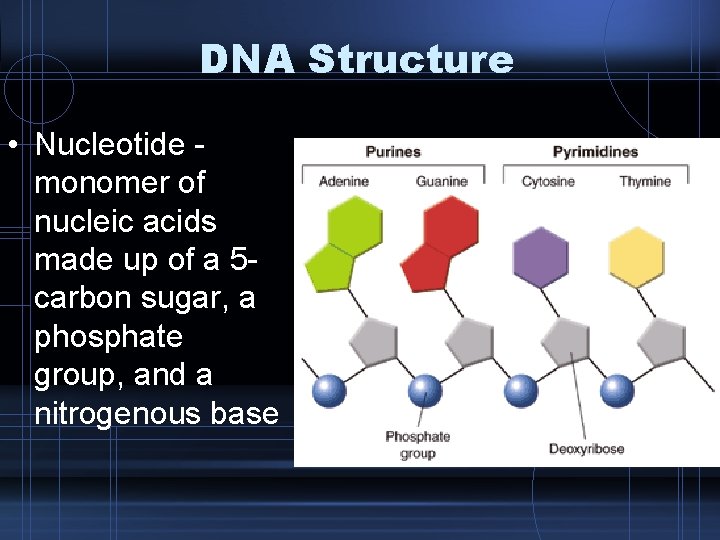
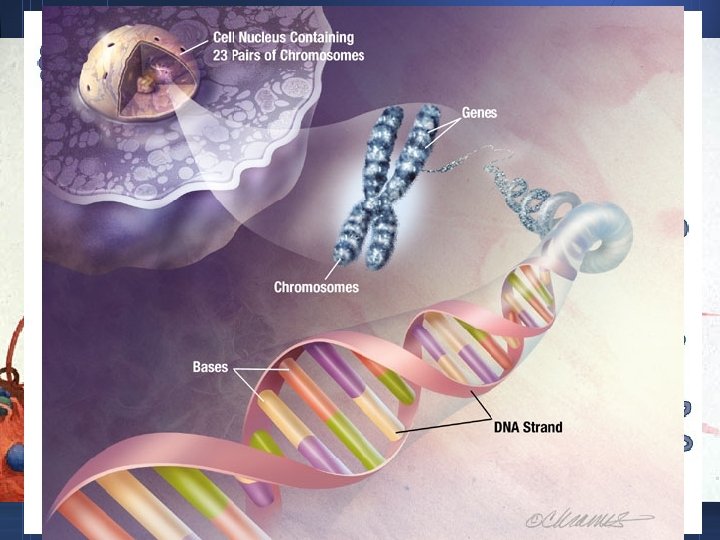
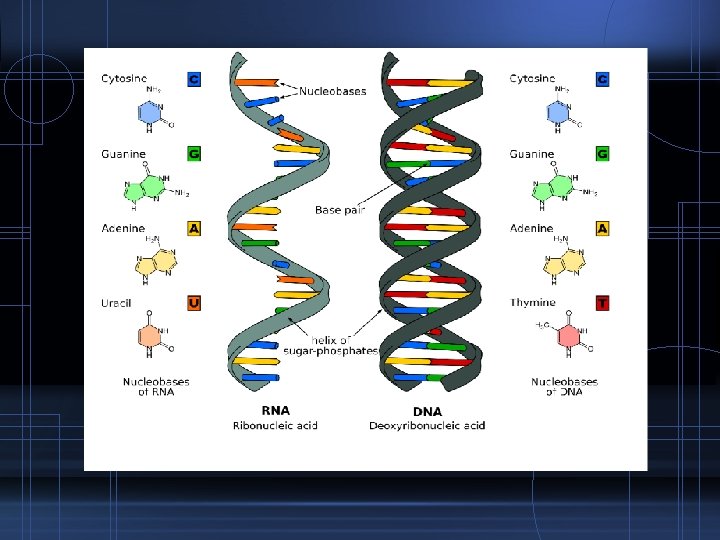
DNA Structure • Nucleotide monomer of nucleic acids made up of a 5 carbon sugar, a phosphate group, and a nitrogenous base
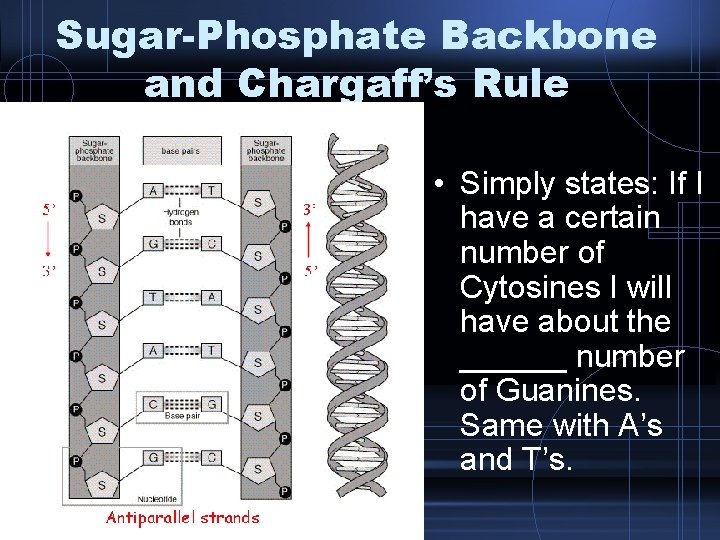
Sugar-Phosphate Backbone and Chargaff’s Rule • Simply states: If I have a certain number of Cytosines I will have about the ______ number of Guanines. Same with A’s and T’s.
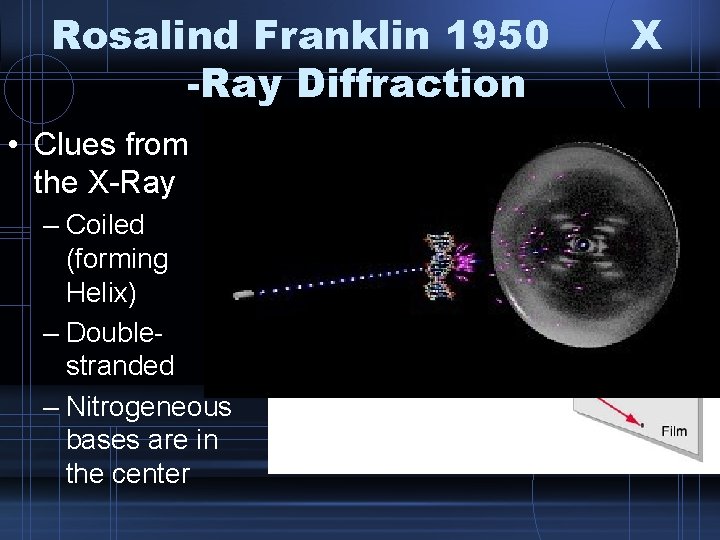
Rosalind Franklin 1950 -Ray Diffraction • Clues from the X-Ray – Coiled (forming Helix) – Doublestranded – Nitrogeneous bases are in the center X
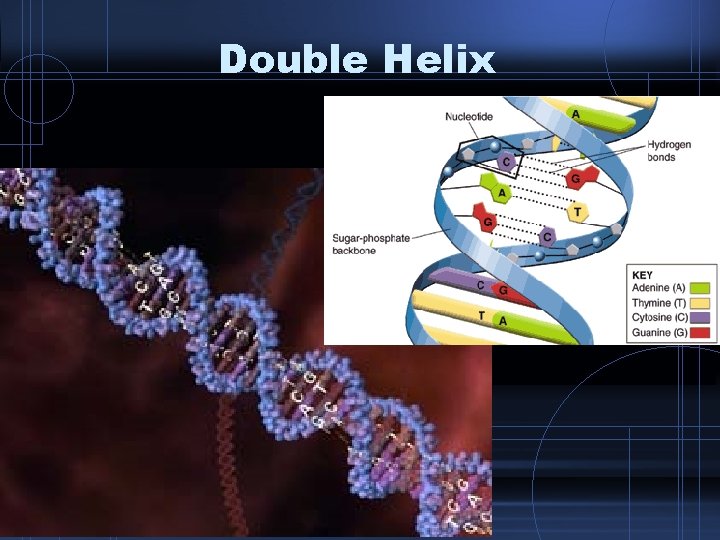
Watson & Crick • Francis Crick – British physicist • James Watson – American Biologist – Building a 3 D model of DNA – Franklin’s X-Ray opened their eyes to the Double Helix • Watson and Crick’s model of DNA was a double helix, in which two strands were wound around each other.
Double Helix
Homework Study Guide 12 -1 and 12 -2 1. List the conclusions and how each of these scientist got there: – Griffith – Avery – Hershey and Chase 2. How did Watson and Crick’s model explain why there are equal amounts of thymine and adenine in DNA? 3. Why did Hershey and Chase grow viruses in cultures that contained both radioactive phosphorus and radioactive sulfur? What might have happened if they only used one?
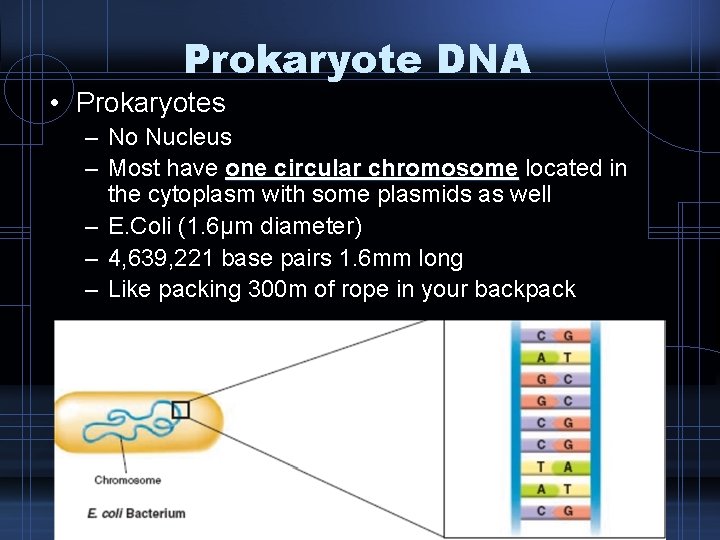
Prokaryote DNA • Prokaryotes – No Nucleus – Most have one circular chromosome located in the cytoplasm with some plasmids as well – E. Coli (1. 6μm diameter) – 4, 639, 221 base pairs 1. 6 mm long – Like packing 300 m of rope in your backpack
Eukaryotes and DNA • 1000 time more base pairs than bacterial DNA • Smallest human chromosome has 30 million base pairs of DNA • How do eukaryotes fit all that DNA in its nucleus?
DNA to Chromosomes • Vocab – Chromatin - granular material (uncondensed) within the nucleus; consists of DNA tightly coiled around proteins – Chromosomes – condensed chromatin – Histone - globular protein molecule around which DNA is tightly coiled in chromatin
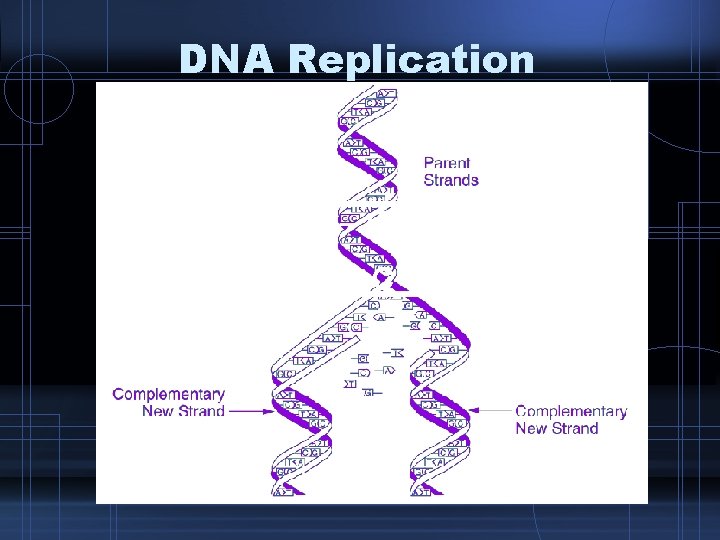
DNA Replication • During DNA replication, the DNA molecule separates into two strands, then produces two new complementary strands following the rules of base pairing. Each strand of the double helix of DNA serves as a template, or model, for the new strand.
Read 12 -3 • Crossword Puzzle
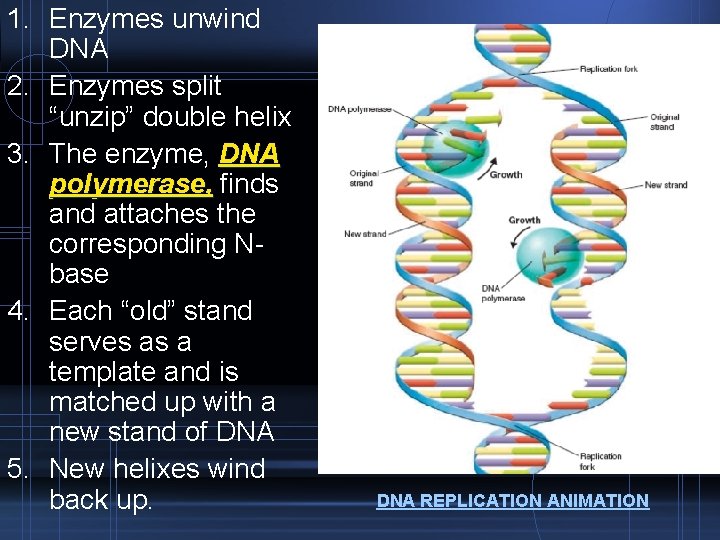
1. Enzymes unwind DNA 2. Enzymes split “unzip” double helix 3. The enzyme, DNA polymerase, finds and attaches the corresponding Nbase 4. Each “old” stand serves as a template and is matched up with a new stand of DNA 5. New helixes wind back up. DNA REPLICATION ANIMATION
DNA REPLICATION ANIMATIONS • DNA REPLICATION OVERVIEW • ORIGINS OF REPLICATION • LEADING STRAND • LAGGING STRAND • DNA REPLICATION REVIEW Play the following game on the link below • http: //nobelprize. org/educational_games/ medicine/dna_double_helix/
DNA Replication A–C–T–T–G–G–A–C T–G–A–A–C–C–T-G
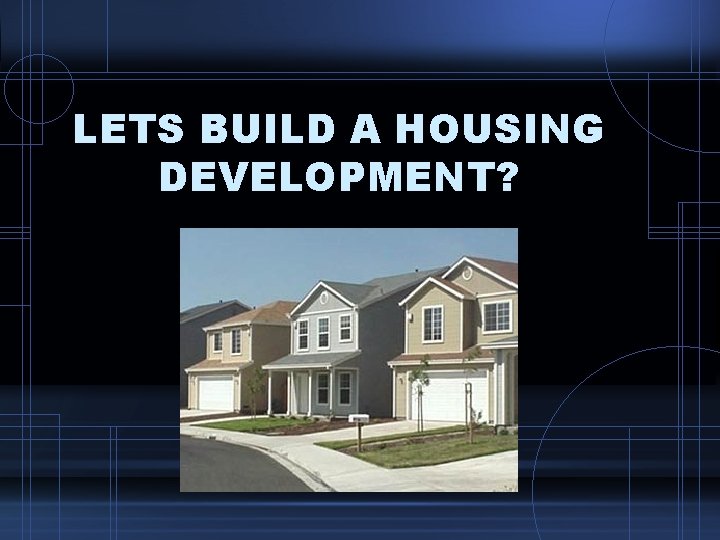
LETS BUILD A HOUSING DEVELOPMENT?
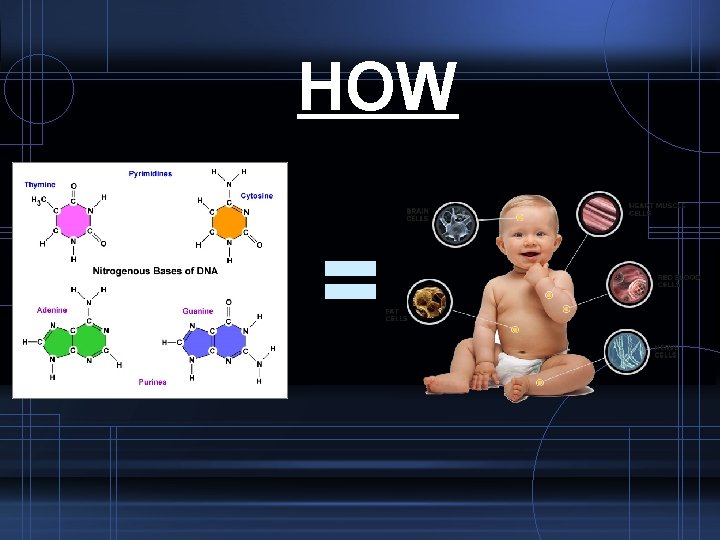
HOW =
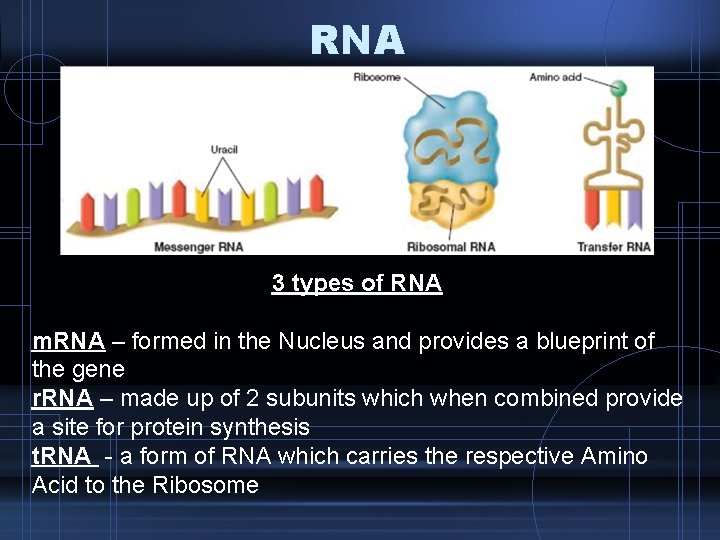
RNA 3 types of RNA m. RNA – formed in the Nucleus and provides a blueprint of the gene r. RNA – made up of 2 subunits which when combined provide a site for protein synthesis t. RNA - a form of RNA which carries the respective Amino Acid to the Ribosome
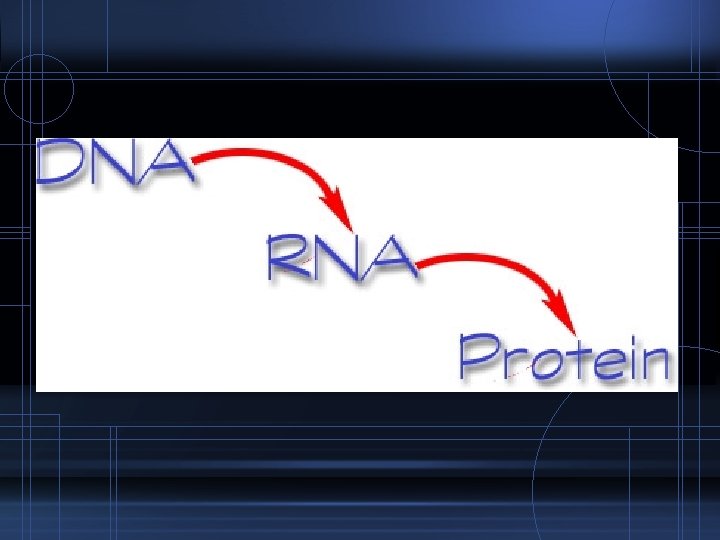
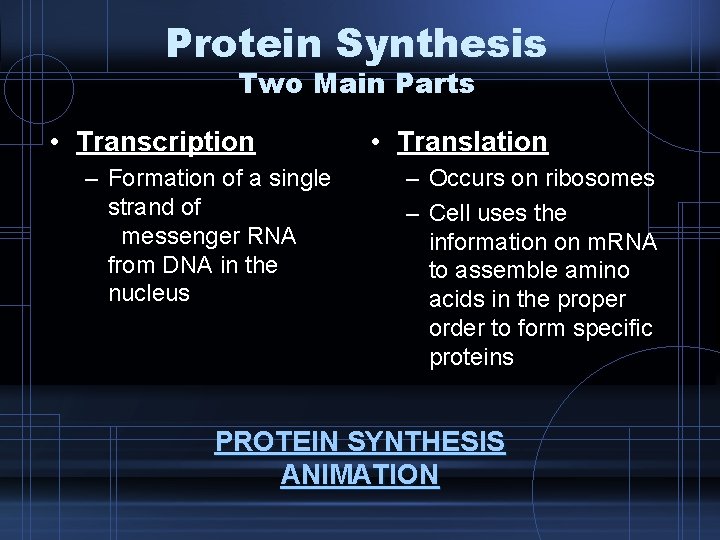
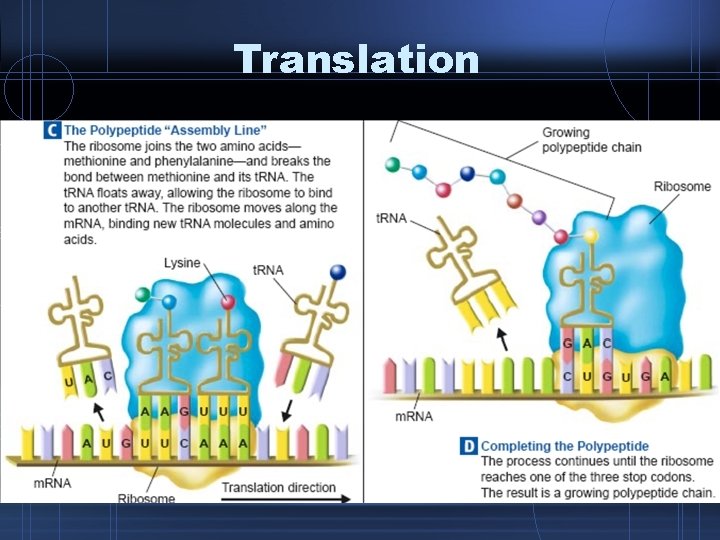
Protein Synthesis Two Main Parts • Transcription – Formation of a single strand of messenger RNA from DNA in the nucleus • Translation – Occurs on ribosomes – Cell uses the information on m. RNA to assemble amino acids in the proper order to form specific proteins PROTEIN SYNTHESIS ANIMATION
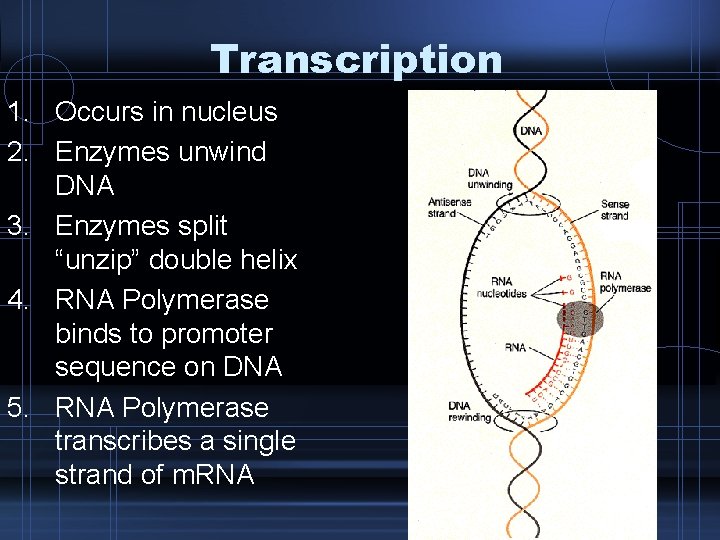
Transcription 1. Occurs in nucleus 2. Enzymes unwind DNA 3. Enzymes split “unzip” double helix 4. RNA Polymerase binds to promoter sequence on DNA 5. RNA Polymerase transcribes a single strand of m. RNA
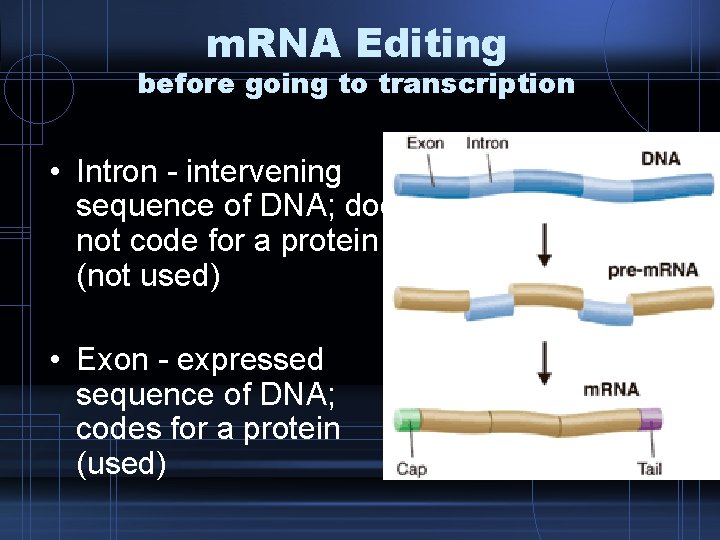
m. RNA Editing before going to transcription • Intron - intervening sequence of DNA; does not code for a protein (not used) • Exon - expressed sequence of DNA; codes for a protein (used)
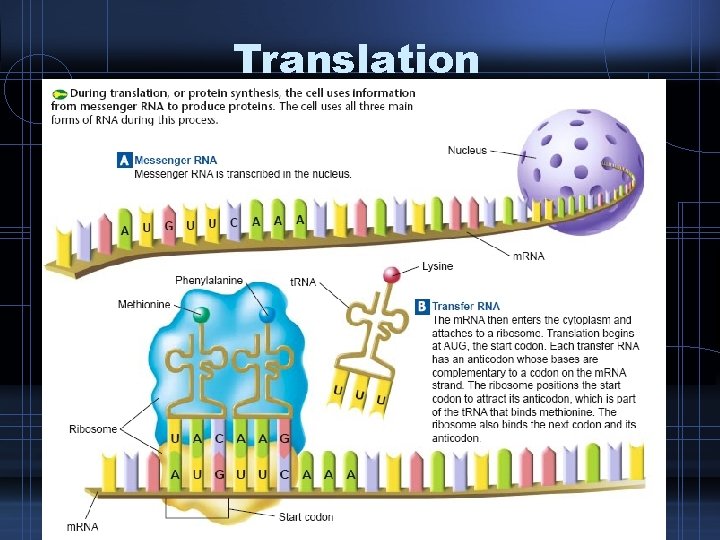
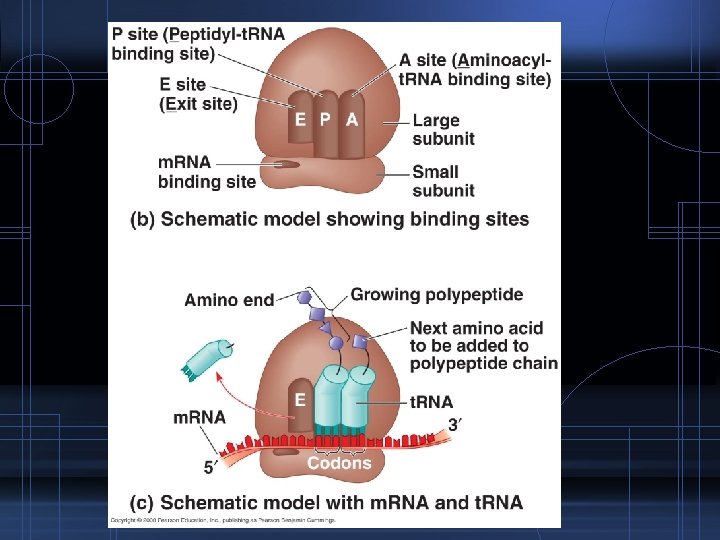
Translation
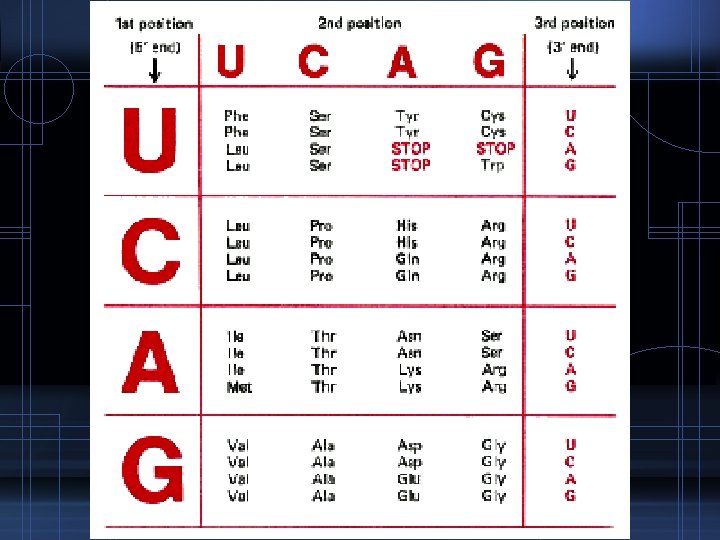
Translation
Genes and Proteins • Most genes only have instructions for assembling proteins. • If that’s the case what do proteins have to do with eye color, hair color or height?
WHAT HAPPENS WHEN THERE IS A MISTAKE?
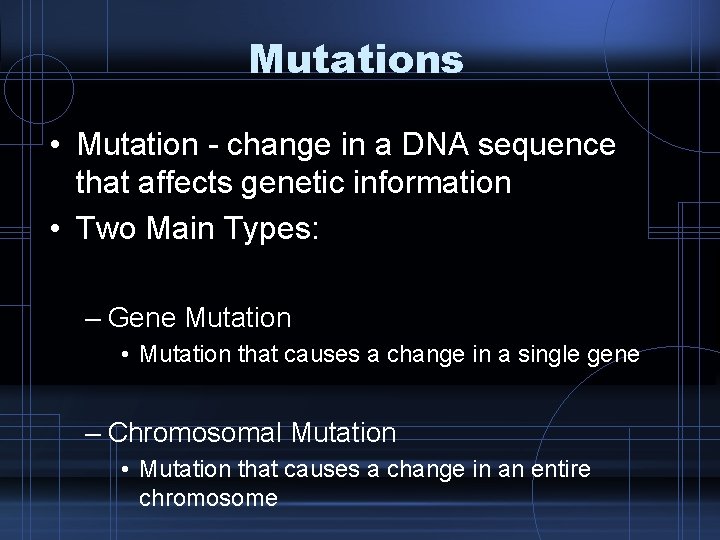
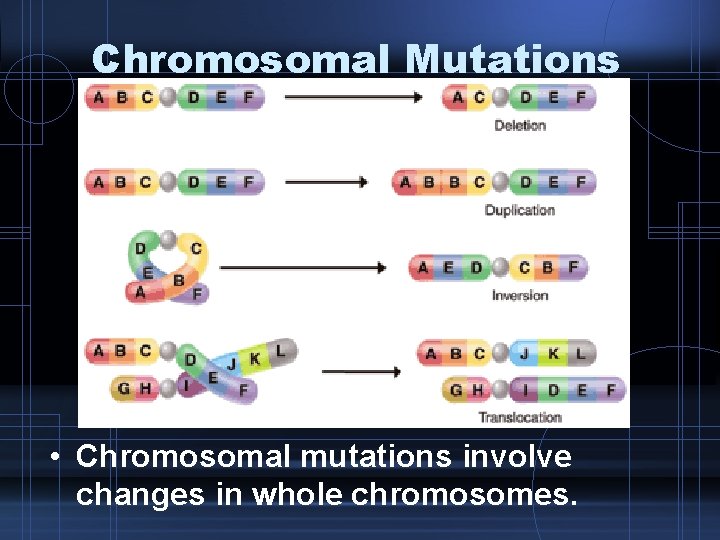
Mutations • Mutation - change in a DNA sequence that affects genetic information • Two Main Types: – Gene Mutation • Mutation that causes a change in a single gene – Chromosomal Mutation • Mutation that causes a change in an entire chromosome
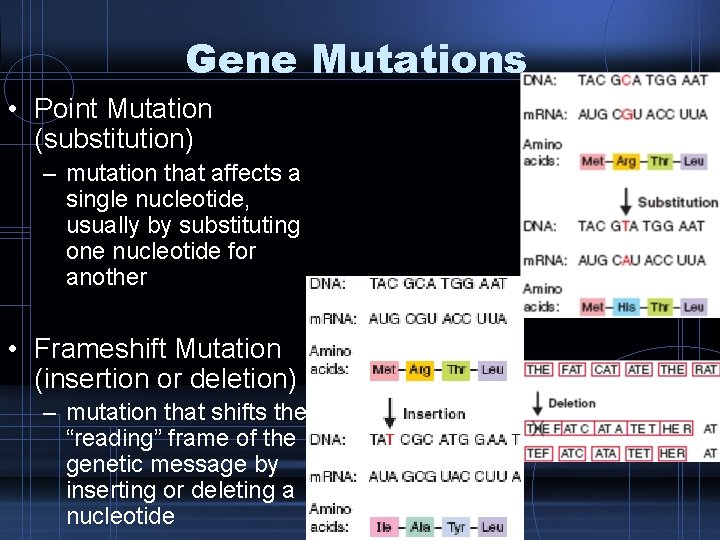
Gene Mutations • Point Mutation (substitution) – mutation that affects a single nucleotide, usually by substituting one nucleotide for another • Frameshift Mutation (insertion or deletion) – mutation that shifts the “reading” frame of the genetic message by inserting or deleting a nucleotide
Chromosomal Mutations • Chromosomal mutations involve changes in whole chromosomes.
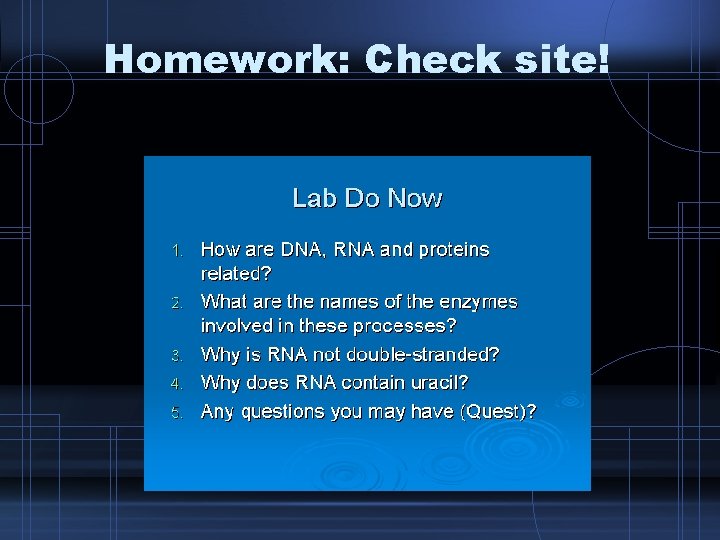
Homework: Check site!
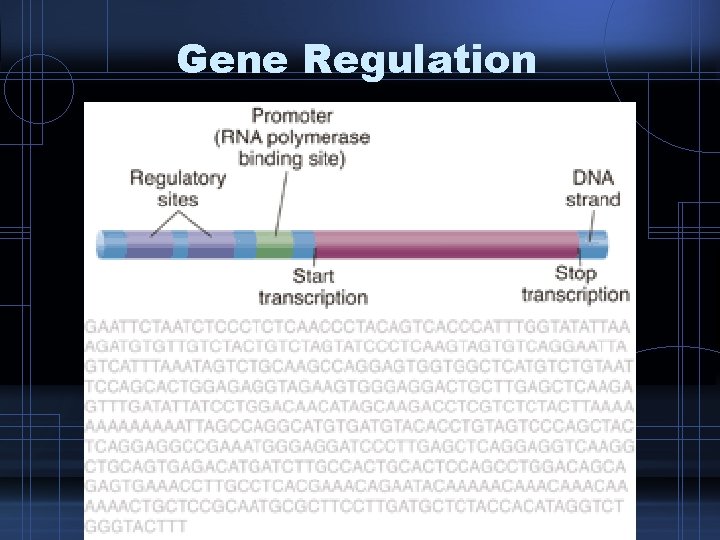
Gene Regulation
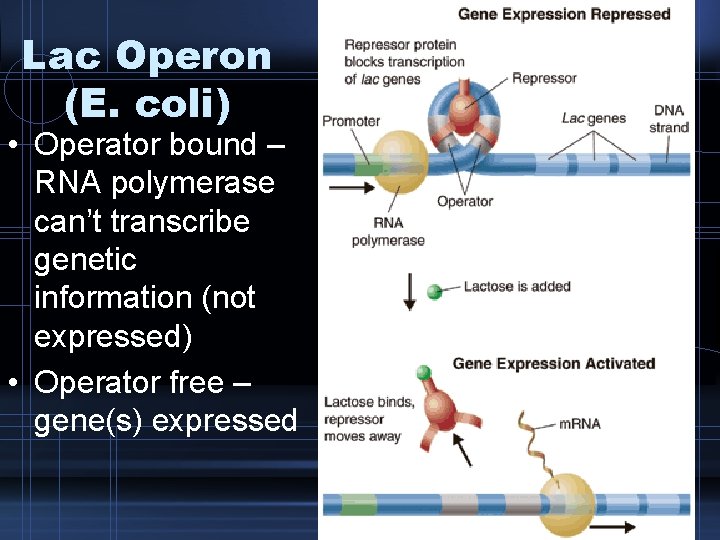
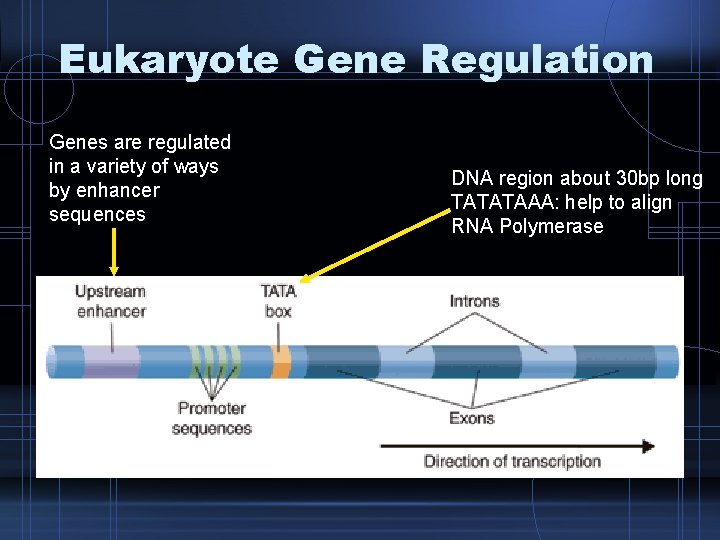
Gene Regulation • Prokaryote Gene Regulation – Will often have one OPERATOR (regulatory site) controlling the expression of more than one gene. OPERON • Eukaryote Gene Regulation – Most eukaryotic genes are controlled individually and have regulatory sequences that are much more complex than those of the lac operon
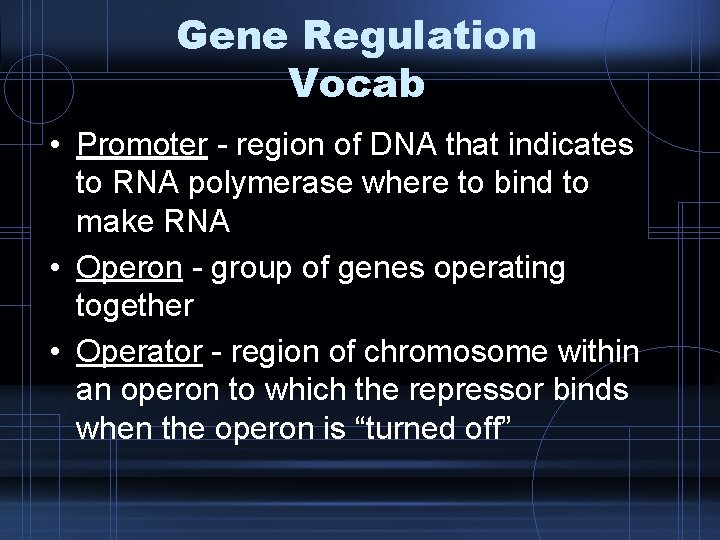
Gene Regulation Vocab • Promoter - region of DNA that indicates to RNA polymerase where to bind to make RNA • Operon - group of genes operating together • Operator - region of chromosome within an operon to which the repressor binds when the operon is “turned off”
Lac Operon (E. coli) • Operator bound – RNA polymerase can’t transcribe genetic information (not expressed) • Operator free – gene(s) expressed
Eukaryote Gene Regulation Genes are regulated in a variety of ways by enhancer sequences DNA region about 30 bp long TATATAAA: help to align RNA Polymerase
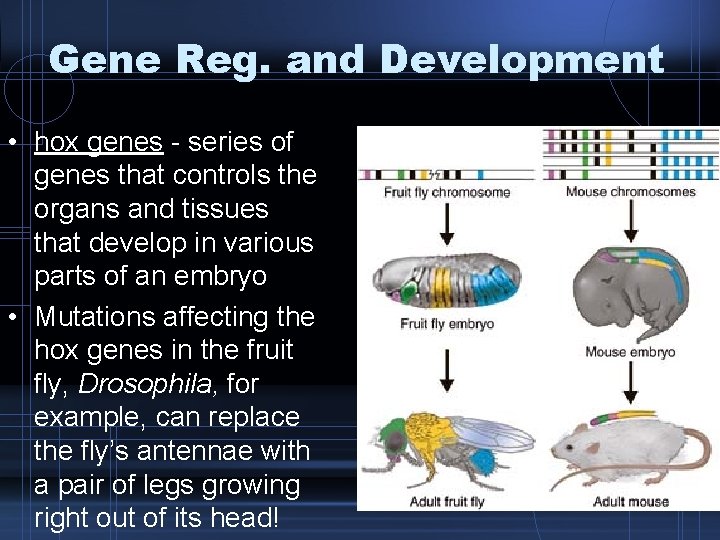
Gene Reg. and Development • hox genes - series of genes that controls the organs and tissues that develop in various parts of an embryo • Mutations affecting the hox genes in the fruit fly, Drosophila, for example, can replace the fly’s antennae with a pair of legs growing right out of its head!
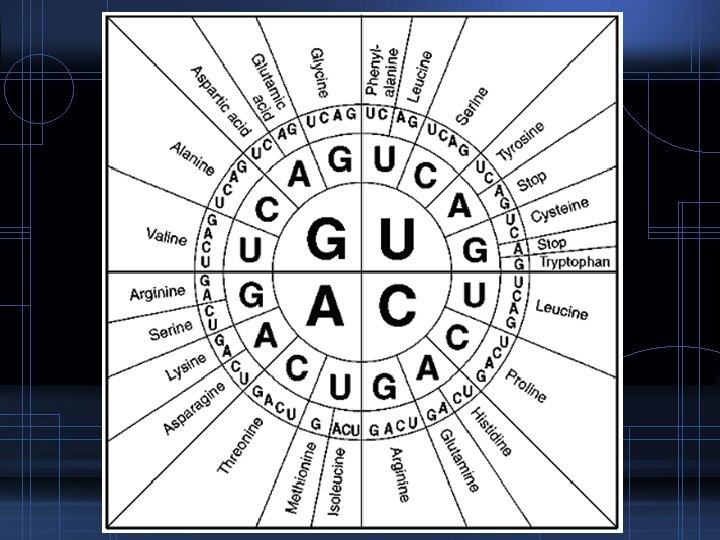
1. 2. 3. 4. 5. 6. 7. What is meant by term base pairing? How is base pairing involved in DNA replication? When a DNA molecule is replicated, how do the new molecules relate to the original molecule? What is the difference between introns and exons? What is a codon? Anticodon? How do they relate? Explain why controlling proteins in an organism controls the organism’s traits. Name two major types of mutations. What do they have in common? How are they different? Give an example of each. The word transcribe means “to write out”, and the word translate means “to express in another language. ” Review the meanings of transcription and translation in genetics. How do the technical meanings of these words relate to meanings of the words in ordinary language?