
DNA and Replication 1 History of DNA 2
- Slides: 34
DNA and Replication 1
History of DNA 2
History of DNA • Early scientists thought protein was the cell’s hereditary material because it was more complex than DNA • Proteins were composed of 20 different amino acids in long polypeptide chains 3
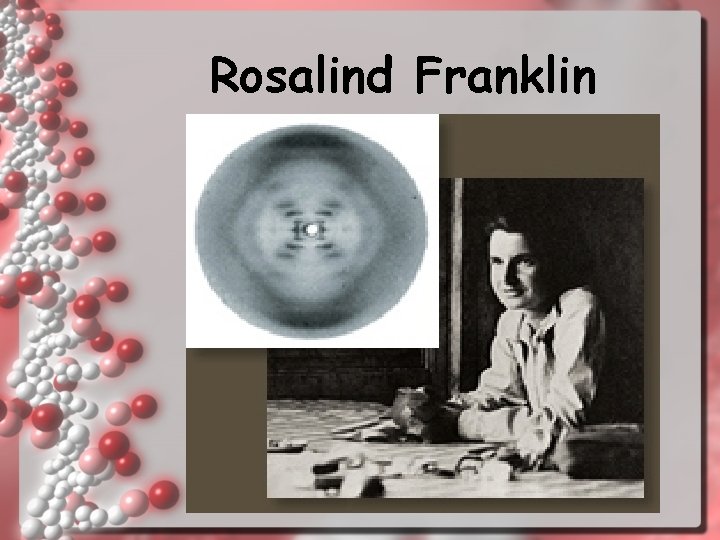
DNA Structure • Rosalind Franklin took diffraction x-ray photographs of DNA crystals • In the 1950’s, Watson & Crick built the first model of DNA using Franklin’s xrays 4
Rosalind Franklin 5
DNA Structure 6
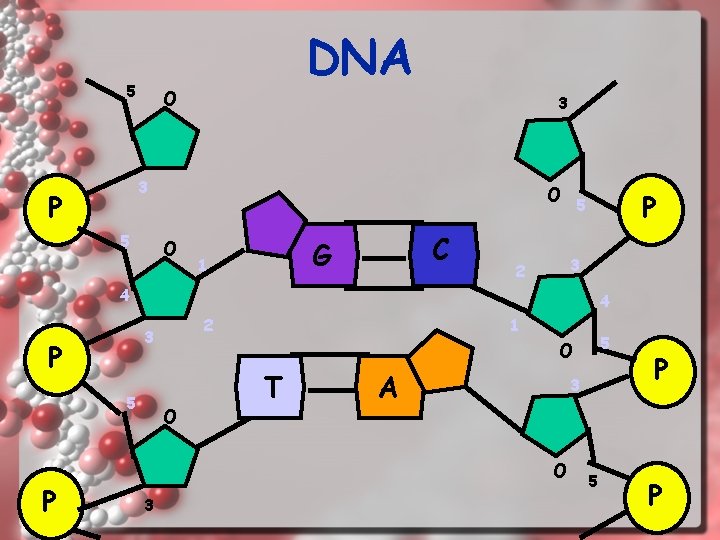
DNA • Two strands coiled called a double helix • Sides made of a pentose sugar Deoxyribose bonded to phosphate (PO 4) groups by phosphodiester bonds • Center made of nitrogen bases bonded together by weak hydrogen bonds 7
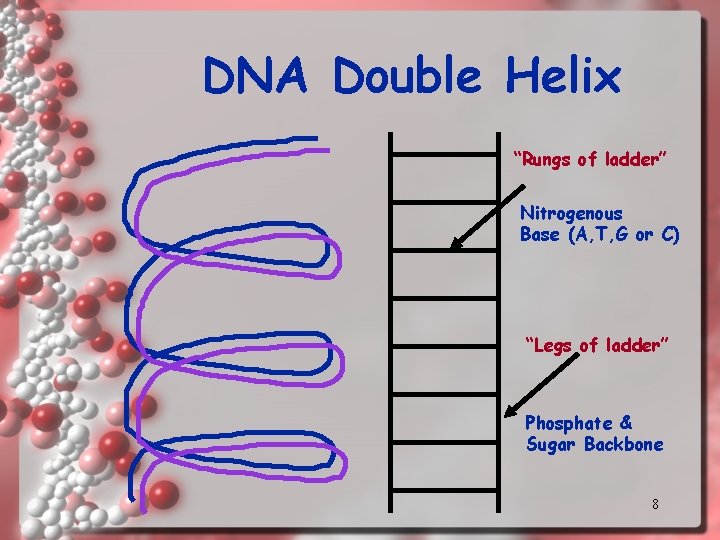
DNA Double Helix “Rungs of ladder” Nitrogenous Base (A, T, G or C) “Legs of ladder” Phosphate & Sugar Backbone 8
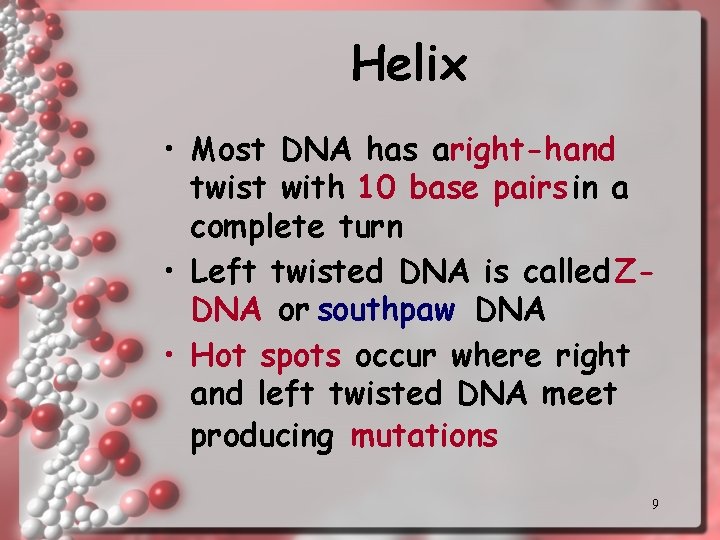
Helix • Most DNA has aright-hand twist with 10 base pairs in a complete turn • Left twisted DNA is called ZDNA or southpaw DNA • Hot spots occur where right and left twisted DNA meet producing mutations 9
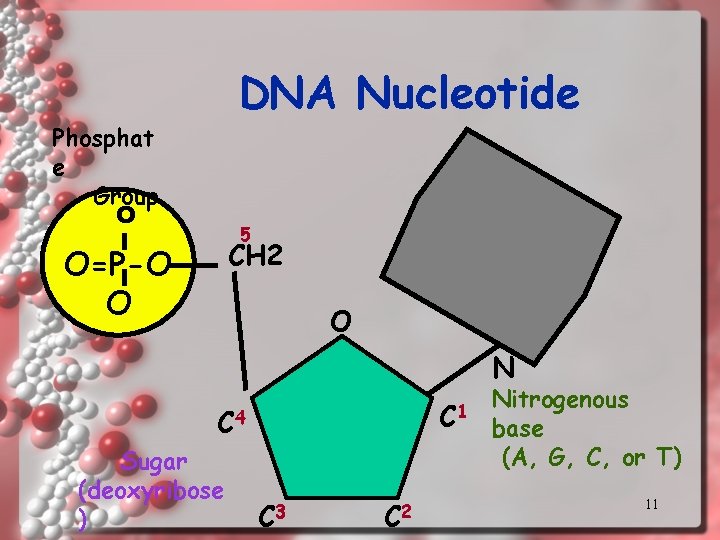
DNA • Stands for Deoxyribonucleic acid • Made up of subunits called nucleotides • Nucleotide made of: 1. Phosphate group 2. 5 -carbon sugar 3. Nitrogenous base 10
DNA Nucleotide Phosphat e Group O 5 CH 2 O=P-O O O N C 1 C 4 Sugar (deoxyribose ) C 3 C 2 Nitrogenous base (A, G, C, or T) 11
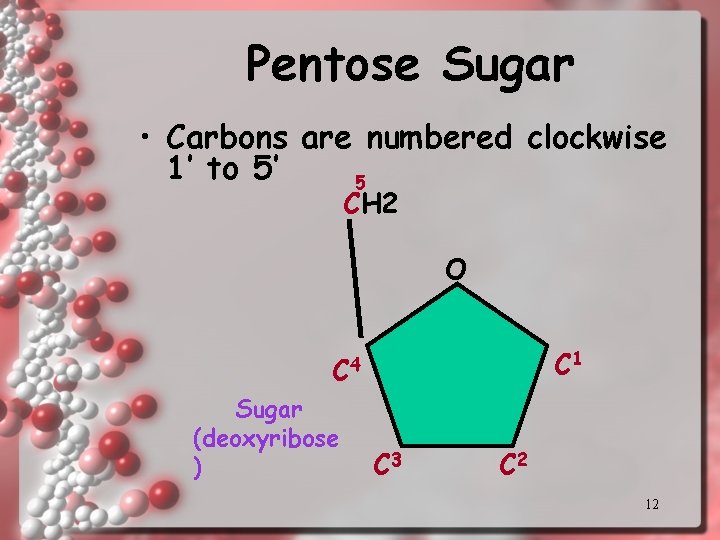
Pentose Sugar • Carbons are numbered clockwise 1’ to 5’ 5 CH 2 O C 1 C 4 Sugar (deoxyribose ) C 3 C 2 12
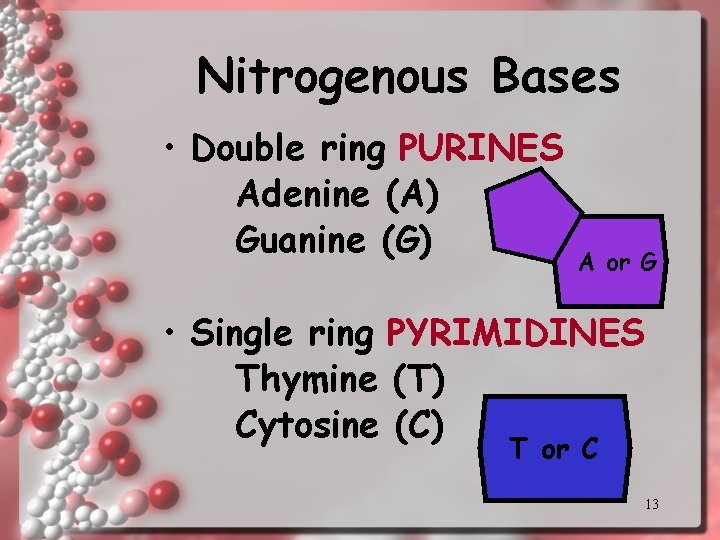
Nitrogenous Bases • Double ring PURINES Adenine (A) Guanine (G) A or G • Single ring PYRIMIDINES Thymine (T) Cytosine (C) T or C 13
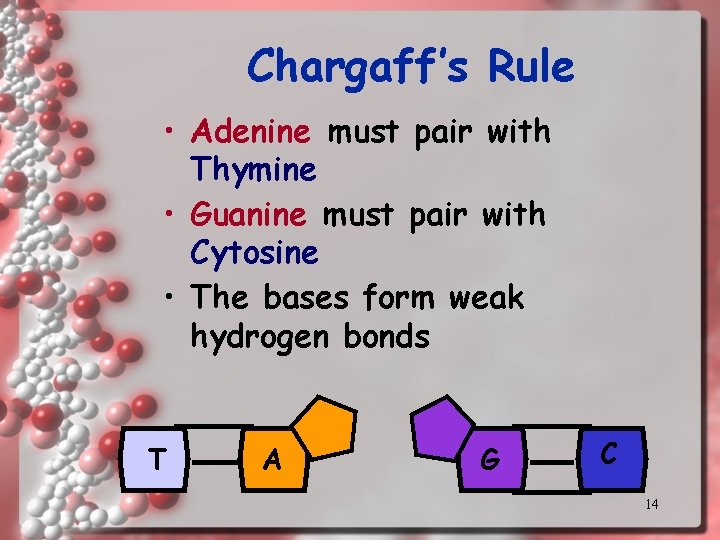
Chargaff’s Rule • Adenine must pair with Thymine • Guanine must pair with Cytosine • The bases form weak hydrogen bonds T A G C 14
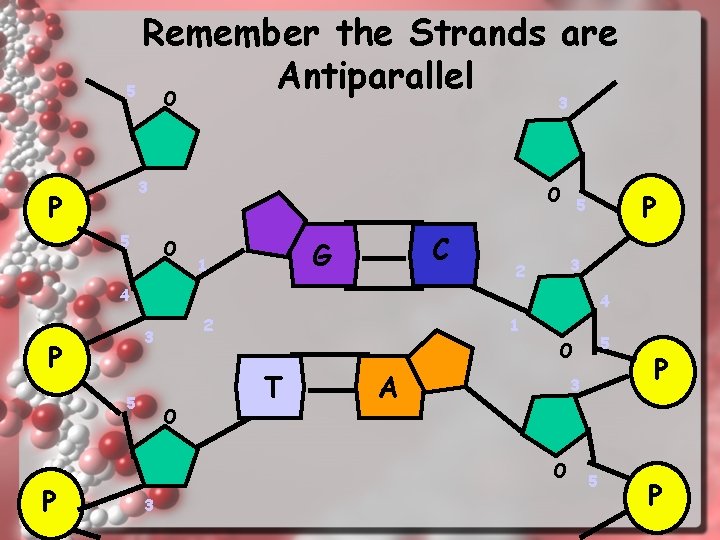
5 DNA O 3 3 P 5 O O C G 1 P 5 3 2 4 4 P 5 P 2 3 1 O T A 3 O 3 5 O 5 P P 15
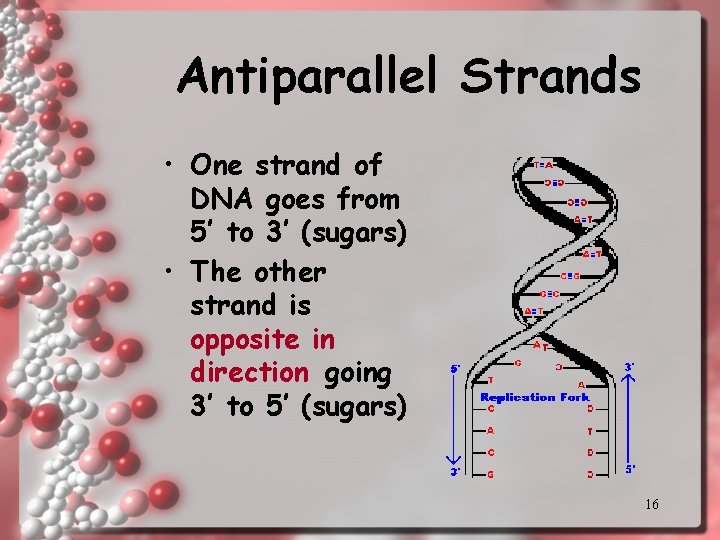
Antiparallel Strands • One strand of DNA goes from 5’ to 3’ (sugars) • The other strand is opposite in direction going 3’ to 5’ (sugars) 16
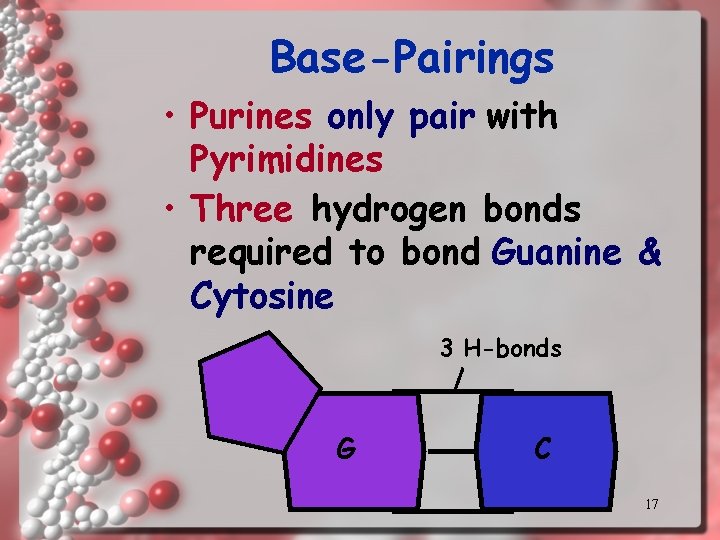
Base-Pairings • Purines only pair with Pyrimidines • Three hydrogen bonds required to bond Guanine & Cytosine 3 H-bonds G C 17
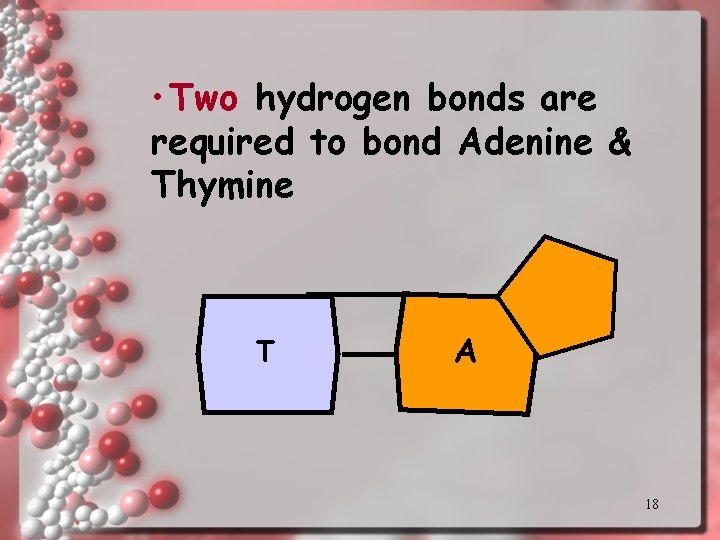
• Two hydrogen bonds are required to bond Adenine & Thymine T A 18
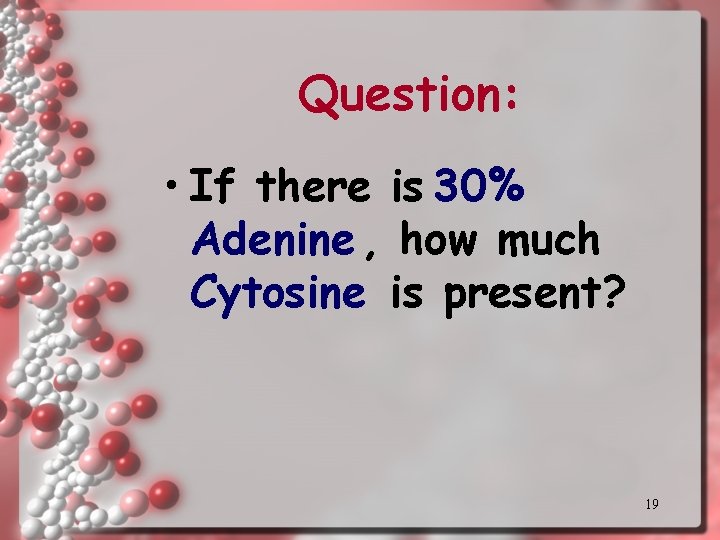
Question: • If there is 30% Adenine , how much Cytosine is present? 19
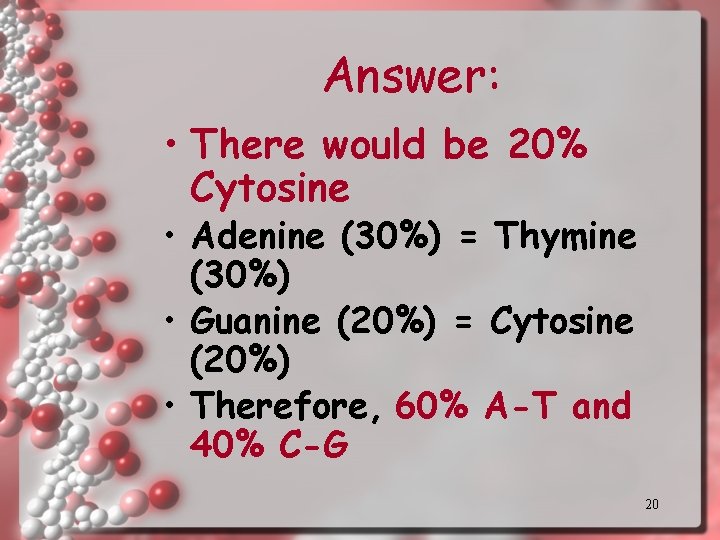
Answer: • There would be 20% Cytosine • Adenine (30%) = Thymine (30%) • Guanine (20%) = Cytosine (20%) • Therefore, 60% A-T and 40% C-G 20
DNA Replicatio n 21
Replication Facts • DNA has to be copiedbefore a cell divides • DNA is copied during the S or synthesis phase of interphase • New cells will need identical DNA strands 22
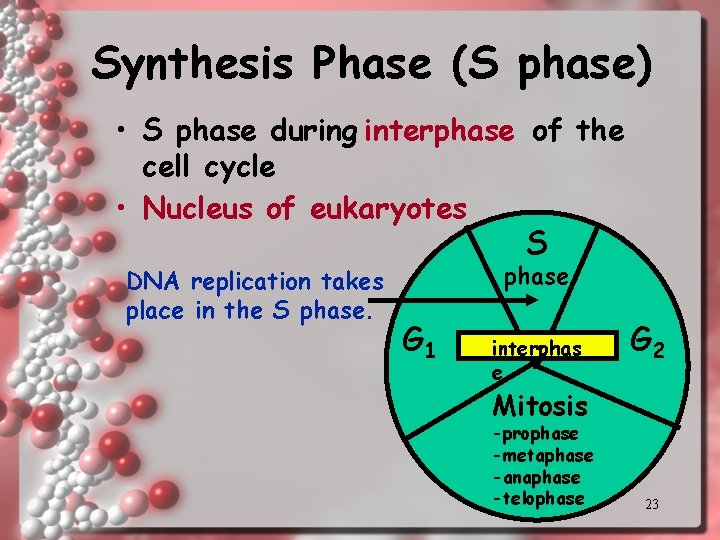
Synthesis Phase (S phase) • S phase during interphase of the cell cycle • Nucleus of eukaryotes DNA replication takes place in the S phase G 1 interphas e G 2 Mitosis -prophase -metaphase -anaphase -telophase 23
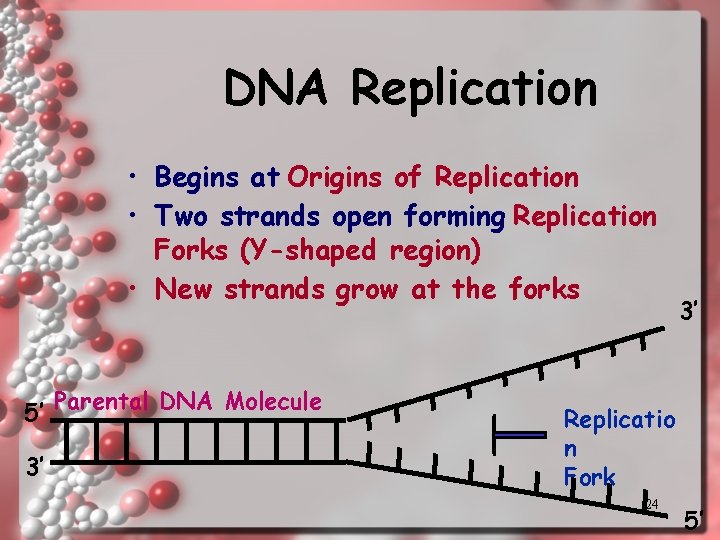
DNA Replication • Begins at Origins of Replication • Two strands open forming Replication Forks (Y-shaped region) • New strands grow at the forks 5’ Parental DNA Molecule 3’ 3’ Replicatio n Fork 24 5’
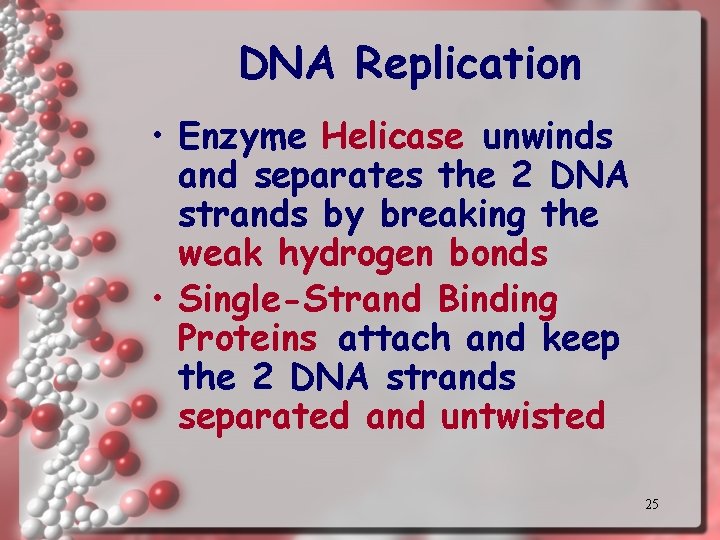
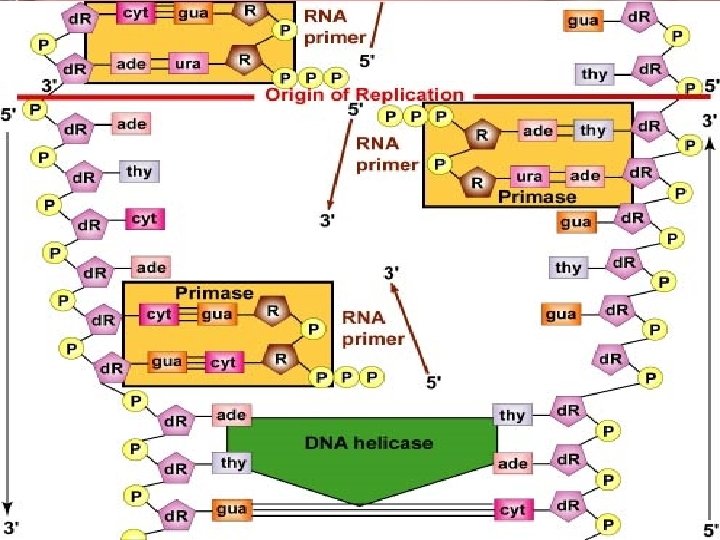
DNA Replication • Enzyme Helicase unwinds and separates the 2 DNA strands by breaking the weak hydrogen bonds • Single-Strand Binding Proteins attach and keep the 2 DNA strands separated and untwisted 25
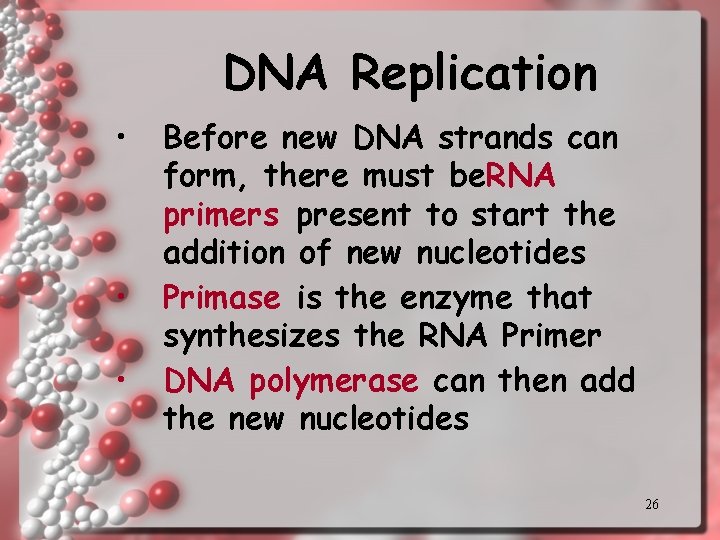
DNA Replication • • • Before new DNA strands can form, there must be RNA primers present to start the addition of new nucleotides Primase is the enzyme that synthesizes the RNA Primer DNA polymerase can then add the new nucleotides 26
27
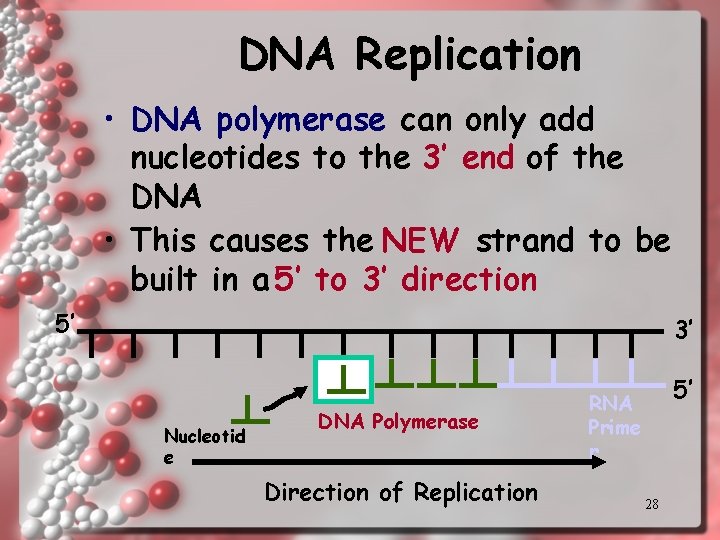
DNA Replication • DNA polymerase can only add nucleotides to the 3’ end of the DNA • This causes the NEW strand to be built in a 5’ to 3’ direction 5’ 3’ Nucleotid e DNA Polymerase Direction of Replication 5’ RNA Prime r 28
Remember the Strands are Antiparallel 5 O 3 3 P 5 O O C G 1 P 5 3 2 4 4 P 5 P 2 3 1 O T A 3 O 3 5 O 5 P P 29
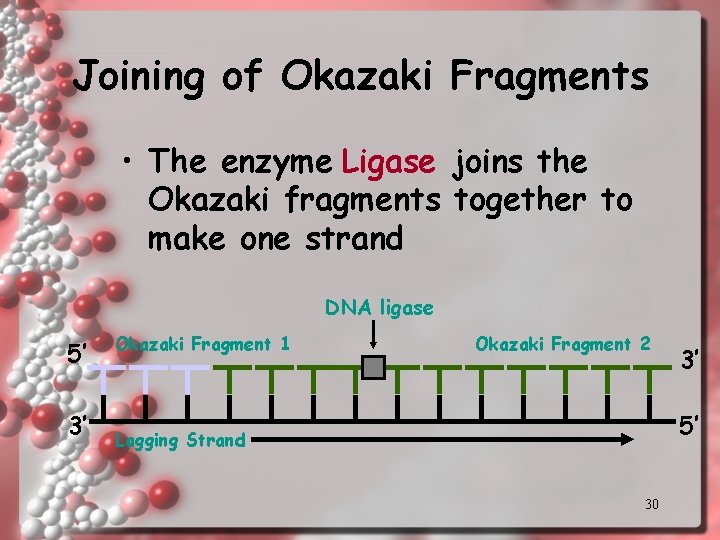
Joining of Okazaki Fragments • The enzyme Ligase joins the Okazaki fragments together to make one strand DNA ligase 5’ 3’ Okazaki Fragment 1 Okazaki Fragment 2 3’ 5’ Lagging Strand 30
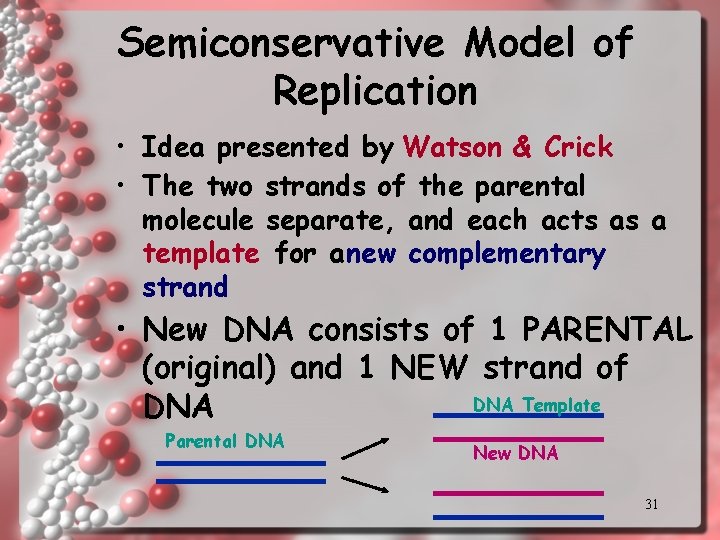
Semiconservative Model of Replication • Idea presented by Watson & Crick • The two strands of the parental molecule separate, and each acts as a template for a new complementary strand • New DNA consists of 1 PARENTAL (original) and 1 NEW strand of DNA Template DNA Parental DNA New DNA 31
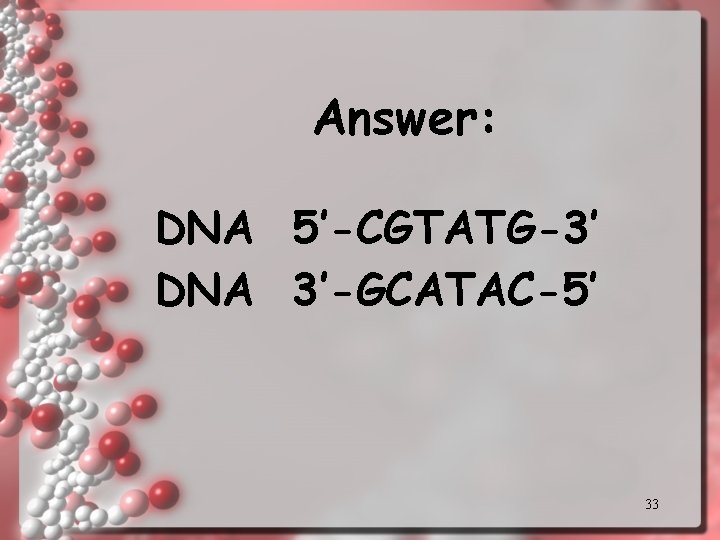
Question: • What would be the complementary DNA strand for the following DNA sequence? DNA 5’-CGTATG-3’ 32
Answer: DNA 5’-CGTATG-3’ DNA 3’-GCATAC-5’ 33
34