
DNA and Heredity Why do children look like
- Slides: 16
DNA and Heredity • Why do children “look” like their biological parents? • Why is a skin cell different from a liver cell? • How can scientists make an entire sheep from just one cell? • Can scientists “grow” replacement organs for each person? • What are “Ethics”
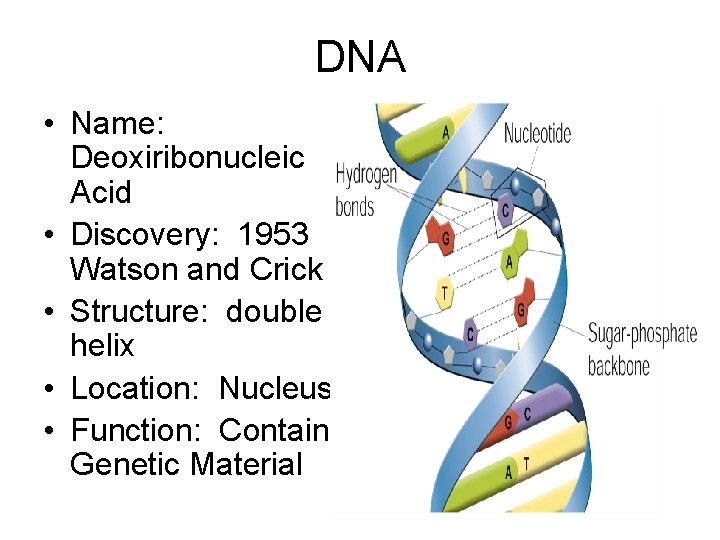
DNA • Name: Deoxiribonucleic Acid • Discovery: 1953 Watson and Crick • Structure: double helix • Location: Nucleus • Function: Contain Genetic Material
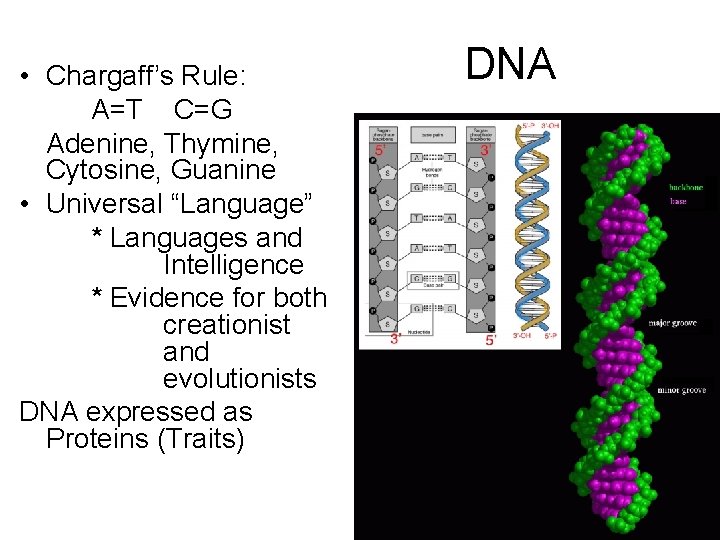
• Chargaff’s Rule: A=T C=G Adenine, Thymine, Cytosine, Guanine • Universal “Language” * Languages and Intelligence * Evidence for both creationist and evolutionists DNA expressed as Proteins (Traits) DNA
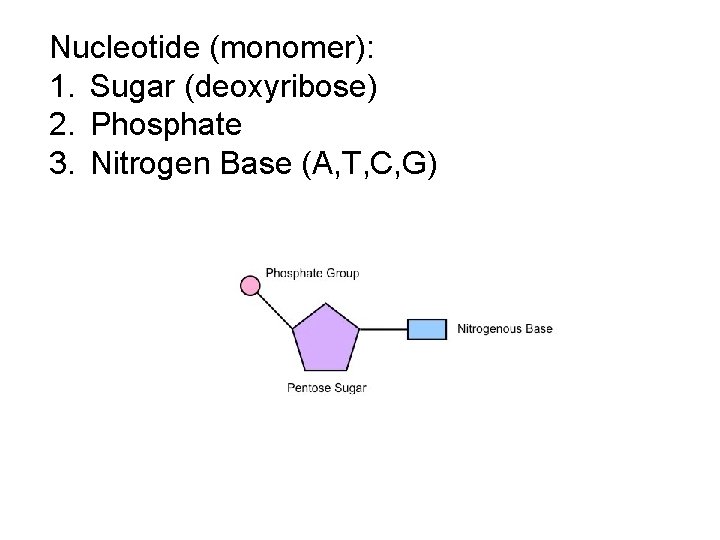
Nucleotide (monomer): 1. Sugar (deoxyribose) 2. Phosphate 3. Nitrogen Base (A, T, C, G)
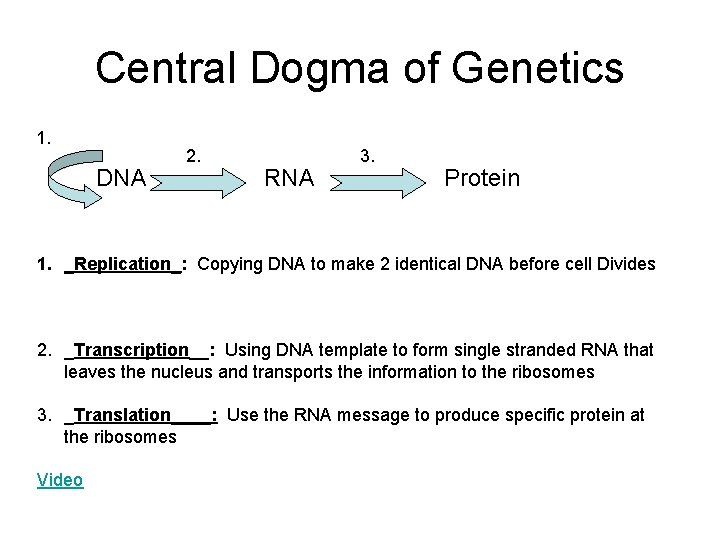
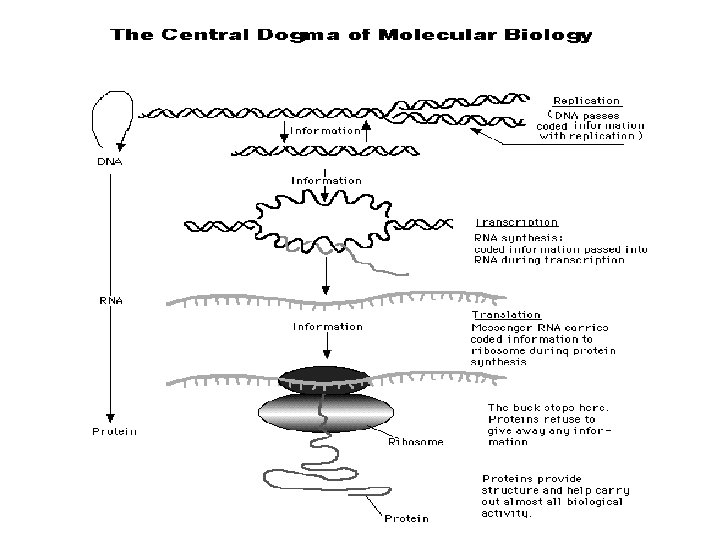
Central Dogma of Genetics 1. DNA 2. RNA 3. Protein 1. _Replication_: Copying DNA to make 2 identical DNA before cell Divides 2. _Transcription__: Using DNA template to form single stranded RNA that leaves the nucleus and transports the information to the ribosomes 3. _Translation____: Use the RNA message to produce specific protein at the ribosomes Video
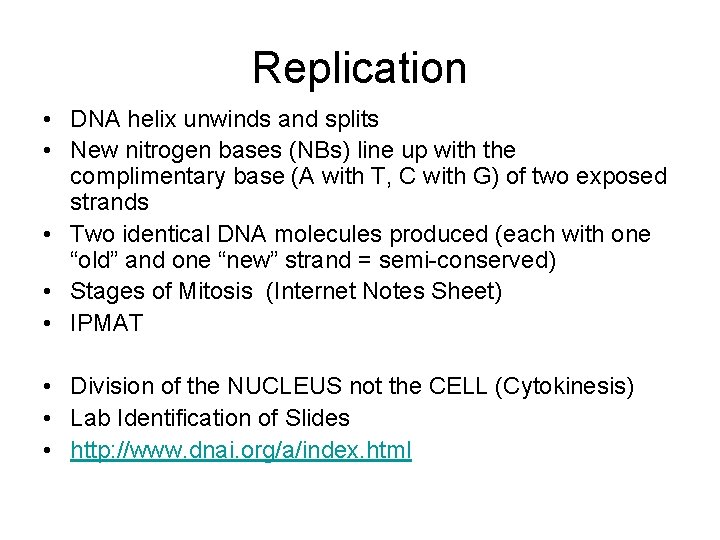
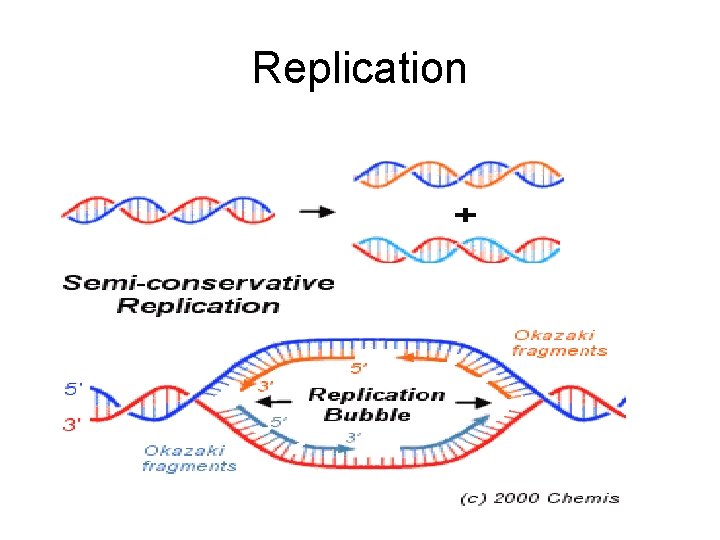
Replication • DNA helix unwinds and splits • New nitrogen bases (NBs) line up with the complimentary base (A with T, C with G) of two exposed strands • Two identical DNA molecules produced (each with one “old” and one “new” strand = semi-conserved) • Stages of Mitosis (Internet Notes Sheet) • IPMAT • Division of the NUCLEUS not the CELL (Cytokinesis) • Lab Identification of Slides • http: //www. dnai. org/a/index. html
Replication
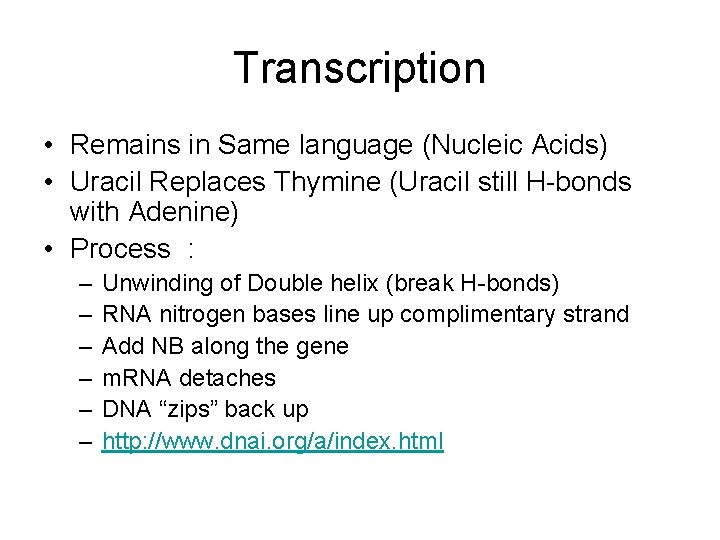
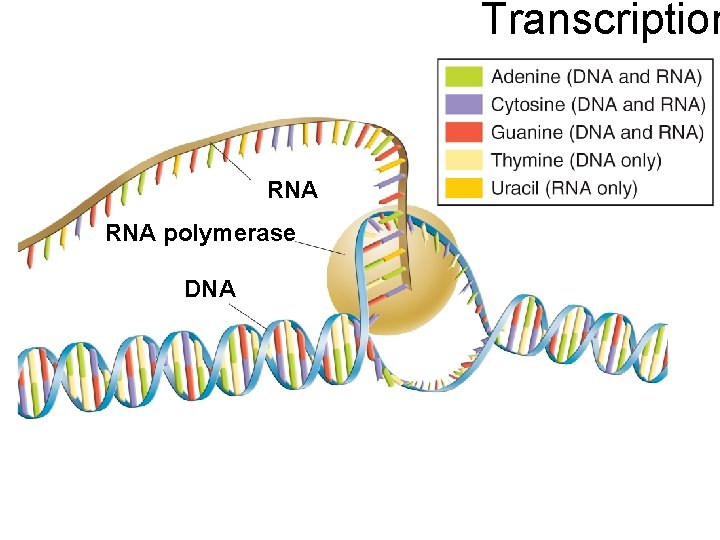
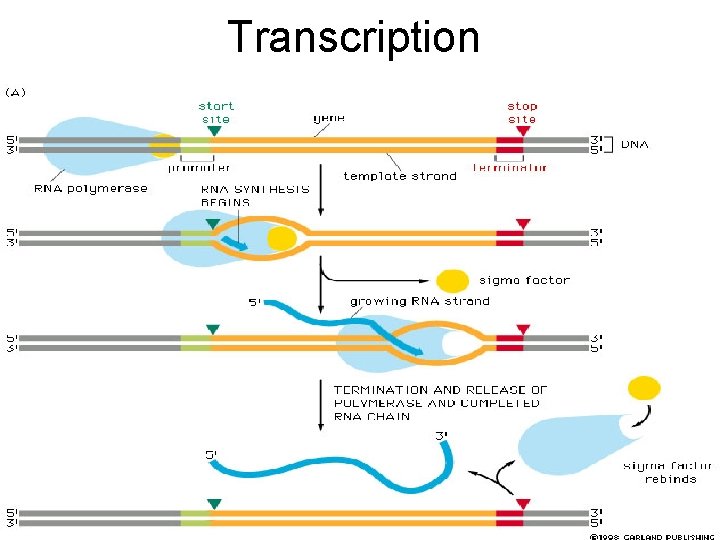
Transcription • Remains in Same language (Nucleic Acids) • Uracil Replaces Thymine (Uracil still H-bonds with Adenine) • Process : – – – Unwinding of Double helix (break H-bonds) RNA nitrogen bases line up complimentary strand Add NB along the gene m. RNA detaches DNA “zips” back up http: //www. dnai. org/a/index. html
Transcription RNA polymerase DNA
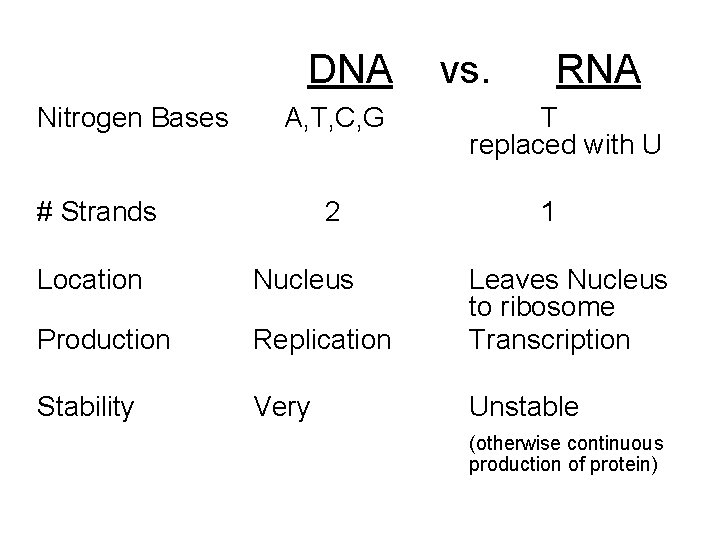
DNA Nitrogen Bases A, T, C, G # Strands 2 vs. RNA T replaced with U 1 Location Nucleus Production Replication Leaves Nucleus to ribosome Transcription Stability Very Unstable (otherwise continuous production of protein)
Transcription
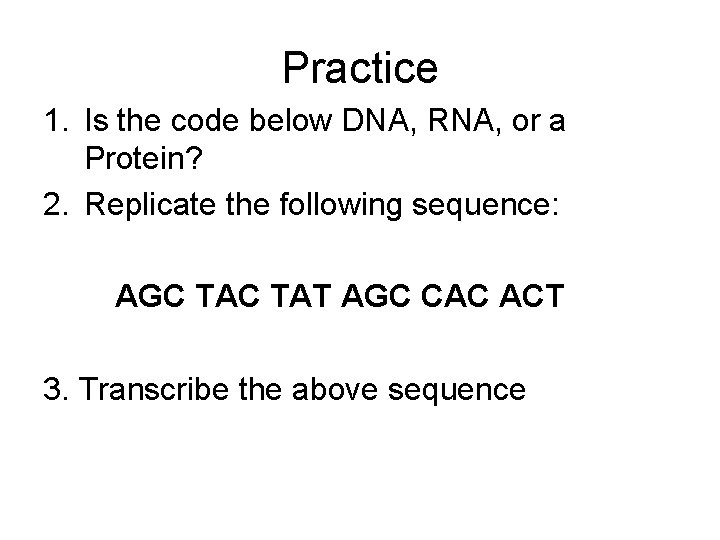
Practice 1. Is the code below DNA, RNA, or a Protein? 2. Replicate the following sequence: AGC TAT AGC CAC ACT 3. Transcribe the above sequence
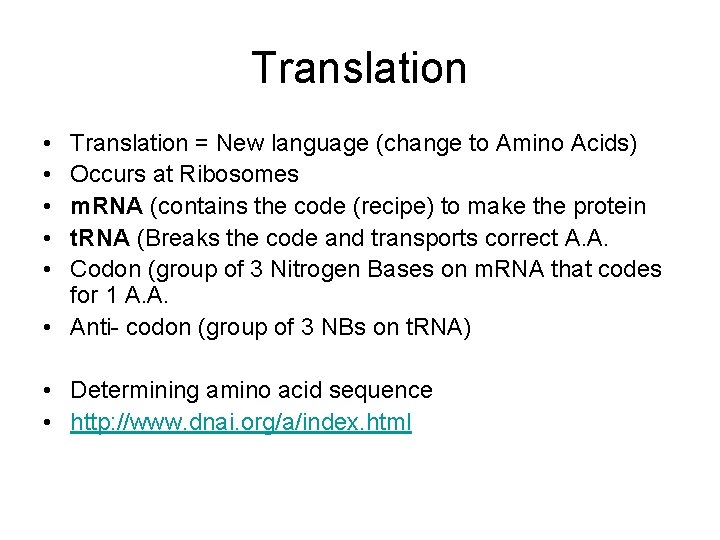
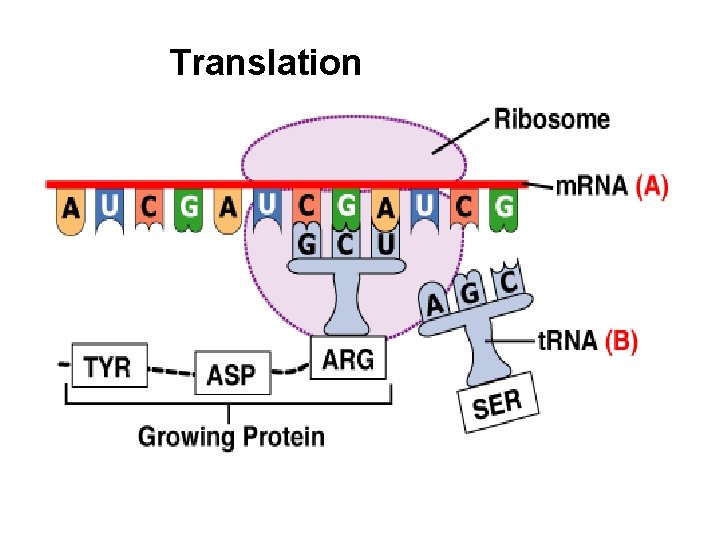
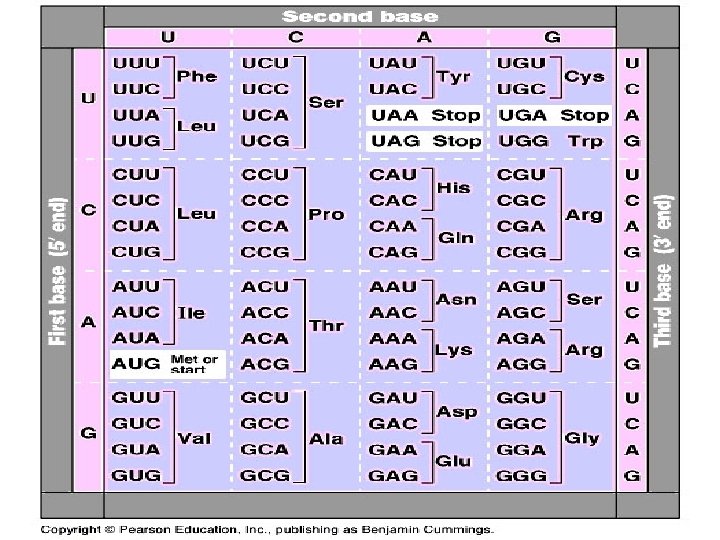
Translation • • • Translation = New language (change to Amino Acids) Occurs at Ribosomes m. RNA (contains the code (recipe) to make the protein t. RNA (Breaks the code and transports correct A. A. Codon (group of 3 Nitrogen Bases on m. RNA that codes for 1 A. A. • Anti- codon (group of 3 NBs on t. RNA) • Determining amino acid sequence • http: //www. dnai. org/a/index. html
Translation