
DNA and Genes Chapter 11 History of DNA
- Slides: 16
DNA and Genes (Chapter 11)
History of DNA 1800’s Mendel determined that offspring inherited traits from parents 1944 Biomolecule that was involved with heredity was DNA (originally proteins were thought to pass on traits because DNA was too simple)
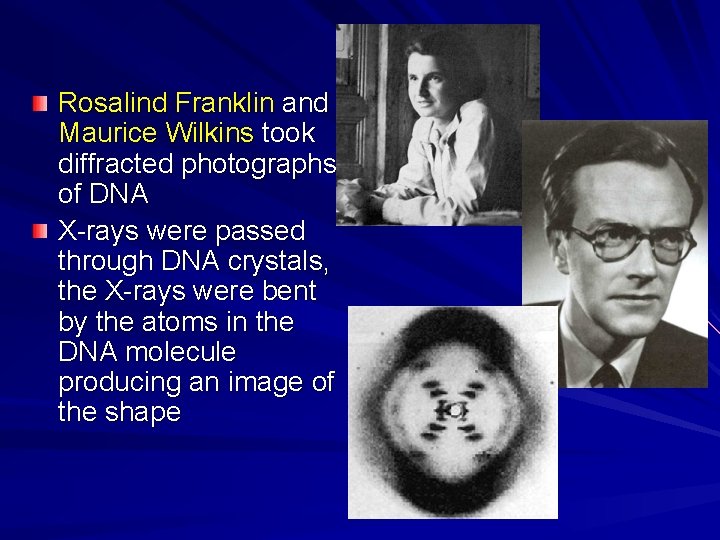
Rosalind Franklin and Maurice Wilkins took diffracted photographs of DNA X-rays were passed through DNA crystals, the X-rays were bent by the atoms in the DNA molecule producing an image of the shape
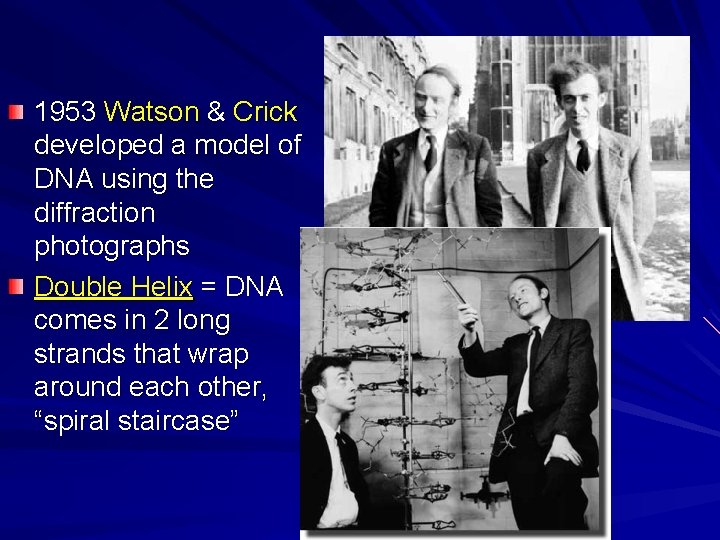
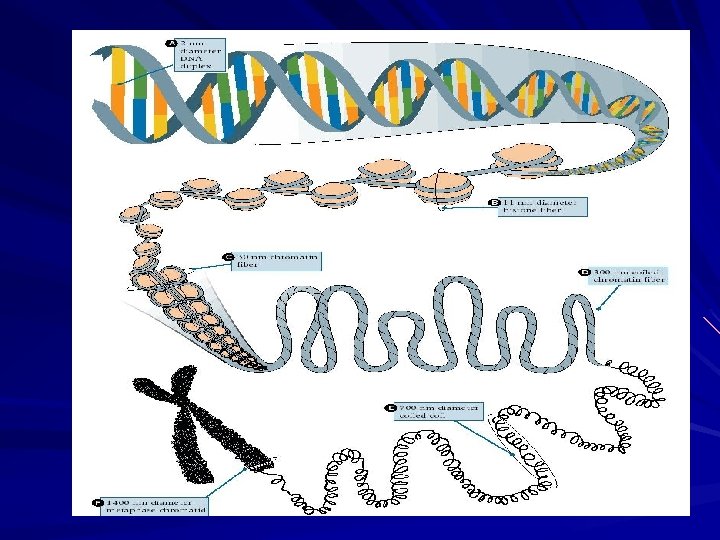
1953 Watson & Crick developed a model of DNA using the diffraction photographs Double Helix = DNA comes in 2 long strands that wrap around each other, “spiral staircase”
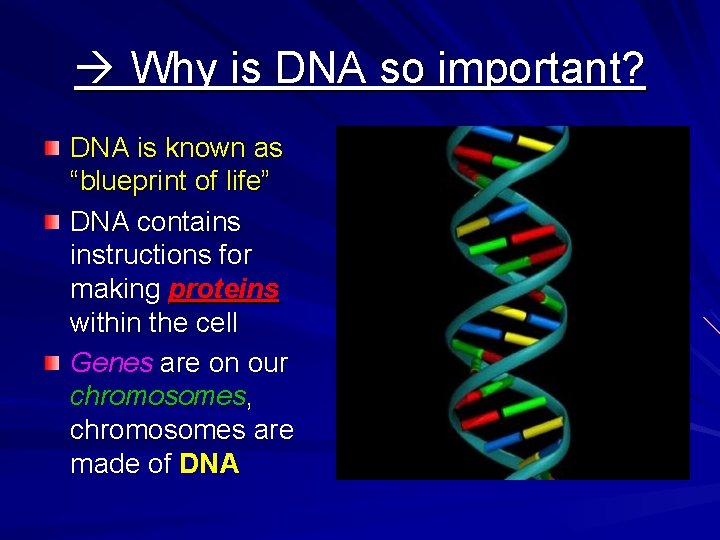
Why is DNA so important? DNA is known as “blueprint of life” DNA contains instructions for making proteins within the cell Genes are on our chromosomes, chromosomes are made of DNA
Protein Functions Proteins have many functions. They serve as enzymatic catalysts, are used as transport molecules (hemoglobin transports oxygen) and storage molecules (iron is stored in the liver as a complex with the protein ferritin); they are used in movement (proteins are the major component of muscles); they are needed for mechanical support (skin and bone contain collagen-a fibrous protein); they mediate cell responses (rhodopsin is a protein in the eye which is used for vision); antibody proteins are needed for immune protection; control of growth and cell differentiation uses proteins (hormones). These are just a few examples of the many, many functions of proteins.
http: //learn. genetics. utah. edu/content/begi n/tour/
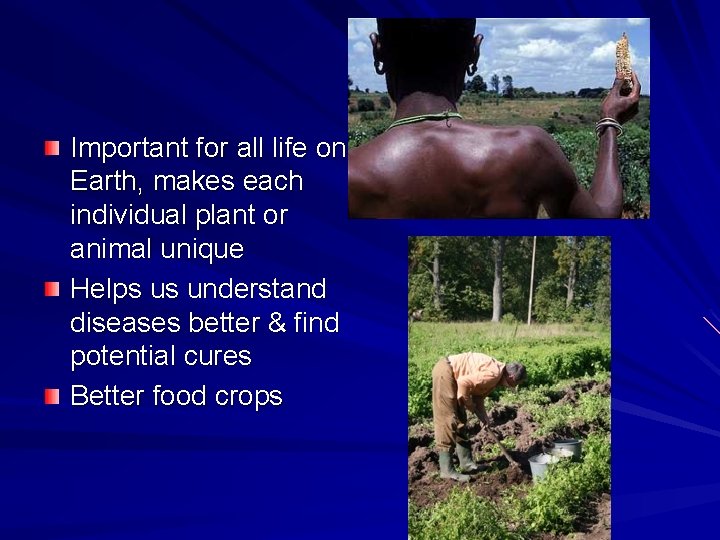
Important for all life on Earth, makes each individual plant or animal unique Helps us understand diseases better & find potential cures Better food crops
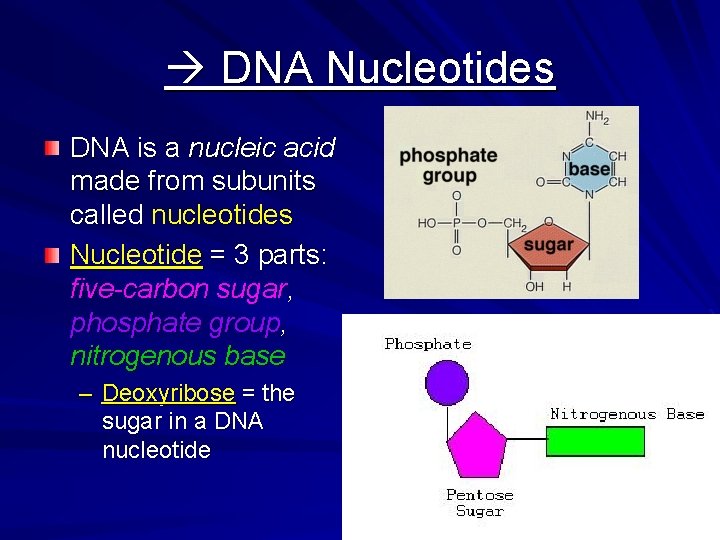
DNA Nucleotides DNA is a nucleic acid made from subunits called nucleotides Nucleotide = 3 parts: five-carbon sugar, phosphate group, nitrogenous base – Deoxyribose = the sugar in a DNA nucleotide
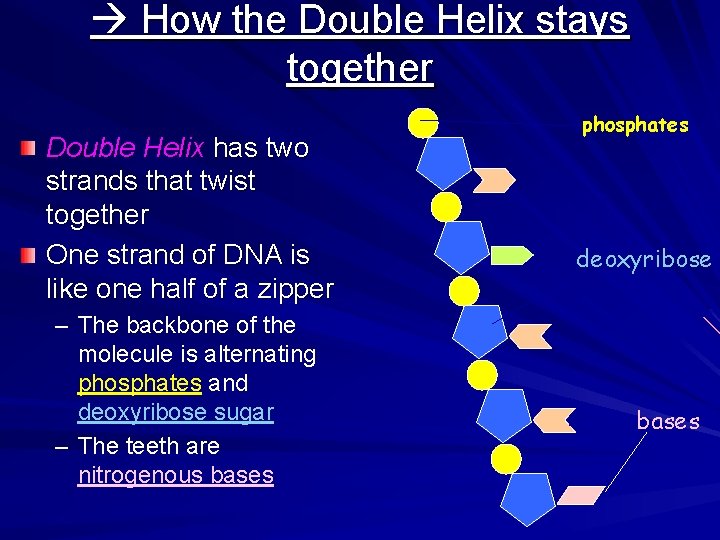
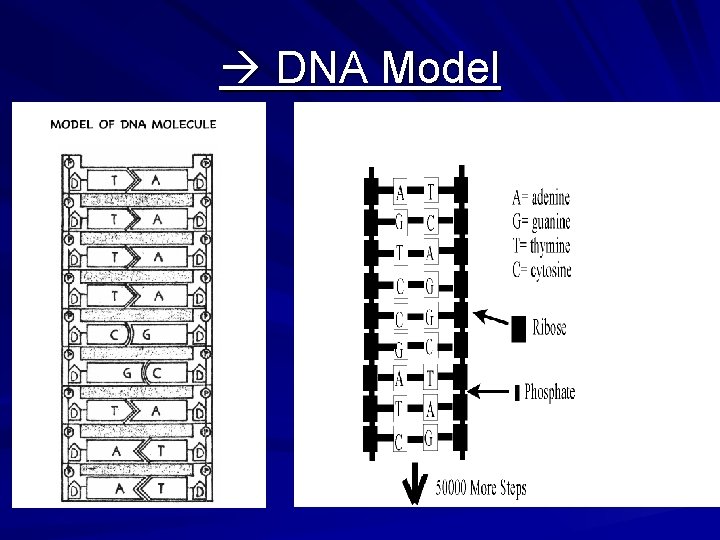
How the Double Helix stays together Double Helix has two strands that twist together One strand of DNA is like one half of a zipper – The backbone of the molecule is alternating phosphates and deoxyribose sugar – The teeth are nitrogenous bases phosphates deoxyribose bases
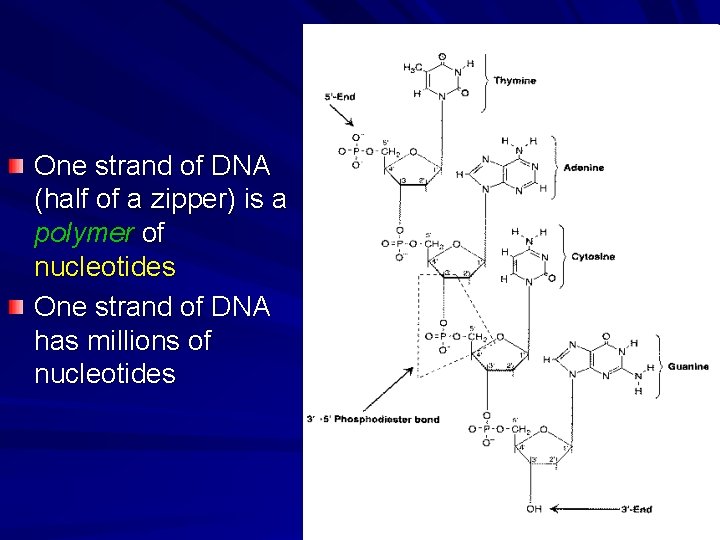
One strand of DNA (half of a zipper) is a polymer of nucleotides One strand of DNA has millions of nucleotides
Nitrogenous Bases DNA has four different bases Cytosine C Thymine T Adenine A Guanine G
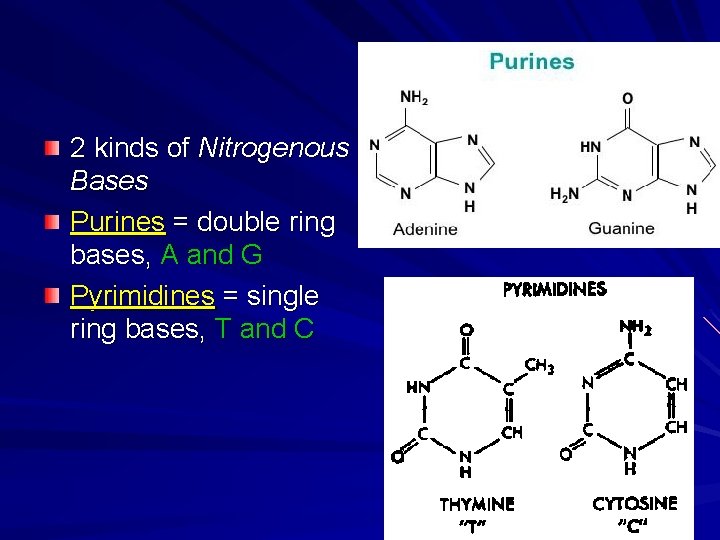
2 kinds of Nitrogenous Bases Purines = double ring bases, A and G Pyrimidines = single ring bases, T and C
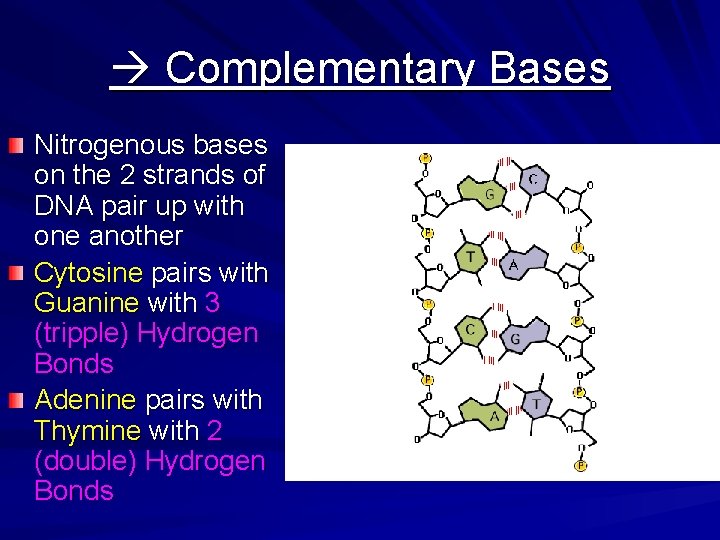
Complementary Bases Nitrogenous bases on the 2 strands of DNA pair up with one another Cytosine pairs with Guanine with 3 (tripple) Hydrogen Bonds Adenine pairs with Thymine with 2 (double) Hydrogen Bonds
DNA Model