
DNA and Chromosome Structure Chromosomal Structure of the
- Slides: 54
DNA and Chromosome Structure
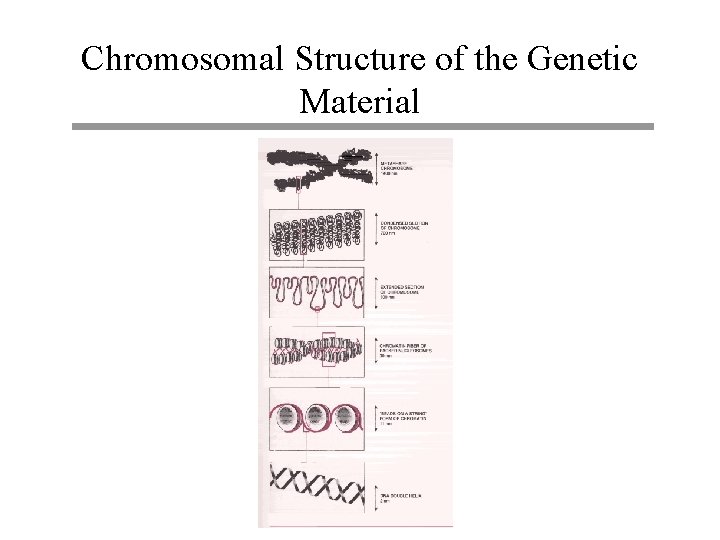
Chromosomal Structure of the Genetic Material
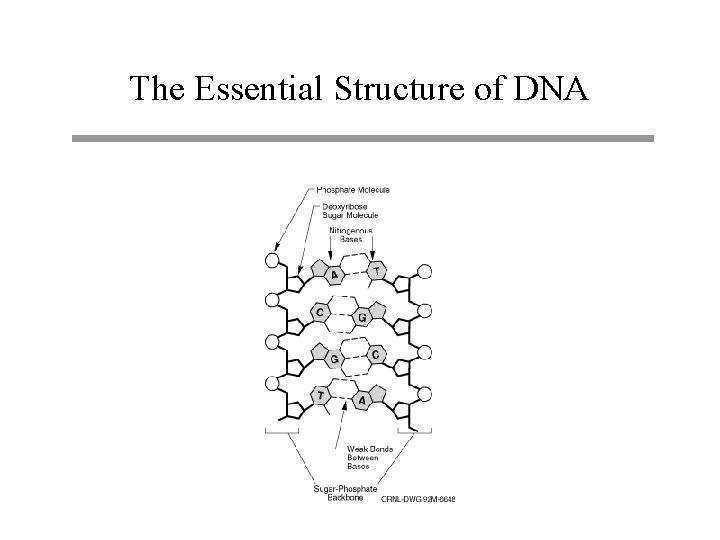
The Essential Structure of DNA
The Replication Challenge • Size of an average human chromosome 130 million bp • Rate of replication ~ 50 bp per sec • Fidelity of replication
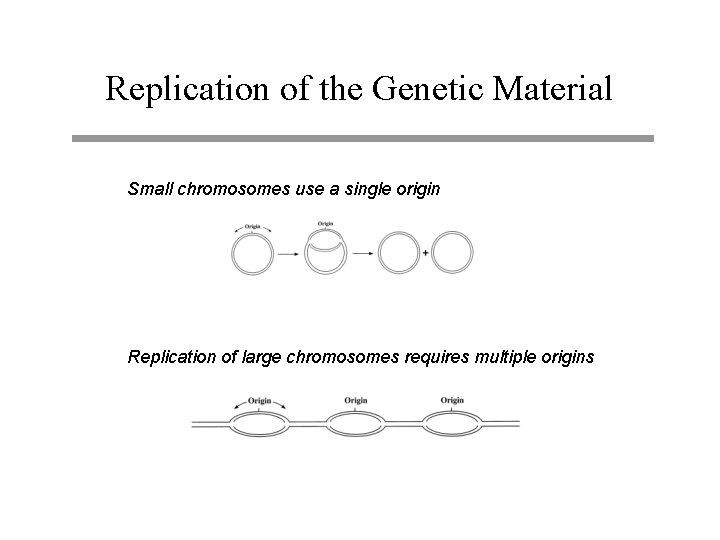
Replication of the Genetic Material Small chromosomes use a single origin Replication of large chromosomes requires multiple origins
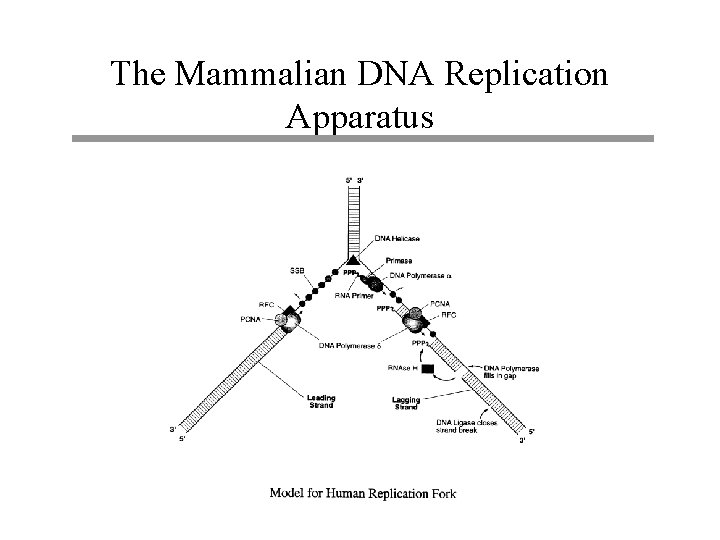
The Mammalian DNA Replication Apparatus
The Importance of Molecular Cloning
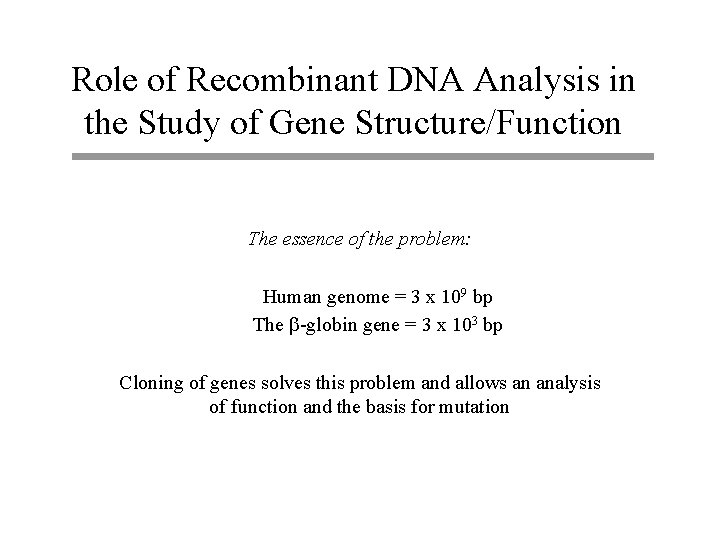
Role of Recombinant DNA Analysis in the Study of Gene Structure/Function The essence of the problem: Human genome = 3 x 10⁹ bp The b-globin gene = 3 x 10³ bp Cloning of genes solves this problem and allows an analysis of function and the basis for mutation
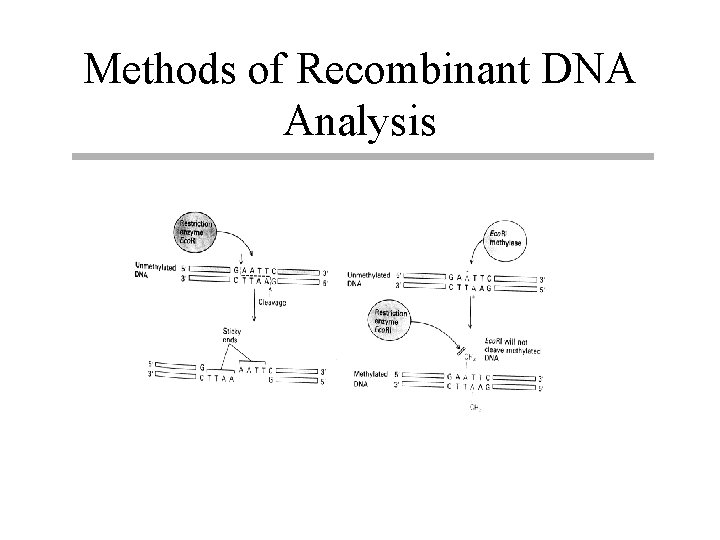
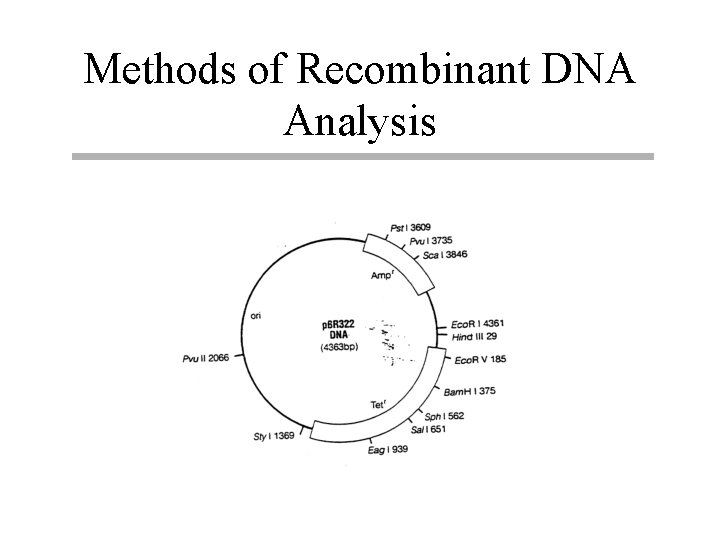
Two Critical Components for Cloning Recombinant DNA • Utility of restriction enzymes for precise manipulation of DNA molecules • Use of DNA vectors that can replicate and also accept foreign DNA sequence
Methods of Recombinant DNA Analysis
Methods of Recombinant DNA Analysis
Methods of Recombinant DNA Analysis
Requirements for Cloning Recombinant DNA • The conditions under which the population of recombinant DNAs is mixed with a population of recipient cells must favor the introduction of a single recombinant molecule into a recipient cell. This results in the separation of each recombinant from all the others • Each recipient cell must be separated from all the others in the population to permit isolation of a clone of cells or viruses containing a unique recombinant • Cells or viruses that receive recombinant DNAs must be distinguishable from those that do not so that they can be selected or identified by screening • Cells that receive the desired recombinant must be distinguishable by screening or selection from those that contain other recombinant DNA molecules
Methods of Recombinant DNA Analysis
Generation and Use of Recombinant DNA Libraries • Sequence libraries • Genomic or c. DNA sequences that represent all possible sequences from the source • Expression libraries • Library constructed in a specialized vector that allows expression of the insert sequence to generate protein
Isolation of a Gene and Gene Structure
Isolation of a Gene
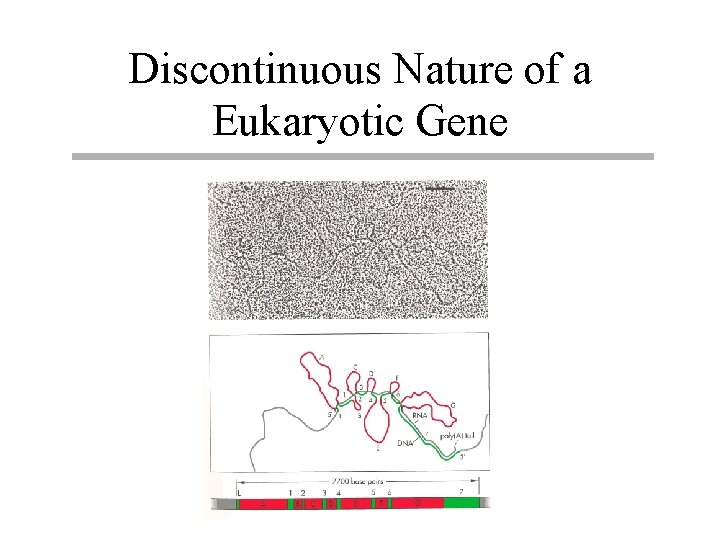
Discontinuous Nature of a Eukaryotic Gene
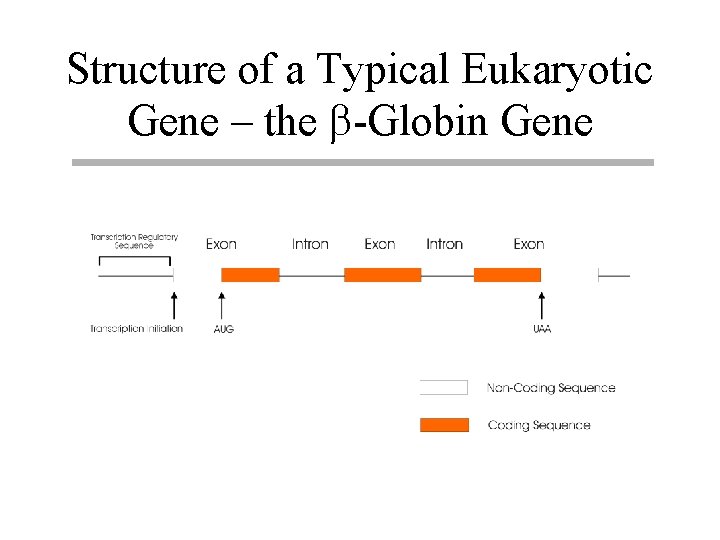
Structure of a Typical Eukaryotic Gene – the b-Globin Gene
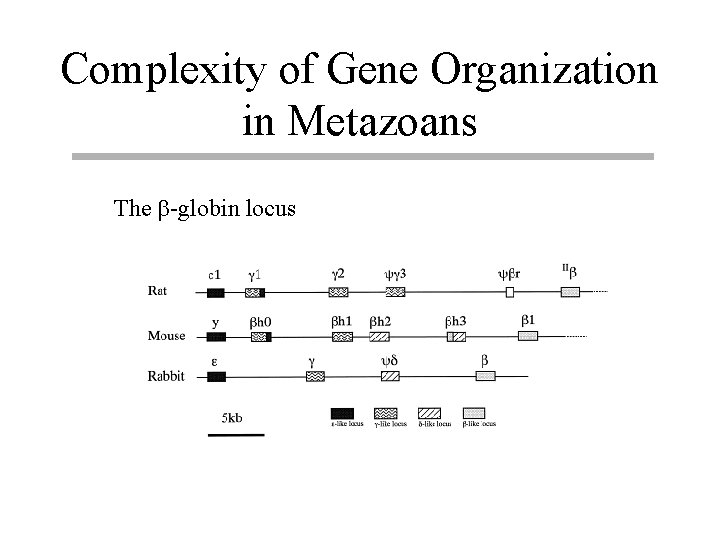
Complexity of Gene Organization in Metazoans The b-globin locus
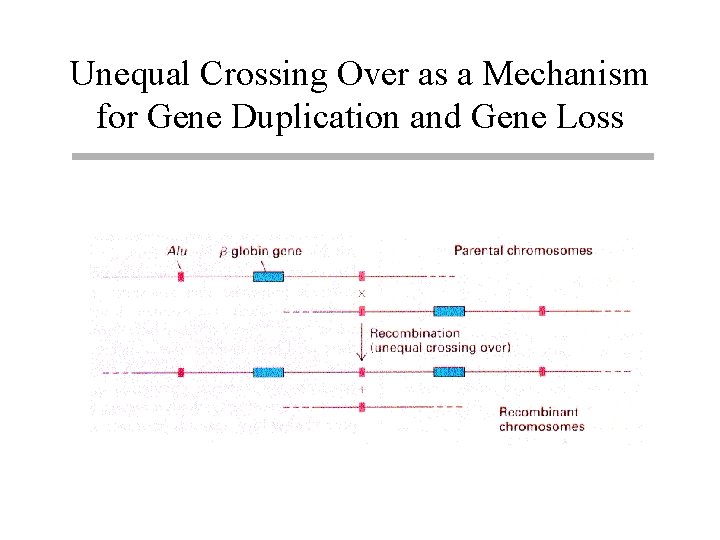
Unequal Crossing Over as a Mechanism for Gene Duplication and Gene Loss
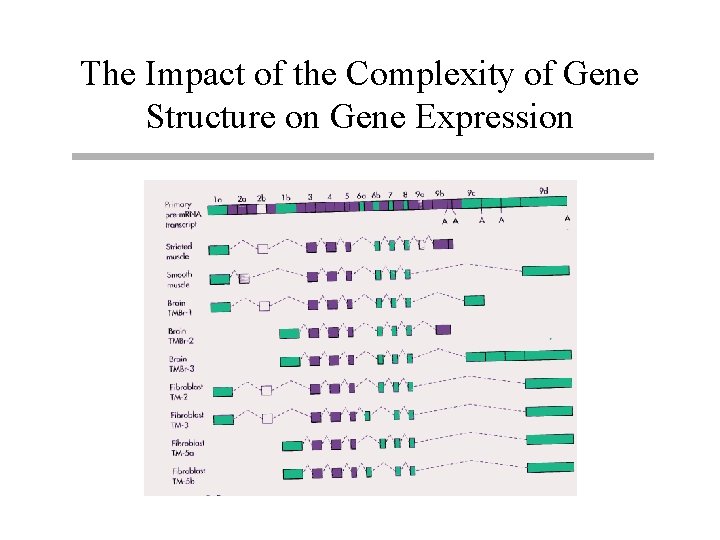
The Impact of the Complexity of Gene Structure on Gene Expression
Gene Expression
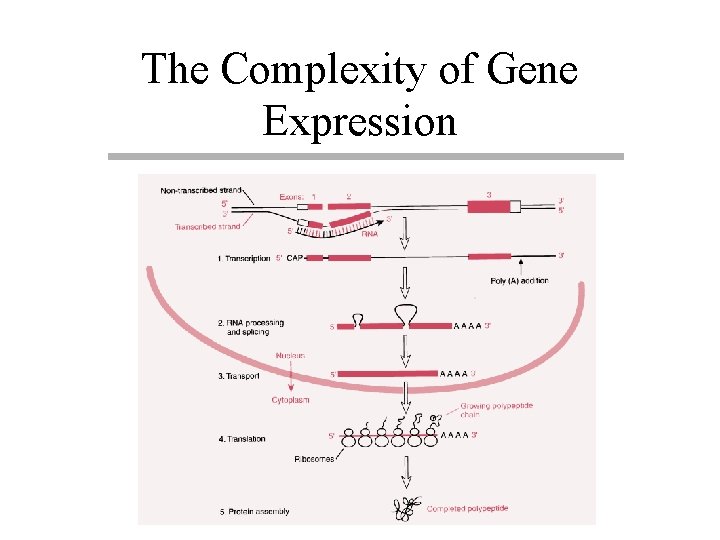
The Complexity of Gene Expression
Gene Expression Requires Splicing of Primary Transcripts
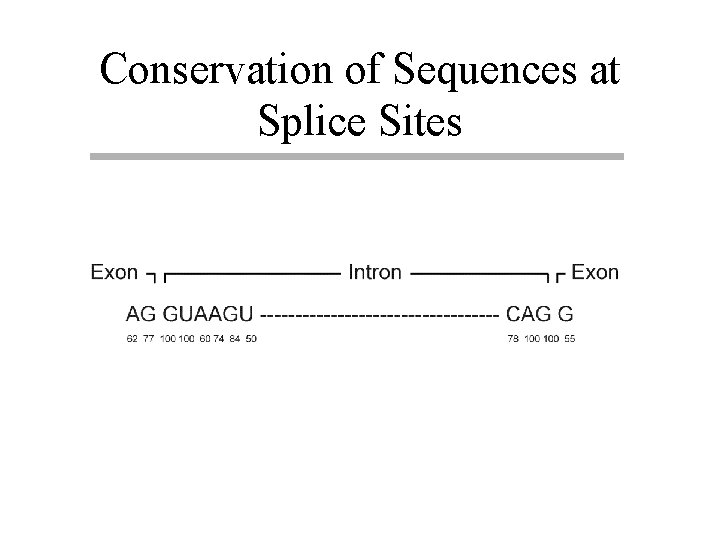
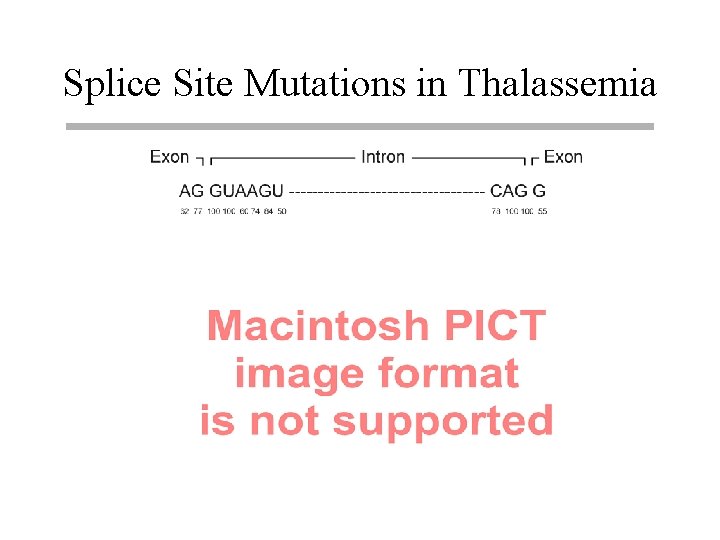
Conservation of Sequences at Splice Sites
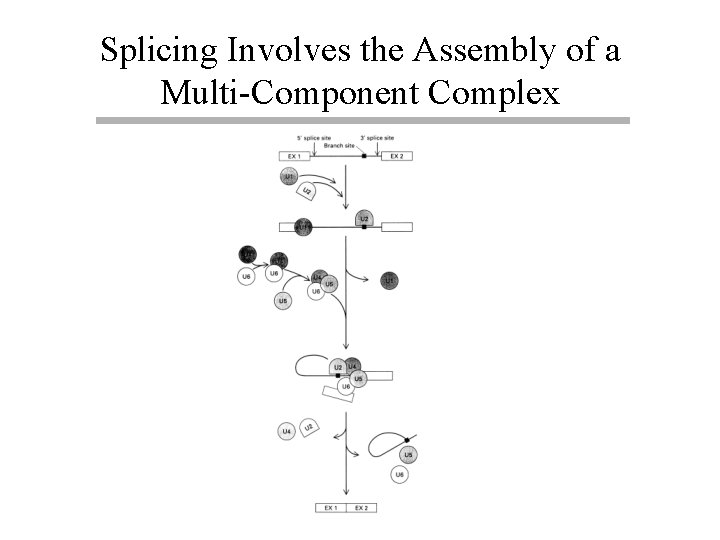
Splicing Involves the Assembly of a Multi-Component Complex
Formation of the m. RNA 3’ Terminus Requires Specific Cleavage
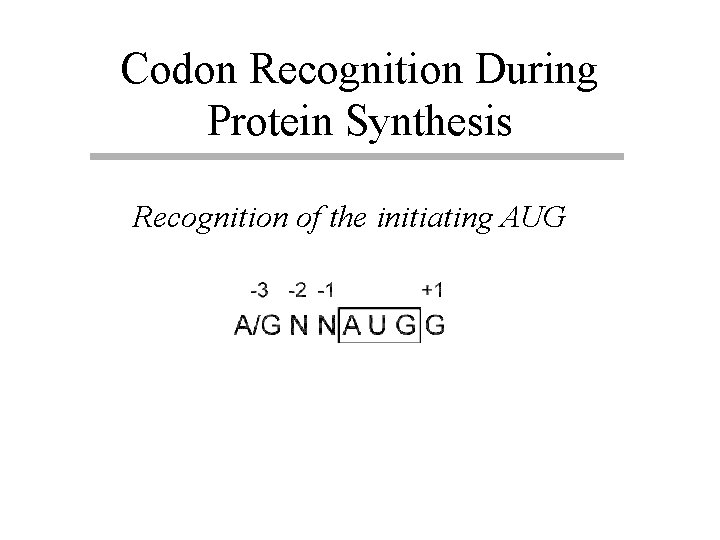
Codon Recognition During Protein Synthesis Recognition of the initiating AUG
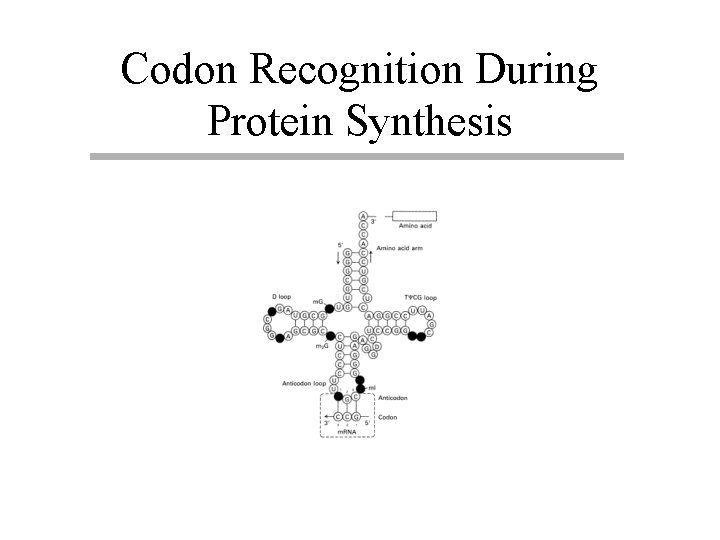
Codon Recognition During Protein Synthesis
Codon Recognition During Protein Synthesis
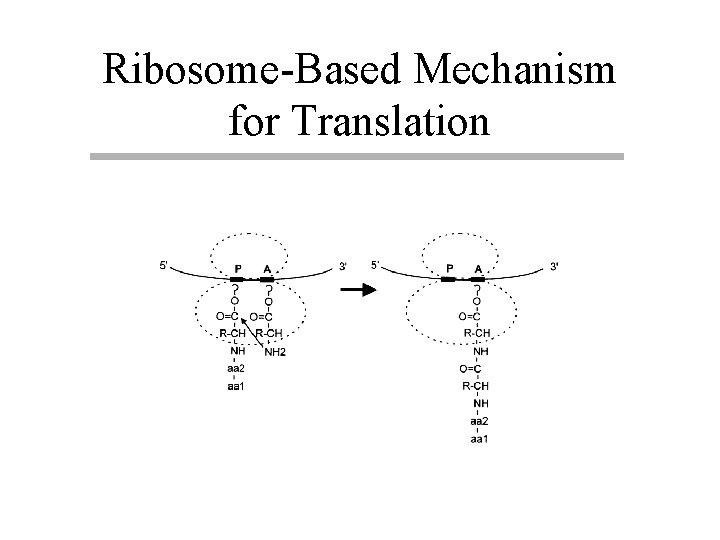
Ribosome-Based Mechanism for Translation
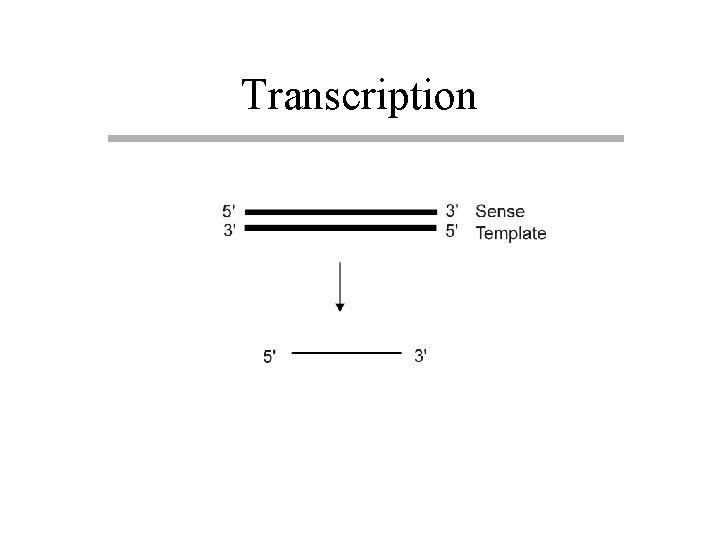
Transcription
Elements of Transcriptional Control • Cis-acting regulatory sequences • Trans-acting regulatory proteins
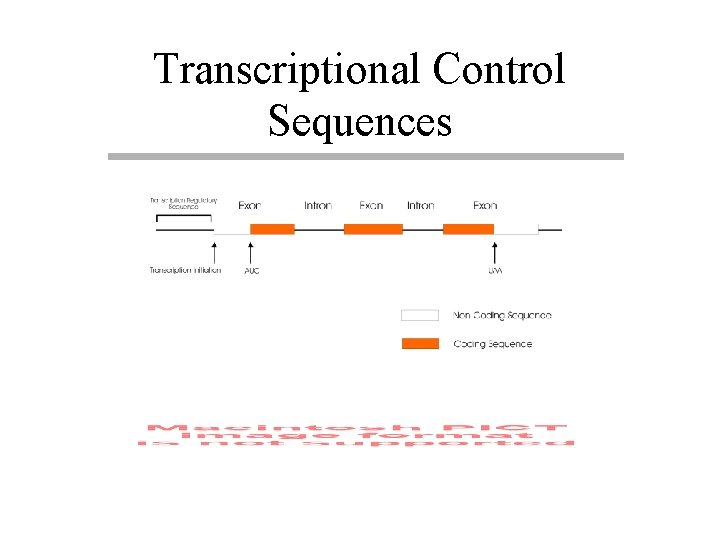
Transcriptional Control Sequences
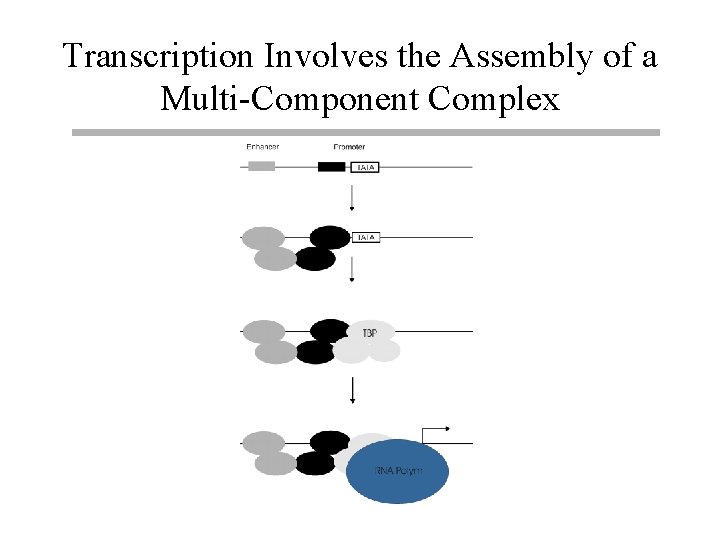
Transcription Involves the Assembly of a Multi-Component Complex
Regulation of Gene Expression
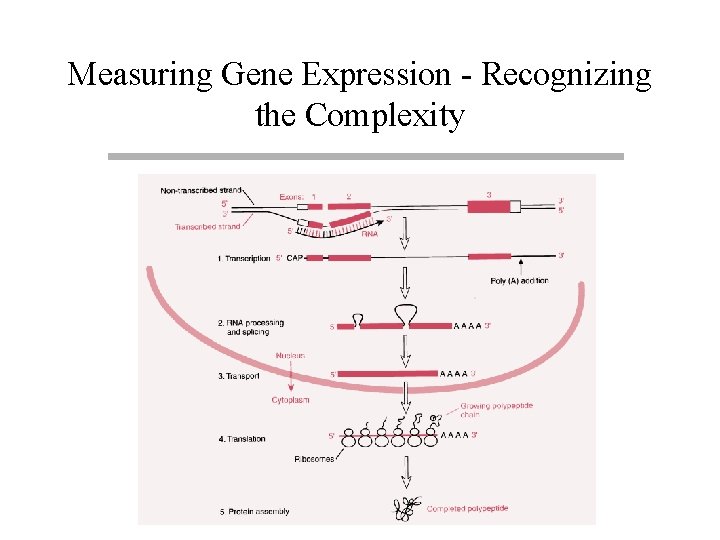
Measuring Gene Expression - Recognizing the Complexity
Regulation of Transcription • Control of transcription initiation (major form of control) • Control of transcription elongation – Role of premature termination
Mechanisms Regulating Transcription Initiation • Control of synthesis of transcription factors • Control of DNA binding activity of the factor • Control of transcriptional function of the factor
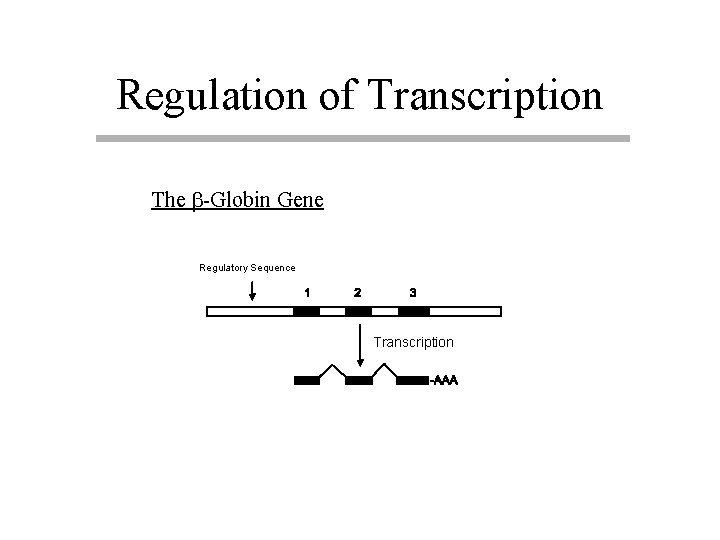
Regulation of Transcription The b-Globin Gene Regulatory Sequence Transcription
Thalassemia Mutations That Alter Transcription Regulation
Regulation of Transcription – Examples from the Myc Gene
Alterations in Transcriptional Control in Disease Activation of the c-myc gene by retrovirus mediated promoter insertion
Alterations in Transcriptional Control in Disease Activation of the c-myc gene by rearrangement in B cell lymphomas
Alterations in Transcriptional Control in Disease Creation of a chimeric transcription factor in AML
Post-Transcriptional Gene Control Mechanisms
Post-Transcriptional Gene Control Mechanisms
Alteration of Post-Transcriptional Control Events
Splice Site Mutations in Thalassemia
Splice Site Mutations in Thalassemia
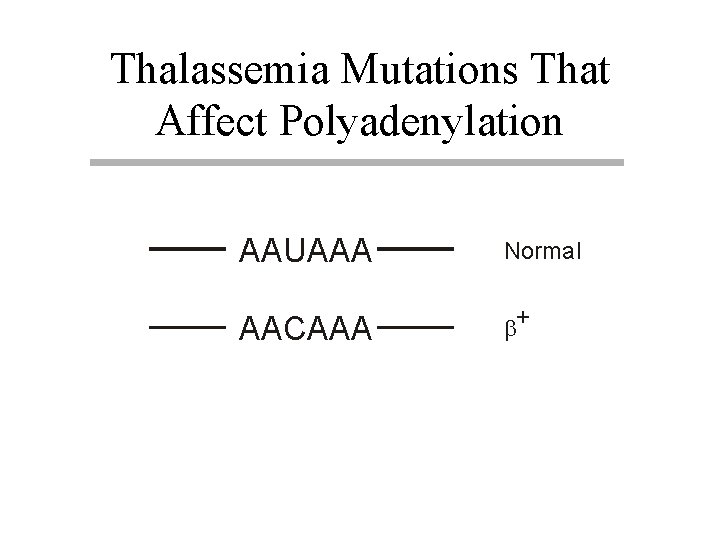
Thalassemia Mutations That Affect Polyadenylation AAUAAA Normal AACAAA b+
Nucleic Acid Hybridization
Hybridization of Complementary DNA Sequences Allows Detection of Specific DNAs