
Diyabetik Nefropati Prof Dr Meltem Pekpak Internal MedicineNephrology
Diyabetik Nefropati Prof. Dr. Meltem Pekpak Internal Medicine/Nephrology 9 th-10 th Semester
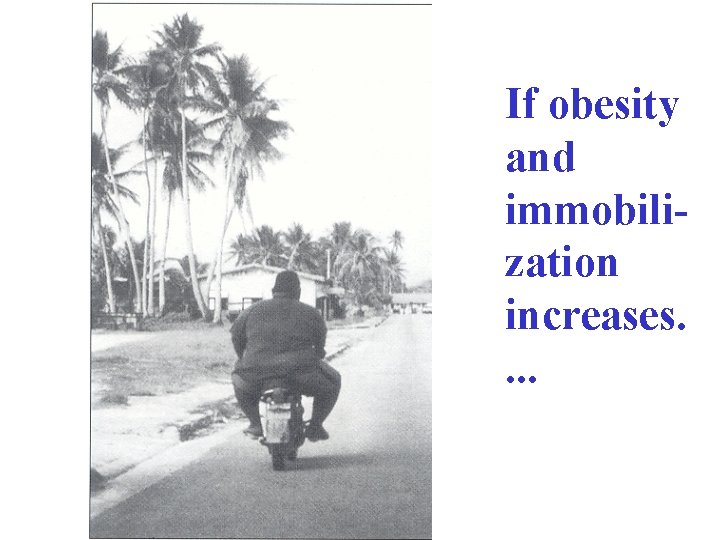
If obesity and immobilization increases. .
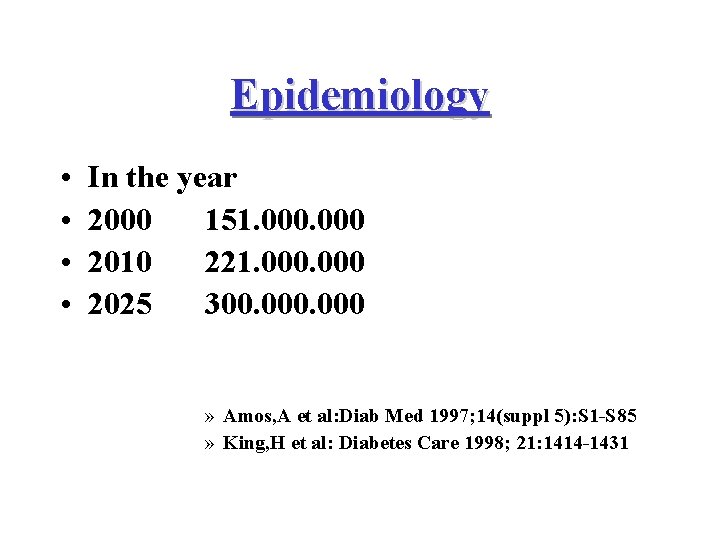
Epidemiology • • In the year 2000 151. 000 2010 221. 000 2025 300. 000 » Amos, A et al: Diab Med 1997; 14(suppl 5): S 1 -S 85 » King, H et al: Diabetes Care 1998; 21: 1414 -1431
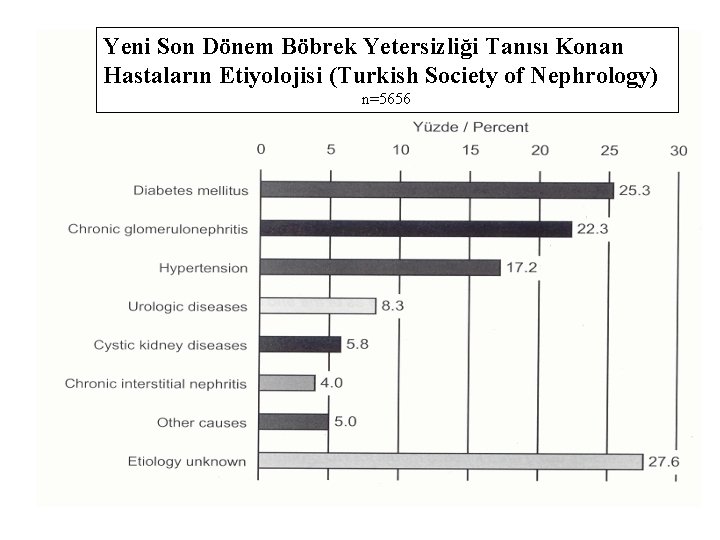
Yeni Son Dönem Böbrek Yetersizliği Tanısı Konan Hastaların Etiyolojisi (Turkish Society of Nephrology) n=5656
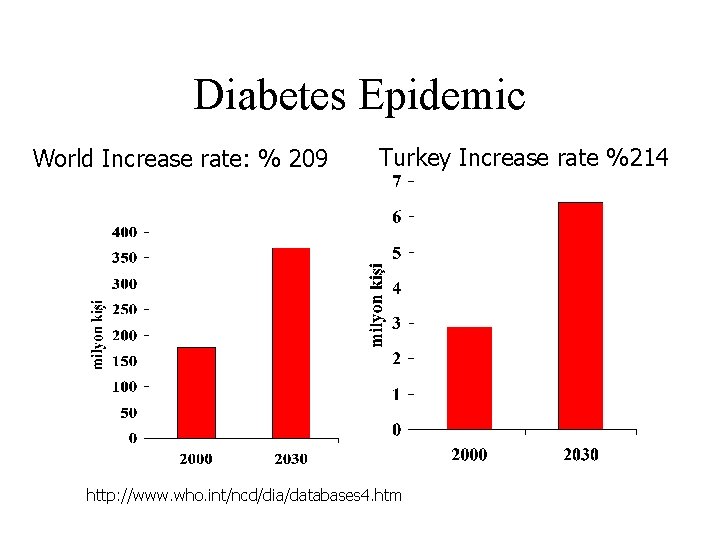
Diabetes Epidemic World Increase rate: % 209 Turkey Increase rate %214 http: //www. who. int/ncd/dia/databases 4. htm
Basics • 1936 Kimmelstiel ve Wilson • Only %30 -40 of all diabetics type 2
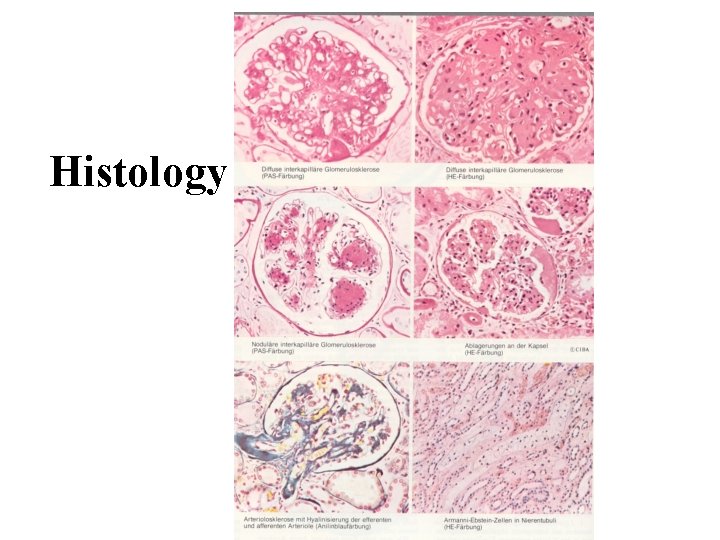
Histology
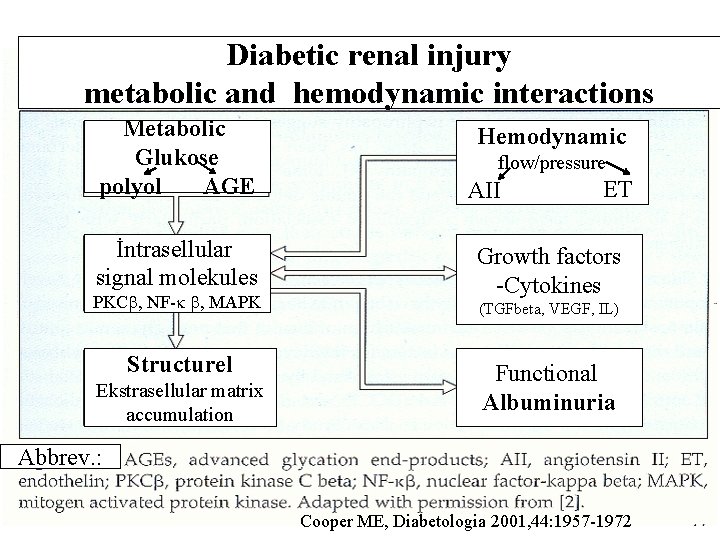
Diabetic renal injury metabolic and hemodynamic interactions Metabolic Metabolik Glukose polyol AGE İntrasellular signal molekules PKC , NF- , MAPK Structurel Ekstrasellular matrix accumulation Hemodynamic flow/pressure AII ET Growth factors -Cytokines (TGFbeta, VEGF, IL) Functional Albuminuria Kısaltmalar Abbrev. : Cooper ME, Diabetologia 2001, 44: 1957 -1972
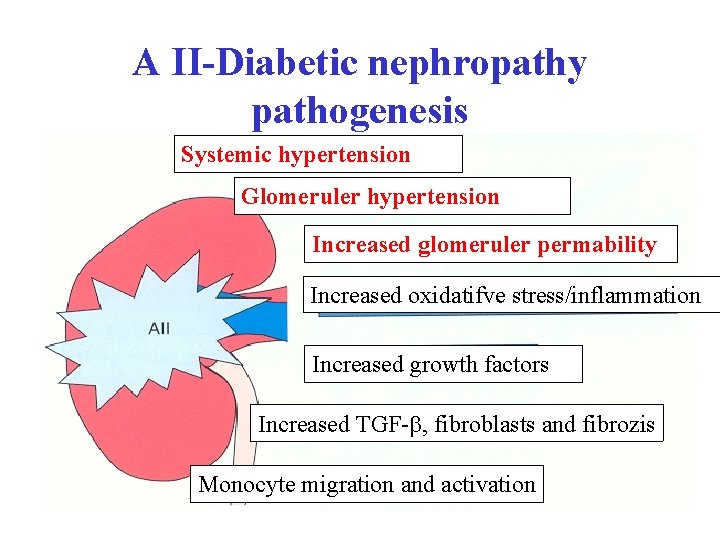
A II-Diabetic nephropathy pathogenesis Systemic hypertension Glomeruler hypertension Increased glomeruler permability Increased oxidatifve stress/inflammation Increased growth factors Increased TGF- , fibroblasts and fibrozis Monocyte migration and activation
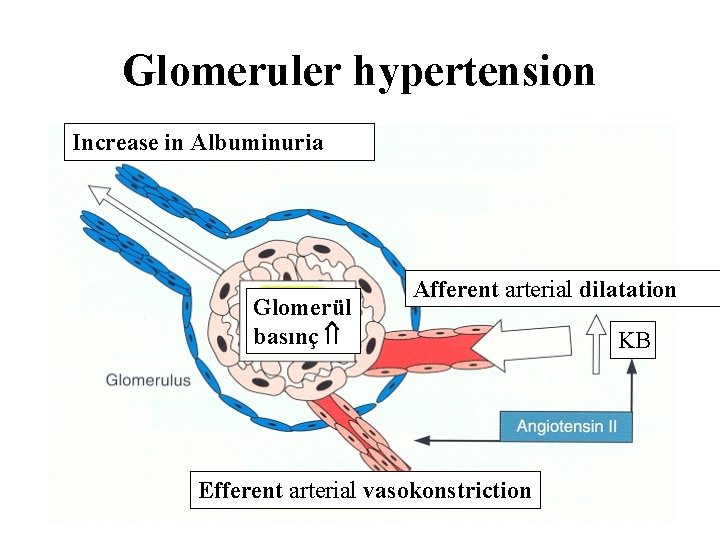
Glomeruler hypertension Increase in Albuminuria Glomerül basınç Afferent arterial dilatation Efferent arterial vasokonstriction KB
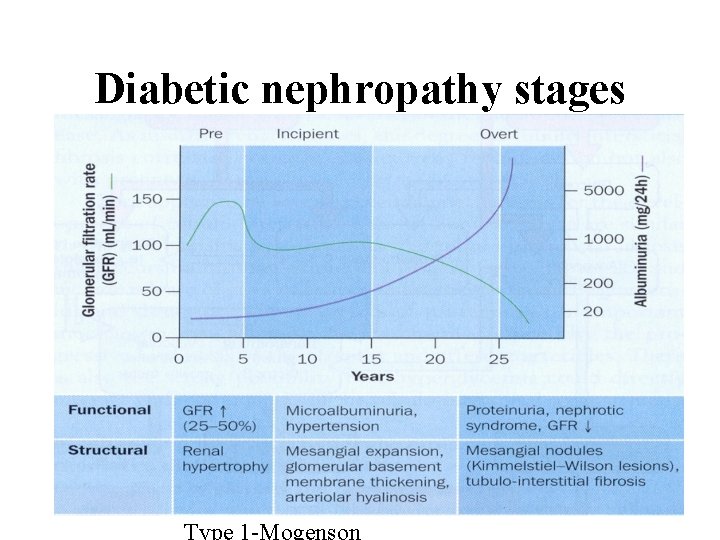
Diabetic nephropathy stages
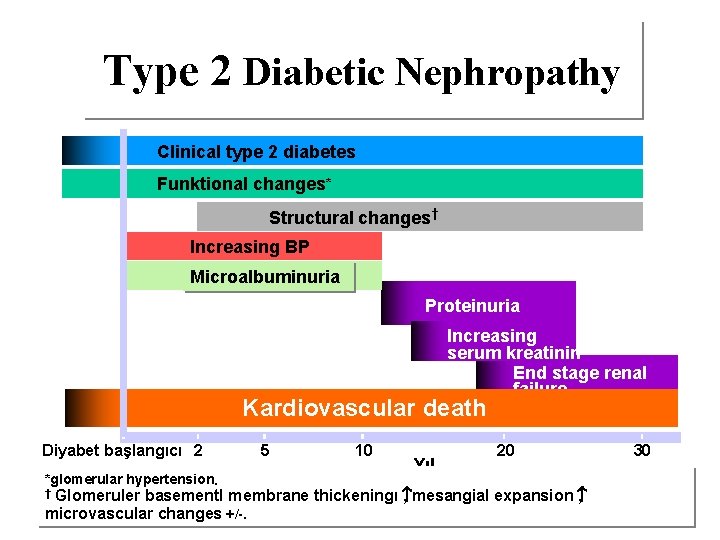
Type 2 Diabetic Nephropathy Clinical type 2 diabetes Funktional changes* Structural changes† Increasing BP Microalbuminuria Proteinuria Increasing serum kreatinin End stage renal failure Kardiovascular death Diyabet başlangıcı 2 *glomerular hypertension. 5 10 Yıl 20 Glomeruler basementl membrane thickeningı , mesangial expansion , microvascular changes +/-. † 30
Clinic • Early signs of nephropathy – Microalbuminuria – Hypertension – Kolesterol ve Triglyseride
Clinic • • • Other microangiopathic changes: Proliferative fundus ophtalmicus Corpus vitreum bleeding Blindness Polineuropathy Coronary microangiyopathy. Small vessel disease of the heart
Clinical classification and approach for treatment • ‘Incipient’ nefphropathy • REVERSIBLE • Microalbuminuria= Albumin-excretion 30 -300 mg/ 24 saat= 20 -200 microgram/dak. • Blood pressure (N) • GFR (N) • Good control of BP • Exercise • Good control of blood sugar • Smoking restriction SLOWS PROGRESSİON
Diabetes Control and Complications Trial Research Group (DCCT) • • Type 1 diabetes 1. group : Intensive insulin (at least 3 injektion/day) 2. group : Conventionel 2 inj. /day Hb. A 1 c: mean 1. group : %7 -- 2. group: % 9 9 years follow-up Microalbuminuria 1. group <<<< (%35 -40) UKPDS Type 2 diabetes: > 10 years follow-up Mikroalb. uria, proteinuria in intensive insulin treatment <<< % 25 -30, • creatinine doubling % 50↓↓
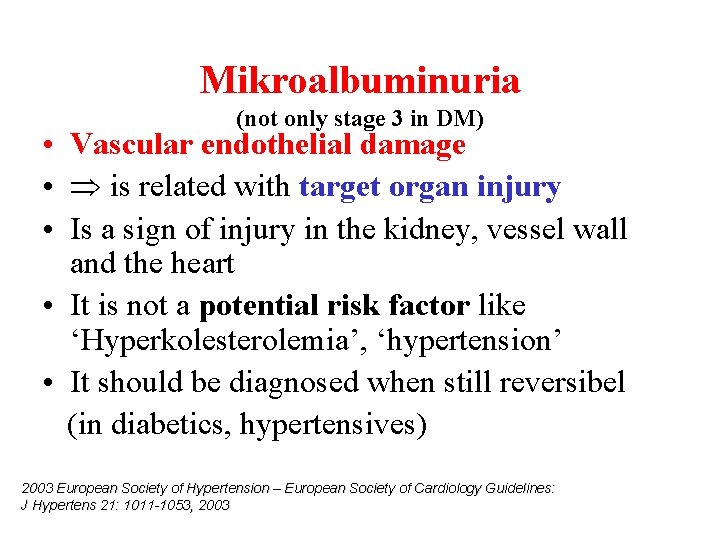
Mikroalbuminuria (not only stage 3 in DM) • Vascular endothelial damage • is related with target organ injury • Is a sign of injury in the kidney, vessel wall and the heart • It is not a potential risk factor like ‘Hyperkolesterolemia’, ‘hypertension’ • It should be diagnosed when still reversibel (in diabetics, hypertensives) 2003 European Society of Hypertension – European Society of Cardiology Guidelines: J Hypertens 21: 1011 -1053, 2003
Microalbüminuria • Shows that there is already a vascular injury ! • Lipids ? • Blood pressure control ? • Micro-ve macrovaskular complications ? • Goal = Normoalbuminuria
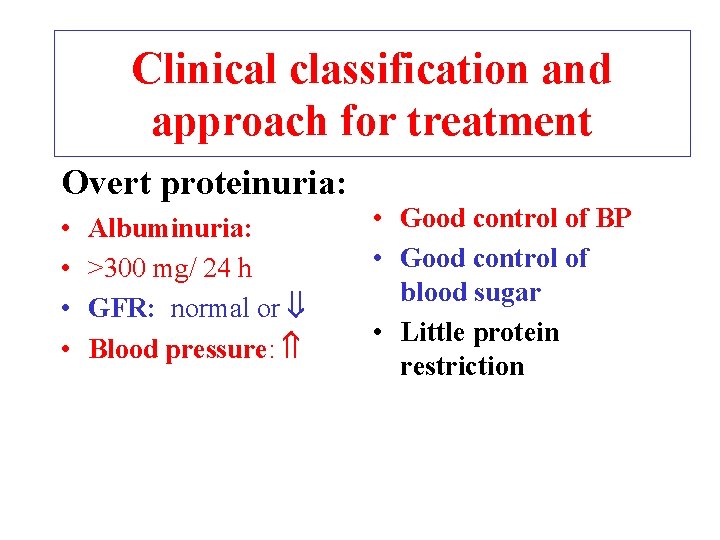
Clinical classification and approach for treatment Overt proteinuria: • • Albuminuria: >300 mg/ 24 h GFR: normal or Blood pressure: • Good control of BP • Good control of blood sugar • Little protein restriction
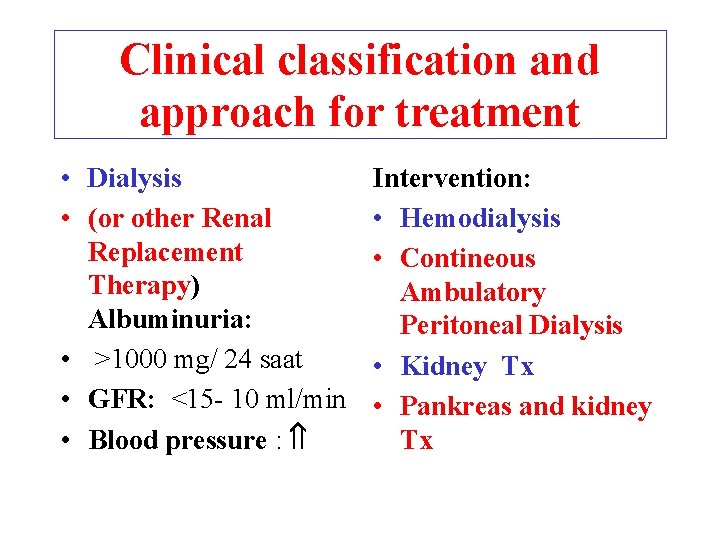
Clinical classification and approach for treatment • Dialysis • (or other Renal Replacement Therapy) Albuminuria: • >1000 mg/ 24 saat • GFR: <15 - 10 ml/min • Blood pressure : Intervention: • Hemodialysis • Contineous Ambulatory Peritoneal Dialysis • Kidney Tx • Pankreas and kidney Tx
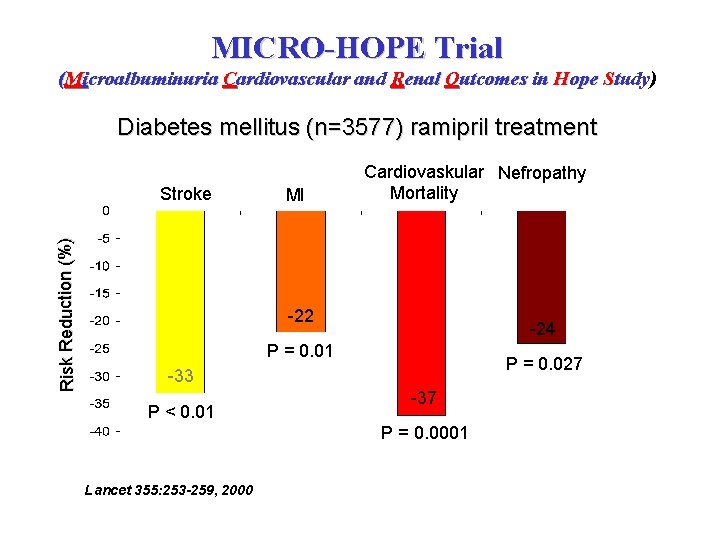
MICRO-HOPE Trial (Microalbuminuria Cardiovascular and Renal Outcomes in Hope Study) Diabetes mellitus (n=3577) ramipril treatment Risk Reduction (%) Stroke MI Cardiovaskular Nefropathy Mortality -22 -24 P = 0. 01 P = 0. 027 -33 P < 0. 01 -37 P = 0. 0001 Lancet 355: 253 -259, 2000
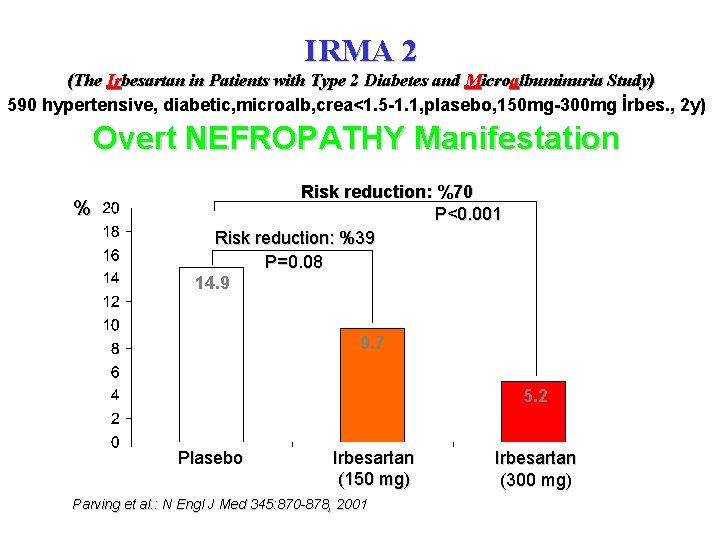
IRMA 2 (The Irbesartan in Patients with Type 2 Diabetes and Microalbuminuria Study) 590 hypertensive, diabetic, microalb, crea<1. 5 -1. 1, plasebo, 150 mg-300 mg İrbes. , 2 y) Overt NEFROPATHY Manifestation % Risk reduction: %70 P<0. 001 Risk reduction: %39 P=0. 08 14. 9 9. 7 5. 2 Plasebo Irbesartan (150 mg) Parving et al. : N Engl J Med 345: 870 -878, 2001 Irbesartan (300 mg)
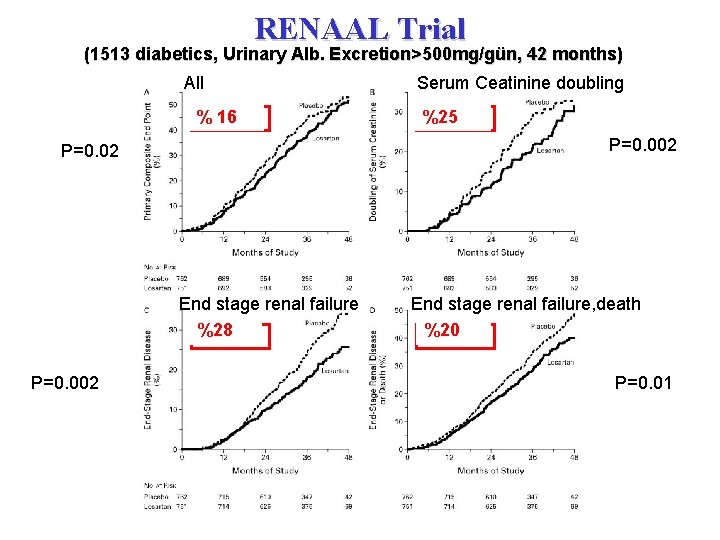
RENAAL Trial (1513 diabetics, Urinary Alb. Excretion>500 mg/gün, 42 months) All % 16 %25 P=0. 002 P=0. 02 End stage renal failure %28 P=0. 002 Serum Ceatinine doubling End stage renal failure, death %20 P=0. 01
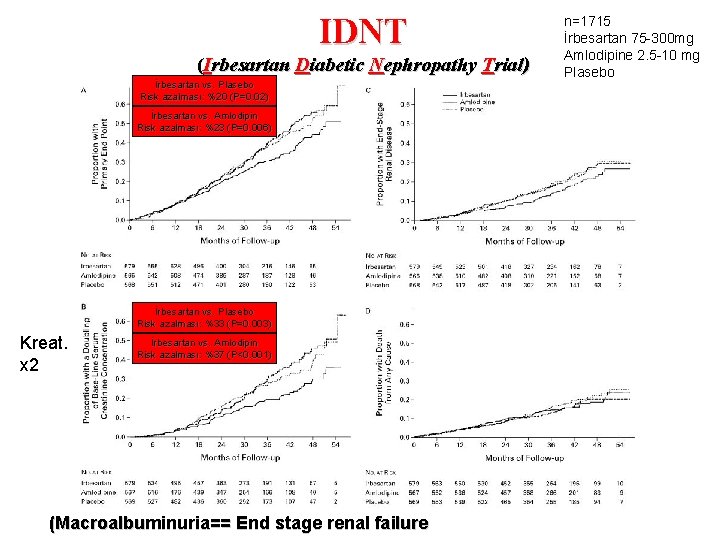
IDNT (Irbesartan Diabetic Nephropathy Trial) İrbesartan vs. Plasebo Risk azalması: %20 (P=0. 02) İrbesartan vs. Amlodipin Risk azalması: %23 (P=0. 006) İrbesartan vs. Plasebo Risk azalması: %33 (P=0. 003) Kreat. x 2 İrbesartan vs. Amlodipin Risk azalması: %37 (P<0. 001) (Macroalbuminuria== End stage renal failure n=1715 İrbesartan 75 -300 mg Amlodipine 2. 5 -10 mg Plasebo
Follow- up • Fundus ophtalmicus diagnostic • Kidney biopsy: especially if proteinuria is too high and you can not diagnose any eye background signs • Urine for microalbuminuria twice a year • Blood tests for Cholesterol (HDL and LDLfractions) triglyceride • Every visit: ECG, blood pressure control, education for self assessment of BP, 24 hours blood pressure records if necessary
Treatment and Progression • Increase of cardiovascular mortality to % 40 Prognosis can be changed by: • Early and good blood pressure control • Goal : BP <120/80 mm Hg • • Good glycemic control (Hb. A 1 c = < %7) Exercise Moderate protein restriction (0. 8 g/kg) STOP smoking
Blood pressure control • Teach self assessment • Microalbuminuria- Antihypertensives • Angiotensin Converting Enzyme Inh. , Angiotension-Reseptor Antag. , Beta. Blockerler, Alpha-Blockers, Vasodilataters (ACE, ARB)+ Diuretics (Hydrochlorothiazide comb. , later Loop. Diuretics)
Blood sugar control • Renal insulin clearence is reduced: RISK: HYPOGLYSEMIA ! • Reduce insulin latest in overt proteinurics • Regular Hb. A 1 c control • Self assessment ! Records
Renal Replacement Therapy Preperation • Creatinine >2 mg/dl every month control • Creatinine, urea, Na, K, phos. , calcium and hemoglobin control • Feet ulcerations ? • Oftalmologic control • Education for RRT alternatives !
Renal Replacement Therapy • Hemodialysis (arterio-venous fistula = creatinine-clearance <20 ml/min), • CAPD ( transperitoneal katheter implantation and education, • Transplantation (cadaveric or from living donor)
Be careful !! • Contrast dye may precipitate acute renal failure (good hydration !) • Renal replacement therapy should be started earlier (Serum-creatinine 4 -6 mg/dl, Creatinine-clearance < 20 ml/min • The patient should not be severe hypertensive or hypo- and hypervolemic before starting RRT!!
- Slides: 31