
Divorce Summary Points This is a lighthearted poem

- Slides: 10
“Divorce” Summary Points This is a light-hearted poem which deals with the serious issue of divorce from an unusual perspective. The speaker, a young child, voices her concern about her parents’ relationship and that of hers with them. She appears to be reacting to a situation which has occurred at home. During this she has obviously stormed off after having been chastised. She then seems to calm down and starts to imagine how other children’s parents act towards their offspring. Through this reverie we learn about what is lacking in her familial relationship. The poem then ends with the child assuming a more accusatory and demanding stance.
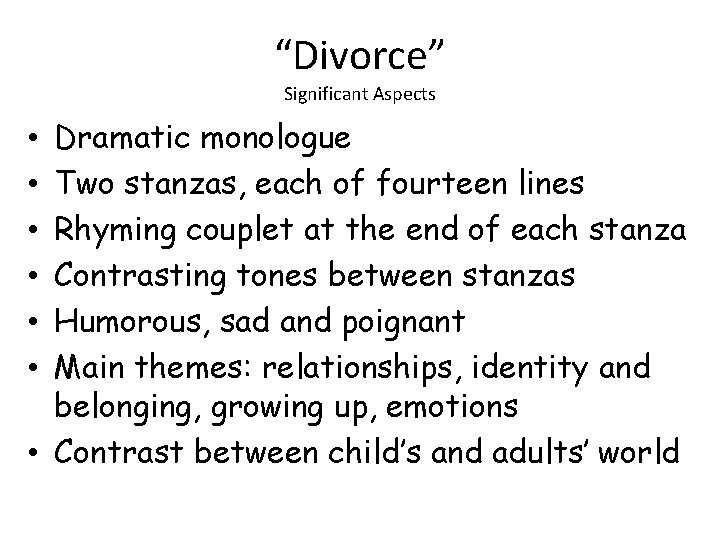
“Divorce” Significant Aspects Dramatic monologue Two stanzas, each of fourteen lines Rhyming couplet at the end of each stanza Contrasting tones between stanzas Humorous, sad and poignant Main themes: relationships, identity and belonging, growing up, emotions • Contrast between child’s and adults’ world • • •
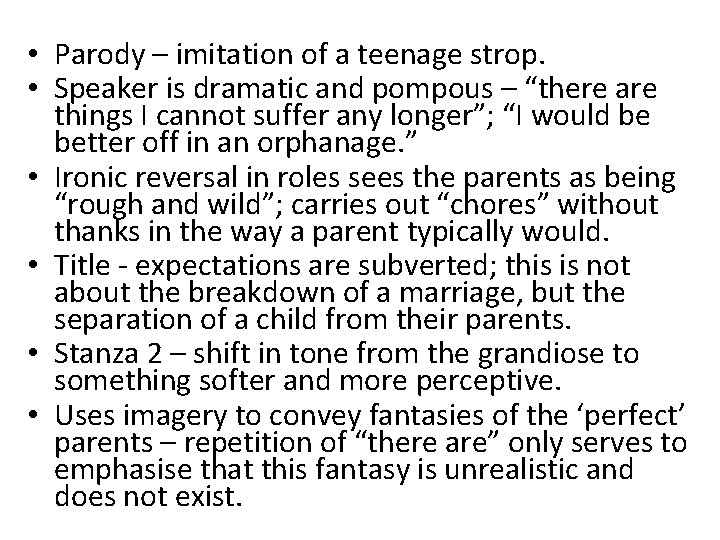
• Parody – imitation of a teenage strop. • Speaker is dramatic and pompous – “there are things I cannot suffer any longer”; “I would be better off in an orphanage. ” • Ironic reversal in roles sees the parents as being “rough and wild”; carries out “chores” without thanks in the way a parent typically would. • Title - expectations are subverted; this is not about the breakdown of a marriage, but the separation of a child from their parents. • Stanza 2 – shift in tone from the grandiose to something softer and more perceptive. • Uses imagery to convey fantasies of the ‘perfect’ parents – repetition of “there are” only serves to emphasise that this fantasy is unrealistic and does not exist.
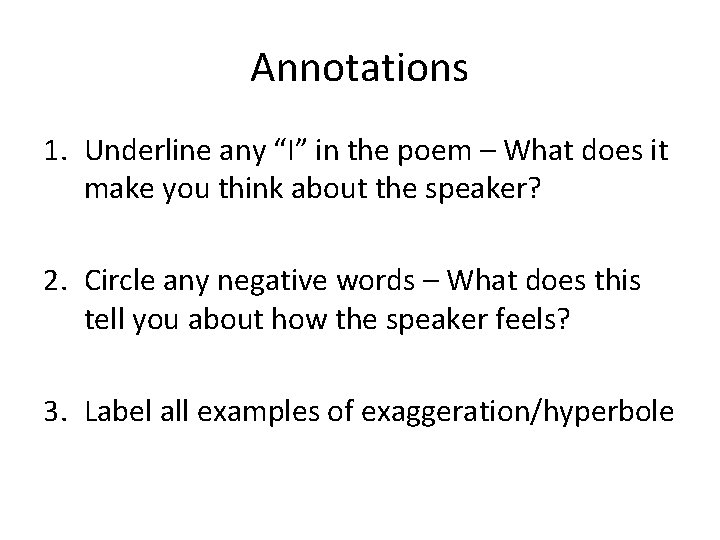
Annotations 1. Underline any “I” in the poem – What does it make you think about the speaker? 2. Circle any negative words – What does this tell you about how the speaker feels? 3. Label all examples of exaggeration/hyperbole
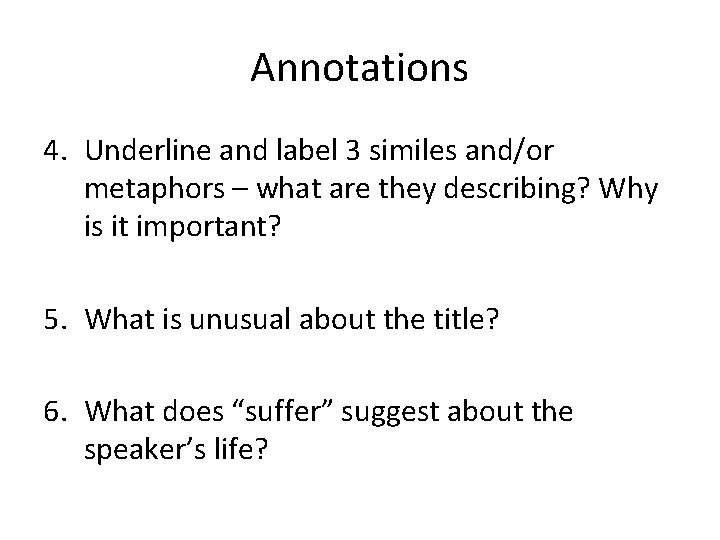
Annotations 4. Underline and label 3 similes and/or metaphors – what are they describing? Why is it important? 5. What is unusual about the title? 6. What does “suffer” suggest about the speaker’s life?
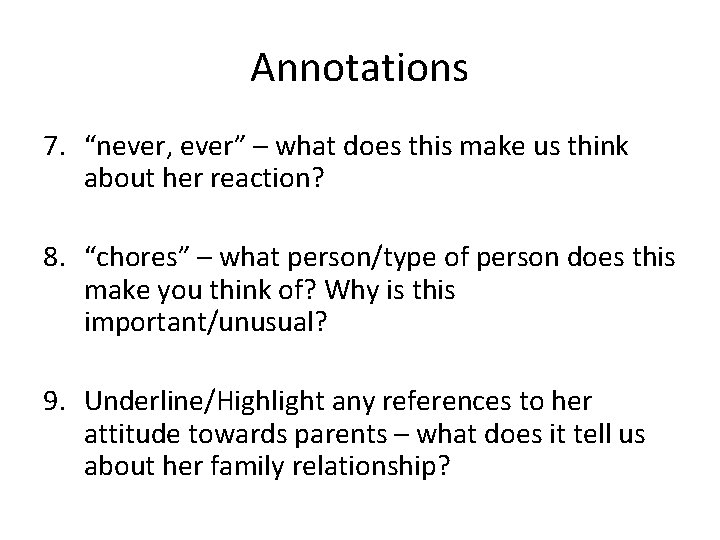
Annotations 7. “never, ever” – what does this make us think about her reaction? 8. “chores” – what person/type of person does this make you think of? Why is this important/unusual? 9. Underline/Highlight any references to her attitude towards parents – what does it tell us about her family relationship?
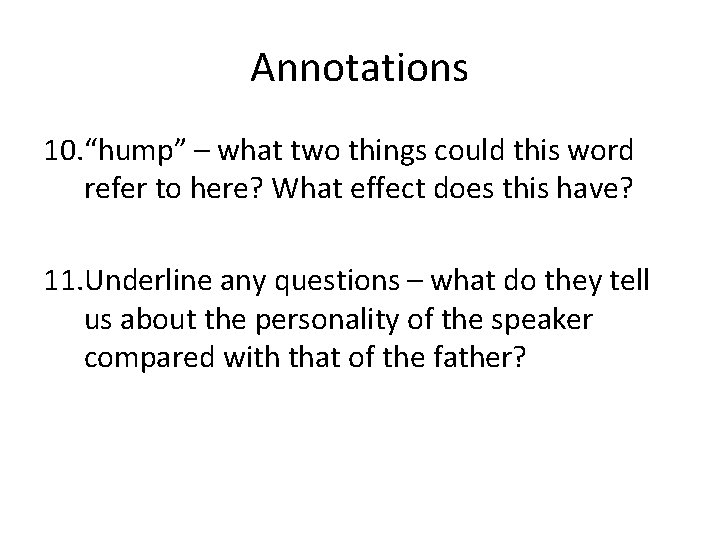
Annotations 10. “hump” – what two things could this word refer to here? What effect does this have? 11. Underline any questions – what do they tell us about the personality of the speaker compared with that of the father?
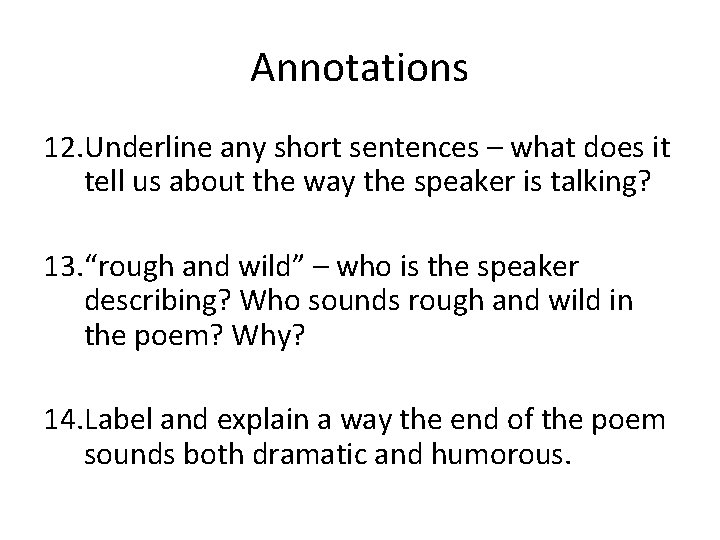
Annotations 12. Underline any short sentences – what does it tell us about the way the speaker is talking? 13. “rough and wild” – who is the speaker describing? Who sounds rough and wild in the poem? Why? 14. Label and explain a way the end of the poem sounds both dramatic and humorous.
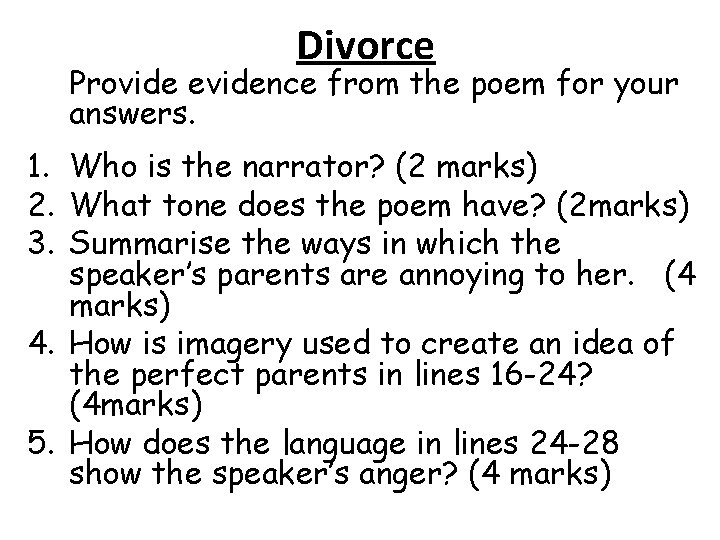
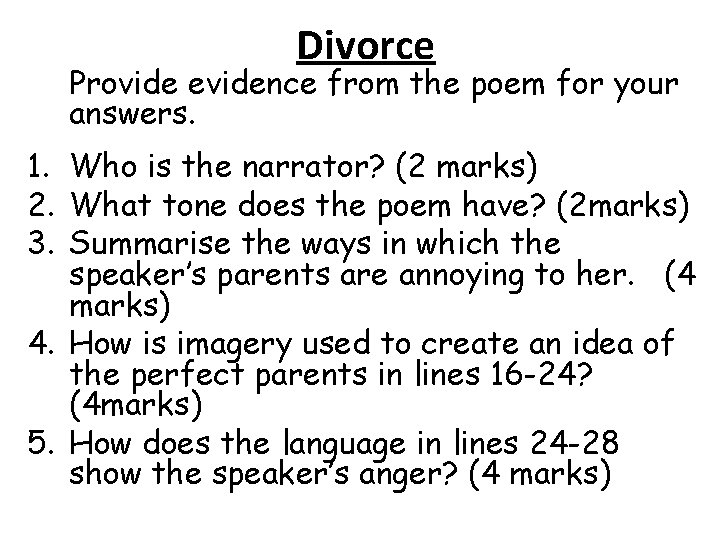
Divorce Provide evidence from the poem for your answers. 1. Who is the narrator? (2 marks) 2. What tone does the poem have? (2 marks) 3. Summarise the ways in which the speaker’s parents are annoying to her. (4 marks) 4. How is imagery used to create an idea of the perfect parents in lines 16 -24? (4 marks) 5. How does the language in lines 24 -28 show the speaker’s anger? (4 marks)
Divorce Provide evidence from the poem for your answers. 1. Who is the narrator? (2 marks) 2. What tone does the poem have? (2 marks) 3. Summarise the ways in which the speaker’s parents are annoying to her. (4 marks) 4. How is imagery used to create an idea of the perfect parents in lines 16 -24? (4 marks) 5. How does the language in lines 24 -28 show the speaker’s anger? (4 marks)