
Diversity Social Differences 1 1 Diversity A social
- Slides: 25
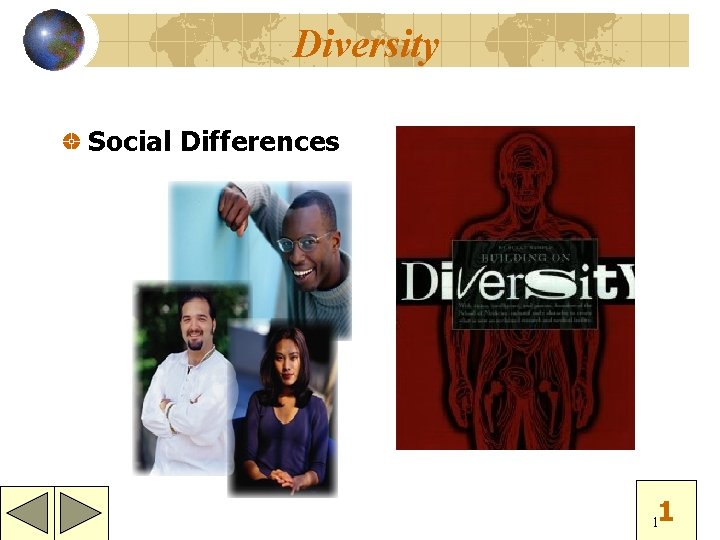
Diversity Social Differences 1 1
Diversity A social situation that includes representation of multiple groups within any environment Emphasis on accepting & respecting cultural differences No culture is intrinsically superior to another 2 2
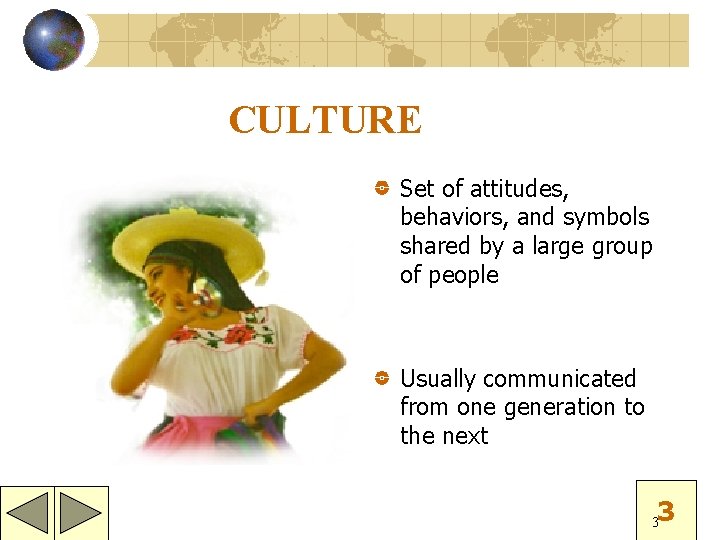
CULTURE Set of attitudes, behaviors, and symbols shared by a large group of people Usually communicated from one generation to the next 3 3
CHARACTERISTICS OF CULTURE Explicit Characteristics Set of observable acts regularly found in a culture Implicit Characteristics Organizing principles that are inferred to lie behind these regularities 4 4
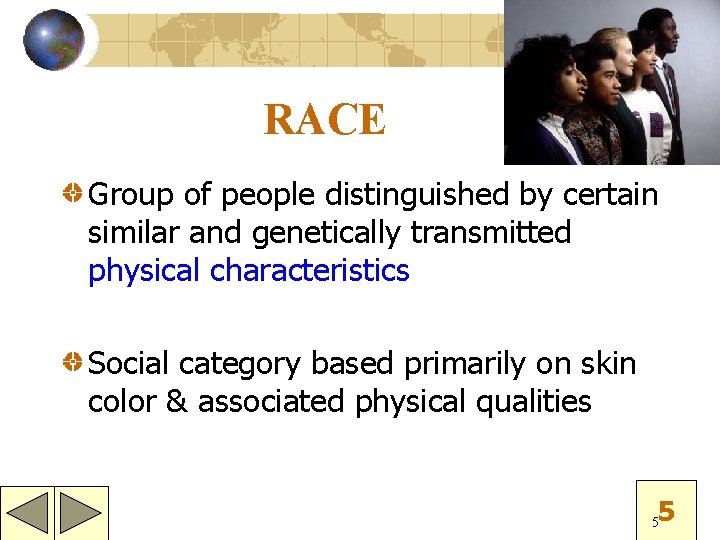
RACE Group of people distinguished by certain similar and genetically transmitted physical characteristics Social category based primarily on skin color & associated physical qualities 5 5
Racial Categories in the United States White (includes people of European, Arab, and Central Asian origin) Black (includes people of African origin) Native American (includes people of American Indian & Eskimo origin) Asian (includes people of East Asian and Pacific Islander origin) Hispanic (includes people of South and Central American origin) 6 6
ETHNICITY Social category based on nonphysical qualities (national origin, culture or language) Cultural heritage, the experience shared by you & other people who have a common ancestral origin, language, traditions, and often religion, & geographic territory 7 7
8 8
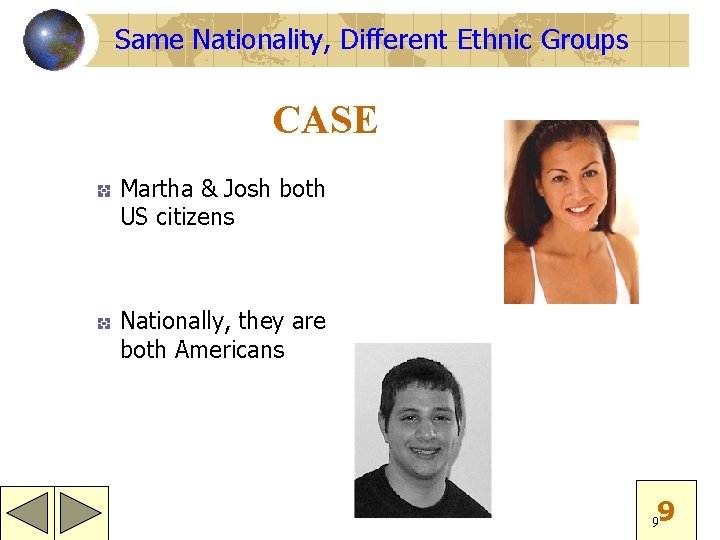
Same Nationality, Different Ethnic Groups CASE Martha & Josh both US citizens Nationally, they are both Americans 9 9
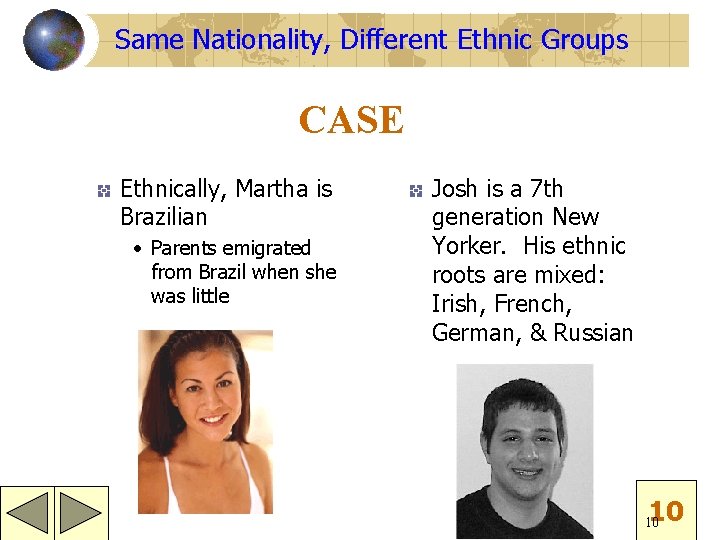
Same Nationality, Different Ethnic Groups CASE Ethnically, Martha is Brazilian • Parents emigrated from Brazil when she was little Josh is a 7 th generation New Yorker. His ethnic roots are mixed: Irish, French, German, & Russian 10 10
ETHNOCENTRISM The tendency to judge other ethnic, national, and cultural groups & events from the observer’s own ethnic, national, or group’s outlook. A distortion in reality Narrows our perception of other countries & social groups 11 11
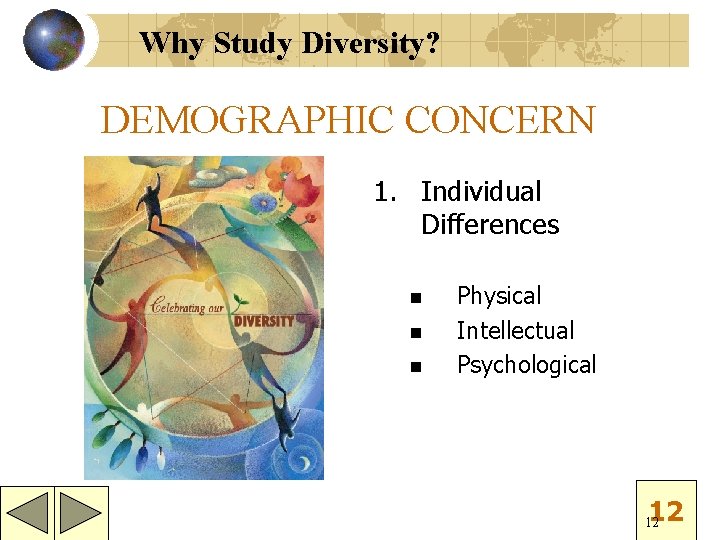
Why Study Diversity? DEMOGRAPHIC CONCERN 1. Individual Differences n n n Physical Intellectual Psychological 12 12
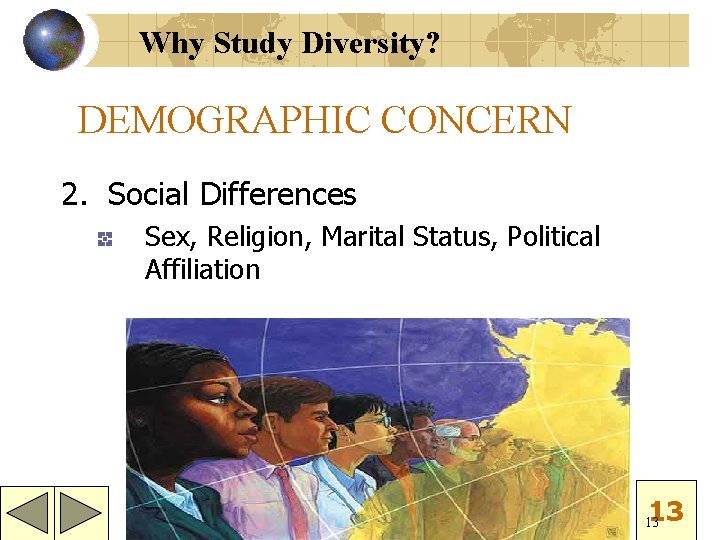
Why Study Diversity? DEMOGRAPHIC CONCERN 2. Social Differences Sex, Religion, Marital Status, Political Affiliation 13 13
Why Study Diversity? POLITICAL CONCERN 1978 University of California v. Bakke Particular social groups who have experienced disadvantage & discrimination 14 14
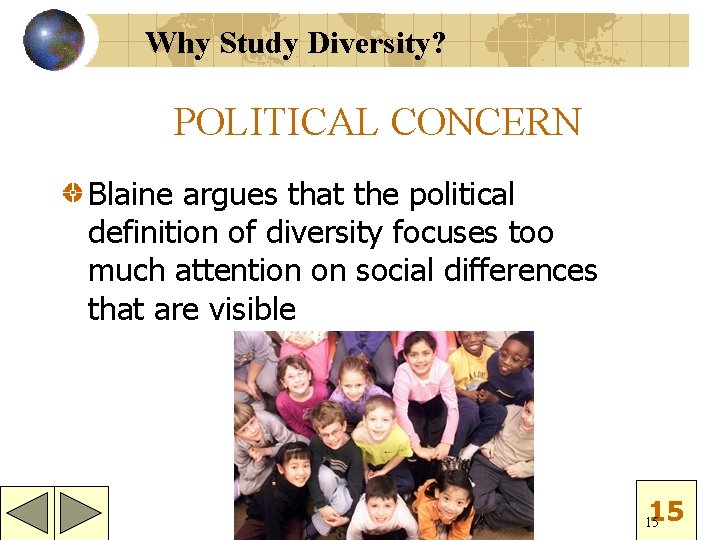
Why Study Diversity? POLITICAL CONCERN Blaine argues that the political definition of diversity focuses too much attention on social differences that are visible 15 15
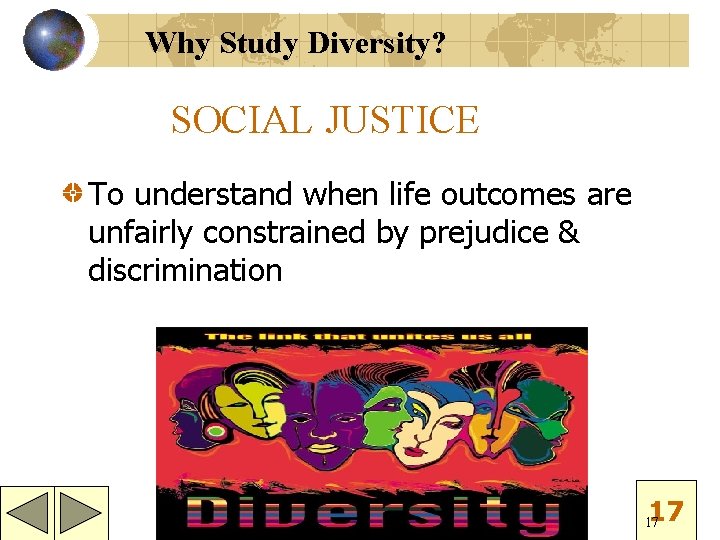
Why Study Diversity? SOCIAL JUSTICE To ensure that all groups of people in a society are afforded the same rights & opportunities 16 16
Why Study Diversity? SOCIAL JUSTICE To understand when life outcomes are unfairly constrained by prejudice & discrimination 17 17
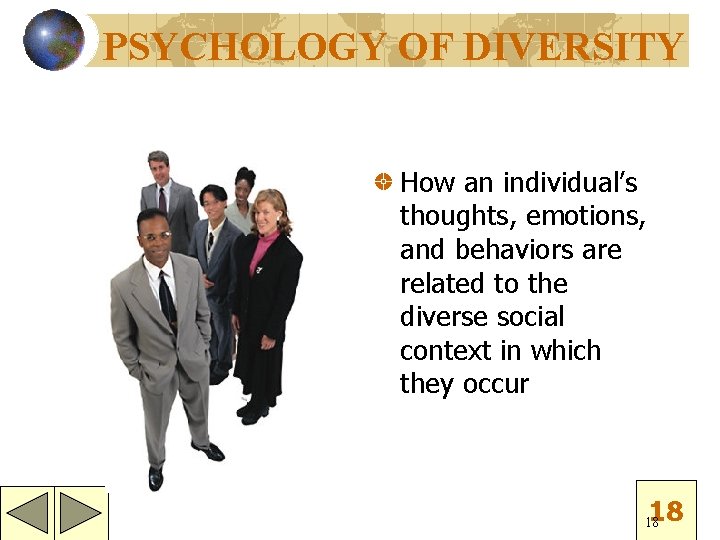
PSYCHOLOGY OF DIVERSITY How an individual’s thoughts, emotions, and behaviors are related to the diverse social context in which they occur 18 18
19 19
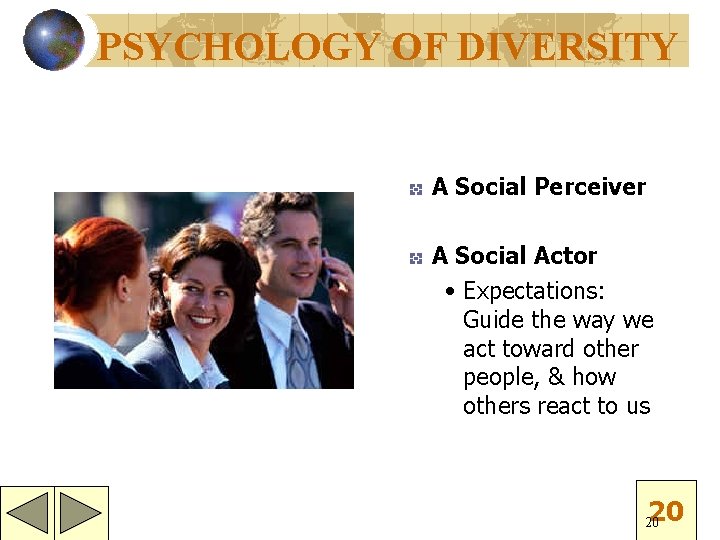
PSYCHOLOGY OF DIVERSITY A Social Perceiver A Social Actor • Expectations: Guide the way we act toward other people, & how others react to us 20 20
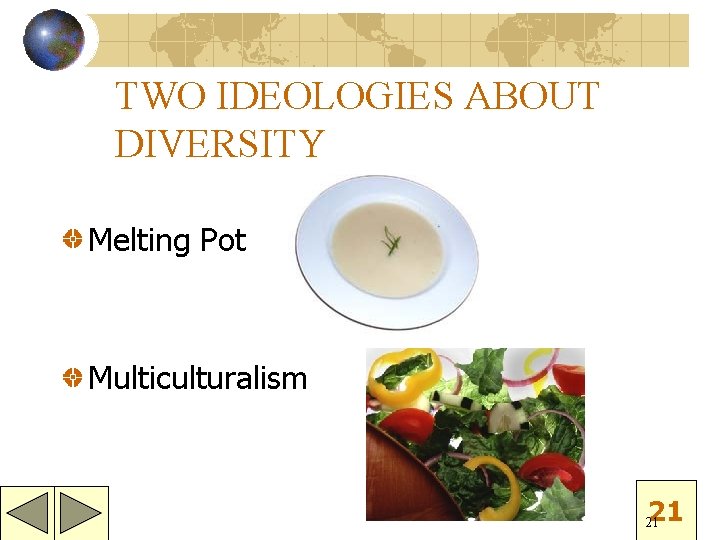
TWO IDEOLOGIES ABOUT DIVERSITY Melting Pot Multiculturalism 21 21
MELTING POT People with social differences relate harmoniously Acceptance of others’ difference if they are (perceived to be) otherwise devoted to the majority group’s values & goals Diversity can work for the benefit of everyone 22 22
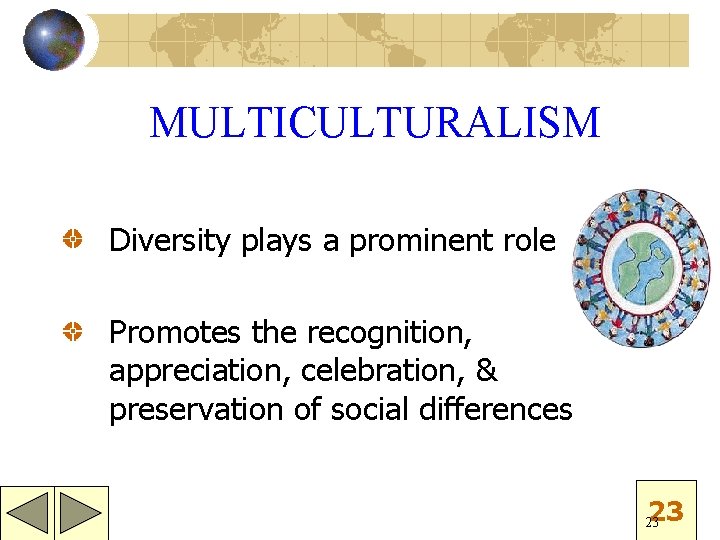
MULTICULTURALISM Diversity plays a prominent role Promotes the recognition, appreciation, celebration, & preservation of social differences 23 23
IMPLICATIONS Melting Pot Society The minority group gains acceptance by the majority group, BUT only to the extent that they adopt to the majority group identity & customs 24 24
IMPLICATIONS Multicultural Society The minority group’s culture and customs are accepted & preserved by the majority group 25 25