
Diversity of Organisms and Classification Essential Vocabulary DNA
Diversity of Organisms and Classification
Essential Vocabulary DNA . § Prokaryotic: a cell that lacks a nucleus § Eukaryotic: a cell that has a nucleus and other complex structures Feeding § Autotrophic: an organism that makes it’s own food from solar energy or chemicals § Heterotrophic: an organism that must eat other organisms to obtain it’s energy
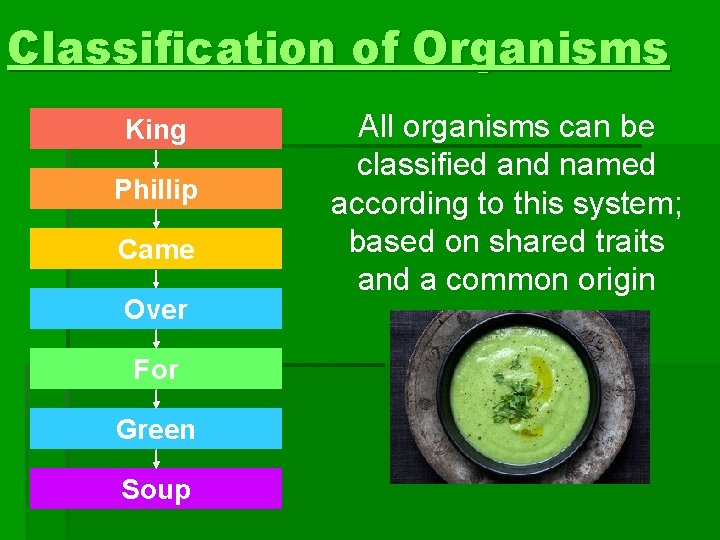
Classification of Organisms Kingdom King Phylum Phillip / Division Came Class Order Over Family For Genus Green Species Soup All organisms can be classified and named according to this system; based on shared traits and a common origin

Classification of Bears
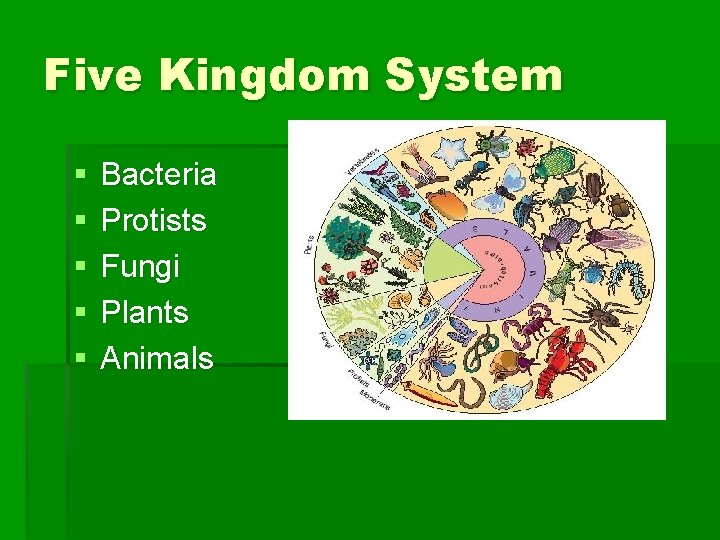
Five Kingdom System § § § Bacteria Protists Fungi Plants Animals
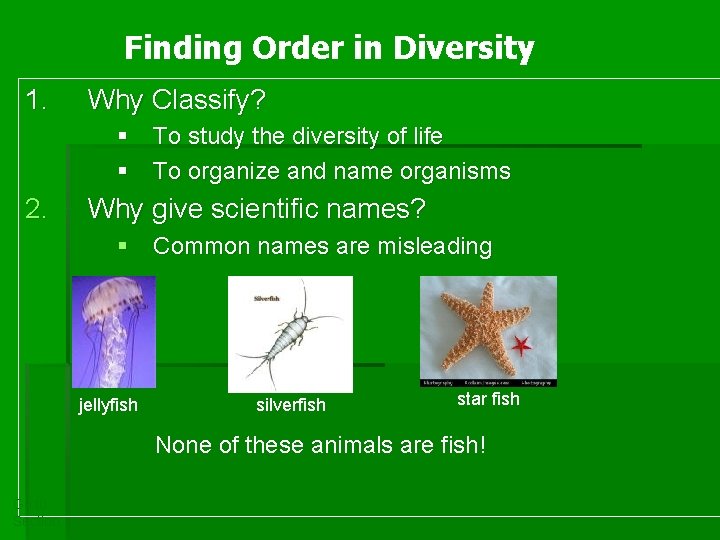
Finding Order in Diversity 1. Why Classify? § To study the diversity of life § To organize and name organisms 2. Why give scientific names? § Common names are misleading jellyfish silverfish star fish None of these animals are fish! Go to Section:
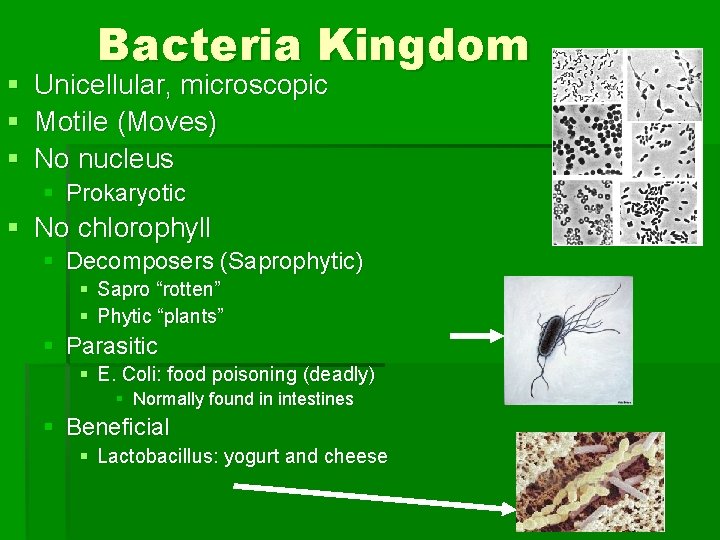
§ § § Bacteria Kingdom Unicellular, microscopic Motile (Moves) No nucleus § Prokaryotic § No chlorophyll § Decomposers (Saprophytic) § Sapro “rotten” § Phytic “plants” § Parasitic § E. Coli: food poisoning (deadly) § Normally found in intestines § Beneficial § Lactobacillus: yogurt and cheese
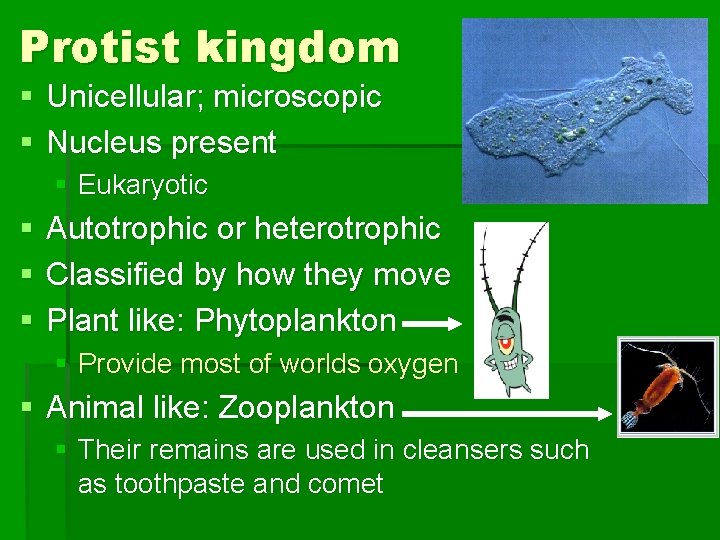
Protist kingdom § Unicellular; microscopic § Nucleus present § Eukaryotic § § § Autotrophic or heterotrophic Classified by how they move Plant like: Phytoplankton § Provide most of worlds oxygen § Animal like: Zooplankton § Their remains are used in cleansers such as toothpaste and comet
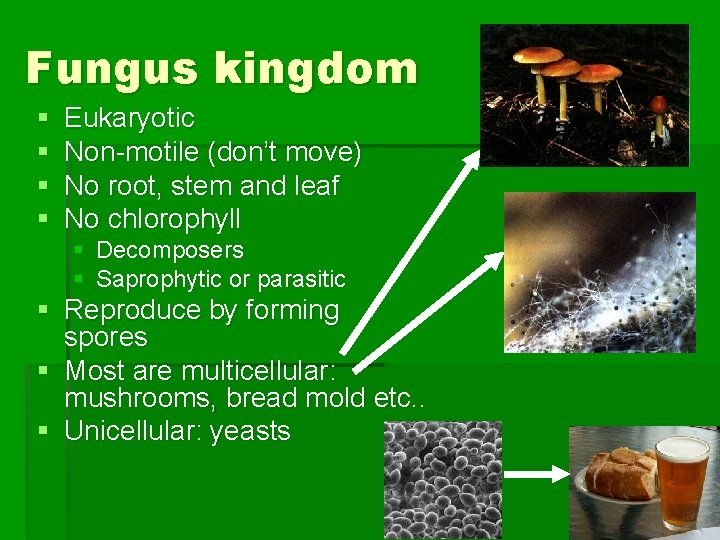
Fungus kingdom § § Eukaryotic Non-motile (don’t move) No root, stem and leaf No chlorophyll § Decomposers § Saprophytic or parasitic § Reproduce by forming spores § Most are multicellular: mushrooms, bread mold etc. . § Unicellular: yeasts
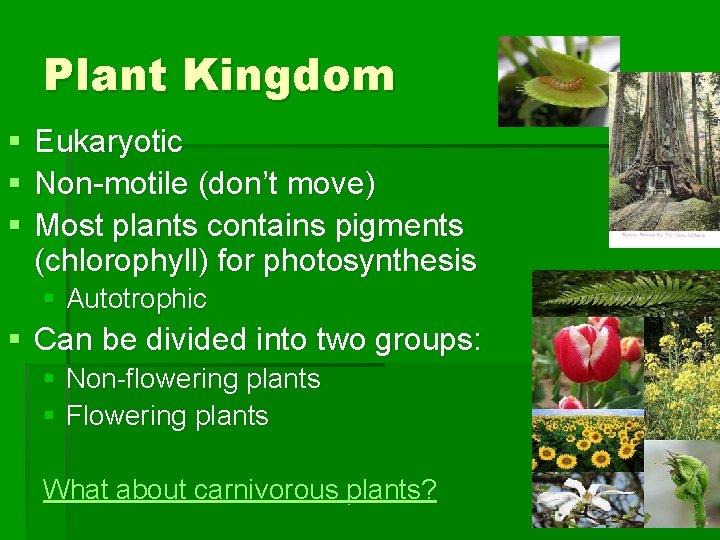
Plant Kingdom § § § Eukaryotic Non-motile (don’t move) Most plants contains pigments (chlorophyll) for photosynthesis § Autotrophic § Can be divided into two groups: § Non-flowering plants § Flowering plants What about carnivorous plants?
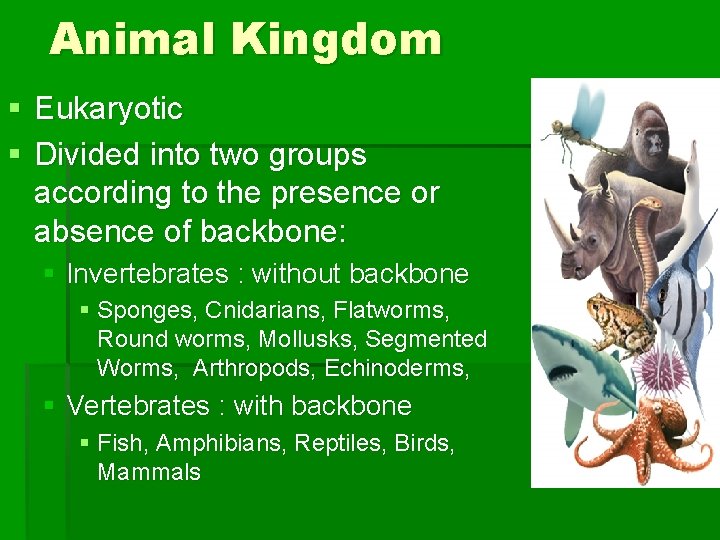
Animal Kingdom § Eukaryotic § Divided into two groups according to the presence or absence of backbone: § Invertebrates : without backbone § Sponges, Cnidarians, Flatworms, Round worms, Mollusks, Segmented Worms, Arthropods, Echinoderms, § Vertebrates : with backbone § Fish, Amphibians, Reptiles, Birds, Mammals
Animals are separated into groups or categories so that they are more easily studied and discussed by scientists and others. Use the following slides to fill in the “Classification Quest” Worksheet
Important Invertebrates: Arthropods • • • Most diverse group of invertebrates Segmented body Hard exoskeleton Several pairs of jointed legs Divided into 3 groups: 1. Crustaceans 2. Arachnids 3. Insects
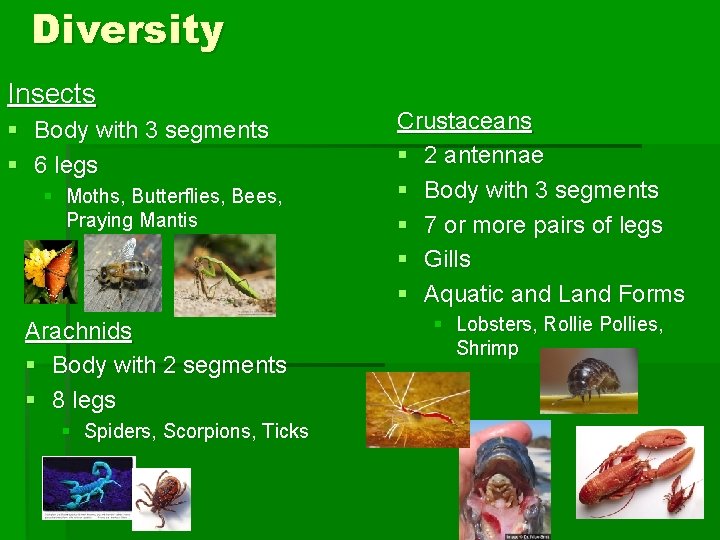
Diversity Insects § Body with 3 segments § 6 legs § Moths, Butterflies, Bees, Praying Mantis Arachnids § Body with 2 segments § 8 legs § Spiders, Scorpions, Ticks Crustaceans § 2 antennae § Body with 3 segments § 7 or more pairs of legs § Gills § Aquatic and Land Forms § Lobsters, Rollie Pollies, Shrimp
Vertebrate Groups: § § § Fish Amphibians Reptiles Birds Mammals
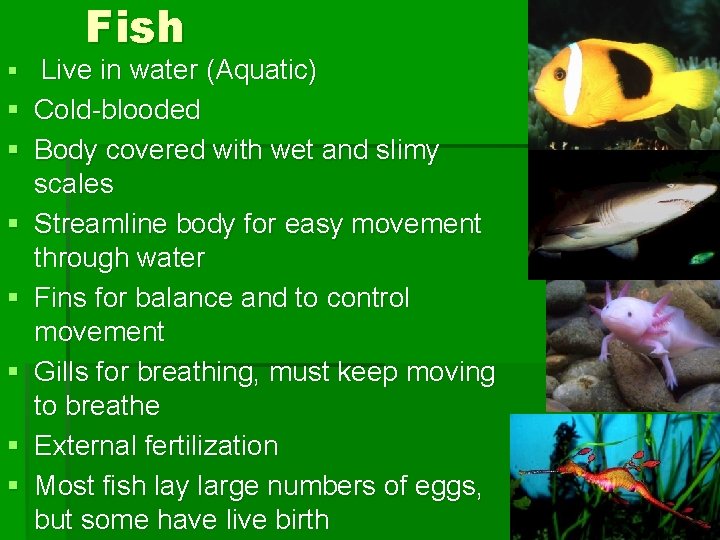
Fish § Live in water (Aquatic) § § § § Cold-blooded Body covered with wet and slimy scales Streamline body for easy movement through water Fins for balance and to control movement Gills for breathing, must keep moving to breathe External fertilization Most fish lay large numbers of eggs, but some have live birth
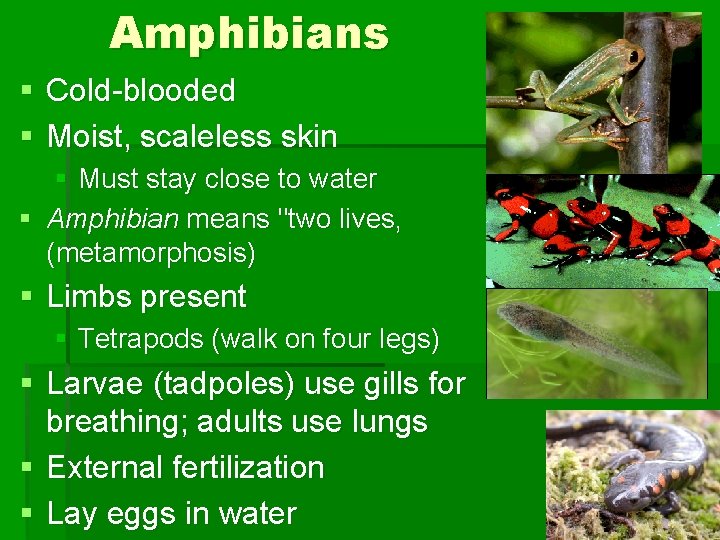
Amphibians § Cold-blooded § Moist, scaleless skin § Must stay close to water § Amphibian means "two lives, (metamorphosis) § Limbs present § Tetrapods (walk on four legs) § Larvae (tadpoles) use gills for breathing; adults use lungs § External fertilization § Lay eggs in water
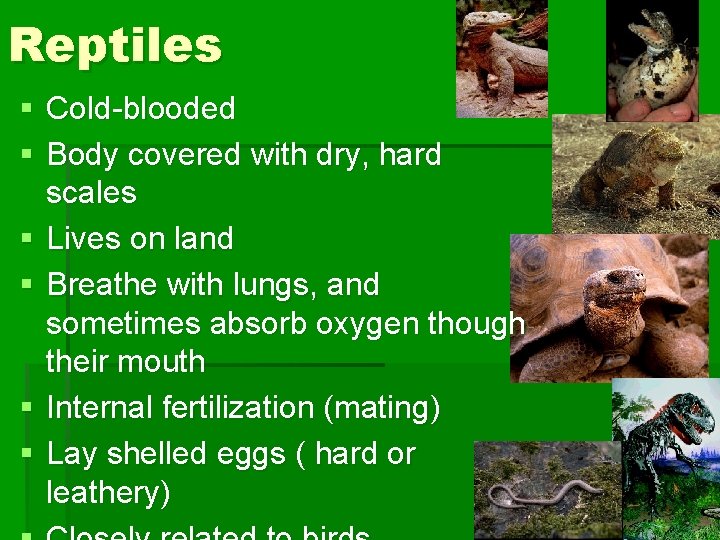
Reptiles § Cold-blooded § Body covered with dry, hard scales § Lives on land § Breathe with lungs, and sometimes absorb oxygen though their mouth § Internal fertilization (mating) § Lay shelled eggs ( hard or leathery)
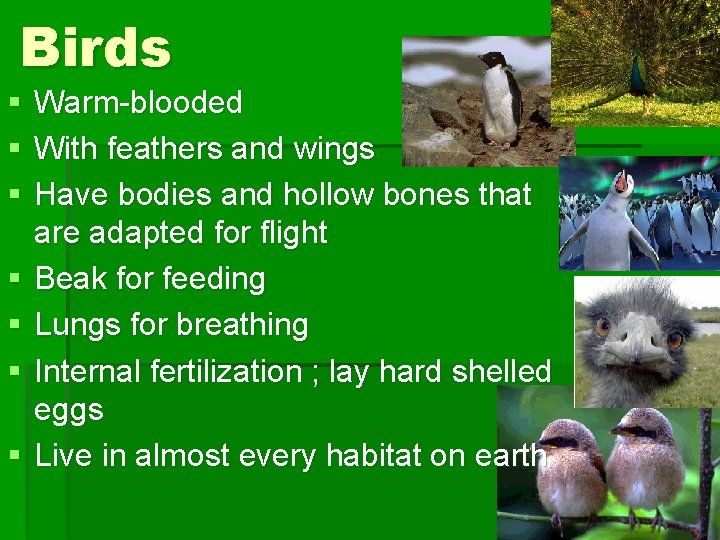
Birds § § § § Warm-blooded With feathers and wings Have bodies and hollow bones that are adapted for flight Beak for feeding Lungs for breathing Internal fertilization ; lay hard shelled eggs Live in almost every habitat on earth
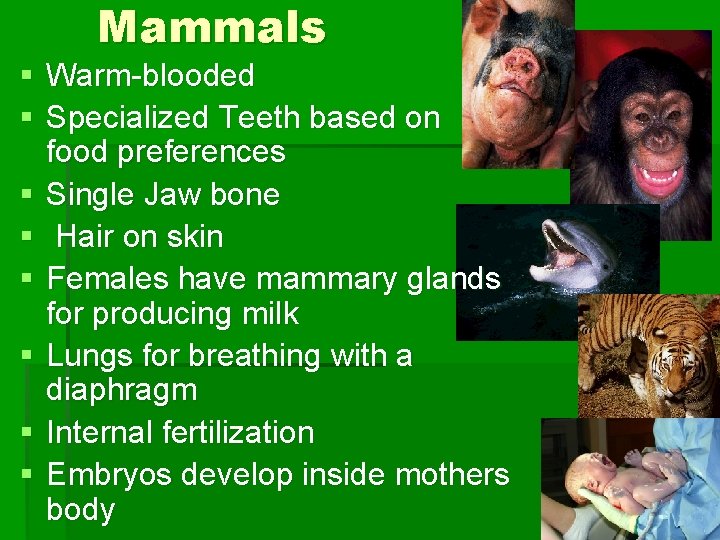
Mammals § Warm-blooded § Specialized Teeth based on food preferences § Single Jaw bone § Hair on skin § Females have mammary glands for producing milk § Lungs for breathing with a diaphragm § Internal fertilization § Embryos develop inside mothers body
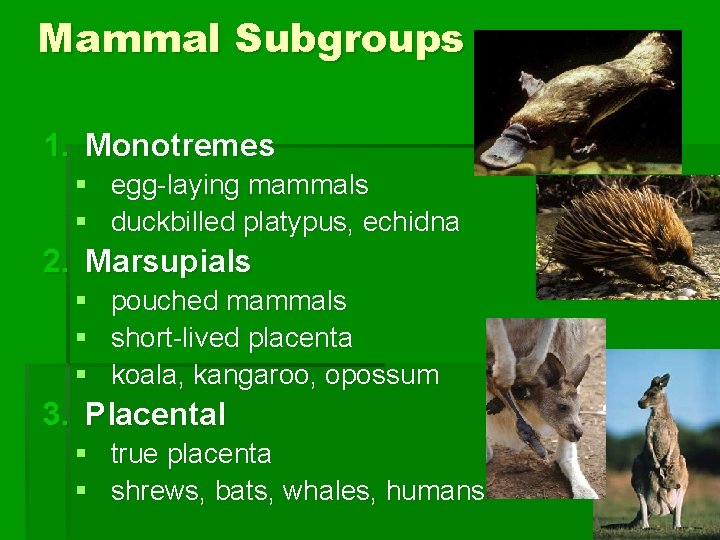
Mammal Subgroups 1. Monotremes § egg-laying mammals § duckbilled platypus, echidna 2. Marsupials § § § pouched mammals short-lived placenta koala, kangaroo, opossum 3. Placental § true placenta § shrews, bats, whales, humans
- Slides: 21