
Diversity of Cellular Life Homeostasis and Cell Communication
- Slides: 19
Diversity of Cellular Life, Homeostasis, and Cell Communication Section 7. 4
Life on Earth extends to many varied and challenging environments. Habitats range from deep with the soil to deep under the sea. All living things are made from cells and share the same basic chemistry. We can even see many organisms sharing the same organelles. All organisms need a method of maintaining their bodies at relatively stable conditions.
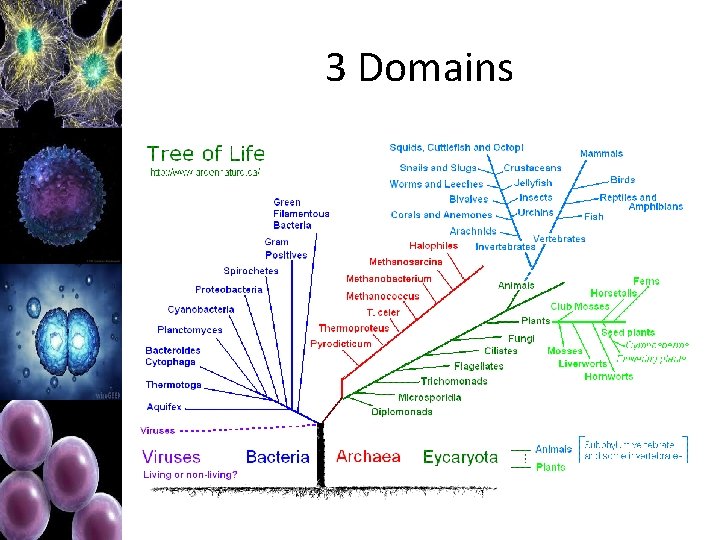
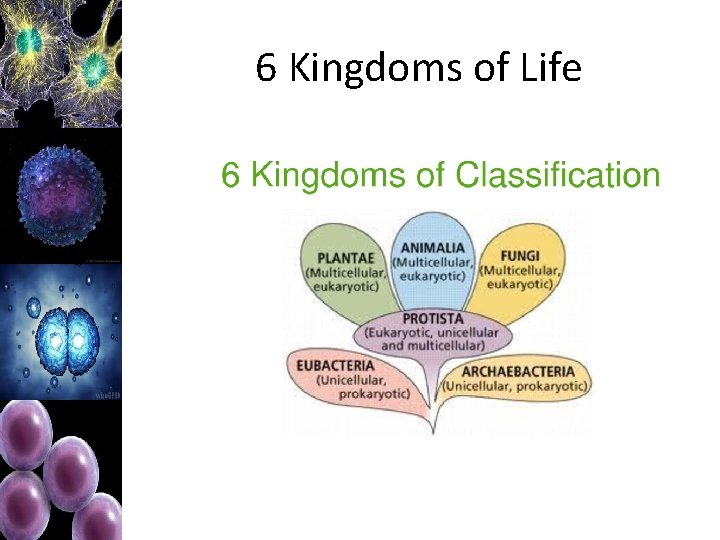
3 Domains and 6 Kingdoms of Life on earth can be classified in many complex systems but the most common way is to use 3 Domains sub-divided into 6 broad kingdoms of organism. The 3 domains we refer to are; Bacteria, archaea, and eukariota. The 6 Kingdoms are; Animals, plants, fungi, protists, eubacteria, and archaebacteria.
3 Domains
6 Kingdoms of Life
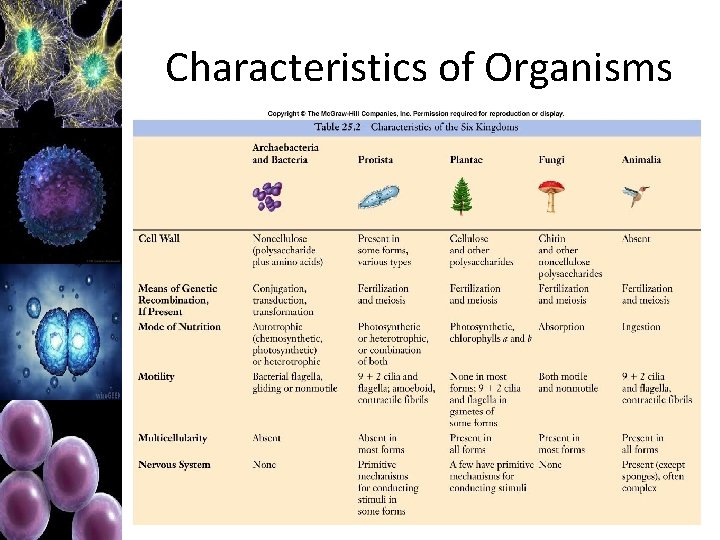
Characteristics of Organisms
The Cell as an Organism Individual cells need to maintain their homeostasis. Unicellular organisms dominate life on Earth in terms of their sheer numbers. Unicellular organisms need to grow, respond to their environment, transform energy and reproduce.
Multicellular Life The cells of multicellular organisms work together to maintain homeostasis. The cells of multicellular organisms become specialized for particular tasks and communicate with one another to maintain homeostasis.
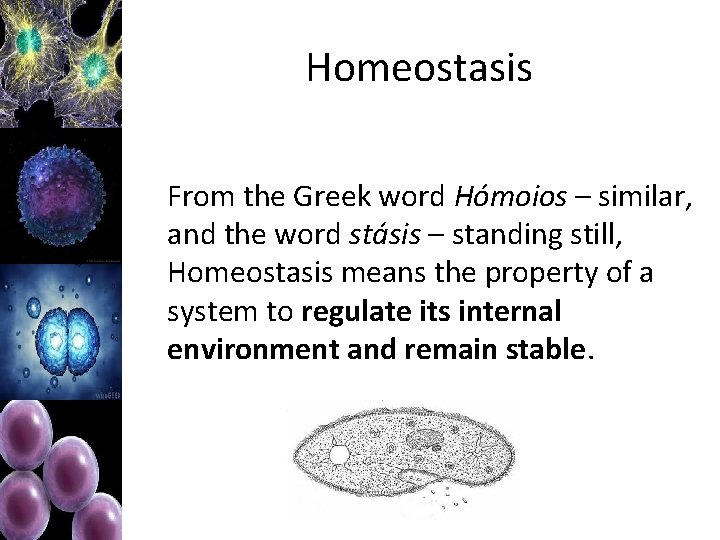
Homeostasis From the Greek word Hómoios – similar, and the word stásis – standing still, Homeostasis means the property of a system to regulate its internal environment and remain stable.
Feedback Loops Most cells in our body operate on a negative feedback loop. This is the same way a thermostat will work. As the temp drops thermostat triggers the boiler to turn on and the heat rises. Once it rises to a set point the boiler will shut off and the heat will drop again.
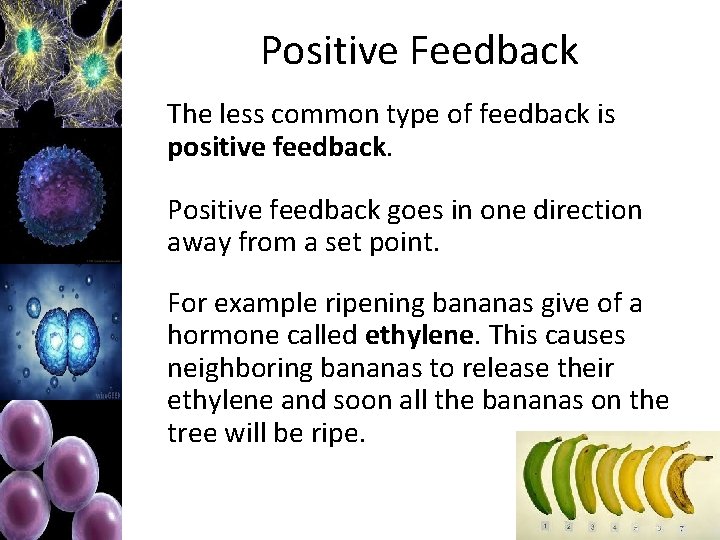
Positive Feedback The less common type of feedback is positive feedback. Positive feedback goes in one direction away from a set point. For example ripening bananas give of a hormone called ethylene. This causes neighboring bananas to release their ethylene and soon all the bananas on the tree will be ripe.
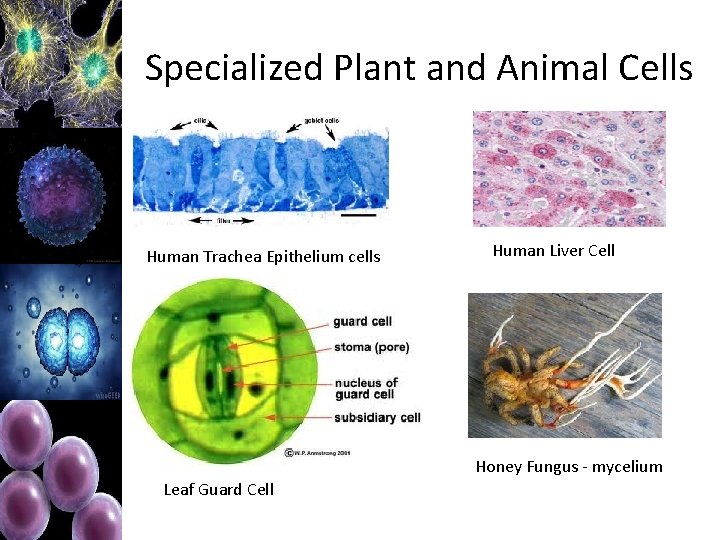
Cell Specialization The cells of a multi-cellular organism are all specialized for particular roles. For example some aid in movement, some react to the environment and others produce substances needed by the organism. All cells in a multi-cellular organisms contribute to the homeostasis of the organism.
Specialized Plant and Animal Cells Human Trachea Epithelium cells Human Liver Cell Honey Fungus - mycelium Leaf Guard Cell
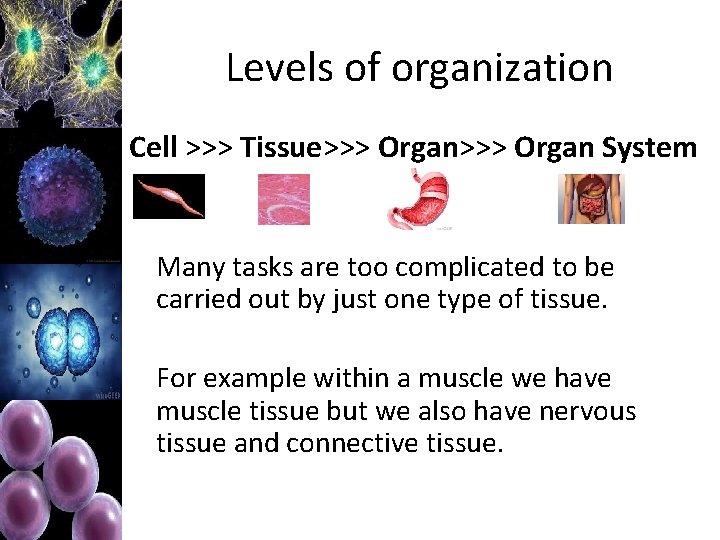
Levels of organization Cell >>> Tissue>>> Organ System Many tasks are too complicated to be carried out by just one type of tissue. For example within a muscle we have muscle tissue but we also have nervous tissue and connective tissue.
Cellular Communication Cells in a large organism communicate via chemical signals passed from one cell to another. These signals can change the rate that cells are performing activities and can thus cause dramatic effects in cells. Via this communication cells can establish homeostasis.
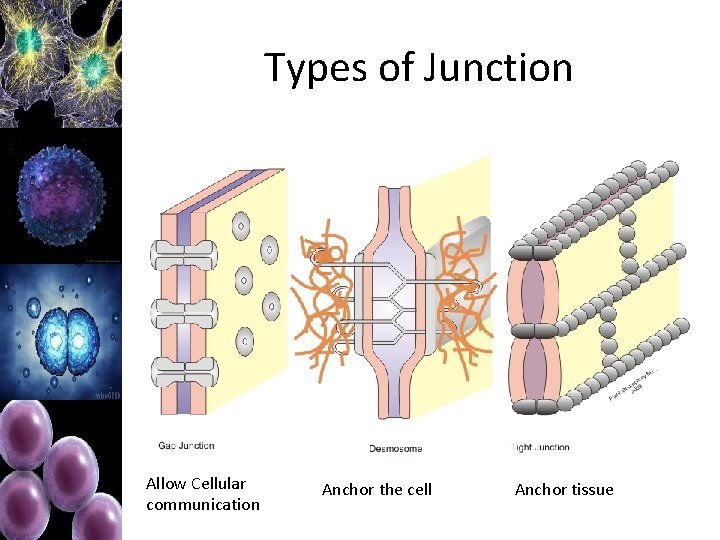
Cellular Junctions Cells within a tissue are connected to one another via cellular junctions Some of these junctions hold cells tightly together. Others allow small molecules to pass through that carry chemical signals to other adjacent cell. The cell receiving this signal must have an appropriate receptor that the signaling molecule can bind to (located on the cell membrane or in the cytoplasm.
Types of Junction Allow Cellular communication Anchor the cell Anchor tissue
Types of Cell Communication
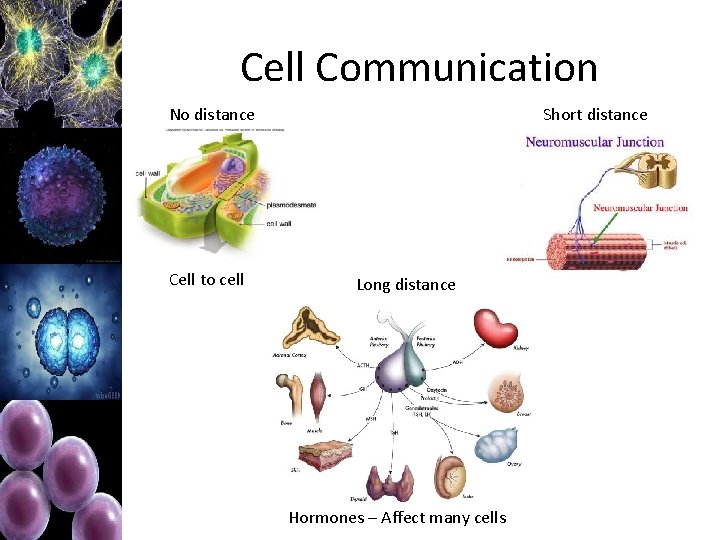
Cell Communication No distance Cell to cell Short distance Long distance Hormones – Affect many cells