
Diversity in the Classroom and Students Moral Reasoning

- Slides: 12
Diversity in the Classroom and Students’ Moral Reasoning Sylvia Hurtado Matthew J. Mayhew Mark E. Engberg University of Michigan
Introduction n “Institutions should foster intellectual honesty, responsibility for society’s moral health and for social justices, active participation as a citizen of a diverse democracy, discernment of the ethical consequences of decisions and action, and a deep understanding of one’s self and respect for the complex identities of others, their histories and their cultures” (p. xii). n The Association of American Colleges and Universities (2002)
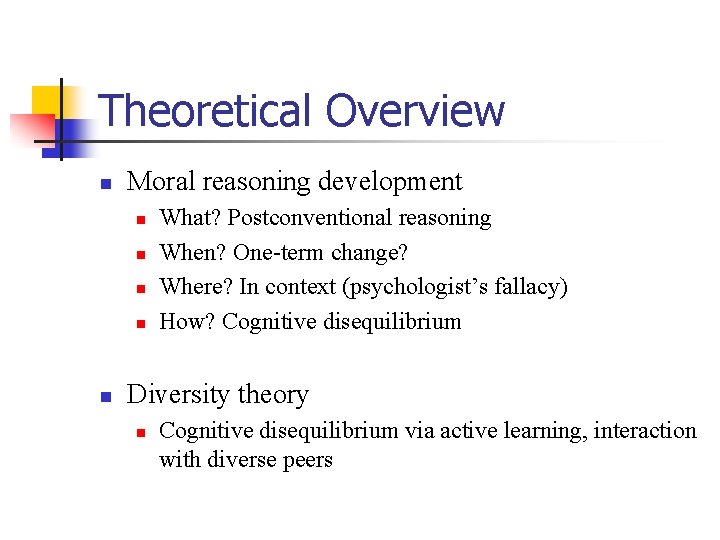
Theoretical Overview n Moral reasoning development n n n What? Postconventional reasoning When? One-term change? Where? In context (psychologist’s fallacy) How? Cognitive disequilibrium Diversity theory n Cognitive disequilibrium via active learning, interaction with diverse peers
Key Features n n n Assess impact of participation in a diversity course using a standard measure of moral reasoning (DIT 2); Beyond the standard pre- and post assessments, account for the type of pedagogy and learning that students report; Model students’ selection of these courses as a way to emphasize that students’ comfort levels and predispositions can be accentuated or challenged during college
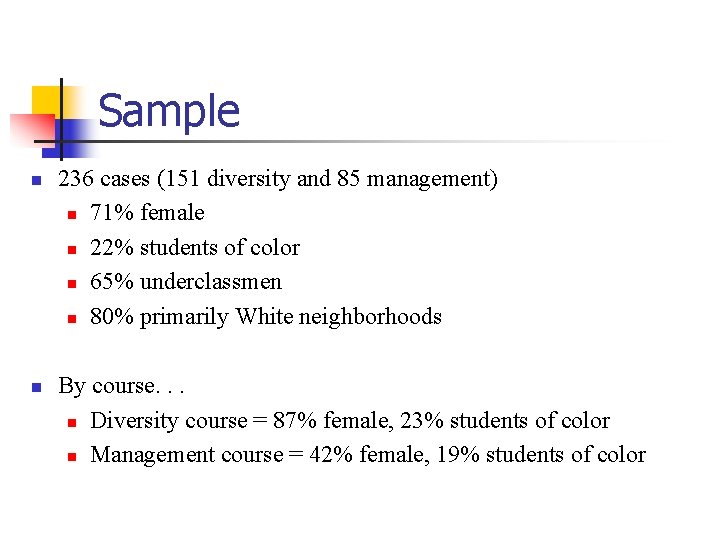
Sample n n 236 cases (151 diversity and 85 management) n 71% female n 22% students of color n 65% underclassmen n 80% primarily White neighborhoods By course. . . n Diversity course = 87% female, 23% students of color n Management course = 42% female, 19% students of color
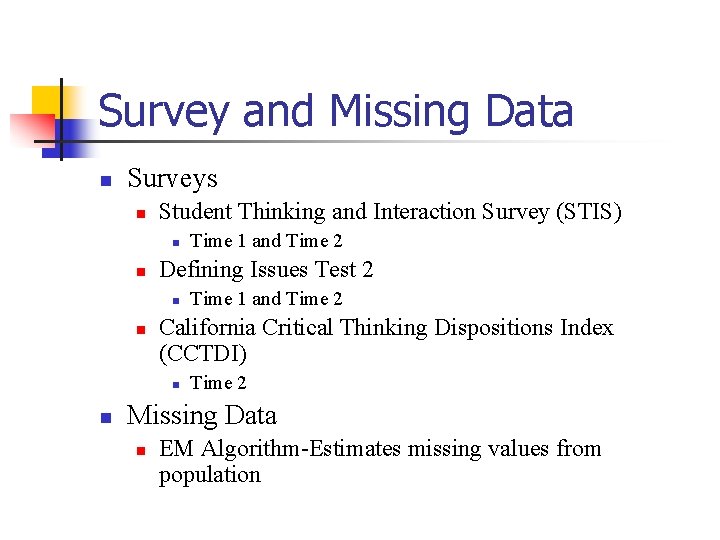
Survey and Missing Data n Surveys n Student Thinking and Interaction Survey (STIS) n n Defining Issues Test 2 n n Time 1 and Time 2 California Critical Thinking Dispositions Index (CCTDI) n n Time 1 and Time 2 Missing Data n EM Algorithm-Estimates missing values from population
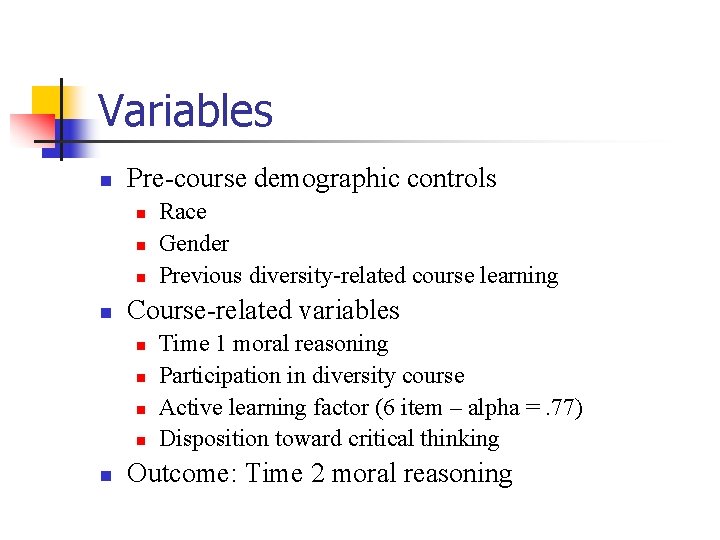
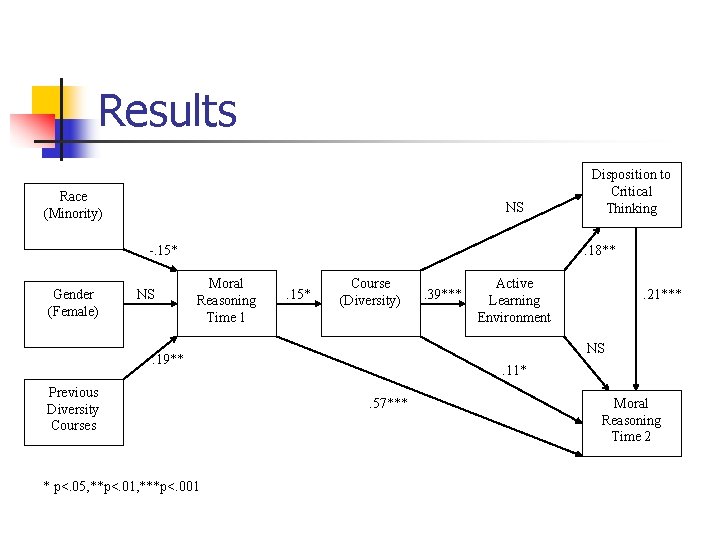
Variables n Pre-course demographic controls n n Course-related variables n n n Race Gender Previous diversity-related course learning Time 1 moral reasoning Participation in diversity course Active learning factor (6 item – alpha =. 77) Disposition toward critical thinking Outcome: Time 2 moral reasoning
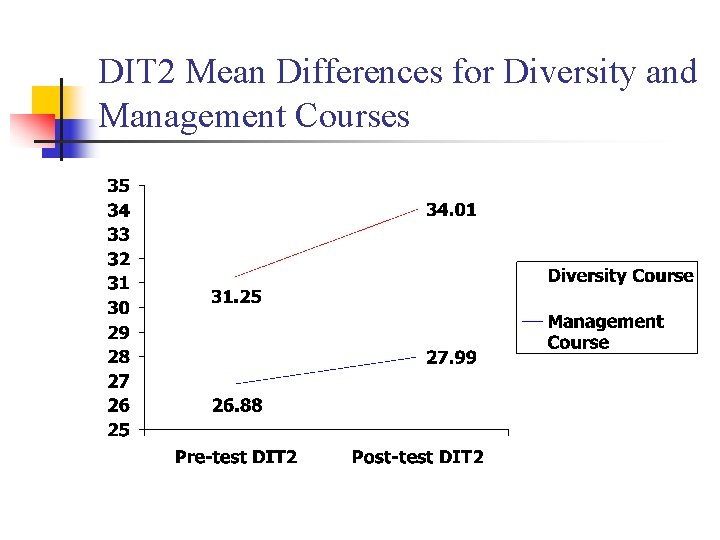
DIT 2 Mean Differences for Diversity and Management Courses
Results Race (Minority) NS -. 15* Gender (Female) NS Disposition to Critical Thinking. 18** Moral Reasoning Time 1 . 15* Course (Diversity) * p<. 05, **p<. 01, ***p<. 001 Active Learning Environment . 21*** NS . 19** Previous Diversity Courses . 39*** . 11*. 57*** Moral Reasoning Time 2
Summary of Significant Direct and Indirect Effects on Moral Reasoning Time 2 n Direct Effects n n n DIT 2 - Time 1*** CCTDI*** Course (diversity)* n Indirect effects n n n *p<. 05, **p<. 01, ***p<. 001 Previous Diversity Course** Race* Active learning*
Implications n n n Moral reasoning skills should be “standard equipment” of college graduates; diversity courses affect moral reasoning Importance of accounting for pedagogy as well as course-taking behavior in classroom-based studies Change over one term has important assessment implications for faculty interested in measuring student development
For More Information n Diverse Democracy Project University of Michigan 610 E. University, 514 SEB Ann Arbor, MI 48109 -1259 n n n Phone: 734. 647. 7439 E-mail: divdemo@umich. edu Website: http: //www. umich. edu/~divdemo/