
Diversity Eukarya Kingdom Animalia Chapter 32 34 Invertebrates
Diversity – Eukarya – Kingdom Animalia Chapter 32 -34

Invertebrates

Key Characteristics – Eukarya Kingdom Animalia • Nucleus and membrane bound organelles • Multicellular • Heterotrophic – Ingestion • NO cell walls – collagen – structural protein - ECM • Store carbs as glycogen • Nervous tissue and muscle tissue – except sponges (porifera) • Usually reproduce sexually w/ dominant diploid stage – Flagellated sperm

Animal Development • Function – Zygote (unicellular) multicellular – Differentiation of cells within the multicellular unit • Tissues and organs and systems – Morphogenesis – animal taking shape
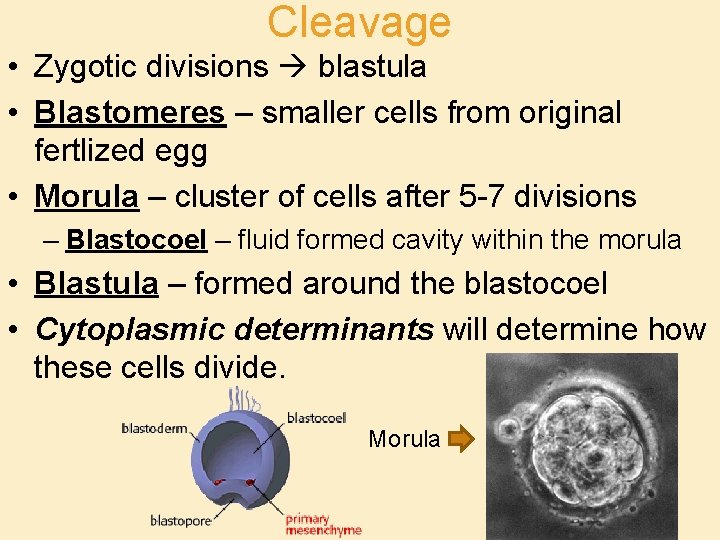
Cleavage • Zygotic divisions blastula • Blastomeres – smaller cells from original fertlized egg • Morula – cluster of cells after 5 -7 divisions – Blastocoel – fluid formed cavity within the morula • Blastula – formed around the blastocoel • Cytoplasmic determinants will determine how these cells divide. Morula
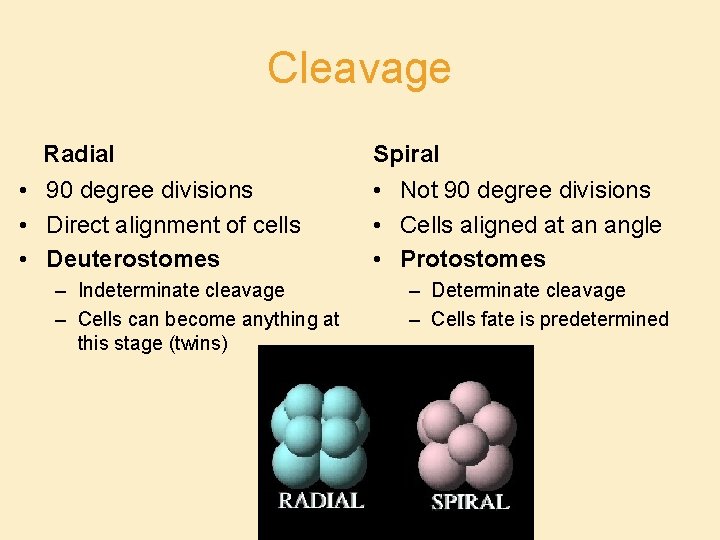
Cleavage Radial • 90 degree divisions • Direct alignment of cells • Deuterostomes – Indeterminate cleavage – Cells can become anything at this stage (twins) Spiral • Not 90 degree divisions • Cells aligned at an angle • Protostomes – Determinate cleavage – Cells fate is predetermined
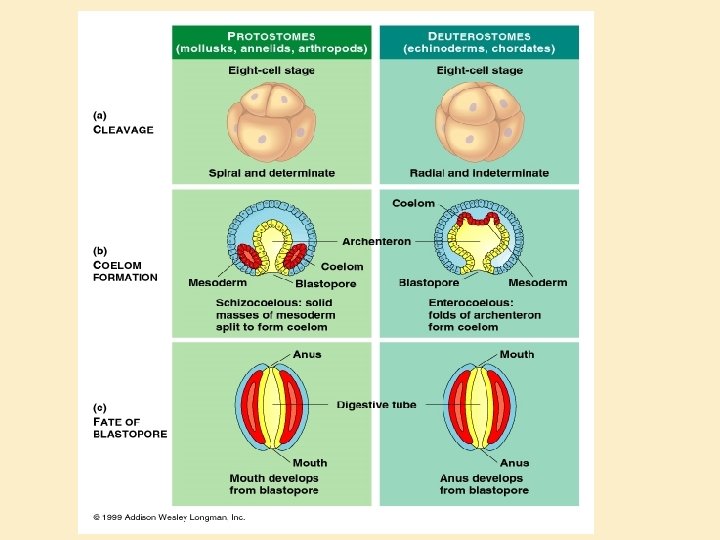
Gastrulation • Rearrangement of the blastula to form a 3 layered (germ layers) embryo with a gut • Blastula cells begin to infold forming the gut (digestive system) – Vegetal pole (future endoderm, divide slowly) – Animal pole (future mesoderm & ectoderm, divide rapidly) – Invagination forms archenteron (gut) – Blastopore anus (deuterostomes) – Blastopore mouth (protostomes)
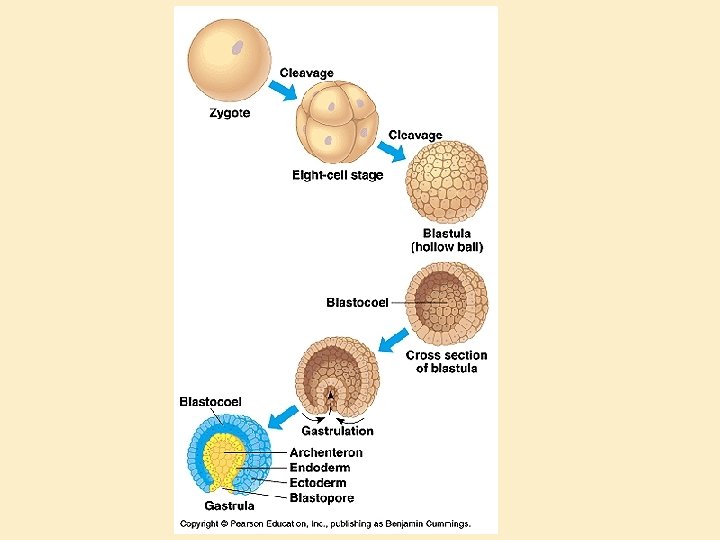

Stop & add this to notes • Sketch and label the stages of animal embryonic development, page 655 in text. Use colors!!!
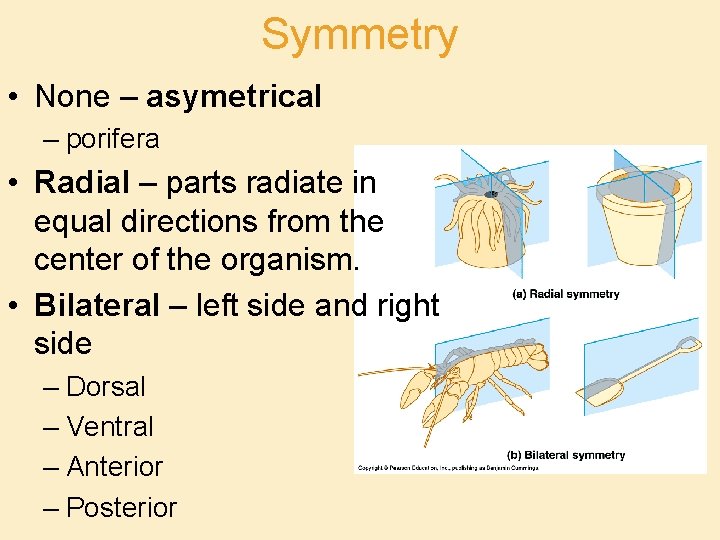
Symmetry • None – asymetrical – porifera • Radial – parts radiate in equal directions from the center of the organism. • Bilateral – left side and right side – Dorsal – Ventral – Anterior – Posterior

Tissues • None – metazoans • Porifera • Eumetazoans – true tissues – Diploblastic – 2 germ layers • Cnidarians – Triploplastic – 3 germ layers • Ectoderm • Endoderm • Mesoderm
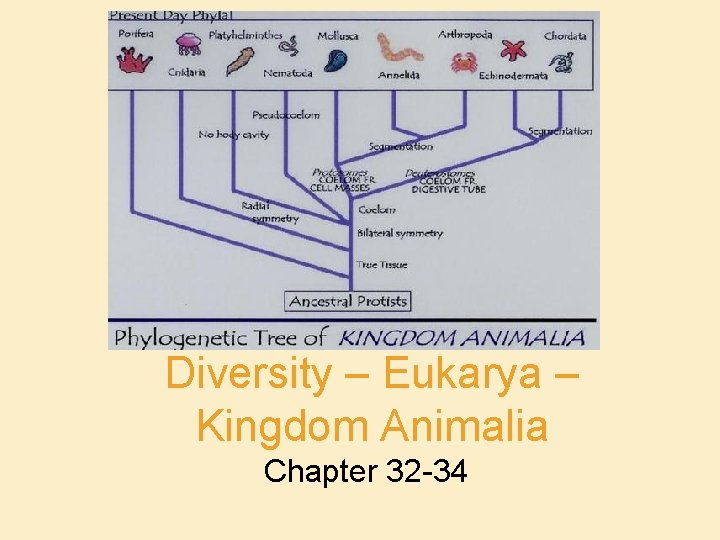
Body Cavities • None – not triploblastic organisms – Porifera, Cniderians • Acoelomate – lack a body cavity – Plattyhelmenthes • Pseudocoelomate – fake body cavity – Rotifera, Nematoda • Coelomate – body cavity lined with mesoderm (separates innner & outer body wall) – Protostomes - Annelida, Arthropoda, Molluska, – Deuterostomes - Echinodermata, and Chordata
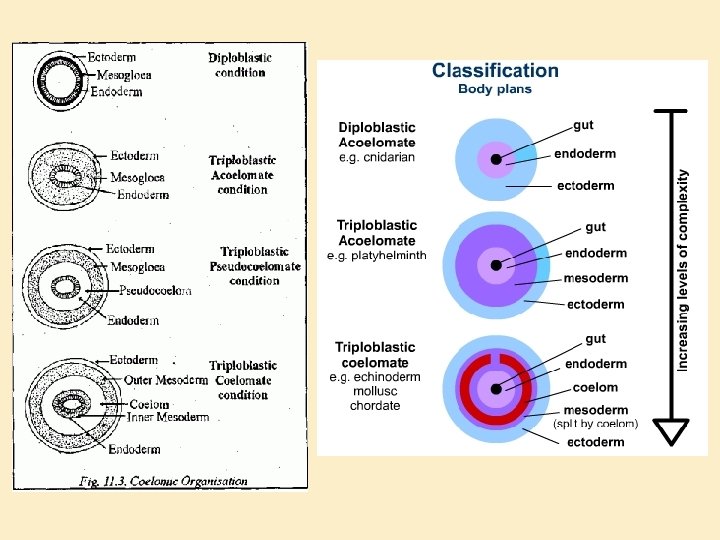
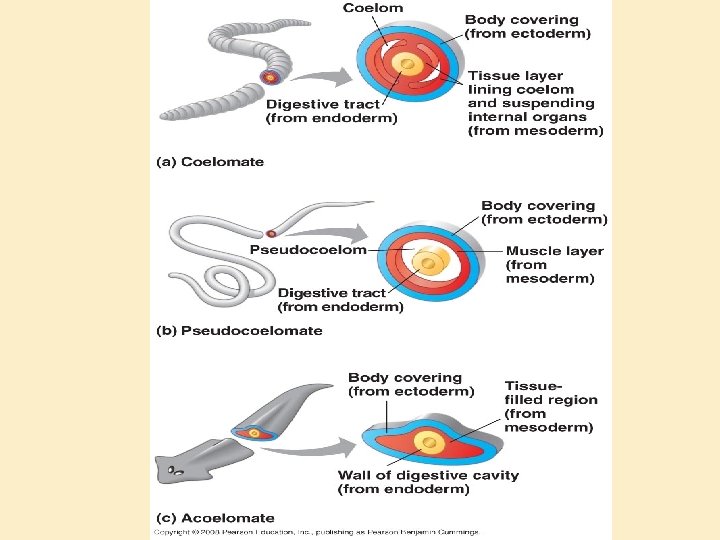
Stop & add this to notes • Page in 1/3’s – top, middle, bottom • Draw and define the following: – top – symmetry – middle – tissues – Bottom – body cavities

Coelomate Organisms – Patterns of Development Protostomes • Spiral determinate cleavage • Blastopore mouth – Mollusks – Annelids – Arthropods Deuterostomes • Radial indeterminate cleavage • Blastopore anus – Echinodermata – Chordata
Embryonic Germ Layers • Will form the tissues and organs of an adult triploblastic organism • Ectoderm – outer layer • Mesoderm – between ectoderm and endoderm • Endoderm – inner layer (lines digestive tract)
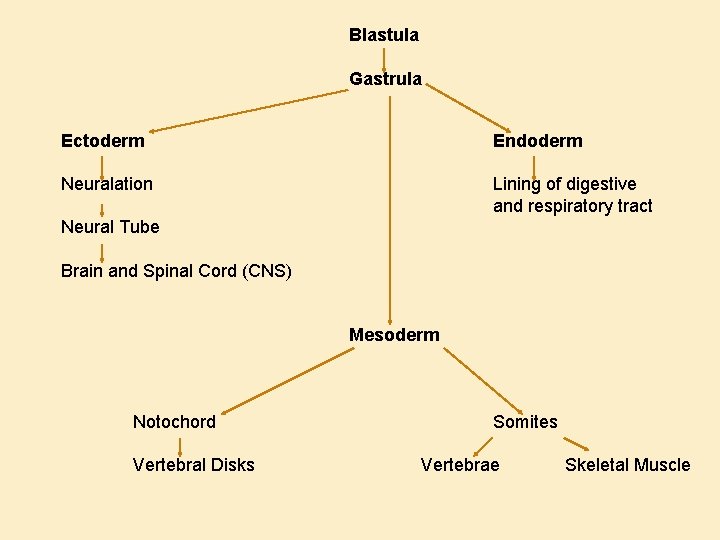
Blastula Gastrula Ectoderm Endoderm Neuralation Lining of digestive and respiratory tract Neural Tube Brain and Spinal Cord (CNS) Mesoderm Notochord Vertebral Disks Somites Vertebrae Skeletal Muscle
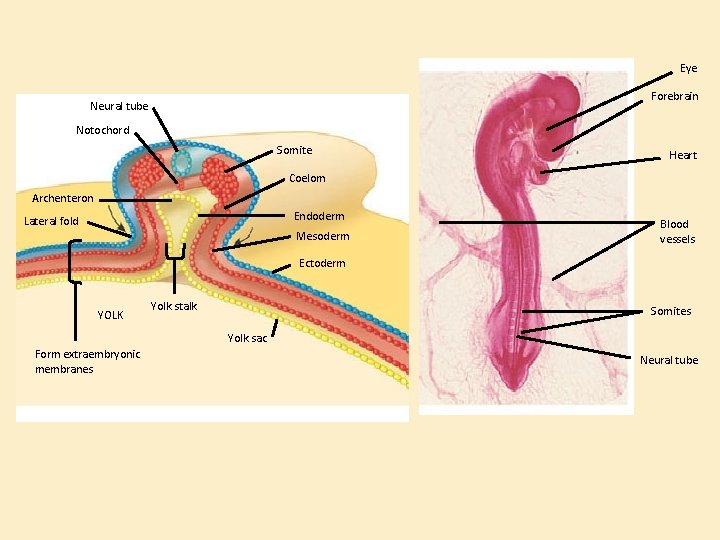
Eye Forebrain Neural tube Notochord Somite Heart Coelom Archenteron Endoderm Lateral fold Mesoderm Blood vessels Ectoderm YOLK Yolk stalk Somites Yolk sac Form extraembryonic membranes Neural tube
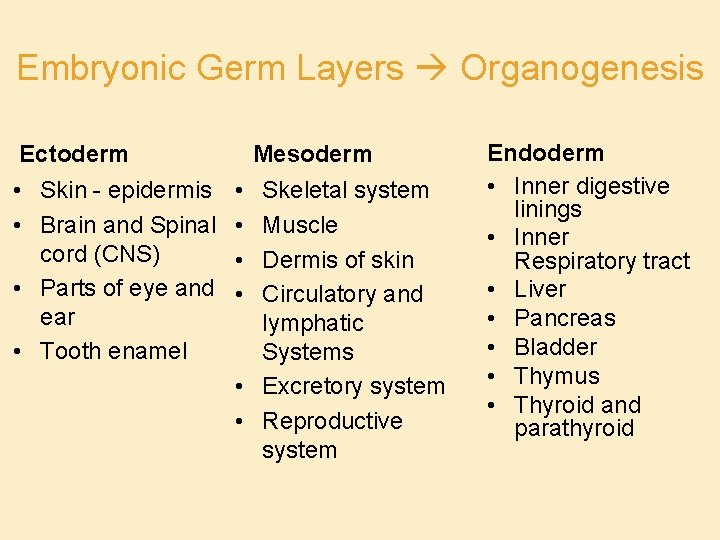
Embryonic Germ Layers Organogenesis Ectoderm • Skin - epidermis • Brain and Spinal cord (CNS) • Parts of eye and ear • Tooth enamel Mesoderm • • Skeletal system Muscle Dermis of skin Circulatory and lymphatic Systems • Excretory system • Reproductive system Endoderm • Inner digestive linings • Inner Respiratory tract • Liver • Pancreas • Bladder • Thymus • Thyroid and parathyroid

Stop & add this to notes • Create a flow map from 3 slides above on top ½ of a page • Bottom ½ - summarize


Notes in your book! • Take the rest of these notes on the charts.
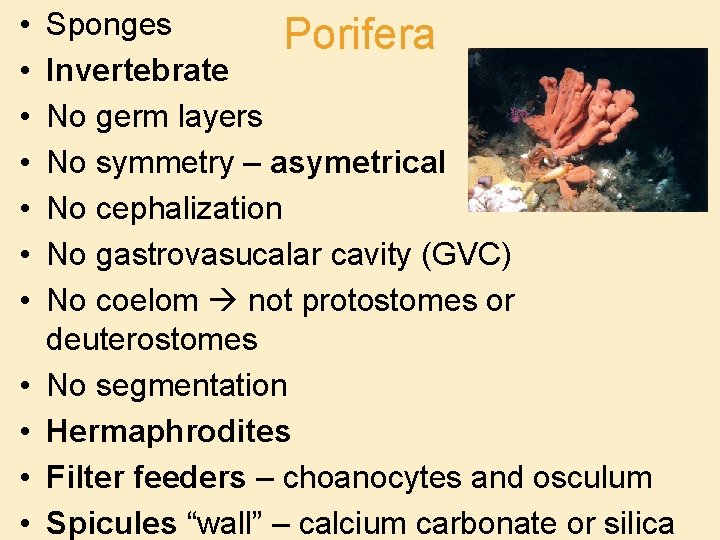
• • • Sponges Porifera Invertebrate No germ layers No symmetry – asymetrical No cephalization No gastrovasucalar cavity (GVC) No coelom not protostomes or deuterostomes No segmentation Hermaphrodites Filter feeders – choanocytes and osculum Spicules “wall” – calcium carbonate or silica
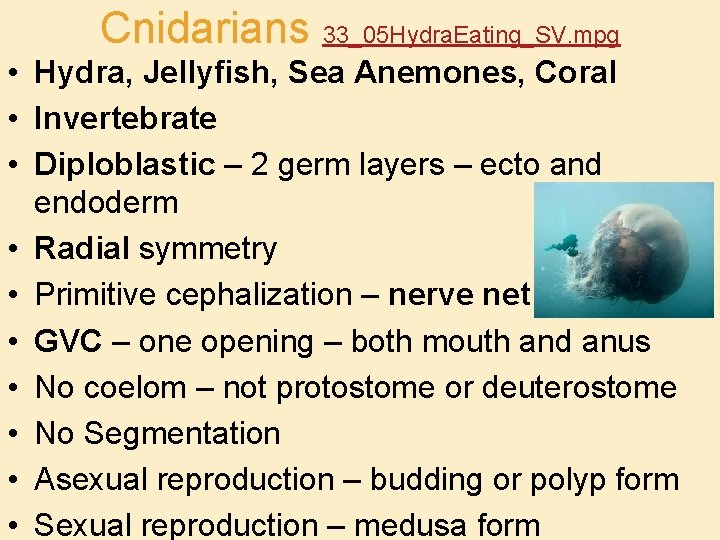
Cnidarians 33_05 Hydra. Eating_SV. mpg • Hydra, Jellyfish, Sea Anemones, Coral • Invertebrate • Diploblastic – 2 germ layers – ecto and endoderm • Radial symmetry • Primitive cephalization – nerve net • GVC – one opening – both mouth and anus • No coelom – not protostome or deuterostome • No Segmentation • Asexual reproduction – budding or polyp form • Sexual reproduction – medusa form
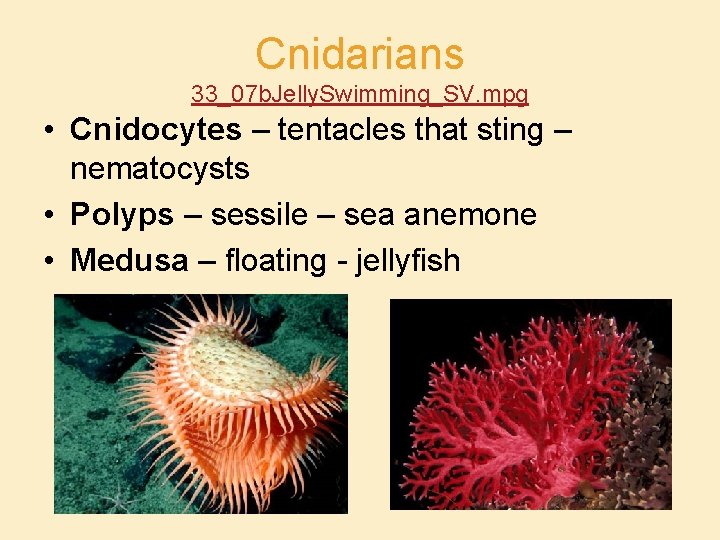
Cnidarians 33_07 b. Jelly. Swimming_SV. mpg • Cnidocytes – tentacles that sting – nematocysts • Polyps – sessile – sea anemone • Medusa – floating - jellyfish
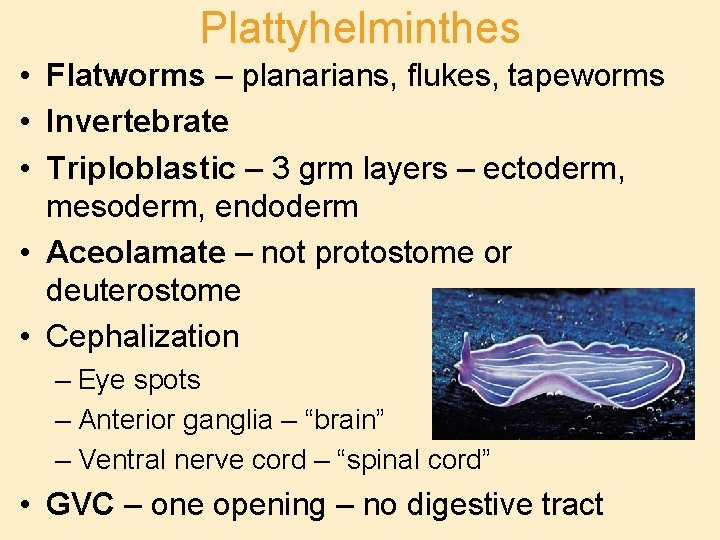
Plattyhelminthes • Flatworms – planarians, flukes, tapeworms • Invertebrate • Triploblastic – 3 grm layers – ectoderm, mesoderm, endoderm • Aceolamate – not protostome or deuterostome • Cephalization – Eye spots – Anterior ganglia – “brain” – Ventral nerve cord – “spinal cord” • GVC – one opening – no digestive tract

Platyhelminthes • No Segmentation • Bilateral symmetry • Sexual reproduction – hermaphrodites • Asexual reproduction regeneration • Parasites
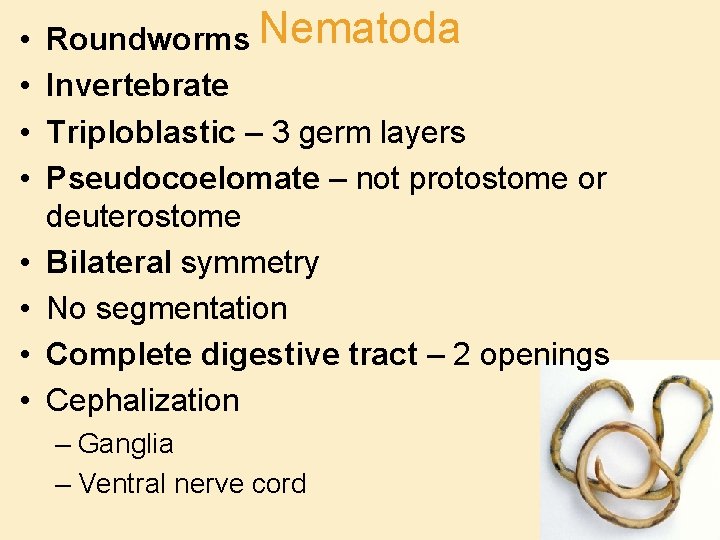
• • Roundworms Nematoda Invertebrate Triploblastic – 3 germ layers Pseudocoelomate – not protostome or deuterostome Bilateral symmetry No segmentation Complete digestive tract – 2 openings Cephalization – Ganglia – Ventral nerve cord
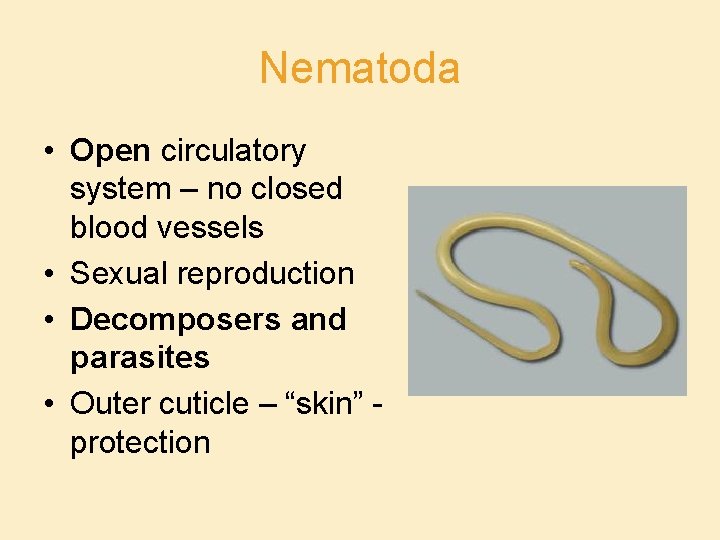
Nematoda • Open circulatory system – no closed blood vessels • Sexual reproduction • Decomposers and parasites • Outer cuticle – “skin” protection

Mollusca • • • Snails, Bivalves, Octopus, Squid Invertebrate Triploblastic Coelomate – Protostome Bilateral Symmetry Cephalized – brain Complete digestive tract No Segmentation Open circulatory system Body plan – muscular foot, visceral mass and mantle (shell)
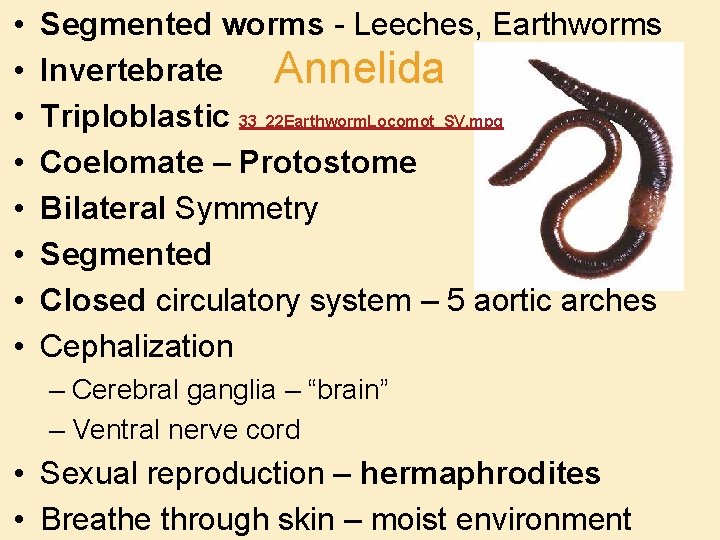
• • Segmented worms - Leeches, Earthworms Invertebrate Annelida Triploblastic 33_22 Earthworm. Locomot_SV. mpg Coelomate – Protostome Bilateral Symmetry Segmented Closed circulatory system – 5 aortic arches Cephalization – Cerebral ganglia – “brain” – Ventral nerve cord • Sexual reproduction – hermaphrodites • Breathe through skin – moist environment
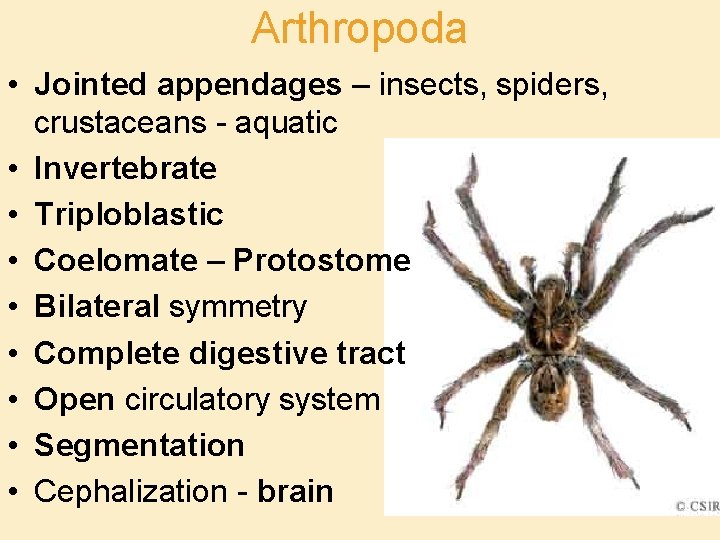
Arthropoda • Jointed appendages – insects, spiders, crustaceans - aquatic • Invertebrate • Triploblastic • Coelomate – Protostome • Bilateral symmetry • Complete digestive tract • Open circulatory system • Segmentation • Cephalization - brain
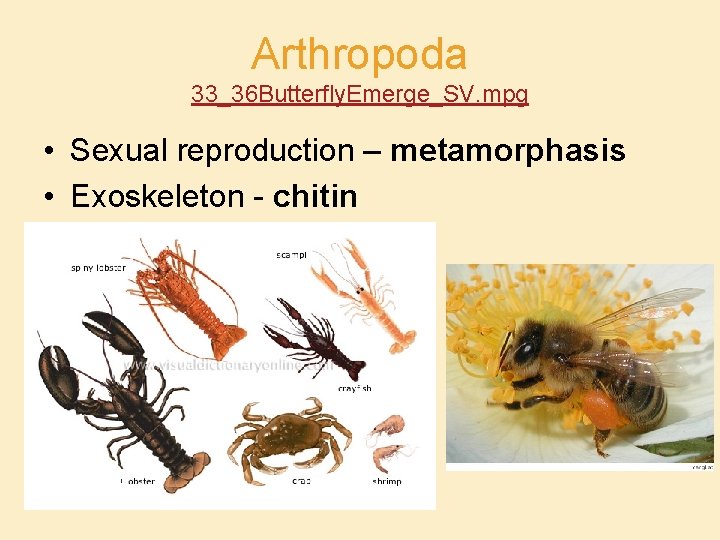
Arthropoda 33_36 Butterfly. Emerge_SV. mpg • Sexual reproduction – metamorphasis • Exoskeleton - chitin
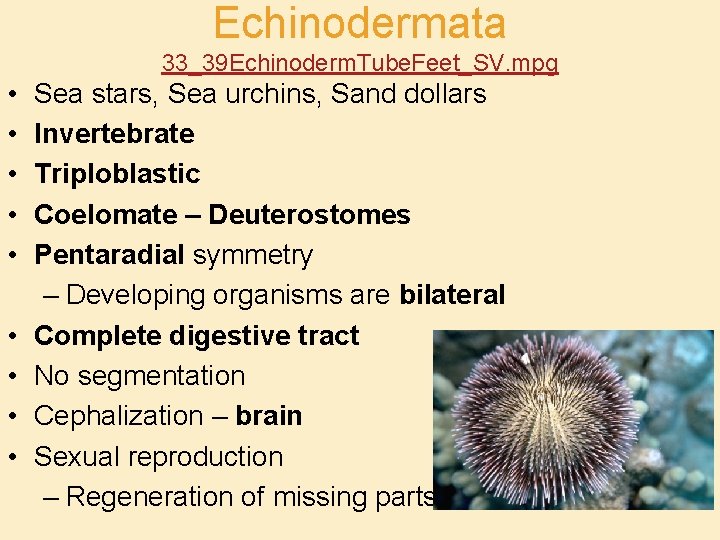
Echinodermata 33_39 Echinoderm. Tube. Feet_SV. mpg • • • Sea stars, Sea urchins, Sand dollars Invertebrate Triploblastic Coelomate – Deuterostomes Pentaradial symmetry – Developing organisms are bilateral Complete digestive tract No segmentation Cephalization – brain Sexual reproduction – Regeneration of missing parts
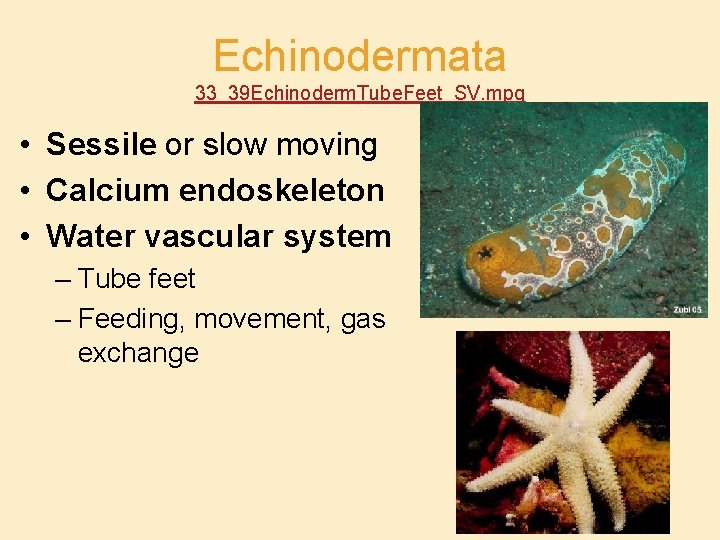
Echinodermata 33_39 Echinoderm. Tube. Feet_SV. mpg • Sessile or slow moving • Calcium endoskeleton • Water vascular system – Tube feet – Feeding, movement, gas exchange
Chordata • • • Chordates – eels, lampreys, fish, mammals Invertebrate and Vertebrate Triploblastic Coelomate – deuterostomes Bilateral symmetry Complete digestive tract Closed circulation “segmentation” Cephalization – Brain and spinal cord
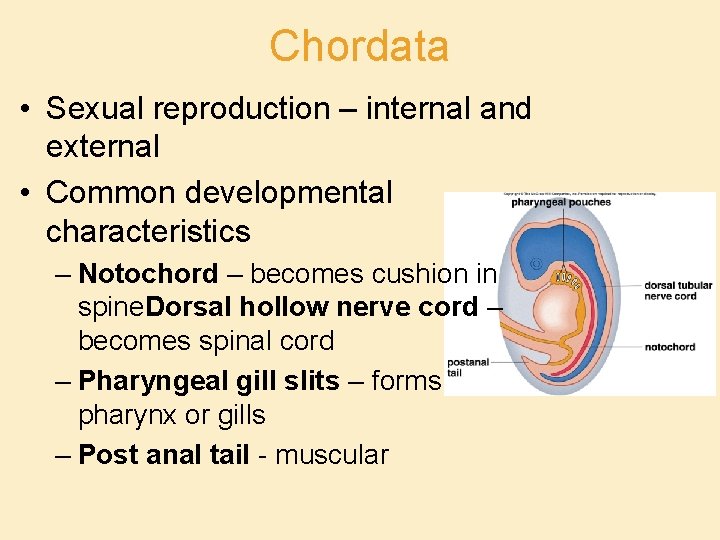
Chordata • Sexual reproduction – internal and external • Common developmental characteristics – Notochord – becomes cushion in spine. Dorsal hollow nerve cord – becomes spinal cord – Pharyngeal gill slits – forms pharynx or gills – Post anal tail - muscular
Stop & add this to notes • Draw a cladogram / phylogenetic tree that has all the 9 animal phylums – label the branches with the characteristics that cause branching – Include • • Symmetry Germ layers Aceolmates Pseudocoelomates Coelomates Protostomes deuterostomes
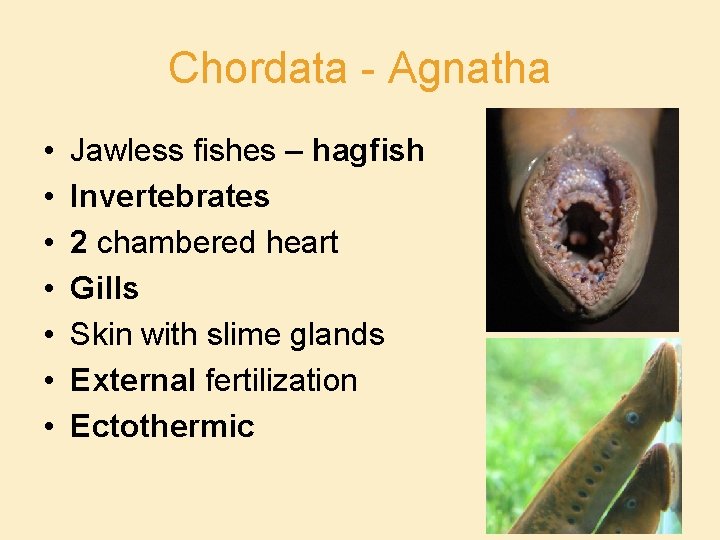
Chordata - Agnatha • • Jawless fishes – hagfish Invertebrates 2 chambered heart Gills Skin with slime glands External fertilization Ectothermic
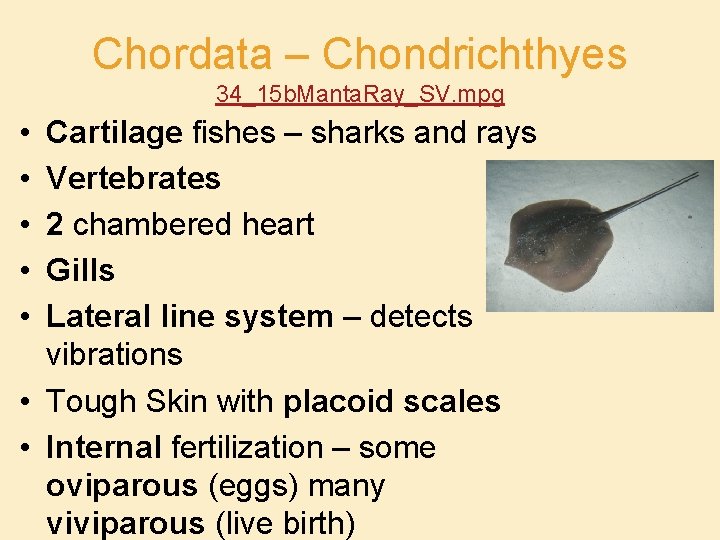
Chordata – Chondrichthyes 34_15 b. Manta. Ray_SV. mpg • • • Cartilage fishes – sharks and rays Vertebrates 2 chambered heart Gills Lateral line system – detects vibrations • Tough Skin with placoid scales • Internal fertilization – some oviparous (eggs) many viviparous (live birth)

Chordata - Osteichthyes • • • Bony fishes – fish Vertebrates 2 chambered heart Gills Lateral line system – detects vibrations • Skin with cycloid scales • Swim bladder – buoyancy • Usually external fertilization
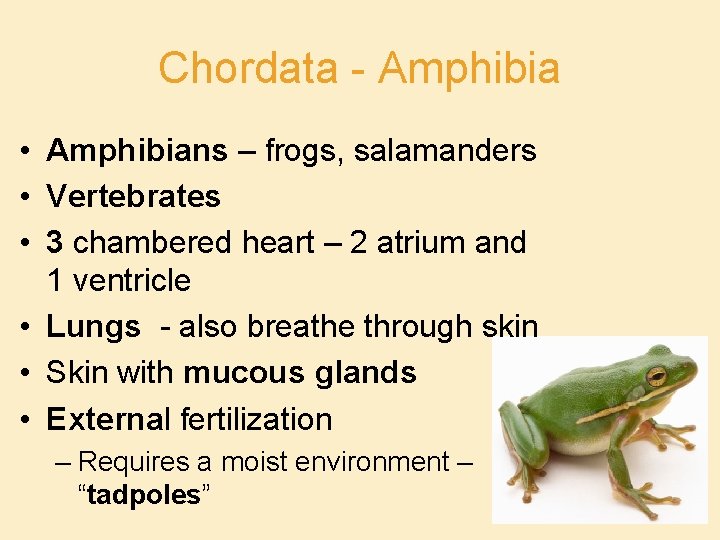
Chordata - Amphibia • Amphibians – frogs, salamanders • Vertebrates • 3 chambered heart – 2 atrium and 1 ventricle • Lungs - also breathe through skin • Skin with mucous glands • External fertilization – Requires a moist environment – “tadpoles”
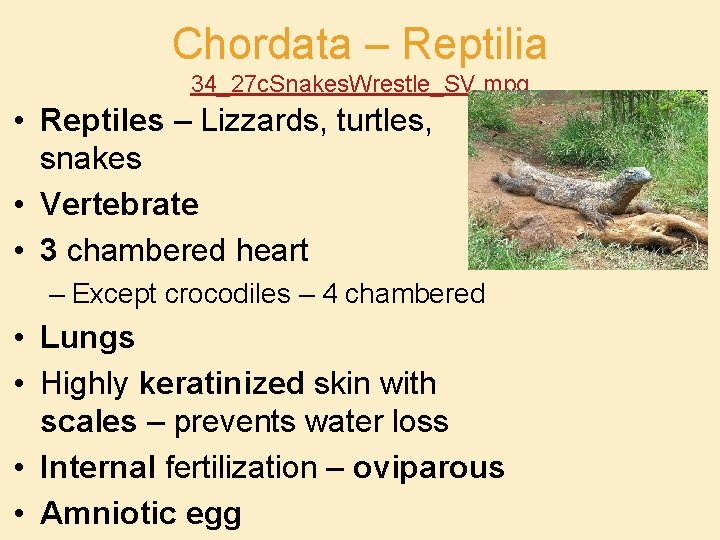
Chordata – Reptilia 34_27 c. Snakes. Wrestle_SV. mpg • Reptiles – Lizzards, turtles, snakes • Vertebrate • 3 chambered heart – Except crocodiles – 4 chambered • Lungs • Highly keratinized skin with scales – prevents water loss • Internal fertilization – oviparous • Amniotic egg
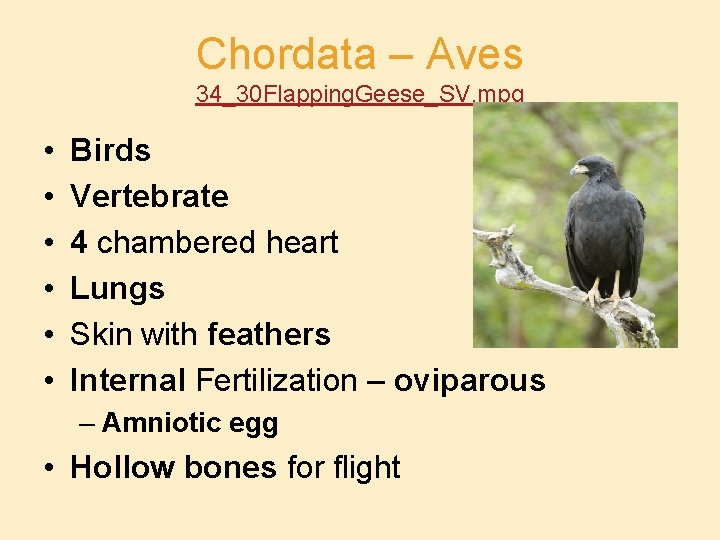
Chordata – Aves 34_30 Flapping. Geese_SV. mpg • • • Birds Vertebrate 4 chambered heart Lungs Skin with feathers Internal Fertilization – oviparous – Amniotic egg • Hollow bones for flight
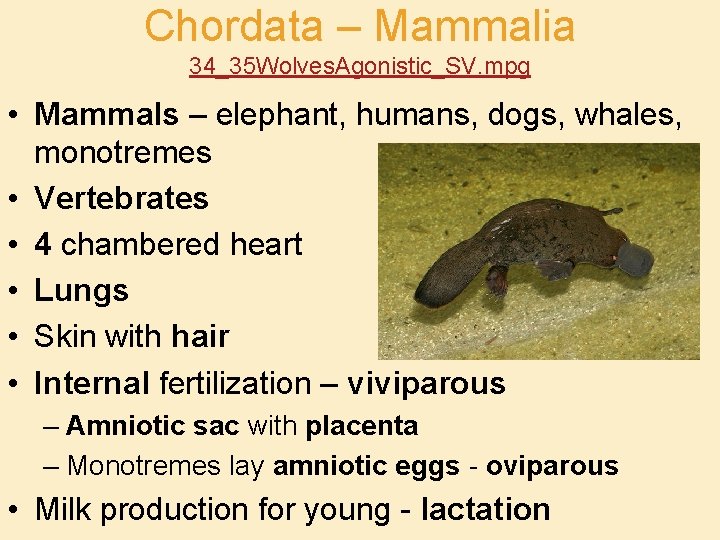
Chordata – Mammalia 34_35 Wolves. Agonistic_SV. mpg • Mammals – elephant, humans, dogs, whales, monotremes • Vertebrates • 4 chambered heart • Lungs • Skin with hair • Internal fertilization – viviparous – Amniotic sac with placenta – Monotremes lay amniotic eggs - oviparous • Milk production for young - lactation
Last page of Diversity Book: • Bubble Map – lots of bubbles for all the chordates.
- Slides: 48