
DIVERSITY As an Inclusive Educational Framework that supports

- Slides: 21
DIVERSITY As an Inclusive Educational Framework that supports all learners and ELL’s By Heather Fisher In fulfillment of EDTE 523 Spring 2017
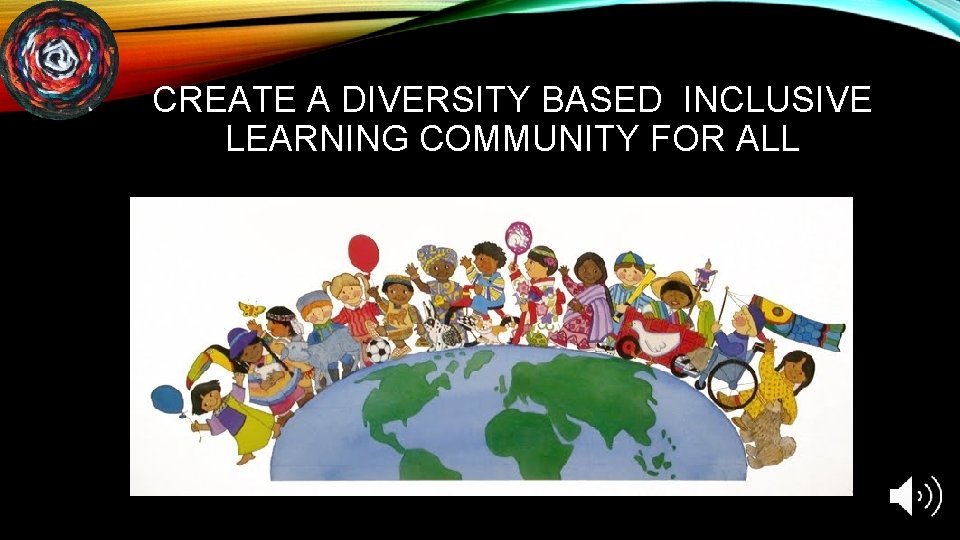
CREATE A DIVERSITY BASED INCLUSIVE LEARNING COMMUNITY FOR ALL
PRINCIPLES OF THE DIVERSITY BASED INCLUSIVE CLASSROOM • Recognize that many aspects of the primary curriculum are truly universal with diverse expressions– i. e. play, art, dance, outdoor exploration, language learning. Children all over the world learn in similar ways during childhood. • Dimensions of diversity such as age, ability, gender, sexual orientation, socio-economic status, family composition, learning styles, culture, ethnicity and language are valued and respected on a daily basis. • Children learn the language of diversity, which includes concepts of equity and equality, in the diverse languages represented in the classroom. • The learners, which includes the teacher who is also a learner, create a class vision statement that supports diversity in the classroom. • All children’s language and cultures are celebrated and woven into the curriculum through family engagement in sharing and learning. This occurs across disciplines. Every family’s dimensions of diversity will be integrated into the learning. This models global citizenship where everyone is celebrated and included. • Digital Literacy is engaged to support the celebration and learning of diversity, which includes cultures and languages. • Conflicts based on differences are viewed as learning opportunities and are resolved using restorative practices that focus on relationship and restitution.
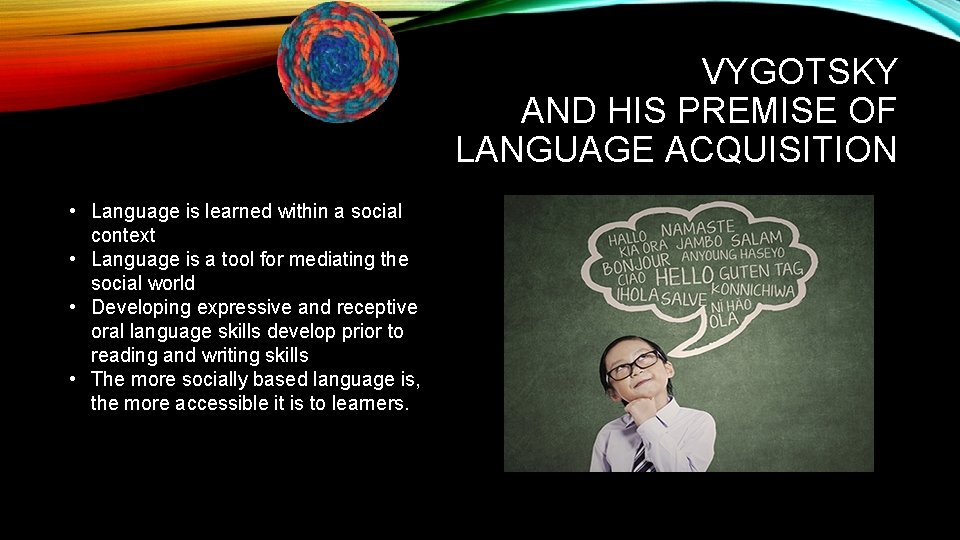
VYGOTSKY AND HIS PREMISE OF LANGUAGE ACQUISITION • Language is learned within a social context • Language is a tool for mediating the social world • Developing expressive and receptive oral language skills develop prior to reading and writing skills • The more socially based language is, the more accessible it is to learners.
PRACTICES OF THE BASED, LANGUAGE FRIENDLY CLASSROOM DIVERSITY • ‘Welcome to the Heart of the Circle’ game • World language lessons with first language speakers from families in the school. • Star of the Week heritage book and sharing themes that elicit dimensions of diversity • Appropriate desk placement for ELL’s – i. e. proximity to the teacher • Appropriate differentiated instruction for all learners • Appropriate differentiated assessment for all learners • Use of comprehensible materials – i. e. images, artifacts, TPR.
• ‘Welcome’ all the children/languages/cultures to the classroom in the first weeks of the school year by doing inclusive games and activities that teach words and phrases in the diverse languages represented in the classroom. Engage students in co-teaching words and phrases. • Focus on a language of the week and re-learn the basic greetings of that language each day during Calendar. By the end of the week, learners should be able to say, “Hello and Welcome. How are you? I am well, thank you”. • Represent languages spoken by students on a diversity word wall – a map of the world with language families written on it in the location where the languages originate. • Create an attention getting song that uses the multiple languages represented in the classroom.
• Include the diverse cultures/languages represented in the class in the learning plan as often as possible • Provide ELL’s with notebooks that they can use to create first language/English language dictionaries for themselves. This can be sent home to be checked by parents that are fluent in the first language. • Invite parents who are fluent language speakers to share the home language in the classroom through a variety of age appropriate language games. These games should integrate discplines – i. e. a nutrition themed game in French that can be done in PE.
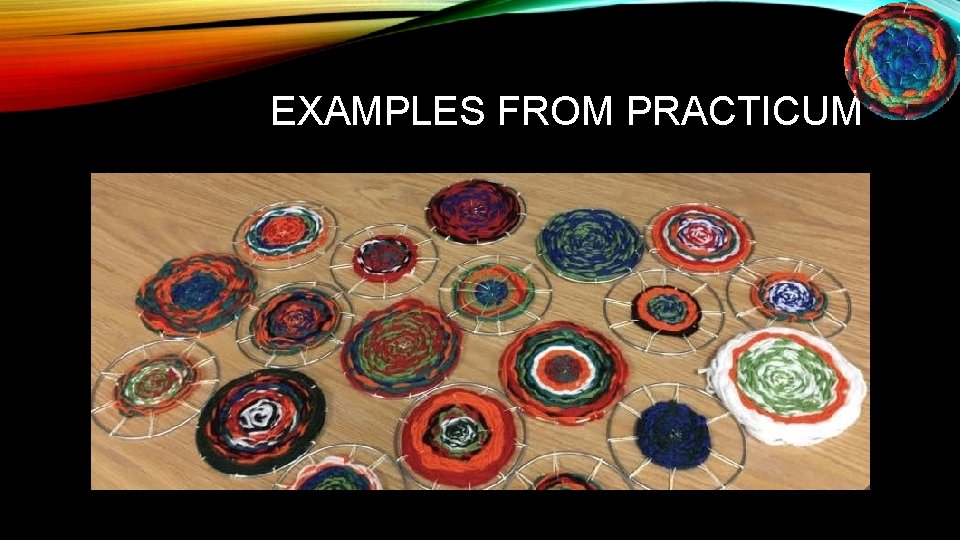
EXAMPLES FROM PRACTICUM
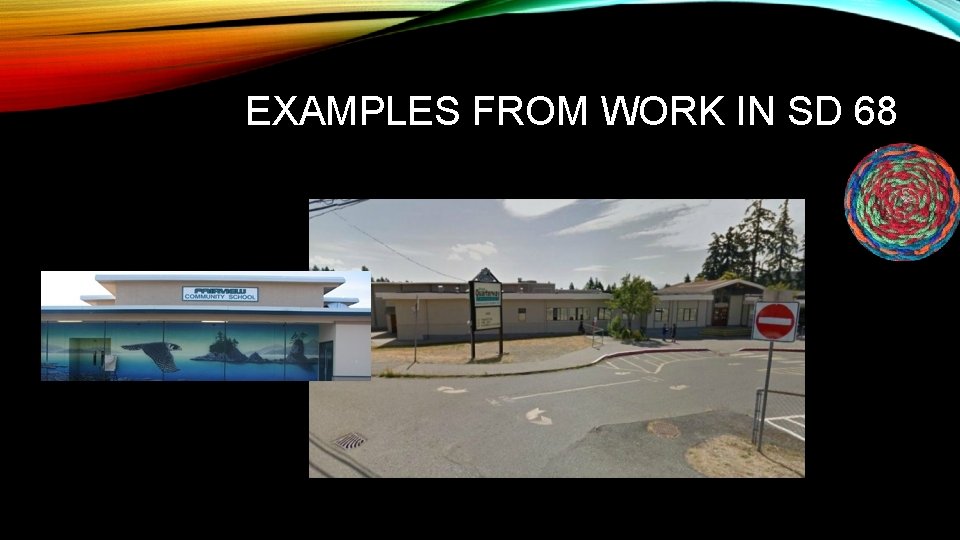
EXAMPLES FROM WORK IN SD 68
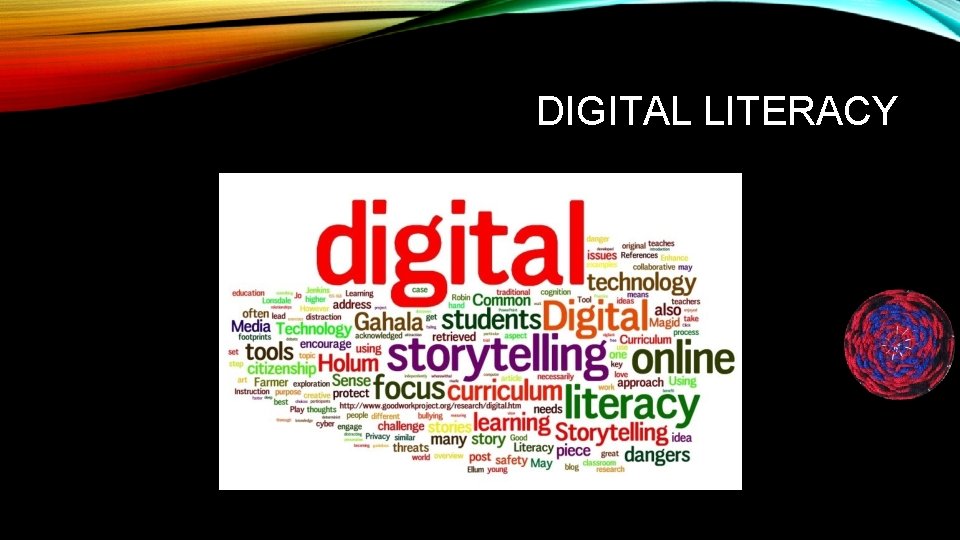
DIGITAL LITERACY
LITERACY • • • Write your own book, listen to audio books Writing prompts, writing games, free writing, buddy editing Word banks/word walls and personal dictionaries Interactive Reader’s theatre with mixed language resources. I. e. for ESD communities. Good Fit books at the instructional level for each child Pre-, During-, and Post- reading strategies – i. e. CAFÉ Program. 1 tier, 2 tier and 3 tier vocab words Sight words Use of artifacts as pre-reading tools for understanding A variety of drawing and graphic writing tools – ‘reports’, ‘books’.
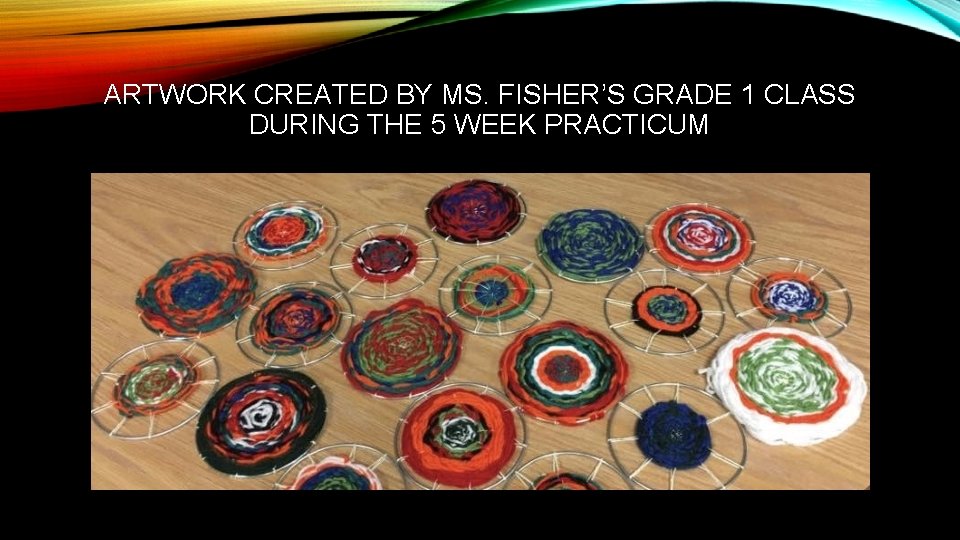
VISUAL ART • Recognize that art-making is a universal human experience connected to communication! • Do multicultural art! Art that connects across cultures – i. e. circular weaving • Connect language and Art by doing word art! (i. e. name mandalas) and encouraging oral language during art making • Connect art materials and techniques with symbology to encourage ‘story-telling’ with art • Connect music and art by playing culturally diverse music connected to the art making • Paint Your Dance! – do interpretive dance to diverse pieces of music and explore the emotions, then paint your feelings afterward )))) • Connect math and art through color theory and shapes (geometry) • Focus on art lessons that represent the diverse cultures represented in our community of learners. Engage family members in art-making. • Connect art to outdoor ed by making art in and of nature materials
PE AND HEALTH • Teach nutrition using food examples from diverse diets • TPR – Total Physical Response games and activities connecting language acquisition to kinesthetic learning. The possibilities are endless! • Make Your Own Game/Make Your Own Dance – bridges cultures and languages, allows multilingual children to choose how to express themselves. • Teach diverse cultural folk dances from cultures represented in the classroom, integrate songs and the languages from the diverse cultures. • Simplify visual and verbal cues during lessons • Play experiential learning and active games that emphasize verbal and non-verbal communication among learners.
SOCIAL STUDIES • At the primary level, languages and cultures are learned through connection to the self and family. • Explorations of diversity should be as place and family-based as possible, i. e. exploring cultural connections within the families, class and school. • The social studies curriculum can be woven into any/all other curriculum areas where language and culture are concerned. • Some of the best practices may include; potlucks, heritage fairs, world language lessons, diverse cultural dance lessons, literature that represents dimensions of diversity, self-directed inquiry into different languages/cultures.
MATH • Math Carnival – introduce and/or play a variety of math games using theme of a carnival (stations that learners rotate through). The key here is to get help from big buddies who can teach the game to the primary students • Connect Authentic Math to Outdoor Ed as often as possible – i. e. use appropriate nature items as math manipulatives. Shells and sticks can be used to teach all primary level math concepts!! Knowledge transfer from outdoor context to paper, or paper to outdoor context – recognizing that doing or showing is often easier than telling or writing for ELL’s. • Mathletics - use a variety of digital resources to support ELL’s and other learners • Use multiple ways to show a concept. Use comprehensible input, culturally appropriate examples to show content
MUSIC/THEATRE • Music is itself a universal language that encompasses the world’s diversity. It can be a vehicle for understanding the diversity of language, art, and culture. • Connect diverse musical genres to other culturally based activities. I. e. if learning to cook a cultural dish or doing an art activity from a particular culture, play music from that culture. • Use music and theatre to bridge differences and bring learners together. • Theatre bridges language music and art and is a vehicle for diverse forms of expression.
SCIENCE/OUTDOOR ED • When science is hands-on and experimental, it becomes concrete, tactile and more easily understood across languages. • Outdoor learning allows learners to communicate in a variety of ways, perhaps with more body language than they are permitted in the classroom. • The freedom of expression that comes with outdoor play and learning has also been found to be universal across cultures in that young children tend to have common patterns in their play in nature – i. e. building structures, playing with mud and making paths and small worlds. • Scientific vocabulary can be translated into languages other than English as necessary.
SUMMARY OF LEARNING • This course provided me with deeper insight into developing my own framework for understanding language acquisition. I learned about new practical and digital tools, strategies and resources that I can use now as an EA, and in my future teaching practice. I believe this course helped me integrate language acquisition into my diversity-based teaching philosophy. • I would like to re-state that diversity is not simply a concept that we teach or a set of techniques and lessons that we can do as part of a social studies unit. Diversity is a foundational value in education that supports the development of a global citizenry that sees and celebrates diversity. Diversity is an innate quality of the universe in which we live and we must understand celebrate it to create a fair and just Canadian society.
FUTURE DIRECTIONS • Continue working en francais a l’ecole Quarterway • Explore French and Arabic language resources for my own language learning so I can better support learners • Learn how to properly use District Language Assessment tools to formally assess learners’ English language proficiency • Research digital tools for language learning.
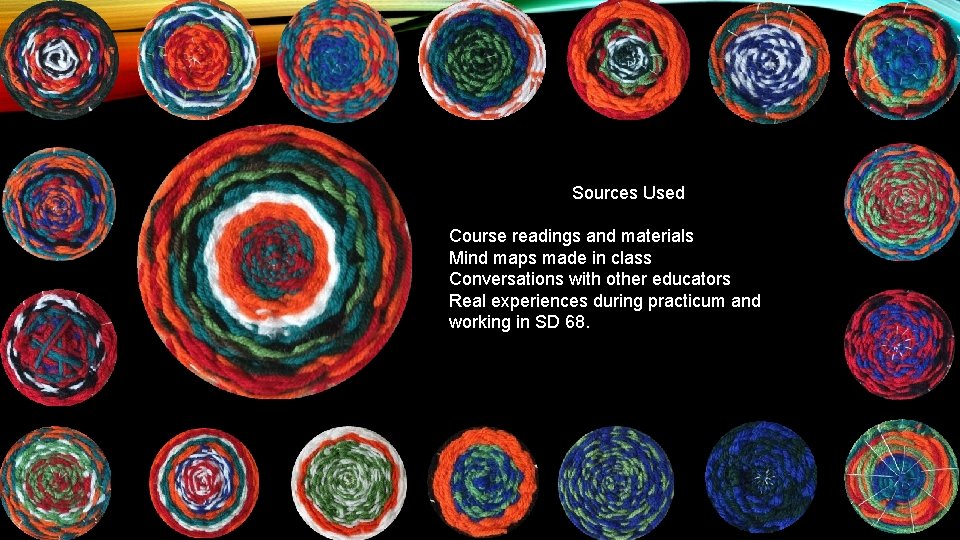
Sources Used Course readings and materials Mind maps made in class Conversations with other educators Real experiences during practicum and working in SD 68.
ARTWORK CREATED BY MS. FISHER’S GRADE 1 CLASS DURING THE 5 WEEK PRACTICUM