
Diversity Advanced Standing 2017 SOWK 541 Diversity Ethnic
- Slides: 13
Diversity Advanced Standing 2017 SOWK 541
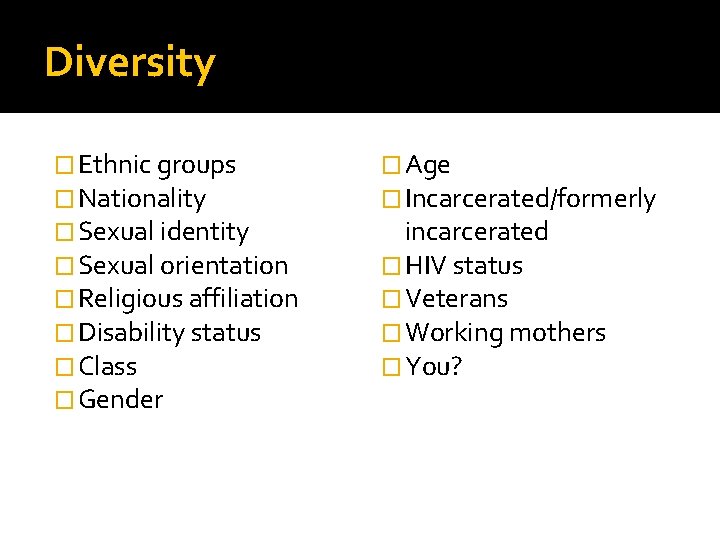
Diversity � Ethnic groups � Nationality � Sexual identity � Sexual orientation � Religious affiliation � Disability status � Class � Gender � Age � Incarcerated/formerly incarcerated � HIV status � Veterans � Working mothers � You?
Code of Ethics �Review the NASW Code of Ethics We are ethically bound to decrease oppression and marginalization Failing to identify and appreciate marginalized groups and their particular barriers is unethical NASW has used cultural competence model in the past ▪ You will read about cultural humility, which should be emphasized over cultural competence
ADDRESSING Model �The ADDRESSING model (see article in Canvas) provides a framework for asking clients about various elements of diversity �For your discussion, you will practice with your classmates asking and answering questions about areas of your lives that you might not have considered when thinking of diversity
Intersectionality �One major concept taught in this course is that everyone has intersections of various factors, such as race, age and sexual orientation �These provide advantages, disadvantages and differences in how we might approach clients in different contexts African-American, age 70, identifies as gay
Privilege and Oppression �Each person has some measure of privilege and experiences some level of oppression �Race, gender, disability are examples of social constructs because there can be some argument about who fits in these categories, based on who you’re talking to All such constructs have societal rankings in order to oppress
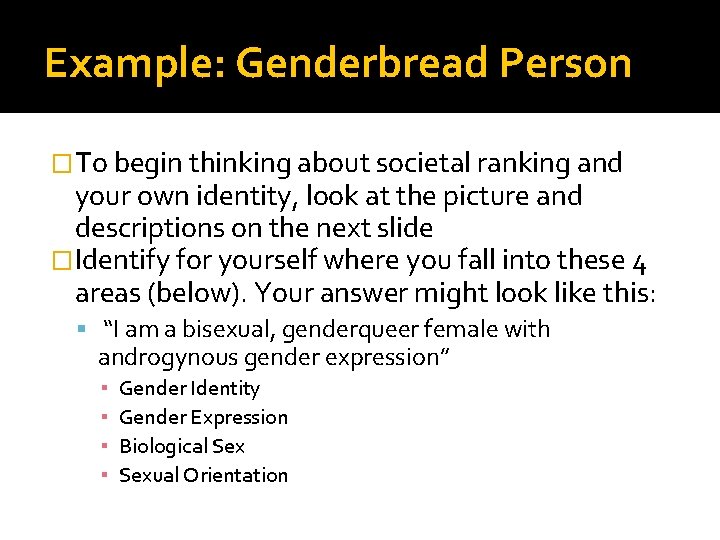
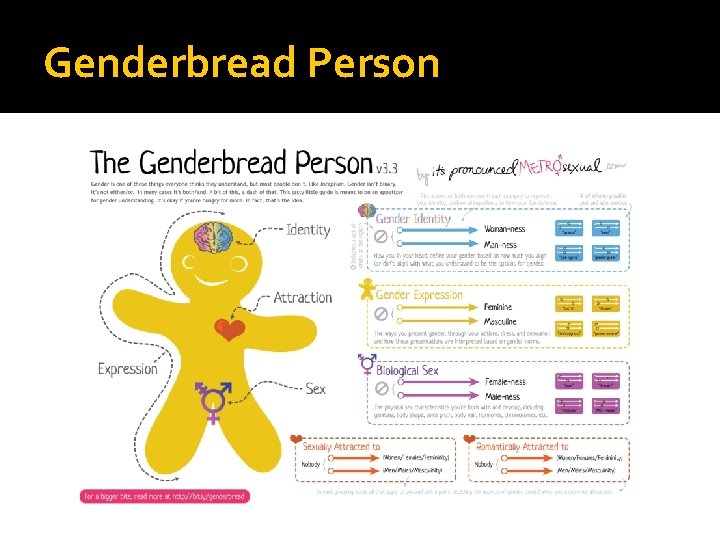
Example: Genderbread Person �To begin thinking about societal ranking and your own identity, look at the picture and descriptions on the next slide �Identify for yourself where you fall into these 4 areas (below). Your answer might look like this: “I am a bisexual, genderqueer female with androgynous gender expression” ▪ ▪ Gender Identity Gender Expression Biological Sexual Orientation
Genderbread Person
Reflection: Genderbread �Many of you may not have thought of those 4 elements of your identity before �How did it feel to reflect on that? �Is it clear to you how someone can identify as transgender, but also be gay? What about straight? What about someone with masculine gender expression who identifies as a heterosexual female?
Culturagrams �Read the article about culturagrams on Canvas �These are a way to assess the level of integration or acculturation of your clients
Discussion �Now that you are familiar with some of the elements of diversity, create one or two questions you would feel comfortable asking a client about some element of their diverse background Go out on a limb here and try something uncomfortable, such as class, ethnicity or gender identity Post your questions on the Discussion Board
Discussion (cont. ) �Once your classmates have posted their questions, you should answer at least one question about yourself to demonstrate your awareness of your own culture and background �One key element of being comfortable discussing diversity with clients is feeling firm in your own culture
Tell Mama Why You Cry �This assigned case study (see Canvas) provides an example of various types of diversity and intersections �You will take a quiz about it after reading it