
Distribution of World Population Population concentrations The four
Distribution of World Population • Population concentrations – The four largest population clusters – Other population clusters • Sparsely populated regions – Dry lands – Wet lands – Cold lands – High lands • Population density – Arithmetic density – Physiological density – Agricultural density 1
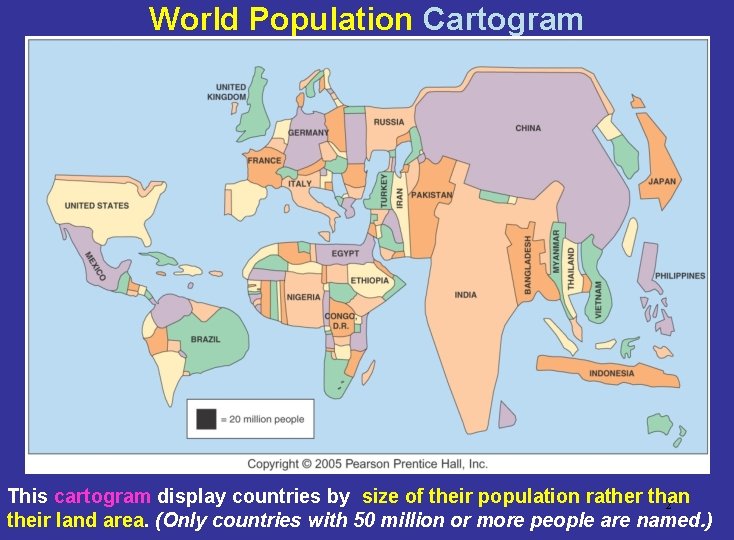
World Population Cartogram This cartogram display countries by size of their population rather than 2 their land area. (Only countries with 50 million or more people are named. )
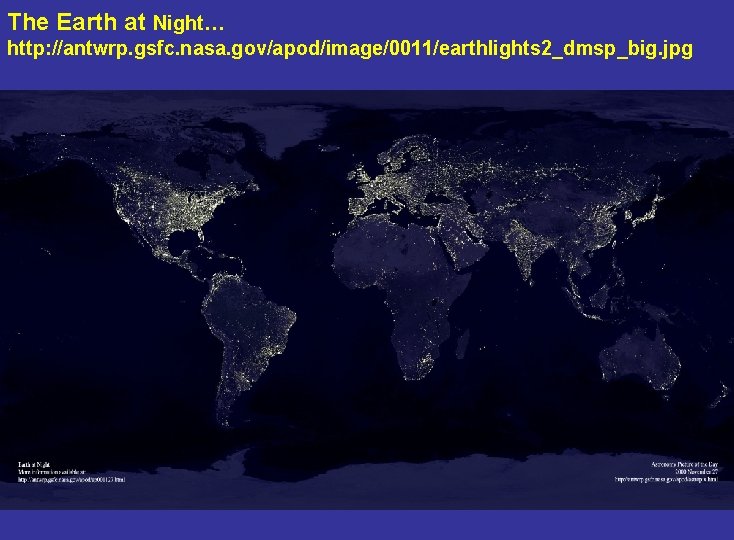
The Earth at Night… http: //antwrp. gsfc. nasa. gov/apod/image/0011/earthlights 2_dmsp_big. jpg 3
KEY 1: Pop distribution basically = concentration & density Pop. Concentrations: 3/4 of people live on 5% of Earth's surface -----remember 71% of surf. = oceans, other areas are harsh • 5 major concentr. = E. Asia, SE Asia, W. Europe, Eastern N. Amer. • similarities. : most near water, low-lying, fert. soil, temperate (warm, but not hot) 4
1) East Asia #1 in pop. (China, Koreas, Japan, Taiwan): 1/4 world pop. here • China: #1 in pop. , #3 in land area; most on river valleys & coasts; 3/4 rural--most farmers • 3/4 of Japan. & S. Kor. = urban 2) South Asia: #2 in pop. ; (Pakistan, India, Bangladesh, Sri Lanka) --3/4 of this pop. in India -most on coast or along Indus & Ganges Rivers; 1/4 cities most of pop. = rural farmers 5
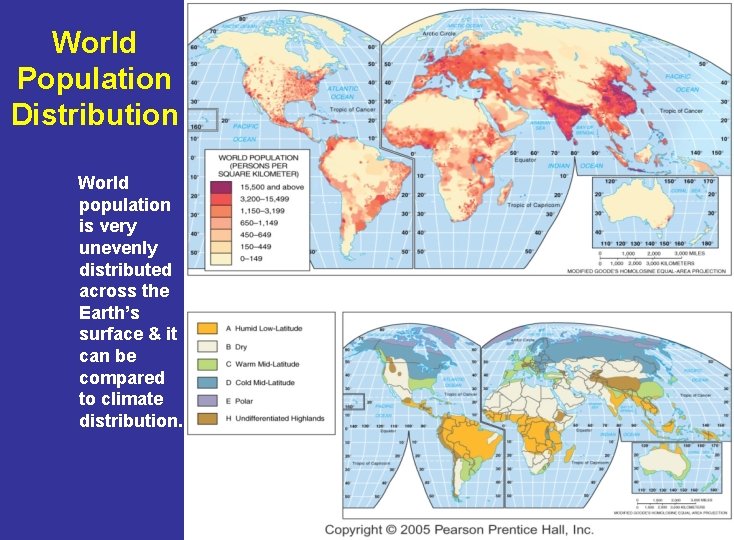
World Population Distribution World population is very unevenly distributed across the Earth’s surface & it can be compared to climate distribution. 6
3) SE Asia: #4 pop. ; (Islands: Java, Sumatra, Borneo, Pap. New Guinea, & Philippines, + Thailand, Vietnam, etc. ) -most are farmers in rural areas In these 3 Asian areas = over 50% of world’s pop. on only 10% of world's land 4) Europe: #3 pop. ; 75% in cities; less than 20% farmers (many of farmers in S & E Eur. ) • Import most of food rather than produce • historically tied to industry > farming 7
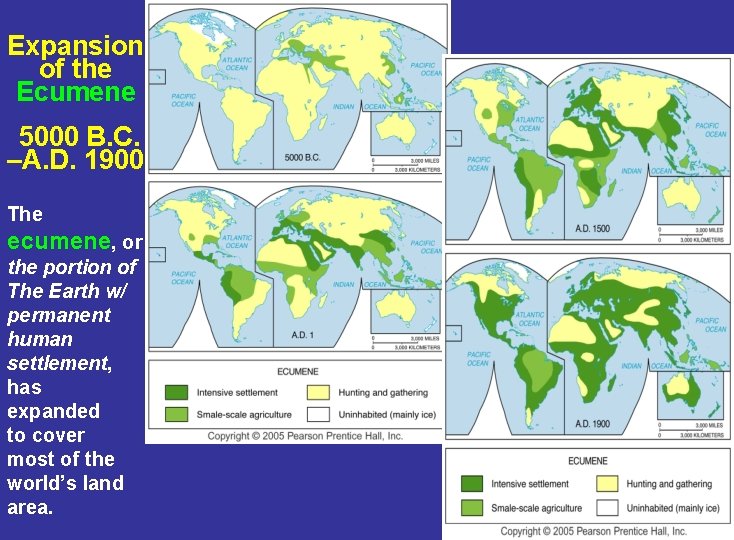
Expansion of the Ecumene 5000 B. C. –A. D. 1900 The ecumene, or the portion of The Earth w/ permanent human settlement, has expanded to cover most of the world’s land area. 8
C) Population density: look at it 3 ways… (Deja vu!!!) 1) arithmetic density (aka population density): -# people per unit of land… 2) Physiological density: # people per unit of arable land: is a more meaningful measure b/c can show pressure on the land due to population 3) agricultural density: ratio farmers to arable land --lower agr. density = higher technology; -MDC's: usually lower agri. density, & LDC’s usually higher; -in MDC’s, lots of land & few farmers means more pop. to work in factories, etc. 9
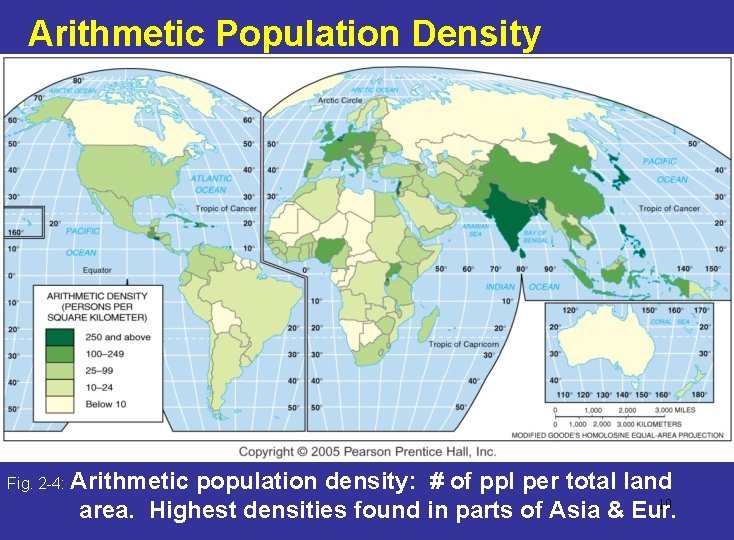
Arithmetic Population Density Fig. 2 -4: Arithmetic population density: # of ppl per total land 10 area. Highest densities found in parts of Asia & Eur.
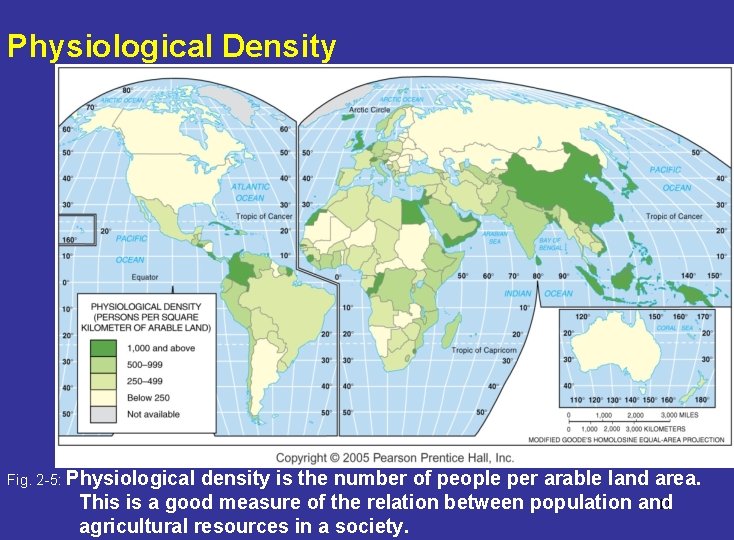
Physiological Density Fig. 2 -5: Physiological density is the number of people per arable land area. This is a good measure of the relation between population and 11 agricultural resources in a society.
Distribution of World Population Growth • Natural Increase (NIR) • Fertility (TFR) • Mortality (IMR + MMR) 12
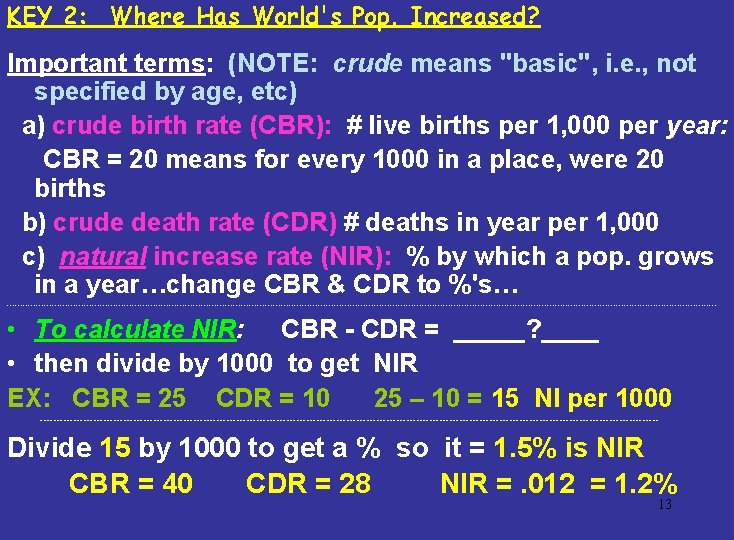
KEY 2: Where Has World's Pop. Increased? Important terms: (NOTE: crude means "basic", i. e. , not specified by age, etc) a) crude birth rate (CBR): # live births per 1, 000 per year: CBR = 20 means for every 1000 in a place, were 20 births b) crude death rate (CDR) # deaths in year per 1, 000 c) natural increase rate (NIR): % by which a pop. grows in a year…change CBR & CDR to %'s… -------------------------------------------------------------------------------------------------------------------------------------- • To calculate NIR: CBR - CDR = _____? ____ • then divide by 1000 to get NIR EX: CBR = 25 CDR = 10 25 – 10 = 15 NI per 1000 --------------------------------------------------------------------------------------------- Divide 15 by 1000 to get a % so it = 1. 5% is NIR CBR = 40 CDR = 28 NIR =. 012 = 1. 2% 13
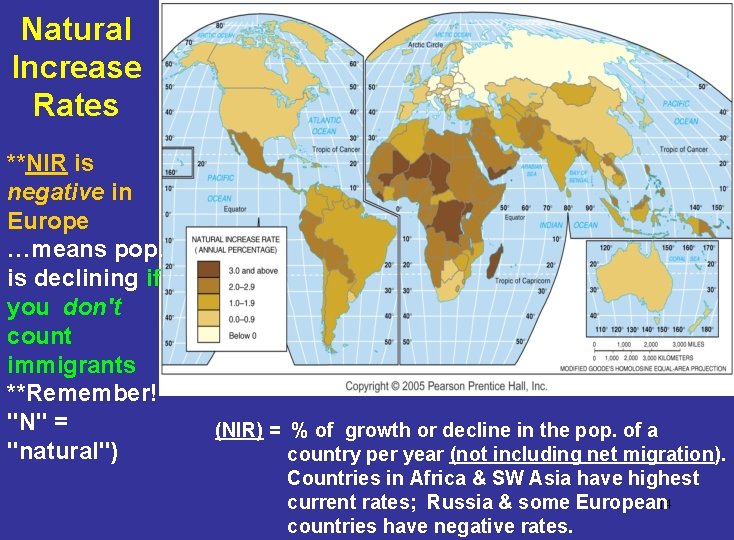
Natural Increase Rates **NIR is negative in Europe …means pop. is declining if you don't count immigrants **Remember! "N" = "natural") (NIR) = % of growth or decline in the pop. of a country per year (not including net migration). Countries in Africa & SW Asia have highest current rates; Russia & some European 14 countries have negative rates.
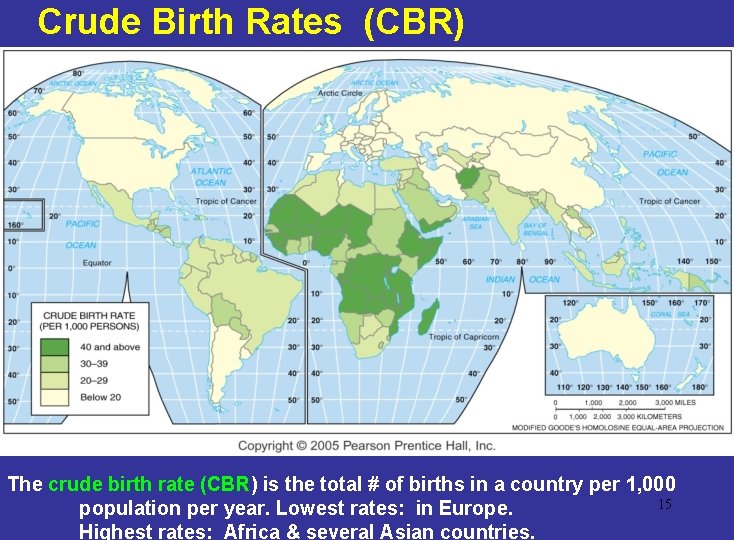
Crude Birth Rates (CBR) The crude birth rate (CBR) is the total # of births in a country per 1, 000 15 population per year. Lowest rates: in Europe. Highest rates: Africa & several Asian countries.
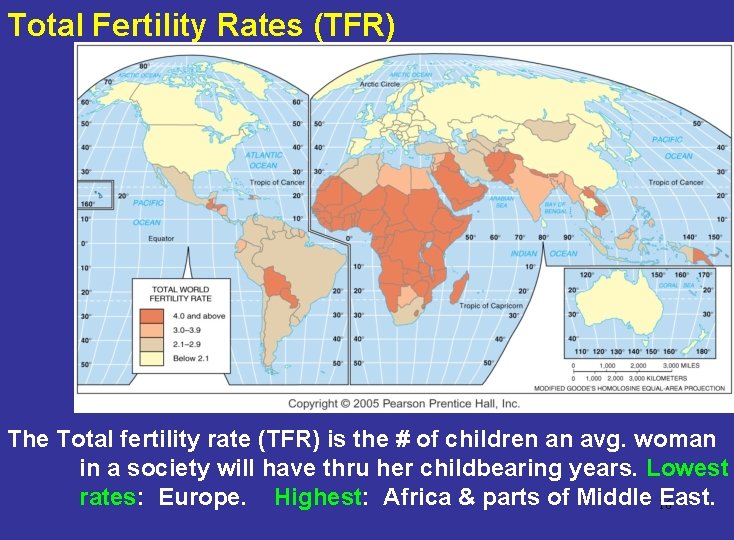
Total Fertility Rates (TFR) The Total fertility rate (TFR) is the # of children an avg. woman in a society will have thru her childbearing years. Lowest rates: Europe. Highest: Africa & parts of Middle 16 East.
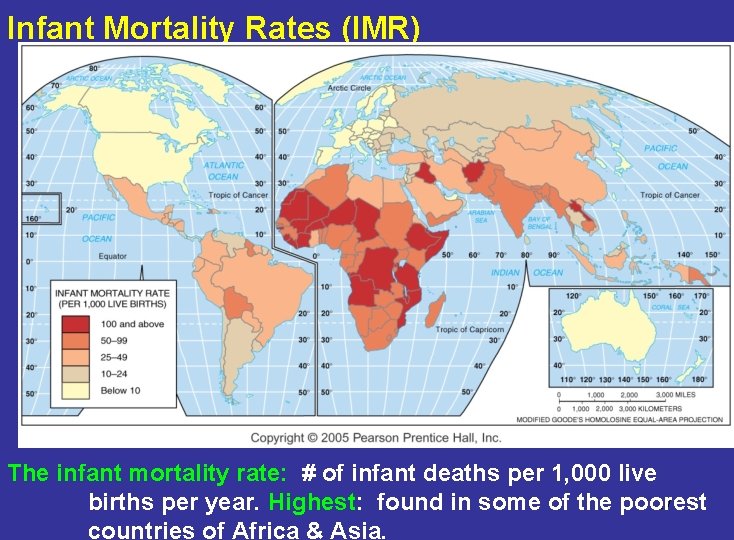
Infant Mortality Rates (IMR) The infant mortality rate: # of infant deaths per 1, 000 live 17 births per year. Highest: found in some of the poorest countries of Africa & Asia.
-MDC's: lower CBR's, TFR's, & IMR's…but higher life expectancy -LDC's: high CBR, TFR, & IMR, but low life expectancy 18
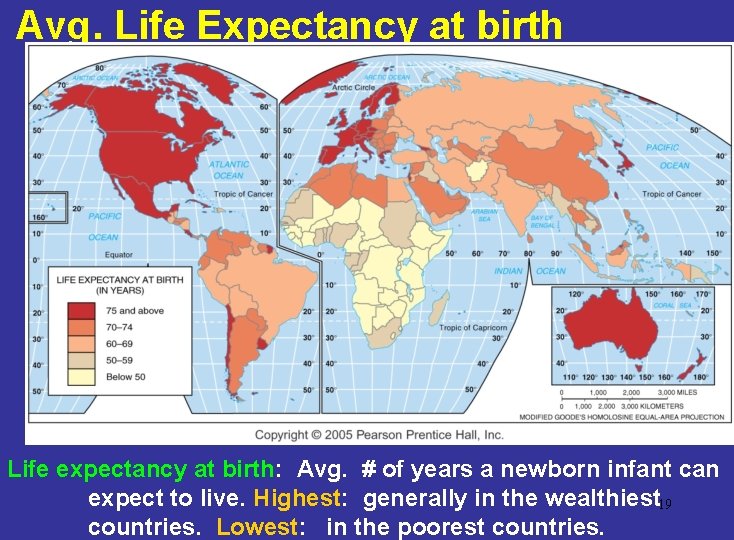
Avg. Life Expectancy at birth Life expectancy at birth: Avg. # of years a newborn infant can expect to live. Highest: generally in the wealthiest 19 countries. Lowest: in the poorest countries.
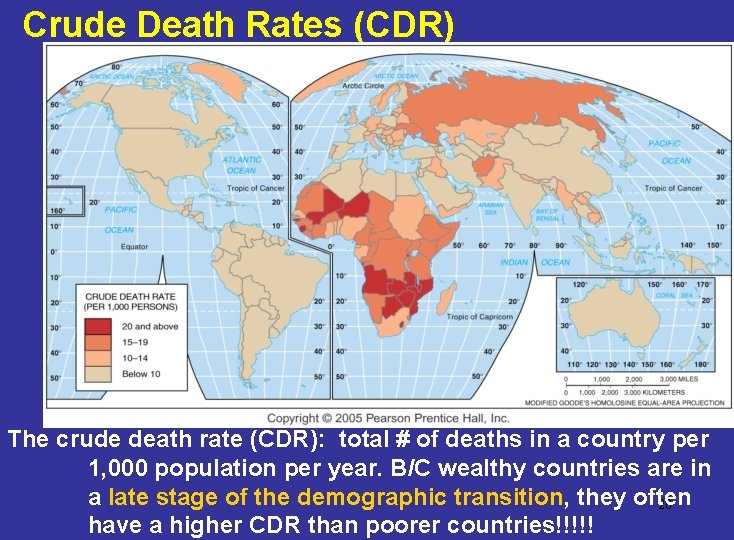
Crude Death Rates (CDR) The crude death rate (CDR): total # of deaths in a country per 1, 000 population per year. B/C wealthy countries are in a late stage of the demographic transition, they often 20 have a higher CDR than poorer countries!!!!!
- Slides: 20