
Distribution of Liquid Water in Orographic MixedPhase Clouds
Distribution of Liquid Water in Orographic Mixed-Phase Clouds Diana Thatcher Mentor: Linnea Avallone LASP REU 2011

Outline • • • Introduction Experiment Important Instruments 1 st Area of Interest 2 nd Area of Interest Conclusion
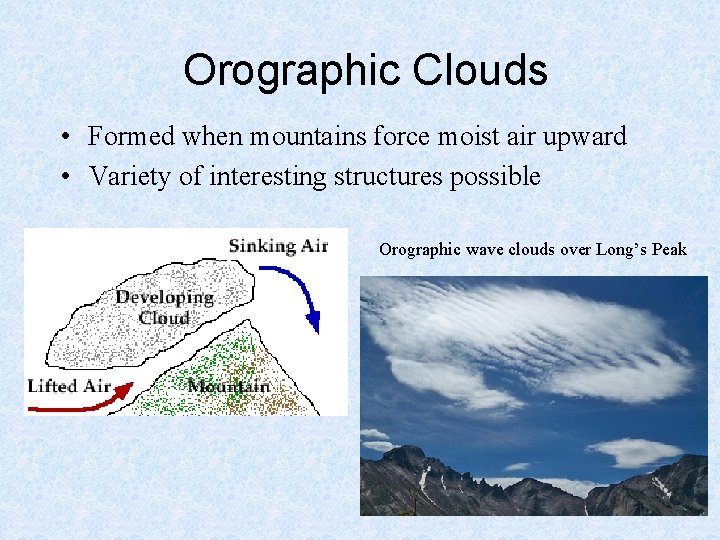
Orographic Clouds • Formed when mountains force moist air upward • Variety of interesting structures possible Orographic wave clouds over Long’s Peak
Mixed-Phase Clouds • Water is present in solid, liquid, and vapor forms • Typical temperatures: 0 to – 30 ºC – Liquid is supercooled • Formed in a variety of situations – – Stratiform clouds in polar regions Frontal systems Convective cloud systems Orographic forcing systems
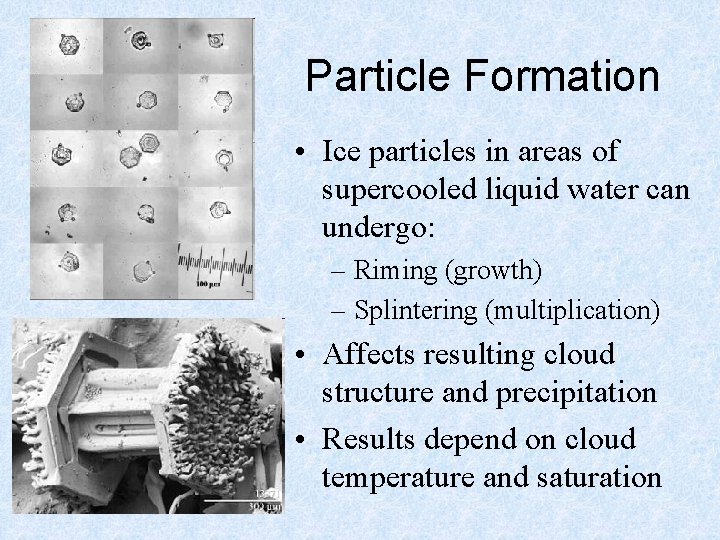
Particle Formation • Ice particles in areas of supercooled liquid water can undergo: – Riming (growth) – Splintering (multiplication) • Affects resulting cloud structure and precipitation • Results depend on cloud temperature and saturation
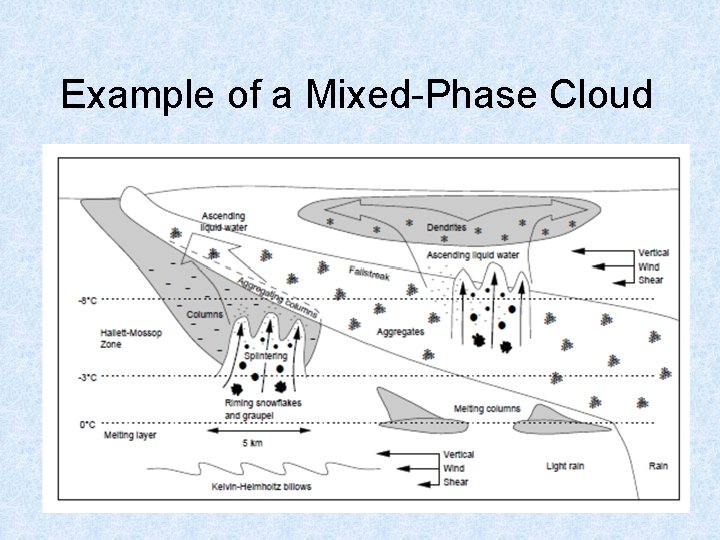
Example of a Mixed-Phase Cloud

Importance of Study • Past studies mainly focus on: – Arctic mixed-phase clouds – Effect of aerosols on mixed phase clouds • More knowledge is necessary to create accurate climate models – Complex effects of topography – Microphysics of liquid and solid particle formation • Results could aid in the prediction of icing conditions
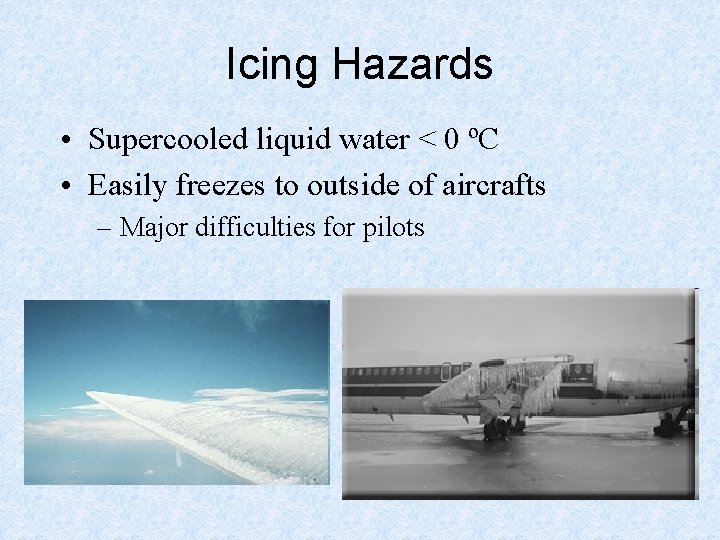
Icing Hazards • Supercooled liquid water < 0 ºC • Easily freezes to outside of aircrafts – Major difficulties for pilots
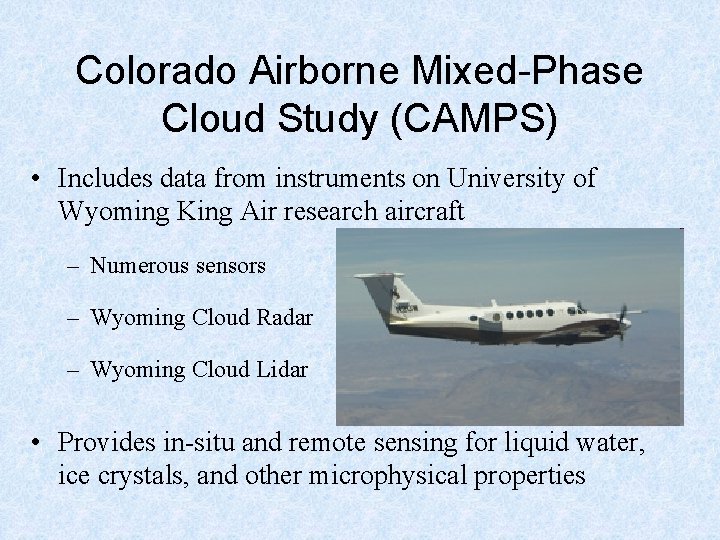
Colorado Airborne Mixed-Phase Cloud Study (CAMPS) • Includes data from instruments on University of Wyoming King Air research aircraft – Numerous sensors – Wyoming Cloud Radar – Wyoming Cloud Lidar • Provides in-situ and remote sensing for liquid water, ice crystals, and other microphysical properties

Cloud Droplet Spectra - FSSP Forward Scattering Spectrometer Probe • Measures particle size distributions • Detects how a particle scatters light • 2. 0 – 47 μm
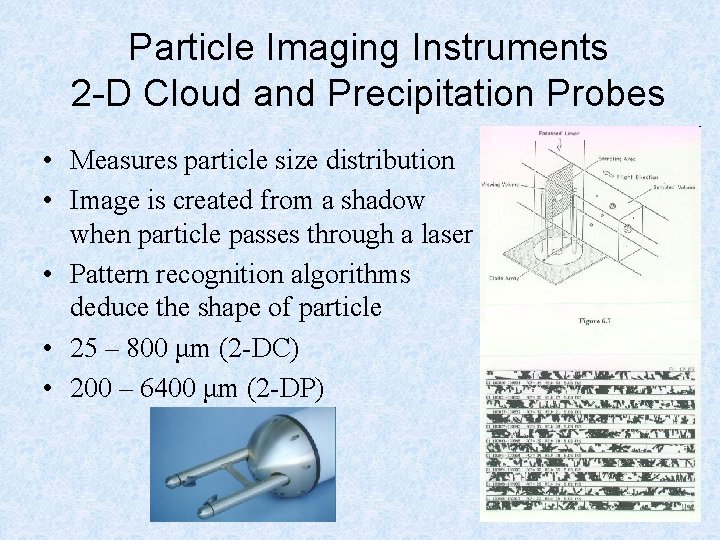
Particle Imaging Instruments 2 -D Cloud and Precipitation Probes • Measures particle size distribution • Image is created from a shadow when particle passes through a laser • Pattern recognition algorithms deduce the shape of particle • 25 – 800 μm (2 -DC) • 200 – 6400 μm (2 -DP)
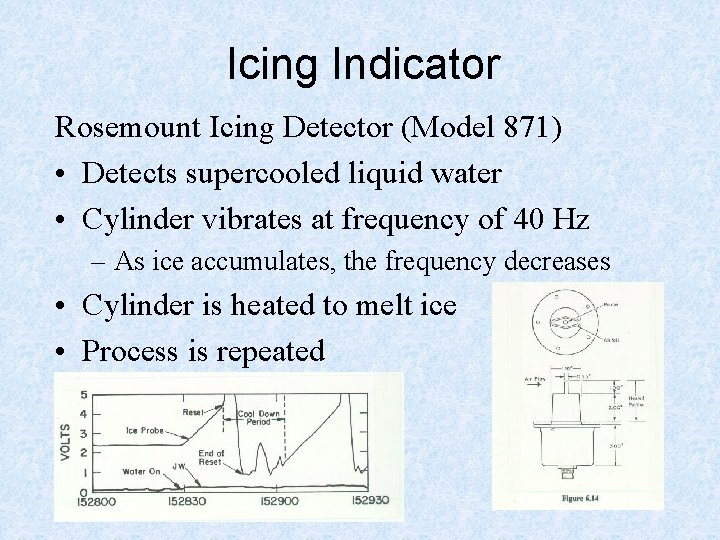
Icing Indicator Rosemount Icing Detector (Model 871) • Detects supercooled liquid water • Cylinder vibrates at frequency of 40 Hz – As ice accumulates, the frequency decreases • Cylinder is heated to melt ice • Process is repeated
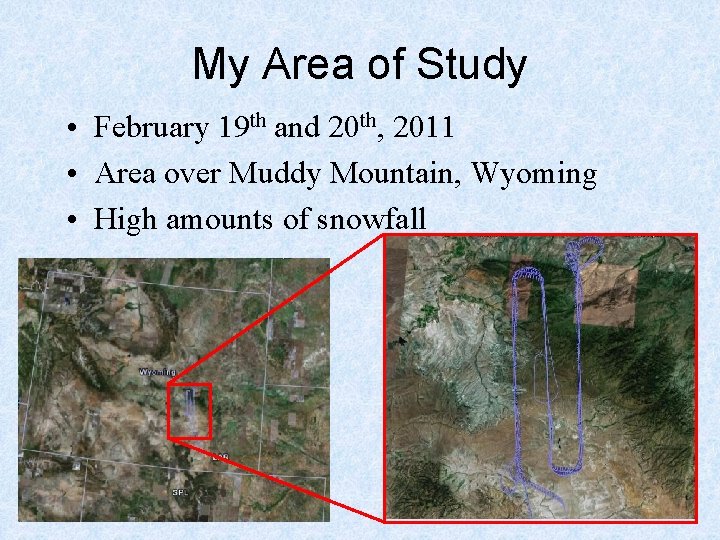
My Area of Study • February 19 th and 20 th, 2011 • Area over Muddy Mountain, Wyoming • High amounts of snowfall
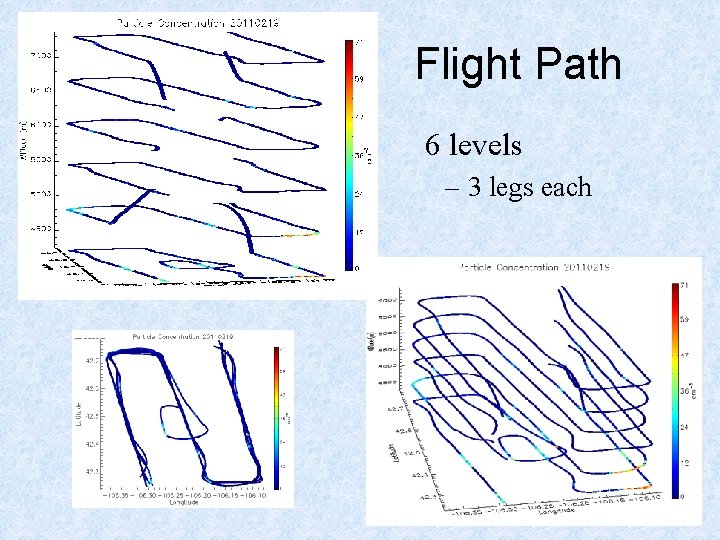
Flight Path 6 levels – 3 legs each
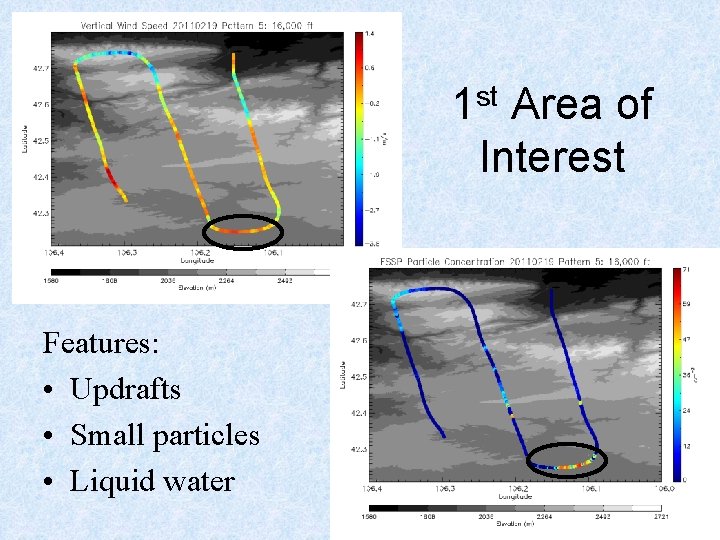
1 st Area of Interest Features: • Updrafts • Small particles • Liquid water
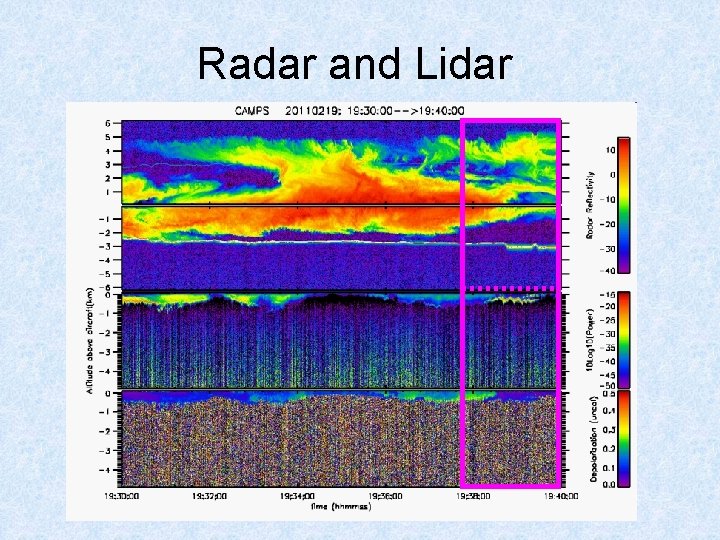
Radar and Lidar
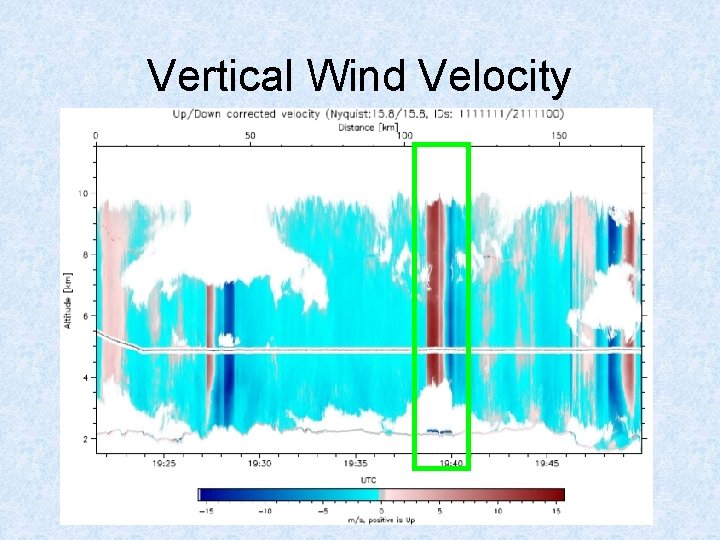
Vertical Wind Velocity
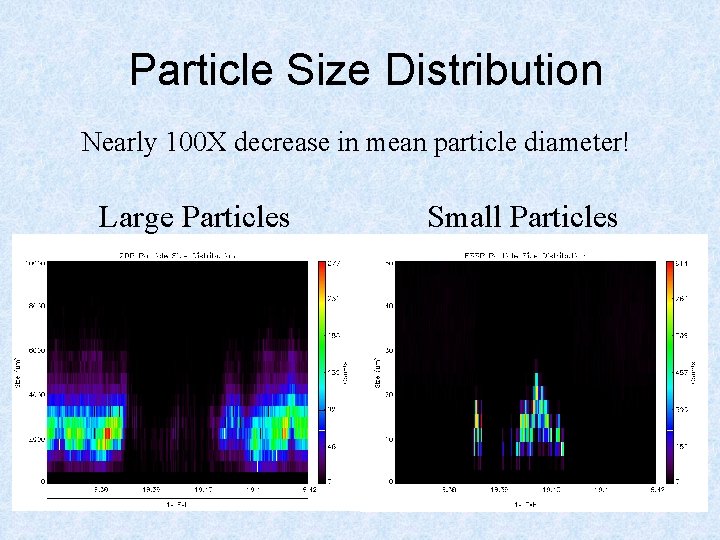
Particle Size Distribution Nearly 100 X decrease in mean particle diameter! Large Particles Small Particles
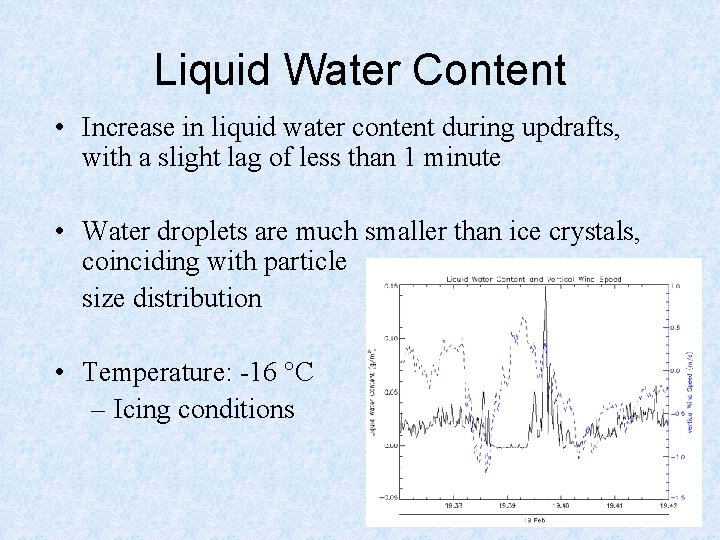
Liquid Water Content • Increase in liquid water content during updrafts, with a slight lag of less than 1 minute • Water droplets are much smaller than ice crystals, coinciding with particle size distribution • Temperature: -16 °C – Icing conditions
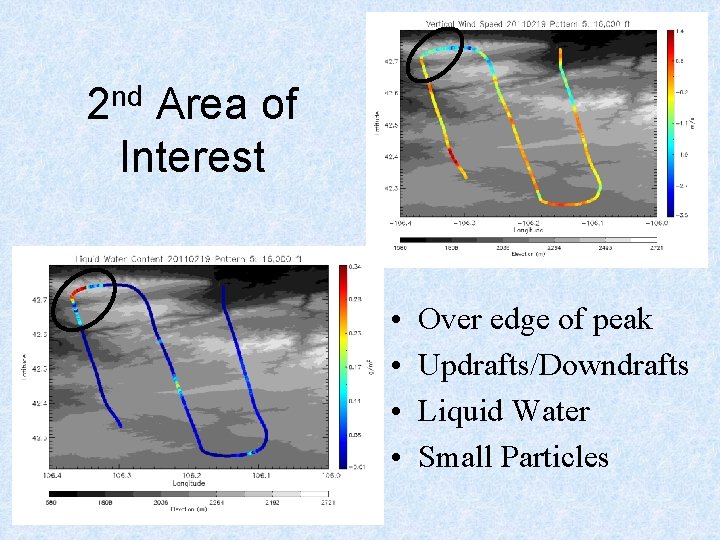
2 nd Area of Interest • • Over edge of peak Updrafts/Downdrafts Liquid Water Small Particles
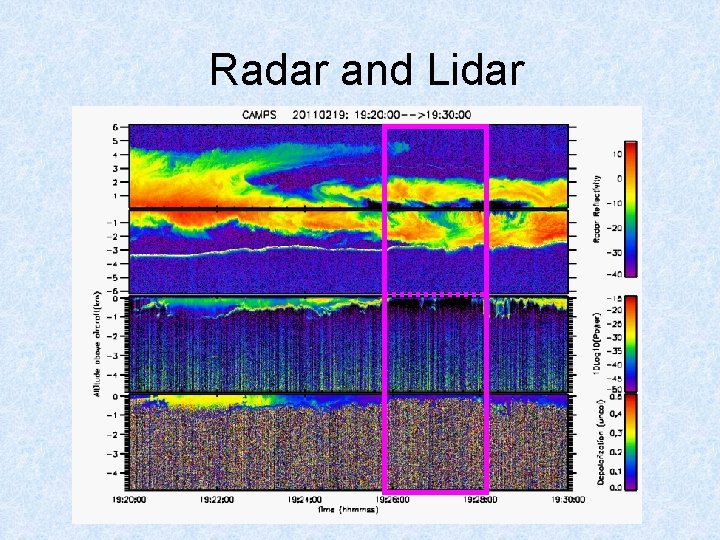
Radar and Lidar
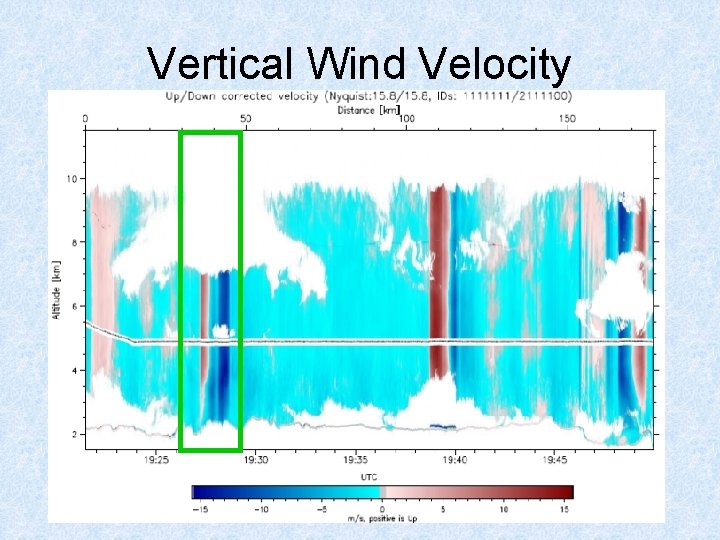
Vertical Wind Velocity
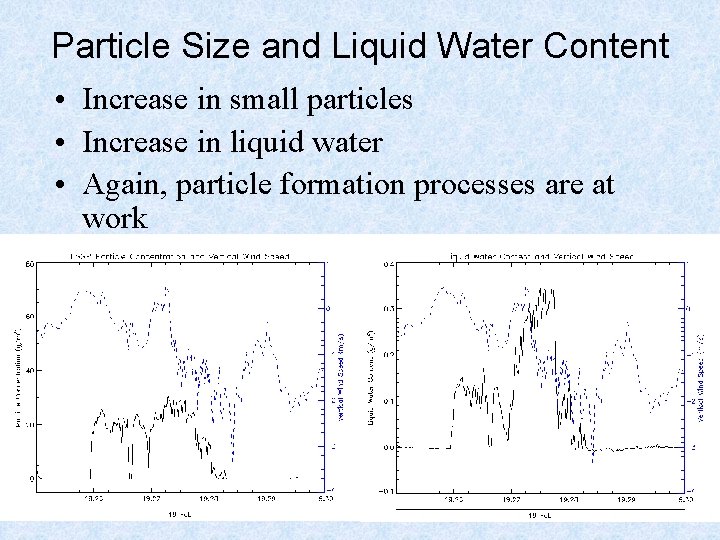
Particle Size and Liquid Water Content • Increase in small particles • Increase in liquid water • Again, particle formation processes are at work
Conclusion Ø In mixed-phase clouds, areas of increased liquid water content are likely to occur in areas of strong updrafts, with a slight lag between the peak velocity and peak liquid water content. Ø Sudden increases in liquid water content are accompanied by a drastic change in the particle size distribution, with a sharp decrease in the concentration of ice crystals and a simultaneous increase in small liquid droplets, indicating the formation of new particles.
Future Work • Obtain particle image data – Determine ice crystal structures – Determine particle formation processes • Expand to a greater variety of cases – Determine limits, such as temperature or vapor saturation – Further analyze the effects of topography

Questions?
References • • Hogan, R. J. , Field, P. R. , Illingworth, A. J. , Cotton, R. J. and Choularton, T. W. (2002), Properties of embedded convection in warm-frontal mixed-phase cloud from aircraft and polarimetric radar. Quarterly Journal of the Royal Meteorological Society, 128: 451– 476. doi: 10. 1256/003590002321042054 http: //www. eol. ucar. edu/raf/Bulletins/B 24/fssp 100. html http: //www. eol. ucar. edu/raf/Bulletins/B 24/2 d. Probes. html http: //www. eol. ucar. edu/raf/Bulletins/B 24/ice. Probe. html
Image Sources • • • http: //ww 2010. atmos. uiuc. edu/%28 Gh%29/guides/mtr/cld/dvlp/org. rxml http: //www. flickr. com/photos/wxguy_grant/4823374536/ http: //www. ucar. edu/news/releases/2006/icing. shtml http: //www. askacfi. com/24/review-of-aircraft-icing-procedures. htm http: //en. wikipedia. org/wiki/Wikipedia: Picture_of_the_day/September_26, _2006 http: //www. cas. manchester. ac. uk/resactivities/cloudphysics/results/riming/ http: //www. eol. ucar. edu/raf/Bulletins/B 24/fssp 100. html http: //www. eol. ucar. edu/raf/Bulletins/B 24/2 d. Probes. html http: //www. eol. ucar. edu/raf/Bulletins/B 24/ice. Probe. html
- Slides: 28