
Distribution Franchise An Experience Torrent Power At a
Distribution Franchise … An Experience
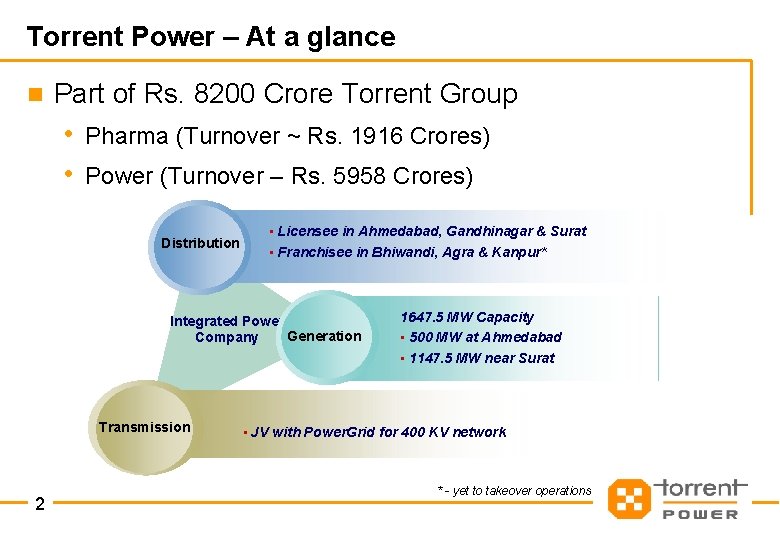
Torrent Power – At a glance n Part of Rs. 8200 Crore Torrent Group • Pharma (Turnover ~ Rs. 1916 Crores) • Power (Turnover – Rs. 5958 Crores) Distribution • Licensee in Ahmedabad, Gandhinagar & Surat • Franchisee in Bhiwandi, Agra & Kanpur* Integrated Power Generation Company Transmission 2 1647. 5 MW Capacity • 500 MW at Ahmedabad • 1147. 5 MW near Surat • JV with Power. Grid for 400 KV network * - yet to takeover operations

3
Why Distribution Reforms? ? ? n 4 Present Distribution Scenario • SEBs are majorly responsible for distribution • Monopoly – Defined License areas • Lack of requisite investment in T&D sector • Lack of R&D in the distribution sector
Present Distribution Scenario – Drawbacks! 5 n High AT&C losses n Frequent power failures due to very old and dilapidated network n Massive load shedding n Low customer satisfaction • Customer service standards are poor • Lengthy and tedious mechanisms for resolving consumer grievances n Uninspiring work culture n Old and obsolete technologies still being used n Unacceptable safety standards

Present Distribution Scenario – High Distribution losses 6 Source: Think BRIC – Comparative Study of Power Sector by KPMG- Jan 2010
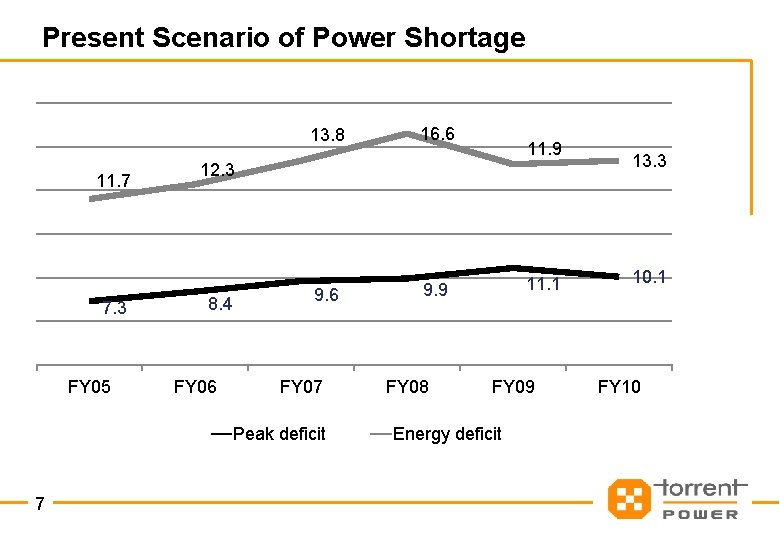
Present Scenario of Power Shortage 13. 8 11. 7 7. 3 FY 05 11. 9 12. 3 8. 4 FY 06 9. 6 FY 07 Peak deficit 7 16. 6 11. 1 9. 9 FY 08 FY 09 Energy deficit 13. 3 10. 1 FY 10
Need of the hour n The power sector requires huge capital outlay to reduce the current deficit and to sustain future GDP growth n It is not possible for the government to fund the growth of the sector on its own n Investment are forthcoming in Generation from the private sector but it is not sustainable if distribution reforms are not undertaken n The government has embarked on an aggressive mission – “Power for All by 2012” and the private sector has a key role in achieving the objectives stated in the mission 8
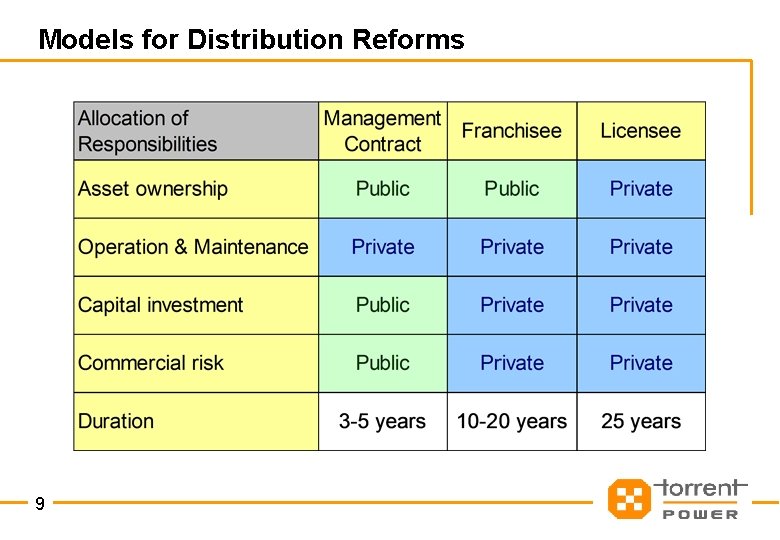
Models for Distribution Reforms 9
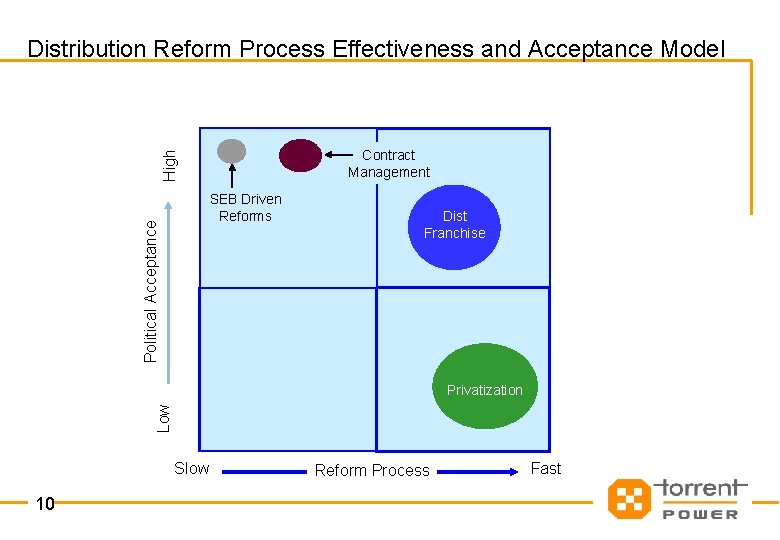
Distribution Reform Process Effectiveness and Acceptance Model High Contract Management Political Acceptance SEB Driven Reforms Dist Franchise Low Privatization Slow 10 Reform Process Fast
Benefits of Franchise Model n Reduction in technical losses and theft n Improvement in Metering, Billing and Revenue Collection n Capital investments in upgradation of the network n Enhancement in customer service quality A win-win scenario for all: Consumers, DISCOM and Franchisee 11
Technical Benefits n State of the art distribution system in franchise area n Lower peaking load due to better technical T&D management n Better overall grid stability due to lower system interruptions n Improvement in reliability parameters like SAIFI, SAIDI, CAIDI, etc. 12
Financial Benefits to the State n Assured returns from distribution franchisee n No investment in the franchise area by licensee n Reduction in losses n Contribution to the Government exchequer • Increase in collection of Electricity Duty as the metering and billing becomes more accurate • Increase in collection of other Central and State taxes pursuant to growth of economy of franchisee area 13
Better services to Customers n Improved services • Faster new connections/ load extensions • Lower attendance time for faults • Grievance Redressal mechanism • Convenient bill payment facilities n Better availability and quality of power n Increased customer satisfaction 14
What is a Franchisee? As per Definitions of The Electricity Act, 2003 “franchisee” means a person authorised by a distribution licensee to distribute electricity on its behalf in a particular area within his area of supply; Facilitation of Franchise Model in the Section 14 of the Act: Provided also that in a case where a distribution licensee proposes to undertake distribution of electricity for a specified area within his area of supply through another person, that person shall not be required to obtain any separate licence from the concerned State Commission …………… 15
Features of Input Based Distribution Franchise
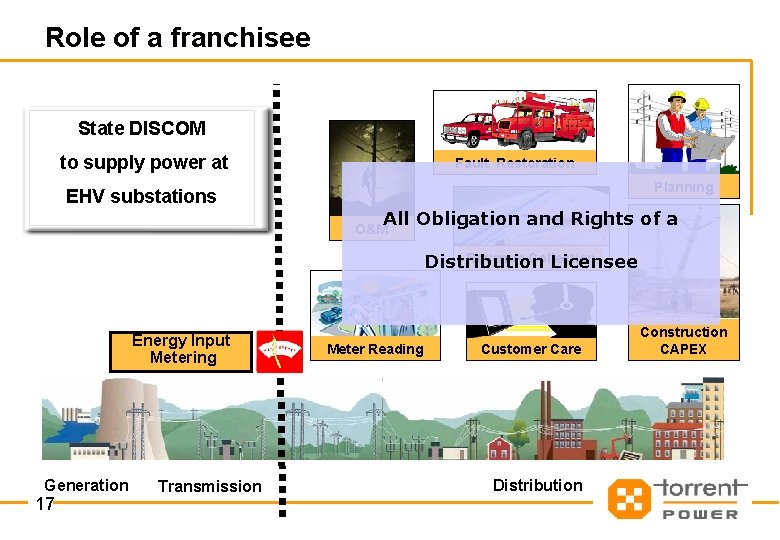
Role of a franchisee State DISCOM to supply power at EHV substations Fault Restoration Planning All Obligation and Rights of a O&M Revenue Collection Distribution Licensee Energy Input Metering Generation 17 Transmission Meter Reading Customer Care Distribution Construction CAPEX
Rights of DF n DF to distribute power in the franchise area for a fixed term as per the agreement n DF is an exclusive agent of Licensee in the Franchise Area n DF has all rights of a Distribution Licensee Ø 18 E. g. authorization under Section 126, 135, 152 of Electricity Act 2003
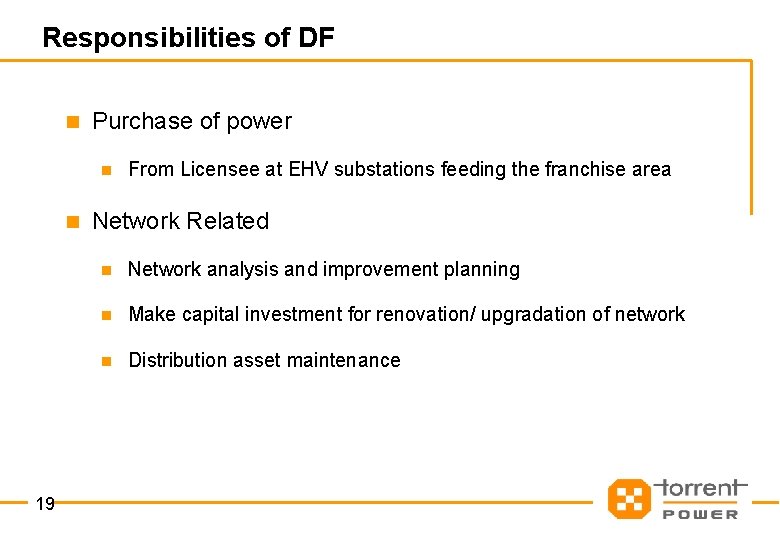
Responsibilities of DF n Purchase of power n n 19 From Licensee at EHV substations feeding the franchise area Network Related n Network analysis and improvement planning n Make capital investment for renovation/ upgradation of network n Distribution asset maintenance
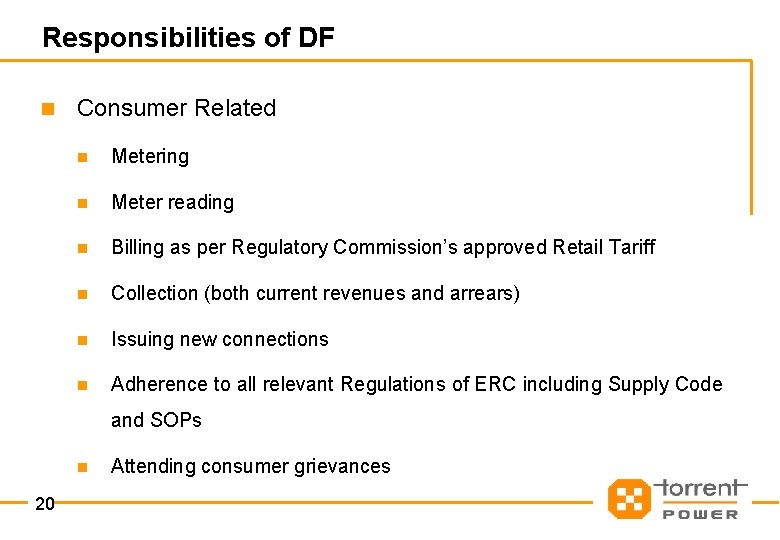
Responsibilities of DF n Consumer Related n Metering n Meter reading n Billing as per Regulatory Commission’s approved Retail Tariff n Collection (both current revenues and arrears) n Issuing new connections n Adherence to all relevant Regulations of ERC including Supply Code and SOPs n 20 Attending consumer grievances
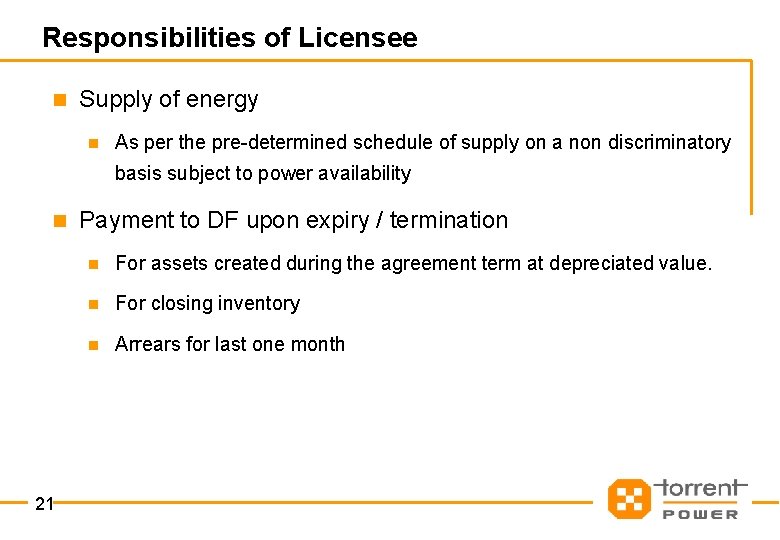
Responsibilities of Licensee n Supply of energy n As per the pre-determined schedule of supply on a non discriminatory basis subject to power availability n 21 Payment to DF upon expiry / termination n For assets created during the agreement term at depreciated value. n For closing inventory n Arrears for last one month
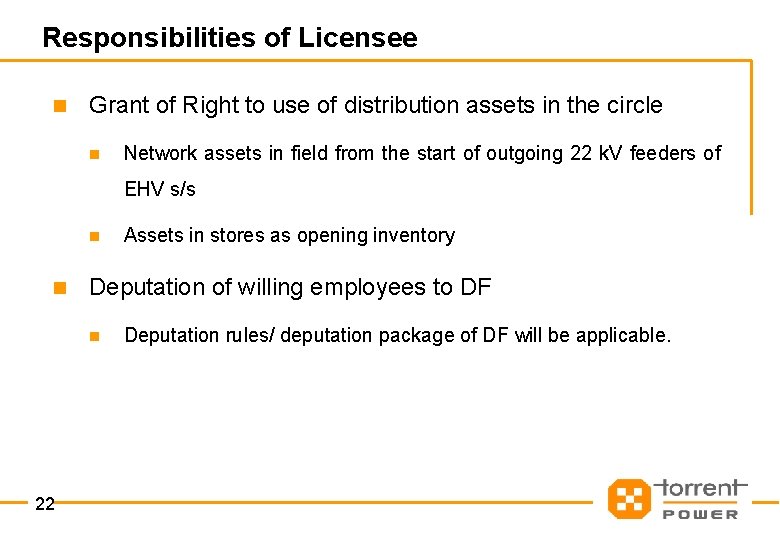
Responsibilities of Licensee n Grant of Right to use of distribution assets in the circle n Network assets in field from the start of outgoing 22 k. V feeders of EHV s/s n n Deputation of willing employees to DF n 22 Assets in stores as opening inventory Deputation rules/ deputation package of DF will be applicable.
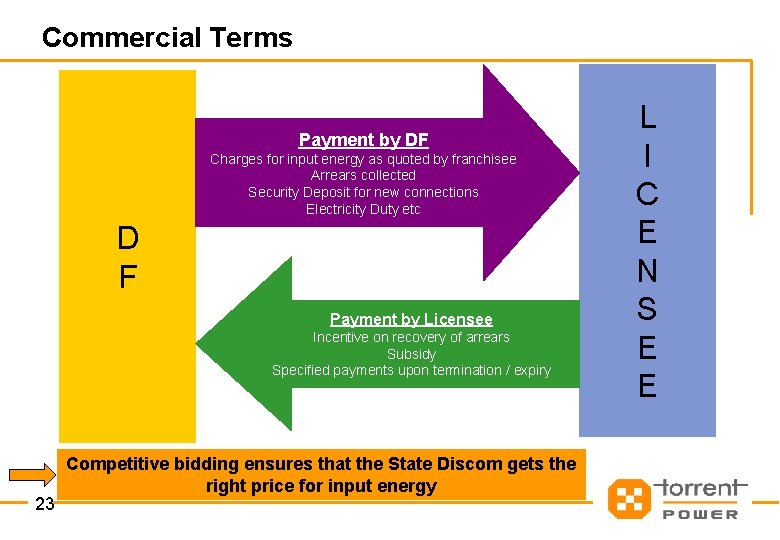
Commercial Terms Payment by DF Charges for input energy as quoted by franchisee Arrears collected Security Deposit for new connections Electricity Duty etc D F Payment by Licensee Incentive on recovery of arrears Subsidy Specified payments upon termination / expiry 23 Competitive bidding ensures that the State Discom gets the right price for input energy L I C E N S E E
Bhiwandi Franchise experience
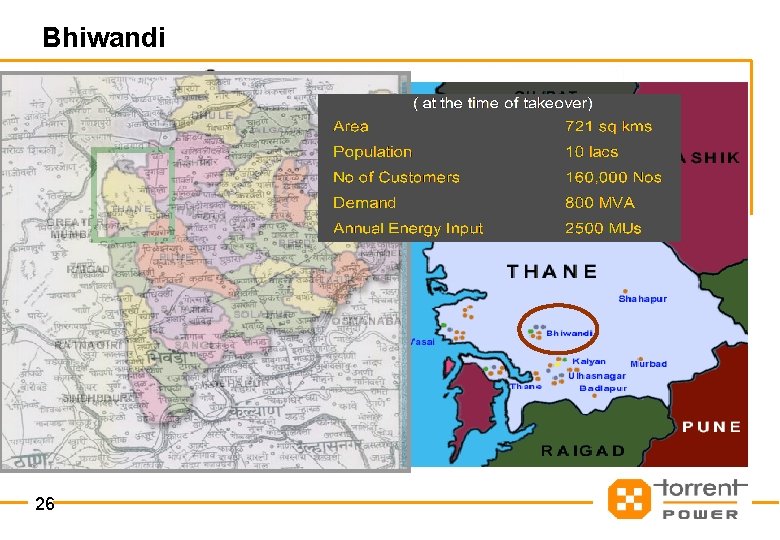
Bhiwandi : Introduction n Government of Maharastra took the lead in distribution reforms and introduced a franchisee model for public-private partnership n DISCOM consequently put through a process for selection and appointment of a distribution franchisee for the Bhiwandi Circle of its license area of Maharastra State n Torrent Power was selected as the Distribution Franchisee through an open competitive bidding process n Distribution Franchise Agreement was signed December, 2006 n 25 Operations taken over from 26 th January, 07 with DISCOM on 20 th
Bhiwandi 26
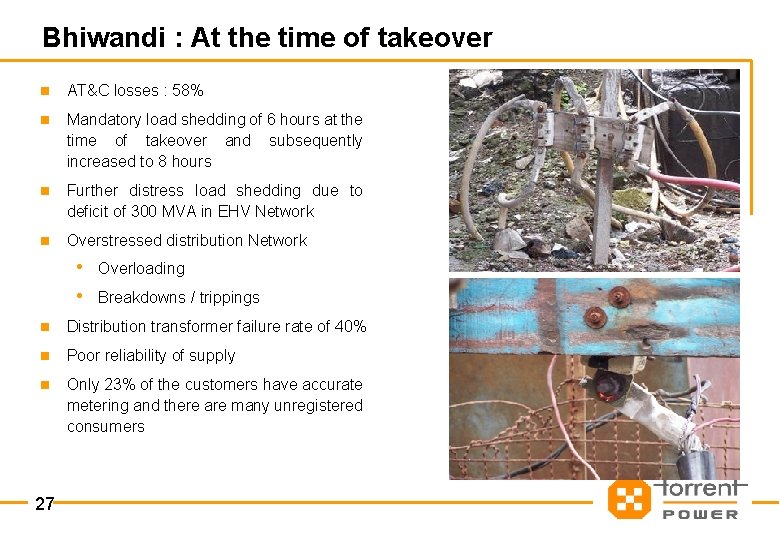
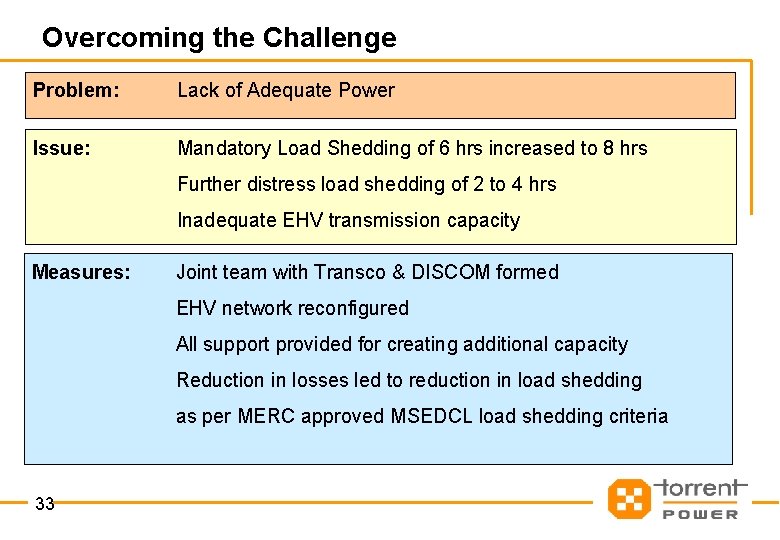
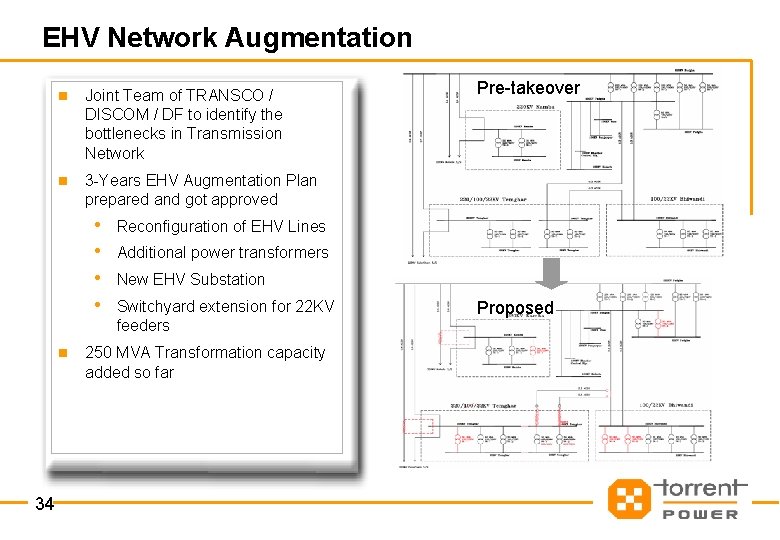
Bhiwandi : At the time of takeover n AT&C losses : 58% n Mandatory load shedding of 6 hours at the time of takeover and subsequently increased to 8 hours n Further distress load shedding due to deficit of 300 MVA in EHV Network n Overstressed distribution Network • Overloading • Breakdowns / trippings n Distribution transformer failure rate of 40% n Poor reliability of supply n Only 23% of the customers have accurate metering and there are many unregistered consumers 27
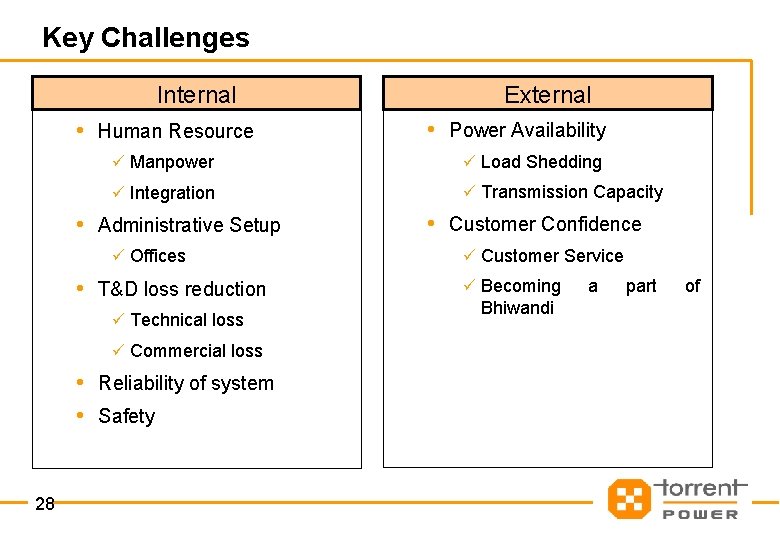
Key Challenges Internal • Human Resource • Power Availability ü Manpower ü Load Shedding ü Integration ü Transmission Capacity • Administrative Setup ü Offices • T&D loss reduction ü Technical loss ü Commercial loss • Reliability of system • Safety 28 External • Customer Confidence ü Customer Service ü Becoming Bhiwandi a part of
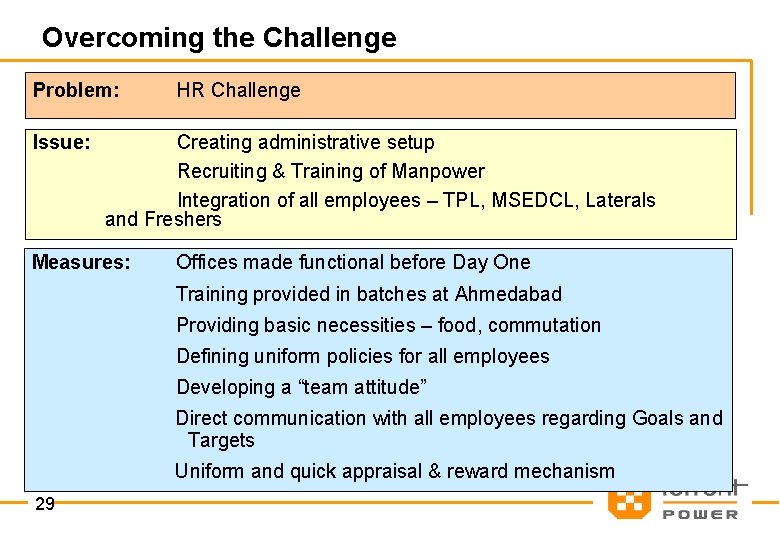
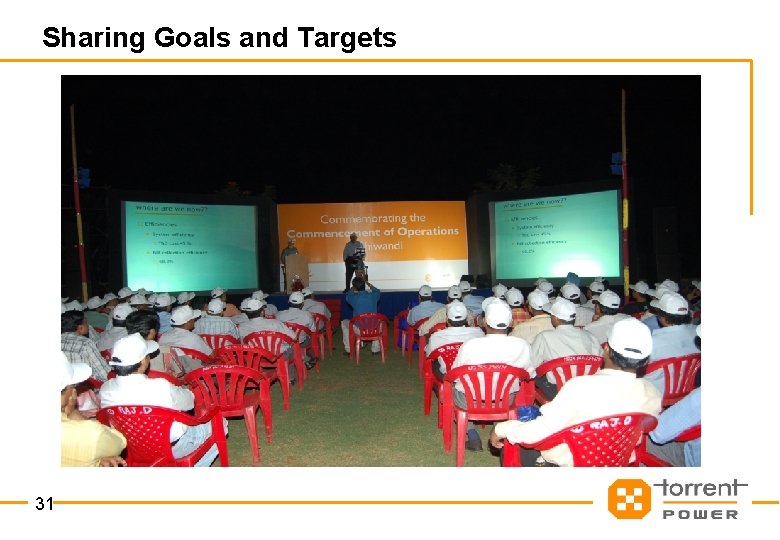
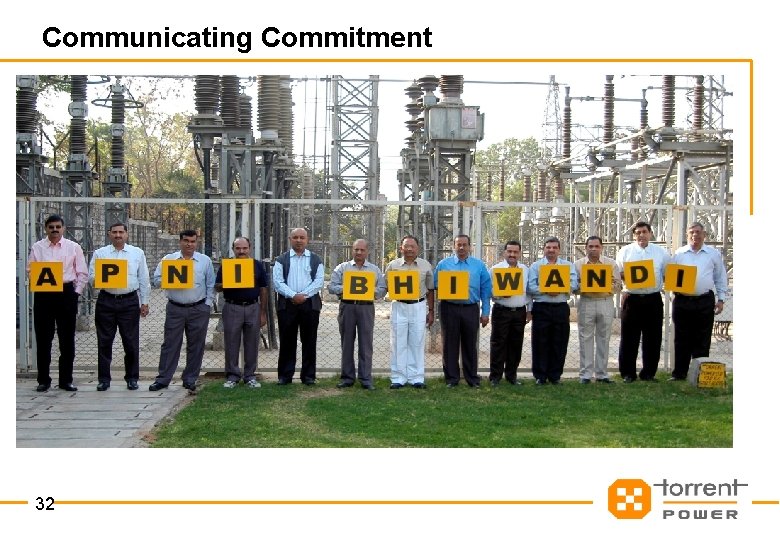
Overcoming the Challenge Problem: Issue: HR Challenge Creating administrative setup Recruiting & Training of Manpower Integration of all employees – TPL, MSEDCL, Laterals and Freshers Measures: Offices made functional before Day One Training provided in batches at Ahmedabad Providing basic necessities – food, commutation Defining uniform policies for all employees Developing a “team attitude” Direct communication with all employees regarding Goals and Targets Uniform and quick appraisal & reward mechanism 29
Bhiwandi Team Logo 30
Sharing Goals and Targets 31
Communicating Commitment 32
Overcoming the Challenge Problem: Lack of Adequate Power Issue: Mandatory Load Shedding of 6 hrs increased to 8 hrs Further distress load shedding of 2 to 4 hrs Inadequate EHV transmission capacity Measures: Joint team with Transco & DISCOM formed EHV network reconfigured All support provided for creating additional capacity Reduction in losses led to reduction in load shedding as per MERC approved MSEDCL load shedding criteria 33
EHV Network Augmentation n Joint Team of TRANSCO / DISCOM / DF to identify the bottlenecks in Transmission Network n 3 -Years EHV Augmentation Plan prepared and got approved • • n 34 Pre-takeover Reconfiguration of EHV Lines Additional power transformers New EHV Substation Switchyard extension for 22 KV feeders 250 MVA Transformation capacity added so far Proposed
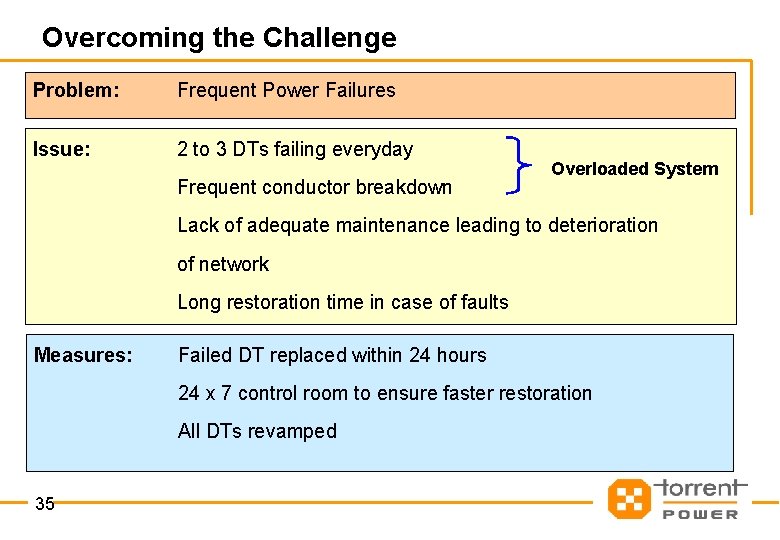
Overcoming the Challenge Problem: Frequent Power Failures Issue: 2 to 3 DTs failing everyday Frequent conductor breakdown Overloaded System Lack of adequate maintenance leading to deterioration of network Long restoration time in case of faults Measures: Failed DT replaced within 24 hours 24 x 7 control room to ensure faster restoration All DTs revamped 35

Overcoming the Challenge Problem: Technical Losses Issue: Overloaded feeders leading to higher I 2 R losses Improper crimping at joints Poor power factor of the system Measures: Reconfigured the existing feeders Added 29 new feeders to the existing 46 feeders Added 125 MVA distribution transformer capacity Proper termination and crimping provided Installed capacitor banks to improve power factor 36
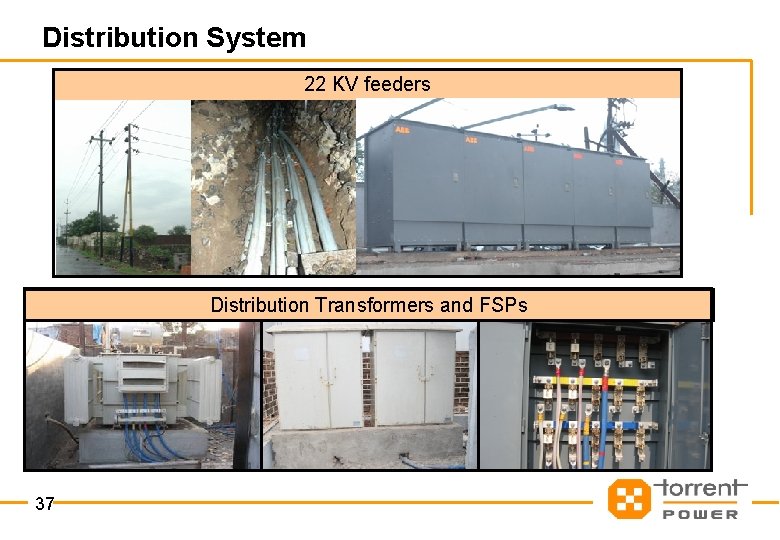
Distribution System 22 KV feeders Distribution Transformers and FSPs 37
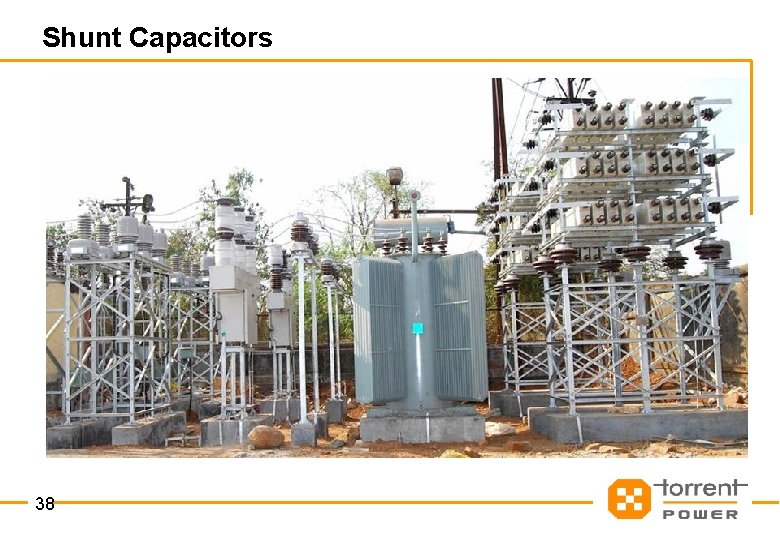
Shunt Capacitors 38
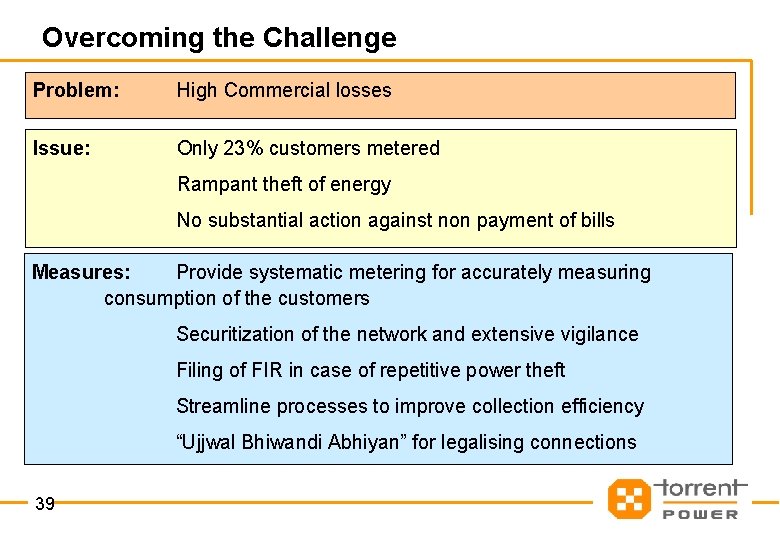
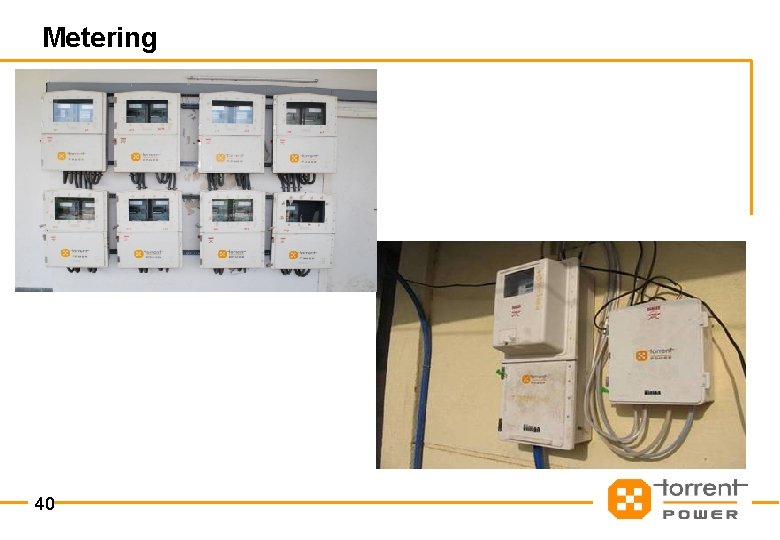
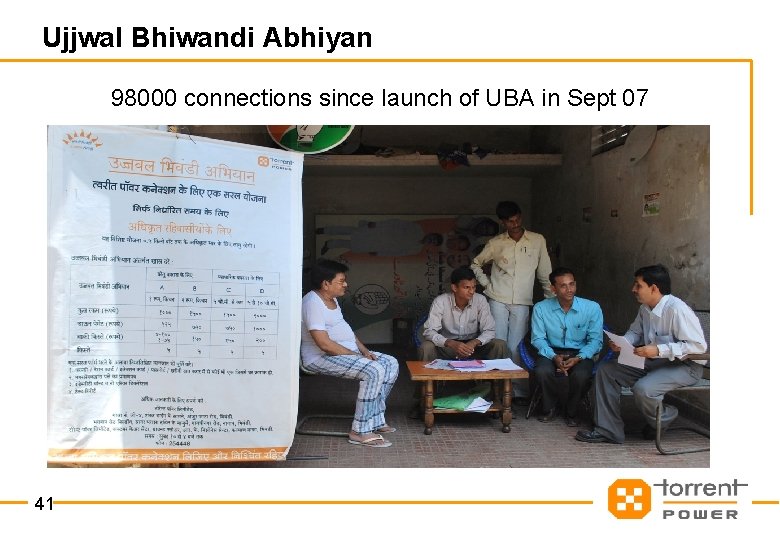
Overcoming the Challenge Problem: High Commercial losses Issue: Only 23% customers metered Rampant theft of energy No substantial action against non payment of bills Measures: Provide systematic metering for accurately measuring consumption of the customers Securitization of the network and extensive vigilance Filing of FIR in case of repetitive power theft Streamline processes to improve collection efficiency “Ujjwal Bhiwandi Abhiyan” for legalising connections 39
Metering 40
Ujjwal Bhiwandi Abhiyan 98000 connections since launch of UBA in Sept 07 41
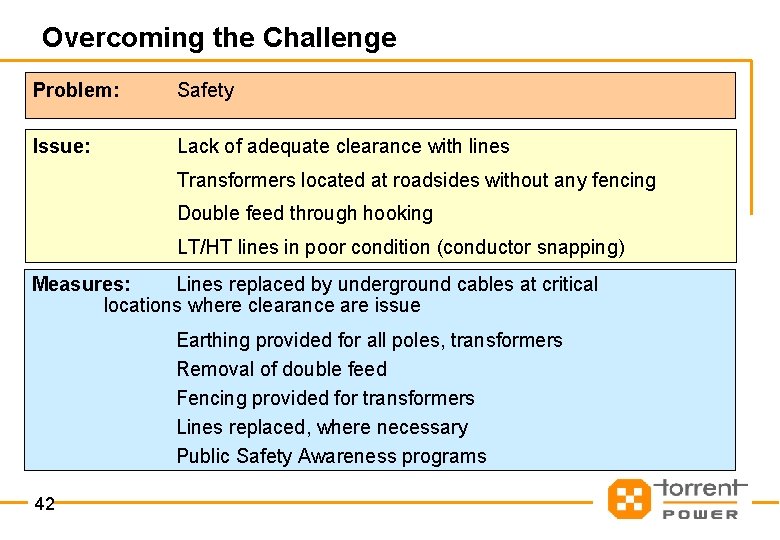
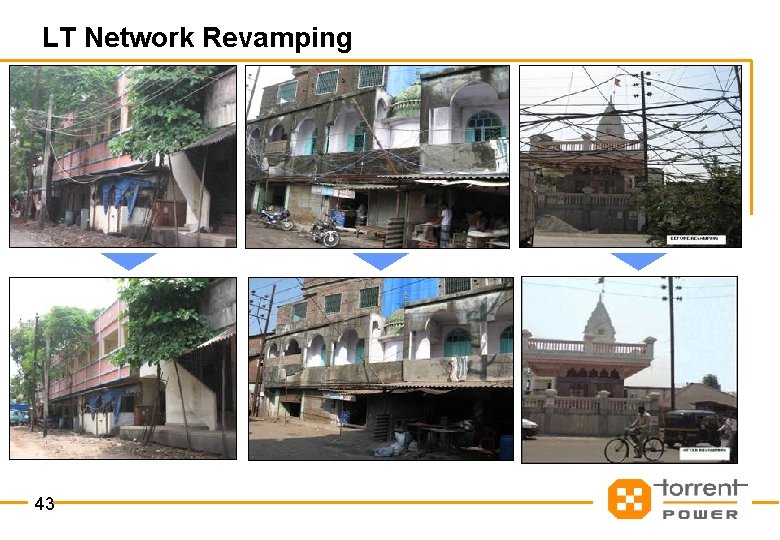
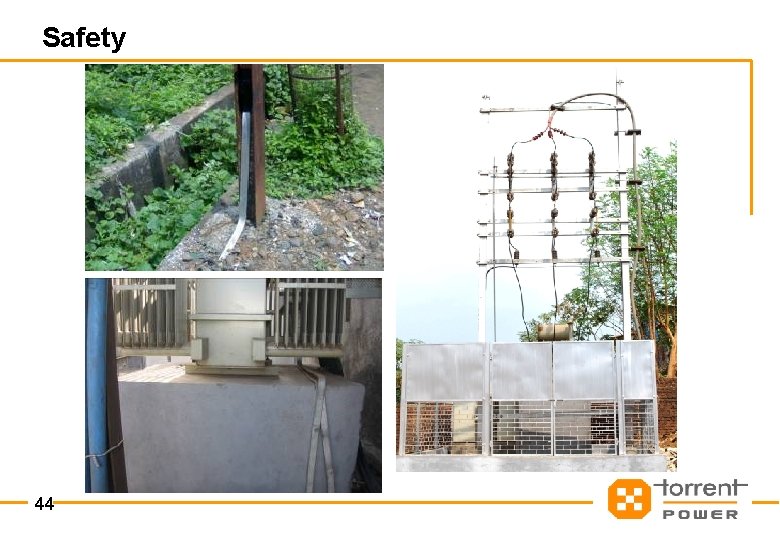
Overcoming the Challenge Problem: Safety Issue: Lack of adequate clearance with lines Transformers located at roadsides without any fencing Double feed through hooking LT/HT lines in poor condition (conductor snapping) Measures: Lines replaced by underground cables at critical locations where clearance are issue Earthing provided for all poles, transformers Removal of double feed Fencing provided for transformers Lines replaced, where necessary Public Safety Awareness programs 42
LT Network Revamping 43
Safety 44
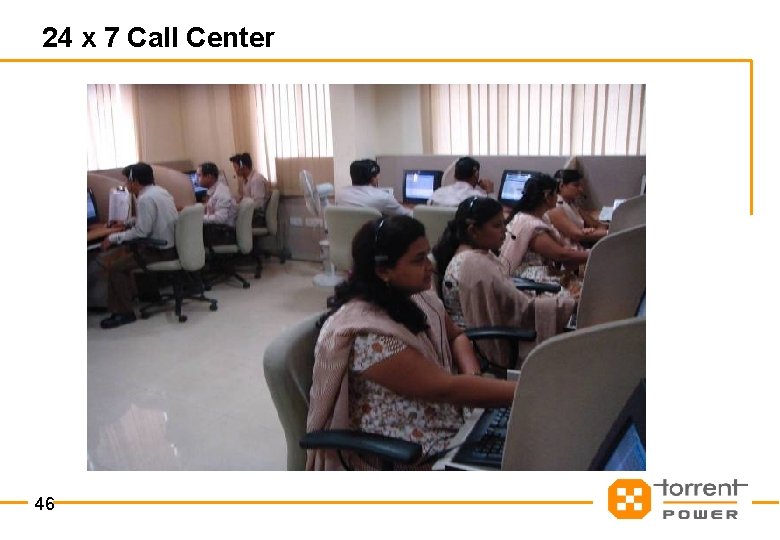
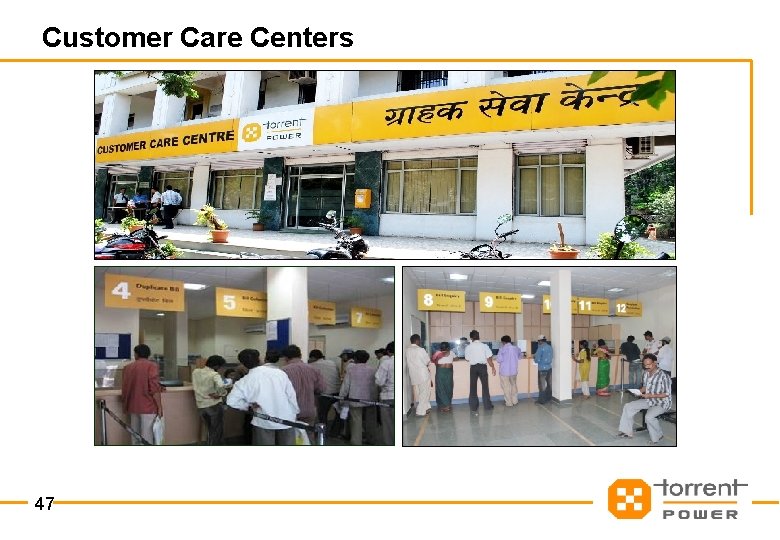
Overcoming the Challenge Problem: Customer Service Issue: No concept of customer service No consumer redressal system Customers had lost confidence in utility Measures: Call Center started from Day One Customer friendly bill introduced 2 Customer Service Centers Opened Customer Redressal Mechanism established Mobile Van as a value added service 45
24 x 7 Call Center 46
Customer Care Centers 47
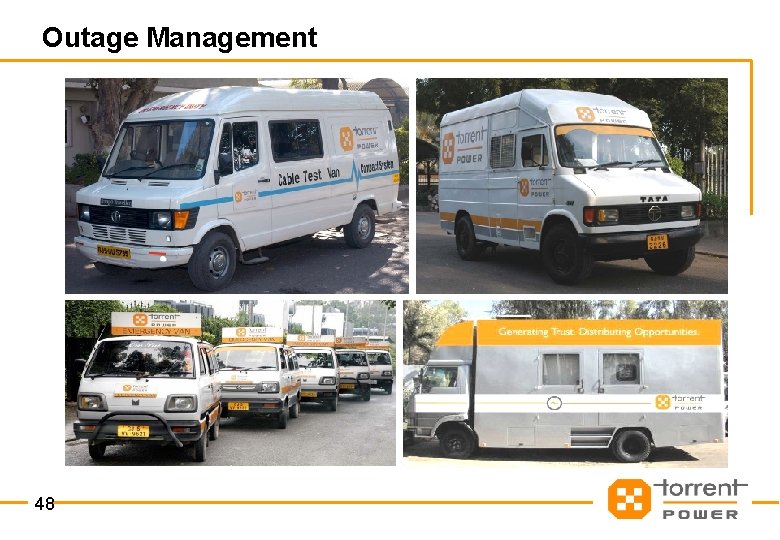
Outage Management 48
Overcoming the Challenge Problem: Creating Customer Confidence Issue: Public was instigated against a private company taking over No knowledge about Torrent’s capability Measures: A series of programs with influential citizens informing them about Torrent Power Direct interaction with Customers through letters Performance standards widely publicized in direct mailers, cable TV, hoardings Cultural adaptability – active participation in all festivals Completing the communication loop through customer feedback - Setup a Customer Advisory Committee 49
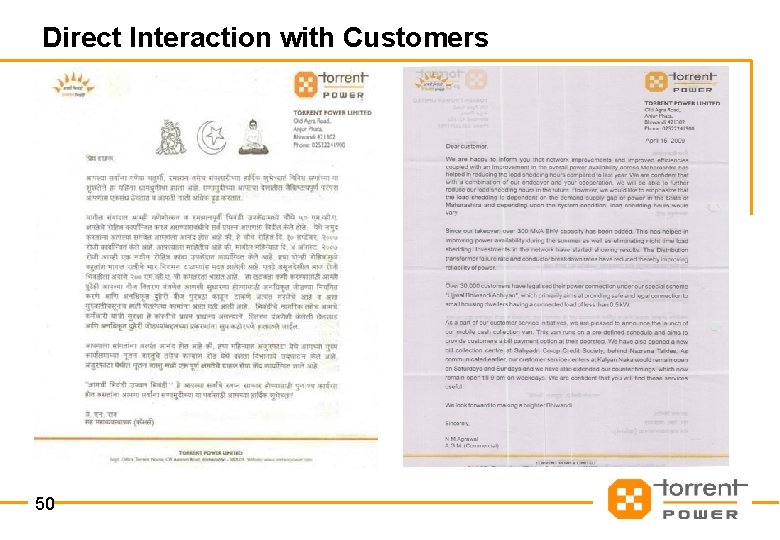
Direct Interaction with Customers 50
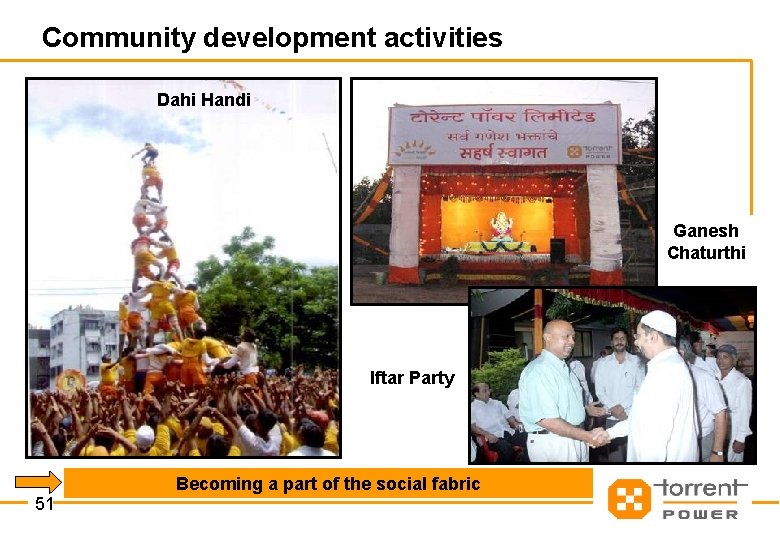
Community development activities Dahi Handi Ganesh Chaturthi Iftar Party Becoming a part of the social fabric 51
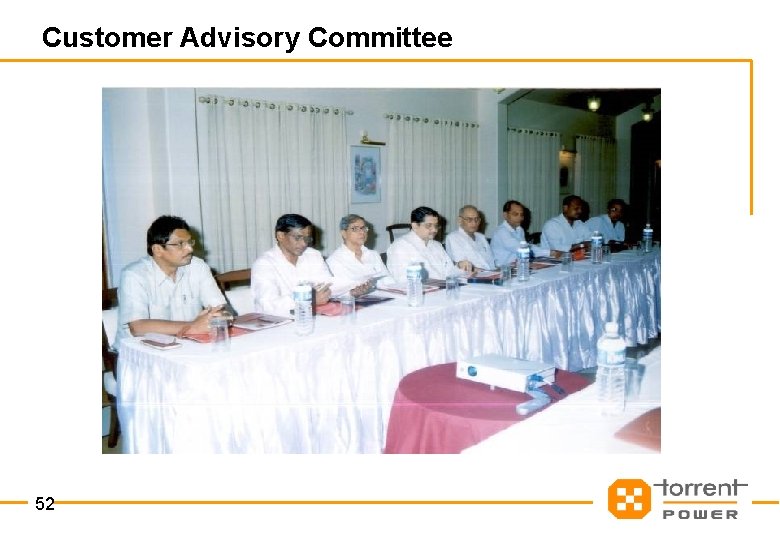
Customer Advisory Committee 52
The results
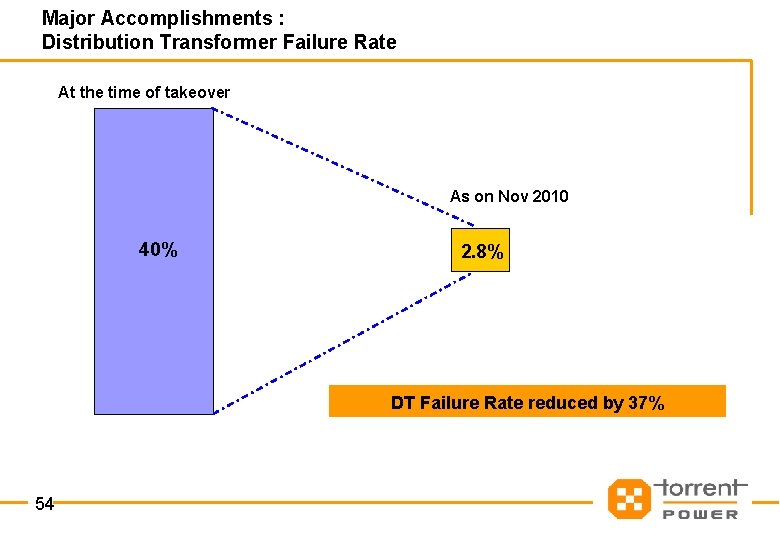
Major Accomplishments : Distribution Transformer Failure Rate At the time of takeover As on Nov 2010 40% 2. 8% DT Failure Rate reduced by 37% 54
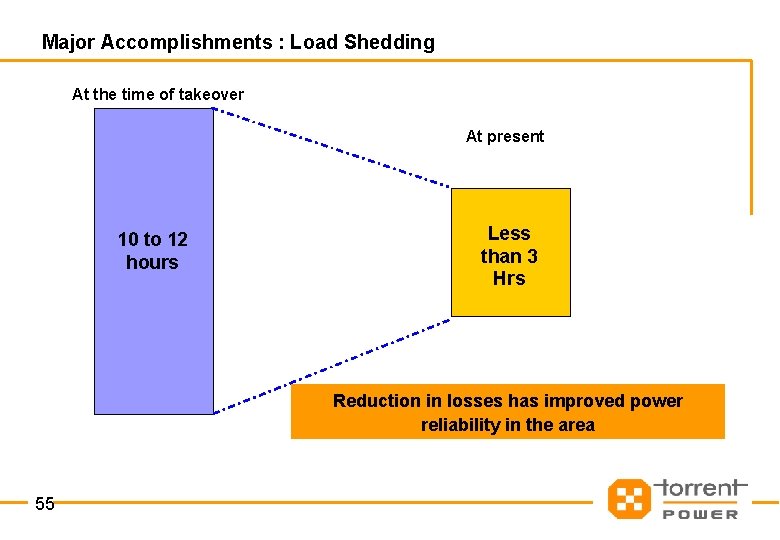
Major Accomplishments : Load Shedding At the time of takeover At present 10 to 12 hours Less than 3 Hrs Reduction in losses has improved power reliability in the area 55
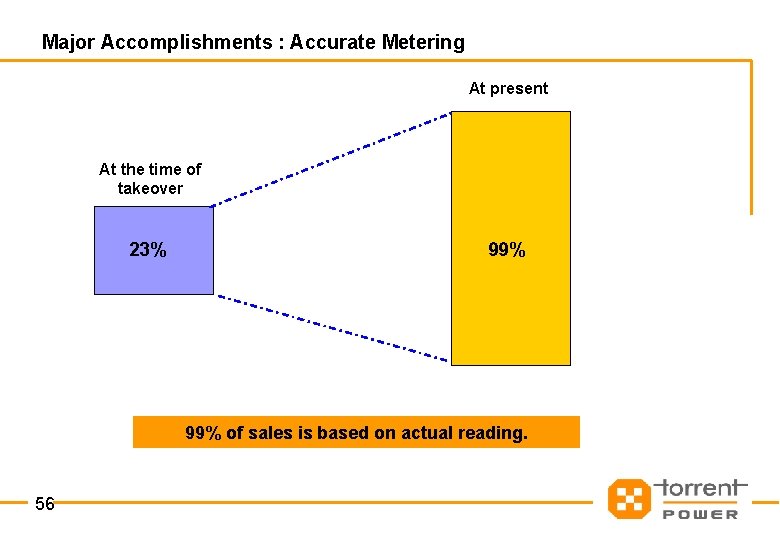
Major Accomplishments : Accurate Metering At present At the time of takeover 23% 99% of sales is based on actual reading. 56
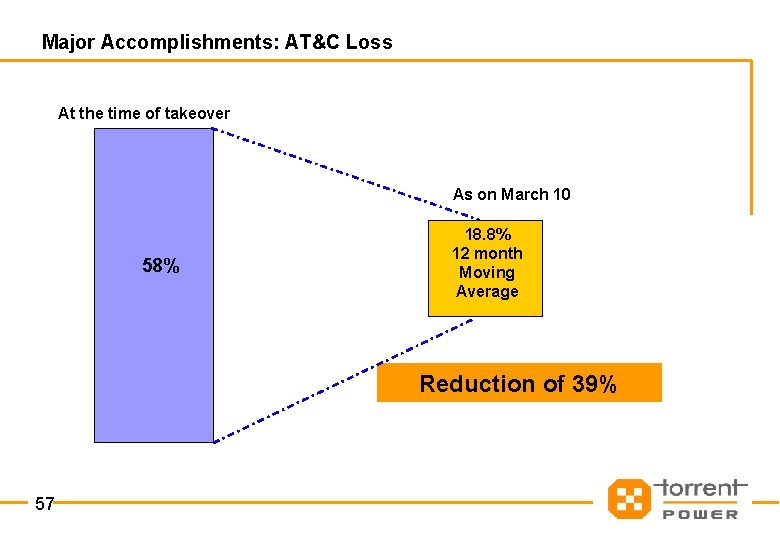
Major Accomplishments: AT&C Loss At the time of takeover As on March 10 58% 18. 8% 12 month Moving Average Reduction of 39% 57
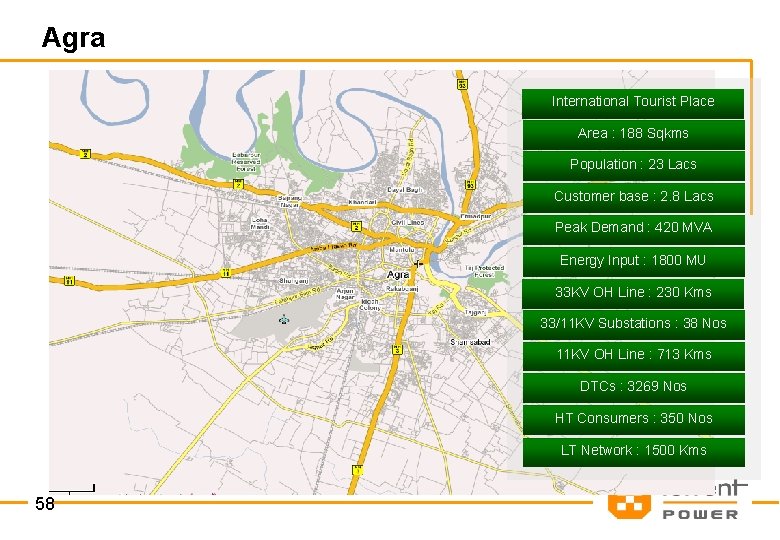
Agra International Tourist Place Area : 188 Sqkms Population : 23 Lacs Customer base : 2. 8 Lacs Peak Demand : 420 MVA Energy Input : 1800 MU 33 KV OH Line : 230 Kms 33/11 KV Substations : 38 Nos 11 KV OH Line : 713 Kms DTCs : 3269 Nos HT Consumers : 350 Nos LT Network : 1500 Kms 58
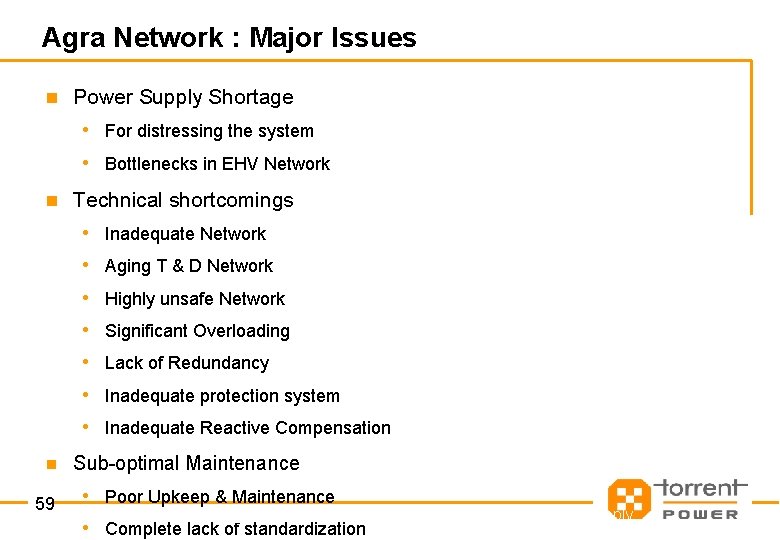
Agra Network : Major Issues n Power Supply Shortage • For distressing the system • Bottlenecks in EHV Network n Technical shortcomings • • n 59 Inadequate Network Aging T & D Network Highly unsafe Network Significant Overloading Lack of Redundancy Inadequate protection system Inadequate Reactive Compensation Sub-optimal Maintenance • Poor Upkeep & Maintenance Couple of major outages every day adversely affecting the reliability of supply • Complete lack of standardization
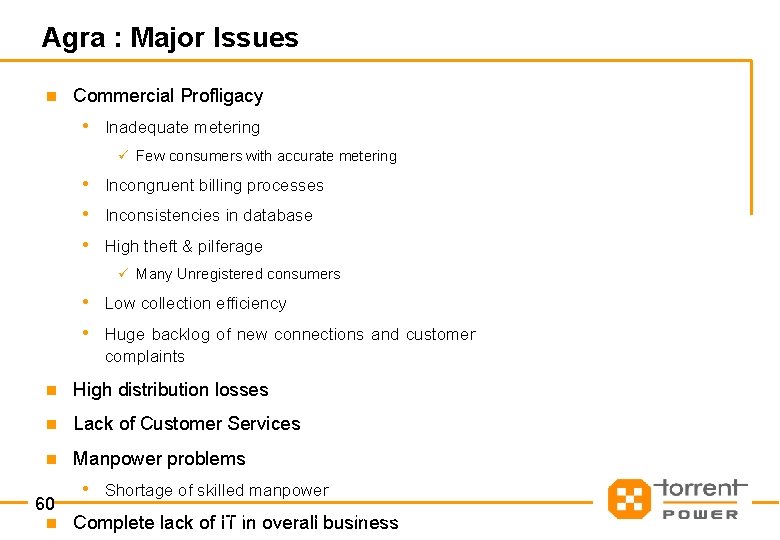
Agra : Major Issues n Commercial Profligacy • Inadequate metering ü Few consumers with accurate metering • Incongruent billing processes • Inconsistencies in database • High theft & pilferage ü Many Unregistered consumers • Low collection efficiency • Huge backlog of new connections and customer complaints n High distribution losses n Lack of Customer Services n Manpower problems 60 n • Shortage of skilled manpower need for complete overhaul of the system Complete lack of Crying IT in overall business
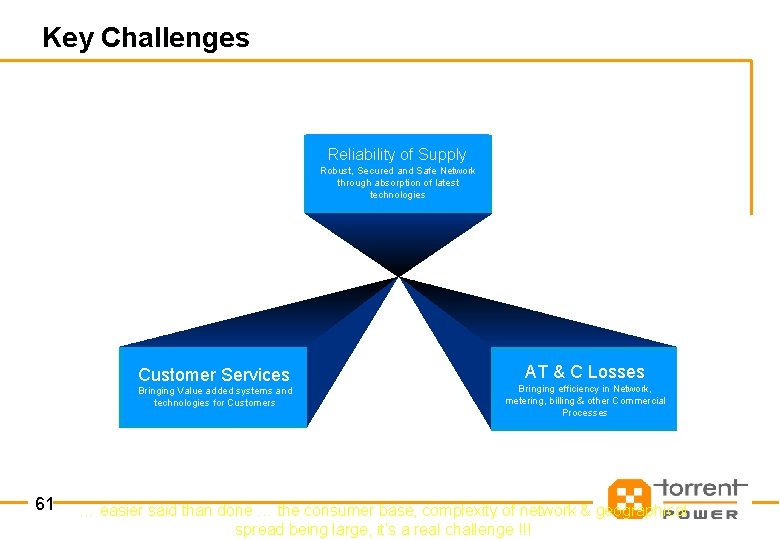
Key Challenges Reliability of Supply Robust, Secured and Safe Network through absorption of latest technologies Customer Services Bringing Value added systems and technologies for Customers 61 AT & C Losses Bringing efficiency in Network, metering, billing & other Commercial Processes … easier said than done … the consumer base, complexity of network & geographical spread being large, it’s a real challenge !!!
Key Requirements for DF arrangement
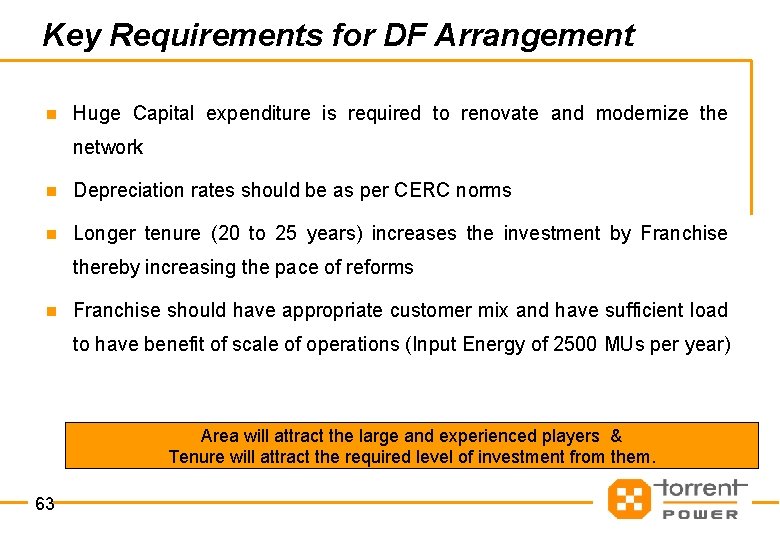
Key Requirements for DF Arrangement n Huge Capital expenditure is required to renovate and modernize the network n Depreciation rates should be as per CERC norms n Longer tenure (20 to 25 years) increases the investment by Franchise thereby increasing the pace of reforms n Franchise should have appropriate customer mix and have sufficient load to have benefit of scale of operations (Input Energy of 2500 MUs per year) Area will attract the large and experienced players & Tenure will attract the required level of investment from them. 63
Key Requirements for DF Arrangement n The required power should be made available • Despite the marked improvement brought in Bhiwandi, change not visible as load shedding continues • Customers want quality power 24 x 7 • Availability of adequate upstream infrastructure (Transmission Capacity) to cater to the demand in the franchise area • Distributed Generation based Dist Franchisee is a step in the right direction Franchise should be provided with adequate power so that the benefits of the improvement are realized 64
Key Requirements for DF Arrangement n In Franchise, the overall control lies with Distribution company but to ensure success, independence in operations should be given to Franchisee • Right to do Capital Expenditure at its own discretion ü Only then can a franchisee bring in the required level of improvement in the system which is the main objective of franchising an area • Rights under section 126, 135 of Electricity Act 2003 to stop theft • Non – interference in day-to-day activities Franchise should be given the rights as long as it follows the orders of Regulatory Commission and the prevalent laws of land 65
Key Requirements for DF Arrangement n Adequate support from the State Discom • Manpower (On deputation from Licensee) ü List of interested employees to be made available to DF ü DF should have the right to select / reject from the list without assigning any reason ü Term of Deputation to be mutually decided ü Employee on deputation cannot go back on their own • Coordination with local authorities / Govt. bodies Support of Govt , Discom and general public is essential for success of DF 66
Key Requirements for DF Arrangement n For certain statutory / regulatory processes, Franchisee should be considered independent of licensee • Levy of Service Line Charges • Accelerated Power Development and Reforms Programme • Regulator has to recognise the locus standi of the franchisee so as to ensure that interests of the customers of the franchise area are protected Franchisee should have the right to approach the regulator wherever required 67
Thank you
- Slides: 68